













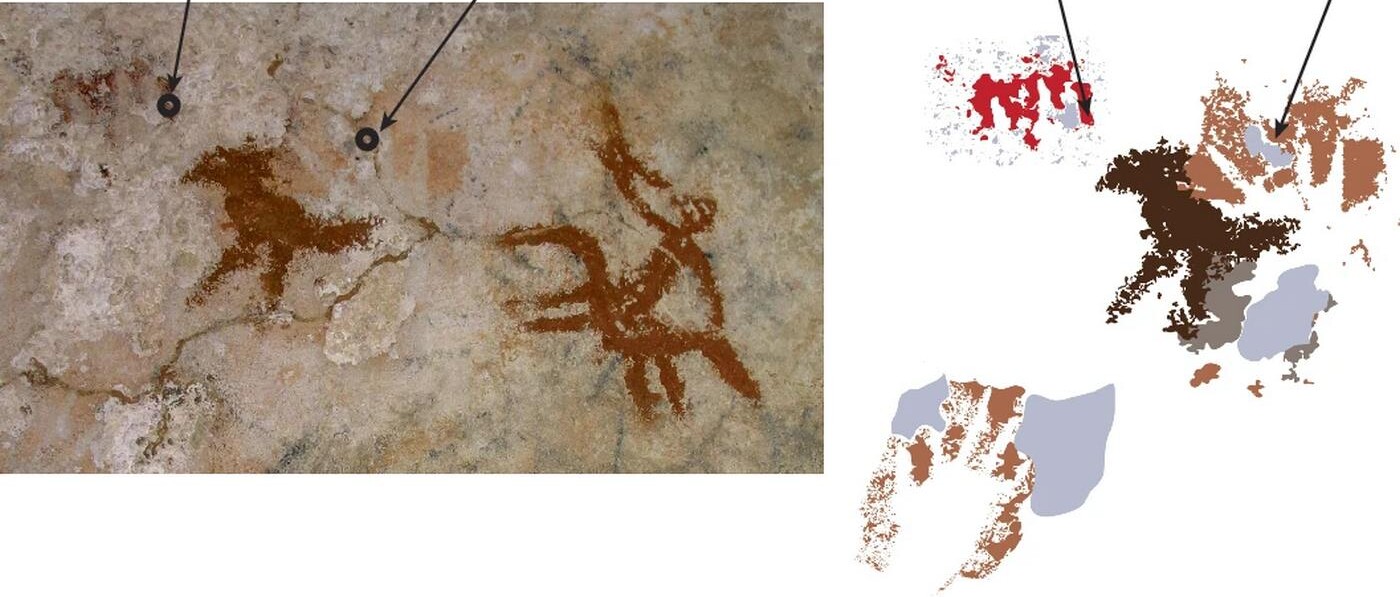
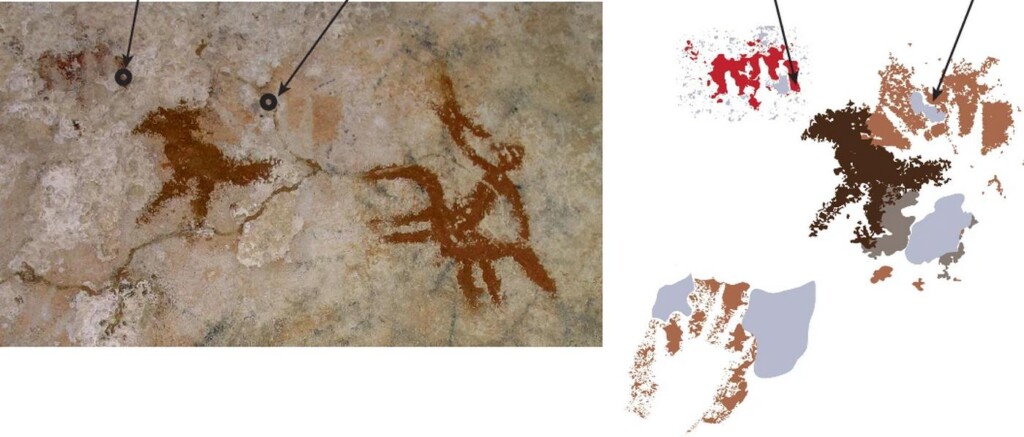
The discovery of stylized handprints dating back at least 67,800 years in a limestone cave in Indonesia has broken the country’s own record for the world’s oldest-known example of rock art.
It provides direct evidence that humans have been crossing the sea intentionally for nearly 70,000 years, as Man traveled from the Asian continent across Australasia to the land Down Under and beyond.
Adhi Agus Oktaviana, a researcher at the BRIN Research Center for Archaeometry, revealed that the minimum age of the rock art is 16,600 years older than the previously discovered rock art from Muna Island, which GNN reported on in 2024.
This rock art is also 1,100 years older than the handprints from Spain that were previously associated with Neanderthals and had long been considered the oldest cave art in the world, and 22,200 years older than the depiction of the Sulawesi warty pig, discovered on the same island as the other two, in 2021.
In other words, in the last five years, 3 of the 4 oldest cave artworks ever found on Earth were identified on the same small island off Sulawesi, Indonesia.
Oktaviana explained that to determine the age of this rock art, the research team applied the laser-ablation uranium-series (LA-U-series) dating technique to the microscopic calcite layer covering the cave paintings and produced a date that would be the earliest possible production time of the handprints.
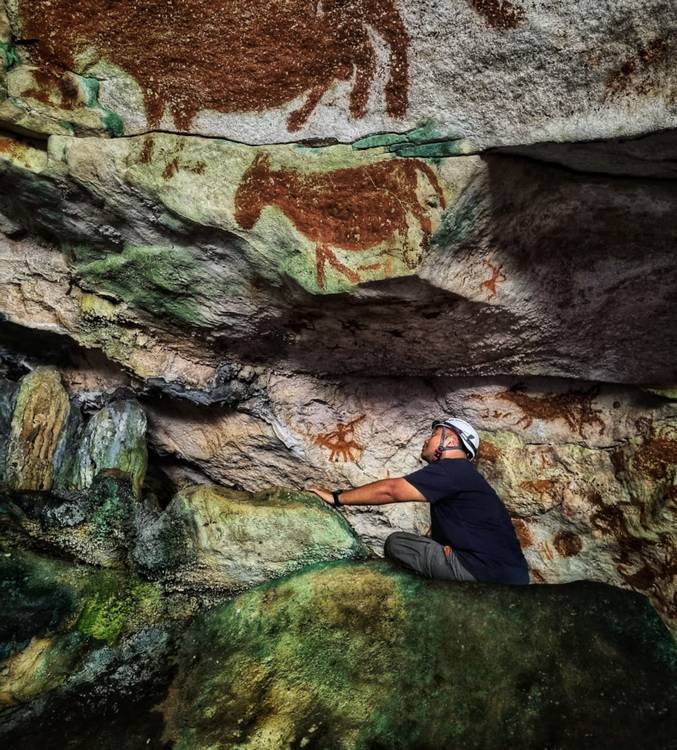
As news releases that regarded the previous two discoveries stated, the artworks elevate Indonesia to one of the most important centers in the early history of symbolic art and modern human sea exploration in the world.
This discovery confirms that Wallacea, a sunken landmass that exists above sea level today as the Indo-Pacific, was not only a route to Australia, but also a major habitat for early modern humans. It also reinforces the long chronological model, which states that humans reached the Sahul landmass (Australia–Papua) at least 65,000 years ago.
“It is very likely that the creators of these paintings were part of a population that later spread further east and eventually reached Australia,” said Oktaviana. “This research provides the oldest direct evidence of modern humans on the northern migration route to Sahul, which involved sea exploration between Kalimantan (Borneo) and Papua—an area that remains relatively unexplored archaeologically.”
AWESOME ROCK ART:
- 5,000-year-old Rock Art of Boats and Cattle Unearthed in the Sahara Shows Grassland Came Before Desert
- Newly Discovered Rock Art Panels Depict How Ancient Ancestors Envisioned Creation and Adapted to Change
- Incredible Cave Paintings 8 Miles-Long Revealed Deep in Amazon Forest: The Sistine Chapel of Ancients
Meanwhile, Professor Adam Brumm from the Australian Research Centre for Human Evolution (ARCHE), Griffith University, said that the handprints found in the rock art on Muna Island also have globally unique characteristics, with modifications that narrow the shape of the fingers to resemble claws, reflecting a mature symbolic expression. According to him, the symbolic meaning of this narrowing of the finger shape is still speculative.
“However, this art could symbolize the idea that humans and animals have a very close relationship. This is already evident in the earliest paintings in Sulawesi, including at least one scene that we interpret as a representation of a half-human, half-animal creature,” he explained.
With the discovery of Pleistocene rock art sites in the karst region of Sulawesi, this brings a great responsibility in preserving irreplaceable cultural heritage. Therefore, researchers are calling for the protection of karst areas containing ancient rock art sites to be an integral part of spatial planning and natural resource management policies.
WATCH Professor Brumm explain…
SHARE These Ancient Doodles With Your Friends On Social Media…