













250 million years ago, the giant ancestors of today’s salamanders swam from the area of today’s Norwegian Arctic to the west coast of Australia.
This monumental trip placed it, many years later, under the brushes and picks of paleontologists who incorrectly identified it. The fossils would later travel all over the world much like the animal did in life, before being placed in storage and forgotten about.
A moment of great fortune reunited the ancient amphibian Aphaneramma with its native land, and it’s given Australian scientists a chance to iron out the family tapestry of these marine amphibians.
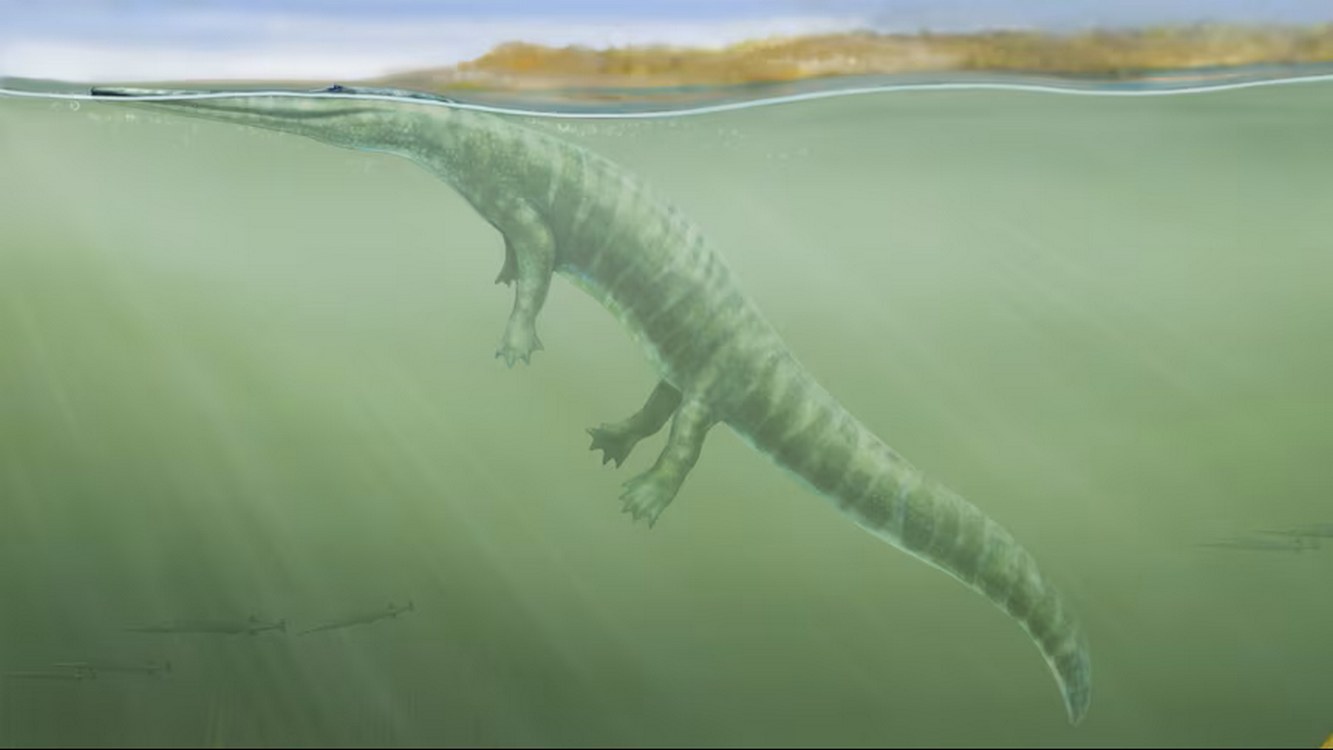
“The Aphaneramma’s got a head like a crocodile, a body like a giant salamander, pretty pointy teeth … it would have been a very active predator in the water,” said Lachlan Hart, a lecturer in paleontology at the University of New South Wales.
The fossils were originally unearthed in 1960 on Noonkanbah Station, about 1,500 miles north of Perth in a region called Kimberly—you can picture classic Australian Outback of hardy trees, red stones, and scrubland.
They were correctly identified as Temnospondyls and named Erythrobatrachus, but paleontologists at the time didn’t know was that they were holding two different species jumbled together.
MORE INSTANCES OF THIS:
- Denver Museum Finds Fossil While Drilling Underneath the Parking Lot–an ‘Infinitesimally Small’ Coincidence
- Newly Unveiled T-Rex Relative Was Sitting in Museum Drawer for 50 Years and ‘Rewrites’ Family Tree
This might have been realized, but the pieces were shipped by and for other institutions around the world and eventually forgotten about. They ended up in the US, where 50 years later researchers stumbled upon them and found out that Dr. Hart and his colleagues had ongoing projects into them.
The American museum staff or researchers who found them asked if he had been “looking for these,” and Dr. Hart admitted it was pure serendipity, when you “really have to check your luck.”
“Temnospondyls are a really important group of animals because they survived two of the big five mass extinction events that have happened in Earth’s history,” Dr. Hart told ABC News AU. “Including the largest one that ever happened … and that’s where about 90% of all living things were wiped out.”
SHARE This Serendipitous Rediscovery With Your Friends…