













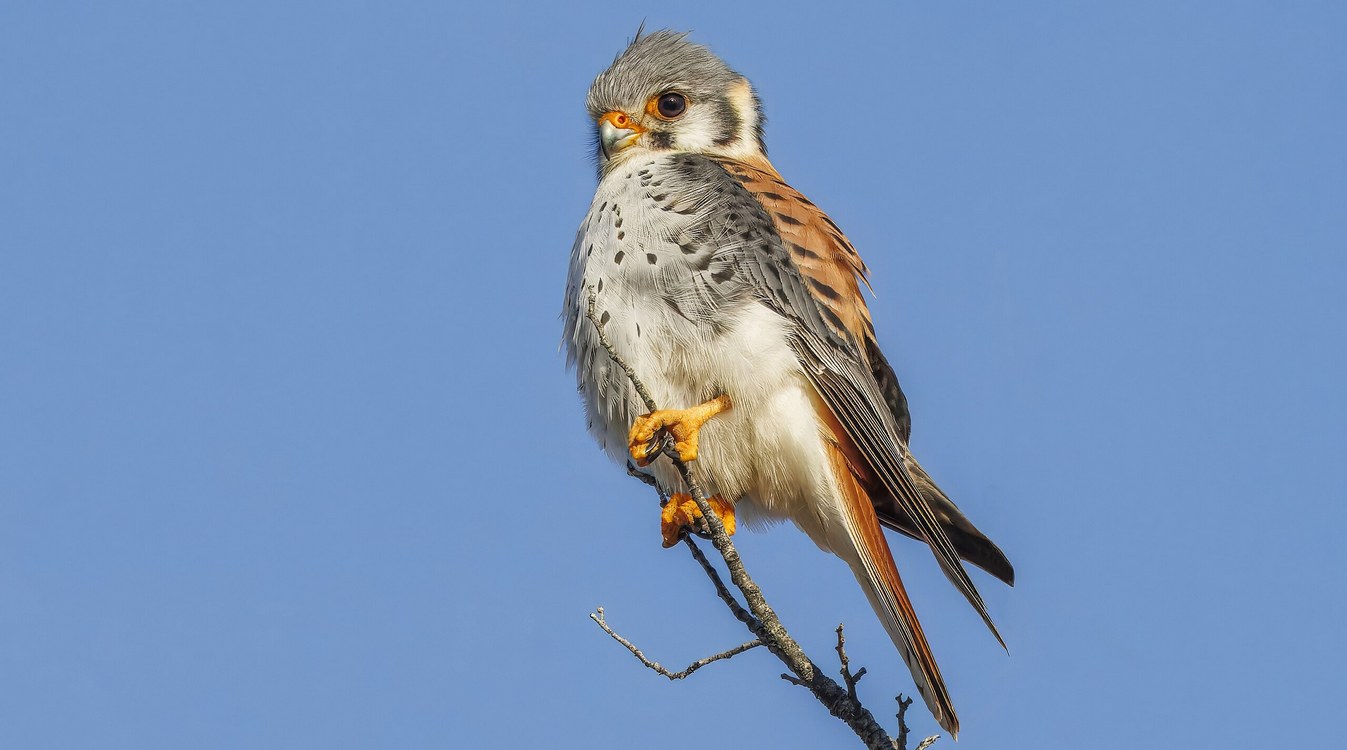
This is the American kestrel; a sight to behold.
Sporting a back that’s emblazoned with pheasant rust and bars of black, supporting wings of battleship grey tipped with white dots like a moth’s, and streaks of menacing black down its eyes, the smallest of the New World falcons is a treat for any birdwatcher.
That’s just one of several reasons why a new method of pest control among American cherry orchards is so appealing: the farmers can reduce crop loss while spotting this gorgeous bird every day.
A study run by Michigan State University in the state’s upper peninsula has discovered that encouraging American kestrels to nest in cherry orchards also reduces the presence of food-borne illnesses that can be passed via the fruit to consumers.
By keeping rodents—but particularly small, fruit-eating birds out of the orchards, kestrels were found to be an effective means of pest control.
“Kestrels are not very expensive to bring into orchards, but they work pretty well,” said Olivia Smith, lead study author and assistant professor of horticulture at Michigan State University. “And people just like kestrels a lot, so I think it’s an attractive strategy.”
The hypothesis of Smith and her colleagues was that by keeping fruit-eating birds away, fewer avian pathogens would reach the shelves of the grocery store. This proved largely correct, as kestrel-guarded orchards showed an 81% decrease in instances of crop damage, including missing fruit and fruit with bite marks, and a 66% decrease in bird droppings on the fruit trees.
“I’ve noticed a difference having the kestrels around, hovering over the spring crops,” Brad Thatcher, a farmer based in Washington state who has housed kestrels in the fruit and vegetable areas on April Joy Farm for over 13 years, told Inside Climate News. “There’s very little fecal damage from small songbirds at that time of year versus the fall.”
MORE IDEAS LIKE THIS: Duck alla Pest Control—This Horde of Ducks Have Been Protecting 140 Acres of Vineyards for a Half Century (WATCH)
There are no shortage of problems for cherry and fruit farmers these days, from wild weather swings to labor shortages. Perching birds are just one more issue to deal with, and they’re quite the issue, causing some $85 million in losses every year among major growing states like Michigan and California.
Growers attempt to prevent the fruit loss in a variety of ways, including chemical repellents, lethal shooting, trapping, hanging nets over their trees, visual and auditory scare tactics, and even deforesting the area surrounding the orchard.
SIMILAR STORY BUT FOR OWLS: California Vineyards That Once Used Only Toxic Chemicals to Protect Vines Now Use Nesting Owls
Not only were the kestrels found to be more effective at keeping the birds away, but the detectable levels of Campylobacter, the most common foodborne pathogen spread by bird feces, were lower on branches in orchards with kestrel nest boxes (0.97% compared to around 10%).
SHARE This Beautiful Bird And Its Important Role For Farmers…