











The future looks substantially brighter for a beautiful and totally unique Australian cockatoo species that requires very specific nesting habitat.
Scientists say it takes 250 years, some termites, no wildfires, and a cyclone to make the ideal home for the palm cockatoo, a difficult combination at the best of times. But deforestation is making this natural coincidence harder and harder to take place.
Now, however, conservationists at the NGO People for Wildlife have “cracked the code” on how to get these birds to nest in artificial tree hollows, opening up a whole new chapter in their protection.
“This is huge news,” People for Wildlife associate researcher Christina Zdenek told ABC News AU. “We have a highly endangered species in severe decline, and we’ve been working for years to crack the code of how to help them. And we finally have.”
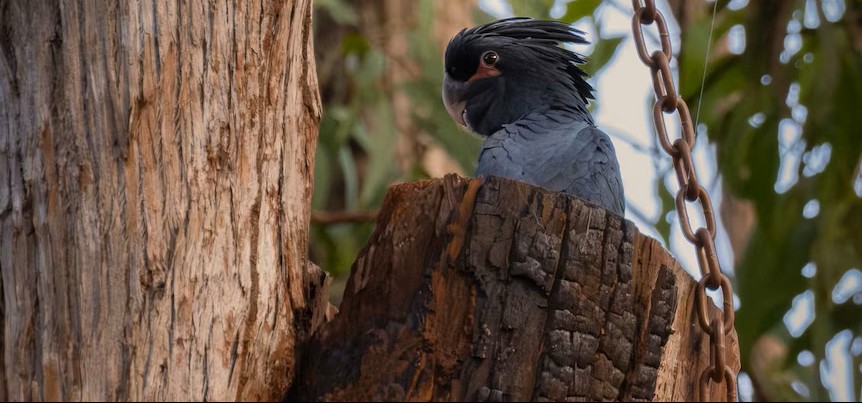
Located in the northernmost state of Queensland, the palm cockatoo is a large bird well-over one foot in length from tip to tail. It sports a beautiful black crest and red cheek, huge black beak, and like other cockatoos, can use tools—specifically it uses a stick to drum out rhythms on hollow trees during mating season.
It’s earned the nickname the Ringo bird, after Ringo Star, the drummer for the Beatles.
There are less than 2,000 of these birds remaining, however, as the habitat they evolved to nest in is extremely specific. They look for hollows made in mature trees by termites or fungi which have been exposed by the strong winds of Southern Pacific cyclones. These conditions can sometimes take 250 years to manifest, and the combination of logging and more intense wildfires severely interrupts this process.
Teaming up with a specialist woodcarver, People for Wildlife designed the “Palm Cockatube,” a section of old-growth tree trunk hollowed out in such a way as to mimic the natural feel of these hollows.
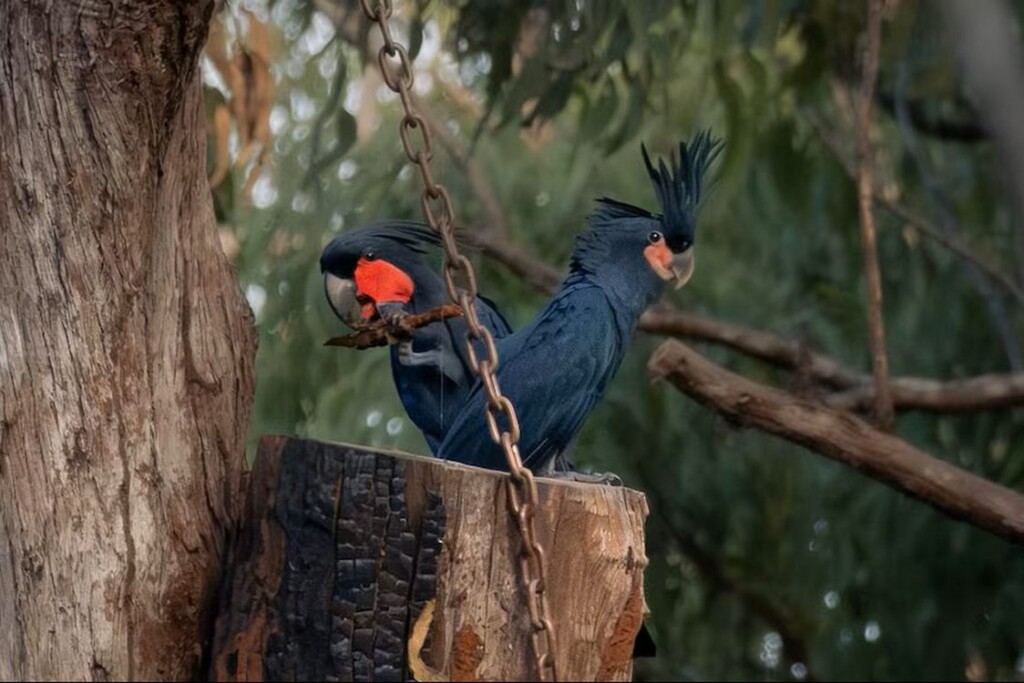
Three different designs divided across 29 artificial nests were hung from trees in prime habitat where it was known the cockatoos lived but weren’t currently nesting. Last September, Dr. Zdenek and her colleague Benjamin Muller noticed one specific hollow being visited by adult birds. Later they discovered an egg was inside, and just recently, it hatched to their delight, and to the delight of the Apudthama Traditional Owners.
MORE AUSTRALIAN BIRDS:
- A Melbourne Sewage Farm Has Become a Haven for 300 Species of Birds
- These Cockatoos Learned to Operate Drinking Fountains with Their Feet to Quench Their Thirst – (WATCH)
- A Mass Blossoming Is Occurring in Wake of Floods to Feed Honeyeater Birds in Australia Where Just 300 Remain
Tree hollows are used by more than just cockatoos in Australia; a whole gamut of animals exploit these natural lignan caves as shelter. Dr. Zdenek believes that if the fussy cockatoos enjoy the artificial nests, than other animals like the glider, a tree-dwelling marsupial with wings like a flying squirrel, will also benefit.
“Palm cockatoos here are the umbrella species — if you save them, you save dozens of others,” she said.
SHARE This Cockatoo And Its Cockatube With Your Friends Down Under…