













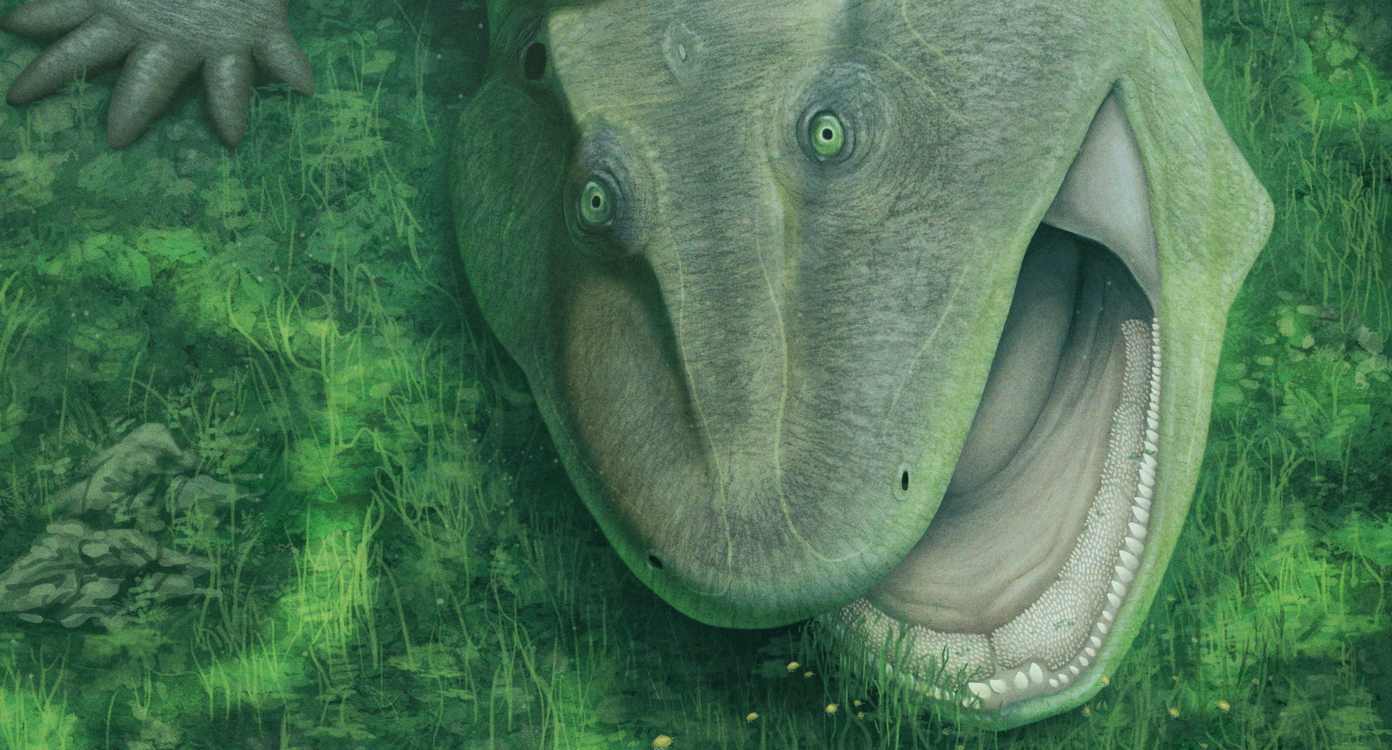
The fossilized remains of a creature with a twisted jaw and sideways-facing teeth have been discovered in the Amazon jungle.
Scientists say the plant eating reptiles now called Tanyka consisted of “living fossils” even when they stalked the Earth around 275 million years ago.
A international team of paleontologists recently revealed this strange creature based on their analysis of 9 bones found in a dry riverbed in Brazil.
They described the jawbones as “oddly twisted” with some teeth pointed out and to the sides, and numerous smaller teeth lining the inside of the jaws—a sign that the creatures were among the first of their kind to grind up plants for food.
The new species, described in the journal Proceedings of the Royal Society B, was given the name Tanyka amnicola by the research team.
The name Tanyka comes from the local Indigenous Guaraní language—meaning “jaw”—and amnicola meaning “living by the river.”
“The jaw has this weird twist that drove us crazy trying to figure it out,” said study lead author Dr. Jason Pardo of the Field Museum in Chicago. “We were scratching our heads over this for years, wondering if it was some kind of deformation, but at this point, we’ve got nine jaws from this animal, and they all have this twist, including the really, really well-preserved ones.”
“So it’s not a deformation, it’s just the way the animal was made.”
He said Tanyka is part of a much larger group of animals called tetrapods, which are four-legged animals with backbones. Modern tetrapods include reptiles, birds, mammals, and amphibians.
The oldest tetrapod lineage, called the stem tetrapods, eventually split into two groups: ones that laid eggs outside of water, and ones that laid their eggs in the water.
Today’s reptiles, birds, and mammals are all descendants of the branch that laid watertight eggs on land, while modern amphibians such as frogs and salamanders are the relatives of the tetrapods whose eggs needed to remain moist.
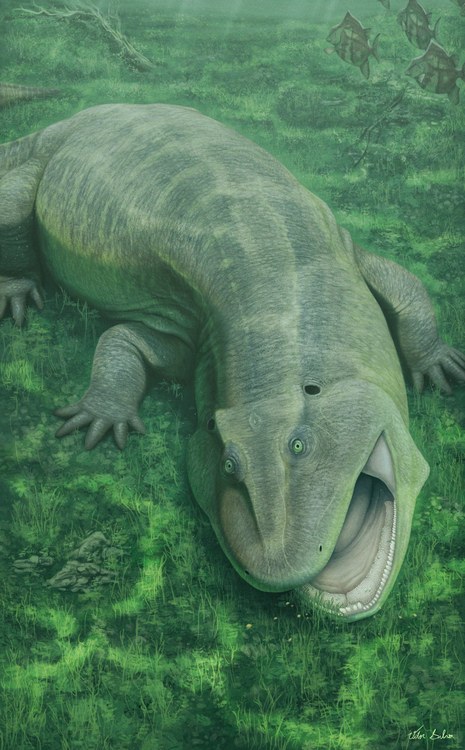
But even after the tetrapod family split into the new groups, some of the stem tetrapods remained, and the research team say Tanyka was one of them. The earliest stem tetrapods include what are currently known to be the first creatures that adapted to bearing its weight on land like Icthyostega.
“In the sense that Tanyka was a remaining member of the stem tetrapod lineage, even after newer, more modern tetrapods evolved, Tanyka is a little like a platypus: it was a living fossil in its time,” said Dr. Pardo.
He said a lot about Tanyka, including its body shape, remains a mystery.
“We can say, by comparison with close relatives, that Tanyka might have looked kind of like a salamander with a slightly longer snout.”
Study co-author Dr. Ken Angielczyk, a curator of paleomammalogy at the Field Museum, cautions that until a more complete skeleton can be found, it’s difficult to say for certain if any of the bones found near the jawbone belonged to the same animal.
The researchers aren’t sure how big Tanyka would have been, but they estimate that it might have been up to 3 feet long, and probably lived in lakes, based on the kind of rocks in which the fossils are found.
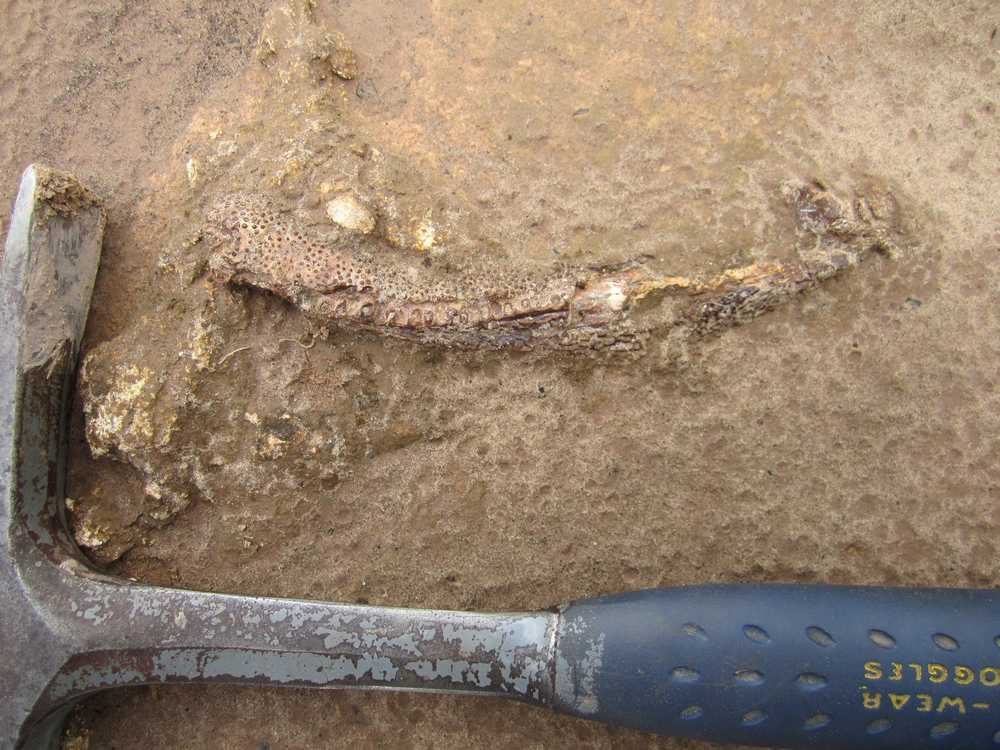
The surface of Tanyka’s jawbone is covered in a series of smaller teeth called denticles, which form a grinding surface sort of like a cheese grater.
Scientists have yet to find the bones that would make up Tanyka’s upper jaw, but they imagine its top teeth and denticles were oriented similarly to the ones on the lower jaw.
TRULY ANCIENT LIFE: 500 Million Year-Old Jellyfish–Oldest Ever Found–May Have Swallowed Prey Whole
“We expect the denticles on the lower jaw were rubbing up against similar teeth on the upper side of the mouth,” Dr. Pardo said. “The teeth would have been rasping against each other, in a way that’s going to create a relatively unique way of feeding.”
Study co-author says Juan Carlos Cisneros, from the Federal University of Piauí (UFPI), Brazil said that based on its teeth, Tanyka was likely a herbivore that ate plants at least some of the time; most of its fellow stem tetrapods only ate meat.
EVOLUTIONARY WEIRDOS: Fascinating Species of 200 Million-Year-old Flying Reptile Discovered in Britain
They said that when Tanyka was alive the area that’s now Brazil was part of one of Earth’s supercontinents—not Pangea, but Gondwana, which included much of modern South America, Africa, Australia, and Antarctica.
“The Pedra de Fogo Formation in Brazil is one of the only windows we have into Gondwana’s animals during the early Permian period of Earth history,” said Dr. Angielczyk. “Tanyka is telling us about how this community actually worked, how it was structured, and who was eating what.”
SHARE This Weird Critter From The Border Between Fishes And Land Animals…