














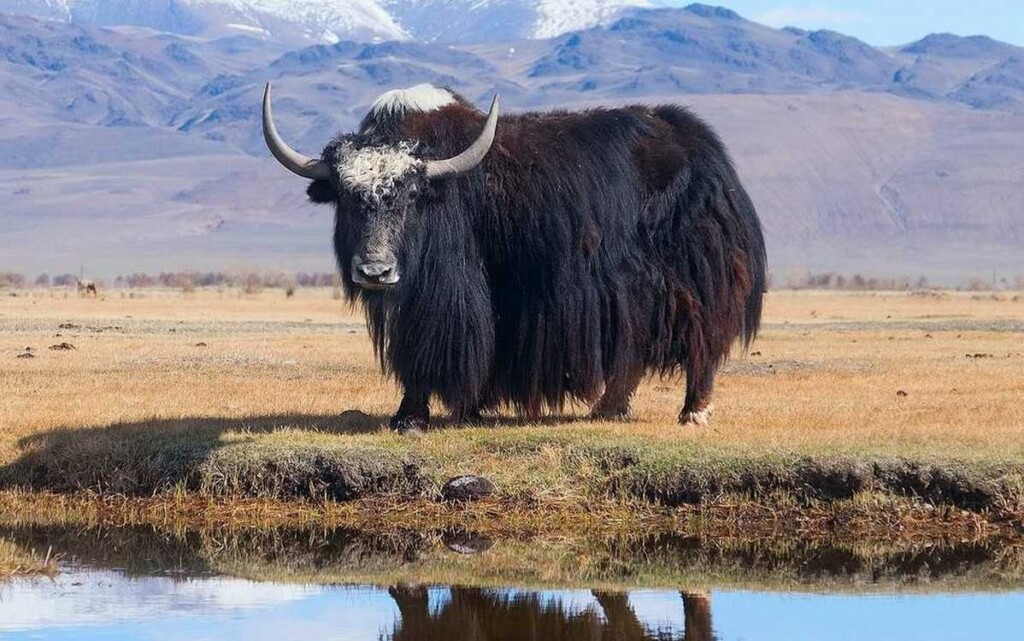
A special gene that helps animals like the yak survive at high altitude could enable new treatments for multiple sclerosis after positive findings from a mouse model.
The genetic mutation that enables yaks to live in environments with much less oxygen, and may hold the key to repairing nerve damage in conditions such as multiple sclerosis (MS) and cerebral paralysis, which currently have no cures.
The myelin sheath is a protective tissue layer that surrounds nerve fibers in the brain and spinal cord, and protects them while they do their job of communicating through nerve signals with the rest of the body.
MS is a debilitating autoimmune disease in which the immune system mistakenly attacks and destroys the myelin sheath, causing slow paralysis. Additionally, insufficient oxygen during fetal brain development can damage the layer, leading to conditions such as cerebral paralysis in new-born babies.
Lastly, reduced blood flow to the brain, often associated with aging, can also damage myelin and contribute to conditions such as vascular dementia.
Now, a new study published in the journal Neuron has revealed a naturally existing pathway that promotes regeneration after nerve damage. The discovery could open up new ways for treating diseases such as MS by leveraging molecules that are already present in the human body, say the Chinese scientists behind the discovery.
“Evolution is a great gift from nature, providing a rich diversity of genes that help organisms adapt to different environments,” said study corresponding author Professor Liang Zhang from Shanghai Jiao Tong University School of Medicine.
“There is still so much to learn from naturally occurring genetic adaptations.”
According to the authors, previous research has found that animals living on the Tibetan Plateau, which has an average elevation of 14,700 feet above sea level, carry a mutation on a gene called Retsat.
Scientists suspected that the mutation helps animals such as yaks and Tibetan antelopes maintain healthy brain function despite chronically low oxygen levels.
Zhang and his team set out to investigate if the mutation could prevent myelin sheath damage, and started by exposing new-born mice to low-oxygen conditions equivalent to elevations above 13,000 feet for about a week.
“Mice carrying the Retsat mutation performed significantly better in learning, memory, and social behavior tests than those with the standard version of the gene,” he said. “Brain analyses also revealed that the high-altitude gene mice had higher levels of myelin surrounding their nerve fibers.”
The research team then examined whether the Retsat mutation could repair myelin sheath damage similar to that seen in MS, and found that in mice carrying the mutation, the myelin sheath regenerated “much faster and more completely” after injury.
CLEVER GENETIC RESEARCH: New Research on Genes Linked to Stuttering Could Be ‘Life-Changing‘ for Those with Speech Disorder
The injury sites also had more mature oligodendrocytes, a type of cell responsible for producing myelin.
“Further investigation showed that mice with the mutation produced higher levels of ATDR, a metabolite derived from vitamin A, in their brains,” said Professor Zhang.
“The Retsat mutation appeared to increase the enzymatic activity that converts vitamin A into its metabolites, which in turn promotes the production and maturation of myelin-producing oligodendrocytes.”
UNORTHODOX DISEASE TREATMENTS: Waste Plastic Turned into Parkinson’s Drug
When the team gave ATDR to mice with an MS-like disease, the severity decreased, and they showed improved motor function.
Zhang says that treatments for MS currently focus only on suppressing immune activity, and adds that Retsat and ATDR are already biologically produced and could be used to treat diseases related to myelin damage.
YAK About This Really Impressive Genetic Science With Your Friends…