












Across Iowa, a tiny fish has inspired an enormous conservation program that has seen hundreds of ponds restored to their natural state.
Though originally for the sake of this small federally-endangered fish, the lakelets soon demonstrated their power to alleviate the state’s nutrient runoff problems as well.
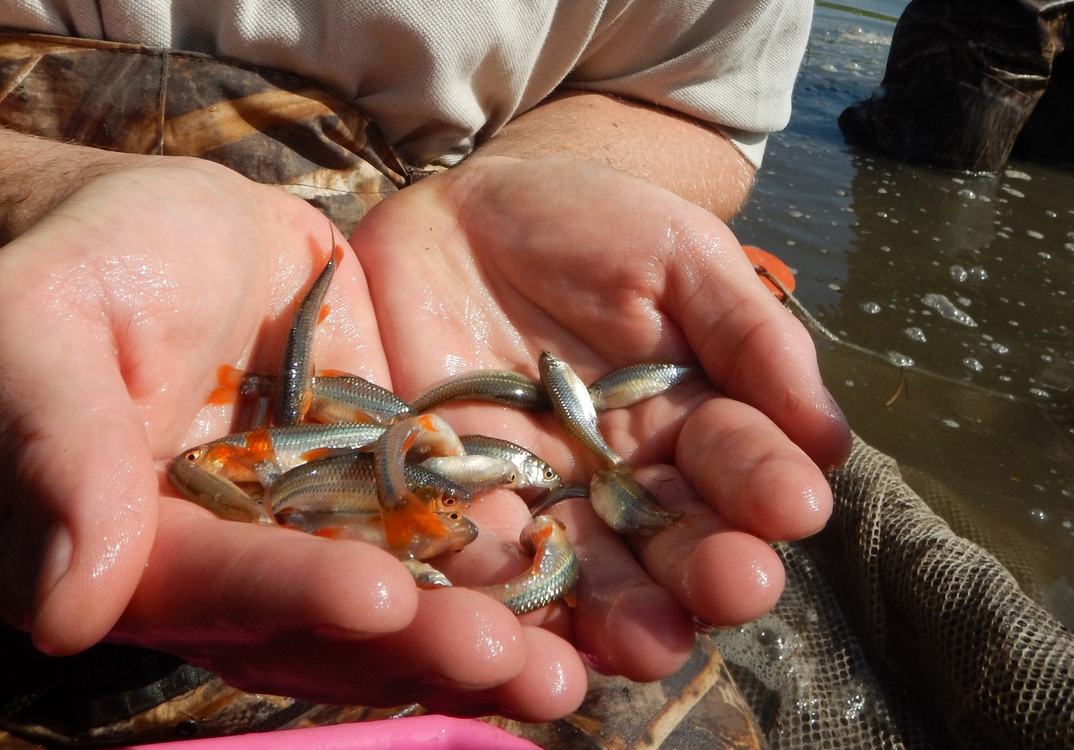
The Topeka shiner is from the minnow family and was once found widely across Iowa, which despite its reputation as a prairie state, used to be covered by wetlands. Heavy rainfall would cut new channels in the meandering course of rivers that would change their path, leaving wide bends cut off from the main flow.
These oxbow lakes, as they’re called for the U-shape, formed a micro wetland ecosystem that covered 11% of Iowa before agriculture. That transformation left over 10,000 of these water bodies barren and erased, and with every one that thusly vanished, the little silver and orange shiner vanished with them.
In 1998, the shiner was placed on the Endangered Species List, and in 2000, the US Fish and Wildlife Service worked together with the Iowa chapter of the Nature Conservancy to identify and begin restoring some of these oxbow lakes in order to save the shiner.
After the first 20 or so of these lakelets were restored, identified by a scar they would leave several dozen meters beyond the zenith in a river bend, either existing or historical, conservationists began to see how agricultural pollutants in waterways were being washed out of streams to settle in the mud of the oxbows.
“It really is a success story,” said Karen Wilke, associate director of freshwater at the Nature Conservancy in Iowa. “Now we’re not just doing it for Topeka shiner, but we’re doing it for water quality as well.”
Most importantly, the shiner returned along with the oxbows. But the benefits—which many landowners were happy to gain—go far beyond the shiner, with some 57 fish species and 81 bird species documented living in the restored oxbow wetlands, and beyond that—mussels, turtles, amphibians, beavers, and even river otters.
“I think all the species are hungry to have this habitat come back, hungry to have more water on the landscape,” Wilke told Inside Climate News.
ENDANGERED SPECIES IN AMERICA: Locally Extinct for a Century, Bay Scallops Thriving Again on Virginia Shore of Chesapeake Bay
The work has cost tens of thousands of dollars per wetland, but has been picked up by a combination of private capital, state, and federal grants, so as to ensure landowners have all the incentive and none of the downside.
In 2011, the Iowa Soybean Association trade group came on board, joining forces to restore more oxbows in the Boone River watershed in north-central Iowa, which lent new vigor to the project.
RESTORE IT AND THEY WILL COME: Astonishing 916% Increase in Breeding Birds Seen at England’s Premier Rewilding Project
Topeka shiners have been documented in 60% of the over 200 oxbow lakes restored across Iowa’s landscape, 97% of which is privately-owned.
A 2021 review of the shiner’s status recommended it be moved from “endangered” to “threatened,” which would represent yet another success story for the Endangered Species List, one of the most effective wildlife conservation measures ever put in place by any nation.
SHARE This Inspiring Rewilding Story Across Iowa’s Amber Waves…