














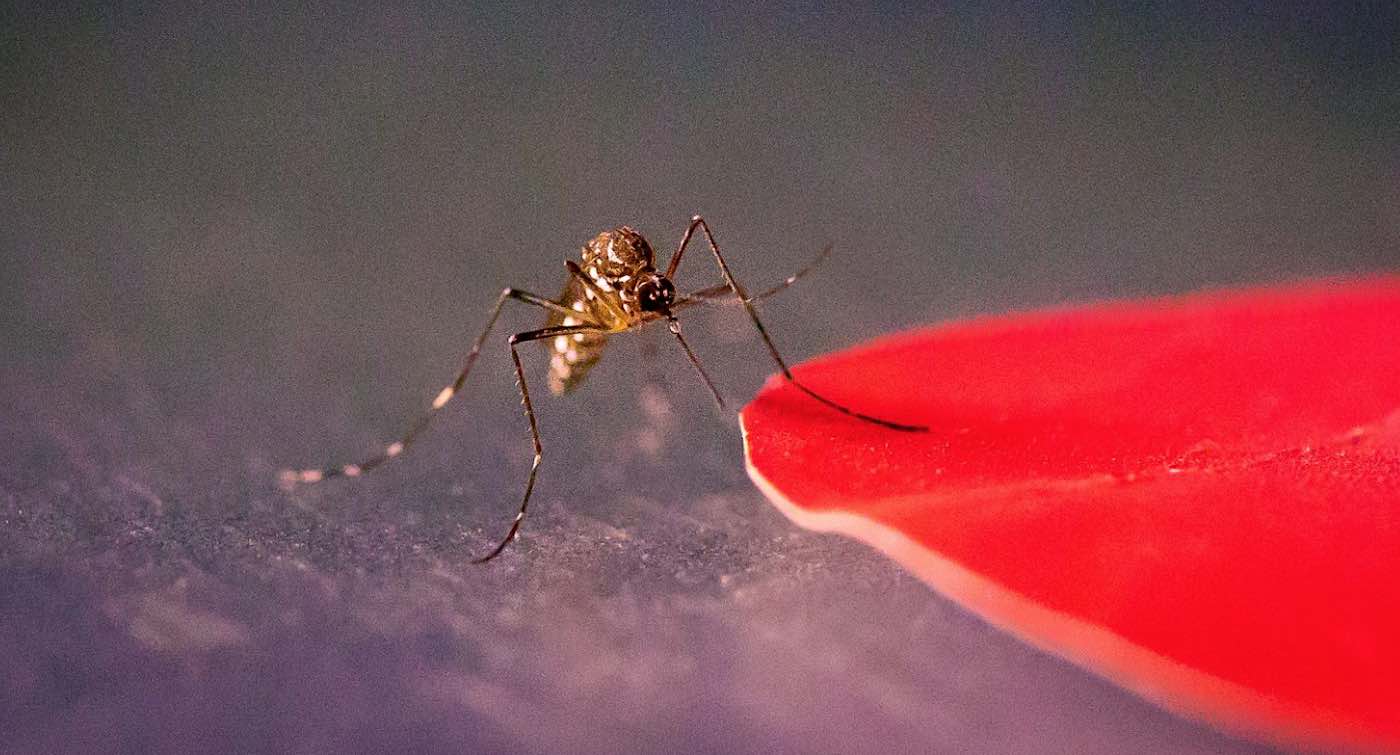
There are dozens of ways to implement mosquito control, but none have proved a cure-all against the deadliest animal on Earth.
Now, researchers have genetically-engineered a natural enemy of the mosquito—with millions of years of evolution backing up its deadly design—to attract and kill the insects even when humans were also on the menu.
It’s called Metarhizium, and it’s a parasitic fungus that lures insects to their death with an odorous compound called longifolene. The fungus plays the olfactory role of a nectar-rich flower, attracting bugs like mosquitoes before infecting them with its spores that kill and eat the creature from the inside out.
The problem is that the fungus only creates longifolene after it kills a bug, which means a lot of waiting around to start; not a positive for a potential mosquito-control agent.
In a study published last week in Nature Microbiology, mycologist Raymond St. Leger at the Department of Entomology at the University of Maryland and his co-authors from China and Burkina Faso elaborated how they were able to genetically engineer Metarhizium to produce longifolene in huge amounts around the clock.
“The fungus is completely harmless to humans as longifolene is already commonly used in perfumes and has a long safety record,” Dr. St. Leger explained to his university press. “This makes it much safer than many chemical pesticides.
When grown on simple wheat or rice substrate in a patent-pending trap design that admits only mosquitoes and not beneficial insects, it successfully culled about half of all mosquitoes released into a room that included a human volunteer sleeping under a bug net over a period of 5 days, and nearly all followed a few days later.
Dr. St. Leger doesn’t believe his traps are a solution on their own, and his collaborators in China are experimenting with other methods of mosquito control to see if there’s an ideal complement.
MOSQUITO BITES:
- ‘Cheaper, More Humane’ Drones Emerge as Key Weapon in Mosquito Control from Poland to Africa
- CBD from Hemp Kills Mosquitoes, Inflicting 100% Mortality Rate on Pesticide-Resistant Insects
- New Mosquito Nets Prevent Millions of Malaria Cases in Insecticide-Resistant Areas
The fungus is easily produced in a variety of settings, including in rural communities where it can be grown on common feedstock like rice. Unlike synthetic chemicals that coat mosquito nets, some of which the insects are now resistant to, Metarhizium has millions of years of evolution behind it, meaning it’s unlikely the bugs will be able to withstand these traps anytime soon.
“If mosquitoes evolve to avoid longifolene, that could mean they’ll stop responding to flowers,” St. Leger said.
“But they need flowers as a food source to survive, so it would be very interesting to see how they could possibly avoid the fungus yet still be attracted to the flowers they need. It’ll be very difficult for them to overcome that hurdle, and we have the option of engineering the fungus to produce additional floral odors if they evolve to specifically avoid longifolene.”
SHARE This Latest Weapon In The Fight Against Mosquitoes…