














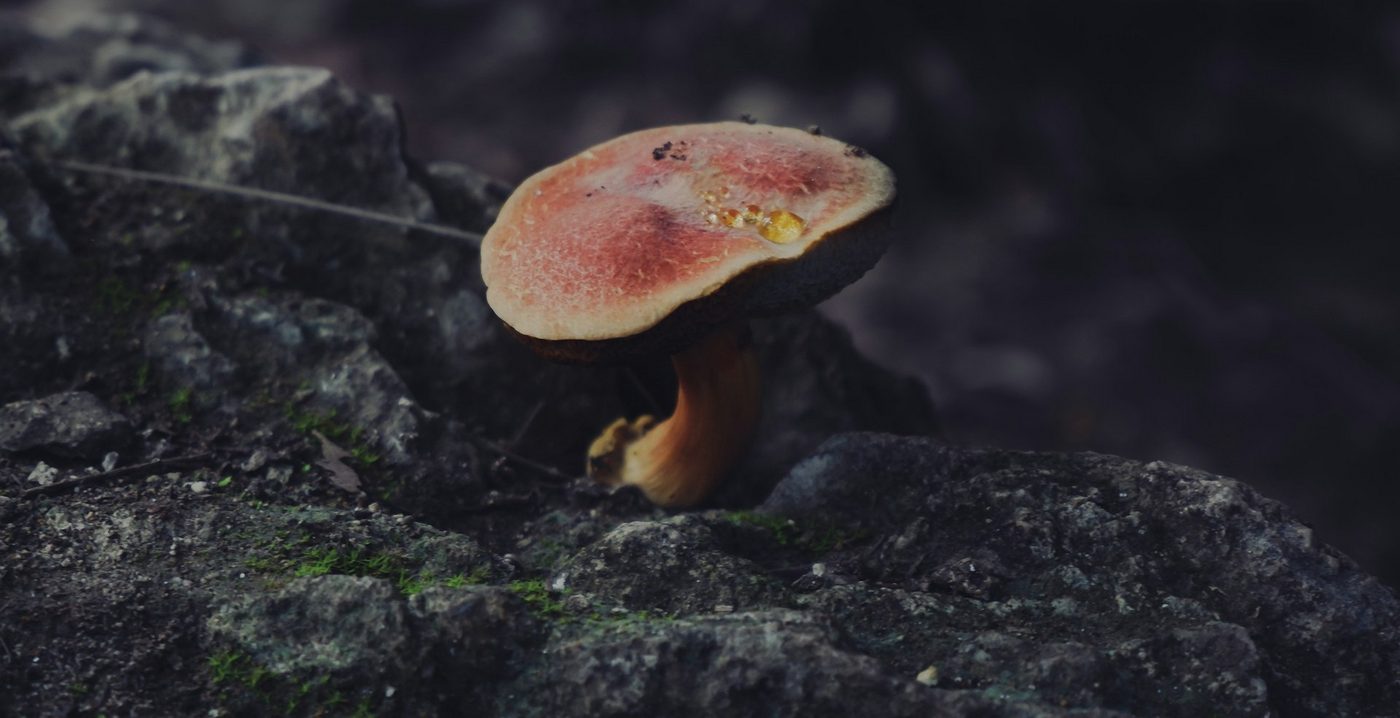
Decades of underinvestment in mining and refining across Europe and North America has landed the manufacturing sector in a problem, which a group of scientists believe can be helped by mushrooms rather than excavators.
One must have been living under a rock not to have recently read the terms “critical minerals” or “rare earth elements.” These components—nickel, to use an example of the former, and gallium from the latter—are needed in increasing amounts to build next generation technologies of all kinds, from longer-lasting batteries in electric vehicles to AI data centers and spacecraft.
Traditionally, these materials have been recovered through mining operations, but each gram that enters the supply chain will eventually become a waste product, and it is out of that waste that scientist from Austria believe mushrooms can recover enough minerals to make a sizable impact in the world economy.
For the mercifully uninitiated, rare earth elements (or rare earths for short) are actually not that rare: they’re found practically anywhere, just at very low levels. For that reason, mining them isn’t very efficient, and they’re very often collected as a byproduct from mining other minerals.
“Mycomining,” as Alexander Bismarck and Michael Jones from the University of Vienna have called it, could take advantage of fungi’s exceptional capacity to grow in contaminated areas to recover rare earths from industrial waste like mine tailings and slime dams, or even from coal ash.
“We really could do this over large areas and quite easily collect [the mushrooms] using existing agricultural machinery,” Jones told the BBC.
Below the innocent mushroom cap we see on the forest floor is a sprawling network of filaments called mycelia that actually makes up more than 95% of the fungi’s total biomass. These mycelia worm their way into every nook and cranny and remain extremely small compared to a tree’s roots which gradually widen.
That mycelia soaks up nutrients the fungi and surrounding plants need, but that’s not all they soak up. Fungi have been studied for the mycelium’s ability to absorb nuclear radiation, toxic heavy metals like lead and mercury, and rare earth elements that go into making our smartphones and other devices.
Compared to other non-mining forms of recovering rare earths, Jones and Bismarck admit that concentrations in fungi would be low, perhaps as little as one tenth that of dissolved e-waste, for example. On the other hand, the fungi don’t need the power of a flash joule heater, which you’d use to dissolve the e-waste, nor would they be grown atop e-waste, but in contaminated areas that might even be hazardous for humans to work in.
MORE MINING NEWS: Researchers Invent Way to Turn Harmful Mine Waste into Healthy Soil
BBC spoke with Jones and Bismarck about their project, which is also being investigated separately at the University of Arizona, where Professor Oona Snoeyenbos-West plans to launch a startup to source fungi already growing in contaminated areas for the purpose of bioremediation and bio-recovery of critical minerals, especially rare earths and copper.
Major mining already spends a lot of time and money on bioremediation. DRD Gold, a subsidiary of South African mining major Sibanye-Stillwater, produced around 160,000 ounces of gold during the last fiscal year entirely from retreating mine tailings through a simultaneous rehabilitation program to render both water and materials nontoxic, much of which is powered by solar panels.
Mine tailings refers to the gravel-like material left behind after ore has been stripped of the majority of gold, silver, copper or other metals through the milling, flotation and/or leaching process.
BIOREMEDIATION: Researchers Use Wastewater to Generate Electricity – While Cleaning It Up
Tailings storage facilities are expensive to build on-site, as they must contain the polluted material from contaminating the nearby environment. Companies can bring their tailings straight from the mill to DRD Gold’s locations for reclamation, saving money and ensuring they are treated soundly. DRD is just one company engaged in this practice, which is becoming more common as operators target big tailings mounds both as an environmental hazard to remove and a bounty of leftover gold, silver, and other metals from eras when metallurgical technologies were less efficient.
The future can only be positive for these strategies of mineral recovery. All the gold in the world both above and blow ground would only form a cube small than the Great Pyramid of Kufu, and eventually there will be more circulating in waste streams than is left below the Earth.
OTHER RECOVERY METHODS: Chemical Process Produces Critical Battery Metals from This Unloved Mineral with No Waste
A similar destiny may be in store for rare earths, one in which the preponderance of e-waste—predicted only to grow larger and larger over the next 25 years—becomes so unignorable that the materials already mined and used simply outnumber the quantity recoverable through traditional mining.
Will mushrooms be present in that future? No one can say for certain, but it seems likely that few if any methods will be as cheap.
SHARE This Compelling Idea Of Mushroom Mining On Social Media…