













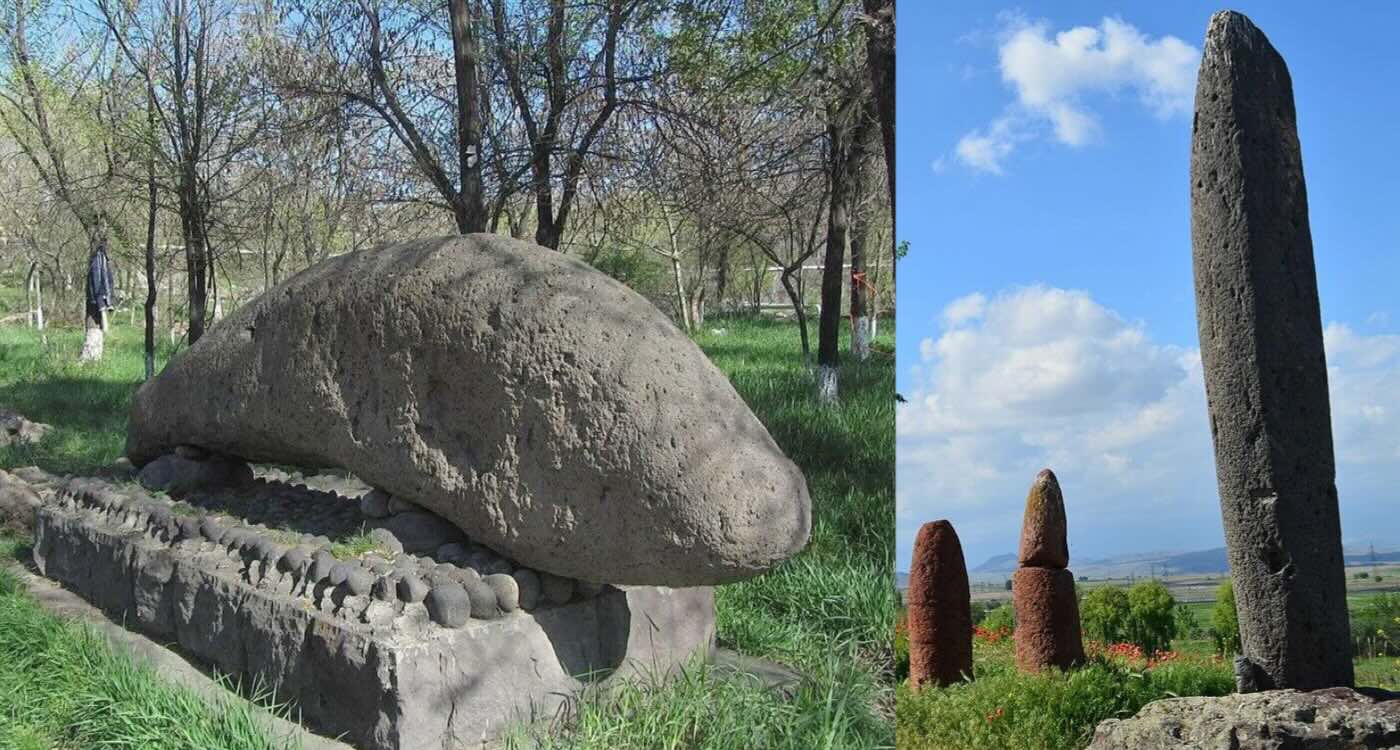
For the first time in the country’s history, a detailed analysis of Armenia’s “dragon stones” has been conducted with the hope of solving the mystery of these large Neolithic monuments.
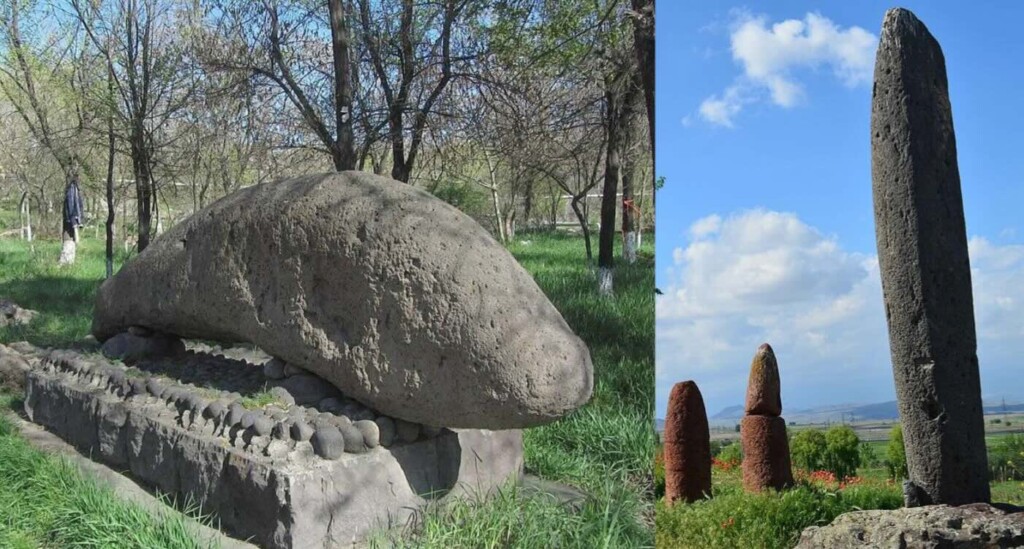
Raised between 4200 and 4000 BCE, in concert roughly with the megaliths of Stonehenge, Armenia’s vishaps, meaning dragons, weigh between 3 and 8 tons, and stretch across a highland region bearing either the carved imagery of a fish or a stretched cowhide.
Dozens have been found and identified, and their ubiquity along with their seeming randomness have defeated previous attempts to define their role in ancient Armenian society.
A new survey and analysis conducted by the Yerevan State University Institute of Archaeology and Ethnography has cracked the code somewhat, even if it involved being stumped once or twice along the way.
Concentrated among the mountainous regions in the Caucasian country’s western reaches, 43 sit among the Geghema Mountains, 36 are found on the slopes of Mount Aragats, and 17 among the Vardenis Mountains. Others have been found beyond this north-south axis, but the vishap builders seemed to primarily work in these areas.
These standing stones present a mystery when considering their elevation.
“[L]arger vishaps would necessitate greater processing time, especially in regions where the duration of the snow-free period decreases with increasing altitude,” wrote the authors.
“Therefore, it might be expected that, at higher elevations, smaller vishaps would be found, assuming that their size and location were not of particular significance to their constructors. However, the results of our analysis contradicted this hypothesis.”
Indeed, even considering the extraordinary labor that would come from building at every additional meter above sea level, there was no correlation between size of the megalith and position with regards to altitude. There were stones higher than 9 feet tall and weighing in excess of 7 tons that were located 9,000 feet up the mountains, where among other challenges such as a paucity of food and shelter, the ground is covered with snow from October to May.
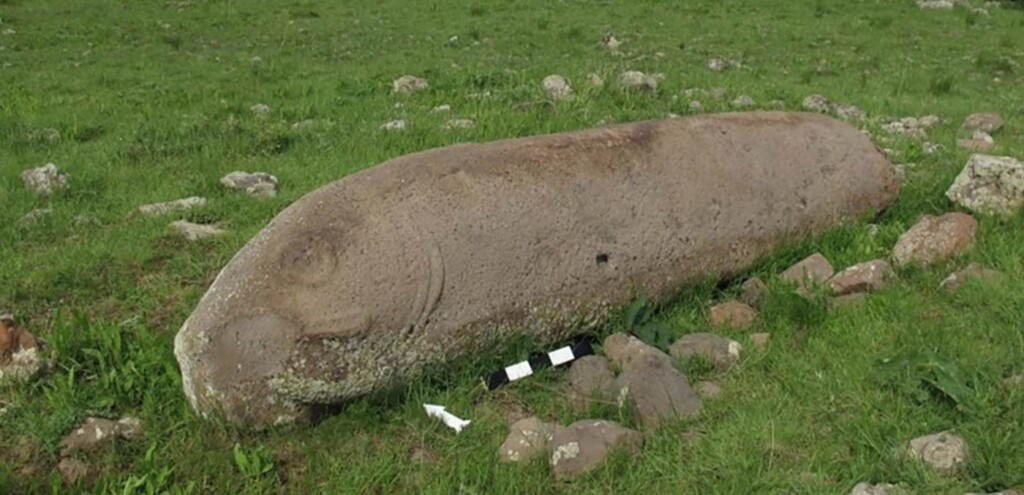
The research team’s working hypothesis is that the stones are likely tied to an ancient water cult, “as vishaps are predominantly located near springs as well as are represented by fish forms.”
ARMENIA NEWS: Nobel-Worthy Prime Minister Attempts to End Century of Ethnic Hatred for Armenians
Additionally, the cow-hide designed stele are more routinely clustered in valleys at lower altitudes where they mark out what may have been ancient irrigation channels, and where pastured livestock may have grazed. Classical and medieval-era settlements, including churches and remote fortresses are located along these same irrigation paths, suggesting the ample snowmelt would have sustained communities for thousands of years after the time of the vishap builders.
In any study of ancient monuments, the most compelling question is always why expend the substantial amounts of labor, and the resources necessary to sustain it, in pursuit of raising the monument.
MORE ANCIENT ARCHAEOLOGY: Archaeologists Uncover 5,500-year-old ‘Ritual Landscape’ in Jordan
Though the effort may have been excessive, the stones, carved and standing, would embody the cultural and spiritual beliefs of the people who carved them as well as their spirit of cooperation and teamwork. Other such projects in other countries have been theorized as acting as anchors of a community—proof that the landscape was theirs.
Incidentally, the ancient vishap builders weren’t the only ones who saw in the standing stones a marker of place and purpose. Future civilizations, including the Urartians, contemporaries of the Babylonians and Assyrians, and early Christian communities, both carved their own marks into the vishaps, the former with their Cuneiform alphabet, the latter with their cross.
SHARE This Ancient Armenian Archaeology With Your Friends…