All News - Page 1410 of 1715 - Good News Network
Home Blog Page 1410

Russian Spam Site Shuts Down, Dramatically Decreasing Spam Worldwide

spam filter graphic from FTC report

spam filter graphic from FTC reportYou may not have noticed, but since late last month, the world supply of Viagra ads and other e-mail spam has dropped by an estimated one-fifth, curtailing the worldwide circulation of spam by an estimated 50 billion messages per day.

Russian police broke up a major spam export business with a criminal investigation of a suspected spam kingpin.

(READ the story in the New York Times)

Man Risks Border Crossing to Help Impoverished Farmers Build a Co-op

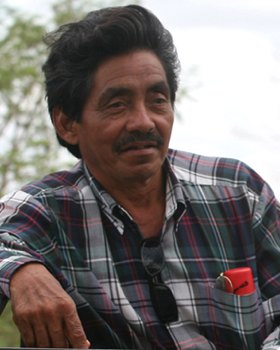
Jesus Hernandez featured in Crossing Borders, news21.com

Jesus Hernandez featured in Crossing Borders, news21.comJesus Hernandez Arias lay in the Arizona desert, half-blind and freezing.

Dawn was approaching on March 11, 2006. It was cold –- no more than 45 degrees -– and winds upwards of 35 mph only added to the discomfort brought on by unrepentant rain.

Hernandez, a 43-year-old diabetic, had by now lost almost all feeling in his extremities, and his vision amounted to nothing more than varying shades of black. He worried about his blood glucose level, the possibility of paralysis or death.

Hernandez had crossed the U.S.-Mexico border the night before with 17 others who, like him, could not afford a pollero’s guidance.

Most of those in Hernandez’s group were crossing for the same reasons: to find work and send money home to impoverished families, to start new lives in the United States or simply rejoin relatives.

Hernandez’s reason, however, was different: He was crossing the border so others wouldn’t have to.

But altruism cannot dictate the delicate balance of a diabetic’s blood sugar.

Hernandez, divorced and the father of a young daughter, had moved four months earlier to Veracruz, Mexico, where he’d met numerous coffee growers. He was impressed by their work ethic but alarmed by their impoverished living conditions.
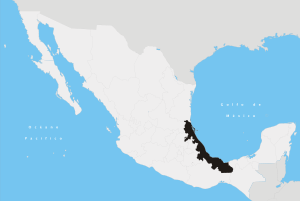
map of Veracruz, MexicoThis incongruity, Hernandez soon found, was due to the fact that the growers had no local market. Unable to sell locally at a reasonable price and too poor to transport their beans to locations with high coffee demand, the growers had no choice but to sell to coyotes, who bought the harvested beans at low prices and resold them to large coffee companies for exorbitant profits.

This had been going on for decades, and the poorer the growers grew the more insoluble their plight became.

Then, in the 1970s, some of the area’s young men began traveling to the United States to work and send money home. Soon, families of those who had found employment on the other side began to enjoy luxuries others could never afford: American-made vehicles, extra bedrooms and glass windows in their homes.

Crossing over became something of a rite of passage as countless young men said goodbye to their families to face the dangers that came with crossing the border illegally: unforgivable terrain, unreliable polleros and an unstable border peppered with drug cartels and American vigilante groups.

Unsettled by the risk he saw young people taking, Hernandez decided the answer was organizing growers so they could start their own coffee cooperative. As their own bosses, he reasoned, growers would enjoy the profits they deserved, their standards of living would rise dramatically and their sons might no longer be tempted to gamble their lives on the border.

Hernandez had training in agronomy, but the growers needed money to organize, and the majority had nothing to spare for the cause. Not even Hernandez, who was living on his savings, could afford to invest in the project.

Determined to pull these growers out of poverty, Hernandez turned his gaze northward. He decided working in El Norte was the best and fastest way to finance the collective.

Among those in Hernandez’s group was Erica, the Venezuelan who claimed to have crossed twice before and –- more or less -– knew the way, as well as a Poblano (originating in the State of Puebla, Mexico.) wearing high-heeled cowboy boots. Hernandez recalled warning the Poblano that he’d never be able to make it out of the desert with such big heels, but the man stood by his choice in footwear.

His group ran across the border at 7 p.m., entering the U.S. Border Patrol’s Tucson sector, the harshest in terms of climate and terrain.
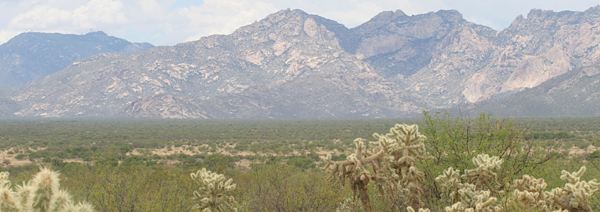
Arizona-Desert-news21-photoThey ran all through the night, hoping to find shelter from the weather and a place to hide from Border Patrol agents before daybreak.

It grew cold. Then it began to rain. Then snow.

Hernandez was among the first in his group to react to the elements -– due, perhaps, to his diabetes and the lack of proper food. His black clothes, meant to hide him during the night from Border Patrol agents, were soaked. He began to freeze.

Then, as the small party neared the town of Arivaca, Ariz., Hernandez’s vision started failing. Towering cactuses blurred together, small plants disappeared into the trail before him and his companions turned to 17 shuffling specters.

One shadow (he did not know whose) took Hernandez by the hand, guiding him through the desert. Others helped, too.

“This way; that way,” they said. “Careful for that; don’t trip. There’s a bunch of thorns over there –- get to that side.”

Somehow he moved on. By 3:30 a.m., as a result of the cold, his high blood sugar or both, Hernandez’s arms and legs had grown so numb that he could no longer continue. His body had given up.

As he began to ease himself to the ground, Hernandez saw a shadow approach. It patted him on the back.

“How’s it going?” said the shadow. It was the Poblano.

“Very bad. I can’t see,” said Hernandez. “On top of that, I’m growing cold. I’m freezing.”

The Poblano helped him sit down.

“No more. I’m going to stay.”

“I can’t take it anymore, either,” said the Poblano. “You were right about these heels.”

He sat down next to Hernandez, and the two waited.

Little by little, in a time span that could have easily been five minutes or five hours, Hernandez lost feeling throughout his body. He slipped in and out of consciousness, catching portions of conversations the Poblano could only have been holding with himself. Conversations about la migra. About going back home. About God.

As the cold took Hernandez, his mind went hundreds of miles south, to his 7-year-old daughter.

Jesus Hernandez in 2006, News21.comJesus Hernandez Arias is scarcely more than 5 feet tall. He has brown, somewhat leathery, skin, dark eyes and a thick mustache. He smiles rarely with his mouth -– though often with his eyes. When he does open his mouth, he displays a couple of missing teeth, like many people in rural southern Mexico.

He speaks calmly of crossing to the United States, though with reined emotion, as if retelling a poignant scene from a movie he once saw.

He remembers waking up in a white bed: “I couldn’t articulate words. My jaw wouldn’t move. I couldn’t speak. I could feel nothing. The only thing I could feel was the cold.”

Although he did not know it at the time, he had just woken up in St. Mary’s Hospital in Tucson, Ariz.

Hernandez didn’t remember how he had gotten to the hospital. Had he been picked up by an Arivaca resident or perhaps by a member of a humanitarian organization? Who knows -– it might even have been la migra.

The Poblano was not there with him, although he must have seen to Hernandez long enough to make sure his belongings were safely stored beside his hospital bed. Perhaps it was the Poblano who had carried him to safety.

Within days, Hernandez was contacted by Sarah Roberts, a nurse and No More Deaths volunteer, who took charge of his care after his week-long stay at the hospital. No More Deaths, an organization dedicated to humanitarian aid and civil rights for illegal immigrants, supplying them with water, food and medical assistance. Hernandez decided to volunteer with the group while figured out his next move.

One day, a fellow volunteer approached Hernandez, saying he had heard of his mission to help the growers in Veracruz. He mentioned Just Coffee, a co-op with a similar objective: to organize coffee growers and give them economic control over their product.

Hernandez joined the co-op, agreeing to return to Mexico to work at the company’s coffee roasting and packaging facility in Agua Prieta, the border town facing Douglas, Ariz.

But, as luck would have it, Border Patrol agents pulled over the vehicle in which Hernandez was a passenger heading back to Mexico, and took him into Immigration and Customs Enforcement custody.

Sidama coffee-coop in Mexico -Just Coffee coop photoHernandez’s experiences in ICE custody and his subsequent deportation only reinforced his resolve to create choices for impoverished Mexican farmers who feel that migrating to the United States is their only option for a better standard of living.

He went to work for Just Coffee at its Agua Prieta and Salvador Urbina locations before returning to help the growers he’d left behind in Veracruz set up their own branch of the co-op.

Then, about a year ago, Hernandez realized that while he was helping dozens of farmers with Just Coffee, he could be helping thousands of impoverished Mexicans under a larger, more organized system.

Today, Hernandez works for AGIRabcd, a nonprofit organization based in France that puts retired workers with specialized skills to work helping others. He promotes agrarian projects and grower-owned commercialization all over Latin America.

He is focusing his efforts in southern Mexico’s Campeche countryside, where he is collaborating with local fruit producers and French AGIRabcd volunteers to build a juice manufacturing plant outside of a small town, aptly named Emiliano Zapata.

Hernandez has not lost his quixotic selflessness and does not feel he ever will.

It is that drive that led him to Emiliano Zapata. (In the small town of Emiliano Zapata, farmers struggle to find a viable way to get their fruit to market. Meanwhile, much of it rots on the ground. A plan to build a processing plant may hold the key to their future.)

(Look for PART 2 of this story – Led By the Children – in the Good News Network, tomorrow)

Journalism student David Kempa of Arizona State won a 2010 Robert F. Kennedy Journalism Award for a three-part series “Crossing Borders,” about immigration issues and one man’s mission to help impoverished Mexican farmers.

Kempa won the RFK award in the collegiate category for focusing on “human rights, social justice and the power of individual action in the United States and around the world.”  The RFK judges, which included Good News Network founder and editor, Geri Weis-Corbley, said, “Illegal immigration is a complicated problem, and Kempa addresses it in a fresh way that contributes to efforts to solve the problem. The reporter found engaging characters and compelling situations. He connected their stories seamlessly, capturing readers’ attention on a vital and heart-rending social issue.”

The story was originally published by the News21.com program for University journalists, a project funded by the Carnegie Corp. and the Knight Foundation, which includes 12 universities, including the Cronkite School at ASU, which is the national headquarters for the initiative.

Man Risks Border Crossing to Help Impoverished Farmers Build a Co-op

Jesus Hernandez featured in Crossing Borders, news21.com

Jesus Hernandez featured in Crossing Borders, news21.comJesus Hernandez Arias lay in the Arizona desert, half-blind and freezing.

Dawn was approaching on March 11, 2006. It was cold –- no more than 45 degrees -– and winds upwards of 35 mph only added to the discomfort brought on by unrepentant rain.

Hernandez, a 43-year-old diabetic, had by now lost almost all feeling in his extremities, and his vision amounted to nothing more than varying shades of black. He worried about his blood glucose level, the possibility of paralysis or death.

Hernandez had crossed the U.S.-Mexico border the night before with 17 others who, like him, could not afford a pollero’s guidance.

Most of those in Hernandez’s group were crossing for the same reasons: to find work and send money home to impoverished families, to start new lives in the United States or simply rejoin relatives.

Hernandez’s reason, however, was different: He was crossing the border so others wouldn’t have to.

But altruism cannot dictate the delicate balance of a diabetic’s blood sugar.

* * * * * *

Hernandez, divorced and the father of a young daughter, had moved four months earlier to Veracruz, Mexico, where he’d met numerous coffee growers. He was impressed by their work ethic but alarmed by their impoverished living conditions.

map of Veracruz, MexicoThis incongruity, Hernandez soon found, was due to the fact that the growers had no local market. Unable to sell locally at a reasonable price and too poor to transport their beans to locations with high coffee demand, the growers had no choice but to sell to coyotes, who bought the harvested beans at low prices and resold them to large coffee companies for exorbitant profits.

This had been going on for decades, and the poorer the growers grew the more insoluble their plight became.

Then, in the 1970s, some of the area’s young men began traveling to the United States to work and send money home. Soon, families of those who had found employment on the other side began to enjoy luxuries others could never afford: American-made vehicles, extra bedrooms and glass windows in their homes.

Crossing over became something of a rite of passage as countless young men said goodbye to their families to face the dangers that came with crossing the border illegally: unforgivable terrain, unreliable polleros and an unstable border peppered with drug cartels and American vigilante groups.

Unsettled by the risk he saw young people taking, Hernandez decided the answer was organizing growers so they could start their own coffee cooperative. As their own bosses, he reasoned, growers would enjoy the profits they deserved, their standards of living would rise dramatically and their sons might no longer be tempted to gamble their lives on the border.

Hernandez had training in agronomy, but the growers needed money to organize, and the majority had nothing to spare for the cause. Not even Hernandez, who was living on his savings, could afford to invest in the project.

Determined to pull these growers out of poverty, Hernandez turned his gaze northward. He decided working in El Norte was the best and fastest way to finance the collective.

* * * * * *

Among those in Hernandez’s group was Erica, the Venezuelan who claimed to have crossed twice before and –- more or less -– knew the way, as well as a Poblano (originating in the State of Puebla, Mexico.) wearing high-heeled cowboy boots. Hernandez recalled warning the Poblano that he’d never be able to make it out of the desert with such big heels, but the man stood by his choice in footwear.

His group ran across the border at 7 p.m., entering the U.S. Border Patrol’s Tucson sector, the harshest in terms of climate and terrain.

Arizona-Desert-news21-photoThey ran all through the night, hoping to find shelter from the weather and a place to hide from Border Patrol agents before daybreak.

It grew cold. Then it began to rain. Then snow.

Hernandez was among the first in his group to react to the elements -– due, perhaps, to his diabetes and the lack of proper food. His black clothes, meant to hide him during the night from Border Patrol agents, were soaked. He began to freeze.

Then, as the small party neared the town of Arivaca, Ariz., Hernandez’s vision started failing. Towering cactuses blurred together, small plants disappeared into the trail before him and his companions turned to 17 shuffling specters.

One shadow (he did not know whose) took Hernandez by the hand, guiding him through the desert. Others helped, too.

“This way; that way,” they said. “Careful for that; don’t trip. There’s a bunch of thorns over there –- get to that side.”

Somehow he moved on. By 3:30 a.m., as a result of the cold, his high blood sugar or both, Hernandez’s arms and legs had grown so numb that he could no longer continue. His body had given up.

As he began to ease himself to the ground, Hernandez saw a shadow approach. It patted him on the back.

“How’s it going?” said the shadow. It was the Poblano.

“Very bad. I can’t see,” said Hernandez. “On top of that, I’m growing cold. I’m freezing.”

The Poblano helped him sit down.

“No more. I’m going to stay.”

“I can’t take it anymore, either,” said the Poblano. “You were right about these heels.”

He sat down next to Hernandez, and the two waited.

Little by little, in a time span that could have easily been five minutes or five hours, Hernandez lost feeling throughout his body. He slipped in and out of consciousness, catching portions of conversations the Poblano could only have been holding with himself. Conversations about la migra. About going back home. About God.

As the cold took Hernandez, his mind went hundreds of miles south, to his 7-year-old daughter.

* * * * * *
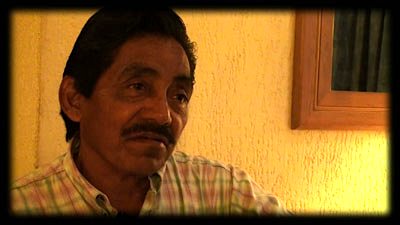
Jesus Hernandez in 2006, News21.comJesus Hernandez Arias is scarcely more than 5 feet tall. He has brown, somewhat leathery, skin, dark eyes and a thick mustache. He smiles rarely with his mouth -– though often with his eyes. When he does open his mouth, he displays a couple of missing teeth, like many people in rural southern Mexico.

He speaks calmly of crossing to the United States, though with reined emotion, as if retelling a poignant scene from a movie he once saw.

He remembers waking up in a white bed: “I couldn’t articulate words. My jaw wouldn’t move. I couldn’t speak. I could feel nothing. The only thing I could feel was the cold.”

Although he did not know it at the time, he had just woken up in St. Mary’s Hospital in Tucson, Ariz.

Hernandez didn’t remember how he had gotten to the hospital. Had he been picked up by an Arivaca resident or perhaps by a member of a humanitarian organization? Who knows -– it might even have been la migra.

The Poblano was not there with him, although he must have seen to Hernandez long enough to make sure his belongings were safely stored beside his hospital bed. Perhaps it was the Poblano who had carried him to safety.

Within days, Hernandez was contacted by Sarah Roberts, a nurse and No More Deaths volunteer, who took charge of his care after his week-long stay at the hospital. No More Deaths, an organization dedicated to humanitarian aid and civil rights for illegal immigrants, supplying them with water, food and medical assistance. Hernandez decided to volunteer with the group while figured out his next move.

One day, a fellow volunteer approached Hernandez, saying he had heard of his mission to help the growers in Veracruz. He mentioned Just Coffee, a co-op with a similar objective: to organize coffee growers and give them economic control over their product.

Hernandez joined the co-op, agreeing to return to Mexico to work at the company’s coffee roasting and packaging facility in Agua Prieta, the border town facing Douglas, Ariz.

But, as luck would have it, Border Patrol agents pulled over the vehicle in which Hernandez was a passenger heading back to Mexico, and took him into Immigration and Customs Enforcement custody.
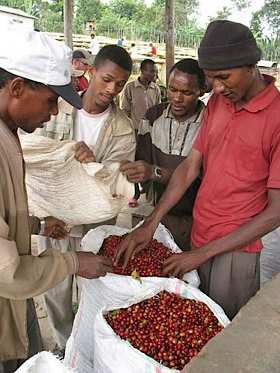
Sidama coffee-coop in Mexico -Just Coffee coop photoHernandez’s experiences in ICE custody and his subsequent deportation only reinforced his resolve to create choices for impoverished Mexican farmers who feel that migrating to the United States is their only option for a better standard of living.

He went to work for Just Coffee at its Agua Prieta and Salvador Urbina locations before returning to help the growers he’d left behind in Veracruz set up their own branch of the co-op.

Then, about a year ago, Hernandez realized that while he was helping dozens of farmers with Just Coffee, he could be helping thousands of impoverished Mexicans under a larger, more organized system.

Today, Hernandez works for AGIRabcd, a nonprofit organization based in France that puts retired workers with specialized skills to work helping others. He promotes agrarian projects and grower-owned commercialization all over Latin America.

He is focusing his efforts in southern Mexico’s Campeche countryside, where he is collaborating with local fruit producers and French AGIRabcd volunteers to build a juice manufacturing plant outside of a small town, aptly named Emiliano Zapata.

Hernandez has not lost his quixotic selflessness and does not feel he ever will.

It is that drive that led him to Emiliano Zapata. (In the small town of Emiliano Zapata, farmers struggle to find a viable way to get their fruit to market. Meanwhile, much of it rots on the ground. A plan to build a processing plant may hold the key to their future.)

(Look for PART 2 of this award-winning series “Crossing Lines”, tomorrow)

_________________________________________________

Journalism student David Kempa of Arizona State won a 2010 Robert F. Kennedy Journalism Award for a three-part series “Crossing Borders,” about immigration issues and one man’s mission to help impoverished Mexican farmers.

Kempa won the RFK award in the collegiate category for focusing on “human rights, social justice and the power of individual action in the United States and around the world.”  The RFK judges, which included Good News Network founder and editor, Geri Weis-Corbley, said, “Illegal immigration is a complicated problem, and Kempa addresses it in a fresh way that contributes to efforts to solve the problem. The reporter found engaging characters and compelling situations. He connected their stories seamlessly, capturing readers’ attention on a vital and heart-rending social issue.”

The story was originally published by the News21.com program for University journalists, a project funded by the Carnegie Corp. and the Knight Foundation, which includes 12 universities, including the Cronkite School at ASU, which is the national headquarters for the initiative.


Nun Gives Prison Moms Second Chance

nun-helps-convict-moms

nun-helps-convict-momsSister Teresa leads a group of New York nuns on a mission to help rehabilitate incarcerated mothers. And their program, Hour Children, is a huge success. More than 30% of women convicts get re-arrested in New York, but the rate for those in the program is just 4%.

The incarcerated women are connected with mentors as they leave prison and enter back into the community. They are given the opportunity to further their education or work in the program’s thrift shop, with a day care-nursery school option that frees mom to explore employment and educational opportunities.

WATCH the video below, or read the story at CBS News

Nun Gives Prison Moms Second Chance

nun-helps-convict-moms

nun-helps-convict-momsSister Teresa leads a group of New York nuns on a mission to help rehabilitate incarcerated mothers. And their program, Hour Children, is a huge success. More than 30% of women convicts get re-arrested in New York, but the rate for those in the program is just 4%.

The incarcerated women are connected with mentors as they leave prison and enter back into the community. They are given the opportunity to further their education or work in the program’s thrift shop, with a day care-nursery school option that frees mom to explore employment and educational opportunities.

WATCH the video below, or read the story at CBS News

South Korea to Send First Food Aid to North Korea in Three Years

korean leaders, 1997 - illustration by Geri

korean leaders, 1997 - illustration by GeriRecently, signs of a thaw have been emerging on the divided Korean peninsula, with Pyongyang making a series of conciliatory gestures, such as releasing South Korean and American detainees and proposing the resumption of stalled joint projects.

South Korea, meanwhile, promised last month to send 10 billion won ($8.5 million) in flood aid to the North.

(READ the AP story in the Boston Herald)

US Proposes First-Ever Emission and Fuel-Efficiency Standards for Trucks and Buses

truck

Coke truckYesterday, the EPA and Department of Transportation proposed the first national  greenhouse gas emission standards and fuel efficiency improvements for medium and heavy-duty trucks, vans, and buses starting in 2014.

The historic step addresses vehicles previously excluded from America’s fuel economy guidelines.

5-Year-old Donates Birthday Money to Charity

Ronald Mcdonald House 5-year-old donator- NBCvid

Ronald Mcdonald House 5-year-old donator- NBCvidIn a year when gifts are down for the biggest US charities, three generous donations were featured on the Today show, including a 5-year-old boy who decided to give his old toys — and forego new ones on his birthday — to help the Ronald McDonald House charity.

Another of the gifts was from a pair of newlyweds who became homeless shortly after their wedding, but who have pledged to give $5,000 each year to the Salvation Army, who helped them when they were down.

WATCH the video below from MSNBC

5-Year-old Donates Birthday Money to Charity

Ronald Mcdonald House 5-year-old donator- NBCvid

Ronald Mcdonald House 5-year-old donator- NBCvidIn a year when gifts are down for the biggest US charities, three generous donations were featured on the Today show, including a 5-year-old boy who decided to give his old toys — and forego new ones on his birthday — to help the Ronald McDonald House charity.

Another of the gifts was from a pair of newlyweds who became homeless shortly after their wedding, but who have pledged to give $5,000 each year to the Salvation Army, who helped them when they were down.

WATCH the video below, or on MSNBC

Good News: Instant Run-off Voting to be Used in North Carolina

vote-button-lrg

vote buttonOn Nov. 2, instant run-off voting, in which voters rank candidates in order of preference, and the winner is picked by tallying second and third choices, will be used for the first time in a statewide election.

It’s a small race—North Carolina court of appeals judge—but proponents hope it will encourage the more than 20 states that have mulled the system since 2000.

One of the important advantages of instant run-offs is the boost it gives to third party voting. At the poll, you can vote your conscious — for instance, a Liberal can choose the green party candidate — but, also choose a second favorite choice, in the case that the Green candidate doesn’t get enough votes to win.

(READ the report at Newsweek)

Protesting Chicago Moms Prove Love’s Power to Win Justice

love sign

protest-sign-loveA scrappy group of moms and their grade school kids in Chicago have shown the nation what determined activism powered by love can do.

Families in a largely Mexican-American, working class community are fighting to defend an old building on the grounds of Whittier Elementary School from a planned demolition. 

Instead, they want the city to use the building to add a library there for the school students, who have none currently.

The moms have occupied the building for 37 days, and begun a lending library on their own, using 1,000 books donated from around the city.

They won concessions already and are meeting with the Chicago school officials on Wednesday to see if an agreement can be reached.

(READ the story in ColorLines blog)

Recycle Old Furs Into Bedding for Injured Animals

coats-for-cubs

coats-for-cubsIs your grandmother’s mink stored away in the attic? Maybe not, but with so many people relegating fur coats — theirs, or a loved one’s — to the back of the closet, the Humane Society hopes to round up piles of pelts in their renewed Coats for Cubs recycling program.

Wildlife rehabilitators know that injured baby possums and orphaned raccoons naturally respond when their boxes are lined with remnants of fur clothing.

The Humane Society along with second-hand retailer Buffalo Exchange will host another fur recycling initiative, which provides bedding and comfort to orphaned and injured wildlife and also offers the added benefit of a tax credit for those who donate. (Watch the video below.)

Recycle Old Furs Into Bedding for Injured Animals

coats-for-cubs

coats-for-cubsIs your grandmother’s mink stored away in the attic? Maybe not, but with so many people relegating fur coats — theirs, or a loved one’s — to the back of the closet, the Humane Society hopes to round up piles of pelts in their renewed Coats for Cubs recycling program.

Wildlife rehabilitators know that injured baby possums and orphaned raccoons naturally respond when their boxes are lined with remnants of fur clothing.

The Humane Society along with second-hand retailer Buffalo Exchange will host another fur recycling initiative, which provides bedding and comfort to orphaned and injured wildlife and also offers the added benefit of a tax credit for those who donate. (Watch the video below.)

University of Tennessee to Recycle 50 Tons on Game Days This Season

Photo from UT Recycling, game-day means extra bins

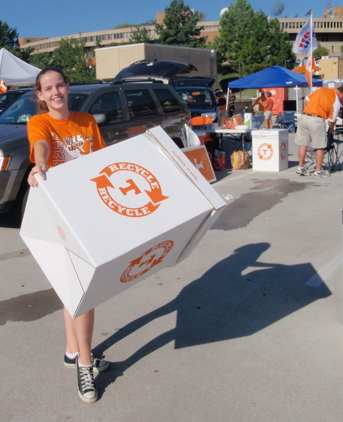
Photo from UT Recycling, game-day means extra binsThe University of Tennessee is claiming a big victory this football season, no matter what scoring takes place on the field.

Last year, UT Recycling, the campus crew in charge of recycling, collected 35 tons of cans, bottles, plastic and paper during the football season. But this year, with 500 recycling bins in tailgate areas alone, up from 125 last year, the effort is on track to redirect a record 50 tons of material that would otherwise end up in landfills.

University of Tennessee to Recycle 50 Tons on Game Days This Season

Photo from UT Recycling, game-day means extra bins

Photo from UT Recycling, game-day means extra binsThe University of Tennessee is claiming a big victory this football season, no matter what scoring takes place on the field.

Last year, UT Recycling, the campus crew in charge of recycling, collected 35 tons of cans, bottles, plastic and paper during the football season. But this year, with 500 recycling bins in tailgate areas alone, up from 125 last year, the effort is on track to redirect a record 50 tons of material that would otherwise end up in landfills.

Taiwanese Woman to Marry Herself

daisies-on-table

daisies-on-tableChen Wei-yih purchased the flowing white dress, enlisted a wedding planner and rented a banquet hall for a marriage celebration with 30 friends.

But there is no groom. Chen will marry herself.

Uninspired by the men she’s met but facing social pressure to get married, the 30-year-old woman says, “It’s not that I’m anti-marriage. I just hope that I can express a different idea within the bounds of a tradition.”

(READ the Reuters story at the UK’s Telegraph)

First Torah Ever Created by Women Debuts in Washington

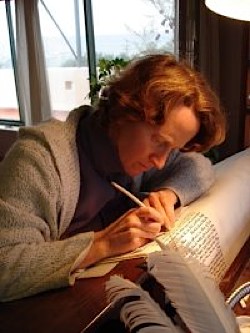
The Women's Torah project trained Shoshana Gugenheim as a scribe

The Women's Torah project trained Shoshana Gugenheim as a scribeJewish women have never been allowed to create a Torah, or even buy the parchment.

But this week, a Seattle group spearheaded by Wendy Graff has completed the first known Torah scribed by women. The project, which has been a collaboration of women from around the world, has cost $100,000 and taken nearly eight years to complete.

Earlier in the week, women arrived from Israel, Brazil, Canada and across the United States to witness the 62 parchment panels of the Women’s Torah Project being stitched together. Yesterday the women read from it during a Sabbath service for the first time at Hillel UW, near the University of Washington campus.

(WATCH the video below, and read the story w/ photos in the Seattle Times)

Photo: The project paid for the training of scribes, like Shoshana-Gugenheim.

First Torah Ever Created by Women Debuts in Washington

The Women's Torah project trained Shoshana Gugenheim as a scribe

The Women's Torah project trained Shoshana Gugenheim as a scribeJewish women have never been allowed to create a Torah, or even buy the parchment.

But this week, a Seattle group spearheaded by Wendy Graff has completed the first known Torah scribed by women. The project, which has been a collaboration of women from around the world, has cost $100,000 and taken nearly eight years to complete.

Earlier in the week, women arrived from Israel, Brazil, Canada and across the United States to witness the 62 parchment panels of the Women’s Torah Project being stitched together. Yesterday the women read from it during a Sabbath service for the first time at Hillel UW, near the University of Washington campus.

(WATCH the video below, and read the story w/ photos in the Seattle Times)

Photo: The project paid for the training of scribes, like Shoshana-Gugenheim.

NBC is Developing ‘The Happiness Project’ for TV

smiling-white-shirt

Photo by Sun StarThe book The Happiness Project is in development to become a new NBC TV show based on the best-selling memoir by Gretchen Rubin about her year-long quest to find ways to become happier person.

Sex and the City star Kristin Davis will star in the half-hour project.

The book by Rubin, who was once a law clerk for Supreme Court Justice Sandra Day O’Connor, came out in December 2009 and immediately hit the NY Times Bestseller List reaching #1.

Gretchin Tweeted today that she is still in shock over the successful TV deal.

In August, one of Rubin’s articles was reprinted in the Good News Network: 12 Tips for Getting Regular Exercise — and the Benefits for Happiness

(READ more about the TV show in the Hollywood Reporter)

Photo by Sun Star

NBC is Developing ‘The Happiness Project’ for TV

smiling-white-shirt

Photo by Sun StarThe book The Happiness Project is in development to become a new NBC TV show based on the best-selling memoir by Gretchen Rubin about her year-long quest to find ways to become happier person.

Sex and the City star Kristin Davis will star in the half-hour project.

The book by Rubin, who was once a law clerk for Supreme Court Justice Sandra Day O’Connor, came out in December 2009 and immediately hit the NY Times Bestseller List reaching #1.

Gretchin Tweeted today that she is still in shock over the successful TV deal.

In August, one of Rubin’s articles was reprinted in the Good News Network: 12 Tips for Getting Regular Exercise — and the Benefits for Happiness

(READ more about the TV show in the Hollywood Reporter)

Photo by Sun Star