All News - Page 1433 of 1716 - Good News Network
Home Blog Page 1433

Government Investments in Electric Batteries Start to Pay Off

electric-battery-obama-opening-_WH_copy

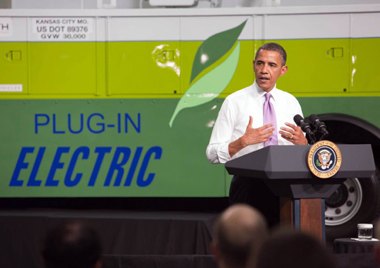
electric-battery-obama-opening-_WH_copyCoinciding with President Obama’s trip to Holland, MI last week for the official groundbreaking of a new electric car battery plant, a federal report was released detailing the economic impact of Recovery Act investments in advanced batteries and electric vehicles. Before the Recovery Act grants, the report says, there were no domestic factories producing high-volumes of batteries for electric vehicles, but with the federal investments, the U.S. will have the capacity to produce up to 40 percent of the world’s batteries by 2015.  

The Department of Energy report, “Recovery Act Investments: Transforming America’s Transportation Sector,” documents how $2.4 billion in Recovery Act funds are being matched with private capital to create new jobs, construct new plants, add new manufacturing lines, install electric vehicle charging stations across the country and help build the emerging domestic electric vehicle industry from the ground up.

More Good News About Body Image: A Mental Health Minute

Photo by lcmatt via Morguefile.com

Photo by lcmatt via Morguefile.comIn a follow-up article for the Good News Network, Cristina Frick, having just completed her Master’s degree in Clinical and Community Psychology, compiles a slew of good news about campaigns that help women and young girls build confidence in their own bodies.

A  Mental Health Minute

Against the backdrop of 10 million women dealing with eating disorders in the US alone, the Delta Delta Delta sorority helped launch the Reflections Body Image Program to focus on the health, wellness, and positive body image of young women in sororities across the United States. As a research-based program designed to prevent eating disorders, the campaign’s effectiveness was proven quite successful in empirical research.

In fact, the statistics of this program, created in collaboration with Dr. Carolyn Becker, professor of psychology at Trinity University, are truly amazing. For example, at one college, 48 percent of participants said they felt fat almost every day. Eight months later, the Reflections program had reduced by more than half the number of times these same participants felt that way, and some of the young women never had negative thoughts about themselves again — pretty powerful statistics.

More Good News About Body Image: A Mental Health Minute

Photo by lcmatt via Morguefile.com

Photo by lcmatt via Morguefile.comIn a follow-up article for the Good News Network, Cristina Frick, having just completed her Master’s degree in Clinical and Community Psychology, compiles a slew of good news about campaigns that help women and young girls build confidence in their own bodies.

A  Mental Health Minute

Against the backdrop of 10 million women dealing with eating disorders in the US alone, the Delta Delta Delta sorority helped launch the Reflections Body Image Program to focus on the health, wellness, and positive body image of young women in sororities across the United States. As a research-based program designed to prevent eating disorders, the campaign’s effectiveness was proven quite successful in empirical research.

In fact, the statistics of this program, created in collaboration with Dr. Carolyn Becker, professor of psychology at Trinity University, are truly amazing. For example, at one college, 48 percent of participants said they felt fat almost every day. Eight months later, the Reflections program had reduced by more than half the number of times these same participants felt that way, and some of the young women never had negative thoughts about themselves again — pretty powerful statistics.

81 Year Old Sweethearts Reunite after 62 years


A short film by Danielle Lurie, a filmmaker who happened to be in the right place at the right time.

Gulf Waters Open For Recreational Fishermen

fishing on the beach by Wax115 via Morguefile

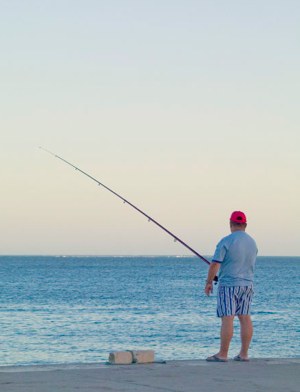
photo by wax115 via morguefile.comAs the BP fix continues to keep oil from leaking in the Gulf, there is a bit of new hope in the area with some waters reopening to recreational fishing.

For people in Louisiana, this weekend has been very good, the first good weekend in months. Recreational fishermen were given the green light to head out on the water and cast away.

As NPR’s Russell Lewis reports now from Grand Isle, Louisiana, it’s the first time in a long time people had news to be happy about.

(READ or listen to the story on NPR)

IPhone App Scans Food For Better Health

iscan-food-app

iscan-food-appA new iPhone app dissects packaged food ingredients to provide information on harmful additives, toxic ingredients and genetically modified foods. The iScanMyFood app was released by IQ Advanced of San Diego, CA to allow consumers to learn more about the ingredients in the food and beverages purchased every day at the supermarket.

Not a bar code reader, it is rather an OCR (optical character reader) using advanced technology using the iPhone camera. The photo is then converted into text and processed through a proprietary software which pulls matching additives from a database and presents them to the end user as results. These results can then be named and saved in a personal database and also emailed for further research. 

Westerners Rally to Bring Free Hay to Horse Owners in Need

horse-haybank-founder-nbcvid

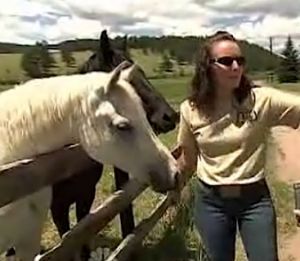
horse-haybank-founder-nbcvidHorses cost much more to feed than normal house pets  — at least one hundred dollars for bales of hay every month. Out of the recent recession a Colorado woman has emerged to help horse owners keep four-legged family members fed.

Since January, her non-profit Hay Bank has helped 30 horse owners who have fallen, due to illness or job loss, on hard times. Recently Amy drove four hours to deliver hay to a woman she’d never met.

WATCH the Making a Difference video below, or on MSNBC

Westerners Rally to Bring Free Hay to Horse Owners in Need

horse-haybank-founder-nbcvid

horse-haybank-founder-nbcvidHorses cost much more to feed than normal house pets  — at least one hundred dollars for bales of hay every month. Out of the recent recession a Colorado woman has emerged to help horse owners keep four-legged family members fed.

Since January, her non-profit Hay Bank has helped 30 horse owners who have fallen, due to illness or job loss, on hard times. Recently Amy drove four hours to deliver hay to a woman she’d never met.

WATCH the Making a Difference video below, or on MSNBC

BP Oil Cap Shows No Sign of New Leaks

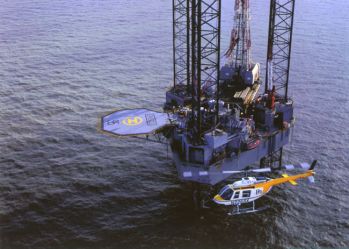
rig-gulf-of-mexico-NOAA

rig-gulf-of-mexico-NOAABP was encouraged Saturday as the final hours ticked away on a two-day trial run of a massive cap on its busted Gulf of Mexico well, saying there no signs of new leaks and oil was being kept out of the water.

Kent Wells, a BP PLC vice president, said there was no evidence from an array of pressure, temperature, sonar and other readings that oil was escaping through the sea floor or anywhere else in the well.

(READ the AP story at NPR)

Tesla to Build Electric Rav4 for Toyota

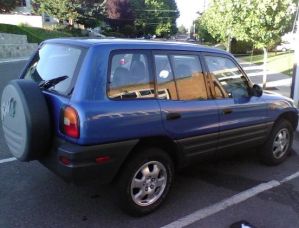
toyota-electric-rav4-CC-mediaguru

toyota-electric-rav4-CC-mediaguruTesla Motors will produce the electric Rav4 crossover SUVs for Toyota Motor Co. beginning in 2012, the two companies announced Friday.

A fleet of electric Rav4 prototypes will be delivered later this year, while the first prototype has already been built, they said, and is undergoing evaluation. The SUVs will be built in California.

Toyota announced in May that it planned to invest $50 million in Tesla Motors  upon the completion of the electric car maker’s initial public offering, which took place on June 29.

(READ the story in CNN Money)

Image by mediaguru, Creative Commons license (2.0)

Ford Invents Eco-Friendly Soy Rubber

Ford-Interior-2009

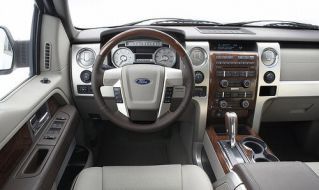
Ford-Interior-2009Ford Motor Company researchers have engineered a formula to use renewable soy oil to improve rubber car parts making them more environmentally friendly.

By using renewable soy oil as a replacement for 25 percent of the petroleum oil used in rubber, Ford more than doubles the material’s stretchability and helps reduce the carbon emissions from its raw materials. The new formula can be used in automotive parts such as deflector shields and baffles, radiator deflector shields, cupholder inserts and floor mats.

According to the International Rubber Study Group, the automotive sector accounts for more than 50 percent of worldwide rubber consumption, which exceeded 22 million metric tons in 2008.

Ford also was the first automaker to demonstrate that soy-based foams could be formulated to pass stringent requirements for automotive applications, starting with seats for the 2008 Ford Mustang later on Ford Escapes and Mercury Mariners.

Using bio foam on more than 2 million vehicles, Ford has annually reduced its petroleum oil usage by more than 3 million pounds and its carbon dioxide emissions by 11 million pounds.

The use of soy content in automotive applications also supports American farmers. The United Soybean Board works with Ford in an effort to get more soy-based products to market.

Ford also is looking at the use of other renewable sources for foam, including grape seed and sunflower oil. In addition to bio foam, the company is working with post-consumer recycled resins to make underbody systems, post-industrial recycled yarns for seat fabrics, repurposed nylon carpeting made into nylon resin and molded into cylinder head covers, and wheat straw-reinforced plastic parts.

The use of recycled or renewable content is making a positive impact on the environment and Ford’s bottom line. In 2009, Ford reduced the amount of automotive-related plastics to landfills by nearly 30 million pounds and saved approximately $4.5 million by reusing recycled materials.

Ford Invents Eco-Friendly Soy Rubber

Ford-Interior-2009

Ford-Interior-2009Ford Motor Company researchers have engineered a formula to use renewable soy oil to improve rubber car parts making them more environmentally friendly.

By using renewable soy oil as a replacement for 25 percent of the petroleum oil used in rubber, Ford more than doubles the material’s stretchability and helps reduce the carbon emissions from its raw materials. The new formula can be used in automotive parts such as deflector shields and baffles, radiator deflector shields, cupholder inserts and floor mats.

New York Opens its First Electric Vehicle Charging Station

Mayor Bloomberg w/ electric-car charger, Spencer Tucker photo

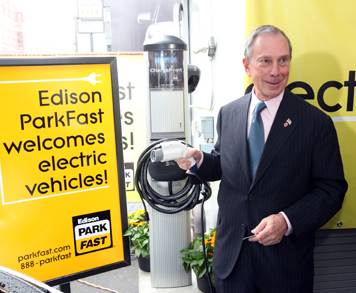
electric-car-charger-bloomberg-spencer-tuckerMayor Bloomberg opened the city’s first electric-vehicle charging station at a commercial parking lot, adding some spark to a nationwide push to boost infrastructure for electric cars.

Forty chargers will be installed for New York City-owned electric cars and hybrid fleets, alone. Chargers will also be installed in public parking lots so cars can be recharged while people work and in private garages, such as those under apartment buildings — more than 100 stations throughout the NYC metropolitan area by 2011.

With matching grants from the American Recovery and Reinvestment Act, Coulomb Technologies will provide nearly 5,000 of its ChargePoint charging stations in nine US cities: Austin, Texas, Detroit, Los Angeles, New York, Orlando, Fla., Sacramento, California, the San Jose/San Francisco Bay Area, Bellevue/Redmond, Wash., and Washington DC. The program, called ChargePoint America, is a strategic partnership between Coulomb and three leading automobile makers: Ford, Chevrolet and Smart USA.

ChargePoint Network is open to all drivers of plug-in vehicles and provides:

* Charging status by SMS text or email notification
* Location of unoccupied charging stations via smart phones
* A ChargePoint iPhone and Blackberry App
* Authenticated access to eliminate energy theft and optimize safety

The NYC charging station was unveiled yesterday at an Edison Properties parking facility at 451 9th Avenue in Manhattan.

(READ more of the story in CS Monitor)

New York Opens its First Electric Vehicle Charging Station

Mayor Bloomberg w/ electric-car charger, Spencer Tucker photo

electric-car-charger-bloomberg-spencer-tuckerMayor Bloomberg opened the city’s first electric-vehicle charging station at a commercial parking lot, adding some spark to a nationwide push to boost infrastructure for electric cars.

Forty chargers will be installed for New York City-owned electric cars and hybrid fleets, alone. Chargers will also be installed in public parking lots so cars can be recharged while people work and in private garages, such as those under apartment buildings — more than 100 stations throughout the NYC metropolitan area by 2011.

With matching grants from the American Recovery and Reinvestment Act, Coulomb Technologies will provide nearly 5,000 of its ChargePoint charging stations in nine US cities: Austin, Texas, Detroit, Los Angeles, New York, Orlando, Fla., Sacramento, California, the San Jose/San Francisco Bay Area, Bellevue/Redmond, Wash., and Washington DC. The program, called ChargePoint America, is a strategic partnership between Coulomb and three leading automobile makers: Ford, Chevrolet and Smart USA.

ChargePoint Network is open to all drivers of plug-in vehicles and provides:

* Charging status by SMS text or email notification
* Location of unoccupied charging stations via smart phones
* A ChargePoint iPhone and Blackberry App
* Authenticated access to eliminate energy theft and optimize safety

The NYC charging station was unveiled yesterday at an Edison Properties parking facility at 451 9th Avenue in Manhattan.

(READ more of the story in CS Monitor)

Seeds of Peace Camp: Sowing Tolerance Among Former Foes

Bobbie Gottschalk

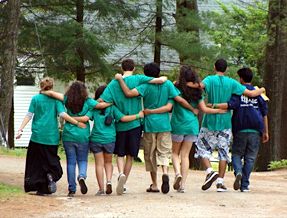
2010 camp photo by Bobbie GottschalkWhile governments can do important work to promote it, peace, tolerance and understanding come mostly from people. That’s why the South Asian Seeds of Peace participants will be important messengers in countries back home — Afghanistan, India and Pakistan.

This week, teenagers complete a three-week camp program in Maine designed to promote conflict resolution and mutual understanding. They were joined at the camp by Palestinian, Israeli, Egyptian and American teens.

2010 camp photo by Bobbie Gottschalk

“During your weeks at camp you established new friendships that cross borders and barriers,” a State Department official told the campers in a gathering on Wednesday.

Seeds of Peace “is more than a summer program,” said Under Secretary of State for Public Affairs and Public Diplomacy Judith McHale. “It is dedicated to empowering young leaders from regions of conflict with the leadership skills required to advance reconciliation and coexistence.”

The South Asian participants were among 164 campers who arrived at the Otisfield, Maine, camp on June 23 for the program’s 18th season. Beginning with 46 Israeli, Palestinian and Egyptian teenagers in 1993, the Seeds of Peace alumni includes more than 4,000 young people, some of whom now serve as camp counselors or work elsewhere within the organization.

With support from the State Department, the program was expanded to include participants from South Asia, beginning in 2001.

Now ambassadors for the program, each of the participants began their journey at a flag-raising ceremony on the first day of their camp experience. A second-year female participant from Egypt told the participants who are idealistically expecting peace that it will be an elusive goal, but that the program nevertheless asks them to courageously pursue it.

“The only thing you can do is carry on,” she said. “We live in a world of atrocities. The journey you are embarking on is not easy. But if you want to enjoy the honey, you must endure the sting of the bee.”

“Be brave. You are blessed to be here. Bloodshed and hate and war are not inevitable. We are the Seeds of Peace.”

According to a July 14 State Department media note, participants remain in touch with each other after their camp experience, both online and through digital videoconferences, as well as face to face through home stays and regional programs.

The visit to Washington at the conclusion of their camp experience allows them to share their experiences and gain exposure to U.S. policymakers. Along with the State Department, the ‘Seeds’ also visit the White House and meet with members of the U.S. Congress.

Addressing the Seeds, Assistant Secretary for South and Central Asian Affairs Robert Blake said, “All of you are really going to be serving as important bridges between all of your three countries.”

(Produced by seedsofpeace.org, edited by Good News Network)

Seeds of Peace Camp: Sowing Tolerance Among Former Foes

Bobbie Gottschalk

2010 camp photo by Bobbie GottschalkWhile governments can do important work to promote it, peace, tolerance and understanding come mostly from people. That’s why the South Asian Seeds of Peace participants will be important messengers in countries back home — Afghanistan, India and Pakistan.

This week, teenagers complete a three-week camp program in Maine designed to promote conflict resolution and mutual understanding. They were joined at the camp by Palestinian, Israeli, Egyptian and American teens.

2010 camp photo by Bobbie Gottschalk

Paul Allen Pledges Majority of his Billions to Philanthropy

NICE license plate

nice-license-plateWealthy Microsoft co-founder Paul Allen has taken up his friend Bill Gates’ challenge to publicly pledge the majority of his wealth to philanthropy.

Allen, who is 57, said yesterday that he plans to leave the majority of his $13 billion estate to philanthropy to continue the work of his foundation and to fund scientific research. It was also a way of marking the 20th anniversary of the Paul G. Allen Family Foundation, which he started in 1990 and has since given 3,000 grants totaling about $400 million.

His total giving over the years has reached about $1 billion, reflecting eclectic interests in science, the arts and education, including nonprofits he founded: the Allen Institute for Brain Science and the Experience Music Project.

(READ more in the Seattle Times)

BP Strikes Success, Stops Oil From Leaking

BP underwater photo today

BP underwater photo todayThis afternoon, BP was able to test a containment cap on the blown-out well in the Gulf of Mexico, after a series of problems and delays. Now, for the first time in months, there is no oil flowing into the Atlantic Ocean, the company says.

NPR’s Richard Harris said that, half an hour ago, he was watching live footage of the well when “the huge clouds of oil just simply stopped flowing.”

This was part of the test, as BP measures pressure in the well to see how it’s holding. Higher pressure readings mean the well is containing the oil, while lower pressure means some is leaking out. At the moment, it is “too soon” to conclude results, BP said. BP will formally review data from the test with government officials every six hours, Suttles said, so a key time will occur later Thursday night, said CNN on their website.

(READ the story at NPR.org)

Solar Powered Roads Can Collect Electricity, Melt Snow, and Wake Sleepy Drivers

solar-roadways

solar-roadwaysAn Idaho man envisioned “electric roads” way back in his early childhood. Now, in his own state-of-the-art electronics lab, he is building the panels for a solar roadway he hopes will make petroleum-based asphalt obsolete.

Scott Brusaw’s Solar Roadways company is busy with a prototype incorporating all the best ideas for highway design: Roads and sidewalks embedded with solar cells to collect energy, which could pay for the cost of the panels; heating elements in the surface to eliminate the need for snow plows; and LEDs embedded to provide illuminated road lines that light up the road for safer driving at night.

Solar Powered Roads Can Collect Electricity, Melt Snow, and Wake Sleepy Drivers

solar-roadways

solar-roadwaysAn Idaho man envisioned “electric roads” way back in his early childhood. Now, in his own state-of-the-art electronics lab, he is building the panels for a solar roadway he hopes will make petroleum-based asphalt obsolete.

Scott Brusaw’s Solar Roadways company is busy with a prototype incorporating all the best ideas for highway design: Roads and sidewalks embedded with solar cells to collect energy, which could pay for the cost of the panels; heating elements in the surface to eliminate the need for snow plows; and LEDs embedded to provide illuminated road lines that light up the road for safer driving at night.