











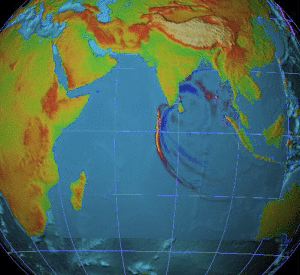
 The devastating tsunami that hit Indonesia so hard in December 2004 had three positive effects: it pushed the population to reflect and improve its mechanisms for managing catastrophes, it caused a new early warning detection system to be launched, and it led to the end of a conflict in the country’s Aceh province, one that had lasted 70 years.
Caused by an earthquake off the coast of Aceh in western Indonesia, the tsunami sent waves reaching as high as 30 meters surging over all the lands within its reach including as far as Africa. Nearly 230,000 people in 11 countries were killed.
“After the tsunami, Indonesia’s Parliament and civil society worked together to put in place a law on the management of catastrophes, something that had never happened before,” said Titi Moektijasih, from the Office for the Coordination of Humanitarian Affairs.
As a tsunami victim herself and the sole survivor of three OCHA staff in the area, Titi, spoke today on World Humanitarian Day, explaining that even two years ago it was very difficult for her to recount her experience.


 As food bank shelves quickly empty during the recession and more people need help to feed their families, prisons are providing a partial solution.