












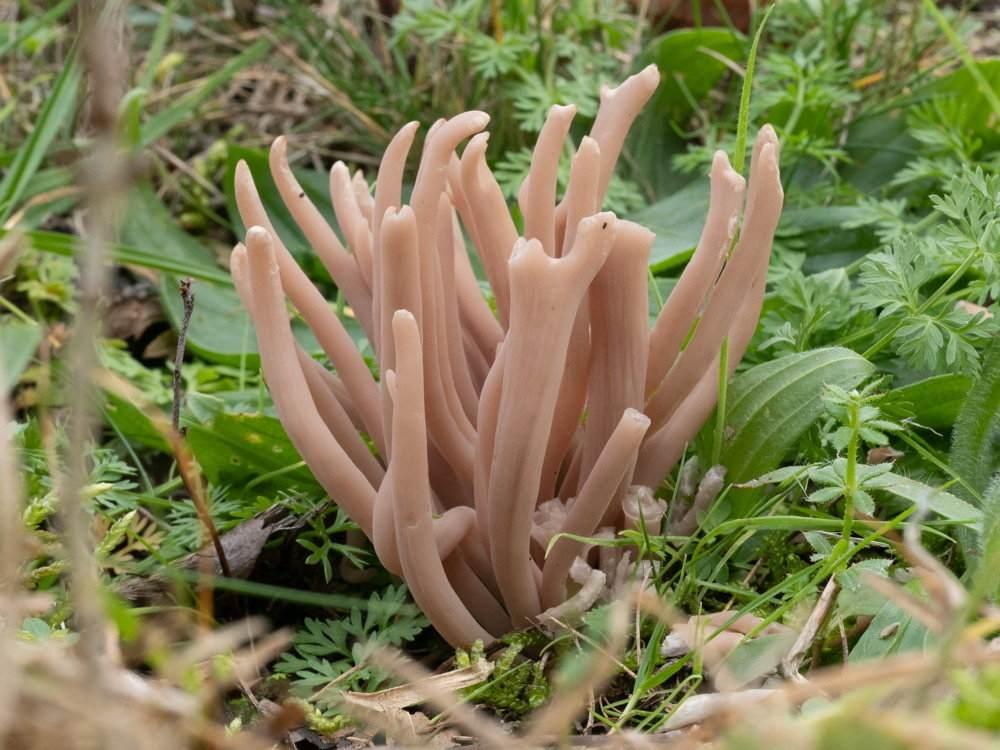
A rare, pale pink, fairy club fungus native to Italy was found during a mushroom survey in England last autumn, the first recording sighting anywhere in Great Britain.
The tennis ball-sized fungus has now been confirmed through DNA testing, as there are other species that look similar to it.
The “exceptional” discovery was made by a group of Naturewatch volunteers from Somer Valley Rediscovered in England’s southwest.
DNA extraction was done in Scotland and then sent to the University of Aberystwyth in Wales for sequencing, making the discovery a truly pan-British effort.
“This discovery further demonstrates that the South West is home to some of the most spectacular and diverse examples of these unique grassland fungi communities anywhere on the planet,” a local enthusiast named Dan Nicholas who led the mushroom survey told England’s Southwest News Service.
“We are truly blessed to have such a colorful spectacle of nature’s calendar right on our doorstep, something we need to cherish and protect at all costs.”
Clavaria calabrica is a small member of an informal group of fungi called fairy clubs, or coral fungi, that was first identified by scientists in Italy in 2017. Clava is the Latin word for “club,” and calabrica refers to the Italian region of Calabria.
It is usually found in grasslands that have been managed gently over time and are rich in wildlife. While the species has previously been recorded in Northern Ireland, this is the first time it has been confirmed in mainland Britain.
The fungus was discovered as part of the Somer Valley Rediscovered project, a partnership made up of local town and parish councils that aims to improve biodiversity whilst better connecting communities to their local green spaces and landscapes.
CRAZY BRITISH MUSHROOMS: Giant Puffball Mushroom Feeds Her Family for a Week
People across the region are being encouraged to take part in the West of England Wildlife Index, a citizen science program tracking wildlife at 20 sites across West England, contributing to the region’s State of Nature report.
Volunteers are asked to help count bees, butterflies, plants and wetland birds as part of well-established national monitoring programs, with guidance and support from the project’s ecologist.
FUN(GI) STORIES: Bionic Arms Enable Mushrooms to Create Music Using Their Own Energy (LISTEN)
“Finding a species never before recorded in Great Britain here in the West is something we can all be proud of. This shows again just how rich and unique landscapes across our region can be,” said Helen Godwin, Mayor of the West of England, a combined administrative authority that makes up Somerset but also Bristol and other areas around the River Avon.
“The work of the West of England Nature Partnership helps make sure these habitats are understood and protected. I encourage everyone to get involved in the West of England Wildlife Index, helping us record and safeguard the nature that makes our region so special.”
MAKE Room For This Mushroom On Your Social Media Channels Below…