













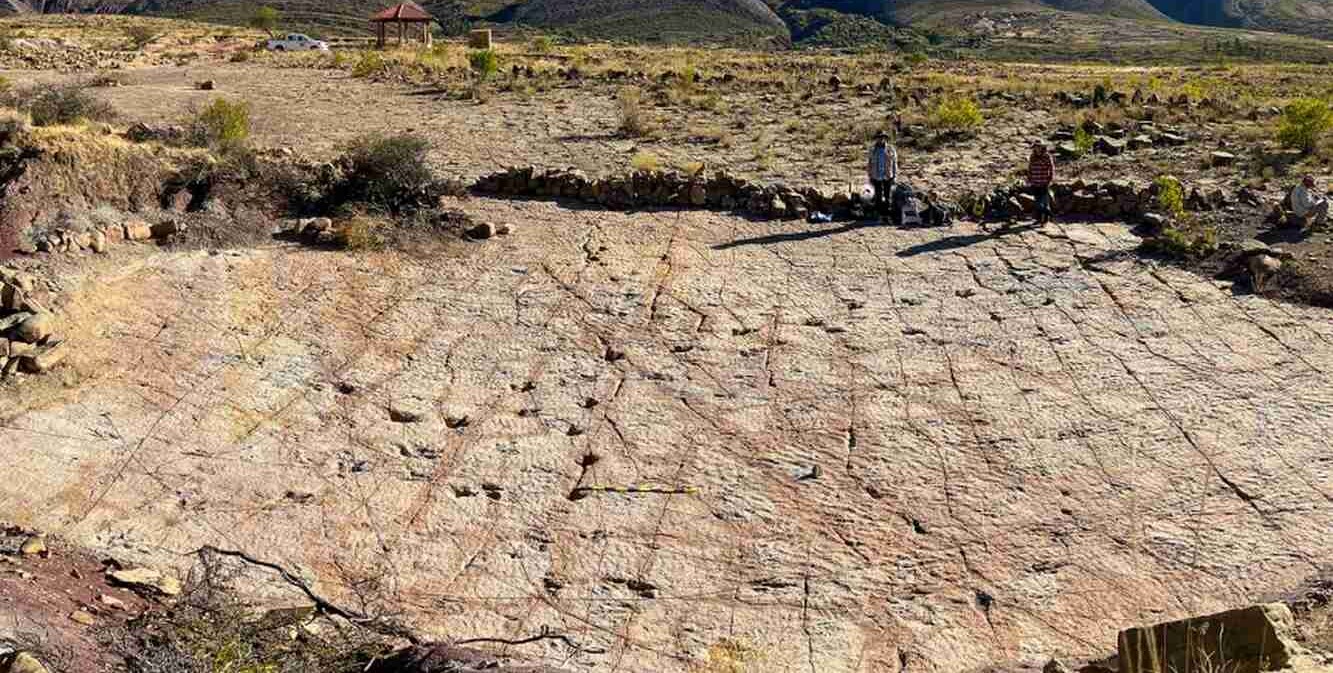
In Bolivia, the largest number of dinosaur footprints ever recorded in a single spot is yielding fascinating insight on how these prehistoric animals moved in a way that bones just can’t.
16,600 footprints, forming dozens of “trackways,” have been so far documented on what would have been the muddy floor of a waterway along what is now the coastline in Bolivia’s Carreras Pampas.
If a skeleton shows what a dinosaur could do, tracks show what they actually did; and while bones may be transported from the location of death through environmental events, a footprint provides perfect evidence of where exactly a dinosaur was at a given time.
These and other aspects of the tracks are why this site in the Torotoro National Park in Bolivia has paleontologists so excited.
The tracks were made by theropods, the bipedal meat-eating dinosaurs that included T. rex. Some were isolated, some moved back and forth, some were made while the animals were swimming or wading, and yet more may show theropods moving in groups.
“Everywhere you look on that rock layer at the site, there are dinosaur tracks,” said study coauthor Dr. Jeremy McLarty, an associate professor of biology and director of the Dinosaur Science Museum and Research Center at Southwestern Adventist University in Texas.
Speaking with CNN, Dr. McLarty said that most of the tracks were traveling north-northwest or southeast, had been made over a short period of time, and may have been part of a long stretch of open country used by these animals in migratory routes to as far south as Argentina.
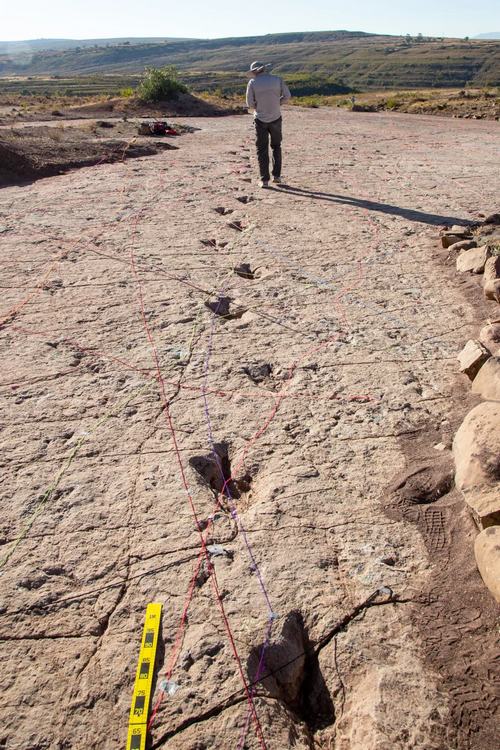
The tracks can show so much about the animal that made them. The size of the prints can estimate the size of the theropod, while the space between prints can suggest the speed of their movement. As a trackway turns and bends, researchers can estimate the hip flexibility of the dinosaur, while traces of a tail dragging behind or the individual impression of each toe shows various gaits that might infer an injury, a posture, or the type of terrain that was present when the tracks were made.
Of their age, Dr. McLarty and his team estimate they were made between 100 and 66 million years ago at the end of the Cretaceous Period.
MORE DINOSAUR TRACKWAYS:
- Family Discovers 8 Huge Dinosaur Footprints While Walking on Eroded Beach (Photos)
- 100 Million-Year-Old Footprints of Giant Dinosaur Found at Restaurant in China
- Watch How Texas Man Found Huge Dinosaur Tracks in Riverbed Dried From Drought
Several paleontologists spoke with CNN who weren’t involved in the trackway analysis, published in PLOS One, and they expressed their supreme eagerness to learn more about the various theropod species which made the imprints, some of which could have been as short as two-feet tall at the hip, while others might have been three-feet tall.
“Tracks don’t move,” McLarty said. “When you visit Carreras Pampas, you know you are standing where a dinosaur walked.”
SHARE This Great Discovery With Dino-Fans And Bolivia Travelers…