

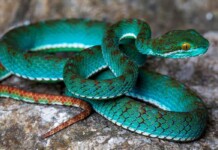










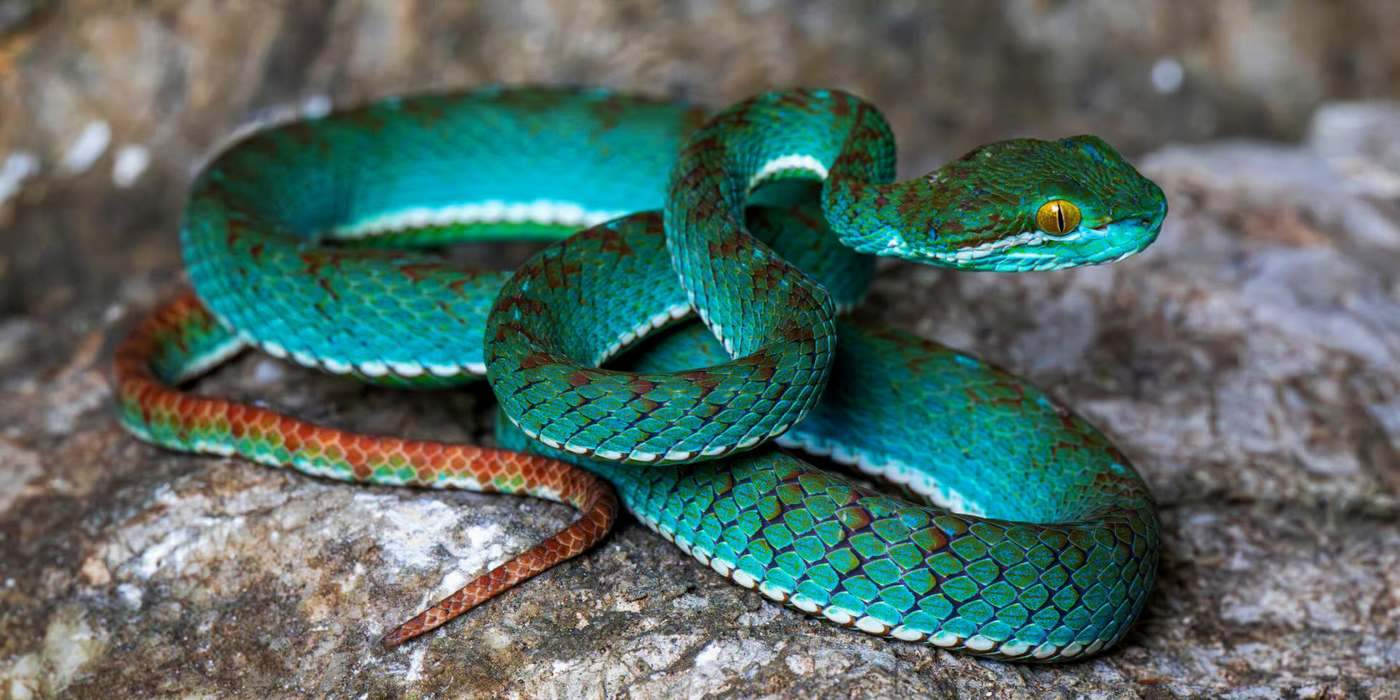
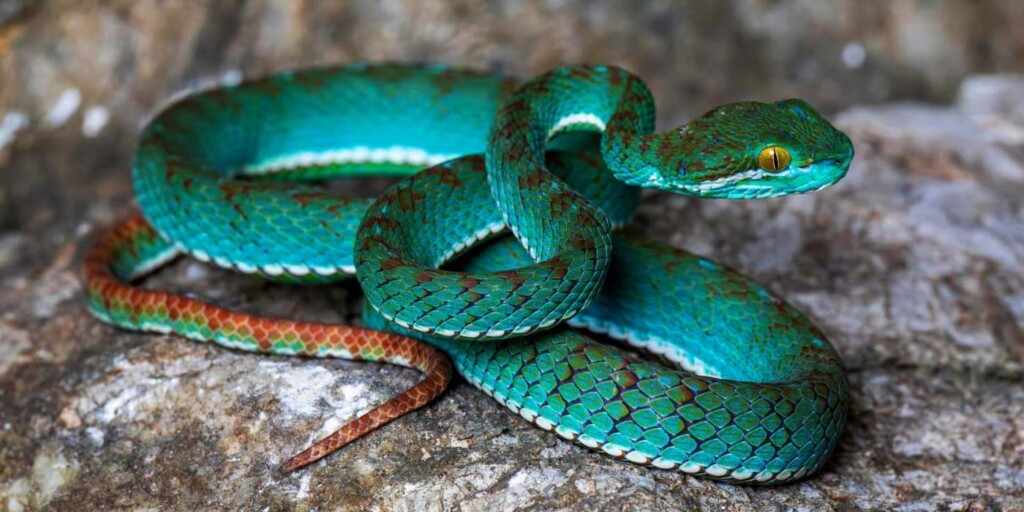
A breathtaking expedition high among limestone escarpments and deep in the cave systems they contain has revealed several new reptile species, including a dazzling pit viper you have to see to believe.
Exploring over 60 caves across 10 hills in the Battambang province, western Cambodia, the survey uncovered a treasure trove of extraordinary creatures besides, many found nowhere else on Earth.
The survey was led by Fauna & Flora International in collaboration with Cambodia’s Ministry of Environment and field experts. The team identified 6 new geckos, 2 micro-snails, and 2 millipedes in addition to the viper.
They also confirmed the presence of many threatened species in the landscape surrounding the caves—such as the Sunda pangolin, Indochinese silvered langur, long-tailed macaque, and green peafowl, further highlighting the critical need to protect this habitat.
Karst covers 20% of the Earth’s landscape. This soluble bedrock made of limestone has created some of the most spectacular rocky landscapes on Earth—including the upturned egg cartons shapes along the great South China Karst, Ha Long Bay in Vietnam, Tsingy de Bemaraha in Madagascar, The Burren in western Ireland, the world’s largest wellspring in Vrelo Bune, Bosnia, the Cenotes of the Yucatan, in Mexico, and Mammoth Cave in the US.
The susceptibility of karst to erode from rainfall has seen it carved into a million beautiful and dramatic shapes that often play host to microclimates where threatened animals can thrive.

Dr. Lee Grismer, a professor of biology at La Sierra University in the US, was part of the expeditionary team, and spoke to F&F about the importance and uniqueness of the landscape.
“Each one of these isolated karst areas act as their own little laboratory where nature is performing the same experiment over and over and over independently. The results are species that exist nowhere else—not just nowhere else in the world, or that country—but in no other cave.”
Indeed, caves from easily in karst landscapes, and many of the world’s longest and largest—and least-explored—cave systems are found in East and Southeast Asia.
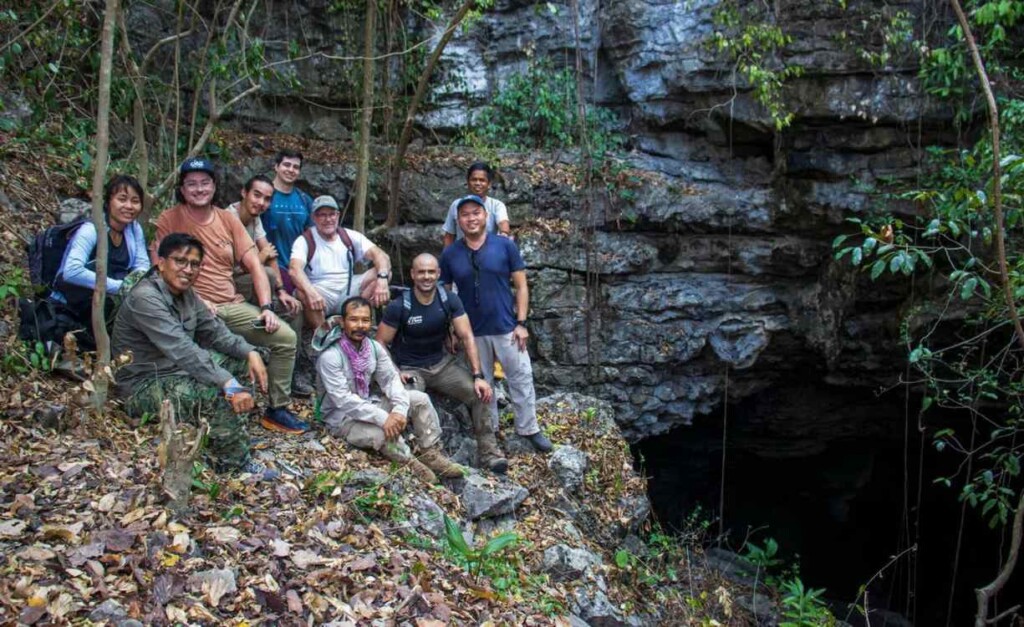
This is certainly the case in Battambang, where the survey team had first to ascend the steep forested slopes of the karst outcrops before scrambling and squeezing through crevices and crawlspaces to reach the cave systems.
Inside, they documented a rich array of life, both endemic to the caves and others—like a big reticulated python—who were just visiting. While the chatter of the Endangered silvered langur troupe, faded behind them, the team began encountering animal after animal that had never been described by science.
A spectacular new species of pit viper (from the Trimeresurus genus) was collected during the survey and is currently being described. Recognized by their triangular heads, these highly venomous snakes track down their warm-blooded prey using the heat-sensitive pits behind their nostrils.
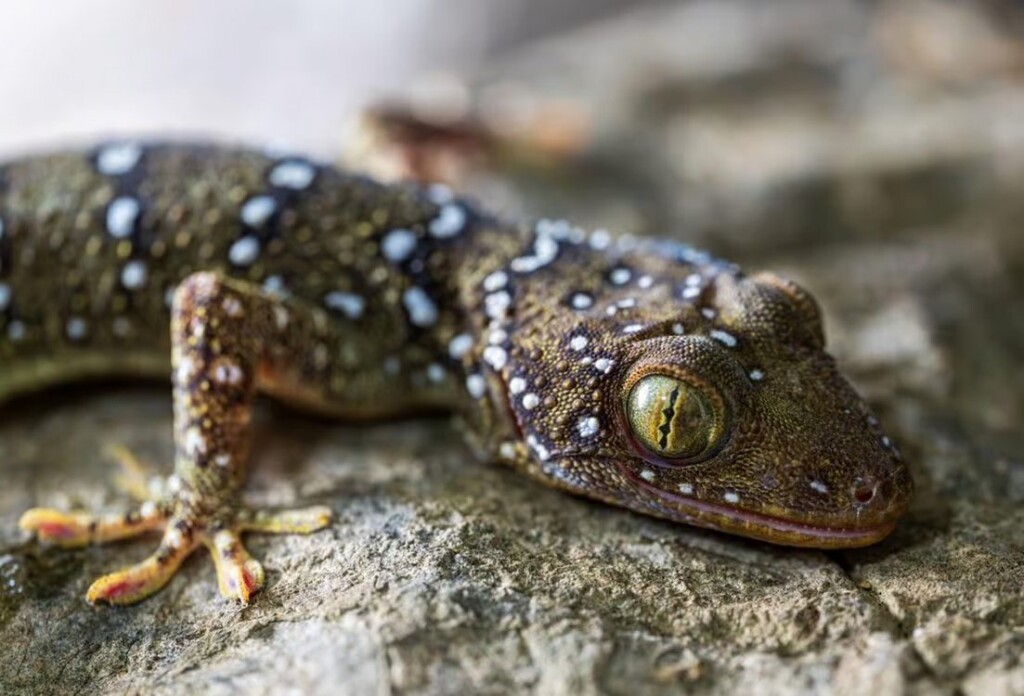
4 populations of the striped Kamping Poi bent-toed gecko were found and identified as a new species: Cyrtodactylus kampingpoiensis. Despite being described as just one species, it is thought that, due to the geographic isolation of the karst formations, these 4 populations are on separate evolutionary trajectories, and further genetic analyses may reveal whether they are in fact 4 different species instead of 1.
Another new species of gecko was named after the Hindu goddess of destruction: Shiva.
ALSO CHECK OUT: Trail Cams Leave Park Officials Elated as Rare Gaur Seen Thriving in Forest–World’s Largest Bovine
In a statement, Fauna & Flora International said it is working with local partners to help conserve Cambodia’s karst landscapes, epitomized through the recent release of guidelines for sustainable development and management of cave ecosystems.
The guidelines integrate international best practices with Cambodian context, providing practical measures to safeguard bat colonies, preserve rare and endemic cave biodiversity, promote sustainable guano harvesting and ensure responsible tourism development.
NEWS FROM BELOW OUR FEET: Cave of Wonders: Where Prehistoric Bees Made Nests in the Bones of Animals Eaten by Colossal Owls
“Cambodia’s karst areas are a treasure trove of scientific secrets waiting to be uncovered,” said Sothearen Thi, Karst Biodiversity Coordinator at Fauna & Flora in the statement.
“But, without sustainable management, we may never find out what these areas truly hold. Karst landscapes are facing many human-driven challenges, and biologically significant species could go extinct before they have even been discovered. We are working with the Cambodian government and local partners to increase protection of the landscapes, with sustainable management being the number one priority.”
SHARE These Beautiful New Creatures And An Organization’s Campaign To Protect The Landscape That Houses Them…