











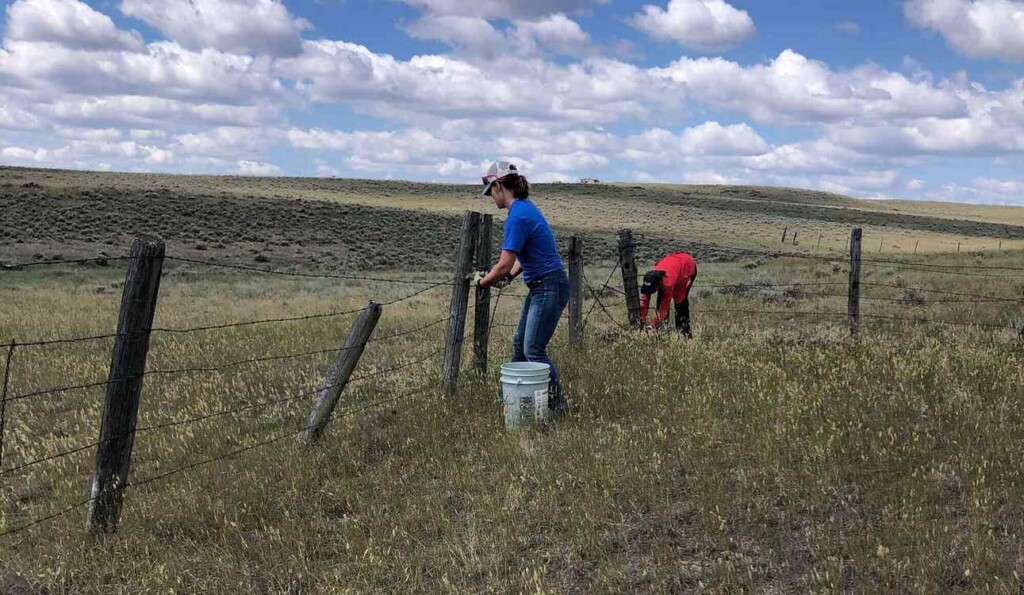
The largest private land conservation project in America passed a milestone of rewilding the Great Plains last year.
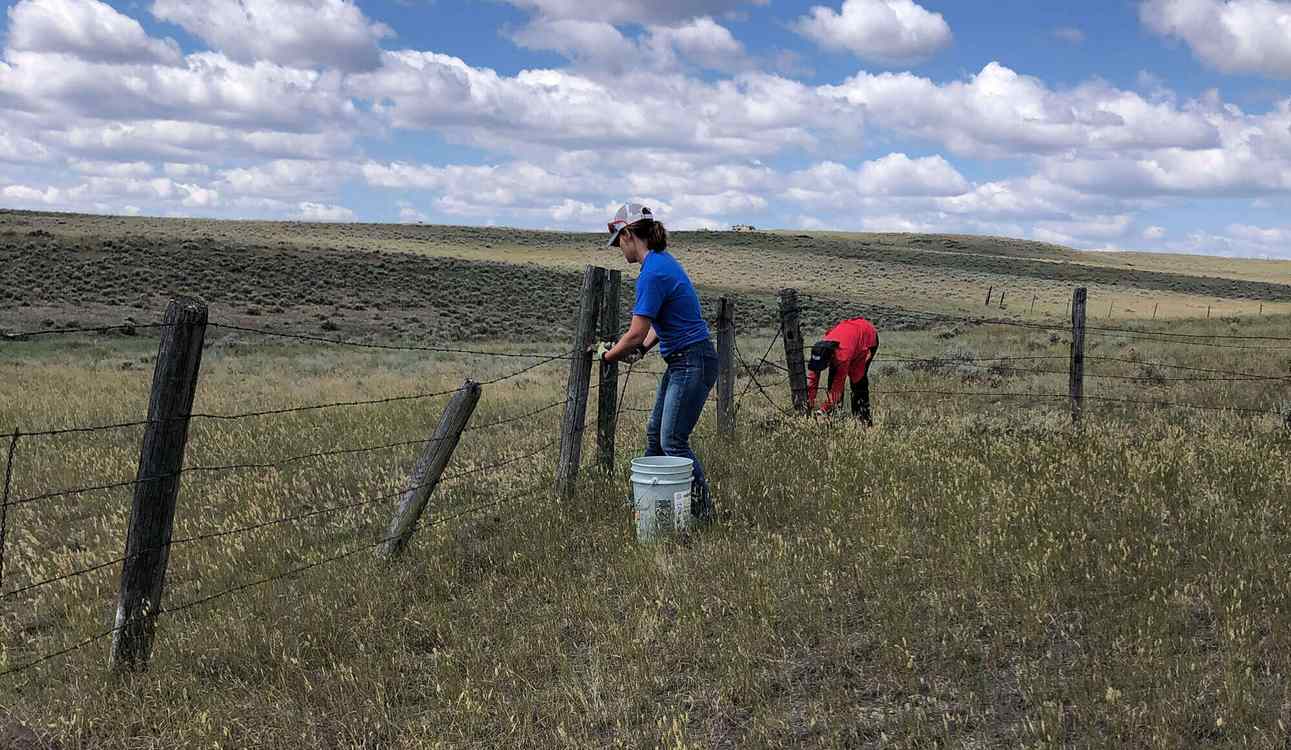
The nonprofit American Prairie recently celebrated the new year with a report that it had successfully removed the 100th mile of derelict barbed wire fencing on its land holdings.
All rolled up, the thorny barrier amounted to 500,000 pounds of scrap metal, and with its removal, the prairie’s megafauna are free to move about as their hearts desire.
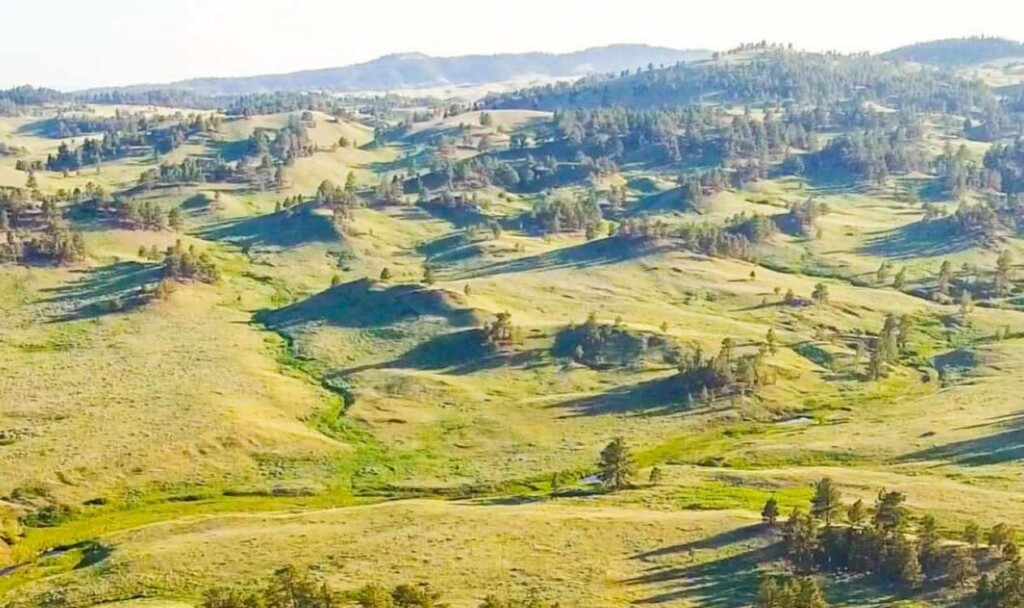
American Prairie Reserve has for years been buying and leasing land between the Charles M. Russel National Wildlife Refuge and Upper Missouri Breaks National Monument in Montana to create America’s largest assemblage of wild prairie for the purposes of conservation and recreation.
Stitching together grasslands, water features, ranchland, rolling hills, and woodland, the reserve has accumulated 603,657 acres, which comprises 167,070 deeded acres and 436,587 leased public acres. Their goal is ultimately to protect and some cases rewild 2.3 million acres—far harder to achieve for citizens than government lawmakers.
Yet in the over 20 years that American Prairie has been working, they’ve expanded their reserve to such an extent that if it were declared a National Park, it would rank among the nation’s 10 largest across the Lower 48.
The work of removing the derelict fencing is part of returning this patchwork landscape to a semi-wild and in some cases totally wild state. With free-roaming animals like mule deer, elk, and pronghorn, the idea is to completely free them to move about as they please, as if it were the year 8,000 BCE.
But no “Prairie Reserve” could be complete without the bison, and the nonprofit’s bison herd has grown over the last 20 years from just 16 animals to 940 by the end of 2025, roaming across 48,000 acres.
In these acres, to comply with state and federal law, the barbed wire fencing has been replaced with wildlife-friendly fencing designed to allow as many species as possible to pass through it while at the same time giving a shock to any itchy bison.
RETURNING THE LAND TO THE BEASTS: Abandoned Ohio Golf Course Being Rewilded into Public Land with Native Fish and Wildlife Returning
As a species, it’s extremely rare bison ever test a fence, but when shedding their winter coats, they will rub up against the barbed wire and risk damaging the fence. The new electric fences of each property are divided into zones and powered by solar panels. Each zone is 10-12 miles of fence powered by one 150-watt solar panel and a 12-joule charger, and a 12-volt battery that stores backup power used at night and on cloudy days.
Wildlife movement, property boundaries, public property uses, and grazing management all have to be considered when deciding to keep or alter fencing, and that includes the reserve’s vibrant bird life.
MORE ON THIS INCREDIBLE PROJECT: Land Was Owned by Billionaires Who Didn’t Allow Access to National Monument – Now it’s Open
One of the design modifications is the addition of fence markers in high traffic bird areas. The American Prairie field team tracks bird-fence collisions and adds markers as needed in collision-prone areas. Research has shown that the markers reduce bird-fence collisions by 70%.
By some estimates, the Great North American Prairie has shrunk by over 90%. American Prairie, which is funded entirely through donations, philanthropy, and the now multiple opportunities for recreation, including stargazing, hunting, and all manner of excursions, aims not to let that number go up so much as 1 percent more, and they’re doing about as good a job as anyone could have ever imagined.
I’d suggest they start a funding campaign where, for $50, you get a 12″ section of wire fence mounted on a mesquite plank with inscription; “I helped save the Great Plains for everyone.”
If someone starts a business doing this, kindly mention me, or send me $0.50 off each one! Yay!