All News - Page 100 of 1695 - Good News Network
Home Blog Page 100

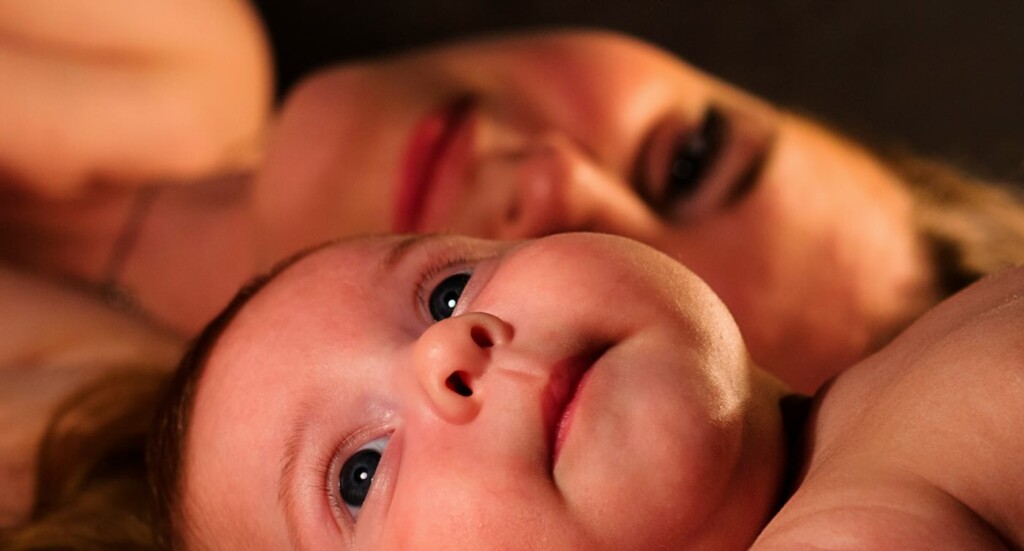
“In every true marriage, each serves as guide and companion to the other toward a shared enlightenment that no one else could possibly share.” – Joseph Campbell 

By Mauricio Livio

Quote of the Day: “In every true marriage, each serves as guide and companion to the other toward a shared enlightenment that no one else could possibly share.” – Joseph Campbell 

Photo by: Mauricio Livio

With a new inspirational quote every day, atop the perfect photo—collected and archived on our Quote of the Day page—why not bookmark GNN.org for a daily uplift?

By Mauricio Livio

Good News in History, February 24

Breezing Up (A Fair Wind) - Google Art Project

189 years ago today, one of the foremost painters of 19th-century America, Winslow Homer, was born. Born in Boston to a father always seeking to pull off a get-rich-quick scheme, Homer was molded by his mother; a talented watercolor painter who taught him the basics. His most prolific period was when he moved to Maine and began to paint the robustness of fishing and seagoing cultures there, producing iconic imagery of 19th-century America such as The Gulf Stream, The Fog Warning, and Breezing Up (A Fair Wind). READ about the man’s life and see some of his paintings… (1836)

The UK’s Cutest Bus Stop Has Been Decorated By Locals With Quirky Themes For 20 Years (Pics)

The bus stop's latest design 'Thyme to Stop' - SWNS
Bus stop in Fowey, England, ‘All you need is Fowey’ design from Jan. 2022 – via SWNS

A bus stop in Fowey, England, has been getting artistic makeovers from creative locals for two decades.

Dubbed the Pretty Bus Stop on Lankelly Lane in Cornwall, it was given its first makeover by Jane Tinsley after it became a target for anti-social behavior.

Over the next 20 years the stop has been decorated as a tea room, a yacht race, a library, and even donned an Elvis theme at one point.

Volunteers step forward to redesign the grotto a couple of times each year—especially during the winter.

Sarah Worne, the artist behind the new plant-themed design, has been helping to keep the tradition alive since 2021.

The latest theme is called Thyme to Stop, and features real—and painted—pots of seedlings and plants.

“It was cold coming into February and everybody needs warming up, so we have made it look like you are sitting in a green house.

The bus stop’s latest design ‘Thyme to Stop’ – SWNS

“It is just trying to bring a bit of warmth as you are sitting there waiting for a bus.”

“I am always liking to keep busy and always liking to do things that just make people smile,” said Sarah. “And, just for the fun of it.”

The bus stop even has its own Facebook page, with more than 2,700 followers which features many looks over the years.

SWNS

“We like to delegate and engage with the local community,” she added. “I have challenged Fowey River Lions to do a design—and they are having a go this year at Easter.”

Nautical themed design from March 2021 – SWNS

Sarah has thought about decorating other bus stops, getting inspired while driving around, but hasn’t yet taken the time to talking to the owners.

“The bus stop in Fowey is actually owned by the town council. You do have to work out who owns the bus stops and I haven’t gone down that route—but I certainly got my eye on a couple other bus stops that could do with brightening up.”

PASS ON THE INNOVATIVE IDEA With Your Hometown By Sharing On Social Media…

Sea Turtles Swarm the Beaches in India for Annual Mass Nesting (WATCH)

Olive Ridley sea turtles return to lay eggs in annual nesting ritual in Odisha, India – SWNS

Thousands of sea turtles have taken over a beach as part of the annual mass nesting of Olive Ridley turtles in India.

The incredible video shows a seemingly endless stretch of beach in Odisha, with waves of turtles slogging ashore near the mouth of the Rushikulya River.

According to Divisional Forest Officer Sunny Khokkar, over 11,000 turtles laid their eggs on February 16 across the 2.5-mile stretch of land (4km). It was the first day of ‘Arribada’, the unique nesting ritual where thousands of females come together on the same beach to lay eggs.

Interestingly, they return to the very same beach where they first hatched as a baby. During the phenomenal nesting, up to 600,000 females emerge from the water during the five to seven day period.

The 2-foot-long turtles then dig pits in the sand to lay between 100 and 150 eggs, before covering them and returning to the sea.

After about 45-65 days, the eggs begin to hatch, and these beaches are swamped with tiny Olive Ridley turtles, making their first trek towards the vast ocean.

It is estimated that approximately 1 hatchling survives to reach adulthood for every 1000 hatchlings that enter the sea waters.

The plentiful species is categorized as “Vulnerable” by international wildlife groups, so to safeguard the nesting process, the Forest Department has implemented protective measures.

AMAZINGLY CUTE: Diver Fulfills Dream to Photograph the Cutest Sea Creature Ever

Local volunteers help to create a secure environment and the beach has been fenced off to prevent visitors from disturbing the nests—and the restrictions are set to remain in place until the hatchlings have emerged.

SHARE The Amazing Sight With Nature Lovers On Social Media…

Teen Mentorship Program Brings Its Bottom Line Success to Detroit–With $15M in Assistance From MacKenzie Scott

By Sagar Ganesh / Pexels

The dreams of going to college for so many American teens may seem like long-shots, but when a billionaire philanthropist sets her sights on education, their stories may have a happy ending.

Enrique Pepén was born in Boston to Dominican immigrants who hoped to grab hold of the American dream, despite a language barrier that sometimes seemed insurmountable.

Growing up in public housing, Pepén had to help translate legal forms and food menus for his parents—and sometimes worried that the American dream would escape him. But he never gave up.

In high school, Pepén found assistance from Bottom Line, a nonprofit mentorship program that provides personalized guidance to first-generation college students and low-income youth.

Bottom Line, which has now served over 7,000 students, helped Pepén navigate all the forms and applications needed for college. He earned a full scholarship to Boston’s Suffolk University. From there, Bottom Line’s mentors supported him throughout his collegiate career.

Then, in 2023, Pepén was elected to the Boston City Council.

Enrique Pepén, Boston City Council

Pepén’s election arrived just one year after a massive $15 million donation from philanthropist MacKenzie Scott helped secure Bottom Line’s long-term future. Scott, Jeff Bezos’ ex-wife, provided monetary support for Bottom Line and 360 other charities and nonprofits through an operation named Yield Giving. Bottom Line’s gift will ensure that there are hundreds of other youths like Pepén who will gain enough support to grab a firm hold of the American dream.

“My parents left everything they knew when coming to the United States and I saw the mental toll of reinventing their lives. They believed in the power of education to make personal progress easier, and it was a belief they instilled in me,” Pepén said in Bottom Line’s most recent Annual Report.

“After walking my path and navigating the college process, if I could give any advice to students in similar shoes, I would say do not be afraid to ask for help!”

Founded in Boston in 1997, Bottom Line has achieved impressive results:

  • 91.2% of Bottom Line’s high school students committed to college
  • 68.2% made an affordable choice
  • 93.5% of students persisted to their 2nd semester—a leading indicator of graduation rates
  • 100% of students surveyed reported feeling more confident in their ability to build relationships and network with professionals

In its 28 years, the nonprofit has expanded to support students in New York, Chicago, and Ohio too. Later this summer, the program will officially launch in Detroit.

Bottom Line students – Credit: knackvideophoto.com

With funding from family foundations, as well as a $600,000 grant from GreenLight Fund Detroit, Bottom Line hopes to support 725 Detroit students annually by 2031.

CHECK OUT: Thank-You Cards Pile Up with Nowhere to Go After School District Receives Anonymous ‘Transformative’ Donation

It’s a worthy goal for a population faced with innumerable obstacles. Fewer than 20-percent of Detroit residents hold college degrees. The city’s median income averages just $37,000. And Michigan has one of the worst student-to-counselor ratios in the country.

But folks at Bottom Line never shrink from obstacles. They prefer to embrace them instead.

Just ask Danielle North, who was named Bottom Line Detroit’s first executive director. The Detroit native is a first-generation college student herself. A similar support program helped propel her through college and put her on a path to success about 20 years ago. Now, she’ll pay it forward to a new generation.

She already met with some prospective students at her alma mater Northwestern High School in December.

“I was already excited,” she said in an article appearing on ChalkBeat Detroit. ”But coming here and having the opportunity to interact with the staff and learn directly from the students what their experiences have been, to see the glimmer of light in their eyes, to see their future possibilities from their point of view, and to understand what they’re looking for, has really just cemented it for me.”

WATCH: Man Who Grew Up Without a Dad Supports Youth on ‘Dad, How Do I?’ YouTube Channel

They could take Pepén’s advice to heart: “There are a lot of opportunities out there that may seem difficult to obtain, but there are people and groups like Bottom Line who want you to succeed.”

Building on successful stories like Councilman Pepén’s in Boston, the next great chapters will be written in Detroit.

SHARE THE STORY to Inspire Youth With Dreams On Social Media…

“My dream is of a place and a time where America will once again be seen as the last best hope of earth.” – Abraham Lincoln

Quote of the Day: “My dream is of a place and a time where America will once again be seen as the last best hope of earth.” – Abraham Lincoln

Photo by: Daryan Shamkhali

With a new inspirational quote every day, atop the perfect photo—collected and archived on our Quote of the Day page—why not bookmark GNN.org for a daily uplift?

Good News in History, February 23

139 years ago today, an American inventor used electrolysis to extract aluminum from aluminum oxide, a process that eventually resulted in reducing the price of aluminum by a factor of 200, making it affordable for many practical uses from soda cans to the Wright Flyer. As small grains amid clay, it was thought by medieval alchemists to be the grains of dirt from a second, currently forming, earth. Today, more aluminum is produced than all other non-ferrous metals combined. The process was discovered by Charles Martin Hall, who helped found the Pittsburgh Reduction Company, which became the Aluminum Company of America. READ more… (1886)

23-Year-old Finds Huge Dinosaur Footprint Dating Back 127 Million Years on UK Beach After Rain

Joe Thompson with Iguanodon footprint - SWNS
Joe Thompson with Iguanodon footprint – SWNS

A huge dinosaur footprint dating back 127 million years has been found on a UK beach after a rainstorm.

A 23-year-old fossil guide spotted the three-toed print on the Isle of Wight.

Joe Thompson says the one-meter long footprint revealed itself after storms stripped the beach of pebbles.

The recent Bristol University paleontology graduate was walking on Shepherd’s Chine beach, looking for any fossils or dinosaur bones.

“I had been walking for an hour or two and hadn’t found anything – so was a bit down in the dumps.

“But then I looked down and could see one of the toes in the clay. Thinking it could be a footprint, I uncovered it and discovered a pretty big footprint of an Iguanodon.

“It is high up in the sequence, which means it is a bit younger than other footprints on the island. It belonged to a really big animal.”

Iguanodon dinosaur fossil footprint – SWNS

The news comes as this month marks the 200th anniversary of the first scientific description of Iguanodon in 1825, after a collection of the dinosaur’s teeth was discovered by geologist Dr. Gideon Mantell from large fossils found in Sussex, England, by him and his wife Mary Ann.

Iguanodons were large herbivores measuring up to ten meters long and weighing over four tons.

“Iguanodons are pretty cool and were quite common, but to see a footprint so well preserved in this area is great.

Iguanodons traveled in large groups of maybe 20 to 30, walked on all fours, but ran on two feet.

“They went around eating all the smaller plants around the ecosystem at the time,” Joe told news agency SWNS.com.

INCREDIBLE! Giant New Species of Dinosaur Named Loki-ceratops for Horns That Look Like the Norse God (LOOK)

Joe, who is a guide for Wight Coast Fossils, has recently launched South Coast Fossils, offering his fossil walks in another nearby region of Highcliffe, near Christchurch, saying:

“The Isle of Wight is one of the best places in Europe for finding dinosaur remains and footprints.”

BIG-FOOT THIS DISCOVERY Onto Social Media For Dino-Loving Friends…

New Upside Down House Opens – Take Fabulous Photos And Walk on the Ceiling (LOOK)

Upside Down House in Bristol – SWNS

A quirky tourist attraction has popped up in another seaside town that lets visitors tour a building where all the furniture is flipped 180-degrees.

‘The Upside Down House’ in Bristol, England, is the 12th one to be erected—or should we say inverted—around the UK since the success of the first one opened in Bournemouth in 2018.

Painted in cheerful colors, the homes look like they’ve been flipped on their heads. With two floors of furniture attached to the ceilings, visitors might feel dizzy from the alternative perspective of life upside down.

A ticket booth connected to the back of the house sells tickets to visitors for $7, with proceeds going to local charities or the Great Ormond Street Hospital Charity.

There are plenty of places to take photos on the two floors, including a kitchen, living room, bedroom where striking fun poses can really take advantage of the anti-gravity views.

Paying guests walk on the ceiling as tables, chairs, beds, toilets and more hang above them.

SWNS

Upside Down Houses have opened in several UK beach destinations, in cities like Liverpool and London, and now in other parts of the world, including France, Germany and Australia.

Each home’s furnishings feature the work of local artists—hung upside down, of course.

SWNS

They also take advantage of seasonal themes, like Haunted Upside Down House on Halloween or maybe Santa’s Grotto during Christmas.

Upside Down House Bristol is painted bright magenta and located on Anchor Square next to the Bristol Aquarium. Children under three enter for free.

LITERALLY COOL: Narnia Themed Treehouse Built Next to C.S. Lewis’ Home Features Magic Wardrobe–Now it’s a Holiday Rental

WATCH a couple videos to get some more wild perspective…

These Scenes Are Inverted For Instant Fun…

SHARE THE DIZZYING Photo Op With Friends On Social Media…

Scientists Discover Low-Cost Way to Trap Carbon Using Common Rocks – And it Could Help Farmers Too

Yuxuan Chen holds carbon dioxide-trapping material with Matt Kanan in their lab – Credit: Bill Rivard / Precourt Institute for Energy

Stanford University chemists have developed a practical, low-cost way to permanently remove atmospheric carbon dioxide, the main driver of global warming and climate change.

The new process uses heat to transform common minerals into materials that spontaneously pull carbon from the atmosphere and permanently sequester it. These reactive materials can be produced in conventional kilns, like those used to make cement.

“The Earth has an inexhaustible supply of minerals that are capable of removing CO2 from the atmosphere, but they just don’t react fast enough on their own to counteract human greenhouse gas emissions,” said Matthew Kanan, a Stanford professor of chemistry and senior author of the new study in Nature. “Our work solves this problem in a way that we think is uniquely scalable.”

In nature, common minerals called silicates react with water and atmospheric CO2 to form stable bicarbonate ions and solid carbonate minerals – a process known as weathering. However, this reaction can take hundreds to thousands of years to complete. Since the 1990s, scientists have been searching for ways to make rocks absorb carbon dioxide more rapidly through enhanced weathering techniques.

Kanan and Stanford postdoctoral scholar Yuxuan Chen developed a new process for converting slow-weathering silicates into much more reactive minerals that capture and store atmospheric carbon quickly.

“We envisioned a new chemistry to activate the inert silicate minerals through a simple ion-exchange reaction,” explained Chen. “We didn’t expect that it would work as well as it does.”

One of the technologies experts say could prevent additional global warming is carbon-capture through the air—but so far, they remain costly, energy-intensive, or both—by using panels or large fans to drive air through chemical or other processes to remove CO2.

“Our process would require less than half the energy used by leading direct air capture technologies, and we think we can be very competitive from a cost point of view,” said Kanan.

Inspired by a centuries-old technique for making cement

Cement production begins by converting limestone to calcium oxide in a kiln heated to about 1,400 degrees Celsius. The calcium oxide is then mixed with sand to produce a key ingredient in cement.

The Stanford team used a similar process in their laboratory furnace, but instead of sand, they combined calcium oxide with another mineral containing magnesium and silicate ions. When heated, the two minerals swapped ions and transformed into magnesium oxide and calcium silicate – two alkaline minerals that react quickly with acidic CO2 in the air.

As a quick test of reactivity at room temperature, the calcium silicate and magnesium oxide were exposed to water and pure CO2. Within two hours, both materials completely transformed into new carbonate minerals—with carbon from CO2 trapped inside.

For a more realistic test, wet samples of calcium silicate and magnesium oxide were exposed directly to air, which has a much lower concentration of CO2 than pure CO2 from a tank. In this experiment, the carbonation process took weeks to months to occur, still thousands of times faster than natural weathering.

Capturing CO2 in this way could also help farmers

“You can imagine spreading magnesium oxide and calcium silicate over large land areas to remove CO2 from ambient air,” Kanan said. “One exciting application that we’re testing now is adding them to agricultural soil. As they weather, the minerals transform into bicarbonates that can move through the soil and end up permanently stored in the ocean.”

Kanan said this approach could have co-benefits for farmers, who typically add calcium carbonate to soil to increase the pH if it’s too low – a process called liming.

“Adding our product would eliminate the need for liming, since both mineral components are alkaline,” he explained.

“In addition, as calcium silicate weathers, it releases silicon to the soil in a form that the plants can take up, which can improve crop yields and resilience. Ideally, farmers would pay for these minerals because they’re beneficial to farm productivity and the health of the soil – and as a bonus, there’s the carbon removal.”

Using mining sites worldwide

Currently, Kanan’s lab can produce only 15 kilograms (33 pounds) of material a week. But the same kiln designs now used to make cement could produce the amount of materials needed to tackle CO2 because of the abundant magnesium silicates (such as olivine or serpentine), which is found in California, the Balkans, and many other regions. These are also common leftover materials – or tailings – from mining.

“Each year, more than 400 million tons of mine tailings with suitable silicates are generated worldwide, providing a potentially large source of raw material,” Chen said. “It’s estimated that there are more than 100,000 gigatons of olivine and serpentine reserves on Earth, enough to permanently remove far more CO2 than humans have ever emitted.” (A gigaton equals 1 billion metric tons, or about 1.1 billion tons.)

SEE MORE CARBON CAPTURE GOOD NEWS:
New Wyoming Carbon Capture Project Will Eliminate 5 Mil Tons of CO2 per Year
UK’s Largest Carbon Capture Project Will Turn 40,000 Tons of CO2 into Baking Soda
Growth in Carbon Capture Projects is Dramatic, Showing Global Determination to Cut Emissions

After accounting for emissions associated with burning natural gas or biofuel to power the kilns, the researchers estimate each ton of reactive material could remove one ton of carbon dioxide from the atmosphere.

The team is also developing kilns that run on electricity instead of burning fossil fuels—and a grant is already funding their efforts to move the research into practical applications.

(Source: Stanford Report) – SHARE THEIR BREAKTHROUGH On Social Media…

Your Weekly Horoscope from ‘Free Will Astrology’ by Rob Brezsny

Our partner Rob Brezsny, who has a new book out, Astrology Is Real: Revelations from My Life as an Oracle, provides his weekly wisdom to enlighten our thinking and motivate our mood. Rob’s Free Will Astrology, is a syndicated weekly column appearing in over a hundred publications. He is also the author of Pronoia Is the Antidote for Paranoia: How All of Creation Is Conspiring To Shower You with Blessings. (A free preview of the book is available here.)

Here is your weekly horoscope…
FREE WILL ASTROLOGY – Week of February 22, 2025
Copyright by Rob Brezsny, FreeWillAstrology.com

PISCES (Feb. 19-March 20):
Have you been struggling to summon the motivation to start anew in some area of your life? I predict that sometime in the coming weeks, you will find all the motivation you need. Have you been wishing you could shed the weight of the past and glide into a fresh project with unburdened mind and heart? I believe that destiny will soon conspire to assist you in this noble hope. Are you finally ready to exorcise a pesky ghost and dash jubilantly toward the horizon, eager to embrace your future? I think you are.

ARIES (March 21-April 19):
The Hindu holiday of Maha Shivaratri is dedicated to overcoming ignorance and darkness in celebrants’ own lives and in the world. This year it falls on February 26. Even if you’re not Hindu, I recommend you observe your own personal version of it. To do so would be in accordance with astrological omens. They suggest that the coming weeks will be an excellent time for you to be introspective, study your life and history, and initiate changes that will dispel any emotional or spiritual blindness you might be suffering from. PS: Remember that not all darkness is bad! But some is unhealthy and demoralizing, and that’s the kind you should banish and transmute.

TAURUS (April 20-May 20):
The blue whale is the most massive animal that has ever lived. You could swim through its arteries. Its heart is five feet high and weighs 400 pounds. And yet, when diving, its pulse slows to four to eight times per minute. I propose we choose the blue whale to be your spirit creature in the coming weeks. May this magnificent beast inspire you to cultivate slow, potent rhythms that serve you better than hyperactivity. Let’s assume you will accomplish all you need by maintaining a steady, measured pace—by focusing on projects that require depth and diligence rather than speed. Your natural persistence will enable you to tackle tasks that might overwhelm those who lack your patience.

GEMINI (May 21-June 20):
Over 10,000 years ago, someone walked for a mile through what’s now White Sands National Park in New Mexico. We know they did because they left footprints that were fossilized. Scientists believe it was probably a woman who mostly carried a child and sometimes let the child walk under its own power. Like those ancient footprints, your actions in the coming weeks may carry lasting significance—more than may be immediately apparent. I encourage you to proceed as if you are making a more substantial impact and having a bigger influence than you imagine.

CANCER (June 21-July 22):
What’s the oldest known recipe? What ancient food product did our ancestors write down instructions about how to make? It was beer! The 4,000-year-old Sumerian text included a hymn to Ninkasi, the goddess of beer. It tells how to use the right ingredients and employ careful fermentation to concoct a beverage that lowers inhibitions and brings people together in convivial celebration. In that spirit, Cancerian, I encourage you to meditate on the elements you can call on to create merrymaking and connection. Now is a good time to approach this holy task with extra focus and purposefulness.

LEO (July 23-Aug. 22):
In November 1963, the captain of a sardine boat sailing near Iceland noticed a column of dark smoke rising out of the water. Was it another boat on fire? No, it was the beginning of a volcanic eruption. A few days later, steady explosions had created a new island, Surtsey, which still exists today. I suspect you will have a metaphorically comparable power in the coming weeks, Leo: an ability to generate a new creation out of fervent energies rising out of the hot depths. Be alert! And be ready to harness and make constructive use of the primal force.

VIRGO (Aug. 23-Sept. 22):
Harald “Bluetooth” Gormsson was a 10th-century Danish king. He united the tribes of Denmark into a single kingdom. His nickname originated in the fact that he had a prominent dead tooth that turned bluish-gray. More than 10 centuries later, engineers who created a new short-range wireless technology decided to call their invention “bluetooth.” Why? Because they imagined it would serve a variety of electronic devices, just as the king once blended the many tribes. In the spirit of these bluetooth phenomena, I’m urging you Virgos to be a uniter in the coming weeks and months. You will have an enhanced capacity to bridge different worlds and link disparate groups. PS: An aspect that could be construed as an imperfection, like Harald’s tooth, could conceal or signify a strength.

LIBRA (Sept. 23-Oct. 22):
Libran author Ursula K. Le Guin wrote, “Freedom is a heavy load, a great and strange burden for the spirit to undertake.” I know from experience there’s truth in that idea. But I’m happy to tell you that in 2025, freedom will be less heavy and less burdensome than maybe ever before in your life. In fact, I suspect liberation will be relatively smooth and straightforward for you. It won’t be rife with complications and demands, but will be mostly fun and pleasurable. Having said that, I do foresee a brief phase when working on freedom will be a bit more arduous: the next few weeks. The good news is that your emancipatory efforts will set the stage for more ease during the rest of 2025.

SCORPIO (Oct. 23-Nov. 21):
Always and forever, the world is a delicate balance of seemingly opposing forces that are in fact interwoven and complementary: light and shadow, determination and surrender, ascent and descent, fullness and emptiness, progress and integration, yes and no. The apparent polarities need and feed each other. In the coming weeks, I invite you to meditate on these themes. Are there areas of your life where you have been overly focused on one side of the scale while neglecting the other? If so, consider the possibility of recalibrating. Whether you are balancing emotion with logic, rest with work, or connection with independence, take time to adjust. If you honor both halves of each whole, you will generate fertile harmonies.

SAGITTARIUS (Nov. 22-Dec. 21):
The ancient stands of cedar trees on Japan’s Yakushima Island have a special power. They create weather patterns for themselves, generating rain clouds from the water vapor they release through their leaves. This ingenious stroke of self-nurturing provides them with the exact rainfall they require. I propose that we make these cedar trees your power symbol in the coming weeks. It’s an excellent time for you to dream up and implement more of the conditions you need to flourish.

CAPRICORN (Dec. 22-Jan. 19):
Tardigrades are tiny, eight-legged animals colloquially known as water bears or moss piglets. Their resilience is legendary. They can thrive anywhere, from mountaintops to the deep sea, from Antarctica to tropical rainforests. They can withstand extreme temperatures, live a long time without water, and even survive in outer space. I propose we make the tardigrade your power creature for the coming weeks, dear Capricorn. Your flexibility and fluidity will be at a peak. You will be hardy, supple, and durable. It will be a favorable time to leave your comfort zone and test your mettle in new environments. Seemingly improbable challenges may be well within your range of adaptability.

AQUARIUS (Jan. 20-Feb. 18):
In the coming days, playing games could be good practice for life. Breezy exchanges and fun activities could stimulate clues and insights that will be useful in making important decisions. What appears to be ordinary entertainment or social engagement may provide you with profound lessons about strategy and timing. How you manage cooperation and competition in those lighter moments could yield useful guidance about more serious matters.

WANT MORE? Listen to Rob’s EXPANDED AUDIO HOROSCOPES, 4-5 minute meditations on the current state of your destiny — or subscribe to his unique daily text message service at: RealAstrology.com

(Zodiac images by Numerologysign.com, CC license)

SHARE The Wisdom With Friends Who Are Stars in Your Life on Social Media…

“It’s always too early to quit.” – Norman Vincent Peale

By Massimo Sartirana / Unsplash

Quote of the Day: “It’s always too early to quit.” – Norman Vincent Peale

Photo by: Massimo Sartirana

With a new inspirational quote every day, atop the perfect photo—collected and archived on our Quote of the Day page—why not bookmark GNN.org for a daily uplift?

By Massimo Sartirana / Unsplash

Good News in History, February 22

Photo by Klim Musalimov

On this day 45 years ago, in a stunning upset, the U.S. Olympic hockey team consisting of amateurs and college students, defeated the long-dominant and heavily-favored Soviet Union team, 4-to-3, on home ice, in Lake Placid, New York. This underdog’s victory over a hockey juggernaut, which later led to an American gold medal, was dubbed the ‘Miracle on Ice,’ and was voted the greatest sports moment of the twentieth century by Sports Illustrated. WATCH the crowd go wild and hear the commentary in this ABC anniversary tribute… (1980)
In the Amazon, One Woman’s Ingenious Canopy Bridges Are Helping Monkeys Cross the Road Safely

A monkey crossing one of Fernanda Abra's bridges - credit Reconecta, screengrab
A monkey crossing one of Fernanda Abra’s bridges – credit Reconecta, screengrab

Why did the monkey cross the road? Because someone built a bridge for him.

Deep in the Amazon Rainforest, motorists hauling along the few highways that bisect the great ecosystem will have seen a series of rope bridges extending from the tree tops over their heads.

They are the result of one ingenious and now-decorated conservationist who decided to climb up and be counted.

Fernanda Abra has worked alongside one of the many indigenous groups of the Amazon—the Waimiri-Atroari people—to create a unique-in-the-world system of wildlife road crossings specifically for tree-dwelling species.

Primates like the Groves’ titi monkey and golden-handed tamarin have witnessed their homes cut in two by asphalt roads, and often have no choice but to brave the white lines on foot.

In fact, as CNN reports, it was on asphalt that Abra saw her first Groves’ titi, one of the world’s 25 most endangered primates.

In response, this postdoctoral fellow at the Smithsonian’s Center for Conservation and Sustainability launched the Reconecta Project (remember, it’s Brazil, so it’s pronounced He-conecta)

Leveraging the Wairmiri-Atroari’s knowledge of where local wildlife pass and congregate, the project has used grant funding to build 30 wildlife road crossings that present as a horizontal rope and or wire bridge. Some incorporate Tyrolean traverses as well.

Each crossing has a camera trap mounted on the anchor poles so that Abra can monitor who is using the crossings. The data will help inform conservation actions, including population estimates, as well as where to put more road crossings.

AIDING THE AMAZON: Grove of 100 Giant Trees Discovered in 2019 Are Tallest in the Amazon–and Now Protected by State Park

“Every time I see the video of the monkey using my canopy bridge, it’s wonderful because we are avoiding the situation of road mortality,” says Abra. “Connecting the population, we can make it stronger and allow it to grow.”

Abra and Reconecta won the 2024 Whitley Award for Nature in honor of her work protecting the region’s primates.

OTHER GOOD CONSERVATION STORIES: True ‘River Monster’ of the Amazon Has Recovered Thanks to New Sustainable Fishing

The best part about the story, aside from the fact that drastic reductions in road mortality in species like the Schneider’s marmoset, Spix’s red-handed howler monkey, and the Guiana spider monkey, is that the Reconecta Project is expanding out from the Brazilian state of Amazonas to Mato Grosso, where she’s already canvassing universities, philanthropists, and governments for funding to build more of these bridges.

“What amazes me about Brazil is the richness that we have, the wonderful biodiversity we have here,” says Abra, “and I will do everything that I can as a person, as a professional, as a conservationist and researcher to protect this rich biodiversity.”

WATCH the video of her work, narrated by Sir David Attenborough…

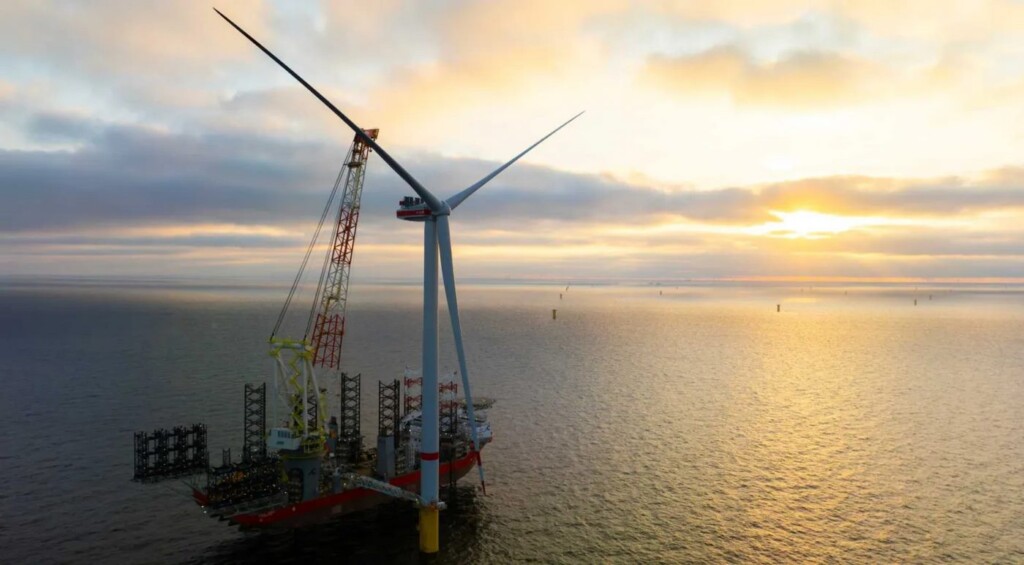
World’s First All-Timber Wind Turbine Blades are Cheaper, Recyclable, Fire-Resistant and Stronger than Carbon Fiber

Credit: Voodin Blade Technology

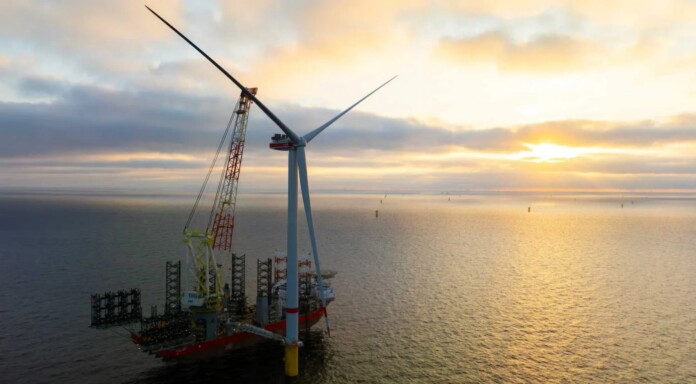
A company making wooden wind turbine blades has successfully tested a 50-meter-long prototype that’s set to debut soon in the Indian and European markets.

Last year, the German firm Voodin successfully demonstrated that their laminated-veneer timber blades could be fabricated, adapted, and installed at a lower cost than existing blades, while maintaining performance.

Now, Voodin has announced a partnership with the Indian wind company Senvion to supply its 4.2-megawatt turbines with these wooden blades for another trial run.

Wind power has accumulated more than a few demerit points for several shortfalls in the overall industry of this fossil-fuel alternative.

Some of these, such as the impact on bird life, are justified, but none more so than the fact that the turbine blades are impossible or nearly impossible to recycle, and that they need to be changed every 25 years.

Wind turbine blades are made from a mixture of glass and carbon fiber heated together with sticky epoxy resin, and these materials can’t be separated once combined, which means they go into landfills or are incinerated when they become too battered to safely operate.

GNN has reported that folks will occasionally find second-life value in these giant panels, for example in Denmark where they are turned into bike shelters. In another instance, they’re being used as pedestrian bridges.

But there are way more wind turbine blades being made every year than pedestrian bridges and bike shelters, making the overall environmental impact of wind power not all green.

MORE INDUSTRY LEADERS: World’s Largest Wind Turbine Manufacturer Says All Its Blades Will Soon be Fully Recycled

“At the end of their lifecycle, most blades are buried in the ground or incinerated. This means that—at this pace—we will end up with 50 million tonnes of blade material waste by 2050,” Voodin Blade Technology’s CEO. Mr. Siekmann said recently. “With our solution, we want to help green energy truly become as green as possible.”

The last 15 years have seen rapid growth in another industry called mass timber. This state-of-the-art manufacturing technique sees panels of lumber heat-pressed, cross-laminated, and glued into a finished product that’s being used to make skyscrapers, airports, and more.

OTHER WAYS TO RECYCLE BLADES: Retired Wind Turbine Blades Get Turned into Bridges and Reinforced Concrete

At the end of the day though, mass timber products are still wood, and can be recycled in a variety of ways.

“The blades are not only an innovative technological advancement but a significant leap toward sustainable wind production,” said Siekmann, adding that this isn’t a case of pay more to waste less; the blades cost around 20% less than carbon fiber.

Additionally, the added flexibility of wooden blades should allow for taller towers and longer blades, potentially boosting the output of turbine by accessing higher wind speeds.

Now partnered with Voodin, Senvion will begin feasibility analysis in the next few months, before official testing begins around 2027.

SHARE This Innovative Use Of Wood And Wind To Create Electricity…

Japanese Team Saves Nearly-Extinct Herons by Hand-Rearing Chicks

Credit: Hosei University

With Japanese know-how and the unwavering support of Japanese experts, Bhutan’s national bird is being hatched and hand-reared in captivity successfully for the first time ever.

The major hurdle to rearing chicks was overcome, and two healthy birds were just hand-reared, bringing the total captive population to five—a crucial lifeline to a bird that numbers less than 100 in the wild.

The critically-endangered white-bellied heron faces extinction due to habitat disturbance from human activities and predation. Professor Satoshi Shimano and his team from Hosei University, Japan, collaborated with the White-Bellied Heron Conservation Center (WBHCC) in Bhutan, to revive the species through direct intervention.

This heron is the world’s second largest, a symbolic bird for the people of Bhutan, and also a typical ‘umbrella species’ that requires a habitat with a vast, preserved environment. In recent years, the white-bellied heron population has decreased significantly.

As of 2024, it’s estimated there are fewer than 45 left in the world, although the official count stands at 60. It’s endemic to the Indian subcontinent, with approximately 25 individuals sighted in Bhutan, and the rest across the border in India. Conservation efforts for the species are limited and fragmented across the region.

In 2021, the Royal Society for Protection of Nature (RSPN) in Bhutan decided to begin efforts to artificially breed white-bellied herons outside their natural habitat, and the WBHCC was constructed and began operation in 2022. The WBHCC, located in the mountainous areas of south-central Bhutan, a six-hour drive from Bhutan’s capital, Thimphu, is supported by the Royal Government of Bhutan, international donors, agencies, and global philanthropists.

Two of the center’s three herons were collected as chicks from wild nests, and the other was rescued as a wounded bird. The center plans to collect not only chicks but also eggs from wild nests to artificially hatch them in an incubator. This was because monkeys were observed eating the heron’s eggs during incubation.

Since pair-bonded adults build their nests on steep cliffs and high trees, collecting chicks and eggs is extremely dangerous. A single nest typically produces around four eggs, and only 3–4 white-bellied heron pairs have been confirmed to nest in Bhutan.

White-bellied Heron at Namdapha NP, Changlang, Arunachal Pradesh, India – credit Rajikimar99 CC BY-SA 4.0. via Wikimedia

The RSPN planned to establish 16 founder populations (8 breeding pairs) by 2028 and release at least 50 herons in the wild by 2050 as part of the population restoration programs, but by 2023, it had only produced 3 chicks, all of which had to be euthanized because of genetic abnormailties resulting from inbreeding, or so it was believed.

Back in 2018, Professor Shimano met a Bhutanese graduate student, Mr. Pema Khandu, who was working to conserve his national bird. Having witnessed the extinction of the Japanese populations of the oriental stork and the Japanese crested ibis, Dr. Shimano readily volunteered to help.

MORE STORIES LIKE THIS: Inspired by Avatar and His Asthma, Indian Man Creates ‘Biosphere’ to Connect Adjacent Land to National Park

“We must not let Bhutan make the same mistakes we made in Japan,” Shimano remembered saying.

Professor Shimano recruited Japanese veterinarians Dr. Takashi Nagamine and Dr. Yumiko Nakaya, from the Okinawa Wildlife Federation and planned a trip to the WBHCC. They concluded that the chick deaths were actually more likely due to hand-rearing techniques rather than genetic abnormalities.

A support team was formed, composed of experts from the Hyogo Park of the oriental white stork and several member associations affiliated with JAZA (Japanese Association of Zoos and Aquariums). These experts had been involved in the captive breeding of oriental storks, Okinawa rails, and Japanese crested ibises. The team visited the WBHCC twice in March and April 2024, during the breeding season, taking the Japanese experience with these birds with them. Equipment and supplies were donated to the WBHCC.

MORE OF ASIA’S GREAT BIRDS: Asia’s Extraordinary Jumping Bird Now Thriving in Captivity–a Hopeful Halt to Population Slide

One of the hand-reared white-belly heron chicks – credit: Ms. Samten Lekey, Veterinary Officer from the White-bellied Heron Conservation Center, the Royal Society for Protection of Nature, Bhutan

Even in Japan, it took more than twenty years to establish the artificial breeding technique for the storks and ibises.

“Japan, which knows the pain of having lost the endemic Japanese lineage and the subsequent efforts that followed, should be the one to make use of its own technique overseas,” said Shimano. “Everyone on the team is committed to supporting the white-bellied heron for the next 20 years.”

Leg abnormalities were known to occur frequently in the ibises and storks during growth. Similar leg abnormalities were observed in the white-bellied herons that died in 2023 and in those hatched in 2024. Rei Matsumoto, a veterinarian and senior researcher at the Hyogo Park of the oriental white stork, instructed that the bedding material be changed to twigs of a thickness that the chicks could easily grasp.

JAPANESE WILDLIFE: Precocious Child Identifies Japanese Wolf Specimen Amid Museum Collection, Encouraged to Publish Scientific Paper

As a result, one of the two chicks showed improvement in its legs and began to grow well.

“There have been past cases where efforts to prevent the extinction of both the crested ibis and the oriental stork have failed. In order to prevent a repeat of this, I hope that by providing the knowledge that Japan has, we can increase the number of these birds, even if only a little,” said Matsumoto.

The team is hopeful that, within 5 to 10 years, when the captive population rises to around 30 individuals, they will release a few into the wild.

SHARE This Asiatic Collaboration To Save A Beautiful National Bird… 

Horses and Humans Go Blind for Similar Reasons, So This Medicine Might Cure Both

- credit Getty Images for Unsplash
– credit Getty Images for Unsplash

Whether one sports hooves or toes, a mop or a mane, autoimmune uveitis can strike away eyesight equally.

A cure for this form of blindness common in horses, but also people, is now undergoing trials that may benefit both.

An interdisciplinary team from the Univ. of Florida’s Institute of Food and Agricultural Sciences, College of Veterinary Medicine, and College of Medicine—ophthalmology, has published findings on an eye-drop medicine to treat uveitis, a leading cause of blindness in both species.

The disease amounts to 10% of new blindness and visual handicaps in the US every year; affecting around 30,000 people.

Named for the uvea, the middle layer of the eye, and ‘itis,’ the suffix that denotes inflammation, eyesight loss occurs when structures of the eye break down from the disease, and light to the retina is blocked.

If caught early, medicine can prevent uveitis from causing loss of eyesight, but in more advanced cases, the damage is often already done, and the eventual effects irreversible.

“It turns out that the place where the drug sits to have its effect in the eye is the same in people and in horses,” said Joseph Larkin, associate professor at UF/IFAS.

“We think that if we’re able to prove its effect in horses, we’ll also be able to treat the disease in people. People go blind if they have this disease, so it definitely alters their quality of life permanently.”

CURING BLINDNESS: Bioengineered Corneas Stand to Cure Blindness For Millions of People Around the World

The eyedrops Larkin and his team developed contain a synthetic peptide that acts to block the inflammatory pathways which cause the inflammation that results in a breakdown of the eye tissue structures in autoimmune uveitis in both horses and humans.

Previous treatments have often proved ineffective due to the condition’s tendency to recur.

VETERINARY ADVANCEMENTS: Legally Blind Texas Student Defies Odds, Gets Accepted into Veterinarian School: ‘Anything is possible’

Research has already been conducted using this eye-drop therapy on blind or light-sensitive horses at the UF/CVM, in which the horses were documented to have regained calmness and composure during exposure to bright light.

The next step will be a clinical trial in horses.

SHARE This Crossover Medical Breakthrough With Your Friends… 

“Life lived for tomorrow will always be just a day away from being realized.” – Leo Buscaglia

Curated Lifestyle for Unsplash+

Quote of the Day: “Life lived for tomorrow will always be just a day away from being realized.” – Leo Buscaglia

Photo by: Curated Lifestyle for Unsplash+

With a new inspirational quote every day, atop the perfect photo—collected and archived on our Quote of the Day page—why not bookmark GNN.org for a daily uplift?

Good News in History, February 21

February 15th, Cherokee Phoenix front page - screengrab

197 years ago today, the first issue of the Cherokee Phoenix was published using the Cherokee syllabary invented by Sequoyah. Sequoyah, also known as George Gist, was a Cherokee polymath who was one of the few people in history from a pre-literate group who created the original written system for that group’s language. Just as Sequoyah’s Cherokee language is still in use, the Cherokee Phoenix is still in print today, nearly 200 years after its first publication. READ more about its origins… (1828)

Countries Are Breathing the Cleanest Air in Centuries and Offer Lessons to the Rest of Us

An article at Our World in Data recently explored trends in air quality across a selection of high and middle-income countries, and found that not only is the West breathing better air than at perhaps any point since urbanization, but that developing nations likely won’t need 100 years or more to arrive at similar outcomes.

Published by Hannah Ritchie, the article focuses on two kinds of gases emitted from industrial activity: sulfur dioxide (SO2) and nitrogen oxide (NOx). Both enter the air we breathe from the burning of fossil fuels—coal in particular—while the latter is emitted mostly from internal combustion engines.

Bad air quality is responsible for millions of lost life years worldwide from respiratory problems, cardiovascular issues, and neurological disease—all of which can develop and become exasperated under prolonged exposure to air pollutants.

UK sulphur dioxide emissions – credit Community Emissions Data System (CEDS) 2024, CC BY license.

As seen in this chart, emissions of SO2 have just dipped under levels seen at the earliest periods of British industrialization. Before this, city and town air quality would have been badly tainted through emissions of wood smoke, so it’s safe to assume that 2022 marked the best British air in many centuries, not just the last two.

SO2 enters the ambient air primarily in urban environments through the burning of coal, and the significant reduction in coal use across the West has seen this number plummet.

But as regards middle-income countries like China and India that still rely on coal for electricity—all is not lost, as the next chart shows.

Sulfur dioxide emissions around the world – credit Community Emissions Data System (CEDS) 2024, CC BY license.

While the UK consumption of coal and emissions of SO2 have fallen in lockstep, the US and China present as excellent case studies for nations—like India, the fourth example—who rely on coal for electricity.

Even if coal consumption is increasing, SO2 emissions can fall even below baseline, with the diligent application of existing technologies for “scrubbing” coal.

“In 1990, the US included a cap-and-trade scheme on SO2 as part of its Clean Air Act Amendments,” Ritchie writes. “Each coal plant was given a ‘cap’ for how much SO2 it could emit, forcing it to either implement technologies to reduce its emissions, trade credits with other plants, or pay a large fine for every tonne of extra sulfur it emitted.”

This was hugely successful, as over just a single decade, emissions had dropped double-digit percentages.

Scrubbers are an apparatus that clean the gases passing through the smokestack of a coal-burning power plant. They exist as large towers in which aqueous mixtures of lime or limestone absorbers are sprayed through the emissions, known as flue gases, exiting a coal boiler. The lime/limestone absorbs some of the sulfur from the flue gases.

These have been used to tremendous effect in China, which despite tripling its coal use since 2000, has actually reduced SO2 emissions to pre-2000 levels. India does not use, nor does it mandate coal scrubbers, which explains its upward trajectory in both use and emissions.

One important note that the article failed to mention: if a country is burning coal, it means they aren’t burning wood or dung. While seemingly more natural than coal or oil, these produce their own, more significant health hazards, as the particulate matter in wood smoke is much larger and higher than smoke from fossil fuels.

Air quality in a city will increase if switching to coal from wood and dung, in the same way that switching from coal to natural gas will accomplish the same. Additionally, more years of life will be lost for having no electricity compared to coal-powered electricity.

But not all emissions come from power production. Nitrogen oxide (NOx) is generated through the burning of gasoline, diesel, and kerosene in internal combustion engines, and much like SO2 emissions, there exists a gradual upward trend throughout the 20th century.

Nitrogen oxide emissions around the world – credit Community Emissions Data System (CEDS) 2024, CC BY license.

In the UK, NOx emissions have fallen to levels seen in 1950, even as the number of road-driven miles in the country has steadily increased to near the highest levels in the country’s history.

KICKING OUT POLLUTION: Mercury Pollution From Human Activities is Declining–With a 10% Drop in Emissions, Say MIT Scientists

This was largely accomplished by the increase in fuel efficiency and exhaust systems on automobiles mandated by the EU in the 1990s. The Euro 1 rating was introduced in 1992, and the bloc is now on Euro 6.

“To comply with regulations, car manufacturers have had to innovate on technologies that can reduce the emissions of NOx and other pollutants from car exhausts,” writes Ritchie. “These technologies have included catalytic converters, filters for particulate matter, gas recirculation—which lowers the temperature of combustion and therefore produces less NOx from the exhaust…”

MORE STORIES LIKE THIS: Over the Last 3 Decades, Nearly Everyone in Bangladesh Gained Access to Basic Electricity

In the chart above, the nations of South Africa, Brazil, and China are those that have adopted similar emissions standards, while those below are those that haven’t, demonstrating how quickly these harmful emissions can be cut out of the air if smart regulation is imposed.

Beijing—once synonymous with face masks and grimy skies, now enjoys a routine weather phenomenon called the “Beijing Blue,” in other words, a blue sky. This, GNN reported, was accomplished by a “war on pollution” that led to an average life expectancy increase of 4 years for the average Beijingren.

SHARE This Great Map Towards Easy Breathy Progress On Social Media…