Quote of the Day: It’s better that ten suspects should escape, than one innocent person be condemned. – Rev. Increase Mather (Today is Freethought Day, marking the end of the Salem Witch Trials)
Photo by: Getty Images for Unsplash+
With a new inspirational quote every day, atop the perfect photo—collected and archived on our Quote of the Day page—why not bookmark GNN.org for a daily uplift?
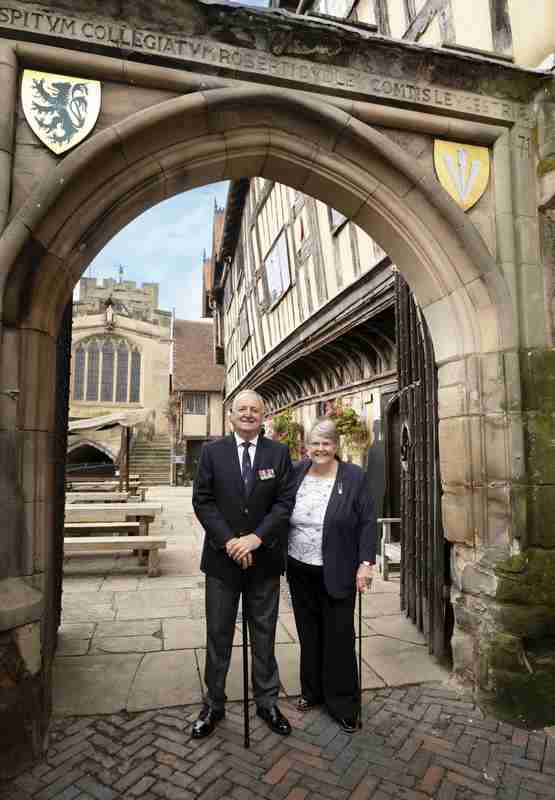
Alan Gill and Janet Brodie-Murphy move into historic Tudor home for veterans, The Lord Leycester – SWNS
Alan Gill and Janet Brodie-Murphy move into historic Tudor home for veterans, The Lord Leycester – SWNS
An Elizabethan order that has been a home for senior or infirm army veterans since the 1500s just welcomed its first female ‘Brother.’
450 years and 400 male residents have passed through the doors of the Lord Leycester in Warwick. Now though, the organization has selected Janet Brodie-Murphy as its first female Brother at the prestigious site which has remained largely unchanged since it was first built.
The Lord Leycester, in Warwick, was established as a hospital and home for soldiers by Robert Dudley, Earl of Leicester, in 1571 during the reign of Elizabeth I, but the buildings themselves date back even further—to the 14th century.
The historic timber-framed buildings enjoy the highest level of government protection and have remained a community for this organization of veterans, known as ‘Brethren,’ ever since.
Janet has moved in with fellow veteran and partner Alan Gill who she met at London’s Royal Hospital Chelsea. Alan will also become a member of the Brethren but within the community they will be referred to as “Brother Jan” and “Brother Alan,” just as in Tudor times.
Janet, who served in the Women’s Royal Army Corps, said that being able to call somewhere like the Lord Leycester home “is a huge honor and privilege.”
“I’m keen to help raise the profile of this wonderful place and ensure that everyone knows its quite remarkable history and how significant it is, not just to veterans but to the country as a whole,” she told English media outlet SWNS.
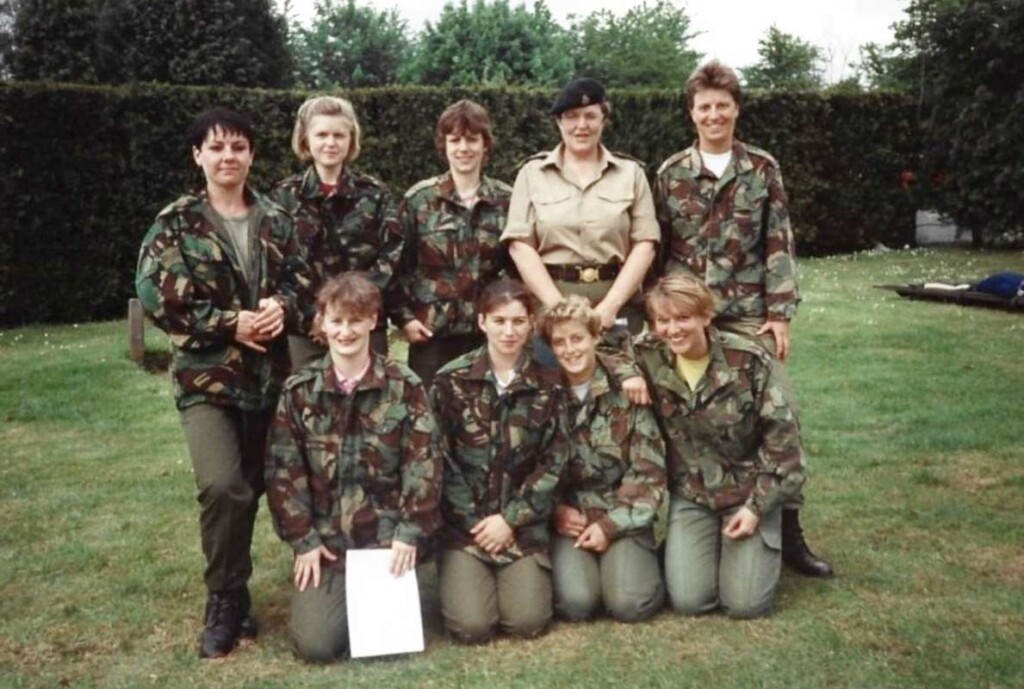
Captain Janet Brodie-Murphy wearing khaki in the back row in 1989 at a training center for the Royal Marines – credit, SWNS
The Lord Leycester is considered one of the most significant medieval sites in Europe and among the finest examples in Britain of medieval courtyard architecture.
“We are an ancient organization founded to take care of wounded veterans in the Tudor age and we haven’t changed much—except now finally we have a female Brother,” said Heidi Meyer, 33rd Master of the Lord Leycester. “I am the first female Master of the Lord Leycester and I am delighted we now have the first female Brother as well.”
“We have a centuries-long history of welcoming war heroes to live as part of our community, and the Brethren play a key role in welcoming visitors to the site.”
The Lord Leycester was built by the powerful Warwick Guilds in the late 1300s and later given to Dudley. In its 450-year history of use by the Brethren, the Lord Leycester has welcomed over 400 men to live in private lodgings on the site.
Alan Gill and Janet Brodie-Murphy will help welcome visitors to The Lord Leycester – SWNS
It remains a home to former servicemen to this day, who have served in the Army, Royal Air Force, and Navy, and the Brethren welcome visitors at the main gates as well as leading guided tours.
The couple will now join five other veterans who call the age-old buildings home.
The premises have also been used for filming Doctor Who and a TV adaptation of A Christmas Carol.
“We’ve been made so welcome already and are looking forward to getting involved wholeheartedly in life at the Lord Leycester and Warwick,” said Alan, who served as an electrician in the Royal Corps of Engineers.
SHARE This Couple’s Amazing New Digs And The Rich History They’re Now A Part Of…
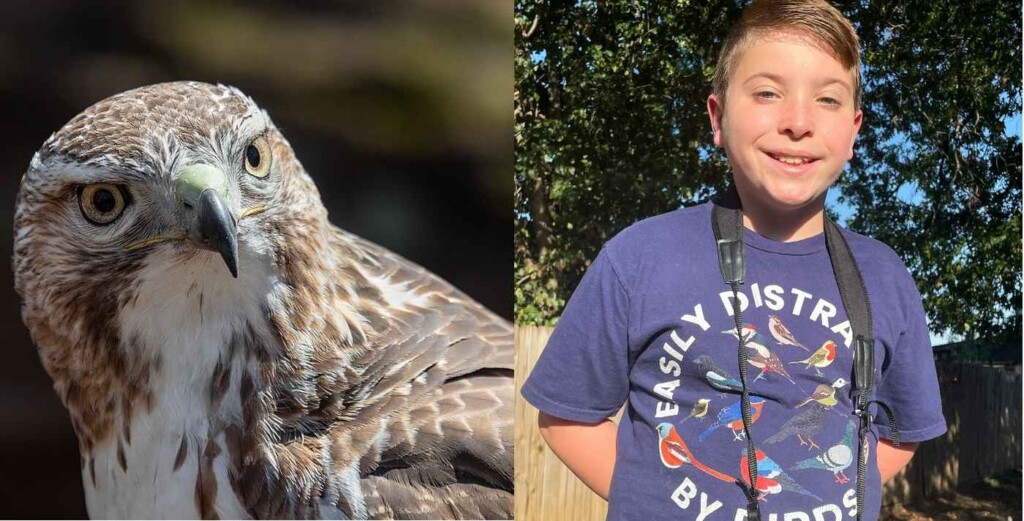
Splitscreen by GNN - Red-tailed hawk, and Samuel Henderson - credit, CC BY-SA, Rhododendrites / Lori Henderson, released.
Splitscreen by GNN – Red-tailed hawk, and Samuel Henderson – credit, CC BY-SA, Rhododendrites / Lori Henderson, released.
Typically, when savants’ incredible natural talents are reported on in the news media, the stories feature musical instrument mastery or mathematical aptitude, but this 10-year-old from OKC has a different skill.
Samuel Henderson can fool professional audio field guides with his incredibly accurate bird calls.
Whether high or low, a trill or a gobble, Samuel seemingly has no limits on his capacity for laryngeal mimicry.
After he posted a video on TikTok of a trio of bird calls he performed in his school auditorium, his account co-managed with his mom Lori went viral, and he soon began posting more and more videos of different bird calls that have to be heard to be believed.
Lori was initially hesitant to allow Samuel to go before his peers and demonstrate such an unorthodox talent; she wasn’t sure how they’d react.
“It took us over 30 minutes to exit the gym due to the high fives and peers trying to get to him and compliment him on his performance,” Lori told the Audubon Society.
The society spoke to Samuel who said that he has mastered 50 bird calls over the past six years, and is always on the lookout for more. In fact, he recently did a fan request video on TikTok with suggestions from his followers.
“Once, I was at the OKC Zoo, and I saw a great-tailed grackle standing on a trash can, and I started copying it,” he says. “That was the first bird I started making a sound of.”
It’s clear from his performance that Samuel, who has autism, understands the calls of the birds he wants to mimic on a much deeper level than most humans, as his mimicry visually displays contortions of his stomach and face—perhaps the key to arriving at the glass-shattering pitches necessary for the northern cardinal or red-tailed hawk.
Audubon reports that Samuel’s bird calls are so accurate, he was able to fool the Merlin Birdsong app—a tool used by birders to help identify species in the field.
Lori says that since he was very young, Samuel often tried to mimic sounds in the world around him. He was always happiest and most serene when listening to birds though.
Samuel wants to pursue a career studying birds, and has his sights set on a university degree from the birding capital of science—Cornell University’s lab of ornithology—a place he was invited to visit after taking off as a TikTok sensation.
Dan Desfosses, right, manager of Market Basket, and the man who found it (left) known only as Skip - credit Truong Huynh, supplied to the media.
Dan Desfosses, right, manager of Market Basket, and the man who found it (left) known only as Skip – credit Truong Huynh, supplied to the media.
A Massachusetts senior lost an envelope containing $12,000 at a supermarket, but just as there seemed to be no hope of finding it, the kindness of a Good Samaritan reunited the woman with her life savings.
Returning home from grocery shopping at the local Market Basket in Shrewsbury, Massachusetts, 71-year-old Ha’s heart dropped—the envelope of cash was nowhere to be seen. Speaking very little English, Ha called her nephew Truong Huynh for help.
Huynh, 55, took his aunt back to Market Basket to look for the cash, but despite checking everywhere she had gone, their search yielded nothing. Arriving at the help desk, the two got in touch with manager Dan Desfosses, who said he would check the security camera footage to see if they could locate where and when she lost the envelope.
This too, turned up nothing. At no point was she in the shot when the money was lost.
Giving up, they headed back to their car.
Suddenly Desfosses and another man came running out to meet them, with the former explaining that the latter had just brought the envelope with every last dollar accounted for to the management desk.
“We were so happy, we almost cried,” Huynh told the Washington Post, adding that he asked to take a photo of the man with Desfosses. “He showed honor,” Huynh said. “Many people wouldn’t pass that test.”
The ‘he’ in question was a man called Skip, whose girlfriend worked at the Market Basket.
“I don’t know if there’s a lot of people that would do that,” Desfosses added. “It shows you what he’s made of… It shows you there are truly some good people in this world.”
Once home, Ha decided to return to Market Basket the next day and give a cash reward to Mr. Skip. She left $300 with his girlfriend as he wasn’t there at the time.
Most people reading will know that seniors have their ways—and tend to be set in them.
That was certainly the case for Ha, who, for fear of misplacing it, carried the envelope with her everywhere she went. Her rationale was that if the money was with her, it couldn’t be taken or moved by anyone else.
There are obvious risks to that strategy. $12,000 cash is heavy, and more than happy in its smooth paper envelope to slip and slide against the fabric lining of a purse and out into the open air.
Ha had always intended to hand the money over to her children as an inheritance one day, and GNN is assuming she will open a savings account at the nearest bank branch.
In a local Facebook group, Huynh shared the story which eventually made it to the Post.
“It takes a special kind of person to do something so honest and selfless, and Skip, you are a true example of integrity and compassion,” Huynh wrote. “Thank you, Skip — you’ve touched more lives than you know today.”
SHARE This Man’s Uplifting Honesty With Your Friends…
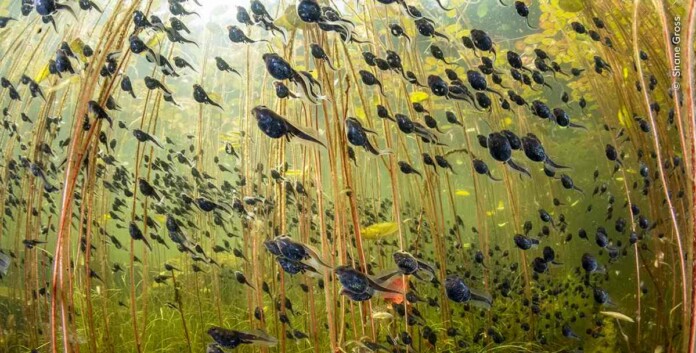
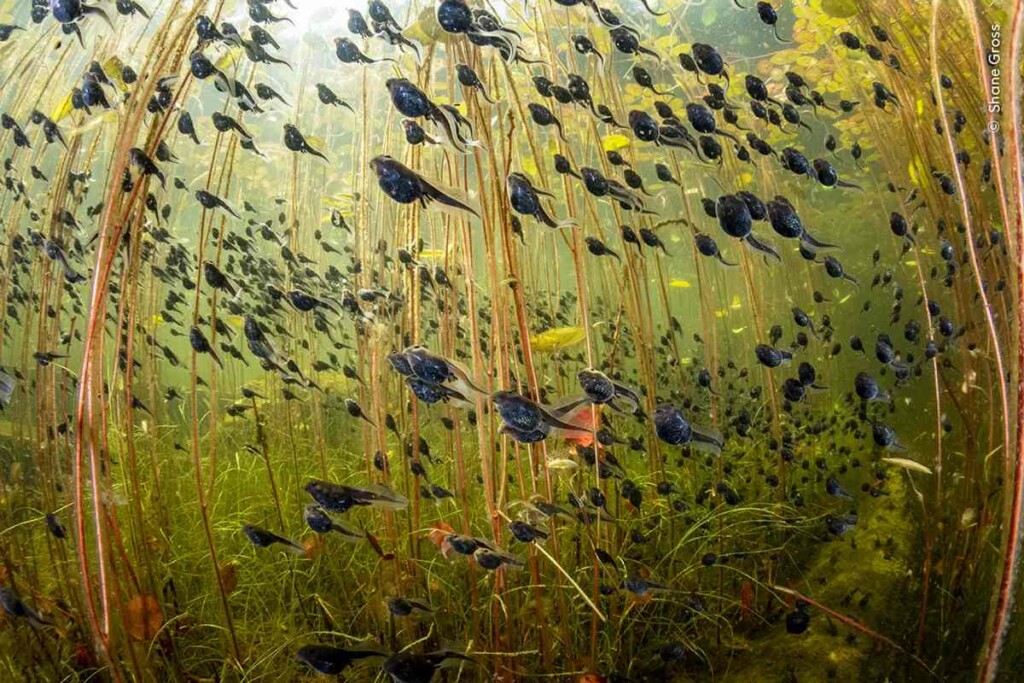
Marine conservation photojournalist Shane Gross captured this simply unreal image of a swarm of western toad tadpoles in a Canadian lake, and with it won the Wildlife Photographer of the Year contest.
Organized by the London Natural History Museum, the contest is in its 60th year. The judges were not only blown away by the mixtures of color and light but by the fact that no one had ever submitted an image of tadpoles before.
Gross was snorkeling in Cedar Lake, on Vancouver Island, trying as best as he could to avoid disrupting the silt and algae anchoring the roots of plants like lilypads under which he was swimming.
“The jury was captivated by the mix of light, energy, and connectivity between the environment and the tadpoles,” explains Kathy Moran, chair of the judging panel. “We were equally excited by the addition of a new species to the Wildlife Photographer of the Year archive.”
These tadpoles are from a near-threatened species of toad, and in a typical year, 99% will not survive to adulthood.
Gross described himself as “over the moon” to have won the award.
“I hope the attention this image brings our amphibians and wetlands leads to much-needed and urgent protections,” the photographer wrote on his Instagram, which is a worthwhile follow if you love nature. “If you know of an important place in your backyard, let’s rally the community together and fight for its protection.”
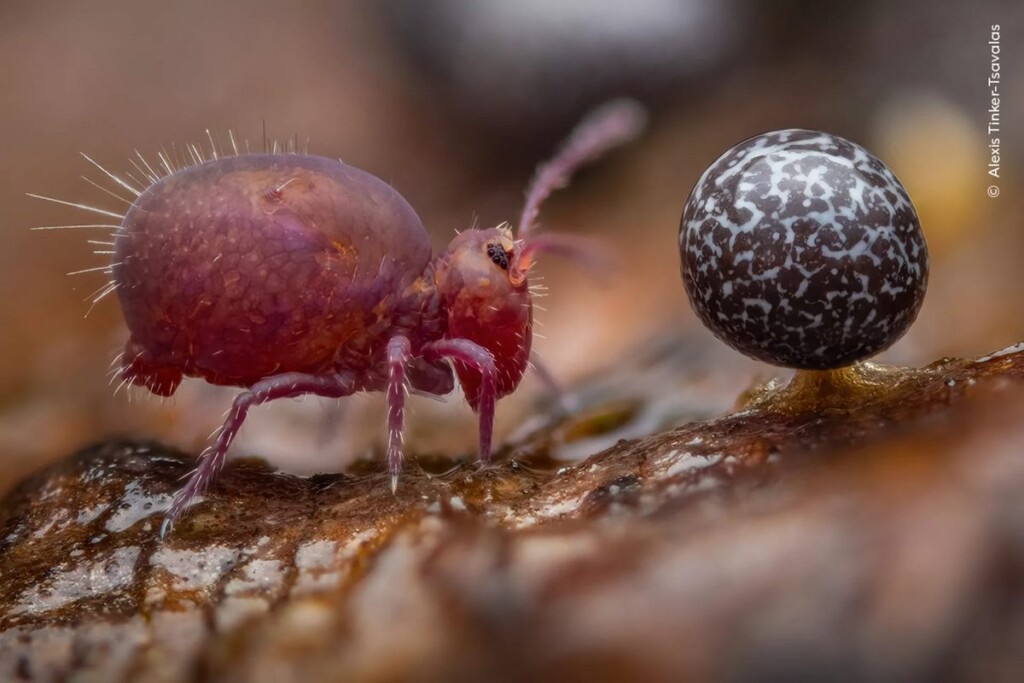
The runner-up to first place was by Alexis Tinker-Tsavalas from Germany, who used a technique called ‘focus stacking’ to quickly take many images, each with a different focus point, before superimposing them to create the right blend of clarity.
He had to work fast though, as his target was a springtail insect, which at the time seemed to be carefully observing the fruiting body of a slime mold. Both were fixed to the underside of a dead log in the forest, and when Tinker-Tsavalas turned it over, he had seconds to act as springtails can easily jump away like a flea.
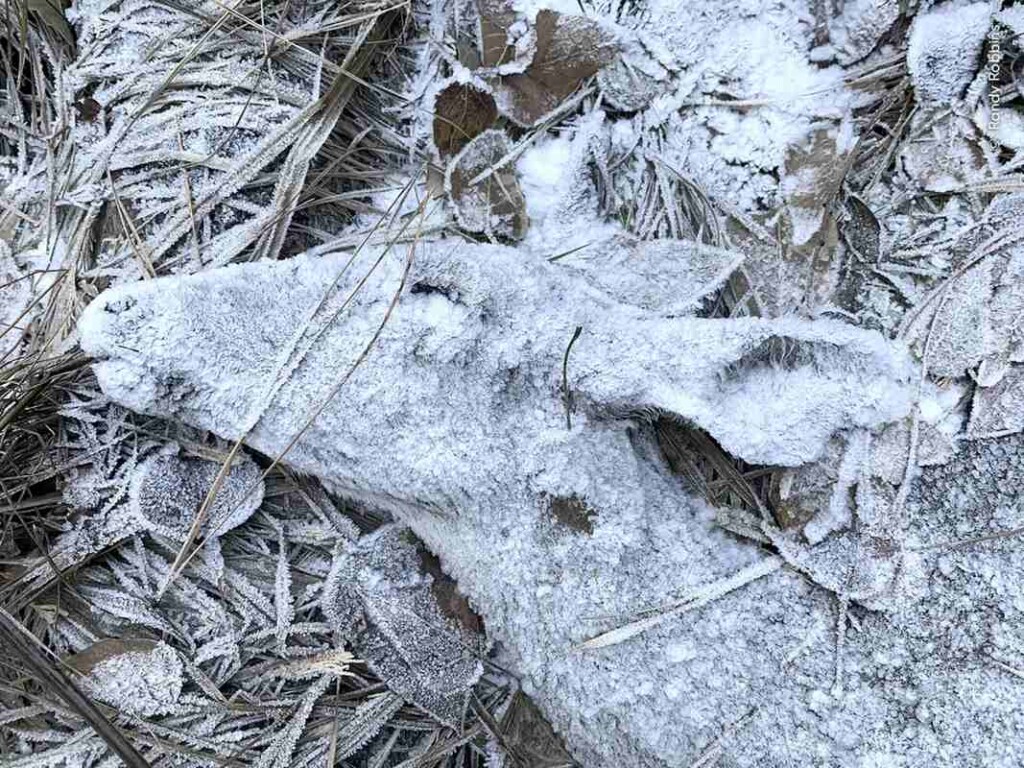
This year’s contestants, of which there was a record number, included the first winner with a smartphone—for the category of natural artistry. Checking trail cameras near his home in Susanville, California, Randy Robbins found a deer that had passed away over the night.
He whipped out his smartphone and took a poignant picture of its peaceful rest, one with the ice and rime on the forest floor.
Winning the special commendation for capturing animal behavior, Xingchao Zhu used his Chinese New Year holiday off to stalk a group of Pallas Cats in the mountains of Inner Mongolia.
His winner captured a large, exceptionally fluffy individual that succeeded in its hunt for birds. The full moon—the sign of the new year, illuminated this nocturnal hunter stunningly.
Quote of the Day: “To give without any reward, or any notice, has a special quality of its own.” – Anne Morrow Lindbergh
Photo by: Getty Images for Unsplash+
With a new inspirational quote every day, atop the perfect photo—collected and archived on our Quote of the Day page—why not bookmark GNN.org for a daily uplift?
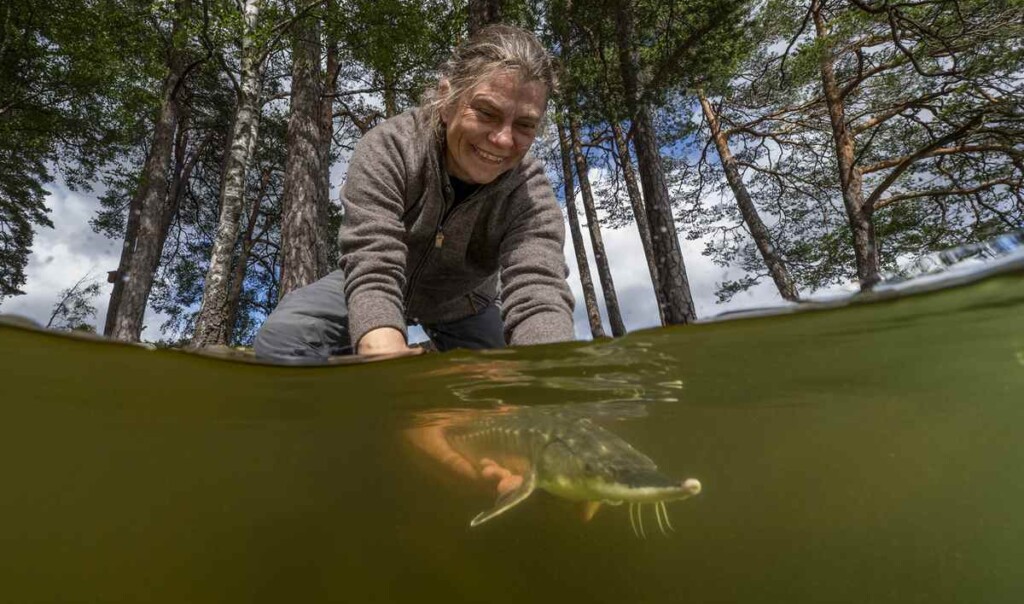
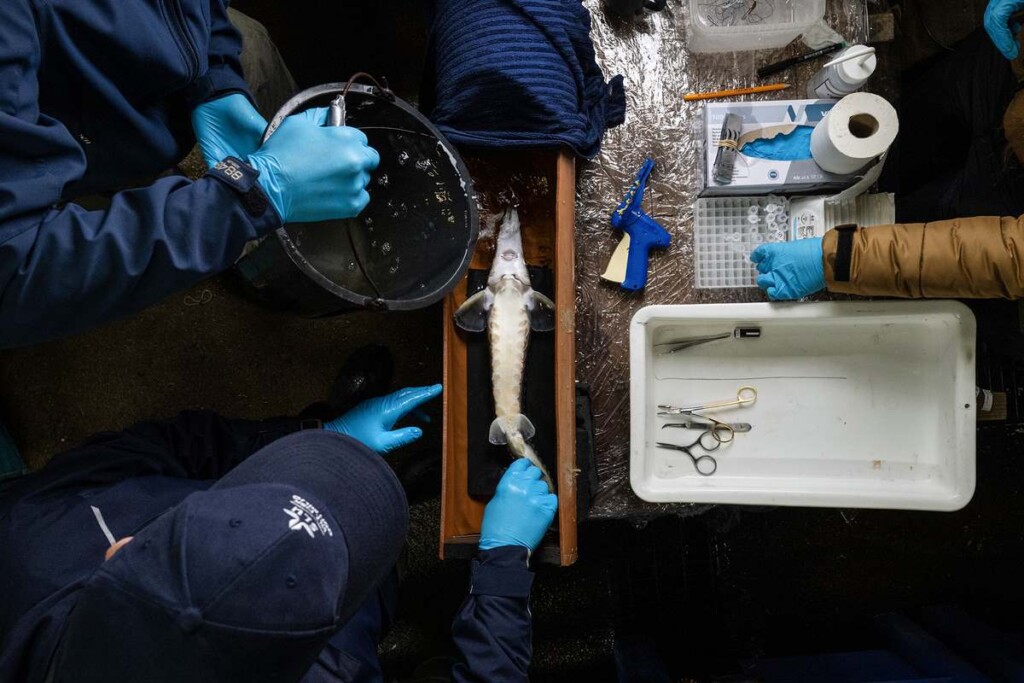
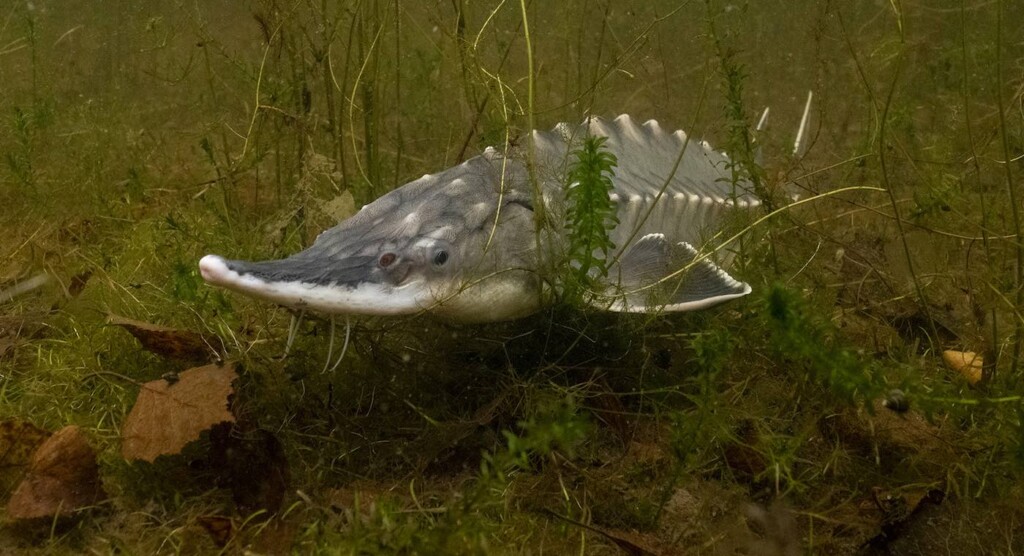
The mighty sturgeon has been reintroduced in Sweden where it was driven to extinction in the early 20th century.
The Atlantic sturgeon is now back in the River Göta following years of measures to improve the water quality and habitat as well as financial support from a variety of groups and institutions.
The Return of the Sturgeon initiative, managed by the Swedish Anglers Association, was able to fulfill its mission recently of releasing 100 captive-bred juvenile Atlantic sturgeon into the Göta.
The juveniles were reared in a breeding facility in the village of Born auf dem Darß, on Germany’s Baltic Sea coast which was just one of the initiative’s German partners. They were released into the Göta near Bohus Fortress, in the city of Kungälv.
“This is a unique and incredibly exciting event,” says project leader Linnéa Jägrud, who is overseeing the Return of the Sturgeon initiative. “The reintroduction of a regionally extinct species is very uncommon in Sweden. I’m looking forward to the day when we can look at the river and say ‘there are Atlantic sturgeon spawning below the surface here’.”
Much like salmon, sturgeon spawn and grow up in rivers before migrating to saltwater habitat like estuaries and the eventually the sea in adulthood. It’s expected the sturgeon will eventually make for the Göta Estuary, but not before they develop the necessary salt tolerance to survive in ocean water.
credit – courtesy of Jon A. Juarez / Rewilding Europe.
The 100 released fish were fitted with GPS tracking tags so scientists can monitor their movements, including where they go when they make it to the ocean, and where they choose to return in order to spawn.
Rewilding Europe supported the initiative with a generous €42,000 grant.
The organization wrote that surgeons are both keystone and indicator species that are essential to a river reaching its most robust levels of biodiversity. They use their narrow, tapered heads to forage for insect larvae and crustaceans while naturally disturbing riverbeds, enhancing oxygenation, moving organic matter along waterways, and creating spawning grounds for smaller fish, in the process.
An Atlantic sturgeon – courtesy of Jon A. Juarez / Rewilding Europe
Rewilding Europe also states they act as hosts for species such as lampreys and freshwater pearl mussels, and eat invasive species that would otherwise disrupt natural food webs. They depend on an interlinked network of habitats that provide them with suitable conditions for feeding, migrating, and spawning, and are sensitive to changes in water temperature, oxygen levels, and other environmental factors.
“The sturgeon can become a symbol for the overall health of the Göta River,” Jägrud told the organization. “It will be an ecological ambassador for the river.”
Jägrud added that she would like to see a situation whereby several hundred individuals are released in the Göta every year due to Atlantic sturgeon pups having a high mortality rate in nature.
“The ideal scenario would be to establish a rearing facility here in Sweden. This would increase the chances of the sturgeon returning here to breed. We want them to feel that the Göta is their home,” she said.
SHARE The Inspiring Return Of This Eons-Old Fish To Scandinavia…
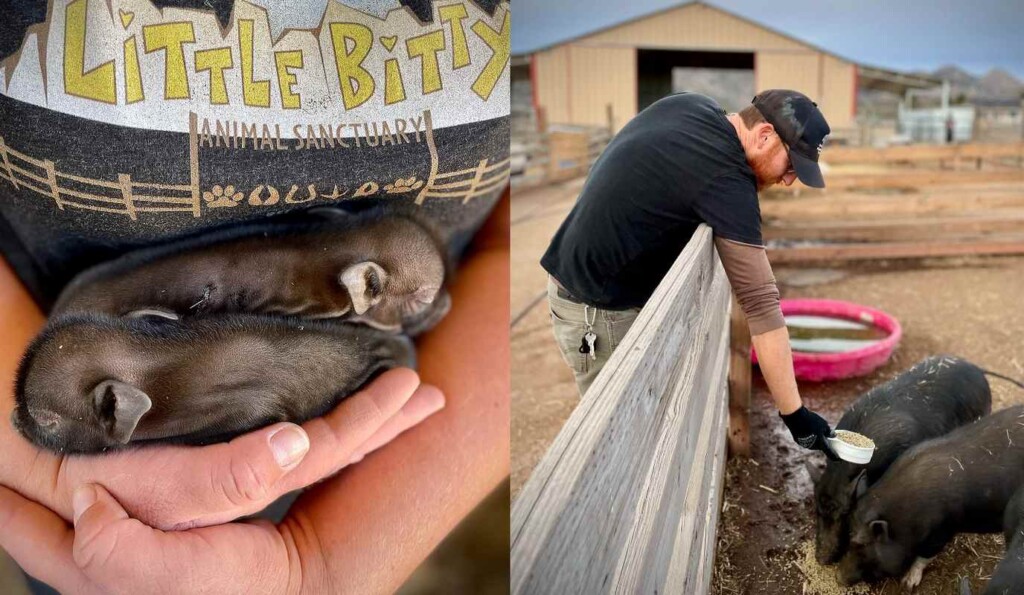
(left) when the piglets first arrived in 2022, and their current size - credit, Little Bitty Animal Shelter, Ranchita. Retrieved from Facebook.
(left) when the piglets first arrived in 2022, and their current size – credit, Little Bitty Animal Shelter, Ranchita. Retrieved from Facebook.
When a scoundrel dumped around 150 captive-raised pigs on the road in the countryside near San Diego in 2022, locals feared they would all perish.
But many of them were rescued, and NBC 7 recently caught up with 2 piglets and a sow who are now living ‘high on the hog’ at a local ranch where their ugly cuteness is helping to raise money for over 100 rescued animals like them.
Today, Mesa, Grande, and their mother Wendi spend their days chowing down and wallowing in muck, as any upstanding pig should, at the Little Bitty Animal Shelter, which was one of several local rescues that stepped up with the pigs were abandoned.
Neither community members nor police ever found out who dumped all the pigs on the dangerous Mesa Grande road, nor why they did it. Some didn’t make it, some went feral, but more than 50 were saved and taken in to live what is probably a much better life.
“Every time when we were out here and we get to spend some time with them and see them, it’s a good feeling,” said Ryan Valverde, owner of Little Bitty Animal Shelter alongside his wife.
“If someone went through the process of dumping them off, then they probably weren’t in the best living conditions leading up to that.”
Arriving at just two pounds, Mesa and Grande are around 25 times heavier now.
NBC 7’s Joe Little got to visit the shelter to see the 3 little pigs, and their appearance on basic cable spurred donations that allowed the shelter to stock up on food and take care of some much-needed veterinary attention for their critters.
WATCH the story below from NBC 7 San Diego…
SHARE These Handsome Hogs And Their Second Chance With Your Friends…
Muthukumaran Packirisamy says real-world applications for holographic 3D printing include the creation of new forms of skin grafts and improved drug delivery - credit, Concordia University.
Muthukumaran Packirisamy says real-world applications for holographic 3D printing include the creation of new forms of skin grafts and improved drug delivery – credit, Concordia University.
Researchers have developed a novel method of 3D printing that uses acoustic holograms, and while it’s a little technical and difficult to understand, the discovery might be a paradigm shift.
The researchers say it’s quicker than existing methods and capable of making more complex objects as the sound waves help cancel out certain limitations imposed by gravity and form the object at a continuous rate rather than “voxel by voxel” (a voxel is the 3D equivalent of a pixel, though perhaps should have been called a ‘boxel.’)
The process, called holographic direct sound printing (HDSP) builds on a method introduced in 2022 that described how tiny bubbles create extremely high temperatures and pressure for trillionths of a second to harden resin into complex patterns.
Now, by embedding the technique in acoustic holograms that contain cross-sectional images of a particular design, polymerization occurs much more quickly.
It has been described in a recent article in the journal Nature Communications, and elaborated in a video produced by Concordia that has to be watched to be believed.
In order to retain the fidelity of the desired image, the hologram remains stationary within the printing material. The printing platform is attached to a robotic arm, which moves it based on a pre-programmed algorithm-designed pattern that will form the completed object.
Muthukumaran Packirisamy, a professor in the Department of Mechanical, Industrial, and Aerospace Engineering at Concordia University in Montreal, believes this can improve printing speed by up to 20 times while at the same time using less energy.
“We can also change the image while the operation is underway,” he told the Concordia press team. “We can change shapes, combine multiple motions, and alter materials being printed. We can make a complicated structure by controlling the feed rate if we optimize the parameters to get the required structures.”
According to the researchers, the precise control of acoustic holograms allows it to store information of multiple images in a single hologram. This means multiple objects can be printed at the same time at different locations within the same printing space.
As a result, acoustic holography will be a launching pad for innovation across any number of fields: it can be used to create complex tissue structures, localized drug and cell delivery systems, and advanced tissue engineering. Real-world applications include the creation of new forms of skin grafts that can enhance healing, and improved drug delivery for therapies that require specific therapeutic agents at specific sites.
He adds that, as soundwaves can penetrate opaque surfaces, HSDP can be used to print inside a body or behind solid material. This can be helpful in repairing damaged organs or delicate parts located deep within an airplane.
The researchers believe that HDSP has the potential to be a paradigm-shifting technology. He compares it to the advancement light-based 3D printing technology saw with the evolution from stereolithography, in which a laser is used to harden a single point of resin into a solid object, to digital light processing, which cures entire layers of resin simultaneously.
“You can imagine the possibilities,” he says. “We can print behind opaque objects, behind a wall, inside a tube, or inside the body. The technique that we already use and the devices that we use have already been approved for medical applications.”
WATCH it in action below…
KNOW Someone Fascinated By 3D Printing? They’ve Got To See This…
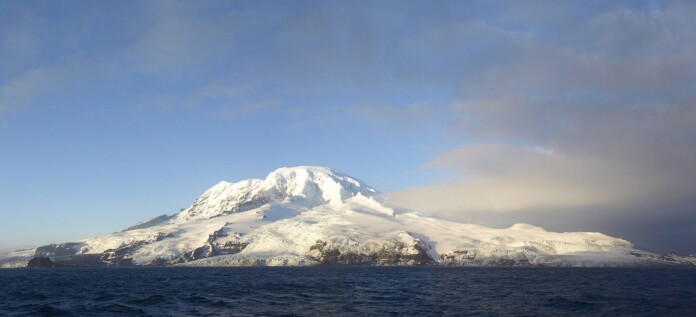
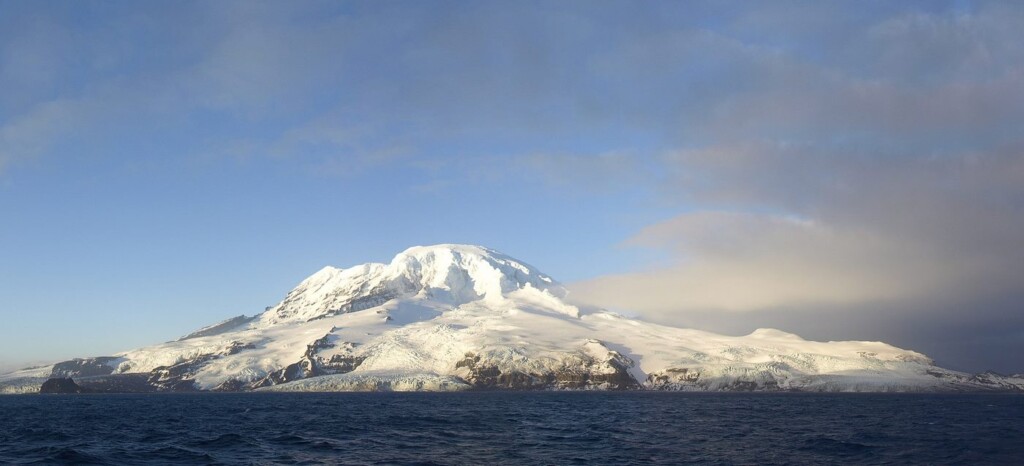
Over 10,000 square miles of additional protected area will be added to the Heard and McDonald Islands in Australia’s far southern territorial waters.
Coupled with other expansions of existing marine sanctuaries, it puts Australia on course to have 52% of its ocean territory protected, more than any other nation, by the end of the current administration’s term.
“This is not just a huge environmental win for Australia, it’s a huge environmental win for the world,” said Australian Environment Minister Tanya Plibersek. “This is a unique and extraordinary part of our planet. We are doing everything we can to protect it.”
Located over 2,000 miles south of the Australian continent, Heard and McDonald Islands make up about 144 square miles of volcanic terrain that represent one of the most remote places on Earth.
They are important breeding grounds for 19 species of bird, including 4 species of penguins, but dozens of other bird species take refuge there. It is a UNESCO Natural Heritage Site, and a RAMSAR Wetland in addition to being an Australian national marine sanctuary.
The quadrupling of the sanctuary borders amounts to 11.5 thousand square miles, (30,000 sq km) of additional protection, but represents one-tenth of the total proposed expansions of marine protected areas.
Under the current guidance, prepared by nationally sanctioned scientific surveys, the total marine protected areas will make up an area the size of Italy.
The current administration of Prime Minister Anthony Albanese is seeking to establish a new environmental protection agency, as well as set a high bar for the country’s commitments to an international philosophy of conservation governance known shorthand as “30×30” or “30 by 30,” which states that to prevent the worst effects of general environmental degradation worldwide, 30% of land and waters should be under protections. Often the second thirty refers to a hypothetical 2030 deadline.
SHARE This Incredible Dedication To Marine Conservation With Your Friends…
Quote of the Day: “God gives the nuts, but he does not crack them.” – Franz Kafka
Photo by: Jacqueline O’Gara
With a new inspirational quote every day, atop the perfect photo—collected and archived on our Quote of the Day page—why not bookmark GNN.org for a daily uplift?
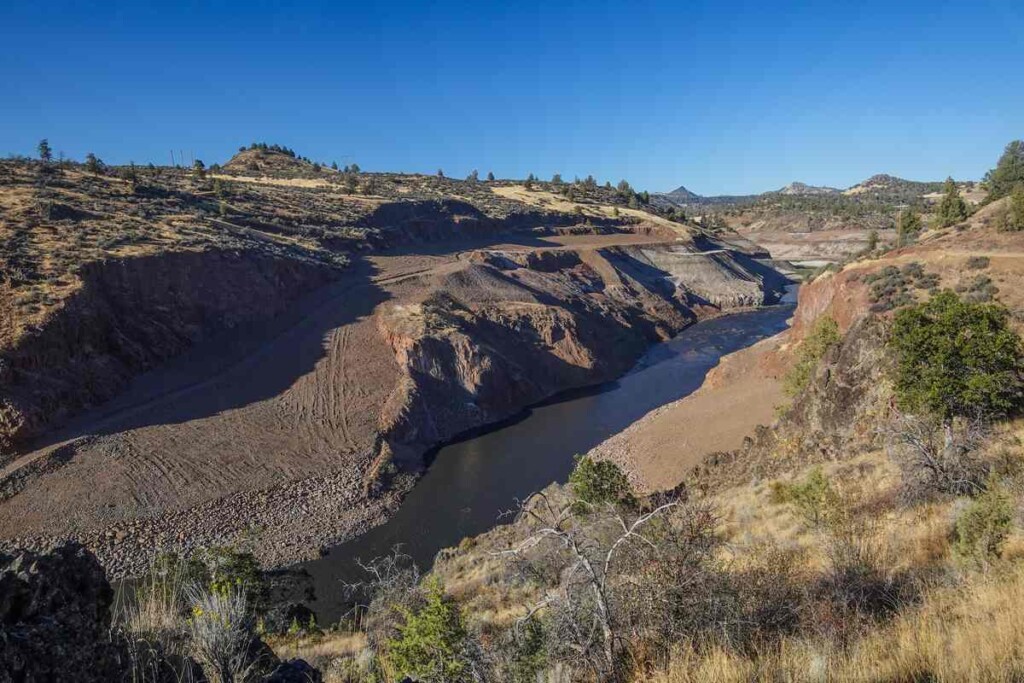
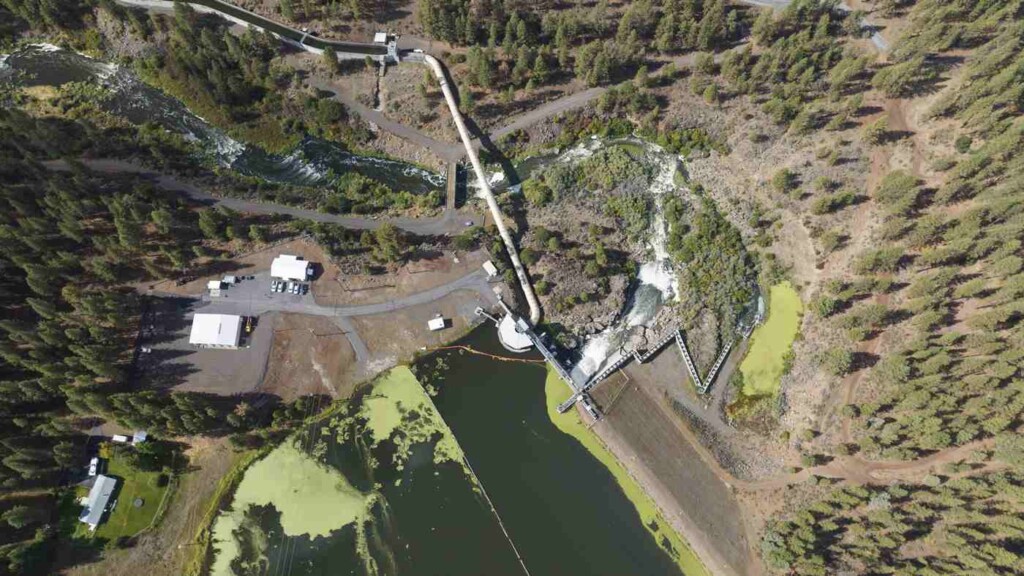
Klamath River flows freely, after Copco-2 dam was removed in California – Courtesy of Swiftwater Films
Klamath River flows freely, after Copco-2 dam was removed in California – Courtesy of Swiftwater Films
For years, California was slated to undertake the world’s largest dam removal project in order to free the Klamath River to flow as it had done for thousands of years.
Now, as the project nears completion, imagery is percolating out of Klamath showing the waterway’s dramatic transformation, and they are breathtaking to behold.
Incredibly, the project has been nearly completed on schedule and under budget, and recently concluded with the removal of two dams, Iron Gate and Copco 1. Small “cofferdams” which helped divert water for the main dams’ construction, still need to be removed.
The river, along which salmon and trout had migrated and bred for centuries, can flow freely between Lake Ewauna in Klamath Falls, Oregon, to the Pacific Ocean for the first time since the dams were constructed between 1903 and 1962.
“This is a monumental achievement—not just for the Klamath River but for our entire state, nation, and planet,” Governor Gavin Newsom said in a statement. “By taking down these outdated dams, we are giving salmon and other species a chance to thrive once again, while also restoring an essential lifeline for tribal communities who have long depended on the health of the river.”
“We had a really incredible moment to share with tribes as we watched the final cofferdams be broken,” Ren Brownell, Klamath River Renewal Corp. public information officer, told SFGATE. “So we’ve officially returned the river to its historic channel at all the dam sites. But the work continues.”
Iron Gate Dam (before) – Credit: Swiftwater FilmsIron Gate Dam (after) – Credit: Swiftwater Films
“The dams that have divided the basin are now gone and the river is free,” Frankie Myers, vice chairman of the Yurok Tribe, said in a tribal news release from late August. “Our sacred duty to our children, our ancestors, and for ourselves, is to take care of the river, and today’s events represent a fulfillment of that obligation.”
The Yurok Tribe has lived along the Klamath River forever, and it was they who led the decades-long campaign to dismantle the dams.
At first the water was turbid, brown, murky, and filled with dead algae—discharges from riverside sediment deposits and reservoir drainage. However, Brownell said the water quality will improve over a short time span as the river normalizes.
“I think in September, we may have some Chinook salmon and steelhead moseying upstream and checking things out for the first time in over 60 years,” said Bob Pagliuco, a marine habitat resource specialist at the National Oceanic and Atmospheric Administration in July.
JC Boyle Dam (before) – Credit: Swiftwater FilmsJC Boyle Dam (after) – Credit: Swiftwater Films
“Based on what I’ve seen and what I know these fish can do, I think they will start occupying these habitats immediately. There won’t be any great numbers at first, but within several generations—10 to 15 years—new populations will be established.”
Ironically, a news release from the NOAA states that the simplification of the Klamath River by way of the dams actually made it harder for salmon and steelhead to survive and adapt to climate change.
“When you simplify the habitat as we did with the dams, salmon can’t express the full range of their life-history diversity,” said NOAA Research Fisheries Biologist Tommy Williams.
“The Klamath watershed is very prone to disturbance. The environment throughout the historical range of Pacific salmon and steelhead is very dynamic. We have fires, floods, earthquakes, you name it. These fish not only deal with it well, it’s required for their survival by allowing the expression of the full range of their diversity. It challenges them. Through this, they develop this capacity to deal with environmental changes.”
SHARE These Incredible Photographs With Your Friends On Social Media…
A painting that was found in a basement signed with the name “Picasso,” but that was dismissed, thrust into a cheap frame, hung in the family house, and then in a restaurant, has finally been recognized as an authentic piece by the Spanish artist.
The value is already estimated to be $6 million, but if recognized by the Pablo Picasso Foundation in Paris, it could be worth twice or thrice that much.
The painting is believed to be an asymmetrical image of Dora Maar, who was Picasso’s lover at a time when he spent a period on the Italian island of Capri, where in the 1950s, Luigi Lo Rosso, a local pawnbroker who used to comb dumps and abandoned houses for treasure, found it in the basement of an empty villa.
According to the story, reported stateside by CNN, Lo Rosso believed it to be authentic, but his wife was less impressed, and so Luigi stuck it in a frame and gave it to her as a present to her great chagrin.
Luigi’s son, Andrea, wasn’t even born at the time. He told CNN that his mother took the Picasso and another canvas covered in dust and lime her husband had found and washed them with detergent as if they were carpets.
In college, the younger Lo Rosso came upon another piece of Picasso’s depicting Dora Maar in an art history textbook, and learned he was in Capri at the time when it was made. Coming home, he told his mom they may have something special on their hands.
It took decades, but because Andrea went through the proper channels—namely treating it as if it were stolen and registering it with the patrimony police, more attention was given to it than the experts Andrea had first contracted were willing to offer.
Locked in a police vault in Milan until 2019, the quest for authentication of the work was concluded when Cinzia Altieri, a graphologist for a patrimony court in Milan, worked for several months to authenticate the Picasso signature in the corner—it was 100% real.
Andrea hasn’t stopped at Altieri’s examination, nor on the word of Luca Gentile Canal Marcante, an art expert and honorary president of the Swiss-based art restoration non-profit Arcadia Foundation, who also says it is doubtlessly authentic.
Andrea is seeking the approval of the Picasso Foundation in Paris—something his father always hoped might come to pass.
A couple who quit their jobs and sold all their belongings to travel in a campervan has completed an epic four-year adventure around the world.
Along with avoiding their work at Britain’s National Health Service just months before pandemic controls started, they amassed a huge following on social media through their YouTube channel Tread The Globe.
Chris and Marianne’s campervan in front of Mount Fuji – credit, SWNS
Chris and Marianne Fisher set off on their journey in January 2020 in a 20-year-old Fiat Ducato campervan called “Trudy” with 40,000 miles which they bought for about $21,000 two years earlier.
The pair said they realized they needed ‘to live for now,’ so they sold everything inside their 6-bedroom property in Telford, England, and rented it out to help pay for their journey.
In total, the couple in their mid-50s traveled 67,000 miles and visited 29 countries logging 28 million YouTube views and 180,000 subscribers.
“I think when you’re sitting at a desk looking out of the window and there’s a brick wall, whether it’s a weekend away or… a whole craziness like we’ve done, I would encourage anyone to just go out,” said Marianne. “If you’ve got something that’s stopping you, a fear, message me and I will put you straight.”
“It’s been phenomenal. Different places, different cultures—everybody’s given us a warm welcome around the world.”
After leaving Telford, Chris and Marianne crossed Europe before arriving in Turkey just in time for COVID-19 lockdowns. The pair settled on becoming Turkish residents for 18 months before making the decision to ship the van to South Carolina and drive across the United States.
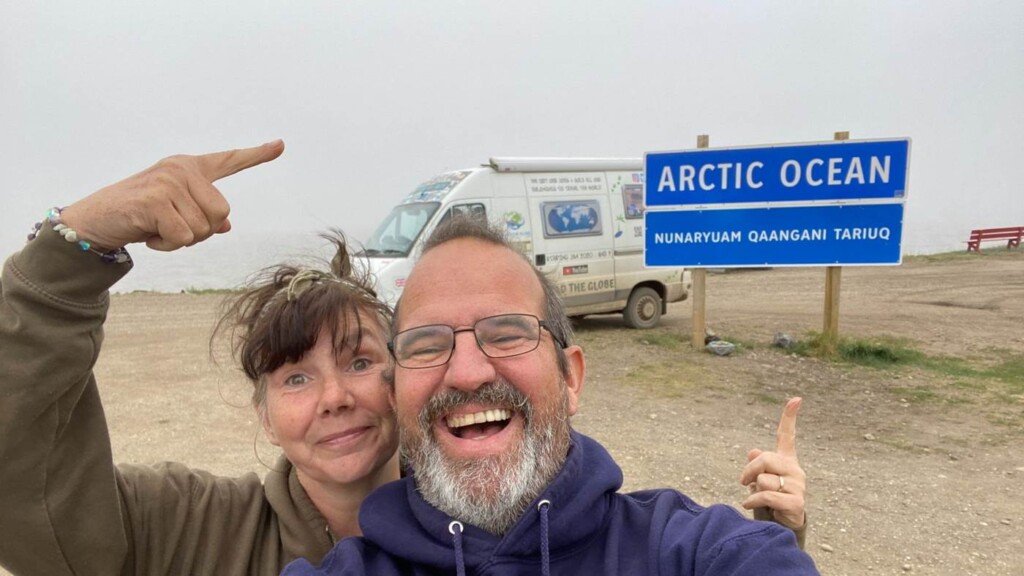
Arriving in San Francisco, the couple headed to Vancouver at the start of a loop around Alaska. They swam in the Arctic Ocean after driving 1,000 miles along a dirt road called the Dempster Highway which leads to the most northerly road point of Canada.
The pair then crossed back into the US, and drove part of Route 66 into California then down into Mexico.
After a few months of exploring, the pair shipped the campervan from LA to Japan. They stayed for 3 months in the Land of the Rising Sun, then jumped on a car ferry to South Korea but got something like ‘traveler’s block,’ that left them unable to decide where to go next.
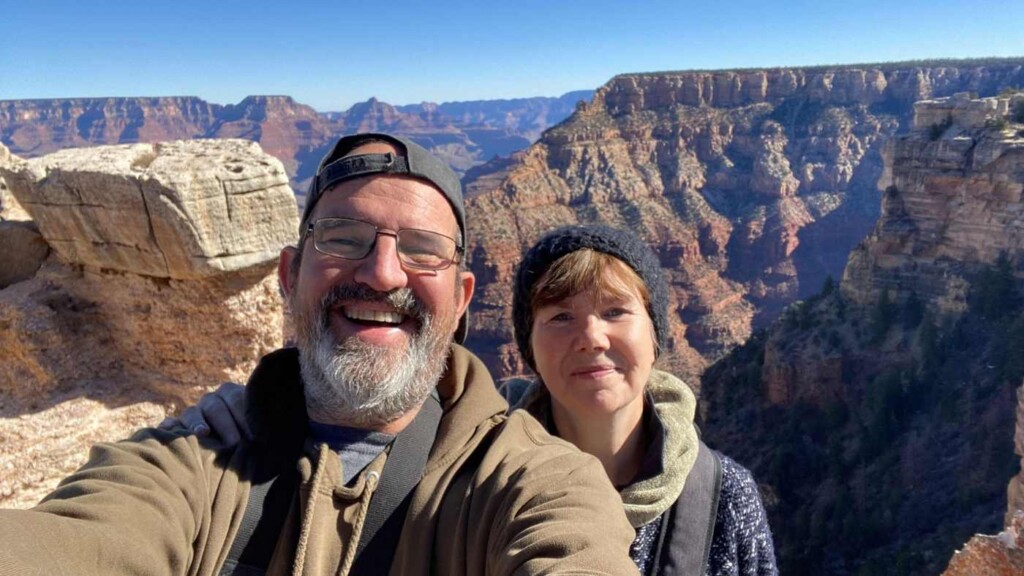
Chris and Marianne at the Grand Canyon – credit, SWNS– credit, SWNS
Refused a visa for China, Chris and Marianne toured Malaysia and Thailand before visiting India and Pakistan. Originally they planned to ship the campervan to Saudi Arabia via Karachi, but were told that the country doesn’t allow right-hand drive vehicles. Instead, the pair went to South Africa to tour a new continent.
They headed north through Mozambique, Zimbabwe, and Botswana before finally taking one last ferry home from Durban after four and a half years of traveling and living in their van.
“We had the mad idea to see if we could wild camp in Las Vegas and see a show, and we managed to stick in a hotel car park and then went to a show and Cirque du Soleil,” said Chris, picking out some brief highlights in a conversation with British media company SWNS.
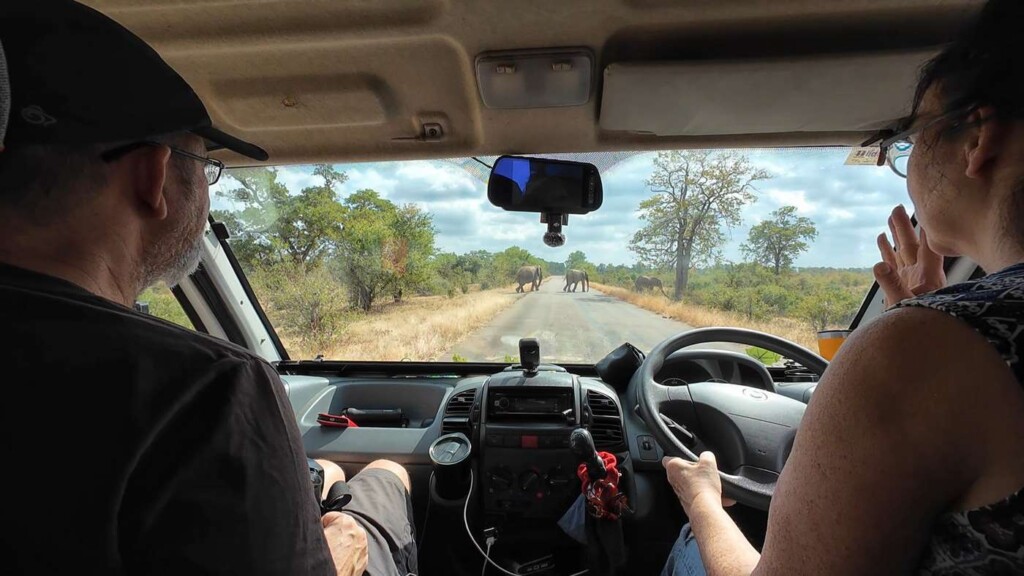
“We drove past Mount Fuji. Passed the Taj Mahal in India, and the nature of seeing elephants walk in front of your van in Kruger National Park and having leopards and lions walking around was fantastic.”
In early September, more than 100 people lined the streets of Telford when they arrived back in their van. The couple said they were ‘overwhelmed’ with the support they had received and are already planning their next adventure.
“I really feel if we do nothing else in our life, we’ve done something fantastic,” said Marianne. “We’re so happy to be home and see such a warm welcome on a rainy day—and so sad that this adventure’s over, but there’s going to be more.”
Chris and Marianne on safari in their van – credit, SWNS
When the couple purchased their van, it had approximately 40,000 miles on the odometer. But, now after their trip around the world, the pair say Trudy has racked up more than 137,000 miles, not including 24,000 at sea.
“We’ve always loved travel and planned when we retired one day that we would go and spend our retirement traveling,” Chris added “You get to that point in life where you realize you’re not going to live forever.”
Through their Tread The Globe channel, the couple documented their trip online and soon built up a legion of followers and fans as they tried to live on £27 a day.
“There’s a real impact and it feels really nice that we’re giving positivity because we’re just about showing the world is a beautiful place.”
WATCH some highlights of their trip below…
SHARE Chris And Marianne’s Exceptional Voyage With Your Friends…
The everyday effects of sleep, exercise, heart rate, and mood—both good and bad—could linger in our brains for over two weeks, according to a pioneering study.
Finnish researchers tracked one person’s brain and behavioral activity for five months using brain scans and data from wearable devices and smartphones.
“We wanted to go beyond isolated events,” says research leader Ana Triana. “Our behavior and mental states are constantly shaped by our environment and experiences. Yet, we know little about the response of brain functional connectivity to environmental, physiological, and behavioral changes on different timescales, from days to months.”
The study found that our brains do not respond to daily life in immediate, isolated bursts. Instead, brain activity evolves in response to sleep patterns, physical activity, mood, and respiration rate over many days.
This suggests that a workout or a restless night even from last week could still affect your brain—and therefore your attention, cognition, and memory—well into next week.
Though the study wasn’t focused exclusively on physical activity, the results speak to what cardiovascular exercise guru Dr. Benjamin Levine recently said on a popular health and fitness podcast about how exercise should best be thought of as part of one’s “personal hygiene.”
Physical activity was also found in the Finnish experiment to positively influence the way brain regions interact, potentially impacting memory and cognitive flexibility. Even subtle shifts in mood and heart rate left lasting imprints for up to fifteen days.
The research is unusual, a release from Aalto University suggests, because few brain studies involve detailed monitoring over days and weeks.
“The use of wearable technology was crucial,” says Triana. “Brain scans are useful tools, but a snapshot of someone lying still for half an hour can only show so much. Our brains do not work in isolation.”
Triana was herself the subject of the research, monitored as she went about her daily life. Her unique role as both lead author and study participant added complexity, but also brought firsthand insights into how best to maintain research integrity over several months of personalized data collection.
“At the beginning, it was exciting and a bit stressful. Then, routine settles in and you forget,” says Triana. Data from the devices and twice-weekly brain scans were complemented by qualitative data from mood surveys.
Ana Triana herself was monitored in the study – Photo by Matti Ahlgren / SWNS
The researchers identified two distinct response patterns: a short-term wave lasting under seven days and a long-term wave of up to fifteen days. The former reflects rapid adaptations, like how focus is impacted by poor sleep, but how it also recovers quickly. The long wave suggests more gradual, lasting effects, particularly in areas tied to attention and memory.
The study is also a proof-of-concept for patient research. Tracking brain changes in real-time could help detect neurological disorders early, especially mental health conditions where subtle signs might be missed.
“Linking brain activity with physiological and environmental data could revolutionize personalized healthcare, opening doors for earlier interventions and better outcomes,” says Triana in conclusion.
SHARE This Pioneering Experiment With Your Gym Buddies…
Quote of the Day: “Never a lip is curved with pain that can’t be kissed into smiles again.” – Bret Harte
Photo by: George Coletrain
With a new inspirational quote every day, atop the perfect photo—collected and archived on our Quote of the Day page—why not bookmark GNN.org for a daily uplift?
Niches at Madagascar's Teniky archaeological site – Photo Courtesy of Guido Schreurs
Niches at Madagascar’s Teniky archaeological site – Photo Courtesy of Guido Schreurs
Among the sandstone hills and boulders of Madagascar’s Isalo National Park, the curious archaeological site of Teniky has puzzled researchers for decades.
These rock-cut niches, once believed to be a makeshift shelter for shipwrecked Portuguese sailors, have now been reinterpreted as a sort of Persian Plymouth Rock, founded by religious settlers looking to practice their religion in peace.
Bold theories require robust evidence, and a dedicated Swiss team working at the Teniky site has turned up at least enough to dismantle the shipwrecked sailors theory.
Zoroastrianism was the faith of the early Persian Empire. Established by the Ancient Iranian prophet Zarathustra, it is a dualistic theology that acknowledges both the creative and destructive forces in the universe and holds fire as a sacred symbol. With worshippers in Iran, Azerbaijan, and India, it survives as one of the oldest formalized faiths.
Guido Schreurs, an archaeologist at Switzerland’s University of Bern, has visited the site several times, and was the first to propose that the enigmatic rock-cut niches bear an uncanny similarity to those used in Classical Persia as burial coffers for the dead, according to the Zoroastrian tradition.
For starters, the niches are completely unlike anything found in Malagasy or East African antiquity, and further, the earliest carbon-dated organic remains at the Teniky site indicate habitation as early as ten centuries ago, long before the Portuguese established the route to India.
The scope of the site is also significantly greater than one would expect lost sailors requiring temporary shelter would build. The total area of the site’s architectural features and masonry is about 300,000 square feet, and consists of man-made terraces, rock-cut niches in the steep cliffs, and a rock shelter delimited by walls consisting of carved sandstone blocks.
Isalo National Park, Madagascar – credit Rod Waddington, CC 2.0., retrieved from Flickr.
Complicating the matter further, pottery shards found at Teniky have their origin in Southeast Asia and China suggesting that whoever inhabited Teniky would have had contact with the maritime trade routes that connected Africa and West Asia to the Orient.
But Teniky sits about as far from the ocean as it’s possible to be on the island.
There’s no evidence of agriculture, and no human remains. It’s no wonder the title of the research paper published by Schreurs based on his years of work is “Enigmatic architecture at an archaeological site in southern Madagascar.”
Schreurs, according to National Geographic, never bought the Portuguese hypothesis. His research tentatively proposes that Teniky was actually inhabited by a colony of Zoroastrians who departed Iran in the centuries following its conversion to Islam.
By the 10th century when Teniky was founded, the geographical understanding of Eurasia and Africa throughout the Arab world was unparalleled, and it included knowledge of Madagascar—known then as the semi-mythical island of Wakwak.
In Zoroastrianism, it’s believed that burying the dead is a defilement of the Earth. Instead, the citizenry would place their deceased in open-air niches cut into the walls of a religious compound known as a necropolis.
Schreurs shows how nearly identical the stone cutting is between Persian necropoli in the Fars Province of Iran and the rock-cut niches of Teniky. The problem is that no bones have been found at Teniky, though Schreurs suggests it could be because they were taken by Malagasy folk for possibly religious purposes.
Then, there’s the question of why the site was abandoned. Sections of the sandstone walls are built in a way that suggests a defensive stance. Were the settlers there under attack?
“But against whom?” Schreurs asks. Fortunately for us, Schreurs and his 16-strong team are preparing for another research trip to Teniky in 2025, when maybe some of these intriguing questions will be answered.
SHARE This Great Archaeological Mystery Among The Stones Of Madagascar…
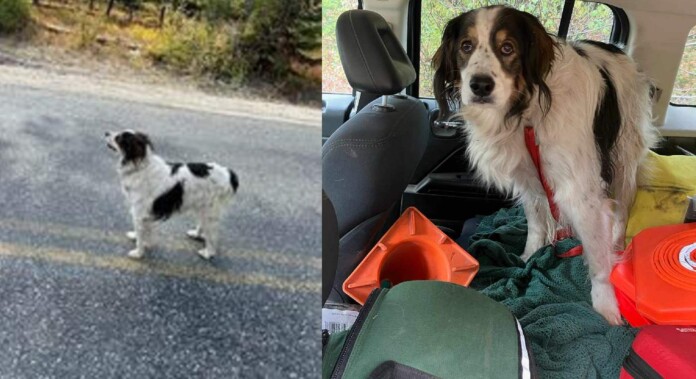
From Washington state comes the story of a senior citizen being saved by his senior canine, who risked her life obstructing traffic in order to find help.
On September 25th, the unnamed, 84-year-old owner of this beautiful pooch named Gita, fell, hurt his leg, and couldn’t move.
Gita then ran down to the main road where she stood on the paving lines waiting for someone to stop.
That someone was Deputy Wright, who was patrolling that particular area of Stevens County. Seeing neither house nor owner, Wright alighted on the road to try and get Gita into his patrol car, but the dog wouldn’t budge.
Visiting nearby residences, Wright couldn’t identify the dog’s owner.
Wright tried to move the dog yet again, but this time she took off up a steep, unmarked, poorly traveled side road.
“Wright followed the dog, and it led him to a small summer cabin. He began checking around the area and observed an elderly male lying on the ground calling for help a short distance from the cabin. The 84-year-old male, who also had other medical conditions needing regular medications, had fallen and injured his leg. He had laid there for hours and may have had serious consequences if he had not been found.”
“We credit Gita for saving his life that day. The loyalty and heroism of our furry friends never cease to amaze us,” the office wrote.
Second-cousin of the injured man, Pat Lolavera, praised Deputy Wright for following his instincts, and Gita for her incredible intelligence and dedication.
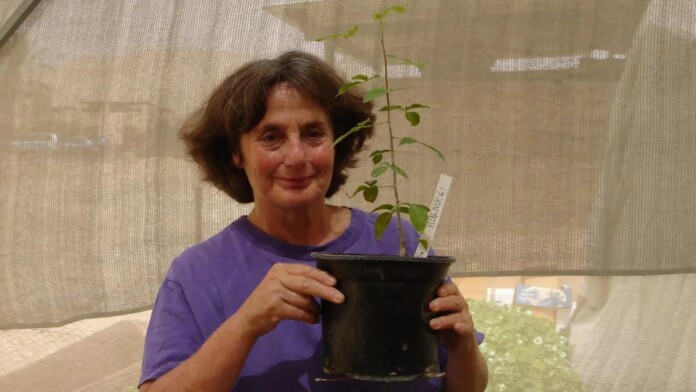
Dr. Sallon holding her spourt 14 years ago - credit, Guy Eisner, supplied to the media
Dr. Sallon holding her sprout 14 years ago – credit, Guy Eisner, supplied to the media
During an archaeological dig in a desert area north of Jerusalem 40 years ago, a seed was discovered which was determined to be in pristine condition but had obviously seen many a year.
Now, despite falling from its parent 1,000 years ago, it has grown into a mature tree, and botanists examining it believe it may be an extinct species that was used for medicinal purposes for thousands of years—even receiving a nod in the Bible.
Neither Israeli botanists, nor Dr. Sarah Sallon, a physician who founded the Louis L. Borick Natural Medicine Research Center at Hadassah University Medical Center in Jerusalem, could determine what species it was from simply from the seed covering. So they did what nature intended—they planted it.
Using a well-documented technique that saw 2,000-year-old date palm fruit pits germinate, study coauthor Dr. Elaine Solowey, a researcher emerita at the Center for Sustainable Agriculture at The Arava Institute for Environmental Studies in Israel, soaked the seed in hormones, liquid fertilizer, and water, and then planted it in a pot of sterile seed; then waited.
Despite its genetic code being exposed to environmental stressors for over 1,000 years, the seed sprouted after 5 weeks. The shoot was protected by a caplike feature called an operculum. As the shoot grew, the operculum was shed—leaving something for the team to radiocarbon date. It narrowed down the age of the almost 10-centuries-old seed to between the years 993 and 1202.
The tree, now 14 years old- credit, Guy Eisner, supplied to the media
Fast forward 14 years and the plant has become a 10-foot-tall tree. Dr. Sallon shared images of the tree, its bark, and its leaves with botanists around the world. One expert suggested it belonged to the genus Commiphora, found across the Arabian Peninsula and parts of Africa. A genetic analysis subsequently revealed this was the case, but a perfect match was lacking.
Dr. Sallon and her team thought it was an extinct species known from history as Judean Balsam, but the best way to confirm that suspicion would be to have some aromatic traces similar to the resins of the myrrh tree to which it is related. However, no such fragrant compounds were detected.
Instead, the chemical analysis of the leaves identified a group of phytochemicals known as guggulterols which have been observed in a related species called Commiphora wightii that’s known to possess certain cancer-fighting properties in its resin.
A medicinal balm, the origin of which is not known, is mentioned in multiple historical texts including the Bible as ‘tsori,’ and rather than the fragrant Judean Balsam, it’s this tsori that Dr. Sallon and her team believe they have found.
They must wait until the tree, now 14 years old, produces flower or fruit to know for sure if it’s an extinct species, and if so, how to perhaps keep it alive.
Dr. Louise Colville, senior research leader in seed and stress biology at Royal Botanic Gardens, Kew, in London who wasn’t involved in the research, told CNN that it was a major accomplishment to grow a seed that old and possibly lead to a resurrection of this Biblical botanical.
“What’s surprising in this story is it was just a single seed and to be able to have one chance for that to germinate is extremely lucky,” she said.
“Working in a seed bank, seeing the potential for that extreme longevity gives us hope that banking and storing seeds that some at least will survive for very long periods of time.”
SHARE This Absolutely Unbelievable Accomplishment In Biblical Botany…
Editor’s note: a previous version of this story claimed that Dr. Sallon was responsible for the germination of the plant. Dr. Elaine Sollowey, of the Arava Institute for Environmental Studies, was responsible for germinating and growing the plant.
An impression of the craft arriving at Jupiter - credit, NASA/JPL - Caltech
An impression of the craft arriving at Jupiter – credit, NASA/JPL – Caltech
NASA has seen some outstanding recent successes in robotic exploration over the past 20 years, but now the agency’s flagship explorer—the largest spacecraft ever built for planetary science—is poised for launch.
Delayed by chip shortages, budget negotiations, and soon-to-arrive Hurricane Milton, Europa Clipper has now only to pick the perfect conditions between the October 10th arrival of Milton and the end of the current launch window of November 6th to start its nearly 6-year journey to our solar system’s largest planet.
The target is also one of the largest moons in the solar system—Europa. It’s about the size of our Moon, but dwarfed by the Jovian Moons Io and Ganymede. However, in the field of planetary science, size doesn’t always matter.
Europa is all but guaranteed to hold an ocean—more voluminous than Earth’s—hidden under a surface layer of ice. That global glacier is believed to keep the vicious radioactive environment of Jovian orbit at bay from affecting the water below.
An off-world ocean would be the best place in the solar system to look for signs of life, but Europa Clipper isn’t just an astrobiology mission. Part of Europa Clipper’s mission is instead to assess the habitability of the planet.
This massive spacecraft, weighing as much as a bull elephant and stretching as tall as the Statue of Liberty when its solar arrays are unfolded, will be armed with 8 science instruments for studying gas, dust, and geology, ice-penetrating radar to plumb the depths of the sub-surface ocean, a magnetometer to understand Europa’s gravity, a thermal instrument to search for warmer pockets of ocean, and a spectrograph.
It’s been an exceptionally long time coming for this spacecraft, and Laurie Leshin, Director of NASA’s Jet Propulsion Laboratory says it’s akin to a “modern cathedral.”
“They are generational quests,” she said of missions like Europa Clipper. “We scientists have been dreaming about a mission like Europa Clipper for more than 20 years. We’ve been working to build it for 10 years,” and will take another 5.5 years for it to arrive at Jupiter to begin its work, she told Euro News.
The spacecraft will orbit Jupiter rather than the moon itself. This is because Europa sits within the most extreme point in Jupiter’s “particle accelerator” atmosphere, which creates channels of charged particles that would expose the craft to something like one million chest X-rays worth of radiation.
Rather than expose the craft to this punishing energetic environment constantly, it will instead absorb that amount during each fly-by, of which it will conduct 49 during the normal mission phase, amounting to 80 orbital revolutions of Jupiter.
“These flybys cover both hemispheres of the moon and a variety of latitudes to get us near-global coverage of the moon for the science instruments,” said Jordan Evans, a project manager for Europa Clipper at JPL.
WATCH a hype-up/explainer video from NASA below…
SHARE This Incredible Effort And Machine To Study An Incredible World…