

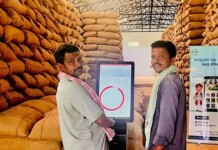


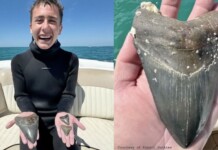








 The HandleBar in Pensacola, Florida is offering a free beer to anyone who votes. Customers must trade their “I Voted” stickers for the free drinks. This is the third year the HandleBar has offered a beer for a vote. (Pensacola News Journal)
Free Beer For Those Who Vote in Pensacola
Fishing Boat Catches Dog in North Sea
Cairn terrier Freddie blundered into the water after getting lost in fog while out for a walk with his owner.
But instead of swimming to shore he headed out into the North Sea. (The UK Sun has story and photo)
Hamas Cease Fire Reaches its Fourth Successful Month

Four months of calm may not seem significant to those of us living in the West. But in a town where residents are accustomed to 30-second warnings of incoming rockets, it is a long time indeed.
It is now four months since the Egyptian-brokered Israeli-Hamas ceasefire went into effect. According to Alex Fishman, the security-minded Yediot Achronot military correspondent, the “agreement has resulted in an almost complete cessation of Qassam rocket fire” on Sderot and other Israeli towns.
Australia Plans Electric Vehicle Network

A US firm Thursday unveiled plans to build a massive one billion dollar charging network to power electric cars in Australia as it seeks cleaner and cheaper options to gasoline.
Better Place, which has built plug-in stations for electric vehicles in Israel and Denmark, has joined forces with Australian power company AGL and finance group Macquarie Capital to create an Australian network.
Indian Tribes See Profit in Harnessing the Wind
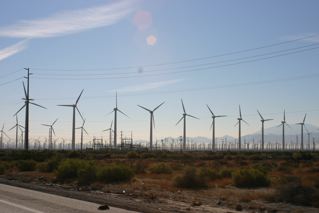
Native American tribes like the Rosebud Sioux of South Dakota are trying to catch the wind and create economic prosperity for the 29,000 tribal members whose per capita annual income is about $7,700, less than a third the national average. Wind turbines may provide that answer. (New York Times)
Surprise Bounce in Existing Home Sales to 13-Month High
US existing home sales rose by an unexpected 5.5 percent in September to the highest level in 13 months, as buyers were attracted by falling prices, an industry survey showed Friday.
Palestinians to Play First Match in Home Stadium

After 10 years of playing home games across the border in Jordan, Palestinians will be gathering on Sunday to watch their national football team play their first game ever in Palestinian territory. The world governing body of the sport, FIFA, paid to have it upgraded to international standards.
Military Hospital Opens for Dogs Wounded in War

A $15 million veterinary hospital for four-legged military personnel opened Tuesday at Lackland Air Force Base, offering a long overdue facility that gives advanced medical treatment for combat-wounded dogs. (AP story at CNN.com)
Blind Marching Band to Be in 2010 Rose Parade
 Students at the Ohio State School for the Blind screamed with joy when they learned their marching band will make history at the 2010 Tournament of Roses Parade. (Associated Press via MSNBC.com)
With Bees Dying by the Billions, Teens Protect Pollinators

Millions of Monarchs will begin arriving in Mexico this week in an annual migration that includes thousands traveling through Michigan’s Upper Peninsula and some of the butterflies can thank Marquette and Native American teens for their future survival.
The Zaagkii Wings and Seeds Project in Marquette was created to protect pollinators like butterflies because billions of honeybees are dying across the world – especially in the Midwest – in a syndrome called “Colony Collapse Disorder.”
(Photo by Greg Peterson)
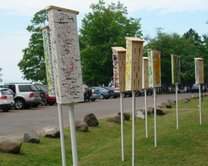
Marquette teens and youth from the the Keweenaw Bay Indian Community (KBIC) spent this summer building the first of dozens of butterfly houses that will be created over the next three years. The white cedar butterfly houses were erected this fall in the two Upper Peninsula (U.P.) counties of Marquette and Baraga. Lined with bark and slimmer than birdhouses, the shelters offer protection, rest and reproduction safety to Monarchs and other butterflies.
While bees are the best known and possible the most effective pollinators, butterflies are a close second in transferring pollen from one plant to another.
Experts are unsure why honeybee colonies are collapsing but pesticides, climate change and other man-made impact are among the suspected causes. Experts say the loss of the honeybees is alarming because without pollinators the world food supply will dry up including fruits, vegetables, flowers, other plants and trees.
The three-year Zaagkii Project (Zaagkii is an Ojibwa word that means: “The Earth’s gift of plants”) was founded this summer by the non-profit Cedar Tree Institute (CTI) in Marquette whose other environment projects have included Earth Day hazardous waste collections and wild rice restorations, which brought together teens sentenced to community service, tribal elders and volunteers.
The “seed” portion of the Wings and Seeds Project is the propogation of native plants. Marquette teens planted over 26,000 native species in seed trays, many of which will be transplanted next spring along Sand Point, a barren Lake Superior beach once polluted by the waste from an old copper mine.
The KBIC Summer Youth Program teens built and painted butterfly houses at the tribal hatchery with help from a Natural Resource Department (NRD) Water Quality Specialist and other environment specialists.
Saving the Monarchs
As birds chirped loudly along the shores of Lake Superior, 17-year-old Ethan Smith and 15-year-old Janelle Paquin measured, hammered and painted the cedar houses.
“We put the bark on the inside for the butterflies to rest on,” said Smith while showing the strips of bark that line the house. “We put on the top so the sunlight doesn’t get in and they can get a good night’s rest.”
The butterfly houses sit on 10-foot poles. Butterflies with folded wings enter through seven tiny slits.
“Butterflies use the houses to rest while migrating,” said 16-year-old Dylan DeCota of Baraga.
14-year-old Jorey Cribbs of Baraga said plants reproduce because butterflies “transport pollen from flower to flower” and the butterfly houses offer “shelter in bad weather.”
Each fall “hundreds of thousands” of Monarchs “stop and rest” on the Stonington Peninsula in the southern U.P. before joining three million Monarchs from across North America in their annual migration to Mexico, said Jon Magnuson, CTI executive director and founder of the Zaagkii Project.
“A lot of people think butterflies are just pretty but they do important work,” the teens were told as they built the butterfly houses.
About 32 years ago, the group Monarch Watch first discovered the annual Monarch migration and began tracking the butterflies, said Zaagkii Project volunteer Tom Reed.
Reed, who has a bachelors degree in social work, informed the kids that monarchs converge in one small area in Mexico on the same few trees, which makes them very vulnerable to extinction.
From Toxic Brownfield to Shoreline of Native Plants
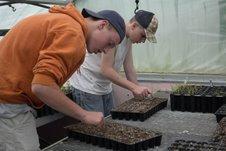
At the Hiawatha National Forest greenhouse in Marquette, local teens planted about 26,000 plants seeds that are native to the U.P. Those plants will winter in the greenhouse and be transplanted next spring across northern Michigan.
“Native plants play a vital role in insect populations,” said Angie Lucas, greenhouse manager at the national forest in which the seeds were collected.
“For example Monarch caterpillars are specific to milkweed plants and without milkweed plants we have no Monarch caterpillars,” Lucas said, adding that at least 17 Monarchs tagged on the U.P.’s Stonington Peninsula were discovered in Mexico.
“The milkweed provides food for the Monarch caterpillars – once the caterpillars mature and turn into a butterfly that pollinates the milkweed plant,” said Lucas describing the symbiotic relationship between butterflies and native plants.
Restoring indigenous plants is vital to U.P. wildlife “so our native species don’t get overruled and extinct by predator species,” said Justin Fassbender, 16, while planting columbine and monarda seeds.
“There are a lot of invasive species,” said Devin Dahlstrom, 15, who is proud to be ensuring the future of native wildlife.
Adding plants will be one of the crowning final steps in the clean-up of Sand Point Beach on Keweenaw Bay, polluted 90 years ago by the Mass Mill copper refinery operation four miles to the north along Lake Superior.
The indigenous plants will return a wide range of wildlife to the 35 acre site designated as a brownfield by the Environmental Protection Agency. Plans for Sand Point include a nature tail, restoring a historic lighthouse, swimming, camping, boating, picnic areas and fishing ponds.
Protect Pollinators in Your Area
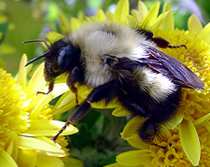 The USFS says the public can help protect pollinators by being careful about what type of insecticides are used and reducing the amount of “chemicals used for gardening and lawn control,” Schultz said.
“The chemicals many times are not very discriminant,” she said. “They will kill these beneficial pollinators as well as the undesirable species.”
“It’s really important for people to think ‘Gee, do I really need to use that?’ Try to get pesticides that are more discriminant to what the offender is.”
“Apply the pesticide either really, really early in the morning … or at dusk when the pollinators aren’t active,” Schultz said.
The Zaagkii Project contributors include the Marquette Community Foundation, the Negaunee Community Fund, the Negaunee Community Youth Fund, the M.E. Davenport Foundation, the Kaufman Foundation, the Phyllis and Max Reynolds Foundation, with assistance from the Upper Peninsula Children’s Museum in Marquette and the Borealis Seed Company in Big Bay. The project was also supported by the Marquette County Juvenile Court and the United States Forest Service (USFS).
All photos by Greg Peterson, Earth Keeper volunteer, media advisor and reporter
Solar “Balloon” Creates 400x More Energy Than Solar Cell

The new Solar “Balloon” by Cool Earth is a concept that creates an “inflatable plastic thin-film balloon, which acts as a solar concentrator that, upon inflation, focuses sunlight onto a photovoltaic cell. The design produces 400 times the electricity that a solar cell would create without the company’s concentrator.” Liverpool is the site for the new prototype’s production plant. (Clean Technica.com)
Government Expands Geothermal Energy Leasing

Geothermal energy, which harnesses steam and hot water from beneath the earth, is a major source of renewable energy for the US. This week, the Interior Department is announcing plans to make available 190 million acres of federal land in a dozen western states for development of geothermal power. Interior Secretary Dirk Kempthorne says the federal leasing program, which will receive a final ruling in two months, could produce more than 5,000 megawatts of electricity, enough to power 5.5 million homes. (Details from the Washington Times)
Here Comes the Green Brick
Bricks have an enormous energy footprint. A new process will reduce the energy content in bricks by over 90 percent, according to CalStar Cement, which will soon begin to ship a green brick that takes almost no energy to produce. (GreenTechMedia.com)
Soldier’s Dog Brought to the U.S. From Iraq (Video)

A black puppy decked out in a red, white and blue bandanna jumped out of his crate and wagged his tail at the airport Monday, three flights and two days after leaving Iraq en route to his new home with a U.S. Soldier, whom he helped get through the worst of times.
Dunkin’ Donuts Opens Its First LEED Certified Green Restaurant

Dunkin’ Donuts unveiled its first LEED certified restaurant in Florida. The St. Petersburg LEED certified store broke ground in May 2008, and will serve as a prototype for the company’s future green construction projects. (Full story in Environmental Leader)
Thanks to Silbatron, for the tweet!
Kashmir Foes Reopen Trade Route After 60 Years of Fighting (w/ Video)

India and Pakistan opened a trade link across Kashmir for the first time in six decades. The move is a ground-breaking step celebrated by merchants who see it as a means to ending the hate and creating peace. (BBC print story here) Thanks to Bill F. for sending the story tip!
Reuters video below may take time to load…
Hiker Rescued After One Week (Video)

A rescue dog found granola wrappers which lead him and his handler to an injured hiker who had been missing for one week. CBS speaks to both the hiker’s father and rescue team led by a trained rescue dog.
New Cancer Meds Offer Real Hope (Video)

Doctors are investigating cancer cell mutations that can be targeted by new prescription medications. The drugs have offered real hope for patients with these mutations, such as Kate Robbins, who is surviving stage 4 lung cancer. (Read full text at CBSNews, or watch their video)
Drivers are Ecstatic as Gas Prices Drop Significantly (Video)

Gas prices haven’t been this low since last October. The Energy Department said the national average is now $2.91 after oil prices plummeted 50% in the past month. As CBS reports, drivers are doing double-takes.
A Different Kind Of Healing for Vets (Video)

Two wounded veterans of the Iraq War started a weekly dinner five years ago for fellow veterans who lost limbs in the war. Every Friday they find healing and camaraderie.
(Read full text at CBSNews, or watch the video report below, w/ 30-second ad)