











All News - Page 158 of 1714 - Good News Network
Home Blog Page 158

Moderate Coffee and Caffeine Consumption Is Associated with Preventing Onset of #1 Killer

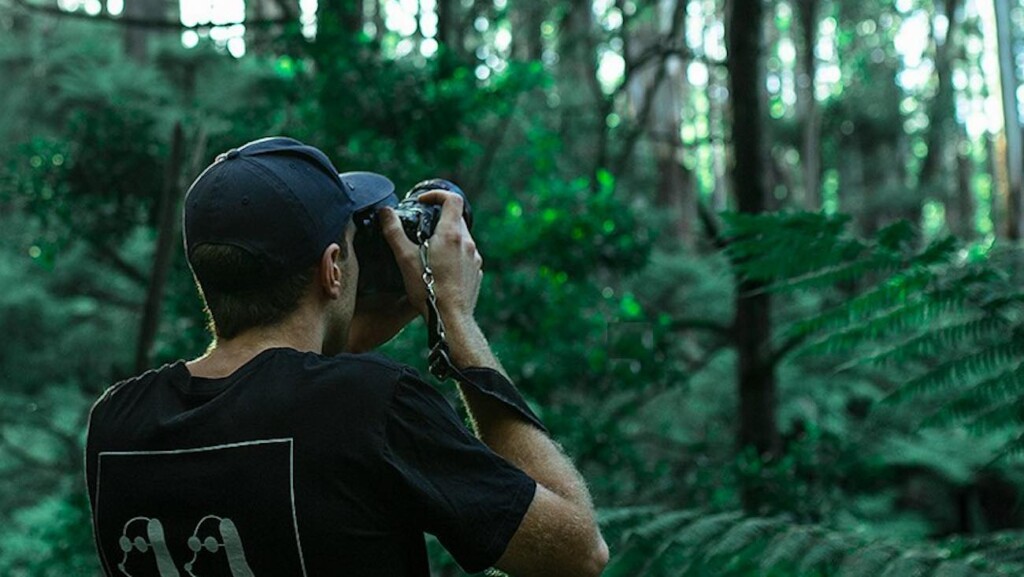
Photo by Kevin Butz on Unsplash

Regular coffee or caffeine consumption may offer a protective effect against developing multiple cardiometabolic diseases like coronary heart disease and stroke, the most common killers in human society today.

Detailed in new research published in the Endocrine Society, three cups of coffee per day were associated with those in the study cohort who had a lower profile for a novel risk marker called “new-onset cardiometabolic multimorbidity.”

Cardiometabolic multimorbidity (CM) refers to the coexistence of at least two cardiometabolic diseases, and the prevalence of individuals with CM is becoming an increasing public health concern as populations age around the world, notes the study.

The COVID-19 pandemic showed that the burden of co-morbidities in high-income countries means that swaths of the population are at all times especially vulnerable to novel infections, particularly upper respiratory tract infections.

Coffee and caffeine consumption could play an important protective role in almost all phases of CM development, the researchers from China and Sweden found.

“Consuming three cups of coffee, or 200-300 mg caffeine, per day might help to reduce the risk of developing cardiometabolic multimorbidity in individuals without any cardiometabolic disease,” said the study’s lead author Chaofu Ke, M.D., Ph.D. at Suzhou Medical College of Soochow University, in Suzhou, China.

The study found that compared with non-consumers or consumers of less than 100mg caffeine per day, consumers of a moderate amount of coffee (3 drinks per day) or caffeine (200-300 mg per day) had a 48.1% or 40.7% reduced risk for new-onset CM.

Dr. Ke and his colleagues based their findings on data from the UK Biobank, a large and detailed longitudinal dietary study with over 500,000 participants aged 37-73. The study excluded individuals who had ambiguous information on caffeine intake.

The resulting pool of participants included a total of 172,315 individuals who were free of any cardiometabolic diseases at baseline for the analyses of caffeine, and a corresponding 188,091 individuals for the analyses of coffee and tea consumption.

OTHER SIMPLE DIETARY ADDITIONS: These Superfoods Can Provide Important Nutrients With a Single Bite

The participants’ cardiometabolic diseases outcomes were identified from self-reported medical conditions, primary care data, linked inpatient hospital data, and death registry records linked to the UK Biobank.

Coffee and caffeine intake at all levels were inversely associated with the risk of new-onset CM in participants without cardiometabolic diseases. Those who reported moderate coffee or caffeine intake had the lowest risk, the study found. Moderate coffee or caffeine intake was inversely associated with almost all developmental stages of CM.

COFFEE HEALS: Coffee and Tea Drinking May be Associated With Reduced Rates of Stroke and Dementia

“The findings highlight that promoting moderate amounts of coffee or caffeine intake as a dietary habit to healthy people might have far-reaching benefits for the prevention of CM,” Ke said.

Numerous epidemiological studies have revealed the protective effects of coffee, tea, and caffeine consumption, some of which GNN has reported on before.

SHARE This Great News Over A Cup Of Coffee With Your Friends…
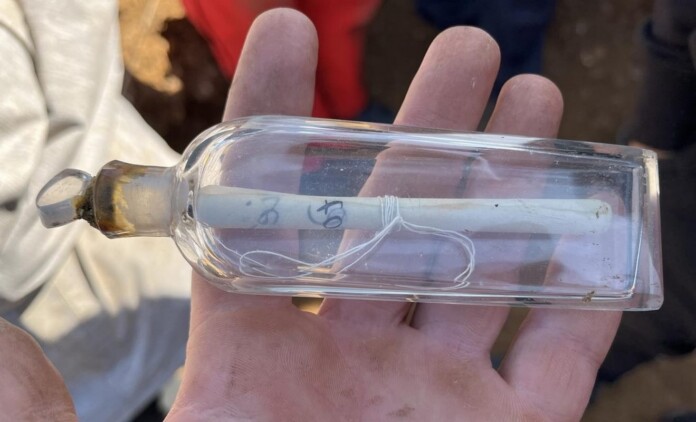
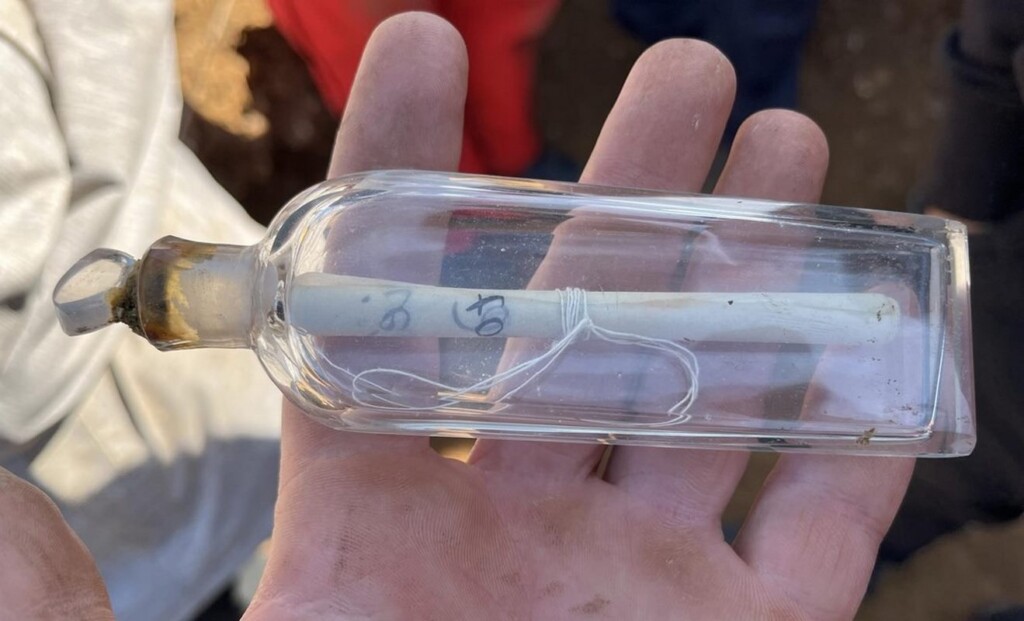
Researchers Discover 200-year-old Message in a Bottle: A ‘Magic Moment’

credit - Guillaume Blondel, Archaeological Service of the City of Eu
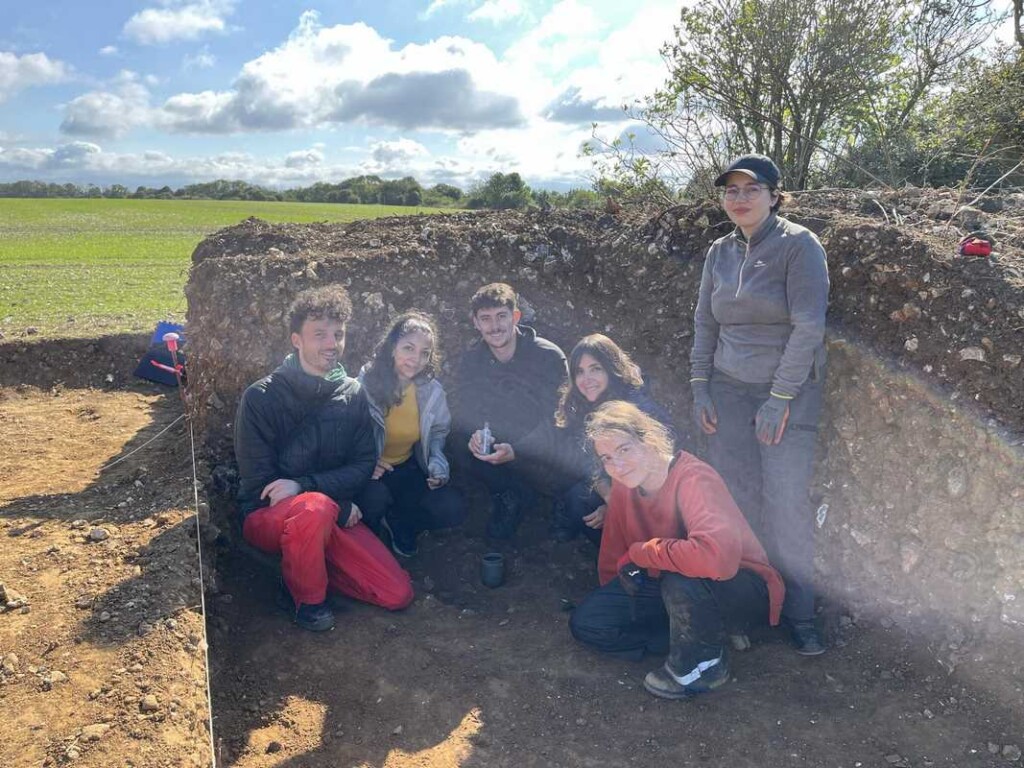
credit – Guillaume Blondel, Archaeological Service of the City of Eu

A team of student archaeologists in France received an amazing surprise while working on a site dating to Gaulic times.

Carried out under the direction of Guillaume Blondel, director of the municipal archaeological service of the city of Eu, the excavations delivered, among other things, a moving and very special testimony from the past.

Located in a previously investigated section of the site, a message was discovered in a small glass bottle from the 19th century accompanied by two coins: a “time capsule” buried almost 200 years ago, a statement from the service read.

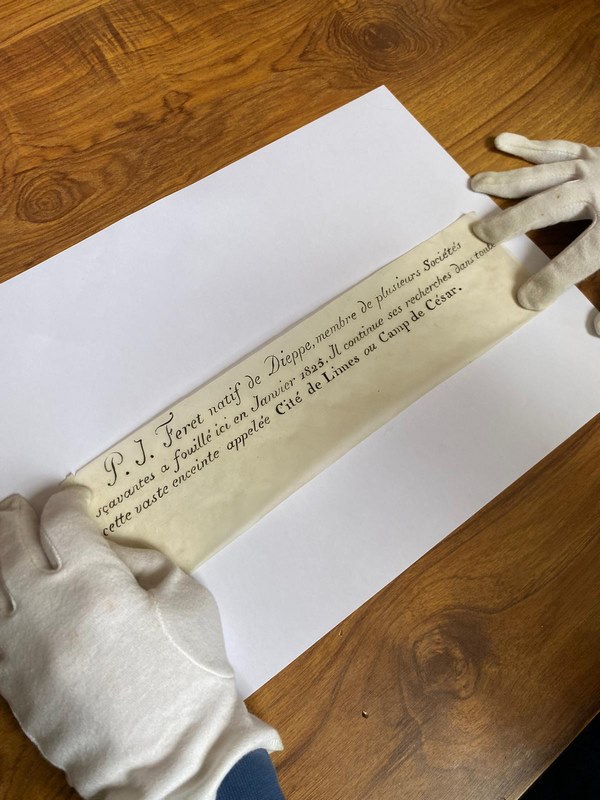
“P. J. Féret, a native of Dieppe, member of various intellectual societies, carried out excavations here in January 1825. He continues his investigations in this vast area known as the Cité de Limes or Caesar’s Camp.”

The message in a bottle had been carefully placed in a ceramic pot dating to a much earlier century so that future archaeologists would be sure to find it.

“It was an absolutely magic moment,” Mr. Blondel told the BBC. “We knew there had been excavations here in the past, but to find this message from 200 years ago… it was a total surprise.”

credit – Guillaume Blondel, Archaeological Service of the City of Eu

“Sometimes you see these time capsules left behind by carpenters when they build houses. But it’s very rare in archaeology. Most archaeologists prefer to think that there won’t be anyone coming after them because they’ve done all the work!”

YOU MAY ALSO LIKE: Teen Girl’s Secret Message Left in a Wall 48 Years Ago is Found: ‘I was Absolutely Shocked!’

Local archives indeed place P. J. Féret in the area as a historical excavator at the time the letter was dated.

credit – Guillaume Blondel, Archaeological Service of the City of Eu

The work was funded and carried out in partnership with the Regional Archaeology Service to preserve archaeological sites that are endangered with the decline of the coastline. Already a part of the ‘oppidum’ or fortified Gaulic camp, has fallen away with the crumbling of the coastal hillside on which it was perched.

The Gauls were a series of interconnected feudal (at best) and tribal (at worst) societies that shared societal, cultural, and warrior practices, and who inhabited most of central and western Europe during the time of the Roman Republic.

MORE TIME CAPSULE STORIES: Time Capsule Buried by Paul Revere and Sam Adams Discovered in Boston

Gaius Julius Caesar waged a campaign to pacify Gaul, hence the name “Caesar’s Camp,” which brough Spain, France, and Belgium, under Roman control.

SHARE This Charming Story Of Surprise, Highlighting The Importance Of Local Archaeology… 

To Save Sea Turtle Population Invasive Deer Successfully Eradicated from Island in Australia’s Great Barrier Reef

Cameras on Wild Duck Island captures out-of-control feral deer numbers – Supplied by Australia Department of Environment

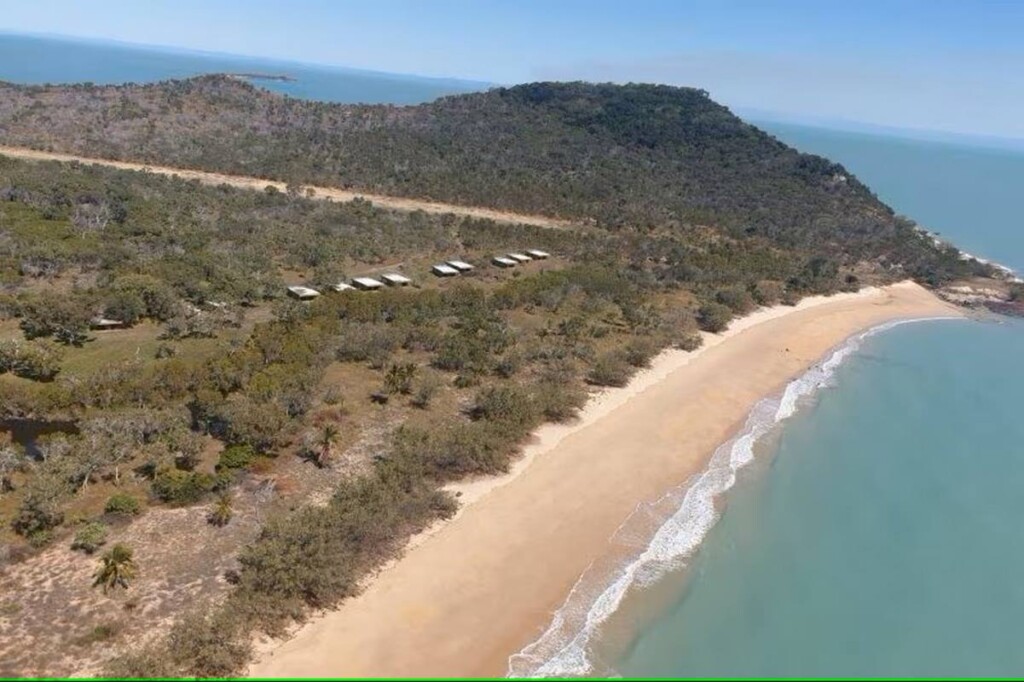
In Australia, wild deer that were destroying sea turtle habitat on an island near the Great Barrier Reef have been eradicated.

The result is that Australia’s largest flatback turtle rookery is now a safe haven for these ocean-goers once again.

Wild Duck Island near the Great Barrier Reef – credit AU Department of Environment

It’s just the latest in a string of high-profile success stories from islands all over Australia’s territorial waters, where conservationists are achieving their goals of returning these isolated ecosystems back to how they were before Europeans arrived.

Bringing goats, deer, rats, cats, foxes, rabbits, and other European wildlife along with them, they greatly disrupted sensitive sub-tropical biomes on islands like Macquarie, Lord Howe, and Middle.

Wild Duck Island sits off the northeastern coast between Rockhampton and Mackay in the state of Queensland. Here, Queensland Parks and Wildlife Service believes that Rusa deer were introduced illegally in 2003 to create a hunting population, but with no natural predators, they quickly multiplied until they began to threaten other species.

“The deer were down in among the dunes when the turtles were coming up and trying to nest … up until they start laying, if anything disturbs them, they will return back to the water,” Southern Great Barrier Reef principal ranger David Orgill told ABC News AU.

They were also trampling the eggs and nests themselves: something which became apparent as late as 2018. Understanding the gravity of the situation, as the flatback turtle has the smallest range of any sea turtle, meaning there aren’t many other places these reptiles nest, conservationists started to use thermal imaging cameras and trail cams to track the deer population.

ALSO CHECK OUT: 6 Saplings of Dinosaur-Era Tree Species Being Auctioned to Spread the Pines Around Australia

By 2023 they had removed over 270 deer, and earlier this year, a camera trap survey recorded no signs of the Rusa deer on Wild Duck Island.

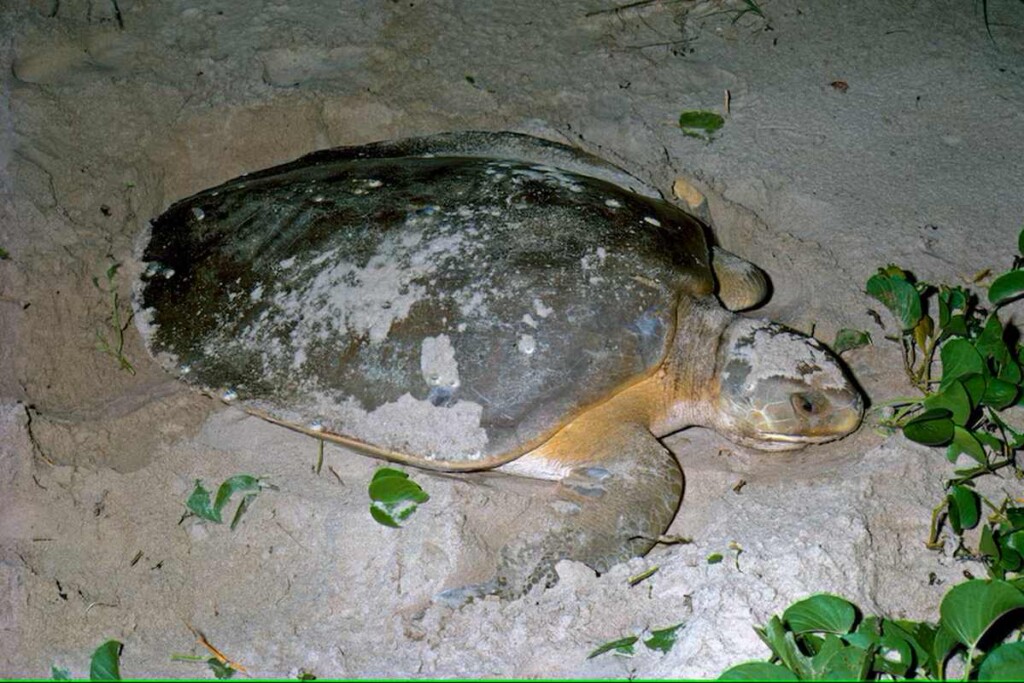
A flatback turtle nesting in the twilight – credit AU Department of Environment

48 islands make up Broad Sound Islands National Park, and others remain infested with invasive species. The combination of thermal and night vision cameras used on Wild Duck is believed to be suited to other islands as well.

GNN reported earlier this year that the greatest conservation success story never told was the progress humanity has made in returning islands back to their natural state. Wild Duck joins a list of hundreds of islands, as famous as the Galapagos, and as obscure as Redonda.

RIGHT UP YOUR ALLEY: The Greatest Conservation Story Ever Told Isn’t Really Being Told

The work has preserved or returned habitat for thousands of species on hundreds of islands in all four oceans, many of which act as important nodes of shelter and food for migrating seabirds and undersea life as well.

SHARE This Wonderful News For These Turtles Down Under… 


“Everything that is made beautiful and fair and lovely is made for the eye of one who sees.” – Rumi

Ben Blennerhassett

Quote of the Day: “Everything that is made beautiful and fair and lovely is made for the eye of one who sees.” – Rumi

Photo by: Ben Blennerhassett (cropped)

With a new inspirational quote every day, atop the perfect photo—collected and archived on our Quote of the Day page—why not bookmark GNN.org for a daily uplift?

Ben Blennerhassett

Inspired by Avatar and His Asthma, Indian Man Creates ‘Biosphere’ to Connect Adjacent Land to National Park

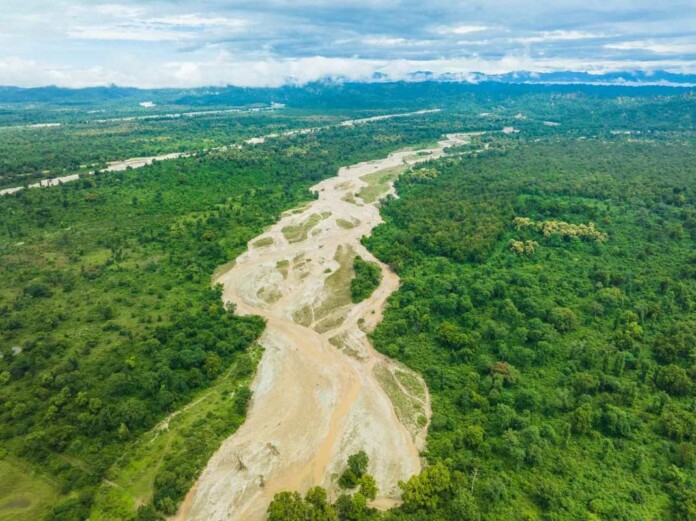
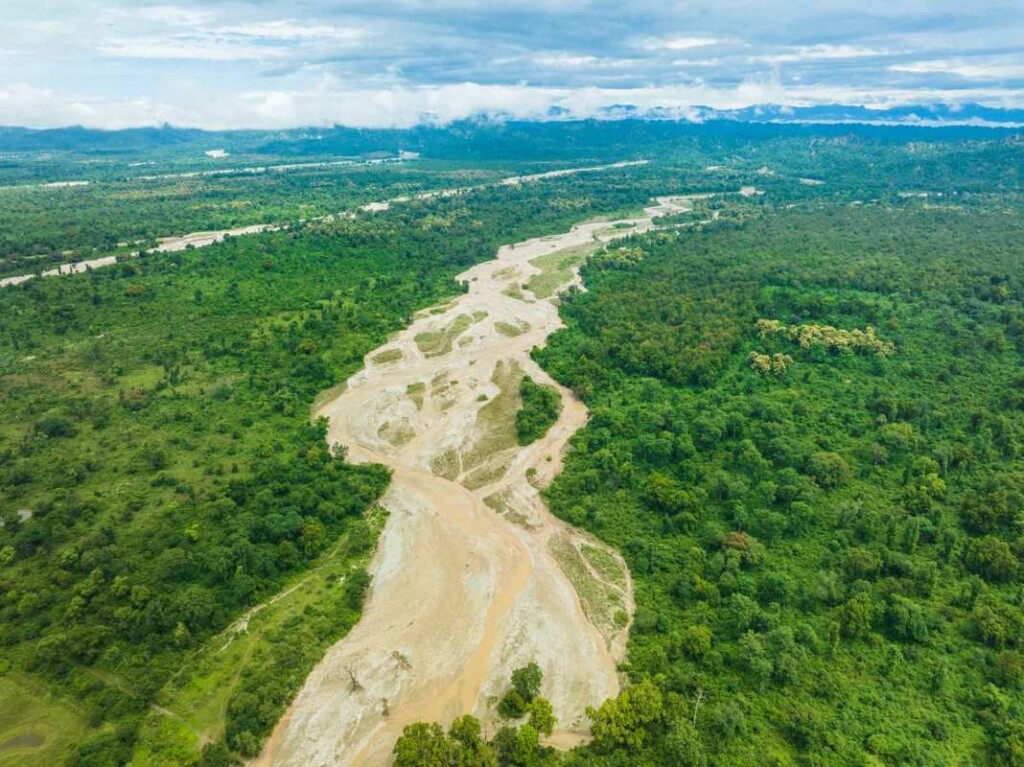
The Raghati river runs through the middle of the biosphere - credit, Rajaji Raghati Biosphere
The Raghati river runs through the middle of the biosphere – credit, Rajaji Raghati Biosphere

It’s being called India’s first private biosphere—a 32-acre forest haven bursting with life and inspired by James Cameron’s Avatar. 

Environmentalist and clean air activist Jai Dhar Gupta dreamt of a place like Pandora, the fictional planet in the film—a luscious Darwinian playground of evolution vibrant with sound and color.

For the entrepreneur’s 50th birthday, he teamed up with renowned Indian rewilding expert Vijay Dhasmana to make his dream come true.

Gupta had by then plenty of reason to want to build a haunt in nature—years of competitive running in Delhi had left him with bronchial asthma from the polluted air of the city.

Following extensive activism and private-public collaboration to improve air quality, he decided to ring in the second-half of his life with a new project.

In 2021, he discovered a stunning piece of land nestled between the Rajaji National Park and Tiger Reserve and the Raghati River. It was stunning because of its potential, but at the time Gupta and Dhasmana found it, it was a degraded shadow of its formerly wild self.

“It had been previously flattened, eroding natural contours and leading to severe soil erosion. Moreover, since monoculture agro-forestry with non-native eucalyptus trees was practiced on the land, it deteriorated the ecosystem’s health further,” Dhasmana told The Hindu. “Thousands of non-native eucalyptus trees were removed within days of acquiring the land. Subsequently, the land was contoured to retain water, prevent erosion, and promote groundwater recharge.”

Once this foundational change had been made, the duo and their teams conducted extensive forest surveys to observe how the mixture of plants and shrubs is naturally distributed around the landscape.

“We collected seeds, established a seed bank, and collaborated with biodiversity parks to germinate and cultivate saplings of trees such as haldu, rohini, mala, saal, jamun, pangana, etc., which were then planted across the biosphere,” said Gupta.

PRIVATE NATURALISM: ‘Give Nature Space and it Will Come Back’: Rewilding Returns Endangered Species to UK Coast

A biosphere, he told The Better India, is a micro-environment. “It’s a zone of life. We’ve got the tiger reserve next to us, but it’s not pure, due to the invasion of non-native species like eucalyptus trees. We are working on creating a pure environment, growing only what nature intended for in this particular area,” he says, adding, “I’m chasing what we saw in that movie Avatar.”

Following this monsoon season, they plan to introduce another 30 to 40 species of plants into the park which sits along the borders of the National Park and agricultural land.

Because the whole landscape is privately owned by Gupta, he decided to ban all motor vehicles from entering it. The now incredible panoply of life lives as undisturbed as possible amid the forest.

ALSO READ: The First of 2,000 Privately Owned White Rhinos Get New Home – Rewilded by South African Conservancy

This includes leopards, sambar and cheetal deer, elephants, monitor lizards, hornbills, serpent eagles, and white-throated kingfishers.

The 132 species of native plants are protected by strict rules barring visitors from bringing any single-use plastic, and any seed-containing foods. A single electric farm utility vehicle that doubles as a safari jeep is present in the biosphere.

GOOD GREEN NEWS FOR INDIA: Tiny Indian Ocean Island Shows How Quickly Seabirds Recover When Invasive Predators Are Removed

There are two small, pre-fabricated homes for overnight stays, but nothing about the RRB is designed for eco-tourism. Instead, it’s a living manifesto—a propaganda tool to give an inspirational glimpse, to those who are curious, about what a rewilded plot of land can look like in the subcontinent.

“The rule in this biosphere is that nature comes first, not humans,” says Gupta.

SHARE This Incredible Idea From A Big City Entrepreneur… 

Virginia State Parks Install Viewfinders for Colorblind Visitors–Just in Time for Autumn Leaves

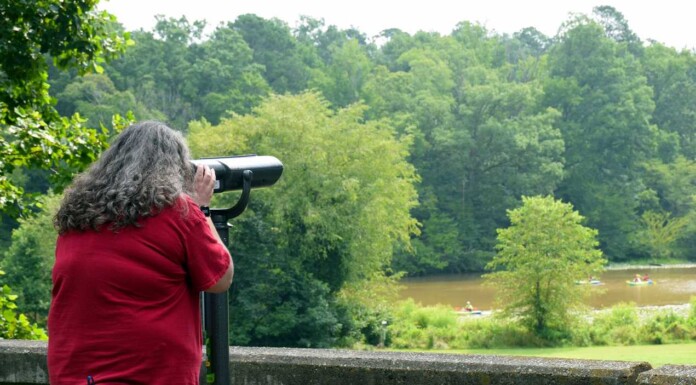
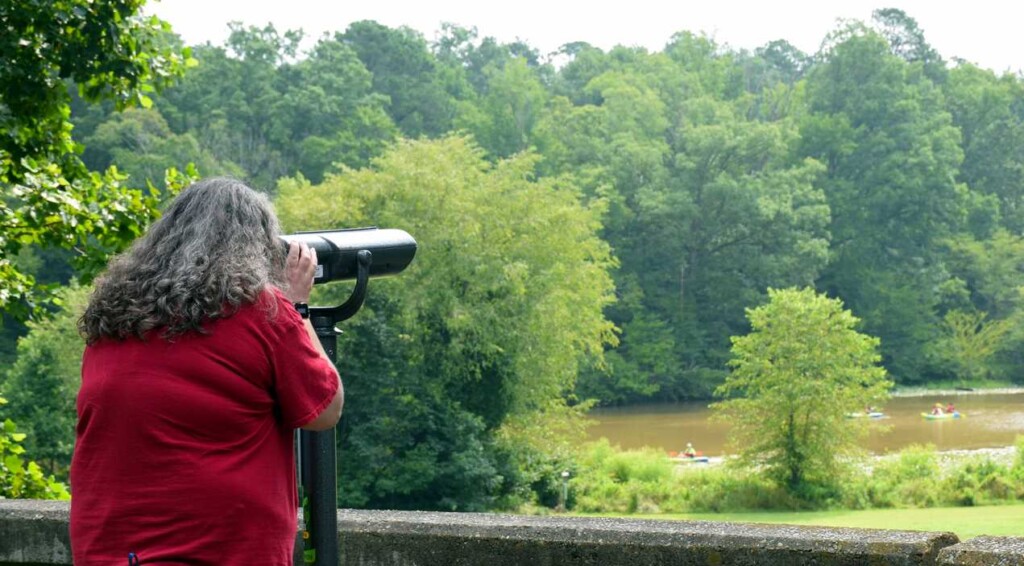
Jillian Sherman, colorblind participant, Pocahontas State Park - credit, Virginia State Parks
Jillian Sherman, colorblind participant, Pocahontas State Park – credit, Virginia State Parks

In preparation for leaf-peeping season, Virginia State Parks have equipped all 43 managed properties with special viewfinders for the colorblind.

The lenses in the viewfinders allow those with red-green Color Vision Deficiency (CVD) to experience the full breadth of color inherent in the autumnal leaf displays that Virginia is famous for.

Red-green CVD is the most common form worldwide, affecting around 300 to 350 million people, and 13 million Americans. While people with normal color vision see over one million shades of color, those with red-green CVD are estimated to see about 10% of hues and shades.

To them, colors containing red and green can appear dull, washed out and indistinguishable—rendering fall forests with all their luscious reds, delicious oranges, and mellow yellows one big sepia mass.

The viewfinders, made by SeeCoast Manufacturing, are equipped with special lenses from another firm called EnChroma designed to help those with CVD experience an expanded range of visible color.

“This initiative underscores Virginia’s commitment to enhancing outdoor experiences for all visitors and sets a new standard for state parks nationwide,” said Matt Wells, director of the Virginia Department of Conservation and Recreation, which manages Virginia State Parks. in a statement. “We’re proud to play a role in opening up a world of vibrant color for colorblind individuals to experience nature like never before.”

The installation began in 2023 in Natural Tunnel State Park, an initiative that was led by Chief Ranger Ethan Howes who is himself colorblind. The other 43 parks would receive their viewfinders this year, which started on July 26th with a ceremony at Pocahontas State Park in which 6 colorbind Virginians were invited to try them out.

US STATE PARKS WELCOMING ALL: 22 Tennessee State Parks Provide All-Terrain Wheelchairs for Visitors to Use

“You all see this every day, huh?” said Bryan Wagner, one of the participants. “Everything’s not the same green. The colors are more vibrant.”

Smithsonian Magazine, covering the topic, detailed how color blindness is dependent on the X Chromosome, and that the condition is nearly 10-times more common in men than women.

CONSIDERATION FOR OTHERS: Boy in Foster Care Allowed to Stay With Disabled Brother When Loving Parents Agree to Adopt Them Both–WATCH

Fall color phasing is much richer in varitation in the temperate zones of the world where mountains run north to south—such as the Appalachians and the Rocky Mountains, and as such Virginia, containing one of the most biodiverse sections of Appalachia, is noted for its gorgeous fall colors.

SHARE This Delightful Accomodation To Welcome All Virginians To Enjoy Their Parks… 

N. Carolina Youth Pulls Couple and Dog from Pickup Truck Sinking in Floodwaters

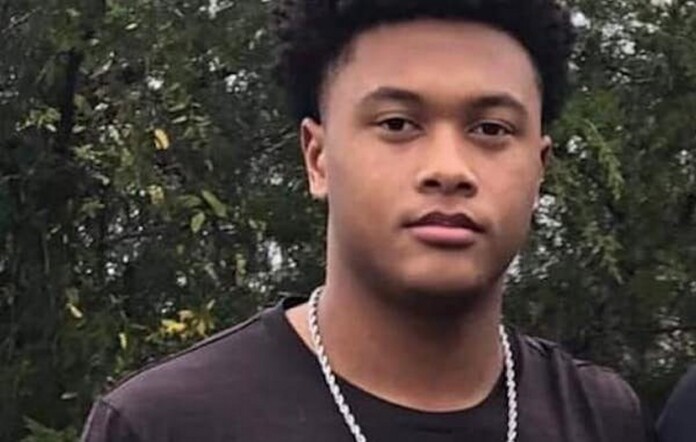
Kenji "Flash" Bowen - retrieved from Facebook via Columbus County News
Kenji “Flash” Bowen – retrieved from Facebook via Columbus County News

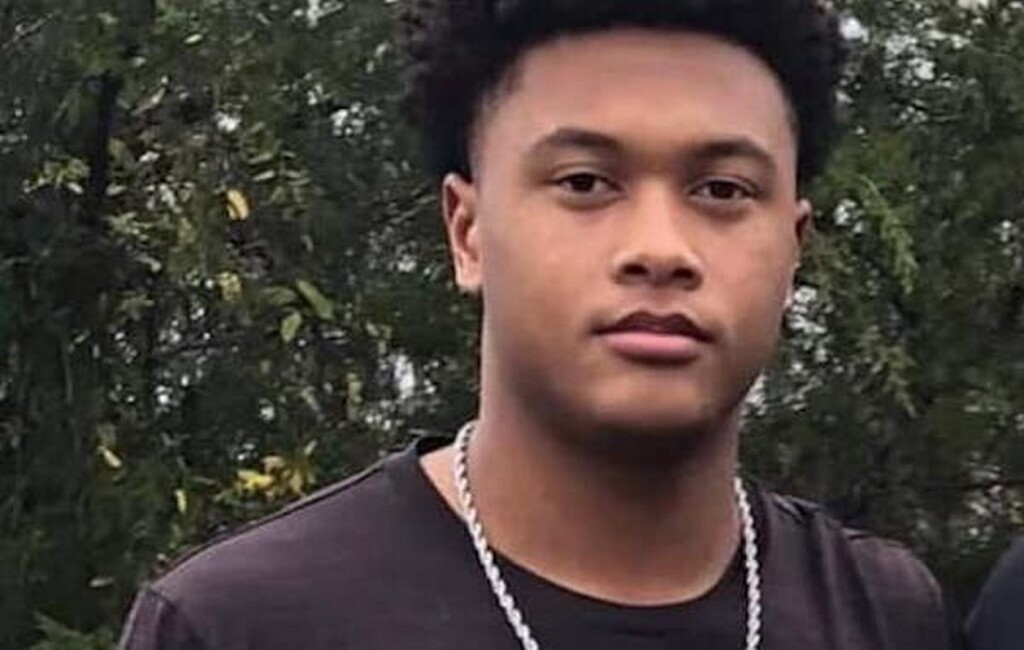
A North Carolina youth bravely rescued a man and woman from drowning just before their truck slid into deep floodwaters.

First reported by Columbus County News, Kenji “Flash” Bowen, a former standout baseball and football player in high school, was driving home last week with his girlfriend and their baby near Wilmington after a near-tropical storm flooded parts of the state.

Nicknamed “Flash” by teammates at East Columbus High School because of his speed, he needed every bit of it when, after being turned back by flooding on a secondary road, he saw a pickup truck inching along towards the torrent on the opposite side of the road. According to Flash, it looked a lot more like the opposite side of a river.

“We turned down Woodyard Road, and got to the place where it was flooded,” Bowen told Columbus County News. “There was no way I was going through that with my family, so I got ready to turn around.”

“There was a truck pulling into the water from the other side, and I tried to flash my lights at him to tell him to stop, but I guess he didn’t see me.”

Though the man from nearby Kelly realized he couldn’t make it through the water, he was too late, and his tires began to spin while reversing as the water gradually shifted the car to the side. The truck started to float towards a ditch on the side of the roadway where the water was much deeper—then began to sink.

The young father then lept into the water and moved as fast as he could towards the truck. “That water was flowing stronger than anything I had ever seen. I got to the truck and grabbed hold, then started working toward them,” he remembered.

Inside the cab, the man and woman began making the mistake of trying to open the doors, which can’t be done once the car is partially submerged. Bowen helped the woman crawl out through the window, where Bowen’s girlfriend Caitlyn was waiting to help her make it up the grassy bank to dry land.

Bowen then went back to rescue the man and his dog—both through the window as the car was sinking.

Though a standout athlete, Bowen has no interest in swimming, and generally doesn’t like deep water, he said laughing.

HIGH SCHOOL HEROES: Florida Teen Wins Prestigious Carnegie Award and Full-Ride Scholarship After Daring Rescue

In such situations, the faster one realizes the car is a coffin, the greater their chances for survival. As soon as your car hits the water, immediately unbuckle your seatbelt and try to get out through the window as it can often still be rolled down.

The door won’t open if it’s even partially submerged as the water pressure is too much to push through. The best place to kick a window that won’t open is near the top of the window pane, and the metal prong of the headrest can provide a tool that might help break it.

MORE SINKING STORIES: Missing Texan Trapped for 3 Hours in Her Submerged Car Saved by Passing Fisherman–Learn How to Save Yourself Too

If the window isn’t opening or breaking, the door can be opened only when the whole car is submerged and filled with water. Steady your breathing, but don’t try to get out immediately—Mythbusters demonstrated that even after the driver is fully underwater, the equalization of the pressure in the car needed for the door to be openable took 1 minute and 51 seconds.

Fortunately, for the couple and their dog, “Flash” Bowen was faster than the surging water.

SHARE This Incredibly Brave Rescue From A Super High Schooler… 

Original US Constitution Found in a Cabinet While Family Was Moving After 7 Generations–Now at Auction

Original copy of the US Constitution – Credit: Brunk Auctions

An incredible piece of US history has been found, and is expected to bring $20 million at auction.

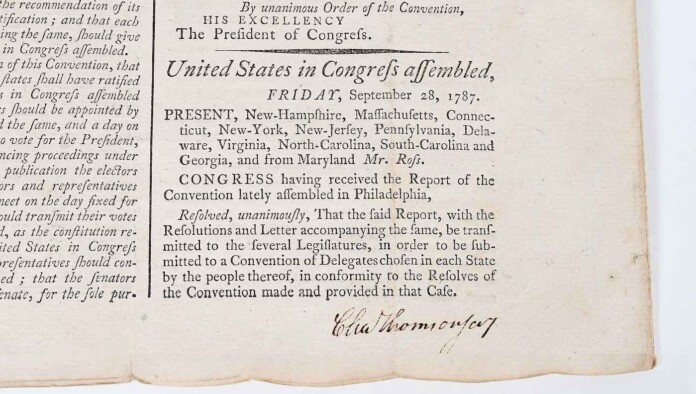
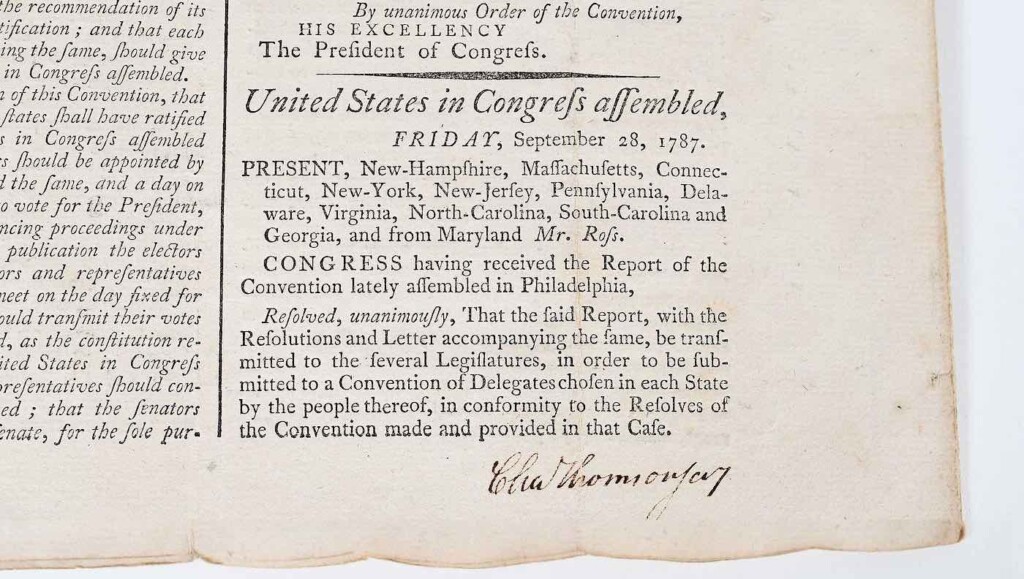
In the lead-up to the Constitutional Convention of 1787, 100 copies of the US Constitution were printed, but only 8 of them were signed by Charles Thomson, the secretary of the Continental Congress, for the official purpose of being brought to each state for the delegates therein to deliberate on.

One of those 8 copies was just discovered inside a house in North Carolina, making it the only privately owned signed copy or the Constitution in the country. It’s now going up for auction at Brunk Auctioneers, and the opening bid of $1 million has already been met.

The family that found the historic document had been stewards of the Hayes Plantation in Edenton, on a property formerly owned by Samuel Johnston, who was North Carolina’s Governor from 1787 to 1789, and was the individual who ratified the document in the state.

They had kept the plantation for 7 generations, but in the process of passing it into the hands of the state to become a historic property, a massive cleanout of generations of items had to be undertaken. It was during this process that the signed copy was found.

“It wouldn’t surprise us for it to go for $20 million dollars, could be less could be more; another copy of the Constitution sold at Sotheby’s for $42.3 million,” said Andrew Brunk, the auction house’s CEO, in an interview with CBS News.

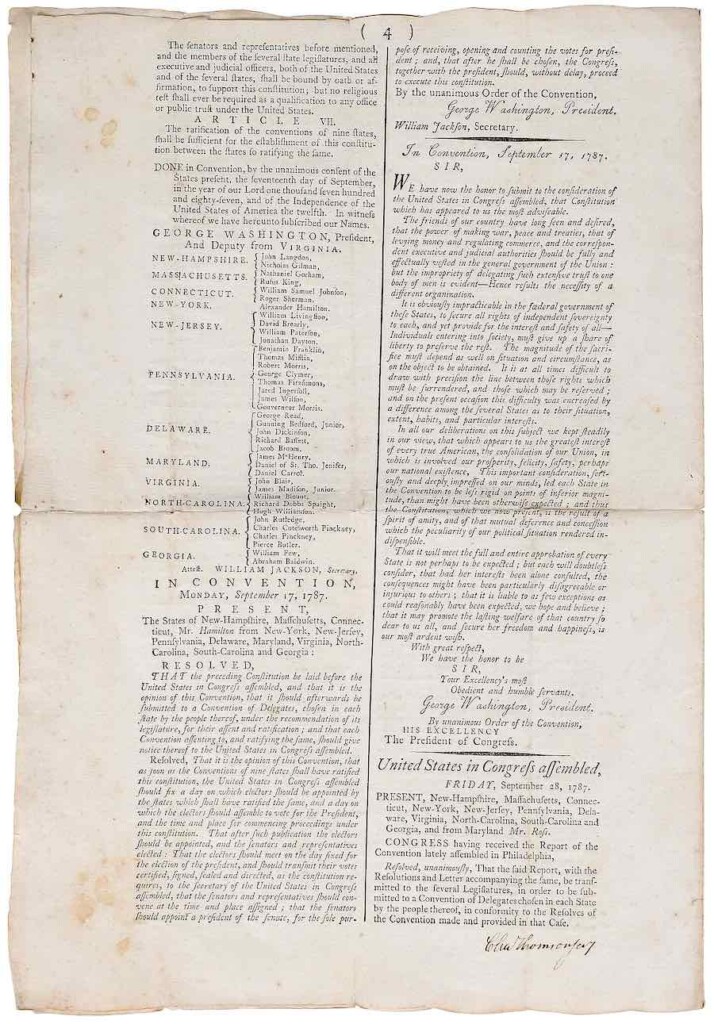
One page of the U.S. Constitution document – Released by Brunk Auctions

The document was preserved pre-cut, so the 8 pages remain on two sheets, with the famous preamble starting with “We The People” located in the top right. Also attached is a resolution from the (Articles of the) Confederation Congress to send the document to the states to ratify, explaining what it is, what’s to be done with it, and what the drafters think the state governors and congresses should do.

MORE US HISTORY STORIES: Balcony Tickets to the Night of Abraham Lincoln’s Assassination Smashes Auction–Only One Other Known to Survive

“Let’s hear it for a discovery that gets us thinking about the amazing set of ideas that make us a country,” exclaimed Lauren Brunk in an email to GNN from her boutique auction house in North Carolina.

WATCH the interview from CBS News… For Those Outside the US, Watch HERE

SHARE This Unbelievable Opportunity To Own Such A Key Piece Of History… 

“Rather fail with honor than succeed by fraud.” – Sophocles

Credit: The Free Birds

Quote of the Day: “Rather fail with honor than succeed by fraud.” – Sophocles

Photo by: lucas Favre

With a new inspirational quote every day, atop the perfect photo—collected and archived on our Quote of the Day page—why not bookmark GNN.org for a daily uplift?

Surprising Benefit of Fines for High-Polluting Vehicles: More Kids Walking to School in London

Walking to school in England - Inbal Marilli, Unsplash
Walking to school in England – Inbal Marilli, Unsplash

London has the largest ultra-low emissions zone in the world, and it’s causing children to walk or bike to school much more than their peers in other cities, a new study has shown.

In London, a charge of $16.00 is required to enter and exit the city in a car that isn’t low emissions or electric, but it wasn’t always so. 6 years ago, only certain parts of inner London were considered low emissions zones.

Researchers at Queen Mary’s and Cambridge universities saw that the zone was going to be extended to encompass the whole of metropolitan London, and wanted to take the opportunity to study how this change would affect the health of children.

The study was launched in 2018 and measured inner London and Luton, a smaller city to the north. Children between the ages of 6 and 9 were given questionnaires about their habits, and were also occasionally examined for their pulmonary health, with researchers expecting that the drop in emissions would lead to better lung development.

Several papers will be published on the collected dataset, and the first one has shown that because of the reduced traffic congestion in the London ultra-low emissions zone, children are more likely to walk, bike, or ride a scooter to school.

2 out of every 5 London students in the study had switched from “passive” to “active” forms of getting to school—in other words, 2 out of every 5 London students used to be driven to school, but are now walking, biking, or riding a scooter.

This was more than in Luton, where only 1 in 5 had switched to biking or walking during the study period.

SIMILAR FROM BARCELONA: It Started With 5 Families, Now Hundreds are Biking to School Together With The ‘Bike-bus’

“Physical activity in general is vital for preventing obesity,” said Christina Xiao, an epidemiologist affiliated with Cambridge University and lead author of the paper. “There’s strong evidence that shows that it prevents weight gain, and also has benefits in terms of children’s physical development and mental health as well.”

GET UP AND GO NEWS: Just Go Walk: Studies Show Normal Walking Can Add Years to Your Life and Reduce Disease Symptoms

The study was limited in that it didn’t examine why the switch had been made. Was it because there was less traffic and so parents felt more comfortable navigating streets with their kids, or because it actually cost money for parents to drive their kids to school?

The authors of the first study hope that such details, along with the effect of less air pollution, will be parsed out in future studies.

FOR THE CHILDREN: Dogs Placed in Elementary Schools Making a Big Difference in Academics and Mental Health for Michigan Students

There are 300 or so low emissions zones across Europe where, in general, walking and biking are more common ways to get around, but no such legislative emissions zone exists in the US.

WALK Over To Your Friends Social Media And SHARE This Story…

Boy Kidnapped 73 Years Ago is Finally Found–Just in Time to Reunite with Dying Brother

Luis Armando Albino (R), now 79, was finally reunited with his long-lost brother Roger, 82 credit - Alida Alequin
Luis Armando Albino (R), now 79, was finally reunited with his long-lost brother Roger, 82 credit – Alida Alequin

A 6-year-old boy who was kidnapped from a California playground more than 70 years ago has finally been found thanks to his determined, and unknown, niece.

Making headlines all over the English-speaking world, Luis Armando Albino was reunited with lost family members when they discovered he was living on the East Coast thanks to a DNA test match with his niece, who had never given up hope of finding him.

The story begins in 1951 when Albino and his brother Roger were on a playground in West Oakland. A woman in a red bandana arrived in a van and said in Spanish that she would buy Luis some candy. Instead, she kidnapped and flew him to somewhere on the East Coast, where a family raised him as if he were their own son.

This diabolical plot succeeded in spades for the kidnappers, and despite Albino’s mother never giving up hope of seeing him again, 73 years passed with the breadth of the whole country separating them, and she died in 2005.

AP, which first broke the story, wrote that Oakland Tribune reports from the time said that his brother Roger had been interrogated by the police several times, and his story was always the same regarding the woman in the bandana. As a result, a massive search party was organized up to and including the military, but Albino was long gone.

The first inkling that Luis Albino might be alive was picked up by 63-year-old Alida Alequin—Albino’s sister’s daughter.

“Just for fun,” she took a commercially available DNA test, and found she matched 22% with an individual on the East Coast. AP declined to stay where. Trying through the limited contact options offered through the kit database, Alequin received no response, but her hope and curiosity had been piqued.

Going to the Oakland police, she convinced them the new lead was substantial, and she even managed to find a photo from the library of an Oakland Tribune story on the kidnapping of Luis and Roger side by side to use in the investigation.

A new missing persons case was opened. The FBI got involved, and prescribed DNA tests to Albino and Alequin’s mother.

On June 20th, investigators went to her mother’s home, Alequin said, and told them both that her uncle had been found.

LONG LOST FAMILY MEMBERS: She Finally Met Her Long Lost Dad, Who Didn’t Know She Existed, Thanks to Stranger on Facebook

“We didn’t start crying until after the investigators left,” Alequin told AP. “I grabbed my mom’s hands and said, ‘We found him.’ I was ecstatic.”

Luis was able to travel to Oakland with the help of the FBI where he met his brother Roger, his sister, and niece Alequin—whom he embraced first—saying “thank you for finding me.”

A lifetime had passed since Luis had seen his brother. Luis had joined the Marine Corps, served in Vietnam, and was a retired firefighter. He wasn’t only a father as well, but a grandfather.

MORE STORIES LIKE THIS: Wife of WWII Soldier Spends Decades to Reunite Japanese Family With Photo Album He Found on Okinawa –LOOK

Luis later flew out for another 3-week visit in August, after which Roger passed away, living to just within 4 months of being able to see his long-lost brother again.

Alequin hopes the story is an inspiration to other families going through something similar. Her message: “don’t give up.”

SHARE This Tear-Jerking Story Of Loss, Hope, And Reunion With Your Friends…
Lab-Grown Blood Stem Cells Could Replace Bone Marrow Donations for Transplants

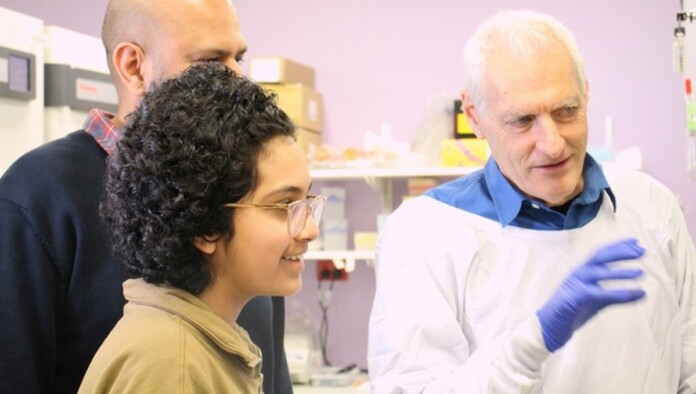
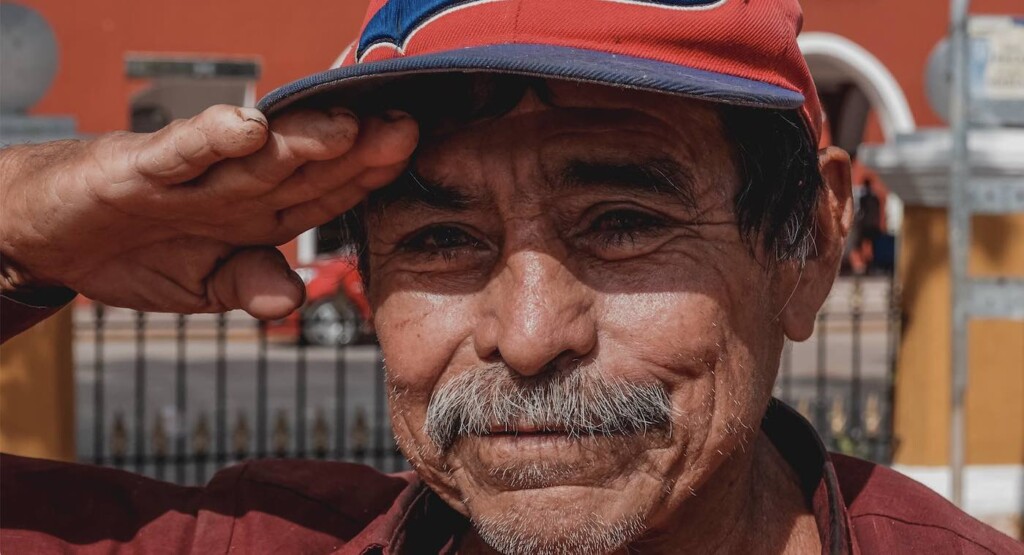
Riya who required a bone marrow transplant, in the lab with MCRI Professor Ed Stanley - credit MCRI, released.
Riya in the lab with MCRI Professor Ed Stanley – credit MCRI, released.

A team of Australian researchers has developed a method to morph personalized stem cells into hematopoietic stem cells, something that would promise risk-free bone marrow transplants

For a myriad of blood and bone marrow-based diseases including leukemia, a bone marrow transplant is the best standard treatment option available.

However, risks abound with the procedure such as mismatched donor cells prompting attacks on the host’s own tissues, leading to inflammation and even death.

Conducted at the Murdoc Children’s Research Institute in Australia (MCRI), the team first performed the common procedure of taking human cells from the hair, skin, and nails, and using a process to reprogram them to morph back into ‘pluripotent’ or ‘multi-power’ stem cells.

Pluripotent cells are richly found in human embryos and infants and have the ability to take the form of any cell in the body. It’s been a decade since Nobel Prize winner Shinya Yamanaka found out how to change any cell in the body back into pluripotent stem cells.

The authors of the new study from MCRI explain that the next step—of turning pluripotent stem cells into hematopoietic stem cells—which can take any form of blood cell, has been difficult to discover, but if it could be standardized, then bone marrow transplants for sensitive individuals like childhood leukemia patients would have much better success rates.

“The ability to take any cell from a patient, reprogram it into a stem cell, and then turn these into specifically matched blood cells for transplantation will have a massive impact on these vulnerable patients’ lives,” says Elizabeth Ng, lead author of the study and Group Leader of the Blood Development Laboratory at MCRI.

“Prior to this study, developing human blood stem cells in the lab that were capable of being transplanted into an animal model of bone marrow failure to make healthy blood cells had not been achievable. We have developed a workflow that has created transplantable blood stem cells that closely mirror those in the human embryo.”

CHILDREN BEING SAVED: After Childhood Cancer Diagnosis, Donor Bone Marrow from Little Sister Sends it into Remission

“Importantly, these human cells can be created at the scale and purity required for clinical use,” Ng adds.

In their study, they not only managed to make this pluripotent-hematopoietic leap, but successfully froze the resultant stem cells before transplanting them into immune-deficient mice. The success they recorded was typical of the rare procedure that is used as the benchmark of success—an umbilical cord hematopoietic stem cell transplant.

ADVANCED MEDICAL ADVANCEMENTS: Exciting Clinical Trials of New Stem Cell Injection Treatment Shows Promise for Halting Multiple Sclerosis

“By perfecting stem cell methods that mimic the development of the normal blood stem cells found in our bodies we can understand and develop personalized treatments for a range of blood diseases, including leukemias and bone marrow failure,” said MCRI Professor Ed Stanley.

His colleague, Dr. Andrew Elefanty, adds that manufacturing stem cells in this way solves additional problems as well.

MORE NEWS LIKE THIS: Lab-Grown Blood Given to People in World-First Clinical Trial

“Mismatched donor immune cells from the transplant can attack the recipient’s own tissues, leading to severe illness or death,” said Dr. Elefanty. “Developing personalized, patient-specific blood stem cells will prevent these complications, address donor shortages, and, alongside genome editing, help correct underlying causes of blood diseases.”

At the time this research and experimentation was ongoing, an 11-year-old girl named Riya was at MCRI receiving a bone marrow transplant from her mother Sonali, who was only a half-match. It took 3 years for her to recover to the point where she could go back to school, but there she and her family got to learn from Drs. Stanley and Ng what their research might do for children like her.

SHARE The News Of This Amazing Work With Stem Cells To Cure Children… 

Fishermen Sacrifice Daily Catch to Rescue Huge Whale Shark Found in Their Net (WATCH)

Fishermen rescue whale shark – Tiktok @qasih2022 Jalibobnori

From the east coast of Malaysia comes an extraordinary account of saintly fishermen who sacrifice their catch of the day to save a gentle giant.

In a viral video published in August, night fishermen around Kaula Terengganu are seen hauling in a net filled with fish, but the shouts heard are not ones of joy.

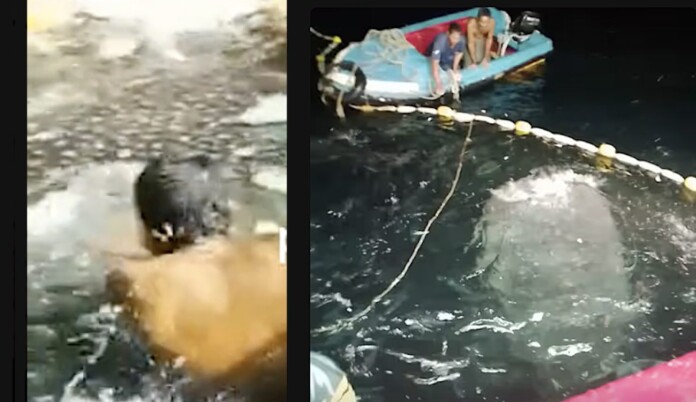
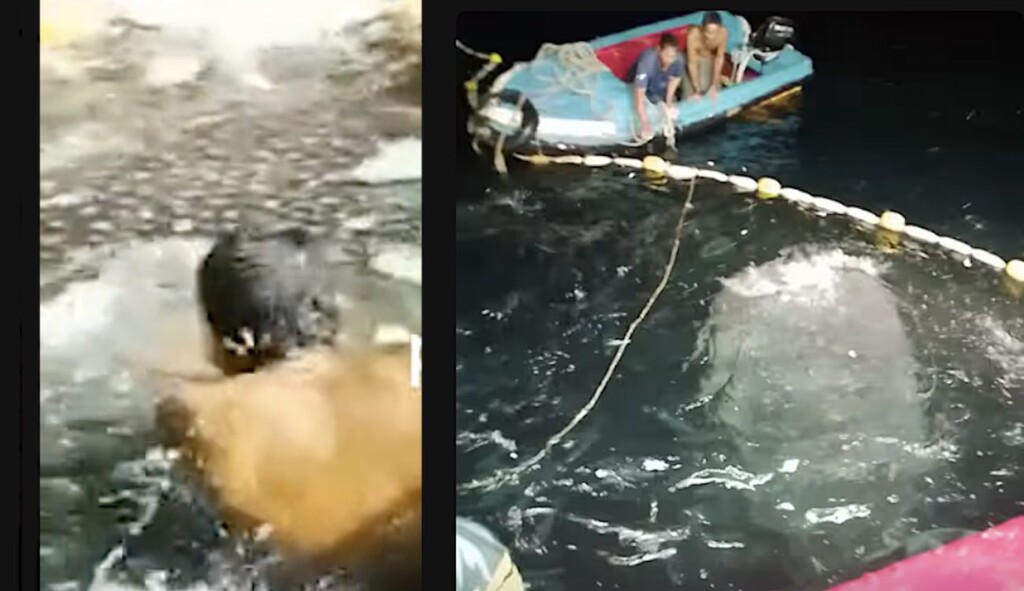
A whale shark, likely a juvenile, was caught in their net, circling around looking for an escape route.

Even though it might have meant losing their day’s pay, the fishermen began to tug and pull different sections of the net to allow the whale shark to leave.

In a second video, some of the ropy Malay fishermen are filmed inside the net, holding onto the whale shark’s head with one hand and trying to pull the surface rope of the net under its chin so it could swim over it.

@qasih2022 #JOGHO #TRF1379 ♬ bunyi asal - Jalibobnori

Whale sharks are totally harmless to humans, but the animal was as large as their boat, and floating in complete darkness beyond the scope of the spotlights mounted on the gunwales, one might still say it took a lot of nerve.

Eventually, their plan worked, and the whale shark can be seen gently swimming away. The first video was viewed 2.2 million times and accumulated 28k likes. Ironically the second video, where the whale shark actually leaves the net, was viewed around 23k times.

@qasih2022 #JOGHO #TRF1379 ♬ bunyi asal - Jalibobnori

There is currently no robust estimate of the whale shark population because they are a global migratory species that inhabit deep water. The species is considered endangered by the IUCN due to the impacts of fisheries, by-catch losses, and vessel strikes, and is one of 6 migratory shark species protected by an international treaty like whales.

SHARE These Selfless Malay Fishermen With Your Friends On Social Media… 

“The essential conditions of everything you do must be choice, love, passion.” – Nadia Boulanger

Quote of the Day: “The essential conditions of everything you do must be choice, love, passion.” – Nadia Boulanger

Photo by: lucas Favre

With a new inspirational quote every day, atop the perfect photo—collected and archived on our Quote of the Day page—why not bookmark GNN.org for a daily uplift?

In a World First, Surgeons Operate on Rhino’s Broken Leg and Fix Her Limp

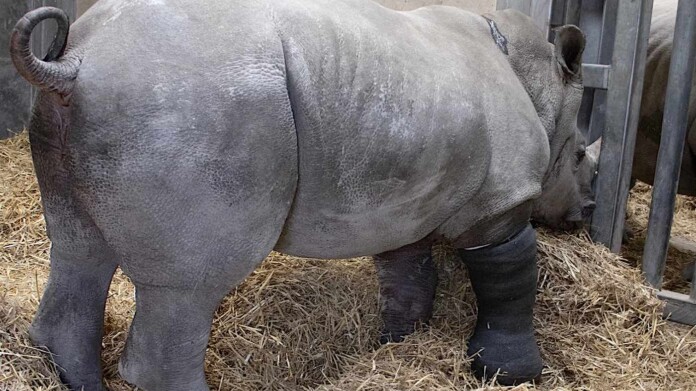
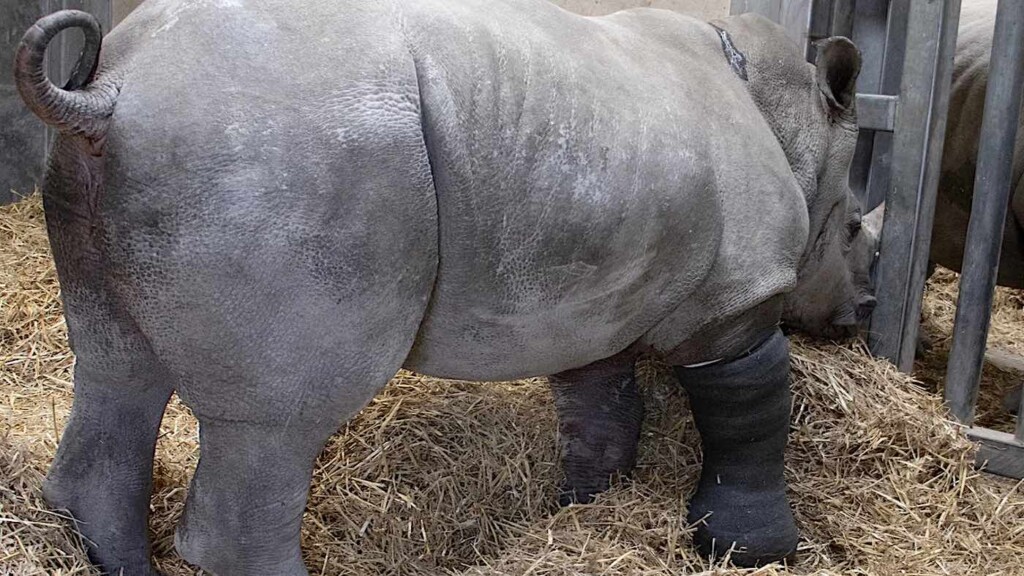
Amara in a cast, healing from a broken leg – Photo released by Knowsley Safari in Merseyside, England on September 19, 2024

A 2-year-old female rhino known for her “boisterous” nature has just undergone surgery on her ulna in a world-first procedure.

Using equine surgeons’ knowledge of similar procedures done on horses as a template, the team of specialist veterinarians successfully healed the rhino’s leg, and even got her up and about wearing a cast.

Amara is a southern white rhino—the most common species in Africa—born at the Knowsley Safari Park near Prescot, in northwestern England. Known for her love of roughhousing, Amara developed a limp, and vets pondered over what to do.

“Earlier this year, Amara began limping on her right front leg,” Knowsley Safari Park told ABC News in a statement. “The Knowsley Safari team brought in specialist equine surgeons from the University of Liverpool to help with the diagnosis, where radiographs confirmed a fractured ulna.”

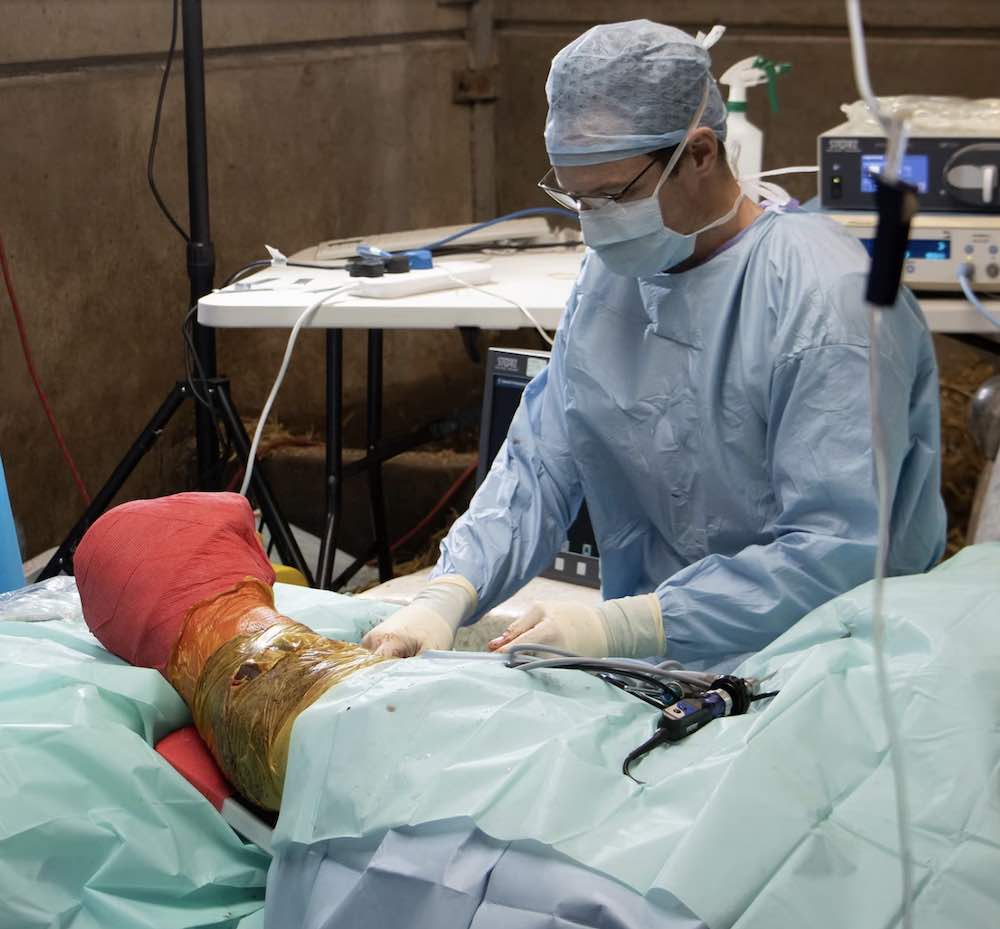
“Under anesthesia in Amara’s enclosure, the large team performed a lengthy operation, including key-hole surgery of Amara’s wrist, in a procedure lasting five hours.”

The ulna is the medial bone that in humans connects the elbow to the wrist on the palm-side of the hand. Similar to humans, in rhinos the ulnar bone is found in the lower section of the front legs.

Rhino operation for broken leg – Photo released by: Knowsley Safari in Merseyside, England

The safari park says no documentation or evidence of such a procedure was found in the run-up to the operation. The rhinoceros is part of the same order as horses—Perissodactyla—or odd-toed ungulates, and so equine surgeons led the procedure based on the same surgical methods used in horses.

“We were unsure if the cast would be strong enough and how Amara would cope with such a restriction on her limb,” Dr. David Stack, senior lecturer in Equine Surgery at the University of Liverpool, told ABC News. “We hoped that she would accept it and that she would be able to move around, get down, and, importantly, back up again, but this was unchartered water.”

The zoo told ABC that Amara is so far doing well. Her arm was supported in a full cast and she is kept in her enclosure to minimize movement.

WATCH the story below from ABC News… 

SHARE This Amazing Standard Of Care For This Member Of A Threatened Species… 

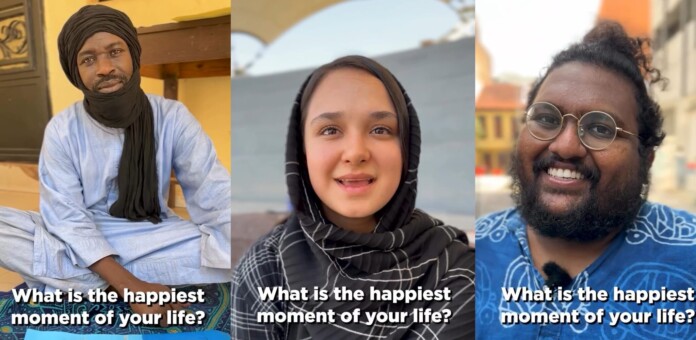
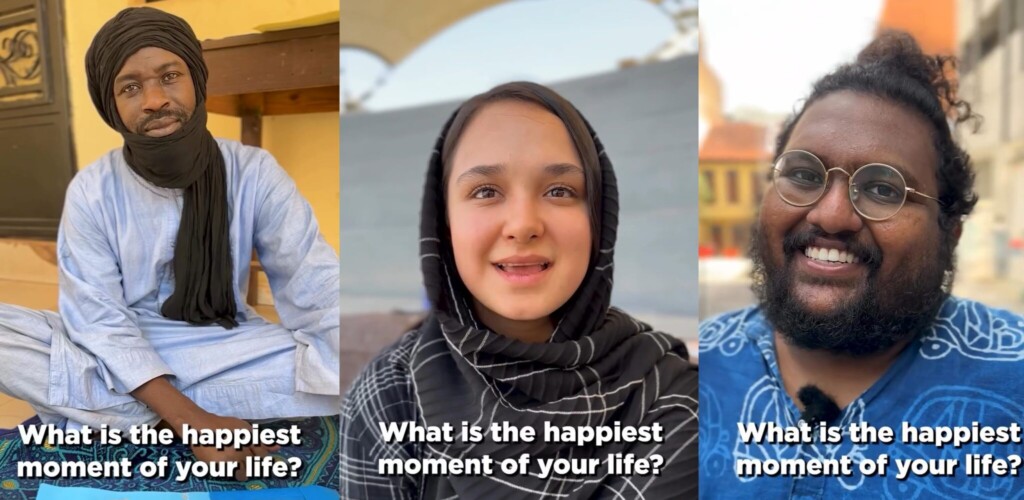
He Shares the Happiest Moments in People’s Lives While Traveling Through Every Country

credit - Michael Zervos Project Kosmos
credit – Michael Zervos Project Kosmos

Reprinted with permission from World at Large, a news website of nature, politics, science, health, and travel.

“It’s really just a publicity thing,” says Michael Zervos, a man who’s currently on course to set the Guinness World Record for the fewest number of days needed to visit every country in the world.

But as he told me, that’s just to bring eyes onto his real mission: to hear the happiest moments from the lives of people in every country in the world and to share them on social media, to help remind us we are all connected, if not by parentage, then by aspirations.

Dubbed Project Kosmos, he has more or less reached the halfway point of his journey, having already passed through 100 countries in under a year. Barring a few pariahs, his passport has been stamped in all of Asia, Oceania, Africa, and some parts of Europe.

His brilliantly shot videos are arrayed very cleverly on his Instagram. Areej, in Jordan, recalled the moment she bought her first bike and learned how to ride it—after she turned 30.

Sam, in Brunei, said it was the day she arrived at her tram stop, and a homeless man whom she had treated to a hot chocolate days before, was waiting there for her with a hot chocolate in return.

They’re curated and produced by Zervos who all the while is traveling at a breakneck pace across the face of the Earth.

“Amazingly, I’m still on schedule,” Zervos, a dual citizen of the US and Greece, told me in May during a stopover in Cyprus. “I had to make several adjustments about 30 countries in, and my intention wasn’t to come back to Greece at this time. But still, I visited all the countries I expected to go to save for a couple I had to kick down the line, like North Korea which still hasn’t opened.”

“I’m amazed I’m on schedule,” he admitted. “Occasionally it means maybe spending a day less in a certain place but I’ve tried to make the most out of those situations.”

If you couldn’t tell by the hair, Zervos was already an avid globe trekker before he concocted the idea for his “record-breaking journey of happiness,” but also a self-described fan of logistics and planning, having worked in documentary filmmaking before embarking on his trip.

Knowing that he only had a few days in each nation, he spent much of the planning phase seeking out personalities and “fixers,” as Anthony Bourdain would call them. Finding them through social media, he’d open a dialogue and see if they could give him a crash course on what it means to be happy in the Democratic Rep. of the Congo, Mongolia, Burundi, etc.

“It’s changed me in ways that I can’t really articulate,” said Zervos in May, who by then had already filmed between 700 and 800 interviews.

A human universal

All human beings are happy sometimes. Zervos wanted to know why.

In an exercise in cross-cultural sociology, he selected questions that are typically found on the sort of surveys from the UNDP or WHO that are administered in regions across low and middle-income countries when measuring development rates.

However, Zervos quickly found that asking the question “what makes you happy?” isn’t the best way to get an answer to that question.

STORIES OF CROSS-CONTINENTAL KINDNESS: Ukraine Girl Bereft Without Her Cat is Reunited Thanks to Kind Strangers in 5 Countries and 7,000 Miles–WATCH

“It doesn’t really elicit a story, so that’s why I changed it to ‘what’s the happiest moment of your life?'” Zervos explains. “I’ve gotten a lot of the same answers, but it’s amazing when you’re able to clarify the question and actually ask for a specific moment, it doesn’t necessarily fall in line with what makes them happy.”

“So if they’re saying ‘oh family makes me happy.’ Okay wonderful, but I want a specific moment in your life, then I’ll get like ‘oh well, when I bought a bell for my prized cow, and I was able to afford it, and everyone could see this bell and how beautiful it was on my black and white cow.’”

Michael Zervos – Instagram

“So it seems like the highest highs aren’t always what makes you happy consistently.
People between the ages of 18 and 25? Not many have said ‘when I got married,’ but many have said education, or when my first child was born, but as they’ve gotten older those responses have actually diminished.”

“Like a village chief near Victoria Falls in Zimbabwe—85 years old but doesn’t look it—he said his happiest moment is when he hosted a cohort of international travelers and agents from all over the world. And he killed goats and oxen and chickens over three days and it was all late nights and dancing and harmony… the way he was describing, you could see the lights in his eyes he was getting so emotional.”

The hunt for happiness in humanity is a new exercise for Zervos, who is fueled by a love of travel and storytelling.

OTHER CREATIVE ENDEAVORS LIKE THIS: Man Connects With Humanity By Sharing Thousands of Hour-Long Conversations With Strangers

“Some of my favorite books and movies—they never wrap up the mystery. Maybe they wrap up the plot but they open up the theme at the very end to make you question more things than none, and there’s more than a little of that in travel and I think that’s why I keep coming back to certain locations. I really can’t get enough of that.”

North America, Europe, and South America remain.

WATCH One of the many amazing video shorts Michael has created on his Insta…

SHARE This Man’s Noble Quest And The Incredible People He’s Met Along The Way…

Pet Cat Lost in Yellowstone Travels 800 Miles Toward the City Where Owner Still Had Hope 60 Days Later

Courtesy of Susanne Anguiano

An incredible story reminiscent of Homeward Bound, recently came out from California—that a cat who had accompanied a family to Yellowstone National Park, was lost there.

Despite the distance of over 800 miles, the cats’ owners got a call two months after the sorrowful trip that their animal had been found in California, not Wyoming.

Benny and Susanne Anguiano have been on many camping trips with their cat Rayne Beau, and were confident that the naturally solitary and self-reliant animal wouldn’t get lost.

Visiting Yellowstone, Rayne Beau was startled by something and ran off into the trees not to be seen again, despite Benny and Susanne looking for him every day of their trip.

Time ticked by, and eventually, the couple had to make the abhorrent decision to leave.

“We had to leave without him,” Mrs. Anguiano told KSBW News. “That was the hardest day because I felt like I was abandoning him.”

REUNIONS WITH LOST CATS: Couple Accidentally Ships Their Cat with an Amazon Return–1 Week and 3 ‘Miracles’ Later They’re Reunited

60 days passed at their home in Salinas, Monterrey, when they suddenly got a call from an SPCA in Roseville located in northern Sacramento County.

They had a Pet Watch microchip, which the SPCA was able to read and gather the Anguianos’ contact information. Apparently, a woman had found the cat in Roseville and decided that since he was obviously a pet she would take him to the shelter.

MORE STORIES LIKE: Missing for 12 Years, Beloved Cat Named Artie Finally Reunited with His Family

Susanne contacted local news to try and share the remarkable story of Rayne Beau’s journey home in the hopes that individuals who may have taken him in, fed him, or saw him pass by, will come forward and enlighten the family as to the path their cat took on his long, 800-mile walk back home.

WATCH the story below from KSBW… 

SHARE This Unbelievable Journey With Your Friends… 
Overdose Deaths in US Plummet With ‘Declines of 20-30%’ – Saving Thousands of Lives

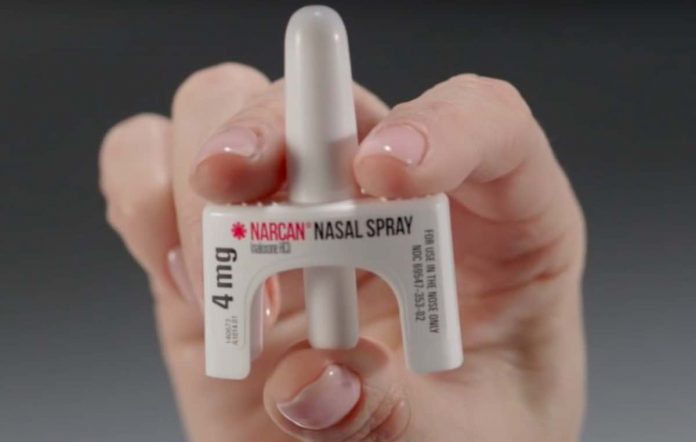
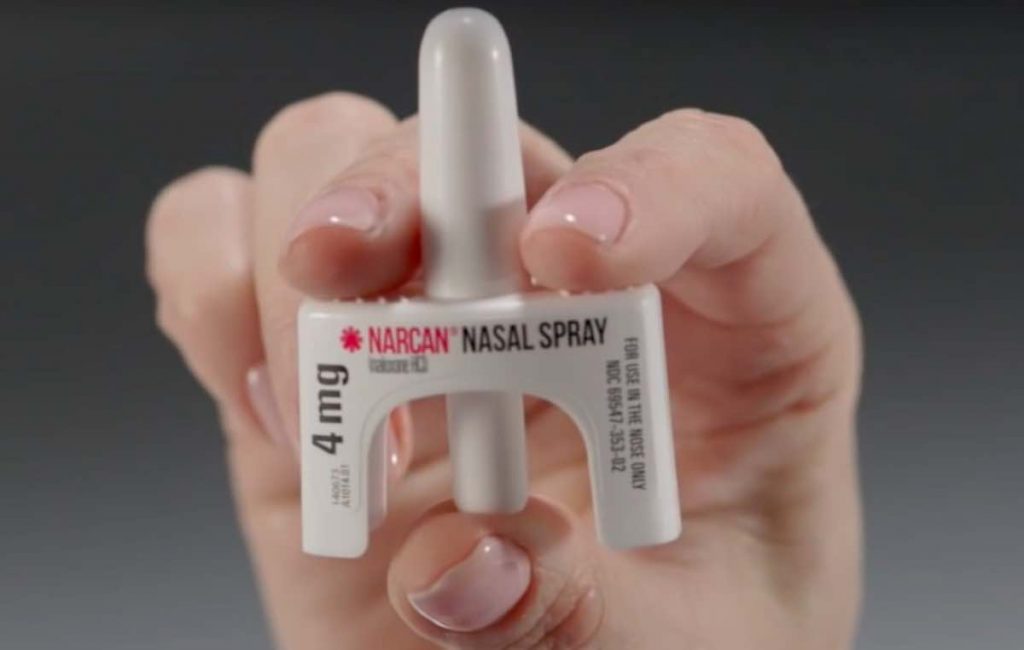
Narcan, a naloxone-based anti-overdose nasal spray, is one factor in the reduction - released by Adapt Pharma.
Narcan, a naloxone-based anti-overdose nasal spray, is one factor in the reduction – released by Adapt Pharma.

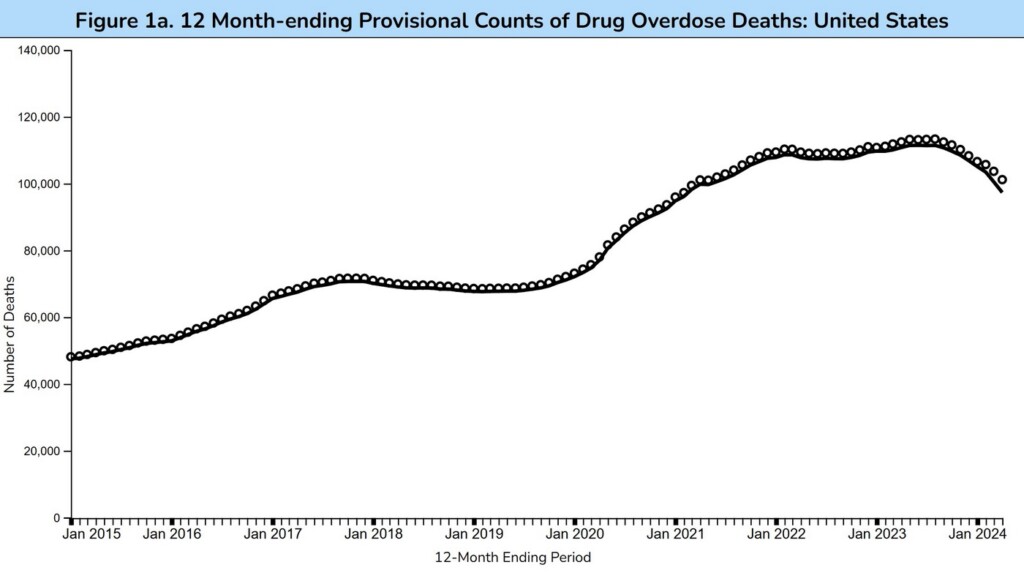
For the first time in decades, drug overdose deaths in the US fell—by 10.6% while in certain states the decline was 20, and even 30%.

Identified in a survey conducted by the CDC, it interrupts a one-way trendline that has been rising higher and higher since 2019, and has given some scientists “so much hope.”

Those in the field of American medicine trying to combat and quantify the problem say that a 1-year drop is no reason “to spike the football,” and the work to try and establish what was the cause of the reduction is now ongoing.

NPR, covering the survey, says that the commonly available drug naloxone which can work to interrupt and diffuse an opioid overdose, has definitely played a factor.

Approved by the FDA in 2015, naloxone has quickly made its way into all manner of establishments such as libraries, YMCAs, and other community locales. GNN reported in Cincinnati that naloxone kits are being made available in vending machines.

The simple nasal spray is highly effective at reversing overdoses, and NPR spoke with one addict of street drugs like fentanyl in Vermont who said that he and other users regularly carry naloxone, and have built the habit of dosing in pairs or groups to make sure that if an overdose occurs, someone is there to help that person.

credit CDC

“For a while we were hearing about [drug deaths] every other day. When was the last one we heard about? Maybe two weeks ago? That’s pretty few and far between,” Mr. Donaldson, an addict from Burlington, told NPR.

Of particular note have been Washington, Ohio, and Missouri, where drug deaths have fallen 15%, 31%, and 34% respectively.

“A year ago when overdose deaths continued to rise, I was really struggling with hope,” said Brad Finegood, who directs the overdose crisis response in Seattle. “Today, I have so much hope.”

ALSO CHECK OUT: 5 Million American Vending Machines Will Soon Offer More Healthy Snacks to Help Curb Obesity

Finegood said that they’ve tripled the amount of naloxone out in the community, and added that his department found in a survey that 85% of high-risk drug users now carry the overdose-reversal medication.

Other hypotheses include better drug enforcement and control of fentanyl coming across the southern border, and although other medications have increased in circulation, like xylazine, which is also toxic, it’s possible that fentanyl was just that much more lethal.

MORE PUBLIC HEALTH PERFORMANCE: 180 Countries Adopt Landmark Public Health Decisions on Tobacco

Of all the public health workers and scientists NPR spoke with, agreement was unanimous that only the briefest of celebrations is merited in the hope these reductions can continue and become sustained since tens of thousands of Americans still overdose on illicit drugs every year.

SHARE This Inspiring Trendline With Your Friends On Social Media…
“Thou art fairer than the evening air clad in the beauty of a thousand stars.” – Christopher Marlowe

prottoy hassan

Quote of the Day: “Thou art fairer than the evening air clad in the beauty of a thousand stars.” – Christopher Marlowe

Photo by: prottoy hassan

With a new inspirational quote every day, atop the perfect photo—collected and archived on our Quote of the Day page—why not bookmark GNN.org for a daily uplift?

prottoy hassan

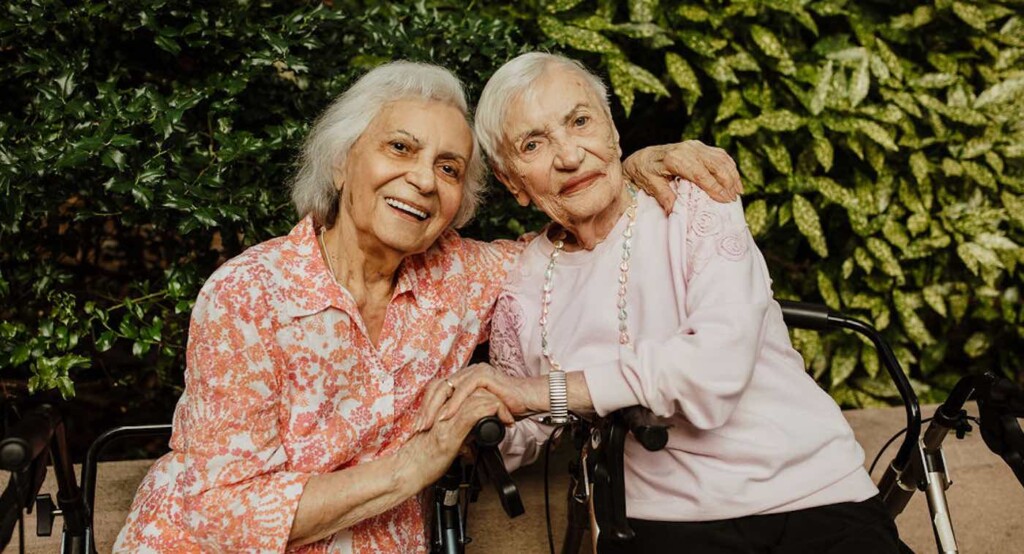
100-Year-Old Holocaust Survivor Granted Wish to Reunite with Sister One Last Time

Credit: Dina Averuk Photography – Submitted by: Wish of a Lifetime via AARP

Helena Stefaniak’s life story is one marked by the bonds of sisterhood growing up in war-torn Warsaw—and she rekindled that spirit of resilience one last time at age 100, thanks to an AARP program that grants wishes for seniors.

Helena and her sister Barbara protected one another from the horrors of their surroundings during World War II. Yet, the war ultimately tore them apart five years after the Nazis invaded Poland in 1939. They forcibly took her to a work camp in Germany in 1944, while Barbara’s fate remained unknown.

Helena recounted her harrowing experience being on her own for three years, saying, “I was really lost. Most of the time the war was going, I was scared.”

Despite the odds, Helena never lost hope of reuniting with her sister.

After enduring years of hardship and uncertainty, Helena was liberated from the work camps and became determined to find her sister. The relentless search finally led to their reunion in Germany in 1947.

Helena and her new husband started afresh, moving to Connecticut and living among fellow Polish immigrants. The sisters reunited again in New Jersey in 1950, where Barbara lives—and their bond remained unbreakable through the decades.

This year, though, as she approached her 100th birthday—and with her health deteriorating—Helena’s greatest wish was to reunite with Barbara once more.

Touched by their story, Wish of a Lifetime from AARP made Helena’s dream come true, allowing her to travel from her current home in Montana to New Jersey, so she can spend precious time with her beloved sister.

“At our age, you have to say goodbye,” Barbara told GNN.

Helena, 52, and Barbara, 48, in 1976 visiting Poland for first time since WWII – Submitted by Wish of a Lifetime from AARP

“I was very, very happy. I know I won’t see her again, and that was our last time.

Founded by Jeremy Bloom in 2008, Wish of a Lifetime, a charitable affiliate of AARP has granted over 2,700 wishes nationwide, averaging 300 per year.

PASS THE TISSUE: Family Brings in Peruvian Mom Who Hadn’t Seen her Son in 20 Years—And Captured the Tearful Moment on Video

“We believe that everyone should be able to age with hope and joy. We empower wish recipients to fulfill their hopes while reconnecting with the people and passions that matter most to them.”

Helena, for one, is grateful beyond words. “Thank you from the bottom of my heart.”

SHARE THE WISH MAKING OPPORTUNITY With Friends and Seniors on Social Media…