It’s probably fair to say that Starry Night is the second most famous painting ever made behind the Mona Lisa, but what its many admirers likely do not know is that its famous swelling skies are “alive with real-world physics.”
Van Gogh’s brush strokes create an illusion of sky movement so convincing it led atmospheric scientists specializing in marine and fluid dynamics in China and France to wonder how closely it aligns with the physics of real skies.
They explained that while the atmospheric motion in the painting cannot be measured, the brushstrokes can act as a stand-in.
And, after measuring the relative scale and spacing of the whirling strokes, the researchers say van Gogh “accurately captures” cascading energy.
They discovered what they described as “hidden turbulence” in the painter’s depiction of the sky.
“The scale of the paint strokes played a crucial role,” in this discovery, said study author Dr. Huang Yongxiang. “With a high-resolution digital picture, we were able to measure precisely the typical size of the brushstrokes and compare these to the scales expected from turbulence theories.”
To reveal hidden turbulence, the research team used brush strokes in the painting like leaves swirling in a funnel of wind to examine the shape, energy, and scaling of atmospheric characteristics of the otherwise invisible atmosphere.
They then used the relative brightness, or luminance of the varying paint colors as a stand-in for the kinetic energy of physical movement.
“It reveals a deep and intuitive understanding of natural phenomena,” said Dr. Huang. “Van Gogh’s precise representation of turbulence might be from studying the movement of clouds and the atmosphere or an innate sense of how to capture the dynamism of the sky.”
The study, published in the journal Physics of Fluids, analyzed the spatial scale of the painting’s 14 main whirling shapes to find out if they align with the cascading energy theory that describes the kinetic energy transfer from large to small-scale turbulent flows in the atmosphere.
They discovered the overall picture aligns with Kolmogorov’s law, which predicts atmospheric movement and scale according to measured inertial energy.
Drilling down to the microcosm within the paint strokes themselves, where relative brightness is diffused throughout the canvas, the research team also discovered an alignment with Batchelor’s scaling, which describes energy laws in small-scale, passive scalar turbulence following atmospheric movement.
They said finding both scalings in one atmospheric system is rare, and it was a “big driver” for their research.
SHARE This Wild, New Discovery Hidden In Such A Well-Known Painting…
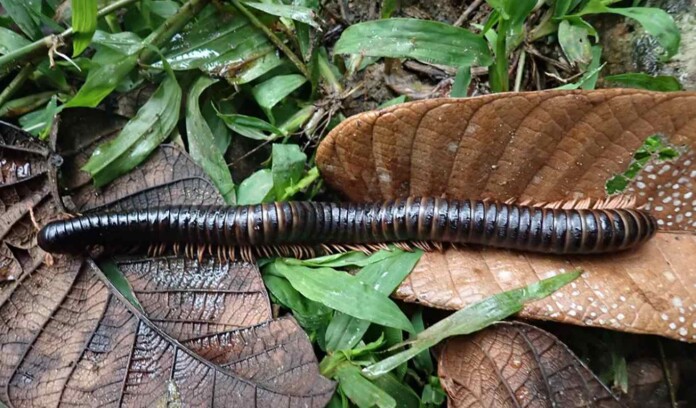
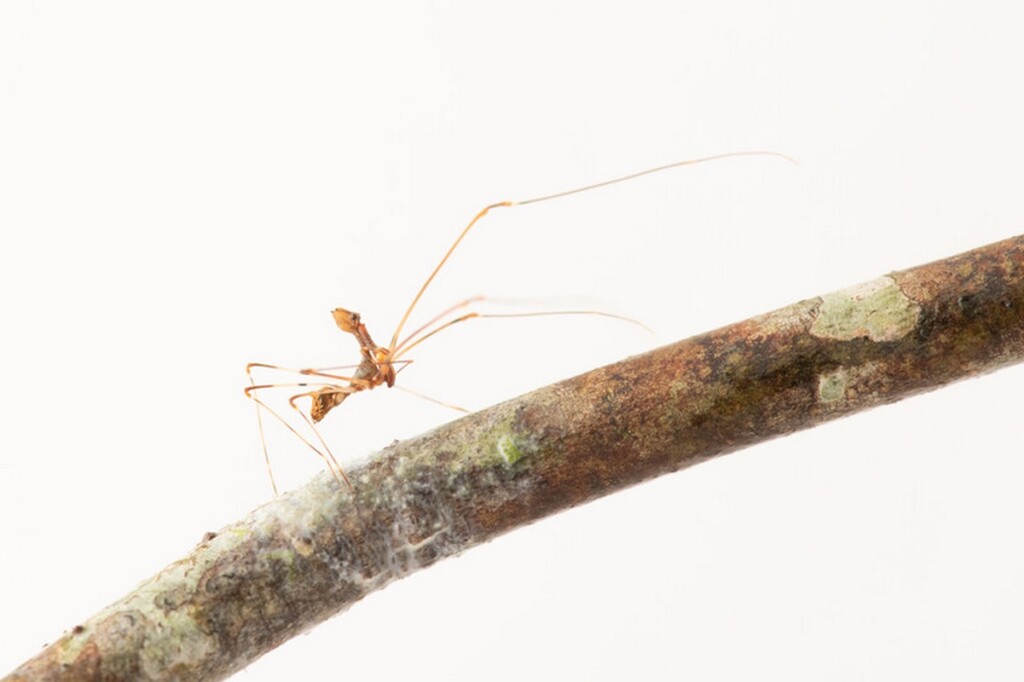
Spirostreptus sculptus (Photo by Dmitry Telnov/NHM London, UK)
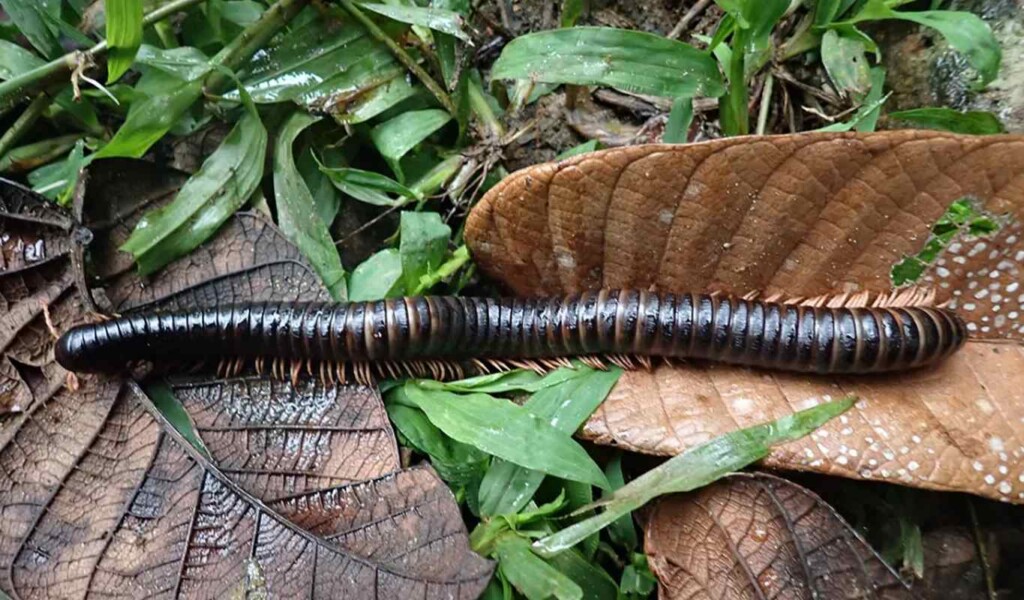
Spirostreptus sculptus (Photo by Dmitry Telnov/NHM London, UK)
It may be the very definition of a creepy crawly, but this species of giant millipede was a major discovery for a recent scientific expedition to Madagascar.
Not seen in 126 years, it was part of a bevy of species identified by scientists among the trees and waterfalls in a remote section of the largest forest on the island, called Makira.
The expedition was part of Re:wild’s Search for Lost Species program, on the progress of which GNN has reported substantially over the last four years. It included teams of scientists and conservationists from 4 different organizations, as well as local guides.
Different specialized team members were searching for mammals, fish, birds, reptiles, amphibians, and invertebrates that have not had a documented sighting in at least a decade or more, but are not assessed as extinct by the IUCN Red List of Threatened Species. The full team, which numbered more than 30 people, searched Makira for several weeks in September 2023 and spent several months analyzing their results.
“In the past the Search for Lost Species has primarily looked for one or two species on each expedition, but there are now 4,300 species that we know of around the world that have not been documented in a decade or more,” said Christina Biggs, lost species officer for Re:wild, whose eDNA work during the expedition detected 37 additional vertebrate species that the taxonomic experts didn’t sight.
“Madagascar is a biodiversity hotspot and Makira is an underexplored area within the country, so we decided to pilot a new model for lost species searches there. We convened a group of scientists to search for as many species as possible, and it proved successful.”
The expedition team initially had a list of 30 lost species they were hoping to find in Makira. The species on the list included 3 mammals, 3 fish, 7 reptiles, 12 insects, and 5 spiders. With the help of local guides and fishermen, the team found the 3 fish species on the list highlighted by the Makira rainbow fish, not seen in 20 years.
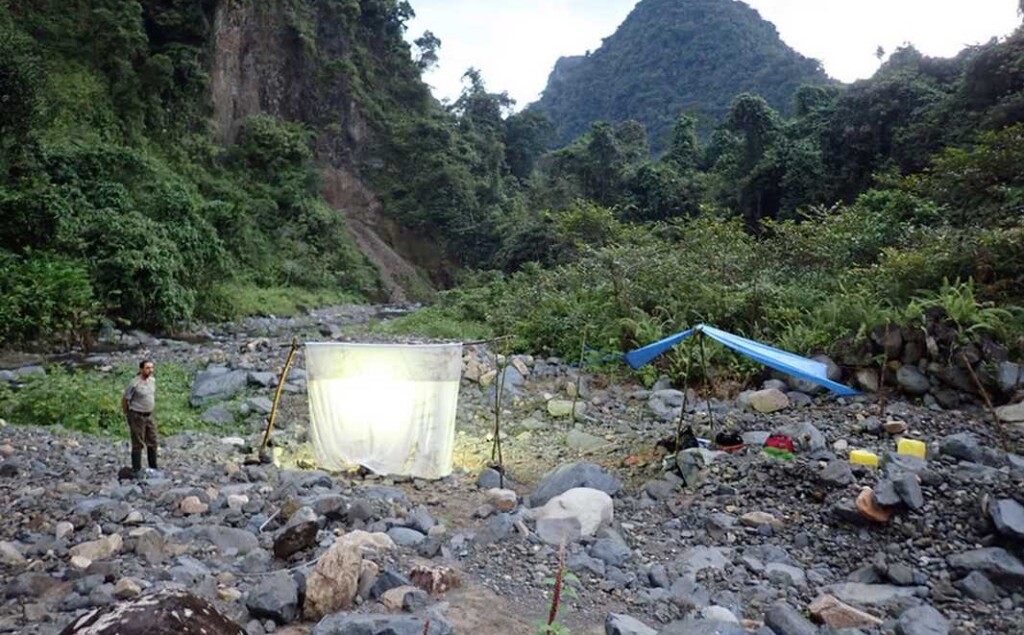
Setting up a light trap in Makira to survey invertebrates at night during a lost species expedition in September 2023. (Photo by Merlijn Jocque)
“When we didn’t find anything during the first five days of the expedition it was very frustrating,” said Tsilavina Ravelomanana, fish biologist at Antananarivo University, who had been to Makira 20 years earlier to survey freshwater fish. “We sampled a small tributary of the Antainambalana River, then the main river, then upstream, and then downstream, but we still didn’t find any fish.”
Two of the expedition’s local guides, Melixon and Edmé, hiked around a steep waterfall and over mountains to villages that were within a few days’ walk of the expedition’s base camp along the Antainambalana River. After several days, the guides were able to find a Makira rainbow fish, a common fish to local communities, and brought it back to the camp in a bucket of water.
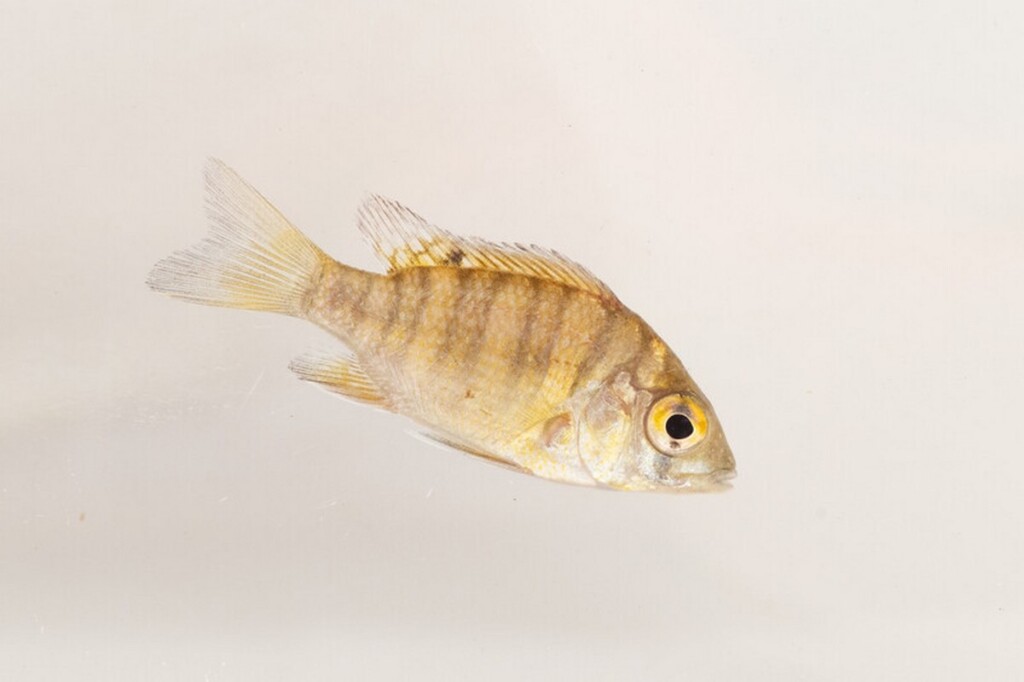
Ptychochromis makira, a species lost to science since 2003. It was rediscovered in 2023 with the help of local guides and fishermen (Photo by John C. MittermeierAmerican Bird Conservancy)
The semi-translucent fish is only a few inches long. The guides were also able to find Ptychoromis makira, which biologists think may only live in one small area near Andaparaty, and is a rare species—even to local communities.
Makira proved to be home to several lost species of insects including bugs and some that were not even on the initial list of lost species for the area. Entomologists found two different species of ant-like flower beetles that had been lost to science since 1958. However, the most unexpected rediscovered lost species was a giant, dark brown millipede.
“I personally was most surprised and pleased by the fact that the giant millipede Spirostreptus sculptus, not uncommon in Makira Forest, appeared to be another lost species known only from the type specimen described in 1897,” said Dmitry Telnov, an entomologist on the expedition team. “The longest specimen of this species we observed in Makira was a really gigantic female measuring 27.5 centimeters [10.8 inches] long.”
New species of spider Madagascarchaea sp. discovered during Makira expedition (Photo by John C. MittermeierAmerican Bird Conservancy)
The expedition team also found a variety of spider species in Makira, including five jumping spiders that were lost to science and 17 spiders that are new to science. The longest-lost spider was the jumping spider Tomocyrba decollata, which had not had a documented sighting since 1900, when it was first described by science.
The most unexpected discovery was a new species of zebra spider. One evening a hanging egg sac in the entrance of a small cave caught the eye of one of the team members.
“I immediately recognized them as something special,” said Brogan Pett, director of the SpiDiverse working group at the Biodiversity Inventory for Conservation and doctoral candidate at the University of Exeter.
“Pendulous egg sacs are one of the characteristics of the family of zebra spiders this new species belongs to. I crawled a short way inside the cave and saw a few adult spiders guarding egg sacs—they were quite large spiders and it was remarkable that they had gone unrecognized for so long.”
Although the expedition found nearly two dozen lost species, there were several that the expedition team was unable to find including the Masoala fork-marked lemur; a large chameleon, Calumma vatososa, meaning “beautiful stone” in Malagasy, and the recently rediscovered dusky tetraka. The lemur has not had a documented sighting since 2004 and the chameleon since 2006.
The dusky tetraka was rediscovered by the Search for Lost Birds in Madagascar in December 2022 and January 2023 in two different locations in Andapa and Masoala. Makira is between these sites, and ornithologists were hoping to determine if the species also lives there. They were unable to find any of the cryptic olive and yellow birds during the expedition, but they are not ready to rule out the forest as a habitat for the species yet.
“The Makira Forest has the potential for two rare bird species, the dusky tetraka, and the Madagascar serpent eagle, but we were not able to find them this time,” said Lily Arison Rene de Roland, Madagascar program director for the Peregrine Fund, another organization that joined the expedition.
Madagascar has one of the highest rates of endemism of anywhere on planet Earth. For millions of years, plants and animals have evolved in seclusion—creating unique ecosystems that don’t exist anywhere else.
SHARE These Hidden Natural Wonders Of Evolution With Your Friends…
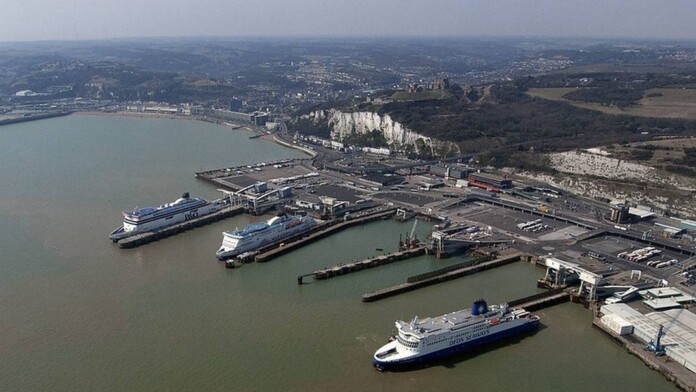
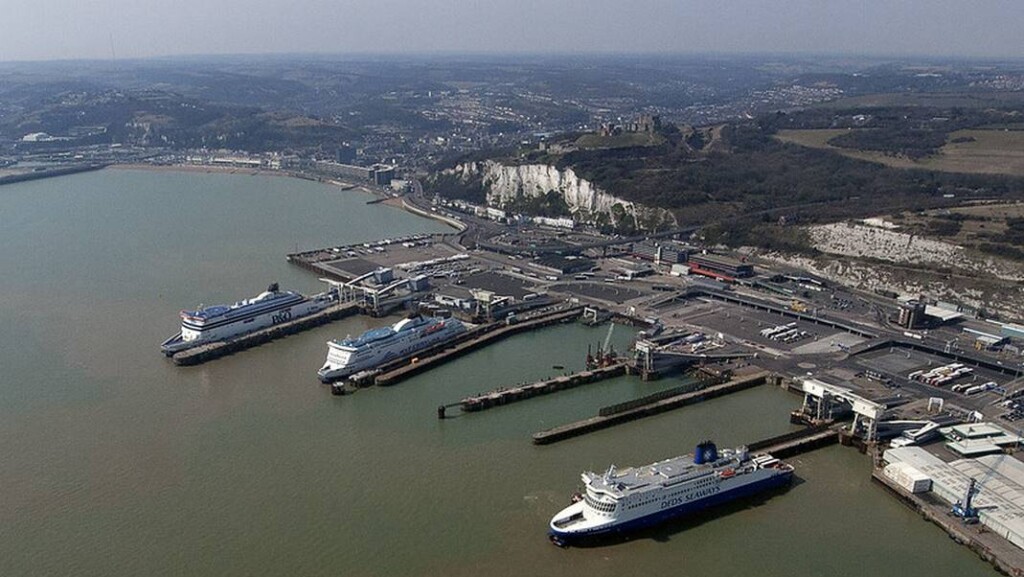
When Dover Police Department responders picked up the phone on August 27th, who knows what was more surprising: that the caller’s ship was sinking, or that he had an East European accent.
The phone call arrived in the US State of Delaware’s capital city, but the man, an Albanian, was talking about the English Channel—over 3,500 miles away.
He was trying to call Dover, one of the most prominent channel port cities in southern England, not Dover, Delaware, but the police dispatcher on the end of the line didn’t waste any time explaining this.
Instead, Communications Operator MacKenzie Atkinson started carefully taking down critical information about the man’s situation, including the name and coordinates of the vessel—piloted by the caller’s brother, who had earlier called him for help getting in touch with emergency services after it started sinking.
Fortunately for the Albanian brothers in England, Atkinson, on the other side of the Atlantic, had recently completed a course from the International Academies of Emergency Dispatch and followed the protocol for a vessel in distress.
Within four minutes, Atkinson’s colleague Connor Logan established contact with the French Coast Guard, His Majesty’s Coastguard, the United Kingdom’s Maritime and Coastguard Agency’s Coordination Center, and, eventually, the correct ‘Dover’ police station.
On September 5th, the MCACC confirmed that the vessel had been located and all aboard rescued.
Dover (Delaware) police officials have nominated Atkinson, Logan, and two other communications officers on duty during the emergency for a Distinguished Unit Commendation.
“The caller had conducted an internet search for the `Dover Police Department’ and the first search result on the screen proved to be the Dover, Delaware Police Department,” police officials said in a news release Thursday. “The family member thought they were calling Dover, England but was connected with our agency here in the United States.”
SHARE This Dramatic Case Of Mistaken Identity (And Happy Ending) With Your Friends From Delaware…
Quote of the Day: “It is easy to sit up and take notice, What is difficult is getting up and taking action.” – Honore de Balzac (Yesterday was Voter Registration Day in America–Check out how to register at the link…)
With a new inspirational quote every day, atop the perfect photo—collected and archived on our Quote of the Day page—why not bookmark GNN.org for a daily uplift?
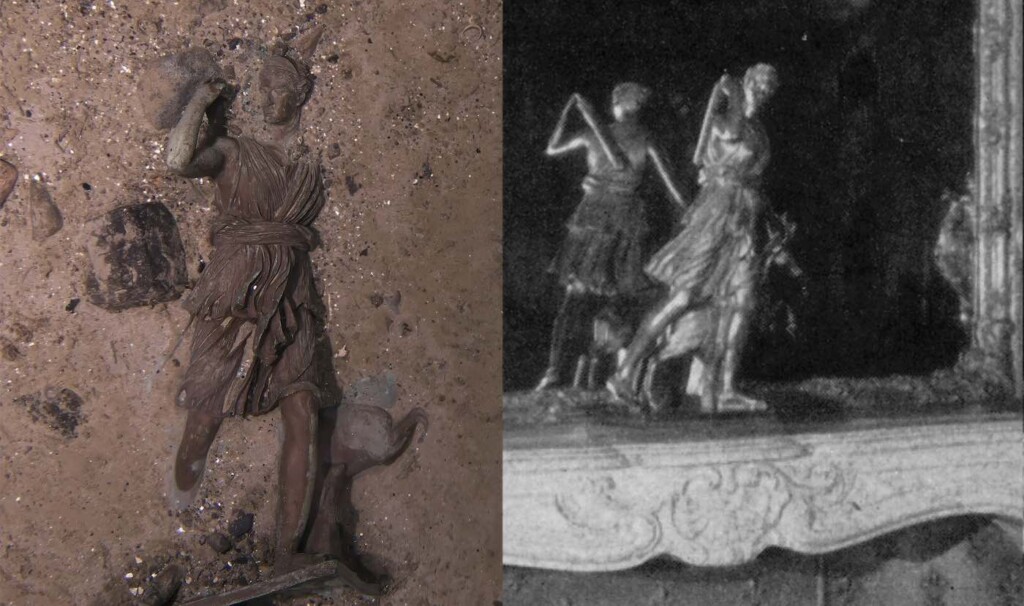
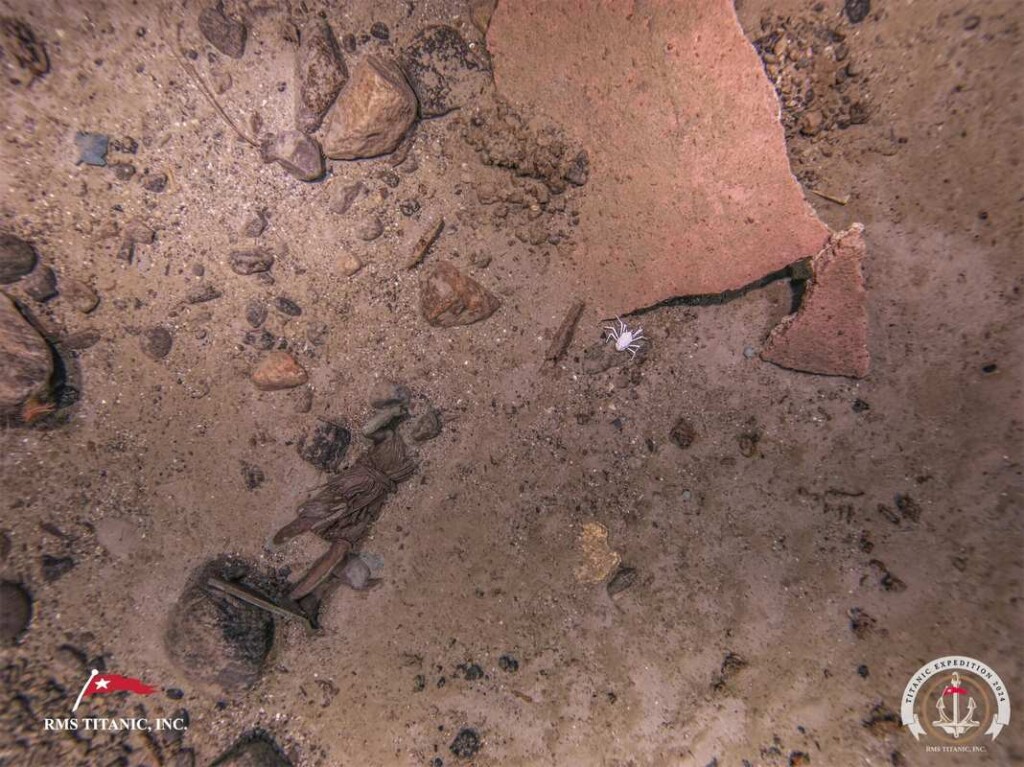
A two-foot-tall bronze statue of the Greek goddess Diana that once adorned the fireplace mantle onboard the Titanic was found during a recent expedition.
Described as like finding “a needle in a haystack,” it was one of a variety of fine art pieces that have for years been the targets of maritime archaeologists working to recover the ship’s relics.
RMS Titanic 2024 – released
The RMS Titanic will likely never stop fascinating people. The ‘unsinkable’ luxury liner that carried the high society of England over to the US on its tragic first voyage was, as Art Net recently described, “a a floating gallery of fine art and design.”
Photographs and written sources from the ship show how it was filled with art, from a 1912 Renault luxury automobile to this bronze statue known as the Diana of Versailles.
Cast based on an original piece kept in the Louvre from the Versailles Palace, it’s known to have been placed atop a fireplace mantle from a photograph taken onboard the ship.
The Georgia company RMS Titanic which conducts expeditions to document, monitor, and recover the relics of the ship recently finished an unmanned expedition to the site in the North Sea where the ship went down. There, half-buried in the mud, they found the goddess without a speck of green to be seen on her flowing gown.
RMS Titanic 2024 – released
“It’s truly a needle in a haystack that is two-and-a-half miles underwater in pitch black darkness,” James Penca, a researcher at the company told National Public Radio, adding that “we found her with just hours remaining in the expedition.”
While RMS Titanic leaves some pieces in situ, others they attempt to collect through expeditions, and the Diana of Versailles will certainly top the list when the company gets around to going back.
SHARE The Amazing Discovery Of This Relic With Your Friends…
Courtesy of Sankofa Nola / Sankofa Community Development Corporation / Audubon Society
Photo credit – Sankofa Nola via Facebook
The Lower Ninth Ward of New Orleans has recently witnessed an incredible eco-renaissance following decades of damage and neglect.
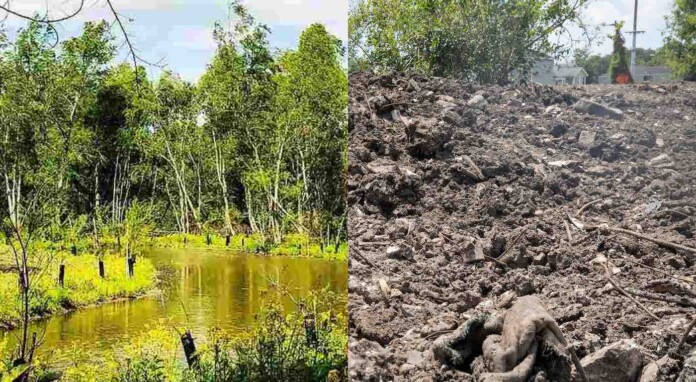
Led by a local community development group, a 40-acre wetlands park has been restored to glories past with hundreds of local trees that attract over a hundred species of birds, plus joggers, picnickers, and nature lovers besides.
The story begins with Rashida Ferdinand, founder of Sankofa Community Development Corporation (CDC). Growing up in this historic part of New Orleans, where Black homeownership thrived, where Fats Domino was born, and where locals routinely went out into the wetlands to catch fish and crustaceans, she watched as it suffered from years of neglect.
Poor drainage, ruined roads, illegal trash dumping, and unmitigated damage from hurricanes slowly wasted the wetland away until it was a derelict eyesore.
In the name of restoring this wild heritage indicative of the culture in the Lower Ninth, and in order to protect her communities from flooding, Ferdinand founded the Sankofa CDC, and in 2014 entered into an agreement with the City of New Orleans for the restoration of Sankofa—a 40-acre section of neglected wetlands in the heart of the Lower Ninth.
The loss of Sankofa’s potential to dampen flooding from storms meant that over the years dozens of houses and properties were flooded and damaged beyond the ability of the inhabitants to recover. Forced out by a combination of nature’s fury and government failure, the cultural heritage of the community was receding along with the floodwaters.
Ferdinand knew that restoring natural flood barriers like Sankofa was key to protecting her community.
“Hurricane protection is a major concern in the community, but there’s a lack of trust in the infrastructure systems that are supposed to protect us,” Ferdinand told the Audubon Society.
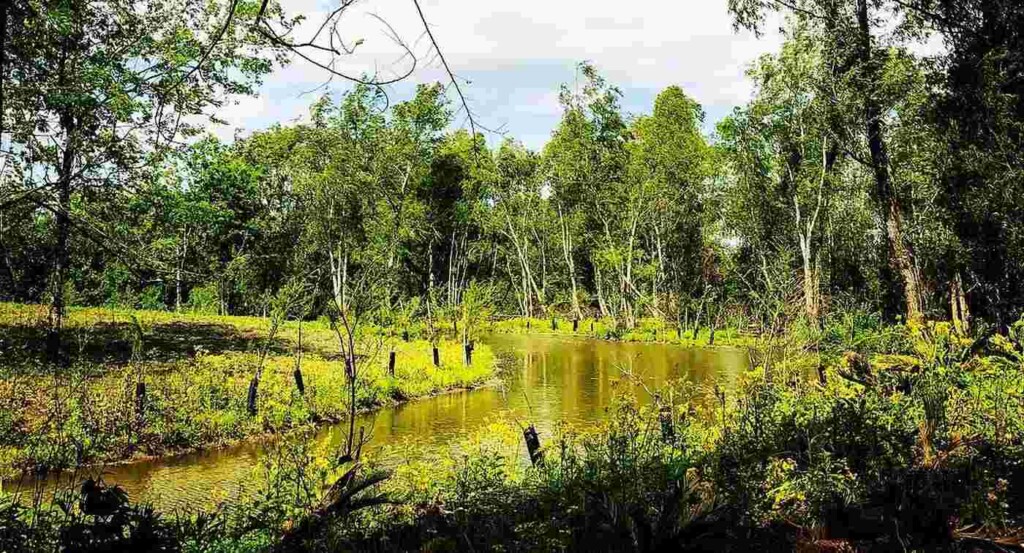
Today, Sankofa Wetlands Park is a sight to behold. Hiking trails snake through a smattering of ponds and creeks, where bald cypresses and water tupelo trees continue to grow and cling to the ground even during storms. Picnic benches have appeared, wheelchair-accessible trails connect sections of the park to parts of the Lower Ninth, and local businesses are seeing more visitors.
Visiting birders have recorded sightings of over 100 species of songbirds, ducks, near-shore waders of all kinds, egrets, and herons, and the park also acts as a home and refuge for otters, beavers, and a variety of amphibians and reptiles.
Photo provided to the Audubon Society by Sankofa Community Development Corporation
It needed a lot of work though. Thousands of invasive tallow trees had to be uprooted. 27,000 cubic meters of illegally dumped trash compacted into the dirt had to be removed. A 60-year-old canal dug by the US Army Corps of Engineers had to be disconnected, and all new native flora had to be planted by hand.
Audubon says that Ferdinand routinely can’t believe her eyes when she looks at the transformation of Sankofa into its current state.
“Seeing butterflies, birds, and other pollinators in the park is a sign of a healthy ecosystem,” she says. “All we had to do was create the right conditions.”
Slated for official completion in 2025 with an outdoor amphitheater, interpretive signage, and additional trails, Ferdinand and the CDC have their eyes set on an even larger area of wetlands to the north of Sankofa.
Along the way, Ferdinand and the CDC attracted many helping hands, and entered into many partnerships, But the catalyst for change arose from the spirit and determination of one woman in the right place at the right time, for the benefit of hundreds in this historic heart of a historic city.
SHARE This Inspirational Effort By These Dedicated Locals…
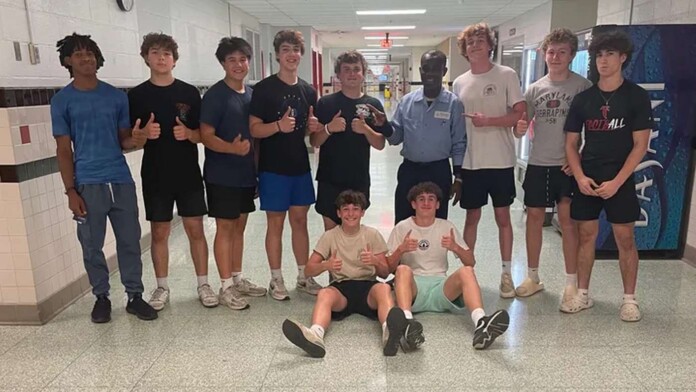
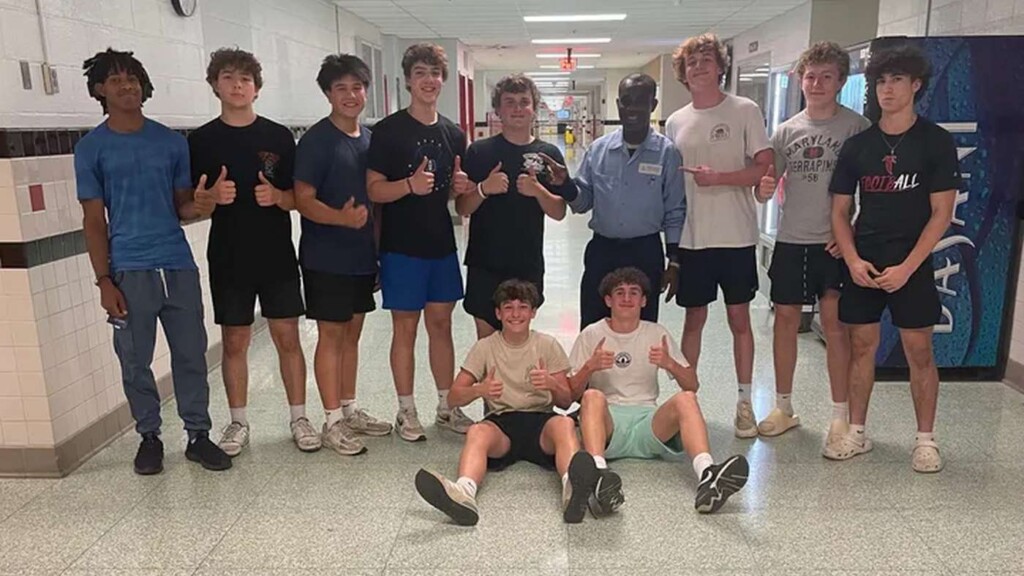
These high school sophomores recently raised over $20,000 to surprise their favorite school janitor with a brand-new car.
The fundraiser kicked off in advance of Francis Apraku’s birthday, whom the boys describe as “super kind and friendly.”
They asked him what he wanted as a present, and, joking, the Ghanaian immigrant replied that he’d love a new Jeep Wrangler.
Bennett, Nick H, Nick T, Artin, Joey, Yousif, and Logan, hoped to have enough by the time they graduated from James Maddison High School in Vienna, Virginia, to give Apraku his Jeep.
After creating their GoFundMe in May, however, they had enough by summer’s end to give him his surprise.
With the help of their community, they raised $21,000 which they used to buy the Jeep in candy apple red, surprising Apraku in the parking lot of the school last Monday.
“He moved to America away from his family and friends a few years ago,” the students wrote on their GoFundMe. “Ever since we met Francis he has been super kind and friendly and sometimes even says prayers for us.”
“This day, the 9th of September, I will never forget,” Apraku said to the students gathered around.
WATCH the big reveal below…
SHARE This Story With Your Friends Who Need Some Good News…
Outer slope of the Rano Raraku volcano, the quarry of the Moais with many uncompleted statues. CC 3.0. Rivi.
Outer slope of the Rano Raraku volcano, the quarry of the Moais with many uncompleted statues. CC 3.0. Rivi.
Our history books are littered with stories that present as lessons and warnings to future generations, and for years Rapa Nui, or Easter Island, was one such warning.
Famous for its giant stone heads, or moai, the island is also infamous for the rapid depopulation of their builders, which for years has been believed to be a devastating population collapse resulting from ecocide, or lethal exploitation of the natural environment.
Now though, a genetic study published in Nature debunks this long-standing theory. The study was carried out by an international team of scientists led by faculty at the Univ. of Copenhagen.
“Our genetic analysis shows a stably growing population from the 13th century through to the European contact in the 18th century. This stability is critical because it directly contradicts the idea of a dramatic pre-contact population collapse,” said first author Víctor Moreno-Mayar, Assistant Professor of Geogenetics at Copenhagen.
In case of a population collapse, the researchers would have been able to observe a less diverse gene pool in their analysis, simply due to there being a smaller population. However, when the team analyzed the genomes of 15 Rapanui (the name for those living on the island) who lived between 1670 and 1950, they found no signal of such collapse.
Today, a few thousand indigenous people live on the island. But the previous theory held that before the Europeans came to the island in 1722, the population was much larger. The “collapse” theory claims that the inhabitants of Rapa Nui depleted their natural resources to build the moai.
This is particularly relevant with trees, which were proposed as being cut down for firewood and to make rollers to move the moai around, eventually leading to a demographic and social collapse marked by famine, violence, and even cannibalism.
Through their genetic analysis, the team of scientists has not only provided evidence against the collapse theory, but also emphasized the stability of the Rapanui society over several centuries until the disruptions caused by European contact in 1722. The “collapse” theory has been called into doubt by previous studies based on archaeological data and population dynamics arguments. This is the first time, however, that genetics has been used to tackle this question.
The researchers now believe the Rapanui people adapted to environmental challenges that indeed occurred on the island between the 13th and the 18th centuries, which undermines theories suggesting resource mismanagement led to the societal collapse in the 16th or 17th century.
“The Rapa Nui landscape changed between the peopling of the island, which is around the 1200s, and the European contact 500 years later. However, the population stability throughout this time shows they were a resilient population capable of adapting to environmental challenges,” says Bárbara Sousa da Mota, a researcher at the University of Lausanne and co-first author of the study.
Moreno-Mayer perhaps puts it best.
“Personally, I believe the idea of the ecological suicide is put together as part of a colonial narrative,” he said. “That is this idea that these supposedly primitive people could not manage their culture or resources, and that almost destroyed their people. But the genetic evidence shows the opposite.”
For those fascinated by these early oceanographers, you’ll want to stay and read the next finding, which is that in addition to challenging the “collapse” theory, the new study also found evidence that Rapa Nui was unlikely to be the last stop in Pacific voyaging.
Although 2,100 miles of ocean separate Rapa Nui and South America, the genetic analysis also showed that the Rapanui people were in contact with Indigenous Americans before Europeans arrived on the island.
The team found that approximately ten percent of the Rapanui gene pool has an Indigenous American origin. But more importantly, they were able to infer both populations met before Europeans arrived on the island and in the Americas.
“We looked into how the Indigenous American DNA was distributed across the Polynesian genetic background of the Rapanui. This distribution is consistent with a contact occurring between the 13th and the 15th centuries,” says Moreno-Mayar.
“While our study cannot tell us where the Rapanui came into contact with Indigenous Americans, this might mean that the Rapanui ancestors reached the Americas before Christopher Columbus,” adds Anna-Sapfo Malaspinas, also from Lausanne, and co-author on the paper.
This result settles a longstanding debate on whether there was any pre-European interaction between Polynesians and Indigenous Americans. And having peopled all of Polynesia across the Pacific, is it really that surprising they were able to arrive in South America?
“Not only is there no evidence of a population collapse before the Europeans arrived on the island, but the data also shows that they were capable of even more formidable voyages across the Pacific than had been previously established, ultimately reaching the Americas,” said Moreno-Mayar. “So we can put those ideas to rest now.”
SHARE This Truly Landmark Paper In The Study Of This Fascinating Island…
Quote of the Day: “One cannot and must not try to erase the past merely because it does not fit the present.” – Golda Meir
Photo by: Marcel Ardivan
With a new inspirational quote every day, atop the perfect photo—collected and archived on our Quote of the Day page—why not bookmark GNN.org for a daily uplift?
Credit - Porthcawl ParkRun organizers, released to the BBC.
Credit – Porthcawl ParkRun organizers, released to the BBC.
A pioneering Welsh running athlete has helped organize hundreds of community running events around the country, and recently celebrated his 85th birthday by racing his great-grandson who takes part in them.
“I intended on walking it, but when I got there with my great-grandson, I decided to run it,” 85-year-old Eric Hughes told the BBC. “He beat me by seven minutes.”
Some things never die, and Hughes’ competitive spirit which has seen him medal at 18 consecutive British Masters Championships at various distances, is certainly one of them.
But as he ran through life’s race, his drive to succeed has morphed into the drive to see others succeed. He is one of the most prolific organizers and volunteers of Britain’s “ParkRuns” a community running event that started originally as a simple club that ran a 5K in London three times a week in 2004.
It has exploded in popularity since then, and with 20 days until ParkRun’s 20th anniversary, there are now more than 1,200 ParkRuns around the world according to the BBC, including countries as diverse as Estwani, Malaysia, Japan, and Austria.
“Hundreds of thousands of Parkrunners are processed, websites updated and millions of emails sent each week,” the official ParkRun website states on its home page. “The ParkRun community is growing all the time—but it’s all still based on the simple, basic principles formed from the start: weekly, free, for everyone, forever.”
Hughes helps organize the senior Parkrun in Bridgend, Wales, on Saturdays and the Sunday version for juniors in nearby Porthcawl. He has helped organize over 500 ParkRun events since he became involved with the movement, and told the BBC he especially enjoys watching young children take part to highlight “the natural ability they’ve got.”
“I think eventually we’ll have such good athletes in this country and that’s because of the ParkRuns,” Hughes added.
He celebrated his 85th birthday with (what else?) a ParkRun, in which his great-grandson joined in. Hughes couldn’t replicate the success he enjoyed throughout his life against another member of his family—his brother Lynn—another runner who actually broke the world four-hour barrier for 40 miles on track.
Eric Hughes running in Malta, 2003 – family photo
Publicized at the time, Lynn wasn’t willing to deny Eric’s claim that he was faster than his twin brother.
Mission Commander Isaacman exiting the Dragon capsule – credit, Polaris Program, retrieved from X
Reprinted with permission from World At Large, a news website of nature, politics, science, health, and travel.
Early Thursday morning at 7:58 a.m. ET, members of the SpaceX Polaris Dawn crew successfully completed the world’s first all-civilian spacewalk 450 miles above Earth’s surface.
Tech entrepreneur and adventurer Jared Isaacman was followed by Sarah Gillis, a SpaceX engineer, in exiting the hatch of the Dragon capsule while it floated over Australia and New Zealand.
There have been several days of incredible scenes and celebrations to mark this momentous occasion—including their safe return on Sunday—but one very important detail hasn’t gotten the spotlight it deserves.
“The images of Isaacman and Gillis silhouetted more than 200 miles high against a dramatic backdrop of Earth will be added to the annals of space history at a time when companies such as SpaceX are authoring new chapters of exploration,” writes Christian Davenport at the Washington Post, who explored that detail in his write-up on the milestone.
The Polaris Dawn mission tested the most recent iteration of the spacesuit. With the success of Isaacman and Gillis’ spacewalks came the success of the SpaceX new extravehicular activity (EVA) suit, which is incomparably more mobile than what the Apollo Program astronauts wore, allowing the Polaris crew to maneuver inside the Dragon capsule and exit into the hatch into space without any airlock chamber.
In an interview with the Post, powered by Starlink high-speed wireless internet, Isaacman said the suit performed well and that their “pretty good data” will inform the design innovation of a further two suits.
The SpaceX EVA Suit – credit Polaris Program, released.
NASA’s Extravehicular Mobility Unit (EMU) has been worn by ISS astronauts since 1981 but weighs over 100 pounds without life support systems, and comes in only a few different sizes, meaning astronauts have to select which size of glove, for example, is the closest approximation to their hand size.
It includes several rigid components like the upper torso and rear-entry hatch. By contrast, the Polaris suits are designed to be almost entirely soft, with thermal insulation and radiation-proof textile designs salvaged from the spacecraft itself. The design keeps in mind that a multi-planet species will need millions of EVA suits, and reflects this need by being easier to manufacture, less expansive, and more customizable.
“We have a lot of different resources at our disposal here,” Chris Trigg, SpaceX spacesuit manager said during a talk in 2022. “There’s some thermal material that we ended up using on the boot, which was developed actually for Falcon and Dragon, and is used on the interstage on Falcon, and on the trunk of Dragon.”
Trigg also described a new heads-up display inside the helmet, allowing astronauts to view data about their suits’ internal temperature, humidity, and pressure; the display also exhibits a mission clock to monitor the durations of particular EVA tasks.
SpaceX’s (and partners) Polaris Program is a little like rolling out the welcome mat to all of humanity for the inauguration of commercial space travel and heavy industry. The Polaris Dawn mission was designed to test a variety of things, including the EVA suit. The second mission will try to visit the Hubble Space Telescope, which Isaacman suggested could be given a push by him and his crew.
Over the years, Hubble, which is still working well, has been pulled towards Earth by gravity, and it won’t be very long before it burns out in the atmosphere.
A third Polaris mission will be aiming to test Starship—SpaceX’s massive, next-generation rocket and spacecraft that SpaceX founder Elon Musk says will take humanity to Mars and back.
WATCH the entire spacewalk below from FARZAD…
SHARE This Milestone For Humanity With Your Friends…
Supplied to ABC AU by the Botanic Gardens of Sydney
Supplied to ABC AU by the Botanic Gardens of Sydney
30 years ago this month, botanists in Australia made the “find of the century” when they discovered a species of pine tree in the mountains near Sydney that have survived from the time of the dinosaurs.
Now, to mark the occasion, the Botanic Gardens of Sydney are auctioning off 6 saplings to avid horticulturalists in order to spread enthusiasm, interest, and connifer genetics, around Australia.
There’s little precedent to generate an estimate as to how much the pine saplings will sell for, but there may have never been a higher-profile plant auction in world history, to say nothing of Australia’s.
The 90 or so original trees surviving in the wild are located in an area so secretive, that entry even by scientists is barred for all but the most important requirements. Unauthorized entry into the sites is punishable by up to 2 years in prison and a fine of $330,000 according to the Australian Biodiversity Conservation Act, with ignorance of the law and the sites’ locations being no excuse.
Introduction of invasive plants, parasites, microbes, fungal spores, or plant viruses could wipe out this relic population in a matter of weeks, so any visitors must be thoroughly sanitized, and their activities carefully controlled.
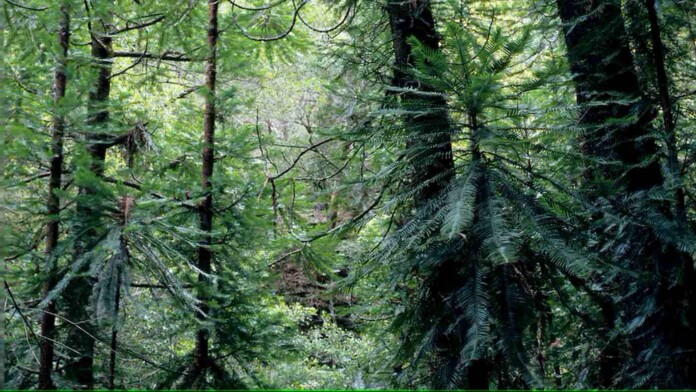
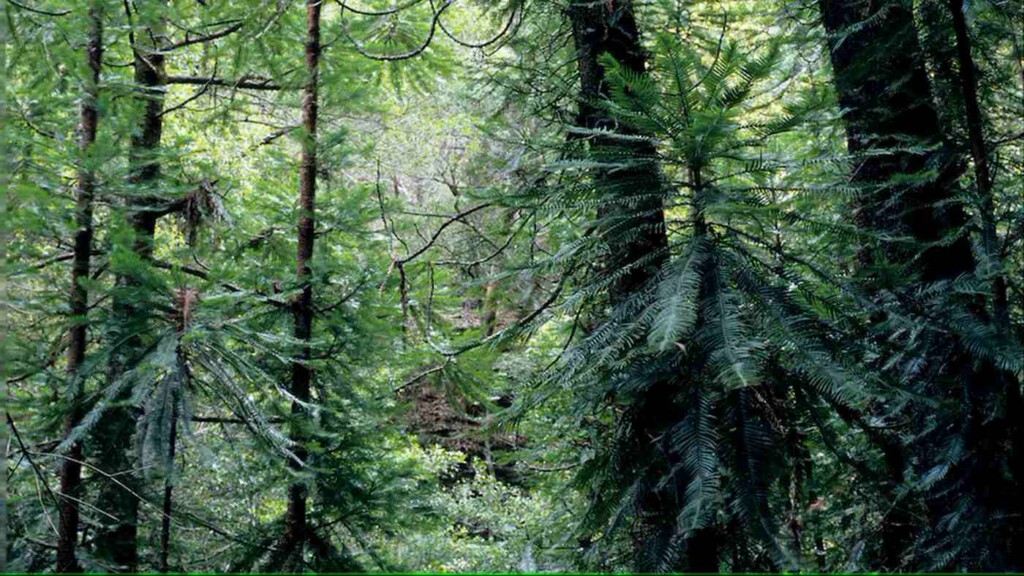
The Wollemi pine evolved 91 million years ago and went extinct according to the fossil record 2 million years ago, but in the Blue Mountains west of Sydney, a stand of 90 specimens were found high in the more remote peaks in 1994.
It not only survived the comet impact and global firestorms that killed the dinosaurs but all the turmoil of the ending of the last ice age as well.
For the past three decades, and in extreme secrecy, a team of specialists from the National Parks and Wildlife Service (NPWS) of Australia has been gradually planting small clumps of the Wollemi pine in other locations to help ensure it has every chance to see another 91 million years.
Director of horticulture at the Botanic Gardens of Sydney, John Siemon, said the greater the difference in the trees’ genetics, the better chance they had of survival.
“Those people who are purchasing into the auction, we hope have that passion like we do, for conserving plant species,” he told ABC News Australia. “We’d be very excited to have the owners understand the importance of the plant, and be able to find homes for them that are the most suitable to live out their life to maturity and beyond.”
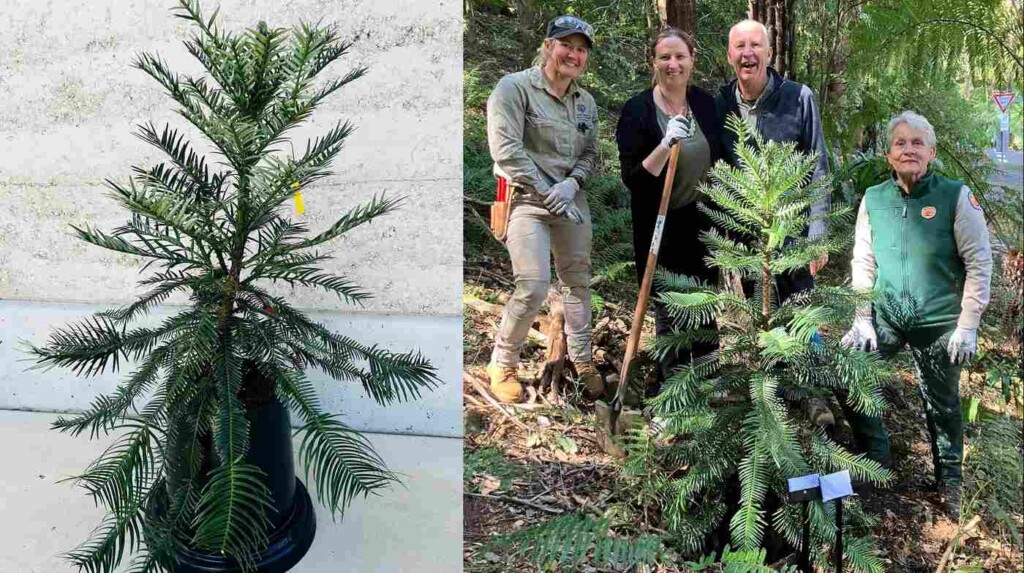
(left) one of the Wollemi pine saplings to be auctioned (right) a team at the Mount Tomah introduction site poses with one of the 40 saplings – Supplied to ABC AU by the Botanic Gardens of Sydney
For readers thinking that an auction is a very shallow and unwise use of these precious saplings, 40 others were recently planted at the Blue Mountains Botanic Gardens at Mount Tomah, also with the 30-year anniversary in mind.
Other areas around the Blue Mountains have been investigated for potential introduction sites, but this pine, with needles akin to ferns of Granny Smith Apple-green colors, has become almost exclusive to a few areas on the higher peaks, shivering on the cold edge of evolutionary oblivion, growing mere millimeters per year in secret, for millions of years.
Dozens of saplings have been shipped off to botanical gardens around the world where they can be stored as additional insurance populations while simultaneously inspiring conservation funding, but in terms of walking through Cretaceous Era forests, the average person’s chance to do so remains as slim as ever.
SHARE This Truly Unbelievable Story With Your Friends On Social Media…
composite image / GNN /Citrus farming in Ojai, Ventura, CC 2.0. / Patagonia, fair use.
composite image /Citrus farming in Ojai, Ventura, Ken Lund CC 2.0. / Patagonia, fair use.
Organic and regenerative farming practices are taking root in the polluted yet beautiful Ventura County in California, where a truly staggering amount of the country’s produce is grown.
Industrial agriculture has polluted soil and groundwater with pesticides, herbicides, and fungicides, while simultaneously driving away or poisoning wildlife.
The Rodale Institute and their California Organic Center has been working to reverse this course for some time, but thanks to a new $1 million grant from Patagonia outfitters and $1.5 million from the state of California, they are now able to help farmers transition to these alternative agriculture strategies that regenerate soil and biodiversity, with almost all the startup funding covered on their behalf.
It’s been 2 years and a week since Yves Chouinard, the founder of Patagonia, announced that every dime of profit his company makes from now on will go to preserving nature and fighting climate change by designating Earth as the company’s sole shareholder.
Little publicity has been generated by the non-profit arm of Patagonia, called the Holdfast Collective, since then. According to reports, it has been quietly going about its business distributing $70 million to some of the largest conservation organizations on the planet, like the Nature Conservancy, the Conservation Fund, and Re:wild.
Holdfast Collective’s executive director Greg Curtis said of Ventura’s Rodale Institute that they’re “peerless,” and their success over the last 5 years in helping farmers transition over to more regenerative farming practices made it a very easy choice for what amounts to Patagonia’s first investment into the industry since Chouinard’s decision.
According to Fast Company Magazine, the funding from Holdfast and the state will help local farmers “access business planning help, long-term contracts for their produce, and grants to buy equipment or manage weed and pests.”
“We are removing every single barrier,” Jeff Tkach, CEO of Rodale Institute told the magazine. “You think Ventura County is this gorgeous part of the world, but it’s an agriculture county, and the water is getting polluted, the air is getting polluted.”
“Eventually, the more people who buy organic and regeneratively grown produce, the more the cost will come down. We have an opportunity to reinvent our food system. And California is often a catalyst for change for the rest of the country.”
Tkach says that starting this transition in Ventura is both symbol and substance. There are more than 2,000 farms across a quarter million acres in this county alone. Particualrly prelevant in Ventura are the orchards, where lemons alone rake in a quarter billion dollars every year.
SHARE Corporate Responsibility Helping To Transform America’s Food System…
Quote of the Day: “Adapt or perish, now as ever, is nature’s inexorable imperative.” – H. G. Wells
Photo by: Jonathan Gross, CC license
With a new inspirational quote every day, atop the perfect photo—collected and archived on our Quote of the Day page—why not bookmark GNN.org for a daily uplift?
Reprinted with permission from World At Large, a news website of nature, politics, science, health, and travel.
With the high season in Europe underway, many famous cities are already analyzing the results of new controls and taxes on tourism to manage overcrowding. The movement towards hindering tourism is nothing short of unprecedented.
One quote from AP is particularly jarring.
“Tourists are waiting more than two hours to visit the Acropolis in Athens,” it read. “Taxi lines at Rome’s main train station are running just as long. And so many visitors are concentrating around St. Mark’s Square in Venice that crowds get backed up crossing bridges—even on weekdays”.
But this year is just a demonstration. Come 2025, even more protocols will be implemented, including an EU-wide travel authorization system that will rake in tens of millions of euros and allow offenders of various tourist control measures to be easily identified.
There has never been a better time to look for B, or even C-list cities in Europe, and in fact there are many advantages to doing so.
They are easier on the wallet—though this doesn’t mean you have to skip first-class attractions.
They offer a surprise—and a more unique window into a country’s culture, both those of the locals and of the nation.
They also allow a visitor to bring home an experience their friends and colleagues are unlikely to have had.
Piazza Vittorio Veneto in Turin – by Gianni Careddu, CC BY SA 4.0 license
Italy — the land of overtourism
Hoping to escape tourists in Italy is like moving a house next to a termite nest and hoping to escape termites. To see Venice, Rome, Naples, Florence, or Milan, visitors must be ready to bear the tourists, controls, and taxes.
Even if you visit a secondary B-list city, like Trieste, Siena, Genova, Lucca, or Verona, there’s no guarantee of escaping tourists. The city footprint is smaller, so the tourists may seem to be closer together.
In Rome, the city is now charging for entry to the Pantheon, and controlling crowds at the Spanish Steps and Trevi Fountain. Florence is now deliberately shrinking the number of short-term vacation rental properties in the city, a measure also implemented already in Rome that may lead to a price spike for accommodations.
Venice is doing the same but to an even greater degree. They’re also trialing a new access tax for day-trippers and regulating tourist group sizes to 25. The Guardian reports that €250 fines have been implemented for simply sitting down on the famous Spanish Steps in Rome.
Consider leaving all this behind for the city of Torino (Turin). The capital of the Piedmont region of Italy. This B-list destination is beautiful, spacious, and verdant—especially because a tree-planting program in the city has added two million urban trees.
Although last year the city saw record numbers of tourists—including the first time that international tourists overtook domestic ones—images from local papers reveal the size of the ‘crowds’ at the peak season, and lengths of the ‘lines’, which are quite modest.
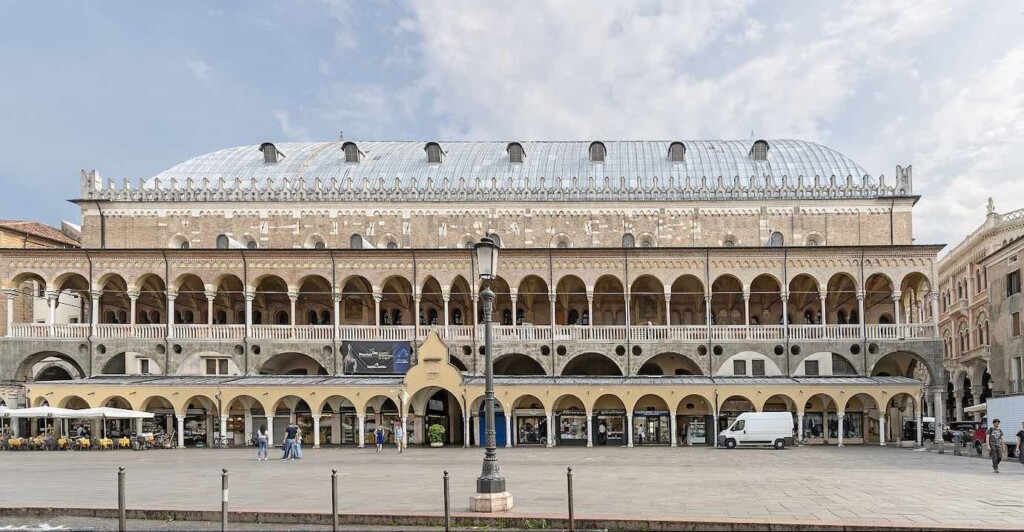
The Palazzo della Ragione in Padua is the old seat of the city administration and courts – View from Piazza della Frutta during high season by Didier Descouens CC BY SA 4.0
Yet, Turin is a big city—just a little smaller than Bologna, and though it’s one of the 250 most visited cities worldwide, it’s merely the 10th most frequented in Italy. The per-night tourist tax at €3.70 per person for 4-star accommodations is half of Rome’s, and one-third less than Naples.
Do a search and gaze at the gorgeous scenery of Turin, which shares much of the iconic imagery of Florence and Verona, i.e. stunning plazas, a beautiful and broad riverside, and important museums.
Follow up with a visit to Padua, in Veneto, where there is no tourist tax to speak of. This hidden gem is just a 40-minute drive from the Venice airport and has been a center of higher learning and scholarship since the Middle Ages. It contains the oldest university in Europe, and perhaps the world’s oldest botanical garden for the purposes of scientific research.
Alongside numerous architectural treasures and achingly beautiful 14th-century frescoes that are recognized as a UNESCO World Heritage Site, it’s a mystery that Padua is not more frequented.
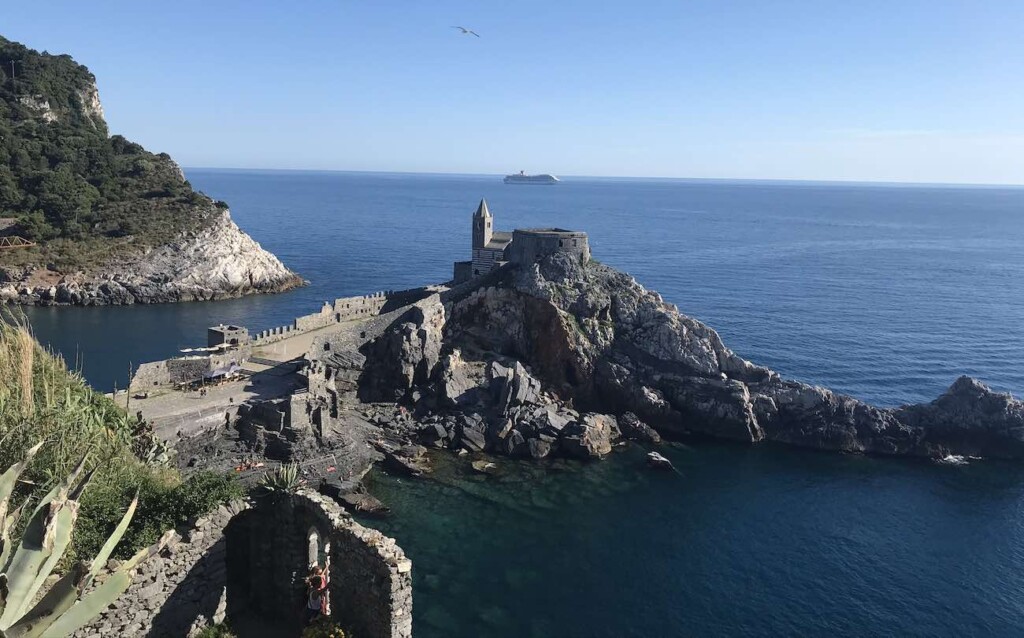
Forbes reports that the problem of overcrowding is equally as bad, if not worse, in the small towns of Cinque Terre in Liguria, with congestion at Portofino—what is essentially a fishing village nestled in a sheltered cove—being so bad that anyone stopping to take so much as a photograph in a way that is intrusive or obstructive can be fined up to €275.
That’s a pittance compared to the €2,500 fine you will receive for walking the paths above the Cinque Terre in flip-flops or sandals. The Italian authorities mean business—behave yourself, or begone… There are good options, however, if you take them up on that offer.
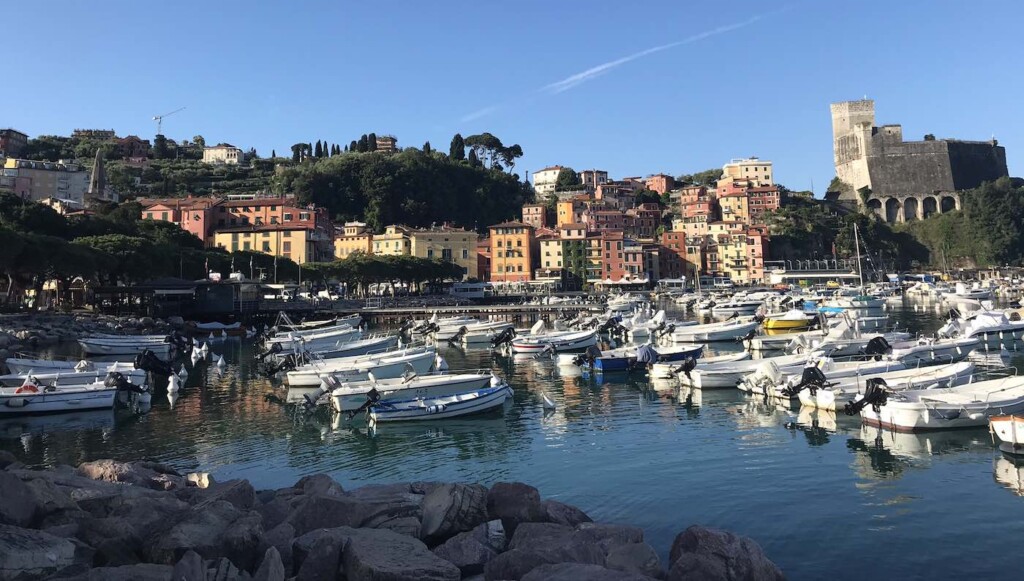
If the sea is a must in your holiday plan, consider the Ante-Cinque Terre, an area south of the major city of La Spezia with very similar scenery, but perhaps one-third of the visitors. Much like Cinque Terre, this area is defined by small municipalities on the seaside, painted a variety of colors.
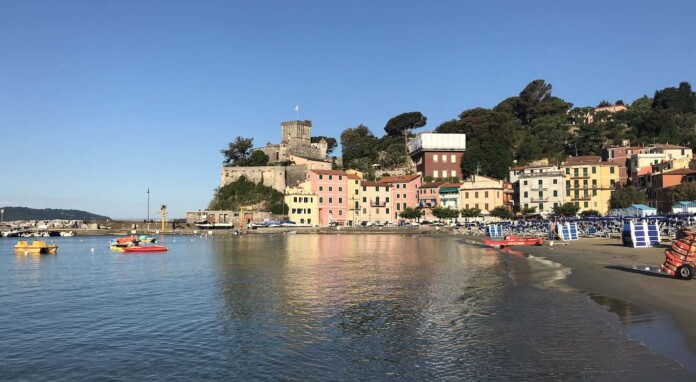
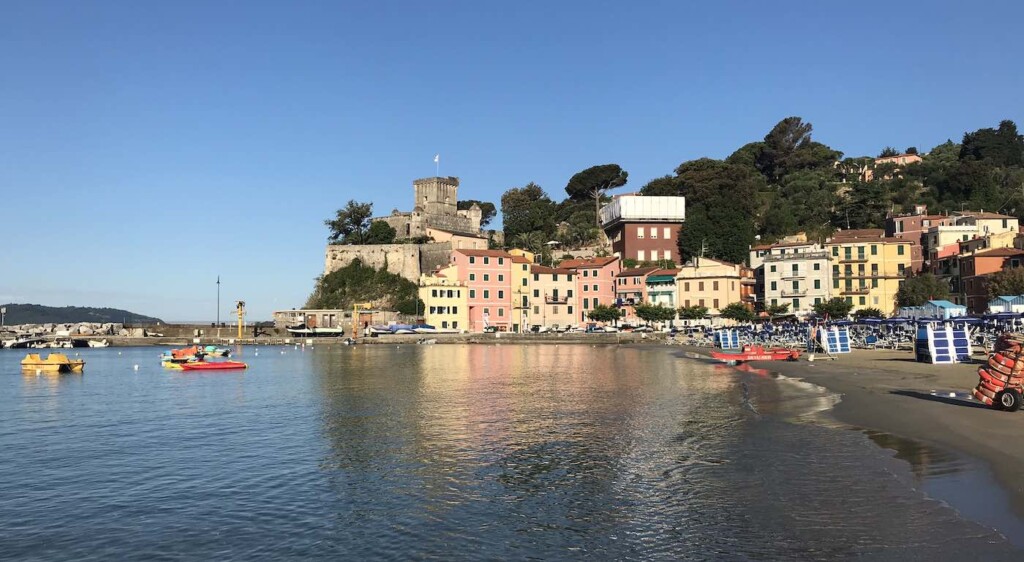
The route includes Fezzano, Le Grazie, Portovenere, Lerici (pictured at the top), Tellaro, and Montemarcello, which together line the shores in a curve around an aquatic feature called il Golfo dei Poeti, because it was here that the famous Romanticists Percy Shelly and Lord Byron both stayed for long periods during their exiles from Britain.
This author has seen both versions of Cinque Terre, and the differences are minimal, with perhaps the only exception being the verticality of the Cinque Terre villages adding to their drama.
But some of the towns in the Ante-Cinque Terre, like Le Grazie and Tellaro, are still just towns—exactly like Cinque Terre used to be before Rick Steves announced their stupendous presence to the world.
PASS ON THE VALUABLE TIPS to Friends and Family Dreaming of Italy–By Sharing On Social Media…
Rachel Hundertmark and Rashad Polk propose marriage at the same time – SWNS
Rachel Hundertmark and Rashad Polk propose marriage at the same time – SWNS
A couple who planned separate marriage proposals to surprise each other at a special concert both got down on one knee at the same time.
Rachel Hundertmark had been planning for months to propose to her partner Rashad Polk at an upcoming concert performed by the couple’s favorite band.
They had shared their first kiss at a Modest Mouse gig in 2021, so on June 14, they headed down to the show with their friends, family, and Rachel’s 16-year-old daughter Jasmine.
Rachel had a ring tucked in her pocket ready to ask the big question—with no idea that Rashad had the same plan. Both had confided in Jasmine that they were going to propose, so the teen had to keep both secrets without ruining the surprise.
The Baltimore, Maryland mom dropped to one knee first, and Rashad burst into laughter before doing the same thing—with Jasmine ready to capture the heart-warming moment on camera.
“I wanted to get down on one knee to make him feel like a prince, just like he makes me feel like a princess.
“We were so shocked at what happened that neither of us thought to actually say yes.”
The couple, who originally met through work, said everything went perfectly on the day and they have already set their wedding date for September 2025.
“It went perfectly on the day, even the weather was perfect,” said Rashad, a photographer. “The moment was flawless.”
SWNS
“It was so surreal—it felt like an out of body experience.
“It was good she proposed first, because I was waiting for a certain song before I proposed, and they didn’t even end up playing the one I was waiting for!”
“The song she proposed to, Dashboard, will definitely be played at our wedding.”
“And in the car on the way home, the radio played ‘Marry You’ by Bruno Mars which felt so fitting.” Watch the moment below…
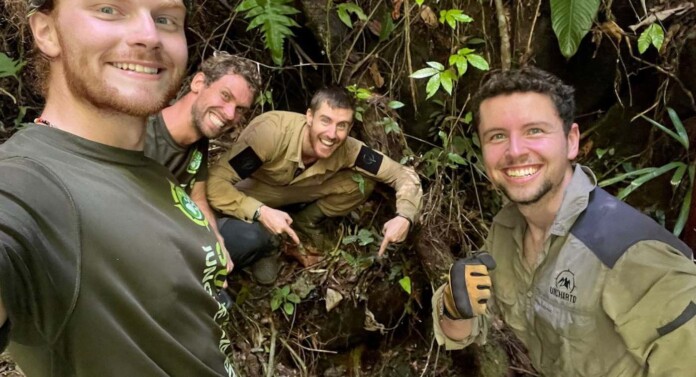
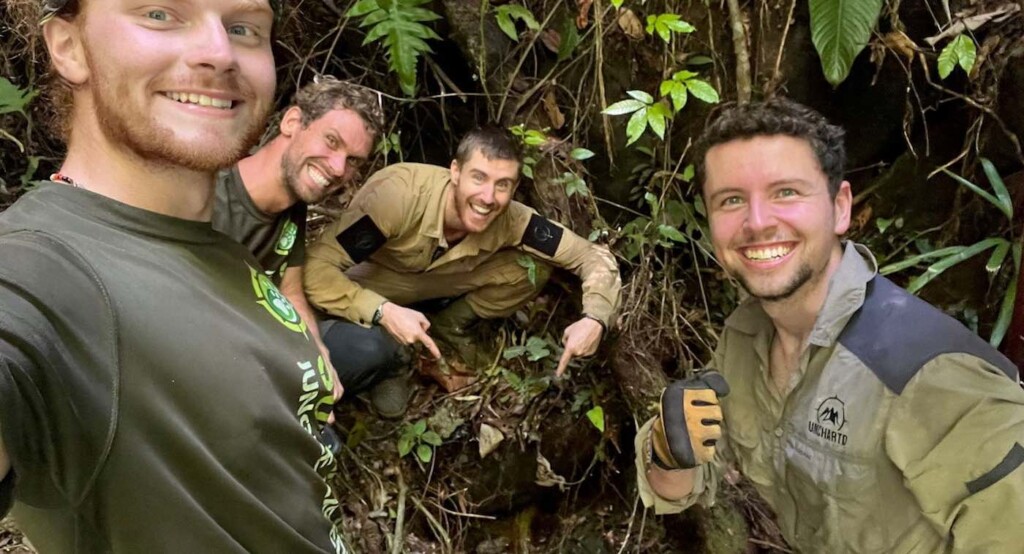
Finding the source of the Coppename River (Left to right: Jacob Hudson, Ash Dykes, Dick Lock and Matt Wallace) via SWNS
Finding the source of the Coppename River (Left to right: Jacob Hudson, Ash Dykes, Dick Lock and Matt Wallace) via SWNS
A British explorer has discovered the source of an uncharted Amazon river, after being stalked by jaguars and ravaged by army ants.
The area has only ever been mapped by satellites, leading to solely inaccurate coordinates due to the jungle tree cover.
The daring 33-year-old, Ash Dykes, beamed with joy after finding the start of the Coppename River in Suriname with fellow adventurers Jacob Hudson, Dick Lock and Matt Wallace
They also named two undocumented waterfalls—Dykes Falls and Wallace Falls—after the team members who first spotted them in the largely unexplored jungle.
Speaking for the first time about their achievement, Ash said it felt “crazy” to find the elusive source of the river. “We were all screaming and getting excited.”
“We’ve mapped the coordinates and took a screenshot for any mapping associations who want that.”
Originally from Wales, but now living in London, he hired a helicopter on August 29th to drop them into the center of the ex-Dutch colony, which is 93% forested.
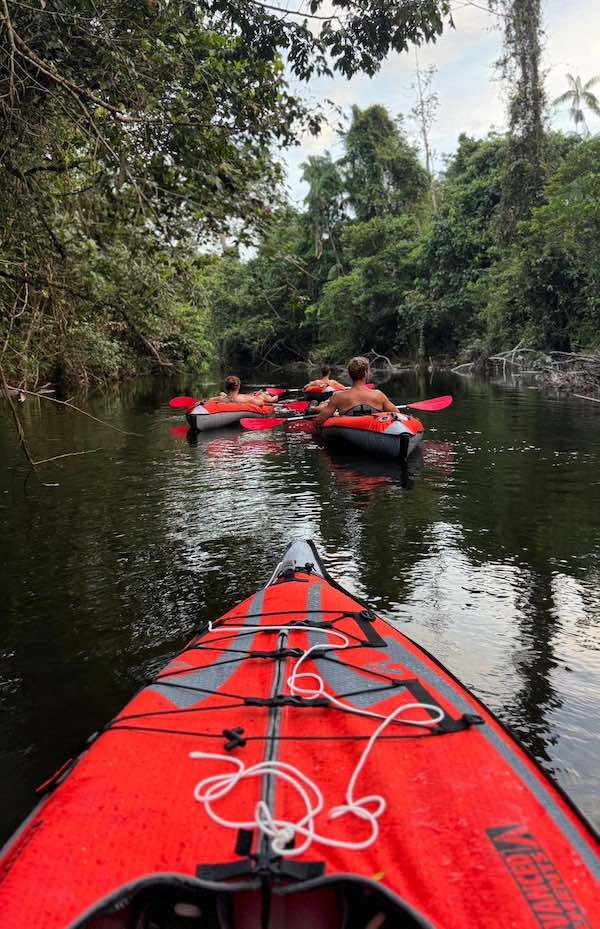
He and his team then spent the next six days fighting their way upstream in kayaks, carrying over 100 pounds of supplies—while being bitten by ticks and vicious army ants.
Ash Dykes and his team kayak up Coppename River (via SWNS)
“It is crazy to think that we are going to some places that the forest hasn’t ever seen a human footprint before. And it’s not surprising… It is brutal in the jungle.”
The group came across a terrifying Goliath tarantula, the world’s largest spider, along with snakes and caiman alligators. But Ash said the most chilling moment was when they awoke to find fresh jaguar excrement just yards from where they had been sleeping in their tarp-covered hammocks.
“We couldn’t see it, but who knows how long it was potentially following our tracks to camp. We also had army ants just take over our camp completely.
“They were all over our hammocks and our tarp, and they made four grown men stand at the side of the river bank, waiting for them to pass. And, Jacob got hit by them.”
The team survived on 500 to 600 calories a day, consuming ration packs and wolf fish they caught in the river—even though they trekked up to 16 hours at a time through jungle and fast-flowing river rapids.
But the team were thrilled to name two waterfalls that they discovered as they ventured towards the source of the Coppename River.
“We were pretty cut open and bruised for the majority of the first two days, and that’s when we came across an undiscovered waterfall,” said Ash.
“It’s a big 15-meter (45-foot) falls that stopped us in our tracks. It’s not on any GPS, and hasn’t been mapped. We discovered a smaller falls right near the source, which I named ‘Dykes Falls’, and that one is even more remote—about 100 meters from the source of the Coppename River.”
Ash has recorded coordinates of their finds in Suriname’s dense interior, which has barely been explored since Victorian missions failed due to disease and injury in the 1800s.
“We’ll probably go a month without seeing any human activity. It’s crazy remote here.”
“I didn’t expect to experience something like this in the 21st century. We’re being thrown back in time.”
Artist impression of vehicle partly constructed with batteries made of carbon fibre composite stiff as aluminum – Chalmers University of Technology in Sweden / SWNS
Artist impression of vehicle partly constructed with batteries made of carbon fibre composite, stiff as aluminum – Chalmers University of Technology in Sweden / Henrik Sandsjö / SWNS
Cars and planes could soon be built from the world’s strongest batteries, thanks to a ground-breaking innovation from Chalmers University of Technology in Sweden.
Researchers detailed the advance of so-called massless energy storage—and a structural battery that could cut the weight of a laptop by 50%, make mobile phones as thin as a credit card, or increase the driving range of an EV by up to 70 percent on a single charge.
Structural batteries are materials that, in addition to storing energy, can carry loads. Stiff, strong carbon fibers could store electrical energy chemically and, in this way, the battery material can become part of the actual construction material of a product.
And, when cars, planes, ships, or computers are built from a material that functions as both a battery and a load-bearing structure, the weight and energy consumption are radically reduced.
“We have succeeded in creating a battery made of carbon fibre composite that is as stiff as aluminum and energy-dense enough to be used commercially,” says Chalmers researcher Richa Chaudhary, the first author of a paper recently published in Advanced Materials. “Just like a human skeleton, the battery has several functions at the same time.”
When it comes to vehicles there are high demands on the design to be sufficiently strong to meet safety requirements. There, the research team’s structural battery cell has significantly increased its stiffness, or more specifically, the elastic modulus, which is measured in gigapascal (GPa), from 25 to 70. This means that the material can carry loads just as well as aluminum, but with a lower weight.
Battery made of carbon fibre – Chalmers University of Technology in Sweden SWNS
“In terms of multifunctional properties, the new battery is twice as good as its predecessor – and actually the best ever made in the world,” said research leader Leif Asp, professor at the Department of Industrial and Materials Science at Chalmers.
“Investing in light, energy-efficient vehicles is a matter of course if we are to economize on energy and think about future generations. We have made calculations on electric cars that show that they could drive for up to 70 percent longer than today if they had competitive structural batteries.”
Massless energy storage – Chalmers University of Technology in Sweden
The team said the goal was always to achieve a performance that makes it possible to commercialize the technology. The link to the market has been forged through the newly started Chalmers Venture company called Sinonus. And, they’ve received “a great deal of interest from the automotive and aerospace industries”.
However, there is still a lot of engineering work to be done before the battery cells have taken the step from lab manufacturing on a small scale to being produced on a large scale for our vehicles.
“It will require large investments to meet the transport industry’s challenging energy needs, but this is also where the technology could make the most difference,” added Professor Asp.
SHARE AN EXCITING VISION OF THE FUTURE With EV Enthusiasts on Social Media…
Quote of the Day: “The world is a looking glass. It gives back to every man a true reflection of his own thoughts.” – William Makepeace Thackeray (quoteoften attributed to Buddha)
Photo by: Dollar Gill
With a new inspirational quote every day, atop the perfect photo—collected and archived on our Quote of the Day page—why not bookmark GNN.org for a daily uplift?
Patients with an inherited disease that caused them to lose much of their sight early in childhood experienced a quick return of vision after they received gene therapy.
The new treatment addressed the genetic mutation that caused their vision’s deterioration, letting them see 100 times better than before.
Some patients even experienced a 10,000-fold improvement in their vision after receiving the highest dose of the therapy, according to researchers from the University of Pennsylvania’s School of Medicine.
“That 10,000-fold improvement is the same as a patient being able to see their surroundings on a moonlit night outdoors as opposed to requiring bright indoor lighting before treatment,” said the study’s lead author, Artur Cideciyan, PhD, a professor of Ophthalmology and co-director of the Center for Hereditary Retinal Degenerations.
“One patient reported for the first time being able to navigate at midnight outdoors only with the light of a bonfire.”
A total of 15 people participated in the Phase 1/2 trial, including three pediatric patients. Each patient suffered from Leber congenital amaurosis (LCA1) as a result of mutations in the GUCY2D gene, which is essential to producing proteins critical for vision. The rare condition, which affects 100,000 people worldwide, causes significant amount of vision loss as early as infancy.
All subjects had severe vision loss with their best measure of vision being equal or worse than 20/80—meaning if a typically-sighted person could see an object clearly at 80 feet, these patients would have to move up to at least 20 feet to see it. Glasses provide limited benefit to these patients because they correct abnormalities in the optical focusing ability of the eye, and are unable to address medical causes of vision loss, such as genetic retinal diseases like LCA1.
The clinical trial published in The Lancet tested different dosage levels of the gene therapy, ATSN-101, which was adapted from the AAV5 microorganism and was surgically injected under the retina.
Improvements were noticed quickly, often within the first month, after the therapy was applied and lasted for at least 12 months.
For the first part of the study, cohorts of three adults each received one of the three different dosages: Low, mid, and high. Evaluations were held between each level of dosage to ensure that they were safe before upping the dosage for the next cohort. A second phase of the study involved only administering the high dosage levels to both an adult cohort of three and a pediatric cohort of three, again after safety reviews of the previous cohorts.
Three of six high-dosage patients who were tested to navigate a mobility course in varying levels of light achieved the maximum-possible score. Other tests used eye charts or measured the dimmest flashes of light patients perceived in a dark environment.
Of the nine patients who received the maximum dosage, two had the 10,000-fold improvement in vision.
“Even though we previously predicted a large vision improvement potential in LCA1, we did not know how receptive patients’ photoreceptors would be to treatment after decades of blindness,” said Cideciyan.
“It is very satisfying to see a successful multi-center trial that shows gene therapy can be dramatically efficacious.”
Researchers did find some patients had side effects, but the overwhelming majority were related to the surgical procedure itself. The most common side effect was the breakage of small blood vessels underneath the clear surface of the eye, which healed. Two patients had eye inflammation that was reversed with a course of steroids. No serious side effects were related to the study drug.
This work, funded by Atsena Therapeutics, comes on the heels of another successful ophthalmological trial at Penn restoring sight in patients with a different form of LCA. Earlier in 2024, CRISPR-Cas9 gene editing was used to improve the sight of many patients with a form of LCA tied to mutations in the CEP290 gene. Co-led by one of the new paper’s co-authors, Tomas S. Aleman, MD, the study used similar tests and was the first time children were involved in any gene editing work.
“The treatment success in our most recent clinical trials together with our earlier experience brings hope for a viable treatment for about 20 percent of infantile blindness caused by inherited retinal degenerations,” Aleman said.
“The focus now is on perfecting the treatments and treating earlier manifestations of these conditions once safety is confirmed. We hope similar approaches will lead to equally positive outcomes in other forms of congenital retinal blindness.”