Photo by: Fernando Jiménez – licensed under CC BY-SA
With a new inspirational quote every day, atop the perfect photo—collected and archived on our Quote of the Day page—why not bookmark GNN.org for a daily uplift?
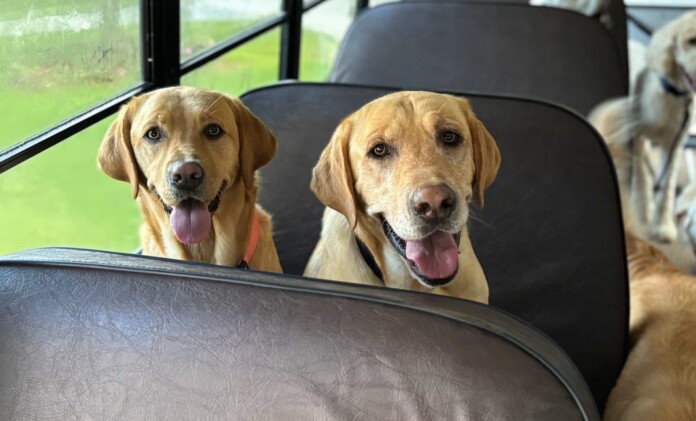
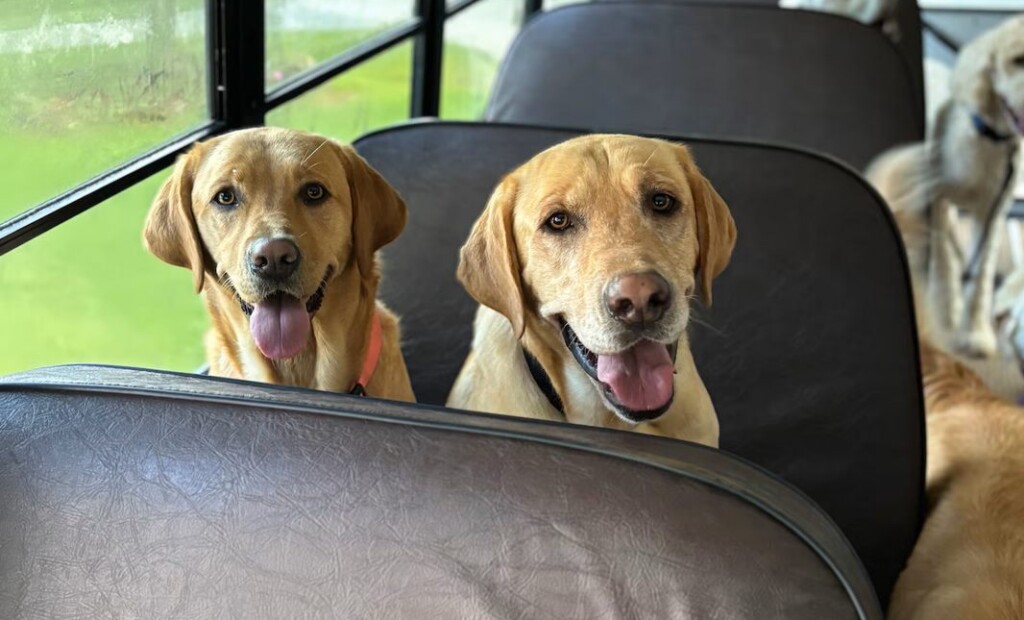
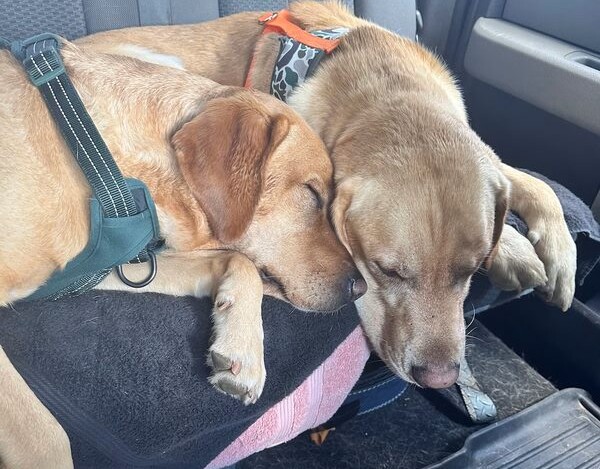
Nellie, left, and Waylon ride the Keller Creek Boarding and Grooming pup bus in Franklin County, Ga. On July 16, Waylon — a stray dog — chased after the bus. He was later adopted by one of the day care's clients. (Keller Creek Boarding and Grooming)
Nellie, left, and Waylon ride the Keller Creek Boarding and Grooming pup bus in Franklin County, Georgia. Waylon was later adopted by one of the daycare’s clients. (Keller Creek Boarding and Grooming)
A determined Lab has found a new home in Georgia after galloping alongside a doggie daycare bus until he won over the driver and found a new home.
In Franklin County, the story begins when the driver of the ‘pup bus’ was doing his rounds to bring clients’ dogs to daycare.
Coming to a house he knew well, a Labrador retriever who had been attending Keller Creek Boarding and Grooming for three years named Motley was waiting for the bus like normal, but this time he had a friend.
Tyson Cash, the owner of Keller Creek, contacted Motley’s owners to ask who the new arrival was, but to his double surprise, the owners said they had not adopted any new dogs.
They added, however, that a stray Lab had been in the area for a few days and neighbors were feeding and occasionally letting it stay on their property. Keller Creek is a reputable doggie daycare center, and Cash couldn’t take the risk of letting a stray onboard. So after loading Motley, he closed the door.
“I didn’t know about his vaccination status. I didn’t know if he was on flea and tick prevention,” said Cash. “I didn’t want to jeopardize all the other dogs, [but] he wanted on the bus badly. He was doing everything he could to get on with the other dogs.”
Steeling himself, he drove off, but the yellow Lab gave chase. Heart aching, Cash asked his wife to take a video and photo of the dog alongside the bus to post on social media to see if anyone in the area knew who his owners were.
A crazy dog dad through and through, Cash was pondering if there were any way he could find room in his house—filled with 9 other pooches as things stood—for this dog desperate for company. But fate, fortune, and a friendly soul stayed Cash’s hand.
Also onboard the pup bus was Nellie, another yellow Lab, whose owner saw the Facebook post and felt even worse than Cash did.
“To see a dog so desperate to catch a ride was very heartbreaking,” she told the Washington Post. “I thought, I’ve got to reach out and see if anybody has a home for this dog. If not, I want him.”
Ask and you shall receive. Pearce was put in contact with a woman who had been allowing the stray to stay on her property—she called him Waylon, but her two dogs were entering heat, so she had to cast him off yet again.
Pearce and her boyfriend went to bring the dog to the vet as he was in bad shape; covered in ticks and fleas, and suffering from malnourishment. They also found that Waylon had a microchip—the manufacturer of which was able to organize a transfer of ownership from the previous owners to Pearce without the latter learning anything about the former.
Nellie, left, snuggling with Waylon credit – Sadie Peace
Now Nellie and Waylon are the best of friends, following each other everywhere, and the Pearce home has become one of joy and cuddles.
Last week, Waylon finally got his wish—a ride on the pup bus when he climbed aboard alongside his new sister much to Cash’s delight, who said it was the best ending to the story anyone could have hoped for.
SHARE This Heart-Scalding Story Of Love Finding Love…
Spartina patens also known as Salt Hay - Photo Dana FilippiniNational Park Service
Spartina patens also known as Salt Hay – Photo Dana Filippini, National Park Service.
Rising sea levels and coastal erosion are threatening farmers on America’s mid-Atlantic coast, but a crop from colonial times may be the future harvest in places like Delaware and New Jersey.
The issue is that more and more mid-Atlantic farmland is becoming inundated with salt making crops like corn and soy ungrowable, but a group of grasses colloquially known as ‘salt hay’ can not only grow in saltier fields, but has been used as fodder to give northern France’s lamb a distinctive salty flavor.
The lamb is sold as “pre-salted” because the grasses on which the lambs are grazing grow on salty marshes and plains near the coast.
A study published in Nature found that between 2011 and 2017, visible salt patches almost doubled across land along the Delmarva Peninsula, and over 20,000 acres of farmlands were converted to marsh. The range of economic losses was estimated between $39.4 million and $107.5 million annually under circumstances where farmers abandoned corn and soy altogether.
Farmers need crops that are salt tolerant if they are to continue their livelihoods, and salt hay is not an entirely forgotten option as it was farmed at scale in New Jersey as recently as 1975. However, harvesting salt hay is just too much trouble for most farmers because it grows on marshy ground where tractors and machines are liable to get stuck.
Ambrook Research, a financial and operations planning firm for farmers and agriculturalists, found that salt hay may be on the brink of a renaissance, as some farmers on the mid-Atlantic coast are working to revive the age-old crop with modern harvesting techniques, particularly because it has so many uses.
“I have documentation of salt hay harvests on our farm dating back to the 1600s,” said John Zander, whose Cohansey Meadows Farms is perched on the Delaware Bay in New Jersey. Spartina patens, the native species of what’s officially called salt meadow cordgrass, has been identified by Zander and others as being once used for building insulation, as packing material, and as an additive to concrete.
It has also been used for paper, textiles, fodder for animals, and because it’s naturally free of seeds and weeds because of its strangulating root system, as a premium mulch for flower beds.
Ambrook Research spoke to Zander who said he has been experimenting with different planting, propagation, and harvesting methods. In his father and grandfather’s day, salt hay was harvested after a deep freeze allowed light machinery to traverse the marshes, but such frosts don’t happen these days. Instead, Zander has been growing it in salt-contaminated fields inland of where the salt hay would typically grow naturally, and says it’s producing “prolifically.”
“We’re cutting it out now like basically rolls of sod,” he said. “We either cut it into plugs or leave it in bigger mats, and it can be transplanted that way.”
Scott Snell, an agronomist at the Cape May Plant Materials Center, told Ambrook that he is interested in salt hay for its secondary benefit: as an anchor to prevent coastal soil erosion.
“These salt meadow cordgrasses are natural buffers. They help to prevent runoff and erosion, so you’re capturing nutrients and reducing soil loss from wind and water erosion,” he said.
Zander agrees, saying the root system is simply impervious.
“It just really grips on. I think if we can get some of that into places where we’re having erosion problems, it might be pretty beneficial to some of these coastal farms and towns.”
SHARE This Story Of The Fascinating Farmable Grass On America’s East Coast…
Breyana Elwell never liked rodents, but after it became clear the neighboring squirrels were suffering from the heat, she began to warm to them.
Living in New Braunfels, Texas, she maintains a sort of “squirrel resort” where the arboreal rodents can stop by, cool down, grab a bite, and lounge until the heat of the day passes.
It all started when Elwell was playing with her toddler out on the deck and the mother of two left a fan on after they were finished. A local squirrel came to realize the value of the fan and plopped himself on the railing to cool down.
There was a drought at the time, and she remembered that the animal looked full of relief, so the next morning she put new batteries in the fan and switched it on again. This time, two squirrels came to visit.
After she put a video of the rodents on her TikTok account, companies began sending her free fans to help cool more squirrels down, leading to a totally new and unforeseen hobby as far as Elwell was concerned—general management of a squirrel resort.
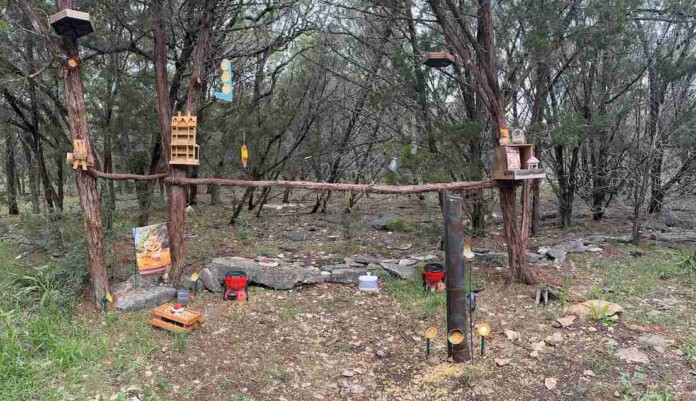
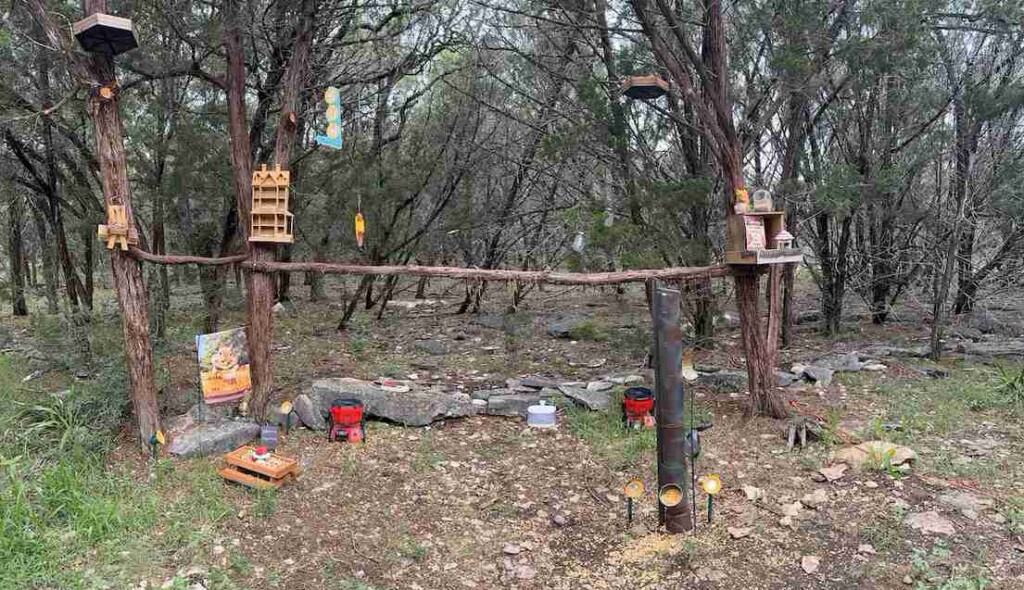
Building little tables and attaching them to the side of trees, squirrels can now stay outside Elwell’s house and bask in the breeze of the fans while munching on nuts, corn, and fruit frozen in ice cubes—a must in the over 100°F heat.
The squirrels originally came to sit under the fans on Breyana’s deck -Breyana Elwell
She placed logs between the trees to act as paths, built a courtyard for them to stay in, designed specialized feeders, bought some stylish wooden decor from the thrift stores in the area, and even hooked up a water fountain.
Every day she lugs the whole resort complex out around 50 feet from the deck and sets it all up—needing around 2 hours to finish the job. She takes it down every night to ensure the dogs that frolic around their 5-acre property don’t destroy it.
“As much as it is for them, it’s for me as well,” Elwell told the Washington Post, covering her curious hobby. She added that her sons, ages 3 and 10, love watching the squirrels. “It’s very therapeutic.”
“It can be pricey,” Elwell said. “It brings joy to me and others, so it’s just worth it. I never thought in a million years this would be something I would turn into a hobby.”
In general, one should never feed or care for wild animals. As soon as they learn that easier pickings are available adjacent to humans, they will abandon their wild lifestyle and instincts, largely to their own detriment. However, squirrels are not jaguars, and as anyone who has visited a city park knows, tens of thousands, perhaps hundreds of thousands of squirrels around the country already negotiate human civilization on a daily basis.
Day 1 - Champions Festival - UEFA Champions League Final 2023/24
Day 1 – Champions Festival – UEFA Champions League Final 2023/24
Alongside all the other memories taken home from their stay in Germany this summer to cheer on their national team, 38,000 soccer fans are now certified in CPR.
The Get Trained, Save Lifes, campaign was a partnership between the EURO Championships and the European Resuscitation Council to raise awareness of sudden cardiac arrest and the importance of bystander CPR.
At official CPR booths, fans from all 24 participating countries practiced on manikins with sensors that measured the depth and rhythm of their compressions.
Their results were compared with other participants in the form of a computer game. Football greats like Clarence Seedorf, Javi Martinez, Ruud Gullit, and Mikel John Obi visited the booths to interact and participate in the game.
In addition to fans, the participating EURO 2024 teams have also received life-saving training at their base camps. The initiative has been extended to match officials, staff, and volunteers working at the tournament, to try and ensure that no matter where an event might occur, someone will be around who knows what to do.
The EUROS have a recent and dramatic history in raising awareness for cardiac arrest, more than the council could have ever hoped to generate on their own.
In the European Championships of 2020, the sporting world watched in horror as a dozen paramedics charged onto the field to try and save Denmark’s attacking midfielder.
Christian Erikson had the ball at his feet before collapsing for seemingly no reason. Simon Kjaer, the captain, ran over and determined that his colleague’s heart had stopped. In those crucial moments, Kjaer cleared Erikson’s airways before performing the first few chest compressions, alerting the tens of thousands of fans in the stadium, and the millions watching around the world, to what was happening.
The Danish players locked arms around their teammate to screen the view of what was happening, but the eagle-eyed television cameras still captured footage of Erikson’s limp body twitching on the ground from the compressions. The terrifying ordeal lasted several minutes before he was transported off the pitch in a medical vehicle, after which he made a full recovery.
The sporting world had had its eyes pinned open to the reality of what can be done to save a person on the very edge of oblivion, and soon, Sky Sports was welcoming paramedics onto their show to teach basic resuscitation skills.
SHARE This Great Idea To Prepare Fans With Your Friends On Social Media…
With a new inspirational quote every day, atop the perfect photo—collected and archived on our Quote of the Day page—why not bookmark GNN.org for a daily uplift?
Repurposed peonies, ready for delivery in Harrisonburg - credit, Friendly City Florals
Repurposed peonies, ready for delivery in Harrisonburg – credit, Friendly City Florals
A pair of Virginians who found themselves habitually dismayed by the amount of floral waste they saw over a series of weddings and funerals decided to launch a small nonprofit to reuse them.
Friendly City Florals delivers flowers to hospice care homes, hospitals, and other events like funerals and weddings to make sure that the joy and special feeling a vibrant bouquet inspires can continue to do so as long as there is color in the petals.
The story begins when Rebecca Shelly, an experienced wedding industry worker, was cleaning up in the aftermath of a wedding reception in North Carolina last year, and was agonizing over stuffing hundreds of perfectly perky peonies into black garbage bags.
She saved as many as she could, but as Shelly told the Washington Post, one could have filled two U-Haul trucks with them all. This sense of regretful waste continued earlier this year, when Shelly and her friend Laura Ruth were grieving over a tragic double loss—both their fathers had passed away in the span of a few months.
The residents of Harrisonburg, Virginia, were remarking over how many bouquets of flowers had arrived at their house over the days.
“What if we could repurpose the flowers and brighten the day for somebody else?” asked Shelly, 32, who along with Ruth, launched Friendly City Florals. “We’ve put the word out everywhere that if you have too many flowers and don’t know what to do with them, we’ll take them off your hands.”
The pair now spend several days a week traveling to halls, houses, and venues to collect floral arrangements that would otherwise be thrown out. They bring them back to Shelly’s home, pick out any wilted stems, and replace them with fresher flowers before driving the bouquets out to those who need them.
Donated flowers spill over Shelly’s kitchen counters in Harrisonburg. (Friendly City Florals)
“It’s a simple thing to pick out what’s wilted, add some of our own [flowers] if needed, and share the joy one more time,” said Ruth, whose own kitchen is usually spilling over with donated zinnias, daisies, and dahlias which they specialize in.
Washington Post spoke with staff and residents of several locations Friendly City Florals frequents, including the Virginia Mennonite Retirement Community in Harrisonburg and the Bridgewater Retirement Community in Bridgewater, all of whom said the flowers were genuinely day-changing joys.
The non-profit also accepts donations from at-home gardeners, or anyone who has spare blooms to spare.
“Especially in nursing homes, that population often they’re socially isolated more often than other communities. They don’t have space for their own greenspaces, there’s just a lot of needs there. And so we found that bringing florals into them, they get visitors from it, they just have some greenery, some flowers in their room. We just hear so much feedback about how much joy it brings them and how much they love it,” Ruth told WHSV 3.
BRIGHTEN UP Someone’s Day With This Great Story Through Social Media…
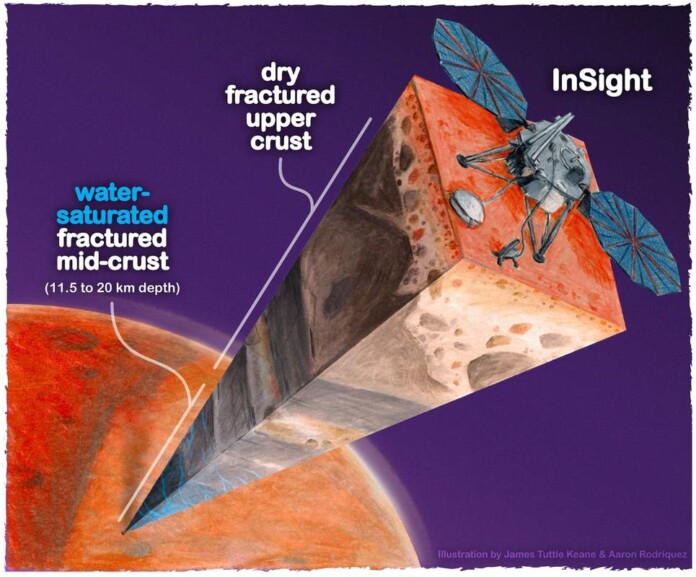
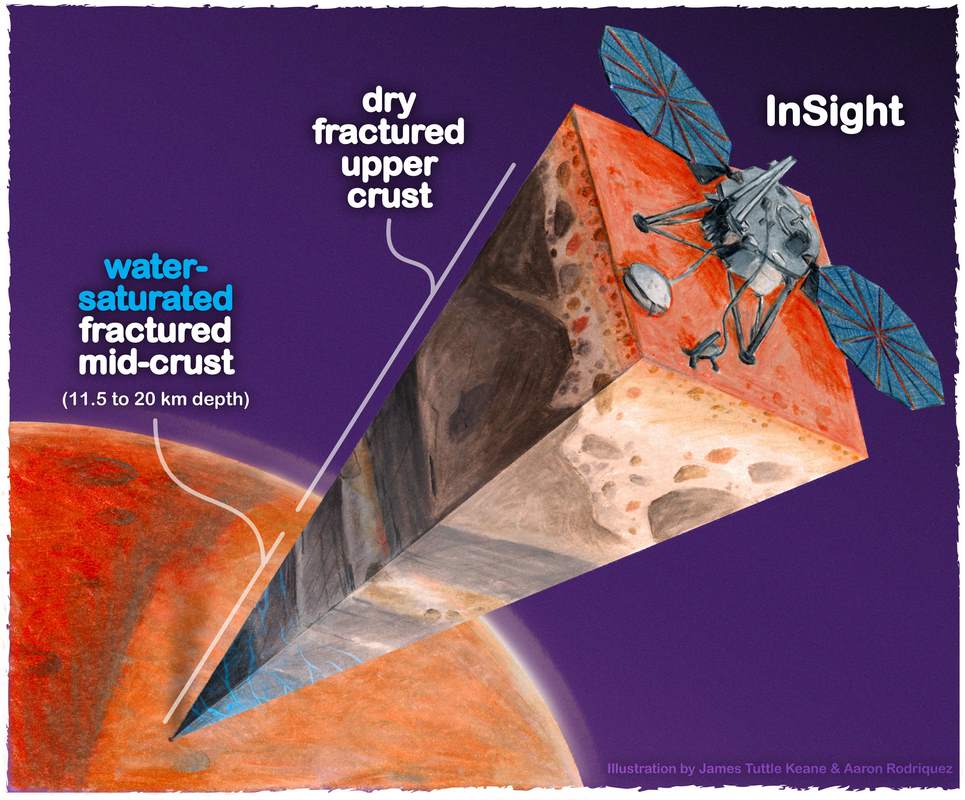
Infographic of the Insight Lander's discovery - credit, Dr. Vashan Wright, UCSD.
Infographic of the Insight Lander’s discovery – credit, Dr. Vashan Wright, UCSD.
If you want to get excited about scientific advancements from space, you have to accept sometimes that often the most exciting things are the most unactionable.
Take for example a study just released from the University of California—that scientists may have finally found all that water that disappeared off the surface of Mars 3 billion years ago wound up in cracks in the Martian mantle.
The water presents undoubtedly the best chance of settling once and for all whether the once-wet and riverine Martian landscape ever harbored, or still harbors, microbial life.
The only catch is that the water is located 12 miles (20 kilometers) below the surface of the planet, 5 miles deeper than the deepest hole ever drilled into the Earth.
Seismic data from NASA’s Insight lander indicated deep, porous rock filled with enough water to cover the entire surface of the Red Planet with a one-mile-deep ocean.
The discovery is significant as it’s been understood for years that oceans disappeared from the surface of Mars more than 3 billion years ago.
“Understanding the Martian water cycle is critical for understanding the evolution of the climate, surface, and interior,” said Dr. Vashan Wright, of UC San Diego’s Scripps Institution of Oceanography.
Wright and his colleagues employed a mathematical model of rock physics on Mars identical to models used on Earth to map underground aquifers and oil fields. They concluded that the seismic data from Insight is best explained by a deep layer of fractured igneous rock saturated with liquid water.
“Establishing that there is a big reservoir of liquid water provides some window into what the climate was like or could be like,” added study co-author Professor Michael Manga, of UC Berkeley.
River channels, deltas, and lake deposits, as well as water-altered rock all support the theory that water once flowed on the surface of Mars, but that wet period ended over 3 billion years ago after Mars lost its atmosphere.
Planetary scientists have sent probes and landers to the Red Planet to find out what happened to that water. They say that the water frozen in Mars’ polar ice caps can’t account for it all—as well as when it happened, and whether life exists or used to exist on the planet.
The new findings indicate that much of the water didn’t escape into space but instead filtered down into the crust.
“And… I don’t see why [the underground reservoir] is not a habitable environment. It’s certainly true on Earth—deep, deep mines host life, the bottom of the ocean hosts life.
“We haven’t found any evidence for life on Mars, but at least we have identified a place that should, in principle, be able to sustain life,” he said.
Insight officially “signed off” on what was then Twitter, after critical power shortages seemed destined to shut the robotic seismographer down. While it may not be continuing to measure “Marsquakes,” the data it already gathered may outlive its noble, metallic soul for years to come.
SHARE This Key Martian Insight From The Insight Lander…
From Arizona comes the story of a remarkable animal sighting: an ocelot, one of the world’s most well-known small wildcat species.
Mostly native to South and Central America, its range once upon a time extended up above the Rio Grande, and one was just recorded passing through the Atascosa Highlands of Southern Arizona’s Coronado National Forest.
The cat was seen by one of 50 camera traps set by the Phoenix Zoo as part of a wildlife monitoring project.
A variety of thornscrub and scattered oak woodlands blanket the slopes of the Tumacacori, Atascosa, and Pajarito mountains which together make up the Highlands—the perfect territory for the nocturnal hunter, which was captured moving across one of the camera traps.
It was on a routine battery replacement that Kinley Ragan, field research project manager for the Phoenix Zoo, stopped to check the SD card for anything interesting.
“This particular location required a 40-minute hike to the site as the temperature was reaching 95 degrees,” Ragan says in a statement released by the zoo.
“The ocelot video (see below) was one of the last videos I reviewed and sent full chills through my body at the excitement and pride in what we had recorded. I was in disbelief at first, watching the video over and over again, but soon a big smile spread across my face as the full impact of this discovery for the important region set in.”
Phoenix Zoo
Arizona Game and Fish Department (AZGFD) Regional Nongame Specialist, Tracy McCarthey, confirmed the finding.
“AZGFD has conducted a pelage spot analysis comparing this ocelot with the current known ocelot in the state, as well as previous ocelots, and concludes that this is indeed a new ocelot.”
Ocelots have been listed as Endangered in the United States since 1972 and are only intermittently recorded in Arizona. This particular cat was observed in desert scrub and at lower elevations than most historical records of ocelots in Arizona.
Another ocelot has consistently been recorded in the last year on camera footage from the Huachuca mountain range, greater than 50 miles away from this new sighting.
“Finding evidence of a new ocelot in southern Arizona reinforces our commitment to collaborative efforts to conserve wildlife and their habitats in the region,” says Phoenix Zoo President and CEO Bert Castro. “We’re eager to review additional camera data from this study to see what else we can learn about species of conservation concern in the borderlands and what they need for their continued survival.”
A previous camera trap survey in the area carried out last year yielded evidence of 21 mammal species in the Highlands, which are considered a crucial wildlife corridor, but no ocelot or jaguar. With this new piece of evidence in hand—notable for the lower elevation at which it occurred, the zoo plans to conduct even broader surveys as well as DNA analysis from nearby water sources to better understand ocelot presence in the area, as well as to perhaps uncover additional secrets in this beautiful slice of American desert.
“We’re excited to see if this was a one-off and what this means for the area,” Ragan tells the Arizona Republic. “Are there more? Now that we are formally surveying it, what else can we uncover in this beautiful landscape?”
YOU’VE Got To SHARE This Amazing Sighting With Your Friends From Arizona…
Only 2 FDA-approved drugs exist for treating male pattern baldness, but a third may have just been found inside our own bodies.
A naturally occurring ribose sugar has already been used to successfully stimulate hair growth in mice, say scientists, and can be applied to a variety of carrier gels inexpensively.
Scientists in the UK and Pakistan say that the “promising” discovery offers hope in the search for a cure for male pattern baldness, known as androgenic alopecia, which affects up to half the men in the world, many as early as 30 years of age.
The study, published in the journal Frontiers in Pharmacology by scientists from the University of Sheffield and COMSATS University Pakistan, identified 2-deoxy-D-ribose (2dDR), as a hair regrowth stimulant.
This sugar plays a “fundamental” role in several biological processes both in animals and humans.
The research team had been studying how the sugar can help to heal wounds by promoting the formation of new blood vessels over the past eight years, but during the research, they also noticed that hair around the healing wounds appeared to grow more quickly compared to those that hadn’t been treated.
To explore further, the researchers established a model of testosterone-driven hair loss in mice—similar to the cause of pattern baldness in men.
They found that applying a small dose of the naturally occurring sugar helped to form new blood vessels, which led to hair regrowth.
Findings from the study show that the sugar is as effective at regrowing hair as Minoxidil—an existing drug used to treat hair loss.
“Male pattern baldness is such a common condition, affecting men all over the world, but at the moment there are only two FDA-licensed drugs to treat it,” said Professor Sheila MacNeil, of the University of Sheffield in a statement.
“Our UK/Pakistan collaboration unexpectedly turned up a small, naturally occurring sugar that stimulates new blood vessel formation, and we were delighted to discover that it not only stimulates wound healing, but [also] stimulates hair growth in an animal model,” she wrote in a statement sent to Fox News Digital.
“The research we have done is very much early stage, but the results are promising and warrant further investigation.”
“This could offer another approach to treating this condition which can affect men’s self-image and confidence,” said Professor Muhammed Yar from Pakistan, who noted in the statement that the sugar was carried well in a variety of gels, and therefore stands as an attractive potential treatment.
“This makes it an attractive candidate to explore further for treatment of hair loss in men.”
SHARE This Wild Discovery With The Potential To Revolutionize Hair Loss Control…
With a new inspirational quote every day, atop the perfect photo—collected and archived on our Quote of the Day page—why not bookmark GNN.org for a daily uplift?
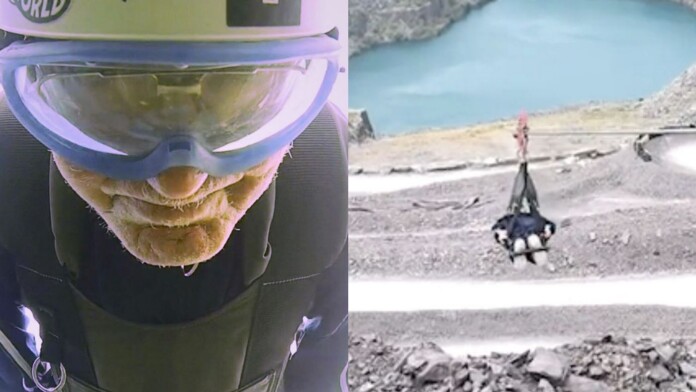
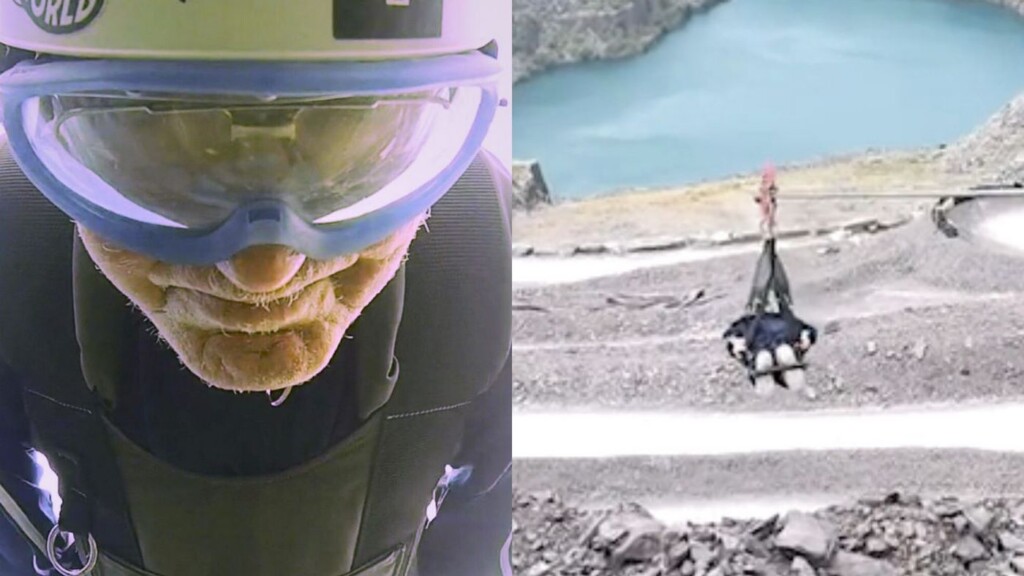
A 94-year-old Englishman decided to have a go on the world’s fastest zip line to raise money for his local hospice care.
Great-grandfather-of-four David Aris lost his beloved wife, June, to cancer five years ago.
For the last few months of her life, she had been cared for by St John’s Hospice, which also provided end-of-life care for one of David’s friends, Mr. Kilby.
Together, 94-year-old David and Mr Kilby’s 70-year-old widow Narelle, took a trip to Zip World in Penrhyn Quarry, Wales, for a ride on the fastest zip line in the world that can reach speeds of 100 miles per hour (160 kilometers per hour).
The pair both looked to raise money for the hospice care that helped them at such an unhappy moment in their lives.
“I had heard of the zip line but I didn’t think to do it until Narelle mentioned it to me,” David told the English news media SWNS. “When we rang up to book in, and I said I was 94, and they said I am ‘probably the oldest person’ to do it. They checked and that turned out to be true!”
“On the day, the zip line was all over and done in less than a minute because it was so fast!” he added. “I was nervous but also excited. And I really enjoyed it.”
June had been supported by St John’s in the final six months of her life after her cancer became terminal.
She and David had lived in the hospice for a few months before moving home and having hospice carers come to them for the last few weeks of June’s life.
The mosaic discovered at Wroxeter – credit English Heritage.
A remarkable 2,000-year-old Roman mosaic was uncovered during excavations at Wroxeter Roman city, which also uncovered an ancient building and shrine.
The Roman presence in Britain is often referred to as the high water mark of the Roman Empire, while the decline and eventual abandonment as something like the receding of a tide.
As the tides of empire receded from England’s Shropshire, near Wales, they left behind a stunning mosaic of fish and other sea life made from green, blue, yellow, and red tiles that’s just been seen for the first time in centuries.
Recent excavations on the largely unexcavated Roman city of Wroxeter turned up the foundations of the settlement’s main building.
“One of the best-preserved examples of a Roman city in Britain, Wroxeter (or Viriconium as it was known) established in the 90s AD, was a thriving city of the Roman Empire, once as large as Pompeii,” a statement from English Heritage reads.
“At its height, the city would have contained over two hundred houses, a civic bath house, marketplace, county hall and judicial center.”
The trenches were dug near the city’s forum, in search of a building called the Civic Temple. Located along the main road, the trenches yielded this “particularly rare” mosaic depicting sea life, and a painted plaster wall, the bottom of which, remarkably, survives to this day.
The mosaic discovered at Wroxeter – credit English Heritage.
Also discovered was a mausoleum and shrine that may have housed the remains of an early civic leader such as a mayor.
Wroexeter contains the largest free-standing Roman wall remaining in Great Britain, and remnants of the public baths have also survived through the ages. The whole site, which saw 20 aspiring archaeologists join in the project, was reburied to protect it from oxidative damage and weathering.
Fish and sea life were common motifs in mosaics made by the Romans and several of their contemporaries, for example, Carthage. The museum in Monastir, Tunisia, contains one of the most impressive collections of classical mosaics outside the Roman world, and sea life is depicted on many of them.
SHARE This Awesome Find From Roman Times With Your Friends…
In one of the largest shake-ups in sports broadcasting this century, Turner Sports (TNT) lost out on an 11-year rights deal to broadcast the NBA.
But while they may have lost their apex product, they didn’t lose their apex presenter, who turned down a total of $100 million in contract offers from other networks so that the team that supports him could maintain their jobs for their final year together.
Last Wednesday, Charles Barkley revealed on the Dan Le Batard Show podcast that as TNT enters the final year of its contract to broadcast the NBA, he could have ended his participation with the network and gone to sign with one of the other networks included in the new 11-year broadcasting deal.
Barkley, who signed a 10-year agreement with TNT Sports in 2022, will be entering his 25th year with the company and chose to stay onboard until the 2025-2026 season to make sure his team maintained their livelihoods.
According to People Magazine, an exit by Barkley would have been contractually sound, as the network had lost the broadcasting rights.
“I love my TNT Sports family,” Barkley said in a statement released by Turner. “My #1 priority has been and always will be our people and keeping everyone together for as long as possible.”
“We have the most amazing people, and they are the best at what they do. I’m looking forward to continuing to work with them both on the shows we currently have and new ones we develop together in the future.”
In late July, the NBA chose to sign a $1.8 billion per year offer from ESPN’s parent company Walt Disney, NBC, and Amazon for the next 11 years of NBA coverage, while TNT’s equivalent offer was rebuffed.
The league stated it looked forward to another season on TNT, but Turner Sports announced it would examine legal options.
“I want to thank all of those networks for reaching out to me,” the two-time NBA Hall of Famer said on the Dan Le Batard show. “It was really humbling and cool, to be honest with you. Even though they were throwing crazy numbers, like damn, but as long as I got my people safe at TNT man, I feel really good.”
SHARE This Story Of Integrity From A Considerate American Millionaire…
Mohammed Azhar Mohiuddin with eco-friendly plastic bags – BioReform
Mohammed Azhar Mohiuddin with eco-friendly plastic bags – BioReform
An Indian entrepreneur is using sugar, cellulose, and corn fibers to make a plastic-like carrier bag for small Indian businesses.
His company Bio Reform has already replaced 6 million plastic bags in the checkout counters of stores all over India.
Based in Hyderabad, Mohammed Azhar Mohiuddin first got the idea during the general mayhem that arose during the pandemic. Mohiuddin was looking at global environmental issues with the hope of finding one his entrepreneurial spirit had the capacity to tackle.
He would eventually settle on plastic use, the overreliance on it in society, and the dangers of plastic contamination in the form of microplastic particles. Specifically, he wanted to find an alternative to one of the most common plastic products used today: the plastic shopping bag.
Mohiuddin saw the largest brands substituting plastic ones for those made of paper or even jute, but for medium and small businesses that power the majority of the Indian economy, the small increase in costs from using biodegradable bags was too prohibitive.
According to The Better India, he started studying a biodegradable polymer that was first formed and researched in the 1980s called PBAT (Polybutylene adipate-co-terephthalate). At the time, it was made with corn and potatoes.
After dodging scams and government-mandated quarantines to identify a suitable class of machinery to manufacture the PBAT bags in Gujurat, his presentation on PBAT landed nearly $100,000 (RS1 crore) in seed funding that allowed him to launch the project.
“I tried to balance both my studies and the operations of the company—from collecting raw material, assisting workers to manufacture bags, delivering the products in the market,” Mohiuddin told The Better India. “I used to sleep in a corner in the factory.”
Overcoming bankruptcy, university studies, and a long backlog of unfulfilled orders, Bio Reform finally started to turn a profit, and today manufactures almost 500,000 bags per year at a gross revenue of $180,000.
“Issues related to plastic pollution are not limited to affecting aquatic life and animals anymore. Today, microplastic has reached our bloodstream. Bottled water contains microplastics. Addressing this is an important and urgent problem,” he told TBI.
“I am glad I am able to contribute my part. It is sometimes taxing to not lead a regular college life but in the end, it is all worth it. I feel content when I go back to sleep. But much more needs to be done to make India plastic-free, and I will continue to strive for it,” he adds.
SHARE This Inspiring Entrepreneurial Story From India With Your Friends…
Quote of the Day: “If you want others to be happy, practice compassion. If you want to be happy, practice compassion.” – Dalai Lama
Photo by: Giulia Bertelli
With a new inspirational quote every day, atop the perfect photo—collected and archived on our Quote of the Day page—why not bookmark GNN.org for a daily uplift?
A young woman who was ‘crippled by a fear of rejection’ says she has cured herself by doing a series outrageous challenges in public.
Sophie Jones compiled a list of of dozens of challenges to undertake as therapy for the phobia which she has struggled with all her life.
So far, the 22-year-old managed to tick 45 things off her list—including walking into a lake fully clothed while people were swimming around her and asking shoppers to give her items from their cart.
Her favorites include challenging strangers to games of rock, paper, scissors and asking to make pizza in a pizzeria kitchen.
“Doing things that terrified me changed my life, and my confidence has skyrocketed,” she said.
Sophie, who lives in Warrington, England, said she experienced a lot of rejection throughout her teenage years. By the time she was 15, she was being bullying in school, which she says made her feel awful.
She said she became terrified of experiencing rejection and started shying away from friendships and opportunities. She didn’t want to put herself forward for things like new jobs or friendships due to low self-esteem.
“I was scared to make more friends. I felt I had no confidence within myself, I saw others with opportunities and thought, ‘why did I not have them?’”
“I felt like it was holding me back. I felt like I’d lost control of my life. I struggled with my mindset and outlook on life.”
In February, she became aware of a treatment called “rejection therapy,” that can treat a fear of rejection—from which she realized she was suffering.
This model is a form of exposure therapy that urges people to actively try to get rejected as much as possible.
After seeing another woman online asking for a free coffee in a shop, she decided to start her own “fear list”, which made the social media manager feel inspired, but also very nervous. (See her video below showing a few of her challenging moments…)
“The fact that someone could put themselves out of their comfort zone, I aspired to have that confidence. I knew it was possible.
“When I first started, it was awful. The anxiety of asking someone a question would eat me up all day. I was scared of being judged. But now, I’m thriving and living my life to the fullest with less fear.
“I have always seen people dance and sing in the street and I thought they must have a strong mindset. I knew it was my next step; I’ve motivated myself and grown my confidence.”
Sophie Jones on TikTok / SWNS
Since discovering the method, Sophie has been able to make her own ice cream in an ice cream van, and even climbed up stairs in public on all fours.
She has challenged herself to ask a mattress store manager if she could sleep in one of the beds, and even asked to slide down a fireman’s pole.
“When I asked if I could have my fuel for free the woman gave me a dirty look and asked why I would want it for free. It can be so nerve-racking at first.”
As the challenges progressed Sophie found herself receiving fewer rejections—which she says is due to her being more confident.
Now, she feels free from rejection anxiety, and recommends other people do this too.
“I want everyone to realize they can do anything they want. The greatest opportunities are just around the corner.”
“Anyone can do rejection therapy. It doesn’t have to be anything big, it can sometimes just be just asking for the bill at a restaurant, you can start small.”
But, Sophie’s upcoming challenges are getting bolder. She wants to go on a walk wearing a shower cap and to sing on a train. (Check out her video clips below…)
SHARE THE GREAT ADVICE With Friends and Family On Social Media…
Four out of five parents are working to make the back-to-school season “magical” for their elementary school kids, according to a new poll.
A survey of 2,000 parents with children aged 12 and under found 86% are trying to bring the “magic” back to school and, for many, their goal is getting their child excited about returning to the classroom.
In order to do so, parents are allowing their child to choose their clothing and outfits (62%), purchase school supplies they liked best (62%), and help support their child’s passions and interests (56%).
19% of parents admitted they disliked school when they were their child’s age, and 96% are hoping to create more positive memories for their little ones.
Results found that 40% of kids are typically “very excited” to return to school after their summer break, which means parents are working overtime to make it match expectations.
How do parents get their kids excited about learning? 63% use hands-on learning (like teaching fractions through baking a cake). 43% said they use food or snack activities, and 25% exercise their imagination and learning with experiences, such as fantasy costume play.
Conducted by Talker Research on behalf of Keebler snacks, the survey looked into more ways parents are making the school year “magic” for their kids.
Over four in ten like to surprise their kids with their favorite snacks, three in ten slip notes into their lunchbox, and 19% have given their child a “lucky charm” to take to school for good luck. And, 70% of parents believe an after-school snack is a “magic” fix when their child has had a rough day.
According to the results, parents generally ‘keep magic alive’ by encouraging their child to use their imagination (70%), encourage a belief in the Easter Bunny, Tooth Fairy, or Santa Claus (53%), teach them to always see the best in people and their experiences (50%) and encourage them to look for the unexpected (46%).
“There’s plenty of small ways to make a new routine ‘magical’ and help instill that love of learning and school in your child,” said Alicia Mosley, Vice President of Marketing for the Keebler Brand. “Whether you’re putting notes in your child’s lunch box or surprising them with their favorite snack.”
“It’s encouraging to see parents working so hard to keep magic alive for their children and it’s those little moments of magic that their children are going to remember and cherish for the rest of their lives.”
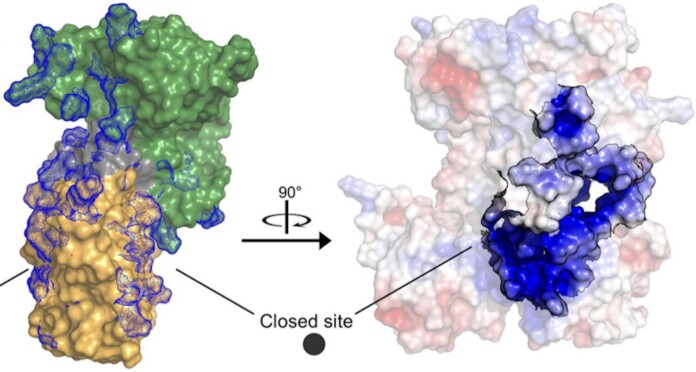
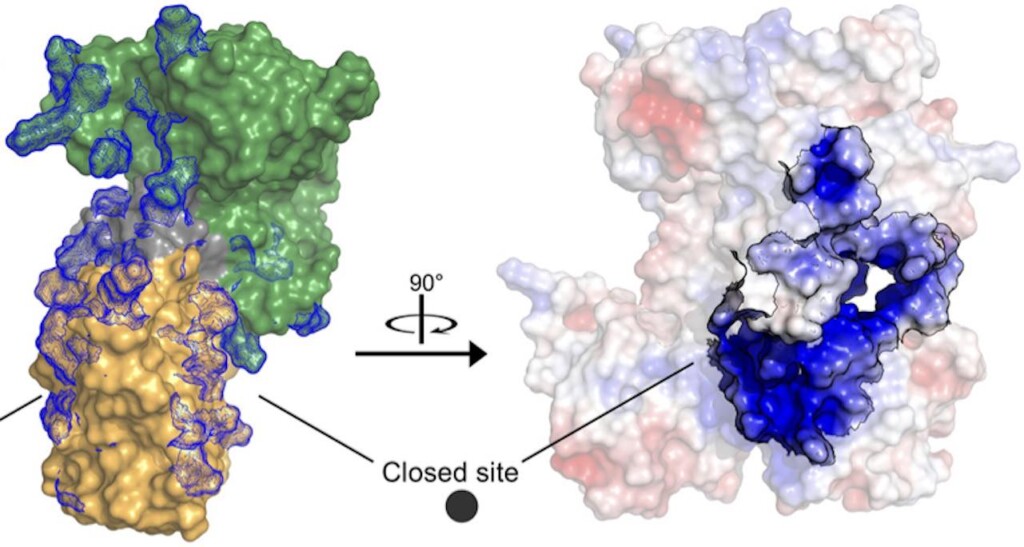
DdrC-DNA complex protein formation – Western University / Canadian Light Source
DdrC-DNA complex protein formation – Western University / Canadian Light Source
Researchers from Western University have discovered a protein that has the never-before-seen ability to stop DNA damage in its tracks. The finding could provide the foundation for developing everything from vaccines against cancer, to crops that can withstand increasing drought.
The researchers in Ontario, Canada, found the protein—called DdrC (for DNA Damage Repair Protein C)—in a fairly common bacterium called Deinococcus radiodurans, which has the decidedly uncommon ability to survive conditions that damage DNA; it can withstand 5,000 to 10,000 times the radiation that would kill a regular human cell.
Lead researcher Robert Szabla says Deinococcus also excels in repairing DNA that has already been damaged.
“It’s as if you had a player in the NFL who plays every game without a helmet or pads,” says Szabla, a grad student in Western’s Department of Biochemistry.
“He’d end up with a concussion and multiple broken bones every single game, but then miraculously make a full recovery overnight in time for practice the next day.” He and his colleagues discovered that DdrC is a key player in this repair process.
Every cell has a DNA repair mechanism to fix damage. “With a human cell, if there are any more than two breaks in the entire billion base pair genome, it can’t fix itself and it dies,” he said in a news release.
“But in the case of DdrC, this unique protein helps the cell to repair hundreds of broken DNA fragments into a coherent genome.”
Szabla and his team used the most powerful X-ray source in the country, the Canadian Light Source at the University of Saskatchewan to determine the 3D shape of the protein, from which they then worked backwards to better understand its “superpower” to neutralize DNA damage.
They discovered that DdrC scans for breaks along the DNA and when it detects one it snaps shut – like a mousetrap. This trapping action has two key functions.
“It neutralizes the DNA damage, and prevents the break from getting damaged further. And it acts like a little molecular beacon. It tells the cell ‘Hey, over here. There’s damage. Come fix it.’”
Typically, says Szabla, proteins form complicated networks that enable them to carry out a function. DdrC appears to be something of an outlier, in that it performs its function all on its own, without the need for other proteins.
The team was also curious whether the protein might function as a “plug-in” for other DNA repair systems. They tested this by adding it to a different bacterium: E. coli.
“To our huge surprise, it actually made the bacterium over 40 times more resistant to UV radiation damage,” he reported in findings published in the journal Nucleic Acids Research. “This seems to be a rare example where you have one protein and it really is like a standalone machine.”
He says that, in theory, this gene could be introduced into any organism – plants, animals, humans – and it should increase the DNA repair efficiency of that organism’s cells.
“The ability to rearrange and edit and manipulate DNA in specific ways is the holy grail in biotechnology,” said Szabla. “What if you had a scanning system such as DdrC which patrolled your cells and neutralized damage when it happened? This might form the basis of a potential cancer vaccine.”
The Western team is just getting started studying Deinococcus.
“DdrC is just one out of hundreds of potentially useful proteins in this bacterium. The next step is to prod further, look at what else this cell uses to fix its own genome – because we’re sure to find many more tools where we have no idea how they work or how they’re going to be useful until we look.”
“Currently, when we think of cancer treatments, we always think of treating it once it’s already happened. What if we can prevent the cancer from happening in the first place?”
Watch his video explaining it in easy-to-understand terms…
HAIL THE EXCITING DISCOVERY By Sharing On Social Media…
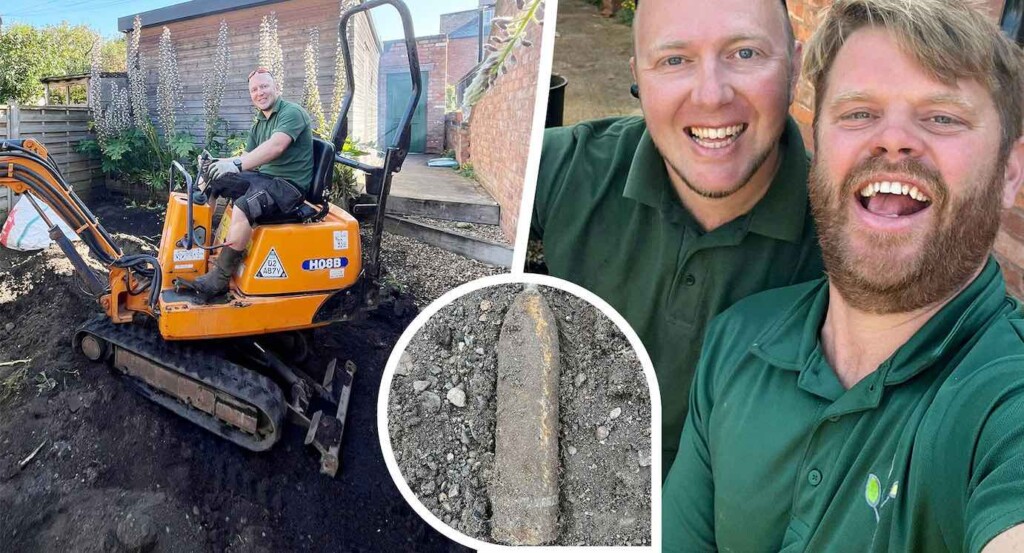
Lucky landscapers James Dobson and Paul Probert – SWNS
Lucky landscapers James Dobson and Paul Probert – SWNS
A pair of landscape gardeners were left shell-shocked after digging up an unexploded bomb from World War II, while working on a back garden.
Residents were evacuated from their homes in Worcester, England, while police and bomb squads rushed to the scene following the discovery by Paul Probert and James Dobson.
The pair had been working in the backyard of a residential home on Stephenson Road in Barbourne, when they unearthed the device with heavy machinery on Thursday.
Paul said he thought he had found a Coca-Cola bottle at first until they saw the shape and James did a Google image search to reveal it was a WW2 bomb.
West Mercia Police erected a 100m cordon and told people to leave their homes while a specialist Army Explosive Ordnance Disposal team examined the device.
The EOD team was on the street for over three hours before they transported the device away from the area to carry out a controlled explosion.
“I dug it up with the digger and thought it was a coke bottle due to the shape,” said Paul, a 34-year-old father of two. “It wasn’t until I saw the tip that we realized it was a bomb.”
James used Google Lens to try to identify it, and learned it was a World War II bomb.
“We’d like to reassure the public that the area has now been made safe by Explosive Ordnance Disposal, who have removed the item and will carry out a controlled explosion in a safe location,” reported Detective Chief Inspector James Bamber.
SHARE THE LUCK WITH GARDENING BUDDIES On Social Media…