All News - Page 170 of 1715 - Good News Network
Home Blog Page 170

D-Day Hero Gets Over 200 Cards to Celebrate His 100th Birthday

100-year-old veteran John Dennett – SWNS

A D-day veteran who defended landing troops from Nazi fighter planes has received more than 200 cards from well-wishers for his 100th birthday.

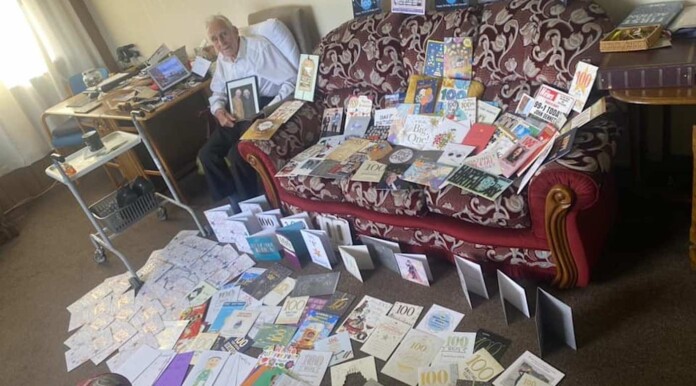
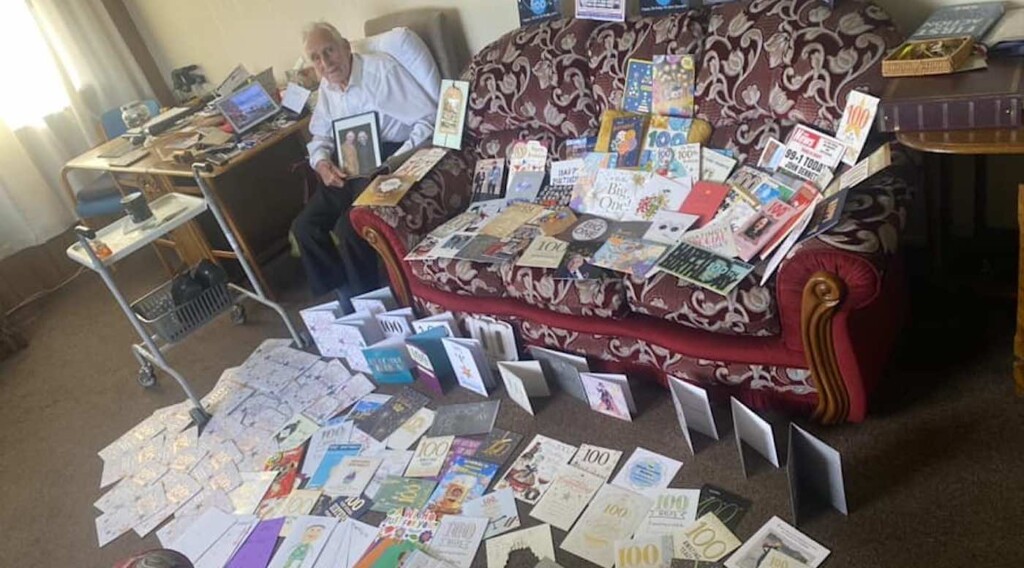
John Dennett, who now lives near Liverpool, England, was surprised by the haul of 217 cards and letters sent to him from across the county to mark his special day.

The widower celebrated with friends and family at a private party that featured wartime music, food, and entertainment.

“It’s a funny feeling. It’s only now that I’ve reached 100 that I realize I’m that old. I will just have to take it easy now,” he joked.

“All I hope is I reach 200!”

John was just 17 when he signed up to serve at the start of the war, against his mother’s wishes. He was an apprentice bricklayer, but after concealing his age, he managed to join the Royal Navy in 1941 and went to train in the US aboard the Queen Elizabeth.

Three years later, on June 6, 1944, he served as an anti-aircraft gunner aboard one of the 7,000 ships that delivered soldiers onto the beaches of Normandy, which turned the tide of WWII against the Nazis.

John also took part in the other major allied landings during the Second World War, both in North Africa and Italy.

This summer, he returned to France to mark the 80th anniversary of D-Day, where he met the King and paid his respects to the fallen.

John Dennett next to a mural of himself at Ashville AFC, the football club he founded (SWNS)

“It was exceptional, the trip of a lifetime.

“I also met the King and Queen again; we’re on first name terms now!

“I enjoyed my time out there so much, the memories will remain with me for the rest of my life. It was very moving.

AGE IS JUST A NUMBER: WWII Hero of Dunkirk Who Was Still Pumping Weights at 100-yo Shares His Secret Reaching 105: ‘I’m So Full of Life’

“I had to say a few words at Bayeux. I said the line that went, ‘For your tomorrow, we gave our today’.”

“There was one veteran who was 103 who was acting a lot younger. It really gave me hope.”

Following the war, John founded the Ashville Football Club in 1949 to give local kids a place to play. He’s still its president to this day.

And, on its building is a giant mural featuring a portrait of John with his chest full of medals (pictured above).

RAINBOW VILLAGE: 84-Year-Old Saves Neighborhood From Bulldozer By Painting Every Street With Joyful Colors (LOOK)

He said the Club has helped him get through so much in his life, including his wife’s death in 1994.

Over the last 30 years, since becoming a widower, he’s been a member of the Royal British Legion, embarking on several commemorative trips and selling red poppies to benefit his fellow veterans.

GIVE THANKS TO A HERO By Sharing John’s Inspiring Life on Social Media…

New Way of Protecting Tomatoes From Deadly Bacteria Lets Plants Sniff Out Danger Naturally

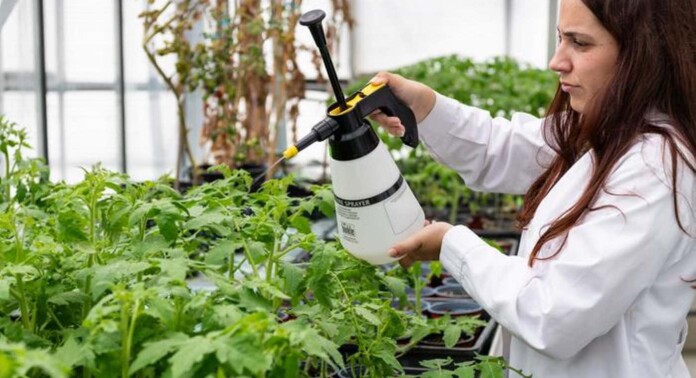
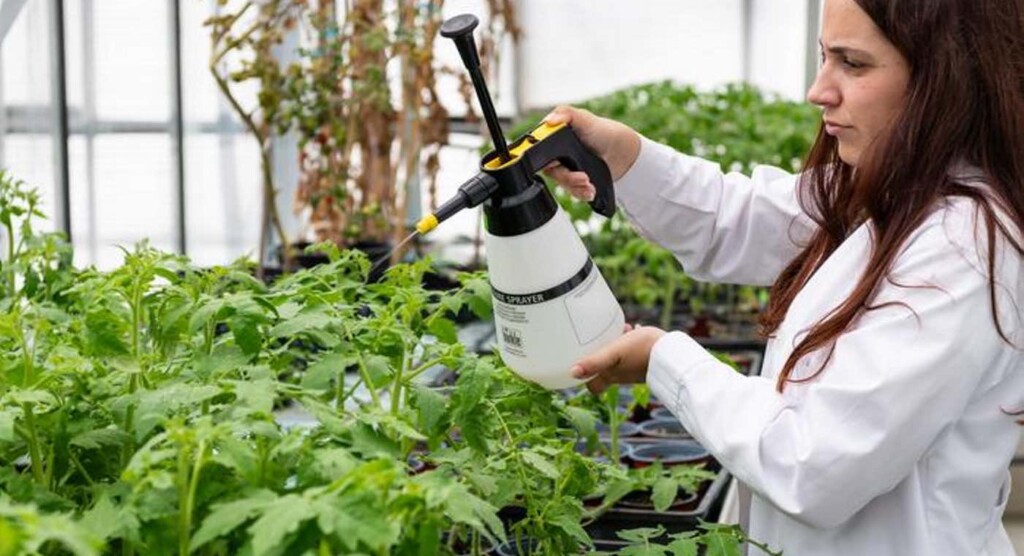
UPV-CSIC professor spraying tomato plants (via SWNS)

A new spray that protects tomatoes from a deadly bacteria has been dubbed the ‘aroma of resistance’ because it allows plants to ‘sniff out’ the danger naturally.

Spanish scientists found that an aromatic compound called alpha-terpineol effectively protects plants from Pseudomonas syringe, a pathogenic bacterium that causes severe damage to crops.

The research team calls it a “significant breakthrough” that could improve crop management by providing environmentally-friendly protection that is highly effective.

Study co-author Julia Pérez-Pérez explained that, like human interactions, plants have their own way of communication and self-defense. They emit volatile compounds to alert their neighbors to danger. The nearby plants use their sense of smell which perceives the message.

“Imagine a field of tomatoes where the bacteria penetrate the leaves of a plant through the stomata,” said Ms. Pérez-Pérez, a PhD student at Valencia Polytechnic University.

“As it spreads, the plant defends itself from attack by releasing volatiles such as terpene.

“Other parts of the plant itself and neighboring plants ‘smell’ this chemical message and quickly close their stomata, preventing the entry of the pathogen and thus protecting the crop.”

FREE FUEL FOR FARMERS? British Company Develops First Tractor in the World to be Completely Powered by Cow Dung

The same research team, partnering with the company Meristem, has already patented and licensed another volatile compound, HB, which also protects plants.

“Both compounds are part of what we call ‘the aroma of resistance’, which symbolizes the smell of survival for tomato plants.”

She says it is a very simple, cheap, and natural application that can be sprayed directly on the plants or applied by diffuser devices.

Dr. Purificación Lisón, co-author of the study published in the journal Plant Physiology, said, “The use of these compounds offers the agricultural sector a new economic, fast, and highly effective alternative to improve the yield of such an important crop as tomato.”

The natural strategy could serve as a protective barrier against bacteria and other infections—and even protect plants from the effects of drought.

SOUPING UP SOIL: Recycling Wastewater Reclaims Valuable Phosphorous for Farmers to Put Back in Soil

Using the compounds in agricultural treatments would also reduce the use of chemical pesticides, according to the research team.

“This is not only beneficial for the environment but also promotes more sustainable agriculture,” said the University’s Dr. Pilar López Gresa.

A-Terpineol, a natural monoterpene, is also commonly used in cosmetics, soap, insect repellent (like limonene), and other household items.

HELP MORE GARDENS GROW By Sharing the Good News on Social Media…

Your Weekly Horoscope – ‘Free Will Astrology’ From Rob Brezsny

Our partner Rob Brezsny, who has a new book out, Astrology Is Real: Revelations from My Life as an Oracle, provides his weekly wisdom to enlighten our thinking and motivate our mood. Rob’s Free Will Astrology, is a syndicated weekly column appearing in over a hundred publications. He is also the author of Pronoia Is the Antidote for Paranoia: How All of Creation Is Conspiring To Shower You with Blessings. (A free preview of the book is available here.)

Here is your weekly horoscope…

FREE WILL ASTROLOGY – Week of August 10, 2024
Copyright by Rob Brezsny, FreeWillAstrology.com

LEO (July 23-Aug. 22):
I love the fact that Antarctica doesn’t belong to anyone. Thirty nations have research stations there, but none of them control what happens. Antarctica has no government! It has a few laws that almost everyone obeys, like a ban on the introduction of non-indigenous plants and animals. But mostly, it’s untouched and untamed. Much of its geology is uncharted. Inspired by this singular land, I’d love for you to enjoy a phase of wild sovereignty and autonomy in the coming weeks. What can you do to express yourself with maximum freedom, answering primarily to the sacred laws of your own ardent nature?

VIRGO (Aug. 23-Sept. 22):
Babylonia was an ancient empire located in what’s now Syria, Iraq, and Iran. Among its citizens, there was a common belief that insomnia was the result of intrusive visitations by ancestral spirits. Their urge to communicate made it hard for their descendants to sleep. One supposed cure was to take dead relatives’ skulls into bed, lick them, and hold them close. I don’t recommend this practice to you, Virgo. But I do advise you to consult with the spirits of deceased family members in the coming weeks. I suspect they have a lot to tell you. At the very least, I hope you will explore how you might benefit from studying and pondering your ancestors’ lives.

LIBRA (Sept. 23-Oct. 22):
Libran tennis player Naomi Osaka is one of the highest-paid women athletes ever. She is also a staunch political activist. That blend of qualities is uncommon. Why do I bring this to your attention? Because now is an excellent time to synergize your pragmatic devotion to financial success with idealistic work on behalf of noble causes. Doing both of these activities with extra intensity will place you in alignment with cosmic rhythms—even more so if you can manage to coordinate them.

SCORPIO (Oct. 23-Nov. 21):
Scorpio actor Sally Field told a story about an agent who worked for her early in her career. In those formative years, all her roles were on TV. But she aspired to expand her repertoire. “You aren’t good enough for movies,” the agent told her. She fired him, and soon she was starring in films. Let’s make this a teaching story for you, Scorpio. In the coming months, you will be wise to surround yourself with influences that support and encourage you. If anyone persistently underestimates you, they should not play a prominent role in your life’s beautiful drama.

SAGITTARIUS (Nov. 22-Dec. 21):
One Sagittarius I know is building a giant sculpture of a humpback whale. Another Sagittarius is adding a woodshop studio onto her house so she can fulfill her dream of crafting and selling fine furniture. Of my other Sagittarius acquaintances, one is writing an epic narrative poem in Greek, another is hiking the Pacific Crest Trail from Northern California to the Columbia River in northern Oregon, and another has embarked on a long-postponed pilgrimage to Nigeria, the place of her ancestors’ origin. Yes, many Sagittarians I know are thinking expansively, daring spicy challenges, and attempting fun feats. Are you contemplating comparable adventures? Now is an excellent time for them.

CAPRICORN (Dec. 22-Jan. 19):
When I opened my fortune cookie, I found a message that read, “If you would just shut up, you could hear God’s voice.”  In response, I laughed, then got very quiet. I ruminated on how, yes, I express myself a lot. I’m constantly and enthusiastically riffing on ideas that are exciting to me. So I took the fortune cookie oracle to heart. I stopped talking and writing for two days. I retreated into a quiescent stillness and listened to other humans, animals, and the natural world. Forty-five hours into the experiment, I did indeed hear God’s voice. She said, “Thanks for making space to hear me. I love you and want you to thrive.” She expounded further, providing me with three interesting clues that have proved to be helpful in practical ways. In accordance with your astrological omens, Capricorn, I invite you to do what I did.

AQUARIUS (Jan. 20-Feb. 18):
Scientists at the University of California devised a cheap and fast method for unboiling an egg. Their effort wasn’t frivolous. They were working with principles that could be valuable in treating certain cancers. Now I’m inviting you to experiment with metaphorical equivalents of unboiling eggs, Aquarius. You are in a phase when you will have extra power to undo results you’re bored with or unsatisfied with. Your key words of power will be reversal, unfastening, unlocking, and disentangling.

PISCES (Feb. 19-March 20):
Every week, I imbibe all the honey from an eight-ounce jar, mostly in my cups of hot tea. To create that treat for me, bees made a million visits to flowers, collecting nectar. I am very grateful. The work that I do has similarities to what the bees do. I’m constantly gathering oracular ideas, meditating on the astrological signs, and contemplating what inspirational messages my readers need to hear. This horoscope may not be the result of a million thoughts, but the number is large. What’s the equivalent in your life, Pisces? What creative gathering and processing do you do? Now is a good time to revise, refine, and deepen your relationship with it.

ARIES (March 21-April 19):
Legend tells us that the first person to drink tea was Chinese Emperor Shennong in 2737 BCE. As he lounged outdoors, tree leaves fell into his cup of water and accidentally created an infusion. Good for him that he was willing to sample that accidental offering. It took many centuries, but eventually tea drinking spread throughout the world. And yet the first tea bag, an icon of convenience, didn’t become available until 1904. I don’t expect you will have to wait anywhere near that long to move from your promising new discoveries to the highly practical use of those discoveries. In fact, it could happen quickly. The coming weeks will be a favorable time to ripen your novel ideas, stellar insights, and breakthrough innovations.

TAURUS (April 20-May 20):
I hope that in the coming months, Taurus, you will be refining your skills with joy and vigor. I hope you will devote yourself to becoming even more masterful at activities you already do well. I hope you will attend lovingly to details and regard discipline as a high art—as if doing so is the most important gift you can give to life. To inspire you in these noble quests, I offer you a quote by stage magician Harry Blackstone Jr.: “Practice until it becomes boring, then practice until it becomes beautiful.”

GEMINI (May 21-June 20):
Wohlweh is a German word that means “good pain” or “pleasurable pain.” It might refer to the feeling you have while scratching a mosquito bite or rubbing your eyes when they’re itchy from allergies. But my favorite use of the word occurs when describing a deep-tissue massage that may be a bit harrowing even as it soothes you and provides healing. That’s a great metaphor for the kind of *wohlweh* I expect for you in the coming days. Here’s a tip: The less you resist the strenuous “therapy,” the better you will feel.

CANCER (June 21-July 22):
I earn my living as a writer now, but for many years I had to work at odd jobs to keep from starving. One of the most challenging was tapping the sap of Vermont maple trees during the frigid weather of February. Few trees produce more than three gallons of sap per day, and it takes 40 to 50 gallons to create a single gallon of maple syrup. It was hard work that required a great deal of patience. According to my analysis, you Cancerians are in a metaphorically comparable situation these days. To get the good results you want, you may have to generate a lot of raw material—and that could take a while. Still, I believe that in the end, you will think the strenuous effort has been well worth it.

WANT MORE? Listen to Rob’s EXPANDED AUDIO HOROSCOPES, 4-5 minute meditations on the current state of your destiny — or subscribe to his unique daily text message service at: RealAstrology.com

(Zodiac images by Numerologysign.com, CC license)

SHARE The Wisdom With Friends Who Are Stars in Your Life on Social Media…

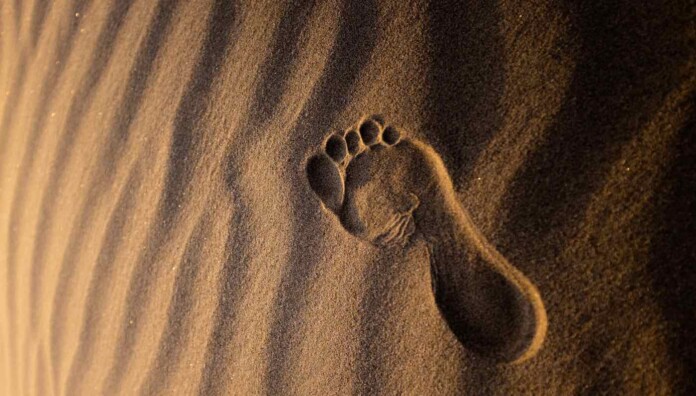
“I cried because I had no shoes, until I met a man who had no feet.” – Helen Keller

Credit: Jeremy Bishop

Quote of the Day: “I cried because I had no shoes until I met a man who had no feet.” – Helen Keller

Photo by: Jeremy Bishop

With a new inspirational quote every day, atop the perfect photo—collected and archived on our Quote of the Day page—why not bookmark GNN.org for a daily uplift?

Scientists Identify 7 Stars That Could be Hosting a ‘Dyson Sphere’–the Sci-Fi Concept Turned Realistic Hypothesis

An artist's impression of a Dyson Sphere - credit, Flickr, CC 3.0. 紅色死神
An artist’s impression of a Dyson Sphere – credit, Flickr, CC 3.0. 紅色死神

Astrophysicists recently put one of the great hallmarks of science fiction culture to the test, and used it to identify 7 stars that may harbor an alien civilization.

The 7 stars are glowing with infrared radiation in a way that cannot be explained by naturally occurring phenomena yet known to science.

The theoretical superstructure known as the ‘Dyson sphere’ was designed back in the 1960s by renowned British American physicist Freeman Dyson.

His idea was that, similarly to how metal smelting marked the end of the Stone Age and the start of the Bronze Age, all advanced civilizations would eventually harness the power of the star at the center of their home star system.

They would likely build a sphere, Dyson wrote, consisting of “a loose collection or swarm of objects traveling on independent orbits around the star.” However, his idea was captivating, and the concept of a Dyson sphere expanded to include fictional depictions of stars that were ensconced at the center of a twenty-sided sphere that included panels covered in cities and power plants.

Dyson was a serious scientist, but he openly admitted he got the idea for the sphere from Olaf Stapledon’s 1937 sci-fi novel Star Maker.

His official position was that if humanity wanted to search for signs of intelligent life in the galaxy, they would need a reliable signature to look for, which could be a biological sign like liquid water, or it could be a technological one.

Although the technology to do so didn’t exist in 1960, he proposed looking at stars to see if they bore a signature of waste heat like power plants give off here on Earth that would be detectable as infrared radiation, and that such radiation would indicate a civilization may be using the star as a power source.

Enter ‘Project Hephaistos.‘ A team of Swedish scientists along with colleagues from Penn State and the Indian Institute of Technology at Indore used historical data from telescopes that have picked up infrared signatures from any star located less than 1,000 light years from the Earth.

Their initial survey included 5 million hits, and the team applied several filters to remove as much data as possible before looking at each one individually.

“So far, we have seven sources that we know are glowing in the infrared but we don’t know why, so they stand out,” said lead study author Matías Suazo, a doctoral student at Uppsala University in Sweden.

“It’s difficult for us to find an explanation for these sources because we don’t have enough data to prove what is the real cause of the infrared glow,” he said. “They could be Dyson spheres, because they behave like our models predict, but they could be something else as well.”

OFF-WORLD MINING: Mercury Could Have A Layer of Diamonds 11 Miles Thick Beneath the Surface

All 7 candidate stars are classified as Red Dwarf stars, the most common type in the universe, and smaller than our Sun. According to NASA, planets orbiting red dwarfs have a higher chance of being inhabitable.

Other potential explanations for the infrared heat could be galaxies directly behind the observed stars whose radiation signature appears to be emanating from the latter. It could also be that the stars are young enough to maintain their protoplanetary disks which emit such radiation.

credit – Mysterio2013, Creative Commons 3.0 License, retrieved from Deviant Art.

The authors admit it could be a natural phenomenon, and suggest that telescopes with greater capabilities for direct imaging be used to investigate, rather than the surveyor observatories WISE and Gaia they used for in their dataset.

YOU MAY ALSO LIKE: China’s Lunar Probe Returns World’s First Samples from Far Side of the Moon

As the decades since Dyson’s original hypothesis have marched on, humanity’s space organizations and astronomers have gotten their hands on more and more sophisticated tools. The universe is becoming increasingly familiar to us, and realistic dialogue of turning the Moon into a gas station, mining asteroids, and colonizing Mars, is sounding less and less like a distant, out-of-reach dream.

32 years after the first exoplanets were discovered, the confirmed number has grown to over 5,000, and some are hypothesized as liveable.

Yet it’s important to take a step back and realize that as infeasible as it is to imagine colonizing another world, a Dyson sphere is many orders of magnitude more challenging.

MORE DEEP SPACE DISCOVERIES: New Temperate Planet That Could Support Human Life Discovered in Pisces Constellation by UK Scientists

“If you picture ourselves having as much energy as the sun is providing every second, we could do unheard-of things,” Suazo told CNN. “We could do interstellar travel, maybe we could even move the entire solar system to our preferred location, if we wanted.”

Suazo added that the Dyson sphere would be larger than the combined mass of all material on Earth, and that Dyson suggested we “dismantle” Jupiter and use that for raw materials.

SHARE This Awesome Space Project And Intriguing Mystery With Your Space Lovers On Social Media… 

Visitors to Scotland Can Play ‘Real’ Tennis’ on the World’s Oldest Court Dating Back 500 Years

Falkland Palace Royal Tennis Court, with the town of Falkland in the background - credit, SWNS.
Falkland Palace Royal Tennis Court, with the town of Falkland in the background – credit, SWNS

Twenty miles from the birthplace of golf sits a different kind of sporting pilgrimage site—the oldest tennis court in the world.

But this is no Wimbledon. The Falkland Palace Royal Tennis Club’s 50 active members play a form of the sport boasted of as “real” tennis based on the fact that it predates lawn tennis by over 300 years.

Nestled near the picturesque Lomond Hills just half an hour by car from St. Andrews, the Falkland Palace court was built in 1539 by King James V of Scotland.

‘Real’ tennis is played on a hard court surrounded by four walls. It became popular with nobility across Europe in the 15th century and includes the use of complex wall and floor markings to calculate scores.

The members are keen to invite visitors to try it out, as they believe they are keeping a centuries-old tradition alive.

Club member Kevin Gilbert became introduced to the sport whilst living in Australia, where a few of the 50 remaining courts are located. After retiring to Scotland he sought out another place to play the game since half of all the real tennis courts in the world are found in the UK.

“It’s played quite differently to lawn tennis, which originated in the 19th century,” Kevin told the British news media outlet SWNS. “The game involves hitting the ball off a penthouse roof, and you’re allowed to hit it onto the walls, and there are other quirks of the game that can win you points.”

SCOTTISH HISTORY AND HERITAGE: A 16th c. Scottish Plaid was Found in a Bog–Now Becomes Oldest Historical Tartan Available to Wear Today

“We have about 40 members from Scotland, and we have others who come and play once in a blue moon. The palace allows us to use the court, and their visitors sometimes arrive during the sessions that we run—they can see us play and we often invite them to join in.”

“We love to provide the opportunity to visit us and play on the court,” he added.

A complex series of markers denote where points are scored – credit, SWNS.

Modern tennis, or lawn tennis, was created to allow the average person to participate in the game without the need for a purpose-built court, but fans of real tennis say they value the opportunity to play the game as it was originally intended.

“In those days, it was only the royalty and the upper class could afford to play on these courts,” said Gilbert. “Once lawn tennis was invented in the mid-19th century, a journalist is said to have coined the term “real tennis” to refer to the original game.”

TRAVEL DESTINATIONS: A Book-Lovers Tour of Britain: From The Bard to the Brontës, Sherwood Forest to Sherlock Holmes–Top 35 Stops

The Falkland Palace, where the court is simply a part of the grounds, is maintained by the National Trust of Scotland, but the club hopes to raise money to contribute to maintenance and upgrades as part of their 50th-anniversary celebrations next year.

Falkland Palace Royal Tennis Court – credit, SWNS.

The palace welcomes thousands of visitors per year, and some will email or write in advance to see if they can get game time on the court.

SHARE This Awesome Reason To Visit Southeast Scotland… 

The UK’s Royal Mint is Now Extracting Gold From Electronic Waste

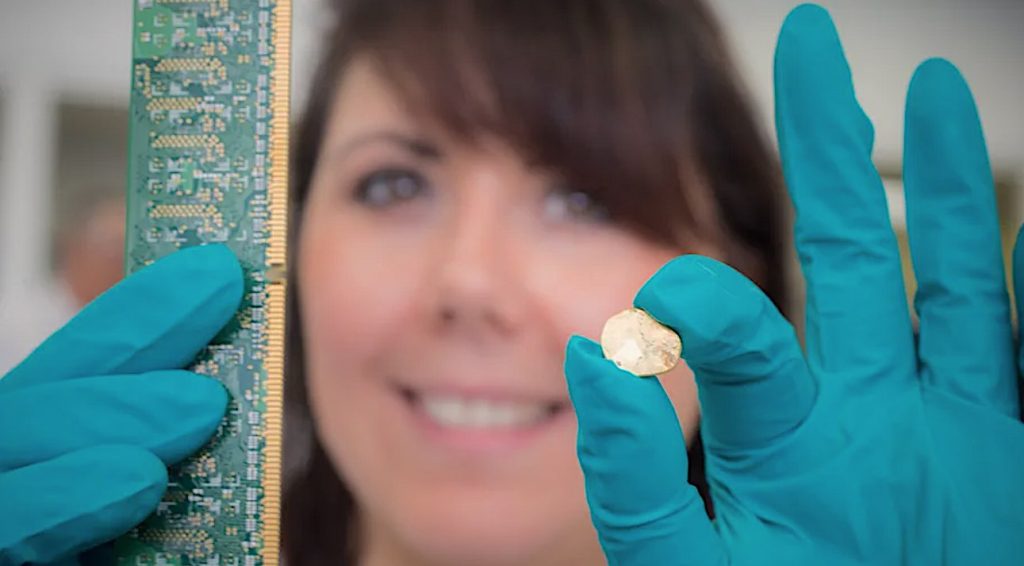
Credit: British Royal Mint

In 2022, GNN reported that Britain’s Royal Mint began using a patented new chemical reaction to recover and reuse the gold, and other metals, within old circuit boards.

Now, a large processing plant for recovering this gold is fully operational and boasts the capacity to break down 4,000 metric tons of circuit boards every year, amounting to hundreds of kilograms of gold.

But the really cool thing about the process is that the British government isn’t pocketing the gold, but rather minting standardized gold coins to back shares of an electronically traded gold bouillon fund that allows investors to diversify into gold without any environmentally damaging mining activities taking place.

From investing your dollars in public solar energy companies to literally buying shares of carbon offset programs in the carbon market, there are a lot of ways of trying to ensure your green stays green.

In this case however, you have the option of turning your green into green gold, after the Royal Mint partnered with Quintet Private Bank to release the ETF on the London Stock Exchange under the ticker RMAU.

But the Mint still needed masses of recycled gold for the offering. In 2022, GNN reported that construction of a new plant in South Wales would be up and running in 2023. Albeit a tad late, the Llantrisant plant is now fully operational.

A United Nations report on electronic waste estimated that 62 million metric tons of old laptops, phones, computers, television sets, and more were thrown out in 2022 alone. Contained within all of these devices are sensitive electronic components lined with precious and industrial minerals like gold, copper, cobalt, and others.

Gold has myriad uses in the medical, aerospace, and manufacturing sectors aside from its obvious function as jewelry and investing, but it’s hard to find and typically involves environmentally destructive mining operations.

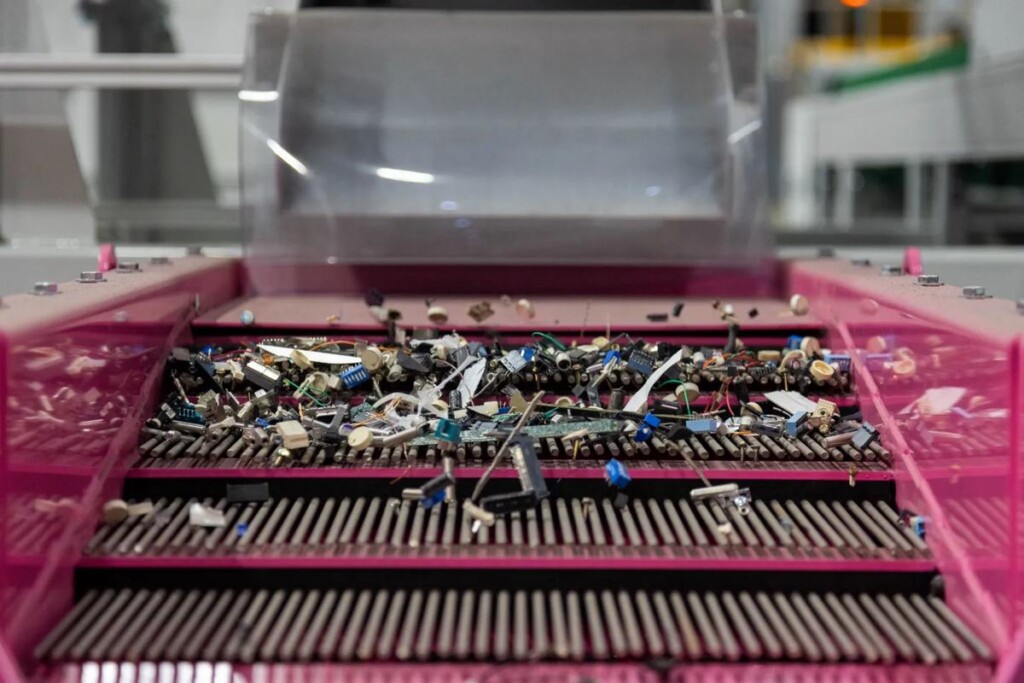
At the Llantrisant plant in South Wales, piles of circuit boards are collected in tubs before being baked until the delicate mounts warp, and the components, including coils, transistors, chips, and capacitors, detach and fall off. A conveyor belt moves them along a series of robotic arms that sort, sieve, and chop them up according to material.

credit – Royal Mint

Those that contain gold are separated and dumped in a chemical solution that leeches the gold from the other materials.

COMBATING E-WASTE AROUND THE WEST:

The recovered gold is in the form of fine dust, which only needs to be heated to be reformed into coins or ingots.

“Traditional gold recovery processes are very energy intensive and use very toxic chemicals that can only be used once, or they go to high energy smelters and they’re basically burnt,” Leighton John, the Royal Mint’s operations director, told BBC.

“The groundbreaking thing for us is the fact that this chemistry is used at room temperature, at very low energy, it’s recyclable and pulls gold really quickly.”

John adds that up until recently almost all this waste was shipped overseas, but now it’s being processed more and more in the UK, and the valuable resources, which ironically also have to be bought overseas, are remaining in the country.

Gold was in the news a few months back after making a new all-time record high against the US dollar. It rose sharply from a 52-week moving average of just under $1,900 an ounce to between $2,300 and $2,450 per ounce. After experiencing what was perceived to be multiple market corrections or pullbacks, the new price range seemed to hold.

SHARE This Awesome Green Gold Mining Process With Your Friends… 

“Talent hits a target no one else can hit. Genius hits a target no one else can see.” – Arthur Schopenhauer

Quote of the Day: “Talent hits a target no one else can hit. Genius hits a target no one else can see.” – Arthur Schopenhauer

Photo by: Andrea Leopardi (self portrait taken in Patagonia, Argentina)

With a new inspirational quote every day, atop the perfect photo—collected and archived on our Quote of the Day page—why not bookmark GNN.org for a daily uplift?

More African Girls Can Get Ahead Thanks to School Uniforms Designed to Grow with the Student

credit - Style Her Empowered, retrieved from GoFundMe
credit – Style Her Empowered, retrieved from GoFundMe

In one of the poorest countries in the world, an American entrepreneur is empowering women and girls to stay in school and become household earners.

Employing women as seamstresses with a generous benefits package to sew school uniforms—one of the highest financial barriers to entry into the school system—two generations of females benefit.

The not-for-profit socially-minded enterprise is called Style Her Empowered, acronym SHE, and was founded by Payton McGriff who began her journey as a senior at the University of Idaho seeking a place in the market to start a business for a class project.

Remembering a book she had read two years earlier, called Half the Sky, which looked at rates of female enrollment in primary school around the world, she was inspired to find market solutions to the problem of over 100 million girls worldwide stuck in their society’s educational dereliction.

As it happened, a professor she knew at University was from the West African country of Togo, and he encouraged McGriff to travel to his hometown of Nôtse on a scouting mission over spring break.

She learned that not only do 69% of households live under the poverty line, but most of the household chores fall upon women and girls. On top of this, the cost of buying new school uniforms made it almost impossible for a child in this part of the world to make it all the way from first to twelfth grade.

“Every girl stood up and raised her hand so high and, not only that, told a very expressive story about how she had been shamed out of school because she didn’t have her uniform,” McGriff, now a 2024 CNN Hero, recalled to the news outlet, explaining how she surveyed schoolgirls for the largest challenges to staying in school.

“I realized, ‘Okay, this is a place to start.’”

The dresses made at SHE are simple, culturally appropriate, and come with extra fabric tucked into the hem that can be quickly released to elongate the dress up to 6 sizes. cords running down the sides of the dress allow it to be adjusted to fit any body shape.

ENTREPRENEURS MAKING THE WORLD A BETTER PLACE:

SHE operates two factories in Togo where seamstresses make 75% more than the minimum wage, and enjoy a comprehensive Western-style benefits package. McGriff manages the business from Idaho, but her early collaborators make up all the middle managers, ensuring that the people reacting to the environment and needs at ground zero are those who were born into the social and cultural environment.

“The vision for starting SHE was always for it to become locally led because local women understand the challenges and the solutions far better than I ever could,” McGriff told CNN. “I may have struck the original match that started SHE. But what I’m so beyond inspired by is watching our team carry the torch.”

Today, SHE serves Nôtse and 20 other rural villages, and because there’s no trash service to any of these places, all leftover textile scraps are recycled into menstrual pads to address another major barrier to entry for students.

At the moment, SHE has an ongoing GoFundMe that’s seeking to raise $25,000 in donations to enroll another 500 girls in its program, for which a $50 donation provides a full year of education for a girl in one of the villages, including school uniform, supplies, and tuition.

WATCH the mini-doc on SHE below from CNN Heroes… 

SHARE This Incredible Social Enterprise Transforming A Place You Didn’t Know Existed… 

Bloomberg Gives Away Another $600 Million to Fund Medical Students–This Time, for 5 Historically Black Colleges

Michael Bloomberg - Released on Flickr
Michael Bloomberg – Released on Flickr

American billionaire philanthropist Michael Bloomberg has announced that a series of grants worth $600 million will be presented to five historically Black colleges and universities.

The donations are being channeled specifically to the universities’ medical colleges, and Mr. Bloomberg’s philanthropic organization said it hopes they will sprout greater representation in the medical sector, where Black doctors make up just 6% of the national labor force.

According to CNN, $175 million will go to Howard University College of Medicine, Meharry Medical College, and Morehouse School of Medicine.

Charles Drew University of Medicine & Science will receive $75 million, while Xavier University of Louisiana, which is opening a new medical school, will also receive a $5 million grant.

Xavier was not counted by CNN as an HBC, but they describe themselves as such.

The donations will more than double the size of three of the medical schools’ endowments, Bloomberg Philanthropies said, relieving hundreds of thousands in student medical school debt at least, but at present other uses of the money have not been decided on.

LATEST ON AMERICAN PHILANTHROPY:

The announcement comes just weeks after Bloomberg Philanthropies announced a $1 billion gift to Johns Hopkins Medical School, one of the largest single donations in the history of American philanthropy.

In 2020, Bloomberg donated $100 million to four of these five schools, with most of the money going to reducing the debt load of enrolled students, based on a campaign promise made during Bloomberg’s brief stint in the 2020 Democratic Primaries.

Last year, the former mayor of New York donated over $3 billion to charity, making him one of the most prolific American philanthropists that year.

SHARE This Latest Earmark In America’s Storied History Of Private Philanthropy…

Archaeologists Find Literal Pot of Gold, but it’s Not in Ireland

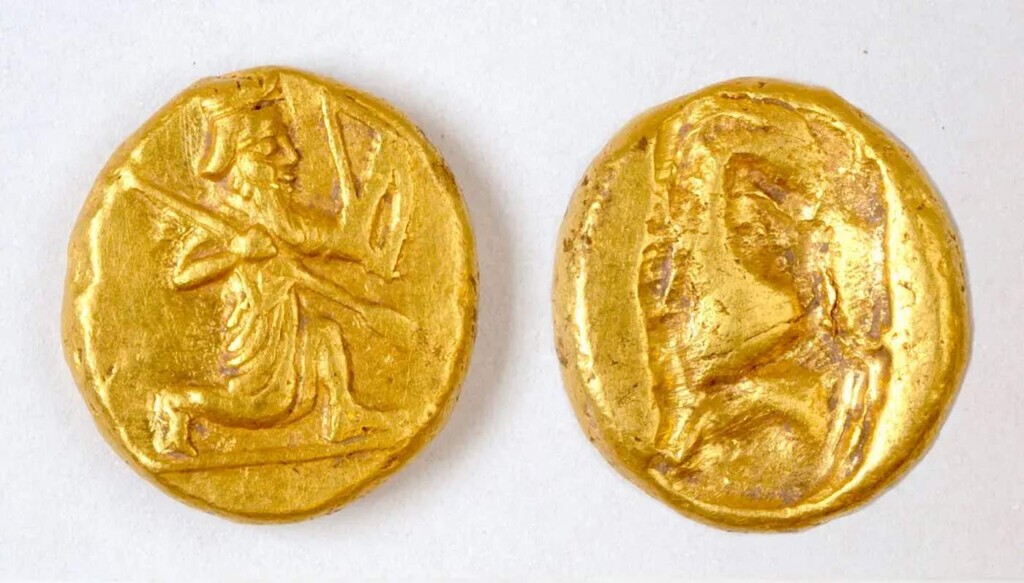
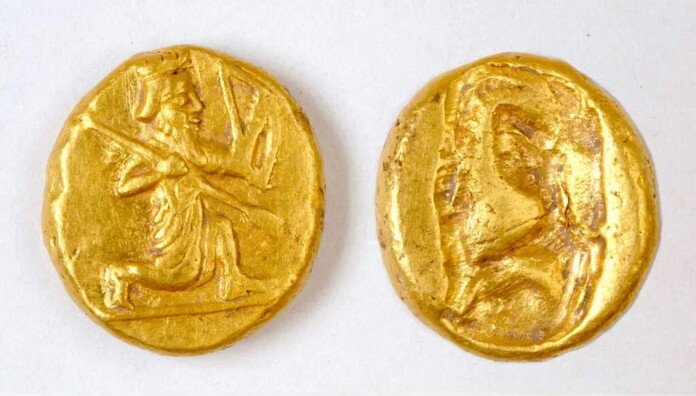
The Persian coins, called darics - credit, Notion Archaeological Project University of Michigan
The Persian coins, called darics – credit, Notion Archaeological Project University of Michigan

It’s one of the best things an archaeologist can hope to find: a hoard of gold coins. One was dug up recently in a terracotta pot, meaning that, if one sustains the pun, they found a pot of gold.

They didn’t find it at the end of a rainbow, however, but it was at the ‘end’ of something—Asia—as the Ancient Greeks would have considered it.

Excavations among the ruins of Notion, an ancient city-state in modern-day Turkey, turned up the foundations of a house dating to the Achaemenid Persian Empire buried under another house built from the Hellenistic Period, or about 180 years later.

“The coins were buried in a corner of the older building,” Dr. Christopher Ratté, lead archaeologist on the project, told the New York Times. “We weren’t actually looking for a pot of gold.”

The coins are known as darics, which stems from the name of the Emperor Darius I, or from ‘dari-‘ the root word for gold in the Persian language. Dating to the 5th century BCE, it was a time of great upheaval as Greek city-states fought against each other, against Persia, and sometimes on behalf of Persia against other Greeks, when mercenary soldiers made up key components of many major armies in Asia Minor.

The running hypothesis as to the coins’ provenance is that they were buried with the full intention of recovering them later. They probably represented savings, as each daric would be around one month’s pay. However, the fact that they were never dug up from their little hole in the corner of the house suggests the worst.

Greek soldiers shunned archery, so their share of the fighting was done at the tip of a spear. Furthermore, mercenary troops were even more likely to die than state troops, because the more of them that died during battle, the fewer people a ruler had to pay in the aftermath. As a result, they were often placed in the most precarious or dangerous positions on the battlefield.

“This is a find of the highest importance,” said Andrew Meadows, an archaeologist at the University of Oxford who was not involved in the project. “The archaeological context for the hoard will help us fine-tune the chronology of Achaemenid gold coinage.”

credit – Notion Archaeological Project/University of Michigan

Ancient timekeepers

Coins, or more specifically the designs stamped into them, are one of the great chronometers of ages past, and are routinely used to place the birth and decline of empires and states that used their own calendars onto our own measurements of time.

They also demonstrate what the most important elements of symbolism for the rulers of a state were. In his book Empires of the Steppes, author and numismatist Kenneth Harl routinely uses the images on minted coins as a way of judging whether a particular conquering band of Central Asian nomads sought to integrate themselves into the cultures they conquered or remain true to their nomadic heritage.

HIDING UNDERNEATH OUR FEET:

Is the king depicted with a sword or a bow? Is he wearing a crown or a felt cap? Are they stamped with agricultural imagery or hunting scenes? The answers can offer critical clues to historians as to how a civilization’s rulers saw themselves and wanted themselves to be seen by others.

In the case of the gold darics, they depict Darius I, the third emperor of the Persians (referred to by his subjects as the ‘shopkeeper’) kneeling and holding a bow and a spear.

Darics are very rare among ancient coins owning to Alexander the Great’s orders to melt them all down and re-stamp them into ones bearing his image after he conquered the Achaemenid Empire.

SHARE This Great Discovery And Important History With Your Friends… 

12-year-old Girl Earns ‘Black Belt’ of Fishing, Becoming Master Angler of Maryland

Lucy Moore, 12, with a carp she caught. Lucy became the youngest person and only female to win Maryland’s Master Angler Award, and it only took a year. credit - Nick Perez, supplied to the media.
Lucy Moore, 12, with a carp she caught. Lucy became the youngest person and only female to win Maryland’s Master Angler Award, and it only took a year. credit – Nick Perez, supplied to the media.

A story coming from Maryland celebrates the depths of a young girl’s talents, as a 12-year-old fishing enthusiast received honors from the state.

Dubbed the “black belt of angling” Lucy Moore was awarded the Master Angler Award after a year of chasing rare catches with her dad.

Moore has been interested in fishing since age 3 when she earned the nickname the “Blue Gill Queen,” owing to an early childhood knack for catching the species. She loves exploring the outdoors and learning about the fish she’s chasing.

However, it’s much more than a recreational pursuit for her, and she’s darn good at it.

Reporting on Moore’s award, the Washington Post recounts a story of a fishing trip in the rain and fog on a lake in Kentucky as the girl and her father, Nick Perez, sought a rare and peculiar fish called a Musky.

On the last of 3 days of fishing, in the rain and muck, a tug on her line led Moore to reel in a 24-inch, or “trophy size” musky, one of the 60 different species one can seek to catch to become certified as a Master Angler in the state of Maryland.

“It was all that hard work: We’re talking almost 30 hours of fishing for that one fish and she was the one to catch it, which made it extra special,” Perez told the Post. “There’s guys I know that are 60 years old who have never caught one. And at the time she was almost 9.”

The FishMaryland program from the Maryland Department of Natural Resources manages the Master Angler certification as a way of celebrating the freshwater diversity of Maryland’s rivers, streams, and lakes. To earn the award, one must catch a trophy-size fish of 10 different species.

“Typically, people focus on two or three species and she’s got 10 that are all trophy size so it’s doubly impressive,” said Erik Zlokovitz, the recreational fisheries outreach coordinator for the Department of Natural Resources, who described the Master Angler Award as the “black belt” of fishing. “She’s probably outfishing many adults that are older and more experienced. It’s definitely more species of fish than I’ve caught over the past few years.”

INSPIRE YOUR KIDS: West Virginia Boy Celebrates Perfect Attendance from Kindergarten Through High School Graduation

Her award was presented during a ceremony at Bass Pro Shops, the beloved American outdoors outlet that presented Moore with custom fishing gear, a $250 gift card, and an opportunity to feed the fish in the tank—something she especially enjoyed owing to her desire to become a marine biologist.

She is an official advocate at Kids Can Fish, a non-profit founded by another young girl who believed it should be encouraged more among children.

MORE CHILD PRODIGIES: Look Out World: 12-year-old ‘Prodigy’ Finishes High School and Heads to College for Double Major

Driven in everything she does, Perez says, the honor roll student has already scoped out top marine biology programs in the US, and has her eyes set on the University of Miami.

SHARE The Story Of This Incredibly Talented And Driven Girl…

“When facts change, I change my mind. What do you do?” – John Maynard Keynes

Abdulla Faiz, CC license

Quote of the Day: “When facts change, I change my mind. What do you do?” – John Maynard Keynes

Photo by: Abdulla Faiz (CC license)

With a new inspirational quote every day, atop the perfect photo—collected and archived on our Quote of the Day page—why not bookmark GNN.org for a daily uplift?

Abdulla Faiz, CC license

4th Generation Farmer Helps Youth Flunking Out of School to Grow and Sell Food for Disadvantaged in Minnesota

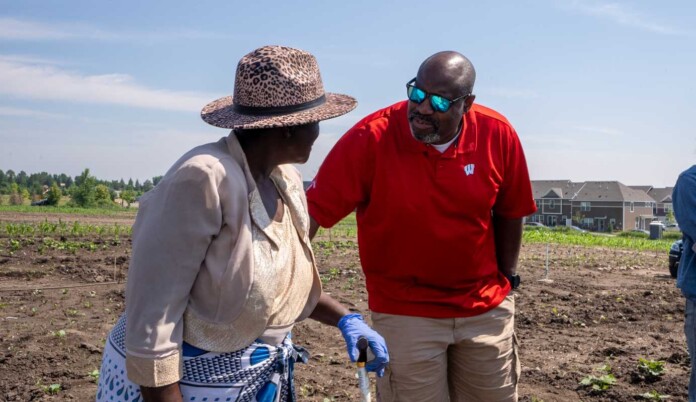
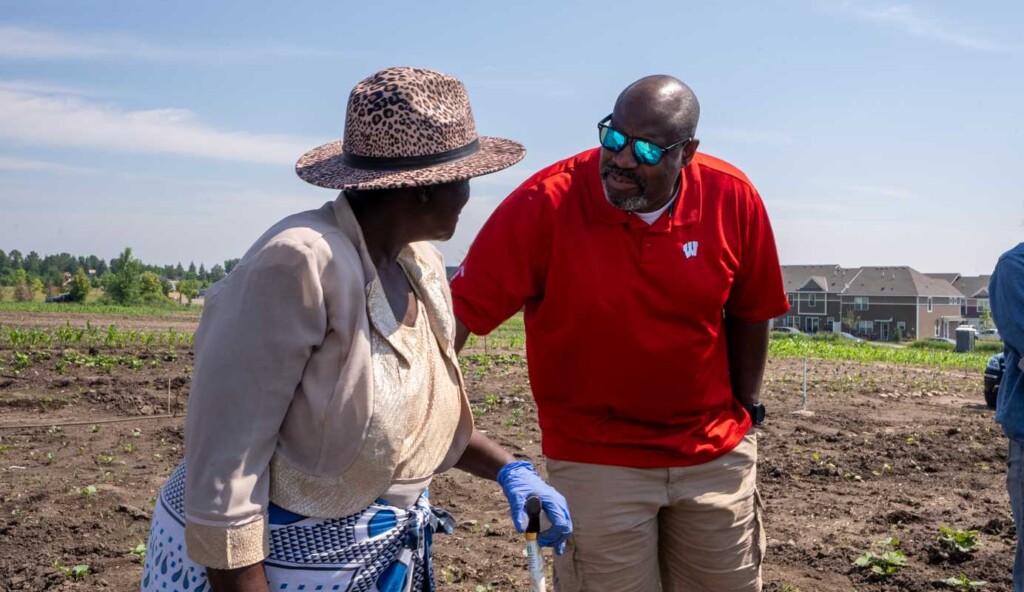
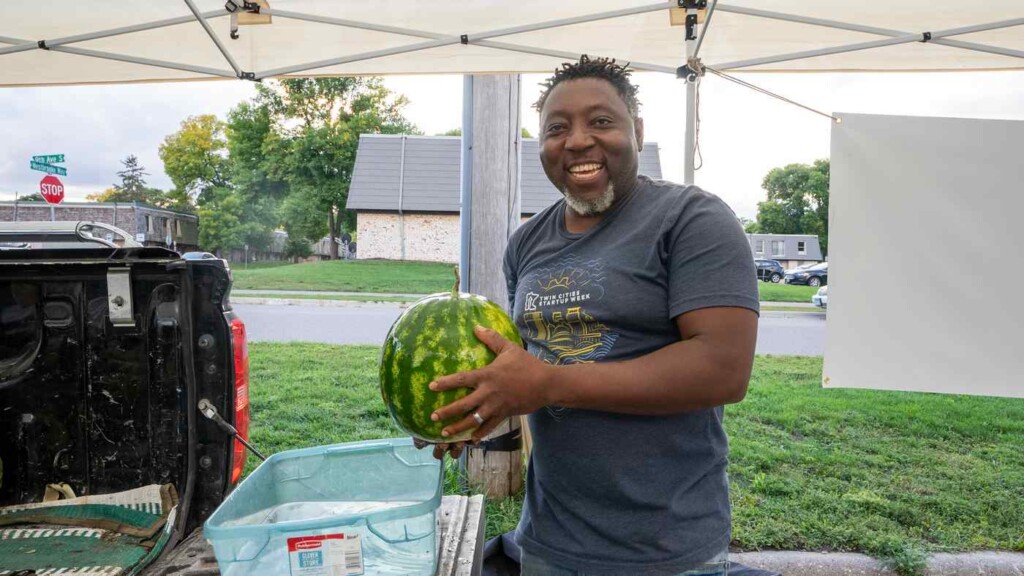
Marcus Carpenter, the founder of Route 1, stands alongside a farmer in Medina, Minnesota.

A fourth-generation Black American farmer is bringing 21st-century agriculture into the lives of youth from marginalized communities, teaching them how to grow and sell nutritious food to the people who need it.

Marcus Carpenter is the founder of Route 1, an organization that focuses on introducing farming to people, and farmers to the people, through a variety of educational and business programs with a focus on addressing the challenges facing the poorest communities in Minnesota.

Carpenter grew up on 180 acres of farmland in Arkansas, bought by his great-grandmother Sally in 1914, who worked the land down a dirt road in a country house with 13 children.

Route 1 was the name of that old dirt road, but its approach to agriculture is anything but old.

The programs and facilities include the “Freight Farm” where hydroponic gardens grow a variety of food inside shipping containers equivalent to 4 acres of farmland. It includes the Emerging Farmers Institute, offering intensive virtual coursework on the fundamentals of farming, while also including sessions aimed at tackling the most commonly faced mental stressors of working in agriculture.

Additionally, Route 1 offers the Seeds to Success Youth Academy, where youth struggling in school can pursue agricultural excellence.

Local farmer Vitalis Tita of Better Greens LLC at the Route 1 Farmers Market in summer 2023.

One such success story is Anthony Rasmussen—born into a low-income family, and raised by a single mom. Route 1 had made itself known inside the school district, and Rasmussen was enrolled in the academy.

He was part of the team that helped grow part of the 7,000 lbs of produce that Route 1 recently delivered to two local community organizations.

This experience sparked Rasmussen’s interest in pursuing a career in agriculture. He realized that farming is not just about being outdoors, which he loves, but also about helping people and making a difference.

HELPING CLOSE THE HUNGER GAP: Farmers Markets Thriving Since Pandemic as Shoppers and Venders Form Unbreakable Ritual

In Minnesota, 1 in 15 people experience food insecurity. The situation is worse for communities of color, with Black residents facing a staggering rate of 1 in 4. The Seeds to Success program wraps up on August 14th; most of the 7 students in the program come from these disadvantaged backgrounds.

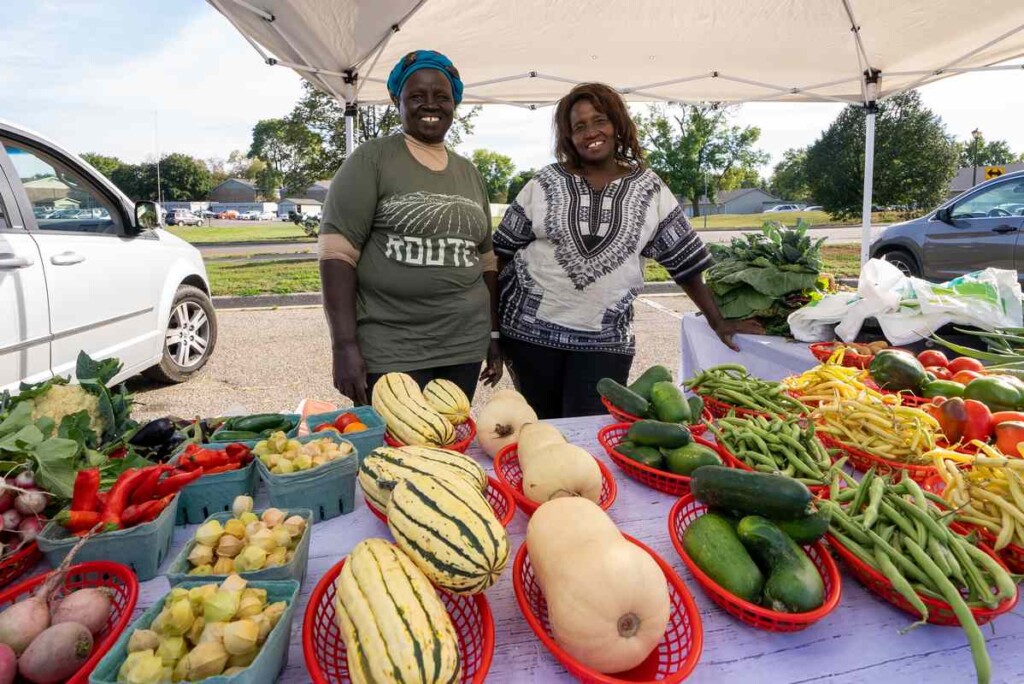
Callin Bosire and Jane Onchiri from Lisaviole Organic Farm, at the Route 1 Farmers Market in the summer of 2023.

Addressing this, Carpenter has incorporated a small variety of African crops that can tolerate Minnesota’s soil and weather, adding a cultural component that he believes helps drive home the point that working the land and reaping the rewards is the birthright and benefit of all mankind.

MORE INITIATIVES LIKE THIS: African Forest Farming Initiative Making A Difference to Thousands with Tree-Planting and Microlending

Route 1 also diligently supports a new sustainable business model known as “community-supported agriculture,” or CSA, by helping farmers in the Route 1 network access local businesses like restaurants and large-scale cafeterias to sell their produce.

SHARE This Innovative Approach To Ending Food Security In Minnesota…

The Most Active Meteor Shower of the Year Arrives in Just 5 Days

By Bill Dickinson, CC license
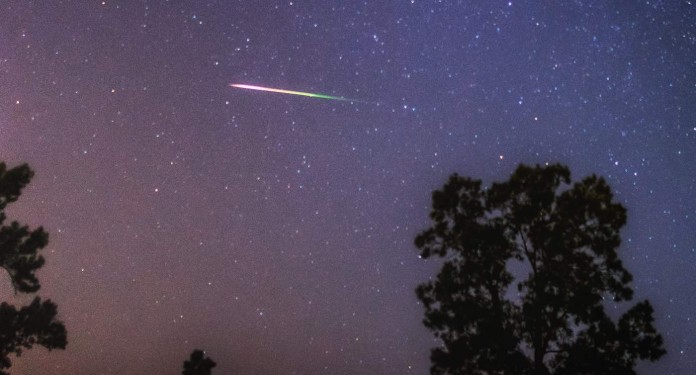
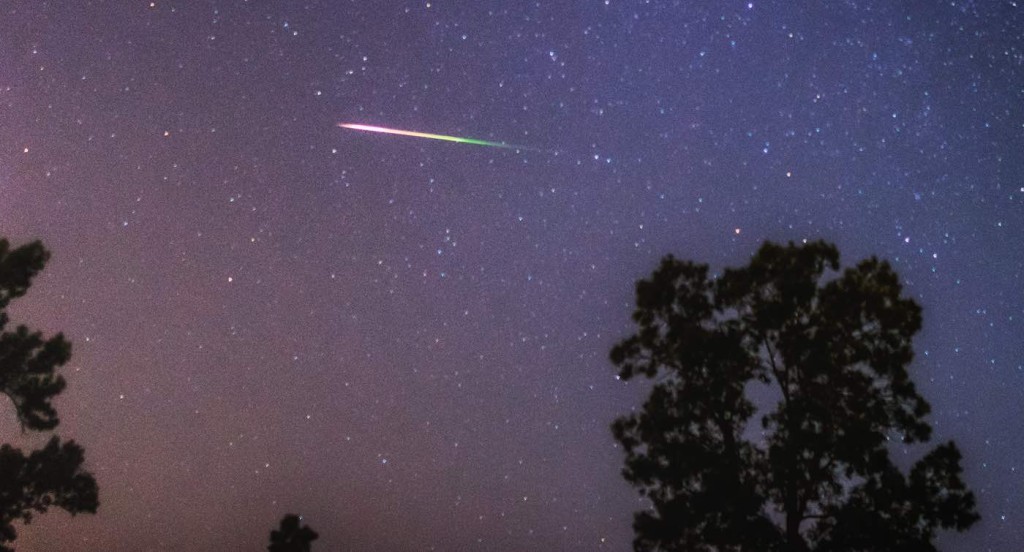
The Perseid Meteor Shower By Bill Dickinson, CC license

The most prolific meteor shower of the year will be at its peak on the morning of August 12th, when 150 shooting stars can be seen per hour in the Northern Hemisphere.

The meteors are called the Perseids because they appear from the general direction of the constellation Perseus, but in more modern times have shifted to radiate on the border between Cassiopeia and Camelopardalis.

According to Valerie at Space Tourism Guide, the Perseids Meteor Shower is caused when the Earth passes through a stream of debris left by the Comet 109P/Swift-Tuttle.

Special conditions permit us to see the debris every August, even though the comet has a 133-year orbit around the Earth.

In a slight case of misfortune, there will be a quarter Moon in the sky that night, meaning in already light-polluted areas with few stars in the sky, the Moon will make it slightly more difficult to see the meteorites.

However if one can position themselves in a rural-enough area with dark skies and plenty of visible stars, our solitary satellite won’t dampen the meteor shower too much at all. In fact, it might even make for a spectacular image.

There are a few other additional events in the night sky this month, such as a close approach of the Moon and Mars on August 27th. They will appear just 5° apart, and both be present in the skies surrounding the constellation Taurus.

For those interested in learning more about their cosmic environment, or as a great crash course for little ones on how to find the Red Planet in the sky, this is a great opportunity.

On the YouTube channel Learn the Sky, there’s a great guide for how to find Taurus in the night sky. Convenient to this article, it’s just under Perseus where the meteor shower will arrive from this month. Also included in the Taurus sector is a famous deep-space object known from ancient times called the Pleides, also known as the Seven Sisters.

SHARE This Great Stargazing Opportunity With Your Friends On Social Media… 

Macgyver-Minded Officer Saves Toddler from Bottom of 10-ft Hole with Makeshift Catchpole –WATCH

Moundridge Police Department

From Kansas comes the story of a quick-thinking rescue that hauled a 14-month-old toddler from a would-be tomb at the bottom of a drain pipe.

The terrifying ordeal was caught on camera and saw a Moundridge Police Department officer build on the spot a makeshift catchpole typically used for pulling varmints out of hard-to-reach places.

Secured under his shoulders, the loop of rope at the end of the catchpole was able to haul the boy, named Bently, out from where he was trapped 10 feet down a section of 12-inch-wide PVC pipe that had been buried vertically.

In certain fits of frustration, it’s entirely possible, especially in the South, that a parent should refer to a rambunctious and recalcitrant 2-year-old as a varmint. Fortunately for Bently, he was still the size of a varmint, and so the varmint-catching tech proved lifesaving.

The parents said they called 911 just before 2 p.m. when they realized Bently had fallen into the PVC hole.

“Looking down at him as he was screaming, he wanted out of there, he wanted help and you can’t do anything. Just complete helplessness,” Blake, the boy’s father, told the local news station covering the rescue. “It’s horrifying, it’s haunting, to feel so helpless knowing that your child is in serious need of help.”

When police, fire department, and EMS arrived at the family’s home in Moundridge, about 40 miles northwest of Wichita, Officer Ronnie Wagner had an idea. He obtained a long thin section of PVC from the paramedics, threaded a rope through the length of it, and tied a knot on one side.

GOD BLESS OUR FIRST RESPONDERS: 

He was making a tool typically used by animal control officers and thought it would serve the same purpose here.

In dramatic footage of the rescue, the officers can be seen negotiating the loop of rope at the end of the pole around the boy before gently lifting him to safety after a 15 to 20-minute ordeal.

“We are relieved to report that the child, while understandably shaken, was unharmed,” the department said. Police thanked “all the first responders for their swift and effective action, which transformed a dangerous situation into a successful rescue.”

WATCH the rescue below… 

SHARE This Dramatic Rescue With Your Friends On Social Media… 

Adorable Dutch Webcam of Rescued Seals Is a Big Hit in Japan (WATCH)

Zeehonden Centrum Pieterburen - released.
Zeehonden Centrum Pieterburen – released.

This year, GNN has featured a variety of stories showing how viral posts on social media do a world of good, all around the world.

Yet another entry in the series comes now from the Netherlands, where a 24-hour live stream of a seal rehab center went viral on social media 8 time zones away in Japan.

The Zeehonden Center in Pieterburen is one of the premier seal hospitals in Northern Europe. They take in sick or injured seals, and handle them in such a way as to maximize the chances of preserving their wild instincts.

This includes rehabilitation from injuries, and fit to purpose, the center has a large pool for young seals to swim in safely. The center set up a 24-hour live stream—a recently popularized tool in the zookeeper and conservationists toolkit to help with outreach and education.

Last Thursday, the Japanese X account @hokahoka_times shared the livestream of the Pieterburen Seal Center with the text: “Let’s all watch a seal sanctuary in the Netherlands for 24 hours.”

That message has now been shared 30,000 times and reached 14 million people.

On the first day, hundreds of additional viewers tuned into the live stream, and donations flooded into the recuse center.

“It was convenient that the seals were just fed, so that viewers in Japan could see that their donations were going well,” says Marco Boshoven, spokesperson for the Seal Center, in a translated statement.

THINK SOCIAL MEDIA IS A NET NEGATIVE?

Boshoven told Nu.nl that the center received in a single day as many donations as they typically receive in a month, so the digital outreach team got to work trying to cater to the Japanese, who by the next day were arriving digitally to watch the seals by the thousands.

“We are answering their questions via a translation program, so there’s an educational side to it as well,” Boshoven said.

As with many viral events on social media, the popularity of the seals took on a life of its own, with some visual artists quickly sketching up some fan art of the seals.

Boshoven learned that the Japanese affectionately refer to seals in their country as “tea leaves.”

“One of the people we spoke to told me a tea leaf floating upright in the water is a symbol of good fortune.”

“When seals are upright in the water they look a bit like that,” he said, explaining the connection.

HERE’s the live stream…
SHARE The Story Of This Amazing Cultural Confluence Centered On Seals…

“Adventure is worthwhile.” – Aesop

Quote of the Day: “Adventure is worthwhile.” – Aesop

Photo by: Jairph

With a new inspirational quote every day, atop the perfect photo—collected and archived on our Quote of the Day page—why not bookmark GNN.org for a daily uplift?

K9 Sniffers in Oklahoma Use Their Nose to Convict Child Predators

The Franklin County Sheriff’s Office – Internet Crimes Against Children Task Force

A doctor who treats children in Ecuador is currently facing a 30-year prison sentence for creating explicit content involving minors—and his prosecution is thanks to Rosco, the electronic sniffer dog.

Not a robotic dog, but a dog trained to detect the chemicals applied onto the surfaces of data storage devices, even SD cards no larger than a pinky nail.

Rosco hails from Rogers County Oklahoma, where he and his partner Lieutenant John Haning work in the Internet Crimes Against Children Task Force.

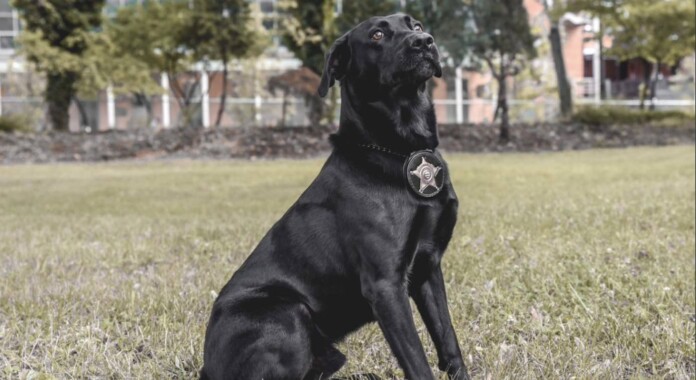
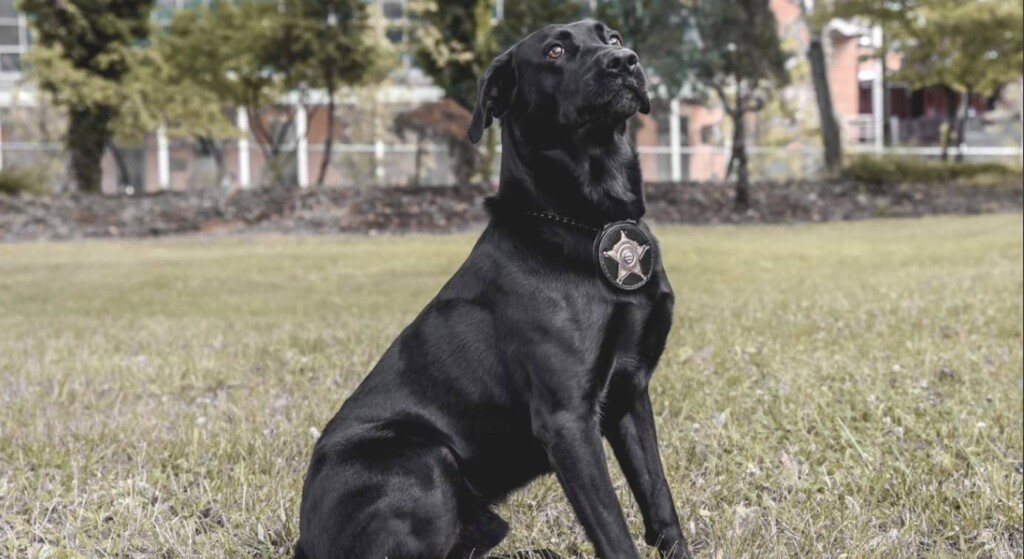
Another K9 in the task force, a black Labrador named Ruger, last year sniffed out a laptop loaded with evidence hidden under the cushion of a sofa.

“If you overlook one cell phone, one computer, micro-SD card, or one hidden camera somewhere in the room, that could lead to another victim or that could lead us to put this perpetrator away for a long period of time,” said Haning.

While typically handling cases in the US, their reputation for success has earned them calls to catch child predators internationally. In the Ecuador case, they were asked to join a big police raid, and Officer Haning told local news that whenever called upon, they answer.

“When they called up and said ‘Hey we need your help.’ We have a high-profile doctor in Ecuador who’s hands-on in creating content that he’s sharing on the internet internationally,’ We jumped at it,” Haning told KJRH News.

After police kicked down the doors, Rosco and Haning followed up looking for any hidden storage devices.

OTHER POWERFUL NOSES: K9 Officer Rescues Lost Non-Verbal Child by Following the Boy’s Scent in Reverse to Find His Home

Then, Rosco’s secondary training—being a support dog—kicked in.

A 15-year-old girl with special needs was present in the house, and was completely out of control and crying. Suddenly, a big blonde pooch walked over to comfort her and the girl calmed down almost immediately.

OTHER CANINE HEROES: Dog Named Hero Saves Owner’s Life for Days, Fighting Off Cold and Coyotes and Getting Help

Rosco also provides comfort to Haning and his fellow officers who admit they’re forced to deal with really ‘heavy’ work. So, when the 80-pound blondie wants to get in their laps, it lightens their loads, too.

It’s a story that reinforces the notion that not all heroes wear capes, as well as introduces the notion that among those heroes who don’t wear capes, some don’t even need to catch bad guys—they just need to sniff out a motherboard.

SHARE The Story Of These Heroic Hounds And Their Ability To Gather Evidence… 

Chinese Doctor Removes Patient’s Lung Tumor Using Robot from 3,000 Miles Away

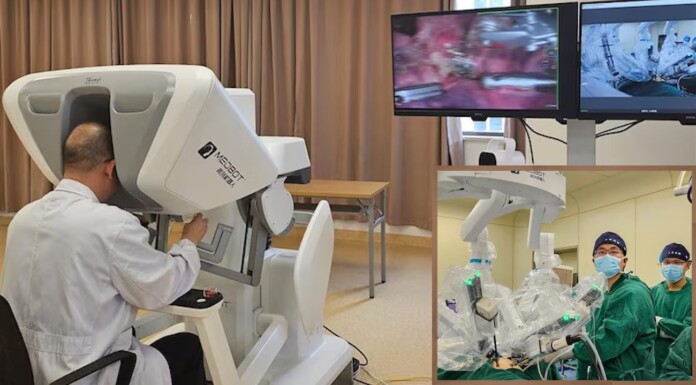
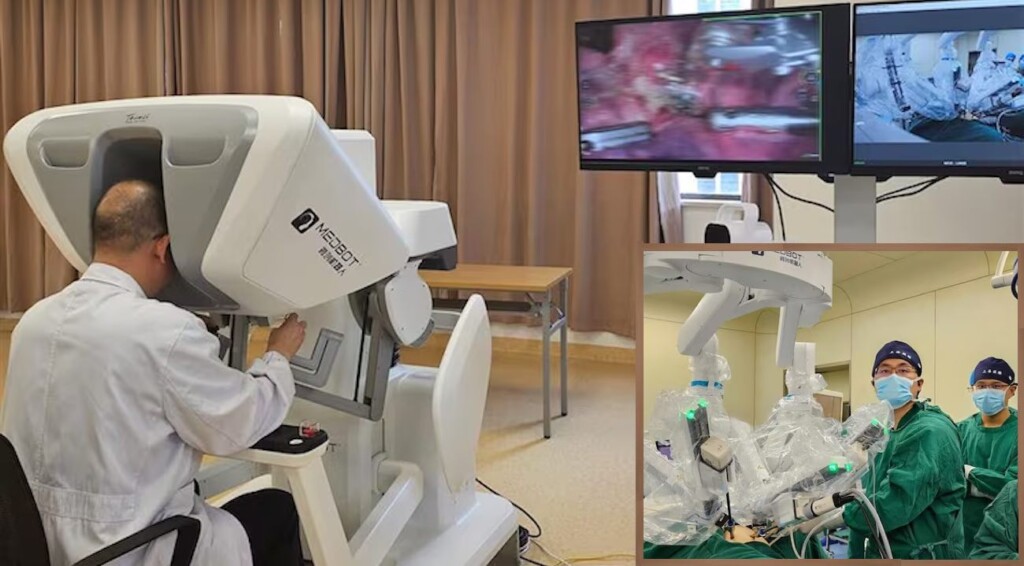
Dr. Luo Qingquan performs remote surgery using robotics – Shanghai Chest Hospital

Is the above image the future of medicine? In it, Dr. Luo Qingquan uses a sophisticated control center to guide a set of robotic surgery tools to remove a tumor from a patient’s lung 3,000 miles away.

Dr. Luo was seated in the Shanghai Chest Hospital on China’s Pacific Coast, while the patient was anesthetized on a bed inside a hospital in Kashgar, Xinjiang Autonomous Region.

The Chinese-made 5G Medbot allowed Luo to transmit his precision and decades of experience instantaneously across three time zones, ushering in an era of telesurgery that may save thousands in rural areas where lack of expert medical staff may have been a death sentence in previous years.

According to Shanghai Daily, the Shanghai Chest Hospital is the nation’s first medical facility carrying out robot-assisted surgery, and it is also the facility carrying out the largest quantity of such surgeries in China.

The global shortage of specialist surgeons is a major impediment to medical advancements in low and middle-income countries. With just over 1.1 million surgeons, but only half as many anesthesiologists, there really are shortages in high-income countries as well, but one review from the Lancet calculated that for every 100,000 people in low and middle-income countries, there are just 0.7 specialist surgeons, compared to 5.5 in high-income countries.

48% of the world’s population enjoys the service of just 20% of the global surgical workforce, the paper continues.

MORE MEDICAL MIRACLES:

It takes over a decade to become a trained surgeon, but a robot can be shipped and installed in just a few months, allowing surgeons in richer countries to perform certain surgeries in poorer countries, or surgeons in richer areas to perform operations in poorer areas in the same country. In either case it’s a truly revolutionary development.

SHARE This Absolutely Mindblowing Medical Advancement…