










All News - Page 181 of 1715 - Good News Network
Home Blog Page 181

South Sudan’s Epic Effort to Protect the World’s Little-Known Largest Mammal Migration

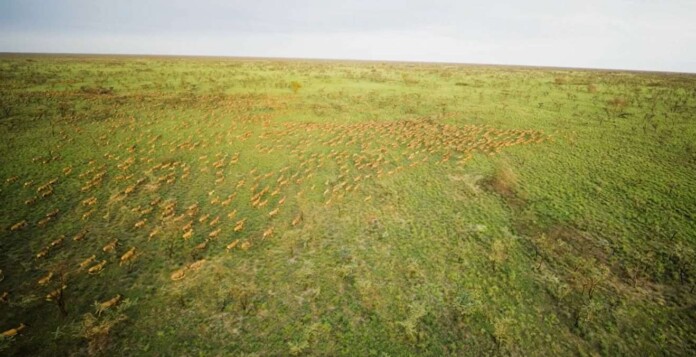
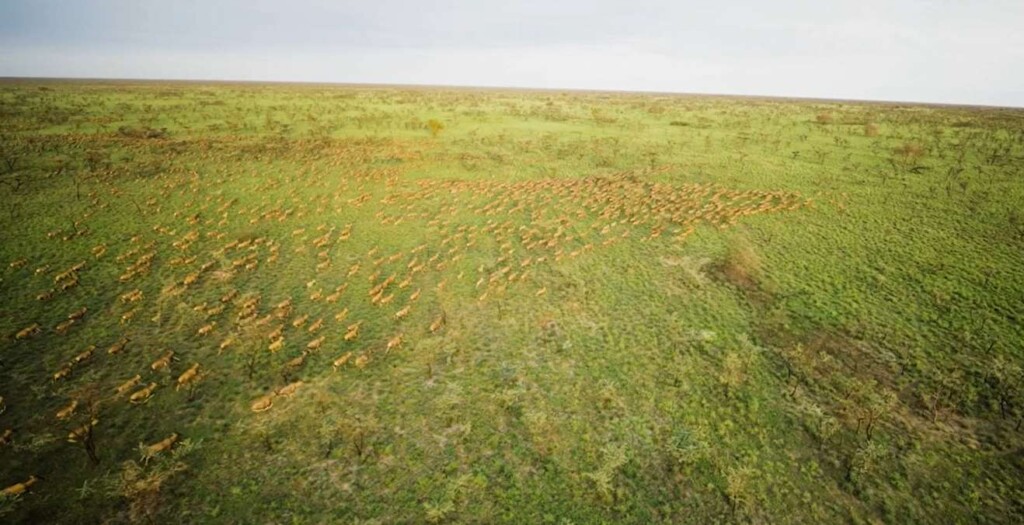
Antelope migrating across South Sudan in the dry season - credit African Parks, screengrab.
Antelope migrating across South Sudan in the dry season – credit African Parks, screengrab.

“The greatest conservation opportunity on the planet,” isn’t in the Amazon, the Andes, Australia, or anywhere else you’d likely imagine. It’s in South Sudan.

In a story that truly demonstrates how much there is left to explore in the world, the world’s largest migration of land mammals is now understood to take place in South Sudan, and the government, with the help of African Parks, is rushing to protect it.

Ecologists have long known the migration through South Sudan’s “No Man’s Land” exists, but didn’t really understand how it worked, or the scope of it. Unlike the caribou migrations across Canada, or the wildebeest migrations in Kenya’s Mara grasslands, No Man’s Land is filled with all manner of migrating species, including Mongalla gazelle, bohor reedbuck, white-eared kob, and tiang—all of which are antelope species.

Believing that the protection of these migration routes and the 6 million animals they play host to are the most significant opportunities for conservation anywhere on Earth, African Parks and the government of the Republic of South Sudan signed a 10-year agreement for the management of the No Man’s Land, currently located within Boma National Park and Bandingilo National Park, totaling 12,700 square miles, or four times the size of Yellowstone.

The 20-year civil war between what is now Sudan and South Sudan seems, according to African Parks, to have steered entirely clear of this massive area.

To start management and implement modern protections, African Parks, a non-profit that manages national parks for conservation across Africa, including in conflict zones, embarked on the largest GPS collaring survey of large animals ever undertaken, including 12 species at 126 GPS trackers.

Together with aerial surveys and assistance from members of the 17 different ethnic groups that live primitively in the areas, African Parks began to unravel the mystery of this massive movement of animals. The antelope moved in a wide circle, altering course to intercept any rainfall.

SIMILAR SUCCESS STORIES: Iberian Lynx Slinks Back From Brink of Extinction Within Just Two Decades of Conservation

“We flew for the first 30 to 40 minutes, and we didn’t see anything. I was like, ‘Oh, no, maybe it’s over. Maybe the wildlife has already disappeared,'” David Simpson, park manager for African Parks, told ABC News, sharing his insights from being aboard an aircraft for one of the surveys.

CHECK THIS OUT: Conservation Almost Always Provides Incredible Results, First-of-its-Kind Report Shows

“Then we get out there and we start hitting one, two, three, four. Then we start hitting hundreds and then we start hitting thousands, and then tens of thousands, then hundreds of thousands.”

MORE AFRICAN CONSERVATION: The First of 2,000 Privately Owned White Rhinos Get New Home – Rewilded by South African Conservancy

For the indigenous peoples, the migration is a symbol of abundance and balance in the natural world. They hunt, and so rely on the beasts for food, clothing, medicine, and shelter materials.

In order to help preserve their traditional life, African Parks has brought many of the people there on board to educate and work with them in their role in conserving the ecosystem for posterity.

WATCH the story below from African Parks… 

SHARE This Great News From Africa With Your Friends Who Love Wildlife… 

Pet Rats Driving Tiny Cars Light Up Instagram After Canadian Couple’s Adoption

Kronk the rat in his car - credit, @emperorsofmischief, instagram
Kronk the rat in his car – credit, @emperorsofmischief, instagram

Two Canadians are delighting animal lovers on Instagram with videos of their pet rats driving around in little cars.

While they were contemplating a dog, Kendal Crawford and Shaun Stephens-Whale ended up adopting two rats from the local animal shelter in their home in British Colombia. They recall being impressed upon by the ragged rescued rats’ curiosity with them, even from within their cage at the shelter.

Having at first decided to sleep on it, the couple didn’t even make it down the block before turning around and adopting ‘Kronk and Kuzko,’ and it took them less than a day to realize they made the correct choice—when after their baths the rats seemed to snuggle right up to the humans in their bed that night.

Like all social animals adapted to live in human society, domesticated rats are very smart, but they need stimulation to thrive. They began to teach them all manner of tricks and activities, with each one more impressive than the next.

While doing research, Crawford came across a certain study from the University of Richmond about how enriched environments affect stress responses in rats.

In it, scientists taught rats to drive tiny cars and found the experience of learning and acquiring mastery over a new skill decreased their stress hormones. Crawford’s father ended up providing Kuzku and Kronk with the two little electric cars, each with three levers to allow the rats to control their direction.

ALSO CHECK OUT: Man Takes His Turkey Everywhere: Inseparable Companions Even In the Pub and Sleeping at Home (Watch)

It took one day for the two rats to learn they could use the middle lever to go forward, and after a week, they also mastered turning the little car with the levers on the sides.

MORE ANIMAL STORIES LIKE THIS: Parrots Kept as Pets Were Taught to Video Call Each Other—and They Loved It

“Their ability to conceptualize where they are just as humans do when they’re driving is pretty incredible,” Shaun told BC TV News, after demonstrating how they could drive their way in random directions across the living room and park in front of a treat hanging from a string.

“I’m in awe,” Kendal adds. “Their experience of the world is so much deeper than we realize.”

WATCH them drive around below… 

SHARE This Bizarre Pair Of Cabby Rats With Your Friends… 

Pioneering Zero-Emissions Hydrogen Fuel-Cell-Powered Ship Successfully Tested in Japan

The Nippon Foundation - released
The Nippon Foundation – released

A consortium of Japanese firms has conducted successfully a demonstration of the first ever zero-emissions ship above 20 gross tons.

Sailing 30 kilometers between the Port of Kokura and the Shirashima Offshore Wind Farm, the HANARIA was powered entirely by hydrogen fuel cells.

An island nation, 10.25 million tons of carbon emissions from Japan’s transportation sector came from coastal shipping and transport. In 2015, former Prime Minister Yoshihide Suga outlined carbon neutrality by 2050 as a major component of Japan’s development strategy, in line with the Paris Climate Agreement, and major steps need to be taken to achieve that.

The Nippon Foundation, a research and development fund dedicated to passing the riches of the sea intact to future generations, worked in tandem with manufacturers and shipping operators to develop a suite of hydrogen-powered, zero-emission vessels for use in shipping and coastal transport.

Hydrogen is manufactured by using an electrical current to split water molecules into hydrogen and oxygen. The pure hydrogen can then be used as a substitute for heavy engine fuels like diesel and kerosene in a fuel-cell vehicle. If the hydrogen is manufactured with green energy, it’s known as ‘green hydrogen’.

A passenger ship, HANARIA spans 108 feet, (33 meters) weighs 248 gross tons, and is equipped with a hydrogen fuel system. She is expected to be used for transporting personnel to the offshore wind farm and for site tours.

JAPANESE TECHNOLOGICAL ADVANCES: Japan Moon Lander Comes Back to Life After Wonky Angle for its Solar Panel, but ‘Unprecedented Pinpoint Landing’

During the demonstration, she registered zero CO2 emissions using hydrogen fuel from her departure to her arrival and return.

A zero-emissions research or yachting ship to be tested in 2026 – The Nippon Foundation, released

“The realization of a hydrogen society requires not only technological development, but also city and social design, and we look forward to moving ahead with all parties involved,” said the project’s chief leader, Yoshihiko Hamamura, who also holds a post at the Toyota Motor Corporation’s Hydrogen Factory which supplied the hydrogen tanks for HANARIA. 

MORE HYDROGEN ADVANCES: World’s First Electric Aircraft Flight Powered by New Liquid Hydrogen–Flew for 3 Hours

The Nippon Foundation has been carrying out the Zero Emission Ships Project since January 2022. The project plans to test two other vessels by the end of fiscal year 2026, including a yacht and a hydrogen-powered tanker.

The executive director of the Nippon Foundation, Mitsuyuki Unno, said that they hope to help Japan lead the world to zero-emissions shipping.

SHARE This Great Green-Blue News With Your Friends… 

“The key to happiness is finding what you’re suited to do, and securing an opportunity to do it.” – John Dewey

woman scientist microscope research lab test-pubdomain National Cancer Institute
Screenshot

Quote of the Day: “The key to happiness is finding what you’re suited to do, and securing an opportunity to do it.” – John Dewey

Image by: National Cancer Institute

With a new inspirational quote every day, atop the perfect photo—collected and archived on our Quote of the Day page—why not bookmark GNN.org for a daily uplift?

woman scientist microscope research lab test-pubdomain National Cancer Institute

China’s Lunar Probe Returns World’s First Samples from Far Side of the Moon

credit - screengrab from a CCTV broadcast
credit – screengrab from a CCTV broadcast

China has become the first nation to gather samples from the Moon’s far side after the Chang’e-6 mission’s re-entry capsule touched down in Inner Mongolia yesterday.

Containing 4.4 pounds of rocks and dust—known officially as ‘regolith,’ the sample-return mission has been hailed as a milestone achievement by scientists who eagerly await what geological secrets the samples may hold.

The Chang’e-6 probe touched down on the Moon’s South Pole-Aitken Basin on June 1st. The lander module drilled for samples using a robotic arm and scoop, which were then stored in its hull where the ascent module took them back into space to rendezvous with the orbiter module.

Once onboard, the samples were shot back to Earth where they parachuted down onto the grass of the rural Siziwang Banner region of Inner Mongolia.

It followed five successful lunar missions (Chang’e 1 through 5) that included establishing a weather station on the Moon’s far side in Chang’e-4—the first time any craft had made it there, and a sample return mission from the polar region with Chang’e-5, which brought back the first Lunar samples since the Apollo missions.

“It’s a gold mine … a treasure chest,” James Head, a professor of planetary geosciences at Brown University, who was able to analyze regolith from the Chang’e-5 mission told CNN. “International scientists are totally excited about the mission.”

“This is a great achievement by China,” said Martin Barstow, a professor of astrophysics and space science at the University of Leicester. “Recovering any samples from the moon is difficult, but doing so from the far side, where communications are particularly difficult is a step taken by no other agency. A real technological feat.”

IS THERE LIFE ON MARS?: Ancient Lake Sediment on Mars Builds Excitement for Evidence of Life in the Perseverance Rover Samples

Scientists like Barstow and Head have several key interests in the samples. Since the Moon is tidally locked, the far side is never seen, but that doesn’t mean there’s nothing to see. In fact, the far side should contain a frozen record of the nature and character of the Moon and Earth during their earlier years.

Plate Tectonics have eliminated or obscured features and evidence of Earth’s earliest periods, but since there are no Plate Tectonics on the Moon, a continuous record from the beginning to the end should be found there.

WHAT THE LAST SAMPLES CONTAINED: China’s New Moon Rock Samples Contain Beautiful Crystal New to Geology

Additionally, the far side is covered with impact craters rather than the ‘maria,’ or frozen lava plains which cover the near side. The hope is that the South Pole-Aitken Basin should be able to tell scientists how many craters were formed during the Late Heavy Bombardment, a period lasting between 20 and 200 million years when the early Earth was under continuous pummeling by asteroids and even small planetesimals.

The chief interest in studying the Late Heavy Bombardment—a difficult task on Earth because of Plate Tectonics—is to see if it supports one theory of how life on Earth emerged: namely that water and other elements crucial for life were deposited during this period via the asteroids and failed planets colliding with our world.

FROM AN ASTEROID: Asteroid Sample Delivered Back to Earth in a ‘Brilliant Feat’–a Time Capsule of Ancient Solar System

Chang’e-6 is the last sample-return mission in the Chang’e mission series, with missions 7 and 8 slated for in-situ experiments destined to inform and assist a permanent Chinese robotic base on the Moon.

The Chinese space program has come on leaps and bounds in the last 6 years. Missions Chang’e 4 and 5, the latter being a sample return mission, were complete successes. Following Chang’e-5’s landing, but before the return of the samples, the CNSA became the only space program to see its first orbiter, first lander, and first rover sent to Mars all succeed on the first time of asking.

SHARE This Giant Leap For Mankind With Your Friends… 

Governor Issues Largest Ever Pardon of US Cannabis Convictions with 175K Marylanders Getting Clemency

Maryland Governor Wes Moore in 2016 - credit the IFLA, Flickr, CC 2.0.
Maryland Governor Wes Moore in 2016 – credit the IFLA, Flickr, CC 2.0.

Democratic Government Wes Moore recently ordered the largest mass pardon of petty and recreational cannabis convictions ever seen in a single state, with 175,000 criminal records and electronic dockets set to be updated.

It’s three-and-a-half-times larger than a similar pardon recently issued by the governor of Oregon.

The governor said the action couldn’t reverse the harm that decades of failed drug war policies have done, particularly to Black Marylanders, but that it instead represents the first of several actions on the road to a more just legal system.

For context, recreational cannabis use was legalized in the state in 2023 following a referendum in 2022 which passed with a two-thirds majority. For further context, Governor Moore’s order consists of pardons, which are different from expungement.

“We are taking actions that are intentional, that are sweeping and unapologetic, and this is the largest such action in our nation’s history,” said Moore in a press conference. “…[L]egalization does not turn back the clock on decades of harm that was caused by this war on drugs.”

“Well today, that ends,” Moore said.

ABC News reporting on the action heard from Heather Warnken, executive director of the University of Baltimore School of Law Center for Criminal Justice Reform, who described the pardons as “a win for thousands of Marylanders getting a fresh start to pursue education, employment, and other forms of economic opportunity without the stain of a criminal conviction.”

This is where the difference comes in, as a check on someone’s criminal record would still produce the cannabis charge—it would also come with a memo that this charge was pardoned, and the convict absolved.

RESTORING LIBERTY: Singapore’s 30-Year Ban on Cats in Government Housing is Lifted, Providing Millions of Felines with Citizenship

To expunge a charge is to erase it from the record entirely. Legally speaking, both should have the same effect on determining someone’s eligibility for education, employment, housing, or hunting opportunities.

Reporters also heard from Maryland Attorney General Anthony Brown, who concurred that the action was “long overdue.”

“As a nation, we have taken far too long to correct the injustices of a system that is supposed to be just for all,” he said.

MORE PARDON STORIES: Michigan Clears Criminal Records for Thousands of Low-Level, Nonviolent Offenders–‘Meaningful 2nd Chances’

America has almost arrived at the ultimate tipping point for the recreational use of cannabis, with 24 states plus the District of Colombia having already legalized it. President Biden recently issued full pardons to anyone charged in a federal court under the sentencing guidelines for the simple possession of cannabis, which was estimated to be around 7,500 convictions.

Additionally, he ordered the Dept. of Health and Human Services to compile a case for the reclassifying of cannabis from a Schedule 1 drug, such as heroin and cocaine, to a Schedule 3 drug, like testosterone and fortified Tylenol.

CELEBRATE The Newly-Gained Liberty Of These 175,000 People… 

Kindergarten Student Brings Audience to Tears Remembering Late Mom in Graduation Speech

credit - Justin Carter, released by the family
credit – Justin Carter, released by the family

There wasn’t a dry eye in the room when young Jaxon Carter delivered a speech as he graduated from Kindergarten, dedicating his hard work, good grades, and spelling bee victory to his deceased mother.

The 6-year-old lost his “beautiful mommy” Taryn Marie Gainey in an apartment fire in 2022, and was enrolled in a STEM-focused public Kindergarten just 2 months later.

Everything was new—life had taken an unhappy aspect of novelty, the school was new, and there were new faces, new rules, and new concepts to take on.

But Jaxon conquered it all, and as he neared the end of his time at New Dawn Academy, the boy was asked if he could deliver a short speech at the Academy’s Kindergarten graduation ceremony.

According to Justin Carter, Jaxon’s father, he worked on the speech with his grandmother in secret, and when the day of the ceremony arrived, it had turned into a full valedictory speech.

“When I started kindergarten at New Dawn Academy in August 2022, I was a little 5-year-old who had lost my beautiful mother a month before,” Jaxon said, taking a long breath after delivering that line.

KINDERGARTEN GRADS: When Five-year-old Missed His Graduation, Plane Passengers Give Special Midair Ceremony – (WATCH)

“I learned to play with other kids, read books, answer or ask questions like how or why, use correct grammar, and use my school tablet. My kindergarten year helped me grow braver, smarter, kind-hearted, and more grateful.”

He went on to thank his father, his teacher, and his grandparents.

OTHER INSPIRING KIDS: Teen Boy Translating Ancient Texts Turned a 4,000-Year-old Scribe From Egypt into Advice for Modern Age

“I dedicate my speech, good grades, all school awards, and my Kindergarten graduation to my beautiful mommy, who I will always love and miss so very much,” he said. “I know she will always be with me in my heart.”

The speech blew away all who heard it, and rapturous applause followed closely after.

WATCH the story below from GMA… 

TEAR-UP Your Friends’ Eyes By Sharing This Touching Tribute On Social Media…

New Tech Revives ‘Unusable’ Organs–10 Successful Transplants Used Kidneys That Are Normally Discarded

By 34Lives
By 34Lives

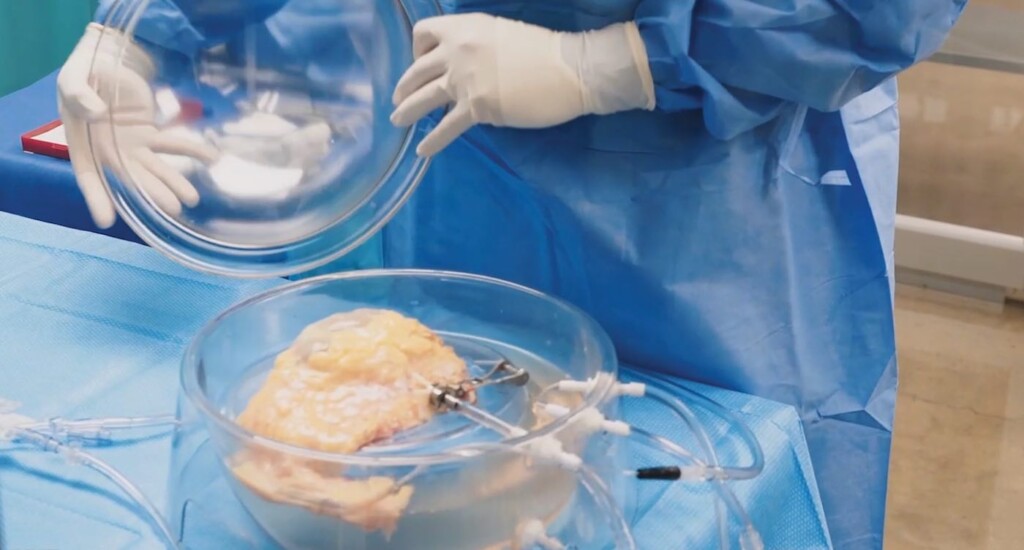
New technologies are often referred to as life-changing, but that phrase quite literally describes the work that 34 Lives is doing for those awaiting kidney transplants. The team’s innovative technology “revives” kidneys that might be otherwise rejected for consideration by transplant surgeons.

The team’s tenacious desire to save lives has resulted in ten successful kidney rescues and ten lives saved. And they’re just getting started.

More than 120,000 people in the US are waiting for a life-saving organ transplant and most of them are waiting for kidneys. When a patient joins the organ transplant waiting list, years can go by before a donor match is found. During this time, patients are often put on a grueling dialysis schedule and can become too sick to receive the transplant or die waiting. On average, 34 US lives are lost daily on the waitlist.

When the company considered where to plant its flag, West Lafayette, ten minutes from Pursue University, just made sense—Purdue has long supported groundbreaking startup companies like 34 Lives.

“We believe West Lafayette and the Purdue University ecosystem is the perfect fit for our startup,” said Jaynes. “Not only do we have access to world-class facilities and engineering talent, but we are able to merge our life-saving technology with Purdue’s aviation infrastructure. I can’t think of a better partnership.”

A giant leap in lifesaving tech

30% of kidneys recovered for transplant are discarded before they ever reach a recipient. These losses are not only devastating for those on the waitlist, but also for the families who hoped their loved ones could save a life.

“The whole mission around 34 Lives is centered around ensuring donated organs can save a life as it was intended,” said St. Jean. “To ensure we can save lives and honor the wishes of donors, we needed a holistic ecosystem to work from.”

A perfectly placed facility could change everything. That’s what 34 Lives found at Purdue Research Park.

Just minutes from Purdue University, the research park is one of the largest university-affiliated incubation complexes in the country and unites discovery and delivery. The flexibility of space in the research park meant the team could custom-build their own Organ Rescue Labs, two ORs where kidneys are revived and immediately sent out the door for transplant.

INNOVATIVE BIOTECH STARTUPS: Bioengineered Corneas Stand to Cure Blindness For Millions of People Around the World

The most critical piece of the kidney-saving puzzle is time. For every second that ticks by, kidneys become less and less viable and surgeons become more and more unwilling to risk a patient’s life.

When kidneys are transported to hospitals on commercial airlines, problems quickly arise. Flights can be delayed or missed. Coolers may be overlooked in cargo areas. Transportation time to distant hospitals can quickly run out the clock—an acceptable “out of body” time is approximately 24 hours.

For 34 Lives, the additional time it would take to transport a kidney from Chicago or Indianapolis airports could mean the difference between the kidney being recoverable or not. In fact, St. Jean confirms that if the team hadn’t had access to Purdue’s regional airport, their fifth successful kidney transplant wouldn’t have happened.

MORE NEWS LIKE THIS: Believe it or Not, Leprosy Offers the Potential to Regenerate Livers – Cutting Transplant Wait Times

Opportunities for first-class collaboration continue to expand with more high-tech companies taking note. For companies like 34 Lives and their patients, that connected ecosystem is everything.

With every kidney revived and every life saved, 34 Lives brings us closer to a future where no patient dies waiting for a transplant. The partnership with Purdue University exemplifies the power of collaboration and shared purpose, proving that when brilliant minds come together, world-changing solutions can become reality.

SHARE This Incredible Collaborative Work Improving Transplant Results… 

“No way of knowing which way it’s going. Hope for the best, expect the worst.” – Mel Brooks

Quote of the Day: “No way of knowing which way it’s going. Hope for the best, expect the worst.” – Mel Brooks

Image by: Jeremy Bishop

With a new inspirational quote every day, atop the perfect photo—collected and archived on our Quote of the Day page—why not bookmark GNN.org for a daily uplift?

Woman Discovers Thrift Store Vase She Bought for $4 is Made by Ancient Mayans and Volunteers to Give it Back

Courtesy of Mexico's ambassador to the US Esteban Moctezuma Barragán
Courtesy of Mexico’s ambassador to the US Esteban Moctezuma Barragán

Anything could have happened to the vase as it sat on a shelf in Anne Lee Dozier’s Washington D.C. home.

A cat, dog, or any one of her three boys could have elbowed it onto the floor while roughhousing, and instead of ending up at Mexico’s National Museum of Anthropology and History, the thrift store vase which was actually made by Mayan potters over 1,200 years ago would have been forever lost.

Backing up, the story began in 2019 when Dozier, who worked in Latin America for a human rights advocacy group, saw a decorative and old vase on the clearance shelf at the 2A Thrift Store in Clinton, Maryland.

Considering it would be “a nice little thing” to remind her of Mexico, and with a price tag of just $4.00, there was no reason to pass it by. Dozier thought the vase might have been decades old, but after a visit to Mexico City five years later, she noticed that the vases at the National Museum were strikingly similar to the one she had on her mantle at home, so much so that she asked a museum official.

The official recommended that she contact the embassy in Washington on her return, which she did. After examining the pictures, the embassy wrote back.

“I got an email saying, ‘Congratulations—it’s real and we would like it back,’” Dozier told the Guardian.

YOU MAY ALSO LIKE: Man Discovers Attic Filled with Looted Art from Battle of Okinawa–Works with FBI to Repatriate it All to Preserve History

“I am thrilled to have played a part in it’s repatriation story. I would like it to go back to its rightful place and to where it belongs,” she said, this time to WUSA, a CBS affiliate. “But I also want it out of my home because I have three little boys and I [would] have been petrified [if] after two thousand years I would be the one to wreck it!”

MORE THRIFT STORE FINDS: A Thrift Store Shopper Joked She’d Found a Famous Artist’s Work for $4 – and Actually She Really Had

Mexico’s ambassador to the US, Esteban Moctezuma Barragán, estimates that the case dates to between the 2nd and 8th centuries CE, dating to the Classical Mayan period when their civilization was at its zenith.

Anne Lee Dozier, middle, stands next to Mexico’s ambassador to the US, Esteban Moctezuma Barragán, right, at a ceremony during which Dozier returned an ancient Maya vase to Mexico. Photograph: Courtesy of Mexico’s ambassador to the US Esteban Moctezuma Barragán

“It’s really important to recognize that some of these things, especially with such historical and cultural value to an entire country and people—you can’t really put a number on that,” said Dozier, adding that the feeling of playing a part in a nation’s cultural heritage was worth more than any amount she could have gotten at auction.

CELEBRATE The Honesty And Integrity Of Dozier On Social Media…

Tongue-Zapping Device Can Rewire Your Brain to Ignore Tinnitus

credit Brian Fligor, released to NPR

20 million Americans who suffer from tinnitus may have an over-the-counter option available to them, one which improved symptoms in 84% of users.

It may seem strange, but a small device that zaps your tongue with electricity whilst playing white noise through headphones is able to refocus the brain away from the ringing in one’s ears, diminishing its effect on their lives.

The device is called Lenire, and though it costs $4,000 and most insurance won’t cover it, multiple clinical trials bear witness to its efficacy.

It’s already approved by the FDA and is being used by clinicians. Few data exist to demonstrate its long-term, continuous viability as a treatment, but early results are impressive, with 80% of users of Lenire reporting they’d recommend it to a friend, according to NPR.

“It’s not a cure, what Lenire is is a significant step forward in terms of the standards of care,” said Ross O’Neil, founder of Neuromode Devices that invented Lenire. “It’s the first and only one that’s been approved by the FDA on the basis of clinical data.”

ALSO CHECK OUT: Red Light Therapy Could Improve Your Eyesight After it Declines Due to Age

The device works by shifting the attention of the brain away from the ringing in one’s ears, described by audiologist Brian Fligor, a consultant on the development phase of Lenire, as moving the ‘spotlight’ on a stage from one actor to another.

Users rarely report the ringing in their ears disappearing entirely, but NPR reports that it allowed one working musician—a singer-songwriter named Victoria Banks—to get back to singing, writing, and performing.

MORE TINNITUS TREATMENTS: ‘Life-Changing’ New Treatment to Stop Tinnitus Developed After 20 Years Searching for a Cure

Fligor said the device isn’t so much a ‘cure-all’ but rather a ‘go-to’ for anyone, especially older patients, who come to him seeking relief. A full session includes 12 weeks with 1 hour of usage per day, and Banks told NPR that a refresher session can help suppress returning symptoms.

WATCH the story below from Reuters… 

SHARE This Potential Life-Changing Treatment Option With Your Friends… 

Fishermen Pull Off Dramatic Rescue of 38 Dogs Treading Water with No Shore in Sight

Courtesy of Bob Gist

What started out as a nice weekend fishing trip turned into a massive rescue operation for two colleagues at State Farm Insurance for a pack of hunting dogs that almost drowned in a Mississippi lake.

Bob Gist, 61, and his friend had hired a local bass fishing guide named Jordan Chrestman to take them out on Granada Lake, and after a morning without much action, they decided to change spots. That’s when they heard the barking.

Casting their lines, the pair, along with Gist’s friend Brad Carlisle, deduced that some hounds had chased a deer into the lake which was paddling along at a good clip, with the dogs unable to keep pace.

Eventually, Chrestman noticed that the dogs were still there, treading water and barking, and asked Gist if he could take time out of the fishing trip to investigate.

When their bass boat arrived on the scene, it was pandemonium. 38 dogs struggling to stay afloat.

“We’re just flabbergasted because it’s dogs everywhere, and they’re all going in different directions because they can no longer see the bank on either side,” Gist told Fox News Digital.

The three men then knew for sure they were hunting dogs because they had large GPS collars on, which provided a good grip for hauling the soaking-wet dogs out of the lake and onto the boat.

DOGS RESCUING HUMANS: Dog Runs Four Miles to Get Help for Owner Who Crashed Car into Oregon Ravine

They needed to make three trips to get them all, bringing the first haul of a dozen hounds to the shore where their anxious owners rejoiced in relief. Traumatized by the event, the dogs were afraid to disembark, believing everything beyond the confines of the boat to be water.

One of the men had the tracking equipment for the dogs’ collars, and joining the rescue effort, led Chrestman and Gist to a third group of dogs that had gotten separated. These were in a very bad way, and could barely keep their heads above water.

In the end, none of the dogs drowned.

MORE DOG RESCUES: ARK Becomes ‘Life Raft’ Saving Over 15,000 Animals from Ukraine With Rescue Partners in Germany

“The hero here is Jordan,” Gist told ABC News, noting that the guide had recognized the danger and sped the boat over. “If it wasn’t for Jordan, there would have been 38 dead dogs.”

“If Brad and I had been there in a boat by ourselves, we wouldn’t have known anything was wrong, but that 20-something-year-old kid—I’m 61, so I’m calling him a kid—he knew something needed to be done,” Gist said similarly, this time to Fox.

SHARE This Incredible Rescue Story With Your Friends…

When Five-year-old Missed His Graduation, Plane Passengers Give Special Midair Ceremony – (WATCH)

Courtesy Janeiry Rivas

Frontier Airlines recently had a special guest on their flight from Florida to Puerto Rico—5-year-old Xavier Rivas who was preparing to ‘graduate’ from Kindergarten.

But because the graduation at his school was taking place whilst young Xavier was 35,000 feet above sea level, Frontier attendants stepped in to give him a special ceremony.

Calling his name from the intercom, they invited all the passengers to offer congratulations as Xavier walked down the aisle in a red cap and gown.

“He is missing his graduation, his Kindergarten graduation today. And because he chose to fly Frontier instead, we are giving him his graduation ceremony on this flight,” the attendant said.

Passengers were recording the special moment and many offered high-fives to the little guy, whose special day included a visit to the cockpit to meet the pilots, and some small presents as well.

ANOTHER SPECIAL ANNOUNCEMENT: Pilot Announces in a Heartwarming Reveal That Young Passenger is Now Cancer Free (Watch)

“He was just beyond excited, like his face lit up,” Xavier’s mom, Janeiry Rivas, told Good Morning America. “He was super super excited, getting high fives from people and getting cheered on.”

WATCH the whole video below… 

@alldayloveme Kindergarten graduation on Frontier Airlines! Lets all congratulate him! #kindergarten #graduation #frontierairlines #fypage #flightattendant ♬ original sound - Laci Alvarez

UPLIFT Your Friends With This Cute Celebration…

“That man is a success who has lived well, laughed often and loved much.” – Robert Louis Stevenson

Quote of the Day: “That man is a success who has lived well, laughed often and loved much.” – Robert Louis Stevenson

With a new inspirational quote every day, atop the perfect photo—collected and archived on our Quote of the Day page—why not bookmark GNN.org for a daily uplift?

Voyager 1 Returning Science Data from All Four Instruments After Months of Radio Silence

Voyager spacecraft - NASA
Voyager spacecraft – NASA

Two months after NASA crews reestablished diagnostic communications with Voyager 1, they just recently received scientific observational data as well.

Transmitted via the last remaining instruments still operational aboard the furthest man-made object from Earth, the data provides critical observations on plasma and magnetism in interstellar space.

It’s been 46 years and 7 months since Voyager 1 left Earth, and 11 years and 8 months since it bade Pluto farewell and left our solar system. It’s currently 15 billion miles, or 24 billion kilometers from Earth.

GNN reported that in March 2024, mission control for Voyager 1 at NASA’s Jet Propulsion Laboratory at California Technical Institute, managed to hone in on the issue that was preventing two-way communication with the probe.

After diagnosing and fixing this issue by dividing corrupted computer code into short sections and storing them in different places on the probe’s flight data subsystem before ensuring the onboard computer could find them again, JPL once again issued commands to restart sending scientific data on May 19th.

Two of the four science instruments returned to their normal operating modes immediately. Two other instruments required some additional work, but now, all four are returning usable science data.

The four instruments study plasma waves, magnetic fields, and particles. Voyager 1 and Voyager 2 are the only spacecraft to directly sample interstellar space, which is the region outside the heliosphere — the protective bubble of magnetic fields and solar wind created by the Sun.

OTHER NASA PROJECTS TO GET EMOTIONAL ABOUT: The Mars InSight Lander Signs Off on Social Media With Encouragement for Humanity – LOOK

“We never know for sure what’s going to happen with the Voyagers, but it constantly amazes me when they just keep going,” Suzanne Dodd, Voyager’s project manager, told CNN in April.

In as little as one year or perhaps just a little longer, some of these four instruments will have to be powered because of the drain on the probe’s battery. By 2036, the probe will depart the Deep Space Network and be beyond all communications, carrying the Golden Record out into the unknown.

SHARE These Precious Communications With Our Most Distant Mark On The Universe… 

She Finally Earned Her Stanford Master’s Degree at 105: ‘I’ve waited a long time for this’

Virginia ‘Ginger’ Hislop receives her Stanford master’s degree at age 105 – Credit: Charles Russo for Stanford University
Virginia ‘Ginny’ Hislop receives her Stanford master’s degree at age 105 – Credit: Charles Russo for Stanford University

Stanford University’s 2024 graduation ceremony featured a 105-year-old student completing a master’s degree in education—83 years after she started her coursework.

Eight decades ago her diploma was put on hold, in favor of the bounties of a husband and children, but Virginia Hislop finally earned the chance to don a cap and gown and grab that parchment, to the applause of her peers.

While attending Stanford in 1940, Hislop needed to write a master’s thesis in order to achieve a master’s degree—a significant challenge during the best of times. Alas, in the middle of the school year, the US entered the Second World War.

Her fiance, George, was called to serve in the military, so they quickly married and she join the homefront war effort. After the fighting was finished, Hislop began a long career of educational work, putting the teaching certificate she obtained via her bachelor’s degree in education to use, by serving on various school boards.

She described her career in a nutshell as trying to improve education opportunities for the largest number of people possible.

OTHER STORIES LIKE THIS: 76-year-old Student Finally Graduates 50 Years After He Began His Ph.D. in Philosophy

Decades went by, and Hislop eventually learned that the master’s thesis requirement had been removed—there was almost nothing stopping her from visiting a campus and picking up where she left off.

OTHER STORIES LIKE THIS: 72-Year-old Graduates from College with His 99-yo Mom Cheering Him On

83 years later, in June, she finally did just that, with her grandkids and great-grandkids looking on.

“For a lot of people the degree is a badge of accomplishment, and it was great to be able to celebrate someone who cared so much about learning, and dedicated her lifetime to other people’s learning,” said Stanford Dean Daniel Schwartz on the occasion of the 105-year-old’s graduation.

Her son-in-law described her as a woman under whose feet “moss doesn’t grow” owing to her active lifestyle of volunteering, voracious reading, and walking around her garden.

WATCH the story below from GMA… 

SHARE This Inspiring Senior With Your Friends On Social Media… 

5,000-year-old Rock Art of Boats and Cattle Unearthed in the Sahara Shows Grassland Came Before Desert

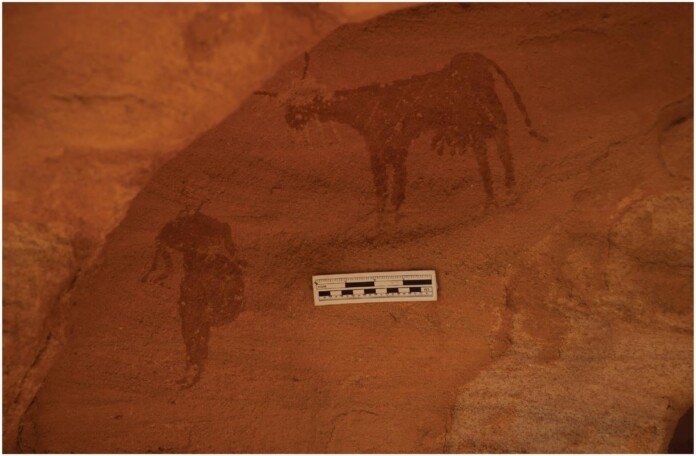
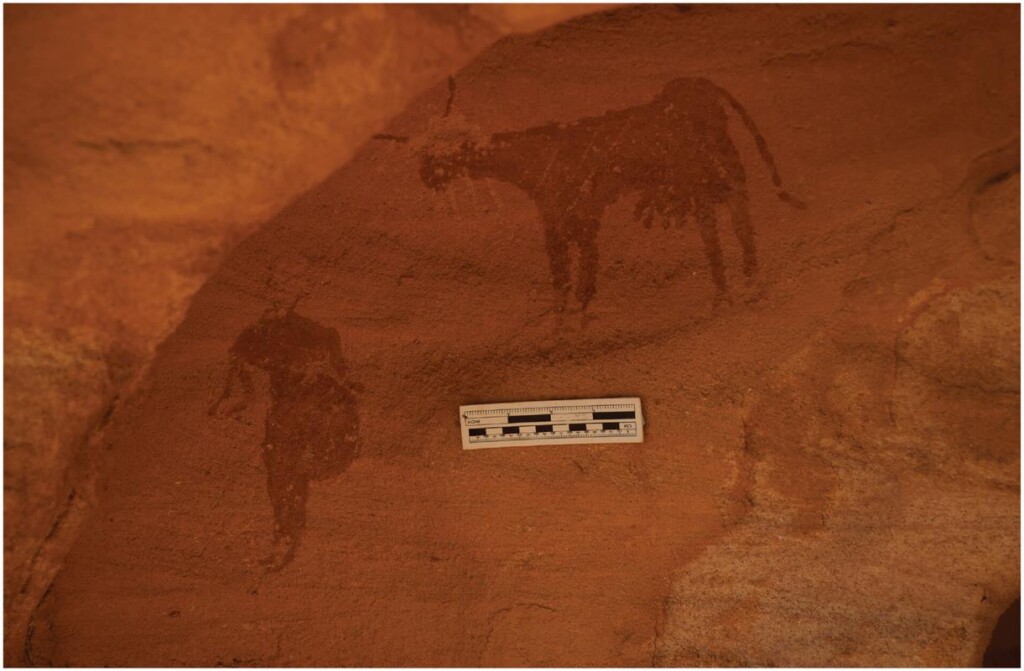
Painted rock art at site AS19.100 - credit Cooper et al.
Painted rock art at site AS19.100 – credit Cooper et al.

Geologists have known for years that from 5,000 years ago and beyond, much of what is today called the Sahara Desert was a lush grassland.

Some exceptional evidence of this recently surfaced in Sudan, where a paper published on a survey done in 2018 reveals the presence of rock art that depicts cattle herders and even boats.

Discovered in a region of the eastern Sahara called Atbai, there hasn’t been rain enough to support cattle here for at least 5,000 years.

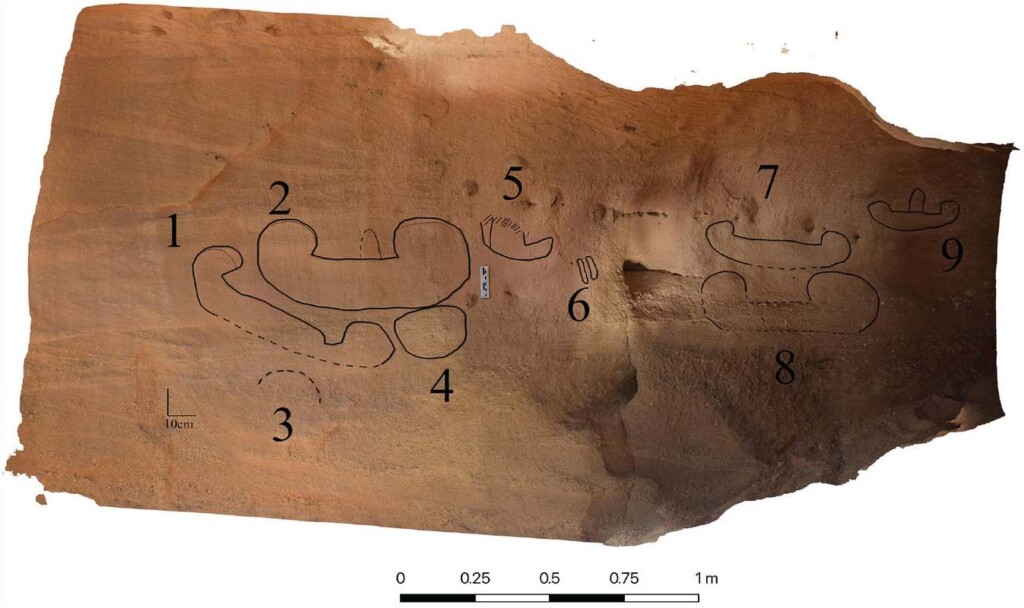
Another exciting discovery was rock carvings depicting 6 boats on a cave wall found 90 miles from the nearest branch of the Nile. Near the entrance to a naturally-formed tunnel in a large rock outcrop in the desert, the boats “are arranged in the manner of a ‘fleet’ or ‘flotilla’, all seemingly emanating from the tunnel interior,” the authors write.

Several anomalies exist in the discovery, chief among them is the dissimilarity of the boats to other known carvings, particularly because of how simple and straightforward they appear.

“This provides a hint as to the identity of the rock art makers, who were probably not present in this remote section of the desert as government officials, but were arguably rather ‘common people’ conveying popular traditions through rock art,” they add.

The cattle drawings, found elsewhere, were similarly isolated from any water source.

“The cattle rock art is very significant, as cattle can no longer live in this hyper-arid desert,” lead author Julien Cooper, an archaeologist at Macquarie University in Sydney, told Live Science in an email. “It tells us that the people that made the art had a close connection to cattle.”

Pottery found in connection to the petroglyph sites suggests that the fourth millennium BCE was when their carvers lived in the area. At the end of this millennium, around 5,000 years ago, conditions in the Atbai were becoming very arid.

credit Paul Wordsworth

Because of this, and because of the obvious connection between the boat carvings and a waterway of some kind, the authors hypothesize that the carvers were Neolithic groups of Nubians who were early gold prospectors, as golden items have been found in burials dating back to the end of the fourth millennium BCE.

“[P]astoralists may still have found ephemeral grasslands and periodic surface water in this desert east of Lower Nubia,” the authors write. “Roughly similar latitudes in the Western Desert still received some of the northerly reaches of the African monsoons as documented by surveys…”

BEAUTIFUL ROCK ART: Newly Discovered Rock Art Panels Depict How Ancient Ancestors Envisioned Creation and Adapted to Change

In the cattle carving, the beast’s udder is clearly depicted, indicating that milking them was an integral part, as it still is today with pastoralists, of the man-animal relationship. However, to produce enough milk to feed the herders would require ample forage—another sign that whoever made these carvings had grown up in a tradition of pastoralism from wetter climes than Atbai, or at least wetter time periods.

YOU’LL ALSO LIKE: 4,000-Year-Old Pyramid Rises From the Soil of Kazakhstan–First of its Kind Ever Found on the Eurasian Steppes

The study authors conclude by describing the carvers as “the last embers of an ancient para-Nilotic nomadic pastoralism that existed before conditions ultimately dried to their present state.”

SHARE This With Your Friends Who Love Learning About Our Ancestors… 

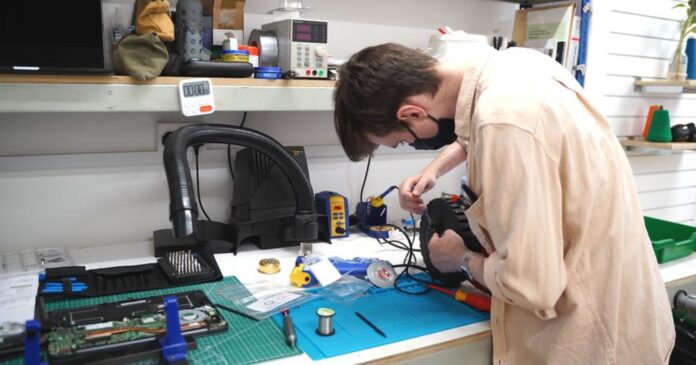
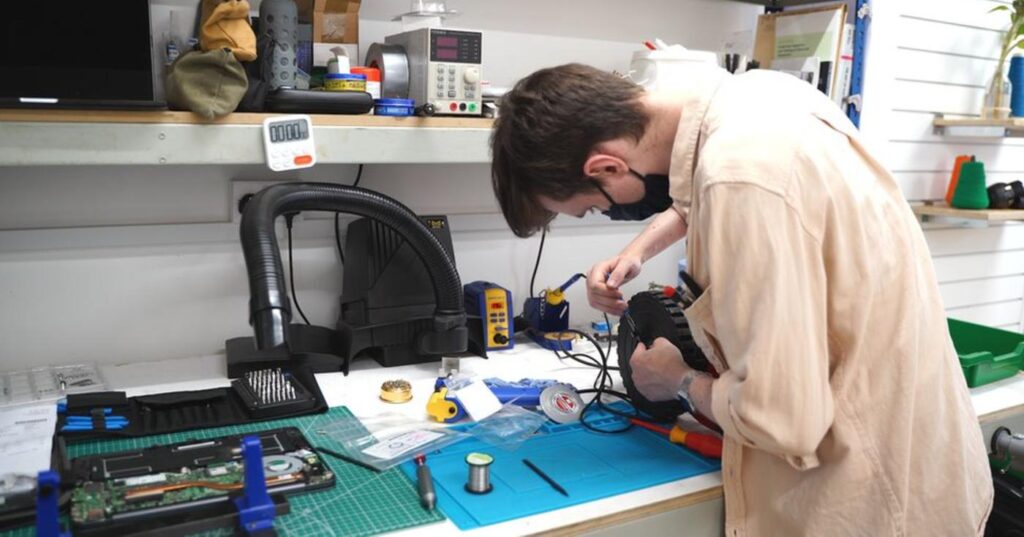
580 Repair Shops Form a Flourishing Subculture Fixing Toasters, Electronics, Coffee Makers and Lamps

RossRemade
RossRemade

Despite the UK being the world’s second-largest generator of electronic waste per capita, a flourishing sub-culture of ‘Repair Cafes’ and other social groups is helping to balance out the island’s wasteful side.

A featured story from the Guardian reports that 580 such repair cafes are hosting regular events where volunteer fixers and tinkerers spend several hours sitting with people to troubleshoot, diagnose, and repair a litany of household items.

Author Sally Howard interviewed over half a dozen participants and organizers, and found the benefits to be legion: helping old people stay involved in the community, keeping undegradable waste out of the landfills, keeping carbon out of the atmosphere, disseminating knowledge on repairing electronics, keeping old skills like tailoring and cobbling alive, and even combating loneliness.

“Anyone can mend a toaster if they have the right tools; this knowledge is a gift we need to share as widely as possible,” said Stefania Fantini, a 59-year-old sound engineer who hosts Rosie the Restarter, a social group for women and non-binaries who want to learn how to repair household items.

Rosie the Restarter works under the organizational umbrella of the Restart Project, a non-profit coordinating and advocacy group that finds places and volunteers to host repair cafes, works to pass legislation in Parliament under the Right to Repair Europe banner, and produces educational literature about the burden of e-waste in our societies.

Electronic waste, being modular in nature, is a growing burden on the landfill system worldwide. Millions of tons of broken electronics are thrown out every year for four chief reasons.

Many people don’t know how to fix mechanical or electronic components or don’t have the tools to do so. The urge to toss something is greater than ever as companies have been able to make most consumer electronics delightfully inexpensive, allowing low and middle-income countries to afford them as well; in other words, replacing things isn’t all that much more expensive than repairing them.

As regards repairs, the third reason for the growth in e-waste is that many small item repair shops—the cobbler for example—are disappearing from streets across Europe and North America, and the fourth is that many companies deliberately make it difficult to repair their products—being particularly true of big-ticket items like laptops and smartphones.

Government action to address this last problem is progressing, but slowly. In the meanwhile, repair cafes, libraries of things, and other such establishments are fighting back against the loss of these small shops, the knowledge of repairing things, and the growing e-waste burden.

MORE STORIES ON THIS BEAT: Company Embodies ‘Right to Repair’ By Redesigning Auto Parts That Constantly Fail—And Selling Them Cheaper

“We conducted a study at a recycling center, and found that half of electricals being thrown away could have been reused, many needing only minor repairs,” said Shelini Kotecha from the Restart Project.

“Restart Parties are about enabling communities to learn how to fix their things for free, keeping items in circulation for longer and lowering our negative impact on the planet. They have a fun and collaborative spirit where everyone is welcome to learn new skills and meet new people”

The Restart Project is one entity playing a big role—especially in London where they have an objective to put a repair cafe in every neighborhood in every borough. It took them 6 months to find a partner and location that could be accessible to the people of Islington, London.

Spreading the word that the Islington Climate Centre was going to be the site of the new repair cafe, 20 interested volunteers visited to see what the event was about—Restart Project needed people to collect data and be part of the organizing team.

Then opening day came, and 30 Islingtonians brought in items in need of repair.

“A printer!” one of the organizers yelled after a local brought in a broken one. “Who wants to fix a printer?”

ALSO READ: Britain’s Royal Mint is Salvaging Gold from E-Waste – Recycling Precious Metals for Green Investors 

Soon, the visitor was sitting with a volunteer doing a diagnosis—a new print head was needed.

48% of everything that was brought in was repaired the same day, which Restart Project said saved 391 kilograms of carbon emissions.

Others are more established, for example The Repairium in Bristol. Open every Sunday from Lunchtime until half past four, the repair cafe at The Repairium will soon open a second-hand electronics shop of all the goods donated.

SHARE This Awesome Social Movement With Your Friends… 

“There are no passengers on spaceship earth. We are all crew.” – Marshall McLuhan

Quote of the Day: “There are no passengers on spaceship earth. We are all crew.” – Marshall McLuhan, Canadian philosopher

With a new inspirational quote every day, atop the perfect photo—collected and archived on our Quote of the Day page—why not bookmark GNN.org for a daily uplift?

Scientists Puzzling Over Bright White Rock on Mars – the First of its Kind, Never Seen Before

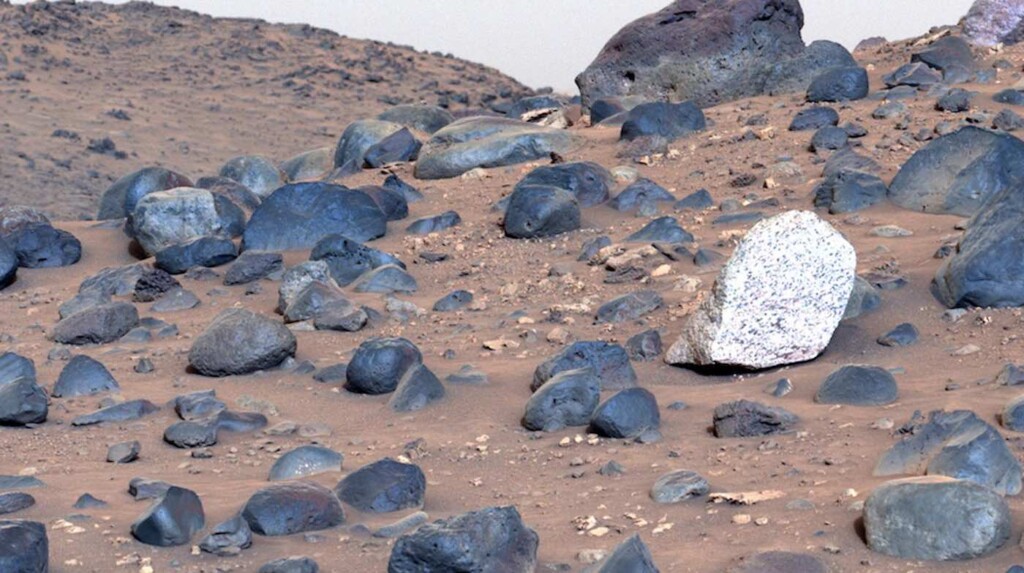
Detail of a mosaic taken by NASA’s Perseverance rover shows a boulder field on “Mount Washburn” Credit: NASA / Western Washington University / SWNS
Detail of image taken by NASA’s Perseverance rover shows boulder field on “Mount Washburn” Credit: NASA / Western Washington University / SWNS

Scientists are puzzling over a bright white rock, of the type never before observed on Mars.

NASA’s Perseverance rover spotted the 14-inch-high boulder starkly standing out in a large field covered with dark rocks in a region named Mount Washburn, inside the massive Jezero crater.

Nicknamed Atoko Point by researchers, the boulder is 18 inches wide and has speckles on a light-toned surface.

Instrument analysis by Perseverance’s SuperCam and Mastcam-Z indicates that the rock is at least partly composed of the minerals pyroxene and feldspar.

“In terms of the size, shape, and arrangement of its mineral grains and crystals—and potentially its chemical composition—Atoko Point it is in a league of its own,” said NASA in a news release.

“The diversity of textures and compositions at Mount Washburn was an exciting discovery for the team, as these rocks represent a grab bag of geologic gifts brought down from the crater rim and potentially beyond,” said team co-leader Brad Garczynski of Western Washington University.

“Among all these different rocks, there was one that really caught our attention.”

Perseverance, which landed on the Red Planet in 2021 specifically to probe the ancient crater, encountered the sparkly boulder while traversing a dried river delta that once flowed billions of years ago. On its way to an area inside the rim where rocky outcrops are being examined for sediment that could shed light on Mars’ history, the rover changed course to avoid rough terrain. It took a short cut through a dune field and reached the hill strewn with boulders.

Composed of 18 images, this natural-color mosaic from Mars shows the boulder field inside Jezero Crater – NASA / SWNS / Western Washington University

Some of the Perseverance scientists speculate the minerals that make up Atoko Point were produced in a subsurface body of magma that is possibly exposed now on the crater rim.

Others on the team have suggested the boulder may have been created far beyond the walls of the Red Planet’s 28-mile-wide Jezero crater and transported there by the “swift Martian waters” eons ago.

“Either way, the team believes that while Atoko is the first of its kind they’ve seen, it won’t be the last,” says NASA.

A key objective for Perseverance’s mission on Mars is astrobiology, including caching samples that may contain signs of ancient microbial life.

LIFE ON MARS? Mars Rover Discovers Evidence of Liquid Salt Water on the Red Planet For the First Time

The rover will characterize the planet’s geology and past climate, with the aim to pave the way for human exploration of the Red Planet, and be the first mission to collect and cache Martian rock and regolith.

LAUNCH THE MYSTERY Onto Social Media By Sharing With Science Fans…