










All News - Page 207 of 1715 - Good News Network
Home Blog Page 207

Scientists Have 3D-Scanned Thousands of Creatures Creating Incredibly Intricate Images Anyone Can Access for Free

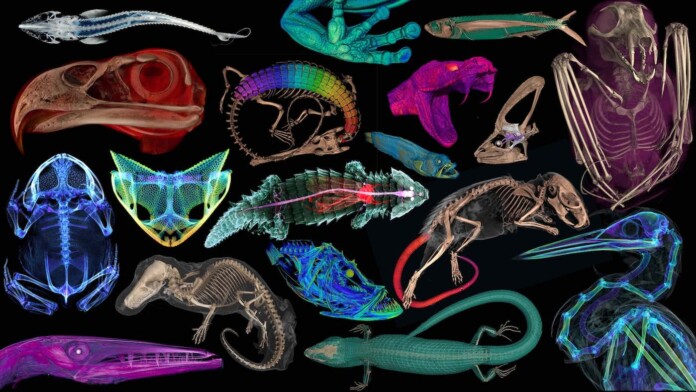
3D scanned creatures by oVert – Released by Florida Museum of Natural History / SWNS

An incredible new project has scanned thousands of creatures to advance scientific research and provide colorful images to the world.

Natural history museums have entered a new stage of scientific discovery and accessibility with the completion of openVertebrate (oVert), a five-year collaborative project among 18 institutions to create 3D reconstructions of vertebrate specimens and make them freely available online.

Now, researchers have published a summary of the project in the journal BioScience reviewing the specimens they’ve scanned to date, offering a glimpse of how the data might be used to ask new questions and spur the development of innovative technology.

“When people first collected these specimens, they had no idea what the future would hold for them,” said Edward Stanley, co-principal investigator of the oVert project and associate scientist at the Florida Museum of Natural History.

Such museums got their start in the 16th century as cabinets of curiosity, in which a few wealthy individuals amassed rare and exotic specimens, which they kept mostly to themselves. Since then, museums have become a resource for the public to learn about biodiversity.

But, the majority of museum collections remain behind closed doors—accessible only to scientists who must either travel to see them or ask that a small number of specimens be mailed on loan—and oVert wants to change that.

“Now we have scientists, teachers, students and artists around the world using these data remotely,” said David Blackburn, lead principal investigator of the oVert project and curator of herpetology at the Florida Museum.

Beginning in 2017, the oVert team members took CT scans of more than 13,000 specimens, with vertebrate species across the tree of life, including over half the genera of all amphibians, reptiles, fishes, and mammals.
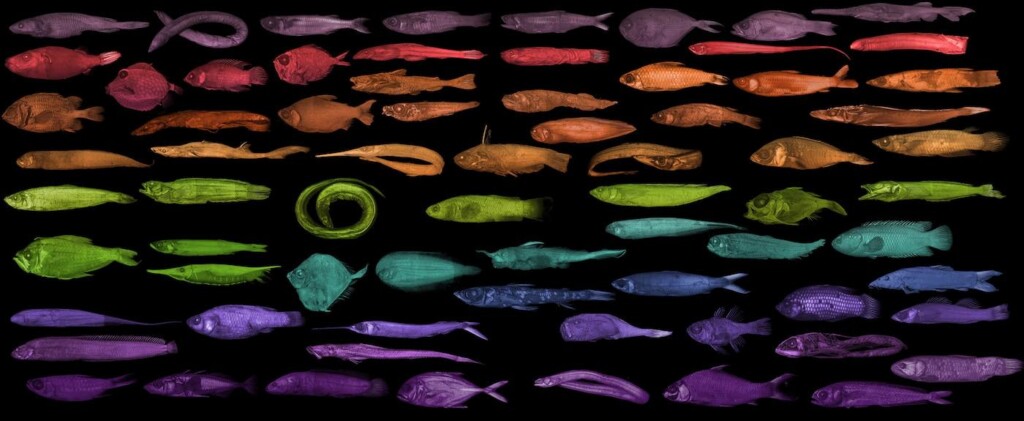
A collage of scanned fish from oVert – Released by Florida Museum of Natural History / SWNS

CT scanners use high-energy X-rays to peer past an organism’s exterior and view the dense bone structure beneath. Some specimens were also stained with a contrast-enhancing solution for visualizing soft tissues, like skin, muscle, and other organs.

The models give an intimate look at internal portions of a specimen that could previously only be observed through destructive dissection and tissue sampling.

“You want to protect specimens, but you also want to have people use them,” Blackburn said. “oVert is a way of reducing the wear and tear on samples while also increasing access, and it’s the next logical step in the mission of museum collections.”
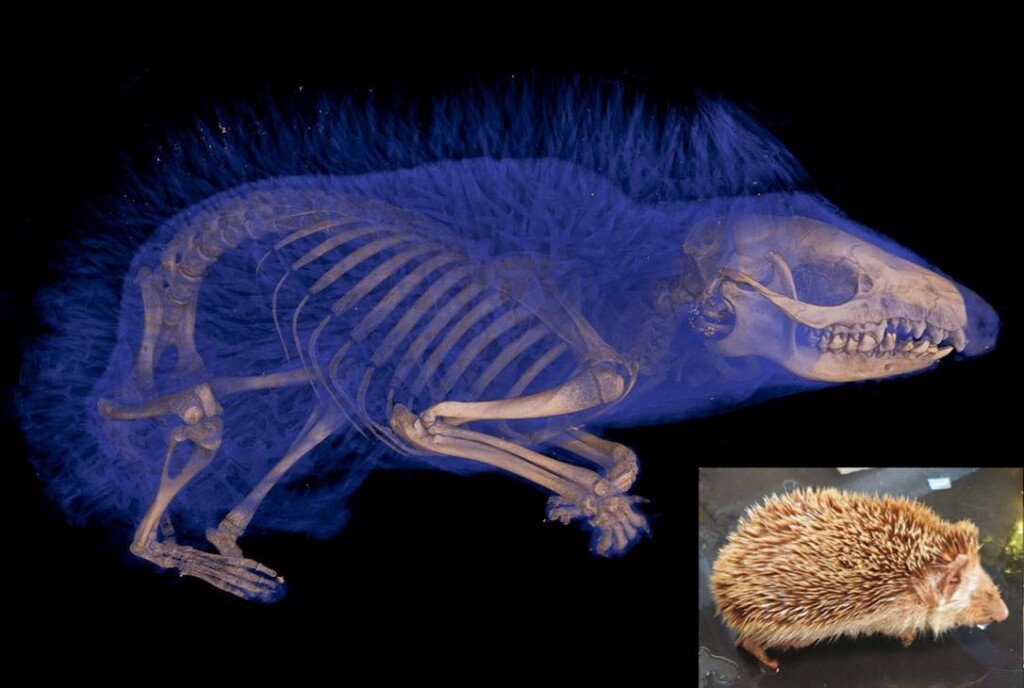
Hedgehog CT scan from oVert – Florida Museum of Natural History / SWNS

Skeletons too large to fit into a CT scanner, like a humpback whale, were painstakingly taken apart so that 3D models of each individual bone could be scanned and reassembled.

“These are not things you put in boxes and loan,” Blackburn pointed out.

A set of iconic Galapagos tortoises at the California Academy of Sciences were each photographed in a 360-degree rotation. Photographing their undersides was problematic, as their curved shells made it impossible to keep them upright. After a few trial-and-error runs, they settled on placing the specimens on top of inflatable swimming tubes.

Scientists have already used data from the project to gain astonishing insights into the natural world. Watch the incredible video below, and learn more at the bottom…

SCIENCE BREAKTHROUGH: Tasmanian Tiger RNA Recovered from Preserved Specimen in Groundbreaking World First

In 2023, Edward Stanley was conducting routine CT scans of spiny mice and was surprised to find their tails were covered with an internal coat of bony plates, called osteoderms. Before this discovery, armadillos were considered to be the only living mammals with these structures.

“All kinds of things jump out at you when you’re when you’re scanning,” Stanley said. “I study osteoderms, and through kismet or fate, I happened to be the one scanning those particular specimens on that particular day and noticed something strange about their tails on the X-ray.

“That happens all the time. We’ve found all sorts of strange, unexpected things.”

  • oVert scans were used to determine what killed a rim rock crown snake, considered to be the rarest snake species in North America.
  • Another study showed that a group of frogs called pumpkin toadlets had become so small that the fluid-filled canals in their ears that confer balance no longer functioned properly, causing them to crash-land when jumping.
  • One study of 500 oVert specimens revealed that frogs have lost and regained teeth more than 20 times throughout their evolutionary history.
  • Other researchers concluded that Spinosaurus, a massive dinosaur that was larger than Tyrannosaurus rex and thought to be aquatic, would have actually been a poor swimmer, and thus likely stayed on land.

And the list goes on, full of insights and ideas that would have been impossible or impractical before the project’s outset. “Now that we’ve been working on this for so long, we have a broad scaffold that allows us to take a broader view of evolutionary questions,” Stanley said.

LOOK: Woman Finds Foot-long Mastodon Tooth From Ice Age on a California Beach
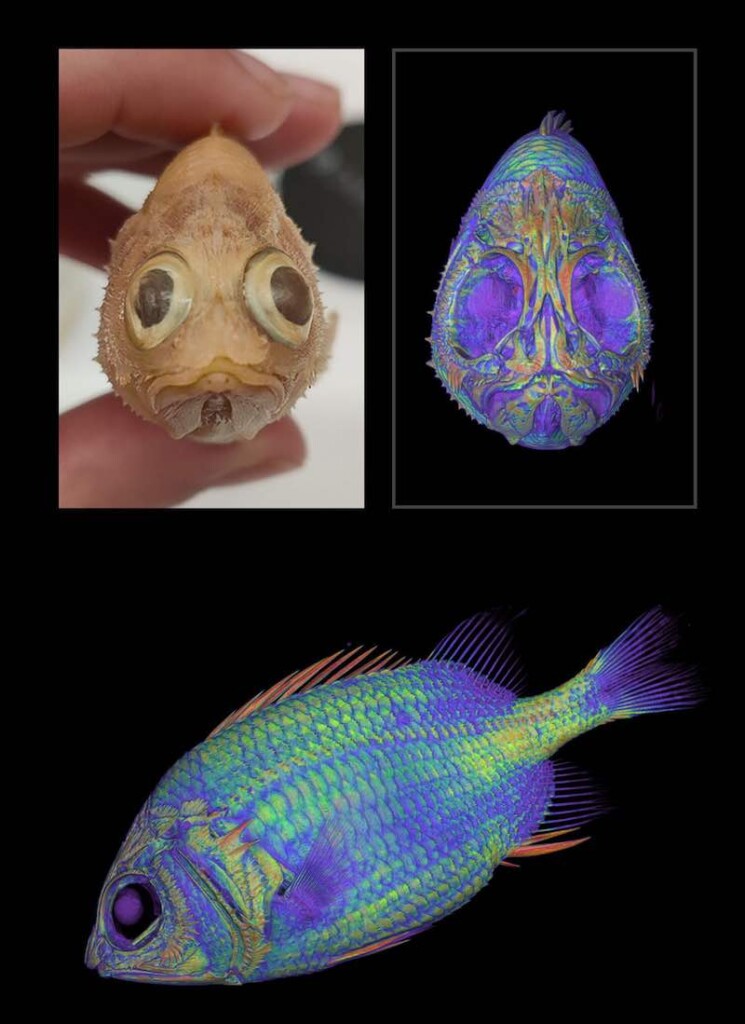
Fish CT scan from oVert – Florida Museum of Natural History / SWNS

Artists and teachers are benefitting too

Funded in part by the National Science Foundation, the value of the oVert project extends beyond science.

Artists have used the 3D models to create realistic animal replicas, photographs of oVert specimens have been displayed as museum exhibits, and specimens have been incorporated into virtual reality headsets that give users the chance to interact with and manipulate them.

CHECK OUT: A Forgotten Masterpiece Was Hanging Above a French Woman’s Hot Plate–Now, it’s Heading to the Louvre

A high school teacher in Cincinnati says it’s been a game-changer for her studies on evolution. “I teach juniors and seniors, and I absolutely love them, but they can be a tough audience,” said Jennifer Broo. “They know when things are fake, which makes them less engaged. Using the oVert models, my class has gotten so much better because I have had the opportunities to work with and expose my students to real data.”

Visit Sketchfab to view a sample of 3D interactive models. At MorphoSource you can access the full openVertebrate repository.

SEND THE GREAT RESOURCE to Creatives, Teachers, and Animal Lovers By Sharing on Social Media…

Your Horoscope for the Week – ‘Free Will Astrology’ From Rob Brezsny

Our partner Rob Brezsny, who has a new book out, Astrology Is Real: Revelations from My Life as an Oracle, provides his weekly wisdom to enlighten our thinking and motivate our mood. Rob’s Free Will Astrology, is a syndicated weekly column appearing in over a hundred publications. He is also the author of Pronoia Is the Antidote for Paranoia: How All of Creation Is Conspiring To Shower You with Blessings. (A free preview of the book is available here.)

Here is your weekly horoscope…

FREE WILL ASTROLOGY – Week of March 16, 2024
Copyright by Rob Brezsny, FreeWillAstrology.com

ARIES (March 21-April 19):
I will never advise you to dim the flame of your ambition or be shy about radiating your enthusiasm. For the next few weeks, though, I urge you to find ways to add sap, juice, and nectar to your fiery energy. See if you can be less like a furnace and more like a sauna; less like a rumbling volcano and more like a tropical river. Practically speaking, this might mean being blithely tender and unpredictably heartful as you emanate your dazzling glow.

TAURUS (April 20-May 20):
Some spiritual traditions tell us that the path to enlightenment and awakening is excruciatingly difficult. One teaching compares it to crossing a bridge that’s sharper than a sword, thinner than a hair, and hotter than fire. Ideas like these have no place in my personal philosophy. I believe enlightenment and awakening are available to anyone who conscientiously practices kindness and compassion. A seeker who consistently asks, “What is the most loving thing I can do?” will be rewarded with life-enhancing transformations. Now I invite you to do what I just did, Taurus. That is, re-evaluate a task or process that everyone (maybe even you) assumes is hard and complicated. Perform whatever tweaks are necessary to understand it as fun, natural, and engaging.

GEMINI (May 21-June 20):
Do you have a relative your parents never told you about? If so, you may find out about them soon. Do you have a secret you want to keep secret? If so, take extra caution to ensure it stays hidden. Is there a person you have had a covert crush on for a while? If so, they may discover your true feelings any minute now. Have you ever wondered if any secrets are being concealed from you? If so, probe gently for their revelation, and they just may leak out. Is there a lost treasure you have almost given up on finding? If so, revive your hopes.

CANCER (June 21-July 22):
Cancerian poet Pablo Neruda wrote this to a lover: “I want to do with you what spring does with the cherry trees.” That sounds very romantic. What does it mean? Well, the arrival of spring brings warmer soil and air, longer hours of sunlight, and nurturing precipitation. The flowers of some cherry trees respond by blooming with explosive vigor. Some trees sprout upwards of 4,000 blossoms. Maybe Neruda was exaggerating for poetic effect, but if he truly wanted to rouse his lover to be like a burgeoning cherry tree, he’d have to deal with an overwhelming outpouring of lush beauty and rampant fertility. Could he have handled it? If I’m reading the upcoming astrological omens correctly, you Cancerians now have the power to inspire and welcome such lavishness. And yes, you can definitely handle it.

LEO (July 23-Aug. 22):
Speaking on behalf of all non-Leos, I want to express our gratitude for the experiments you have been conducting. Your willingness to dig further than ever before into the mysterious depths is exciting. Please don’t be glum just because the results are still inconclusive and you feel a bit vulnerable. I’m confident you will ultimately generate fascinating outcomes that are valuable to us as well as you. Here’s a helpful tip: Give yourself permission to be even more daring and curious. Dig even deeper.

VIRGO (Aug. 23-Sept. 22):
Unexpected mixtures are desirable, though they may initially feel odd. Unplanned and unheralded alliances will be lucky wild cards if you are willing to set aside your expectations. Best of all, I believe you will be extra adept at creating new forms of synergy and symbiosis, even as you enhance existing forms. Please capitalize on these marvelous openings, dear Virgo. Are there parts of your life that have been divided, and you would like to harmonize them? Now is a good time to try. Bridge-building will be your specialty for the foreseeable future.

LIBRA (Sept. 23-Oct. 22):
Many of you Libras have a special talent for tuning into the needs and moods of other people. This potentially gives you the power to massage situations to serve the good of all. Are you using that power to its fullest? Could you do anything more to harness it? Here’s a related issue: Your talent for tuning into the needs and moods of others can give you the capacity to massage situations in service to your personal aims. Are you using that capacity to its fullest? Could you do anything more to harness it? Here’s one more variation on the theme: How adept are you at coordinating your service to the general good and your service to your personal aims? Can you do anything to enhance this skill? Now is an excellent time to try.

SCORPIO (Oct. 23-Nov. 21):
Psychologist Carl Jung said, “One of the most difficult tasks people can perform is the invention of good games. And this cannot be done by people out of touch with their instinctive selves.” According to my astrological assessment, you will thrive in the coming weeks when you are playing good, interesting games. If you dream them up and instigate them yourself, so much the better. And what exactly do I mean by “games”? I’m referring to any organized form of play that rouses fun, entertainment, and education. Playing should be one of your prime modes, Scorpio! As Jung notes, that will happen best if you are in close touch with your instinctual self—also known as your animal intelligence.

SAGITTARIUS (Nov. 22-Dec. 21):
Can Sagittarians ever really find a home they are utterly satisfied with? Are they ever at peace with exactly who they are and content to be exactly where they are? Some astrologers suggest these are difficult luxuries for you Centaurs to accomplish. But I think differently. In my view, it’s your birthright to create sanctuaries for yourself that incorporate so much variety and expansiveness that you can feel like an adventurous explorer without necessarily having to wander all over the earth. Now is an excellent time to work on this noble project.

CAPRICORN (Dec. 22-Jan. 19):
You picked Door #2 a while back. Was that the best choice? I’m not sure. Evidence is still ambiguous. As we await more conclusive information, I want you to know that Door #1 and Door #3 will soon be available for your consideration again. The fun fact is that you can try either of those doors without abandoning your activities in the area where Door #2 has led you. But it’s important to note that you can’t try *both* Door #1 and Door #3. You must choose one or the other. Proceed with care and nuance, Capricorn, but not with excessive caution. Your passwords are *daring sensitivity* and “discerning audacity.”

AQUARIUS (Jan. 20-Feb. 18):
My second cousin has the same name as me and lives in Kosice, Slovakia. He’s a Slovakian-speaking chemical engineer who attended the Slovak University of Technology. Do we have anything in common besides our DNA and names? Well, we both love to tell stories. He and I are both big fans of the band Rising Appalachia. We have the same mischievous brand of humor. He has designed equipment and processes to manufacture products that use chemicals in creative ways, and I design oracles to arouse inspirations that change people’s brain chemistry. Now I invite you, Aquarius, to celebrate allies with whom you share key qualities despite being quite different. It’s a fine time to get maximum enjoyment and value from your connections with such people.

PISCES (Feb. 19-March 20):
My Piscean friend Jeff Greenwald wrote the humorous but serious book Shopping for Buddhas. It’s the story of his adventures in Nepal as he traveled in quest of a statue to serve as a potent symbol for his spiritual yearning. I’m reminded of his search as I ruminate on your near future. I suspect you would benefit from an intense search for divine inspiration—either in the form of an iconic object, a pilgrimage to a holy sanctuary, or an inner journey to the source of your truth and love.

WANT MORE? Listen to Rob’s EXPANDED AUDIO HOROSCOPES, 4-5 minute meditations on the current state of your destiny — or subscribe to his unique daily text message service at: RealAstrology.com

(Zodiac images by Numerologysign.com, CC license)

SHARE The Wisdom With Friends Who Are Stars in Your Life on Social Media…

“To BE is to do.” – Immanuel Kant

Quote of the Day: “To be is to do.” – Immanuel Kant

Photo by: Diana Spatariu

With a new inspirational quote every day, atop the perfect photo—collected and archived on our Quotes page—why not bookmark GNN.org for a daily uplift?

10-Year-old Raises $80,000 for Pearl Harbor Memorial After School Project Inspires Deep Admiration

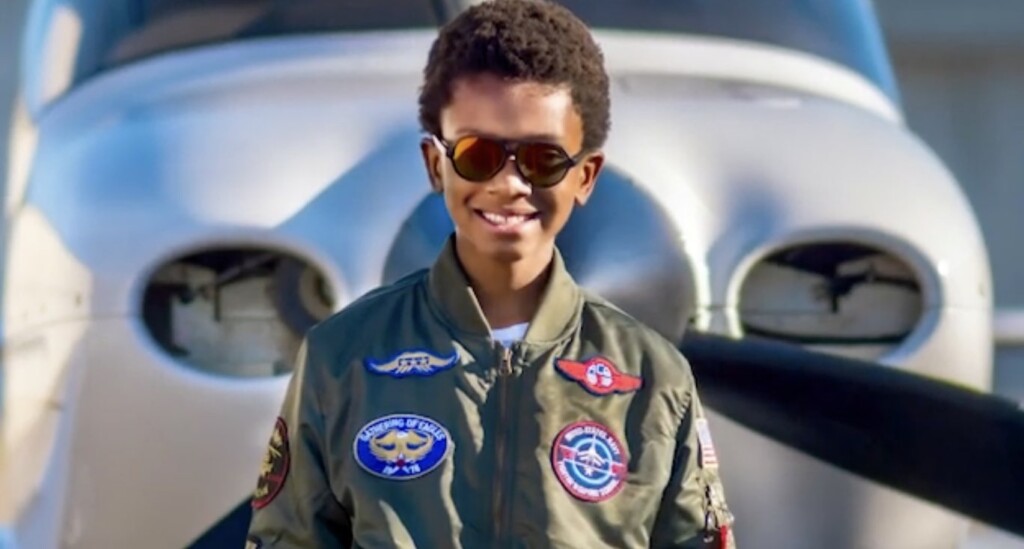
11-year-old Harrison Johnson founded the Harrison’s Heroes charity drive when he was 10.

The bean fields and mountains of North Carolina are 5 time zones and more than 5,000 miles from Hawai’i, but such differences are trifles compared to the determination of youth.

11-year-old Harrison Johnson from North Carolina has raised $81,000 to help fund history projects to tell the story of the attack on Pearl Harbor. The money was raised by collecting donations door-to-door, selling patriotic popsicles, and public speaking engagements (yes, by Harrison himself).

But what brought this spark of patriotic fervor out of this boy’s heart when he had never even seen the famous harbor on Oahu?

According to WRAL, it began in school with a history project. The particulars of the event fascinated Harrison, who began to study it recreationally, reading books and old newspaper accounts, and even speaking to survivors of the attack.

Following a visit to the Pearl Harbor National Memorial in Oahu, Harrison was motivated to start a campaign to ensure that the heroes and victims of the date which will live in infamy are never forgotten.

OTHER INSPIRED YOUTH: A 5-Year-Old’s Lemonade Stand in Seattle Raised Over $17,000 for Victims of Maui Wildfires

His fundraising campaign called “Harrison’s Heroes” is looking to raise $100,000 for Pacific Historic Parks, the Non-Profit that stewards the Pearl Harbor memorial. In particular, Harrison hopes it can produce material that expands the story of the attack to include heroic acts from men and women of color, and other underrepresented members.

“We’re so proud and we pray it makes the impact that he intends,” said Harrison’s mom.

WATCH and LISTEN to Harrison explain his motivations…

SHARE This Young Man’s Inspiring Quest To Honor The Sacrifice Of US Sailors… 

Cougar Travels 1,000 Miles East in One of the Longest Recorded Treks

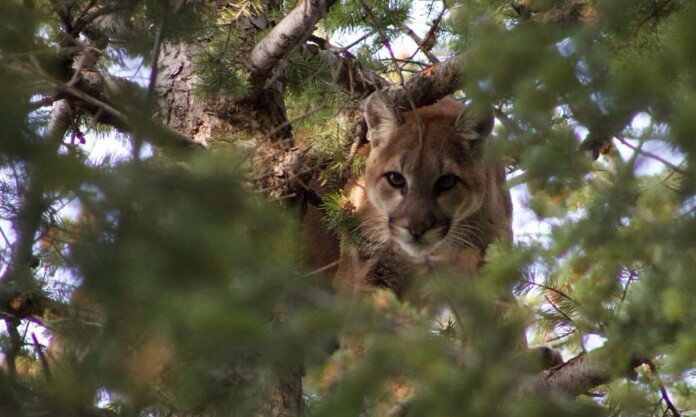
P66, the mountain lion - Utah Division of Wildlife Resources
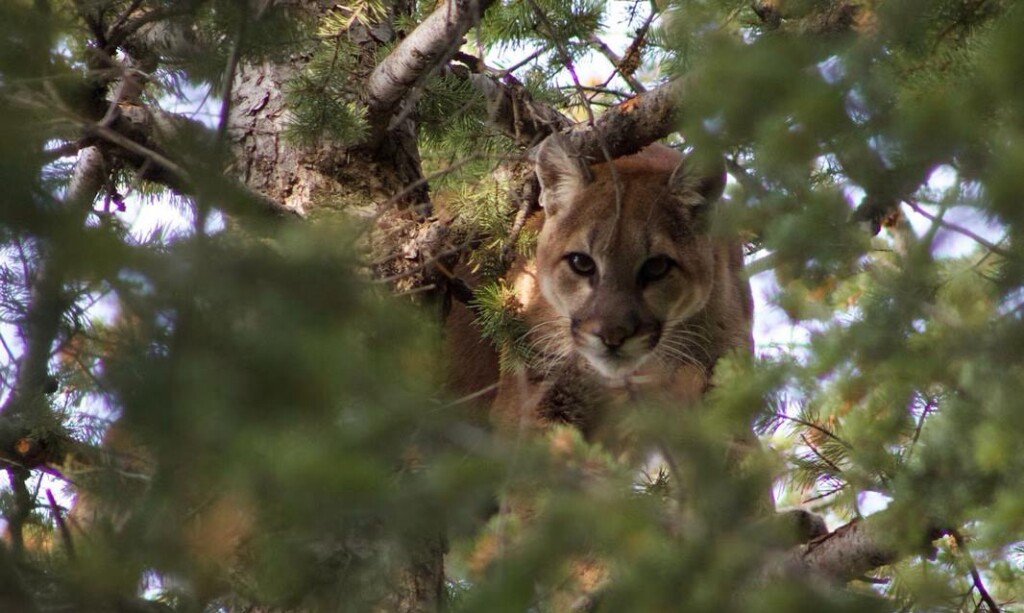
P66, the mountain lion – Utah Division of Wildlife Resources

Cheekily described as “reverse feline Manifest Destiny,” a GPS-collared mountain lion or cougar was recorded traveling 1,000 miles eastward from her home in Central Utah to the eastern slopes of the Rockies.

It’s an incredible journey that showcases just how at home this extirpated mammal is in America’s wilderness areas, and hints that, proper management permitting, this species could recolonize several states east of the Rocky Mountains such as Arkansas and Missouri, where it once roamed.

In 2022, at 2.5 years old, female mountain lion P66, was detected moving eastward from her base in Utah, veering a bit north, and then swimming across a reservoir on the border with Wyoming.

She kept on going until she fell as prey to another mountain lion on the eastern slopes of the Rockies more than 1,000 miles from where she began.

These sorts of wanderings are not unheard of, and in fact, one male cougar (called a Tom, short for Tomcat) made it all the way to Connecticut in 2009, having started in South Dakota.

Morgan Hinton, a Utah wildlife biologist, told Nat Geo that she opened her laptop in summertime, months after P66 began her reverse feline manifest destiny, and was understandably blown away by how far she had gone—almost out of the state entirely by then.

“Then I wanted to look at her every day,” Hinton says, since the cat’s collar pinged regular locations to a satellite every 24 hours. “Especially when she got into the Uinta Mountains of Utah. We knew: This cat is going to go somewhere. She is cruising.”

These occurrences made wildlife biologists estimate that lions would recolonize some more eastern states in the next 25 years, but apart from a few ambitious individuals like P66 with the travel bug (maybe the travel tick in this case) such expansions haven’t really materialized.

But what these voyages do show is that cougars are perfectly at home in most if not all corners of the United States.

“We need to help people understand the benefits of sharing a landscape with big cats, how they really do fortify our ecosystems,” Mark Elbroch, puma program director for Panthera, a global wild cat conservation organization, also told Nat Geo. “They support biodiversity. They make systems more resilient. And ultimately, that only makes our communities stronger and healthier.”

MORE CHARISMATIC CREATURES: Super Rare Wolverines Haven’t Been Seen For a Century in Mt. Rainier—Now They’re Back in a Family Way

Reestablishing populations of cougars isn’t actually as easy as these cruising cats make it seem. They heavily shy away from roads, and need large tracks of open country with plenty of prey species.

Deer populations in many parts of the United States could use more natural predators, which could ease the epidemic of Chronic Wasting Disease (CWD) that has infected deer in 31 states.

It’s believed that the burden of CWD on American cervids would be lessened if more predators were around to hunt them. Mountain lions, grizzly bears, and wolves are all extremely effective hunters of deer, elk, moose, and caribou—the species that can contract CWD.

MORE AMERICAN WILDLIFE: American Marten May Be Set for Return to Pennsylvania Forests After 100-Year Absence

However, in states east of the Rockies these, in the case of lions, extremely rare. Some areas could support, and may already be supporting, mountain lions in conjunction with high rates of CWD such as the Ozarks of Arkansas. Lions were native here but extirpated by the 1920s.

The Arkansas Game and Fish Commission has been contacted on hundreds of mountain lion sightings in recent years, but only 15 have been confirmed by the organization so far. Beginning of 2016, surveys of deer in the Ozark county of Newton found that 23% of deer may have had CWD.

Reestablishing lions in these areas could be a solution, and it seems like there are at least some cats out West with paws just itching to start recolonizing.

SHARE The Incredible Journey Across The West With Your Friends… 

African Forest Farming Initiative Making A Difference to Thousands with Tree-Planting and Microlending

credit - Trees.org
credit – Trees.org

An NGO has realized that the irreplaceable value and beauty of African wilderness might be protected if, rather than pouring billions into funding park infrastructure and rangers, the farmers of Africa are taught simple agro-forestry techniques.

Enter Trees for the Future, which on the surface seems to be just the latest in Africa’s tree-planting schemes, but which actually promises to be a direct stimulant to rural farming economies rather than a carbon-capture scheme.

According to a report in the Guardian, 41,000 hectares, an area 7 times larger than the island of Manhattan, have been turned into forest farms where native trees anchor a diverse mix of subsistence and cash crops that’s more friendly to birds and insects than mono-crop agriculture.

Rather than the dozens of tree-planting initiatives around the world (and the many in Africa), the stated goal is to create 230,000 jobs, not plant a given number of trees; though Trees for the Future believes that this amount of employment in agro-forestry will amount to something like a billion trees.

“This is a massive restoration movement using regenerative agriculture,” Vincent Mainga, the Kenya director of Trees for the Future told the Guardian. “This model is very easy to adopt. We work with the farmers for four years. After that, they can understand all the components and they can use what they learn from our technicians to produce thriving farmlands, usually with a surplus. It is self-sustaining.”

The program has pilot projects in 9 countries, and one such site in Kesouma, on the Kenyan shore of Lake Victoria, is making real progress.

17,000 smallholder farmers have allegedly been equipped with tools, training, and seedlings to begin forest farming. Forest farming isn’t anything new—it’s been used for millennia and survived on small farms even amidst the push to mechanize and commoditize agriculture in Europe and America.

Basically, a forest farm is a multi-tiered growing operation designed around the idea that forests are the most fertile ecosystems. Nut and fruit trees shade the soil to lock in moisture and provide a crop, shade-tolerant veggies and bushes are grown in between the trees, and sun-loving veggies are grown in clearings or on the margins. With this format, the farmer can go in any number of directions from introducing livestock like goats or chickens to cultivating mushrooms.

MORE WORK LIKE THIS: This Wonder Tree is a Game-Changer for Rainforest Agriculture in Honduras And Deforested Sites Worldwide

At Kesouma, the area is subdivided into units consisting of 20 landholders. One community leader is given a stipend of 3,000 Kenyan schillings to buy materials to get started, all members routinely report to workshops where they are trained and learn new techniques. Each individual has on average about 1 hectare, containing around 5,800 trees.

A traditional outer perimeter is formed with Acacia polyacantha (white thorn bush), inside of which sits the growing operation.

Some growers are getting their soil carbon-certified and earning income via carbon credits sold to big businesses to offset emissions.

In 2020, TREES introduced an additional training element to the training program to ensure farmers are able to grow their wealth along with their trees: Village Savings and Loan Association (VSLA) training.

MORE NEWS LIKE THIS: Kenyans Flock to Fields and Parks to Ring in 3-Day Weekend for New National Tree-Planting Holiday

VSLAs are generally made up of 15-30 people, Trees for the Future explains in a recent blog post about their work in Tanzania. They work together to save money, lend each other their savings at low-interest rates, and share the profits. 2,100 forest farmers in Tanzania are working to grow their operations under VSLA loans.

“VSLA training has improved my record keeping skills, I can now save, plan, and budget my money,” says participant Rukia Mwanja. “I have used my savings to increase my livestock, I was also able to pay my children’s school fees and I managed to start a tailoring business.”

Anyone looking to support home-grown economic progress in Africa can donate here.

SHARE This Inspiring Initiative To Develop Agro-Forestry On Social Media… 
Foundry Closing Devastated Tennessee Town but New Lithium Plant Brings Hope, Thanks to 2021 Infrastructure Bill

Tennessee Avenue (US 411) in Etowah - Crian Stansberry CC BY 4.0.
Tennessee Avenue (US 411) in Etowah – Crian Stansberry CC BY 4.0.

A Tennessee manufacturing town could be in for a revitalization after a shuttered iron foundry is poised to be replaced with a lithium mine, thanks to thanks to the 2021 Bipartisan Infrastructure Bill that is rebuilding American highways, bridges, and manufacturing.

The large Waupaca Foundry closed its doors in the historic TN rail town of Etowah nearly two years ago, and many of the 500 or so workers that were laid off had built lives and families in the town of 3,600 people.

Worried that Etowah would soon become just another of the many rural communities devastated by the loss of America’s traditional manufacturing sector, fears have been stymied somewhat by the arrival of Tennessee Lithium, a subsidiary of Piedmont Lithium, one of the largest lithium hydroxide mining firms in the country.

Reporting on the fortune swings of Etowah and McMinn County where it’s located, Capital & Main say that, by chance, the former environment, health, and safety manager at Waupaca met his opposite number, Monique Parker, at Piedmont Lithium. Hitting it off, the two organized a meet and greet in Etowah to recruit workers for the arrival of Tennessee Lithium, one of a number of government-funded start-ups looking to try and turn coal country into the “Battery Belt.”

“It came down to multiple factors, the first being the quality of the site,” Etowah City Manager Russ Blair told Capital & Main, pointing out that since Etowah was constructed by railway companies in 1906, the industrial site where Waupaca was located has great proximity to rail lines. Etowah itself is positioned near other Battery Belt sites of importance.

Spokesmen from Piedmont Lithium say their subsidiary is looking to hire around 120 people from the local community at between $50,000 and $60,000 per annum, while investing tens of millions in the area.

MORE MANUFACTURING NEWS: Making Building Materials Out of Fast-Growing Grasses Capture More Carbon Than Trees for US Startup

“We want businesses to invest not only in our community but also in the people. That’s very important to us,” said Ferguson, the McMinn County economic development chief. “Since Piedmont’s announcement, they’ve shown that they are going to be a huge community partner.”

Paying for it all is an $800 million loan from the Department of Energy’s Advanced Technology Vehicles Manufacturing loan program, which has about $40 billion from the Bipartisan Infrastructure Bill to loan out at current treasury yield rates to companies looking to build light, medium, and heavy-duty vehicle manufacturing, as well as locomotive and light rail, aircraft, maritime vessels, and offshore wind support vessels.

YOU MAY ALSO LIKE: Lithium Discovery in Crater in Nevada Could Be Biggest Deposit Ever Found

According to Piedmont, the plan to launch Tennessee Lithium is to combine this funding with support from a strategic partner or partners.

Tennessee Lithium uses a pressure leaching process that uses steam, natural soda ash, and lime to mine lithium, which the company says gives it a more favorable environmental and safety profile than traditional methods.

SHARE This Potential Revitalization Of An Iron Town With Your Friends…

“You don’t have to continue suffering to be a poet. Adolescence is enough for anyone.” – John Ciardi

Quote of the Day: “You don’t have to continue suffering to be a poet. Adolescence is enough for anyone.” – John Ciardi 

Photo by: MCC (copyrighted)

With a new inspirational quote every day, atop the perfect photo—collected and archived on our Quotes page—why not bookmark GNN.org for a daily uplift?

CAR-T Cell Therapy Achieves Near-Complete Tumor Regression in Brain Cancer After Five Days

MRI of a glioblastoma - CC 2.5. Christaras A
MRI of a glioblastoma – CC 2.5. Christaras A

Clinical trials for a novel treatment for patients with glioblastoma, a deadly form of brain cancer, have shown rapid success, with some patients experiencing a dramatic decline in tumor size just days after their first treatment course.

Researchers from the Mass General Cancer Center, Massachusetts, have shared the results for the first three patients in a clinical trial of CAR-T cell therapy for glioblastoma.

CAR-T cell therapy, or CAR-T for short, won the Nobel Prize in Medicine, and works by using a patient’s own immune cells to fight cancer. It’s currently the most personalized way to treat the disease.

A patient’s cells are extracted, modified to produce proteins on their surface, and then injected back into the body to target the tumor directly. CAR-T therapies have been approved for the treatment of blood cancers but the therapy’s use for solid tumors is limited.

The trial, known as INCIPIENT, was designed to evaluate the safety of CARv3-TEAM-E T cells in patients with recurrent glioblastoma, which is the most common form of brain cancer in adults.

Combining two separate treatment strategies, CAR-T and bispecific antibodies, known as T-cell engaging antibody molecules or “TEAMs” the approach showed promise in preclinical models of glioblastoma.

Three patients were enrolled in the study, published in the New England Journal of Medicine, between March 2023 and July 2023.

Patients’ T cells were collected and transformed into the new version of CAR-TEAM cells, which were then infused back into each patient. The patients tolerated the infusions well, though nearly all had fevers and altered mental status soon after infusion.

Just days after a single treatment, patients experienced dramatic reductions in their tumors, with one patient achieving near-complete tumor regression in five days after one treatment.

“The CAR-T platform has revolutionized how we think about treating patients with cancer, but solid tumors like glioblastoma have remained challenging to treat because not all cancer cells are exactly alike and cells within the tumor vary,” said assistant professor Bryan Choi from Harvard Medical School said.

OTHER GLIOBLASTOMA NEWS: Achilles Heel for Glioblastoma Discovered—a Rogue Protein that Turns Natural Defenses Off

“This is a story of bench-to-bedside therapy, with a novel cell therapy designed in the laboratories of Massachusetts General Hospital and translated for patient use within five years, to meet an urgent need.”

One of the patients, a 72-year-old man, saw a 60.7% decrease in his tumor which was sustained for six months, while a 57-year-old woman had near complete tumor regression only five days after a single infusion.

The team says their results are exciting, but that much more research is needed to fine-tune this treatment.

MORE BRAIN CANCER TREATMENTS: Belgian Boy is the First Child in the World to Have Been Cured of Brain Stem Glioma, a Brutal Cancer

“We’ve made an investment in developing the team to enable translation of our innovations in immunotherapy from our lab to the clinic, to transform care for patients with cancer,” commented Marcela Maus, director of the Cellular Immunotherapy Program at the Mass General Cancer Center.

“These results are exciting, but they are also just the beginning—they tell us that we are on the right track in pursuing a therapy that has the potential to change the outlook for this intractable disease.”

“We haven’t cured patients yet, but that is our audacious goal.”

SHARE This Breakthrough Work On Social Media With Your Friends… 

Liverpool is Building the World’s Largest Tidal Power Plant to Power a Million Homes

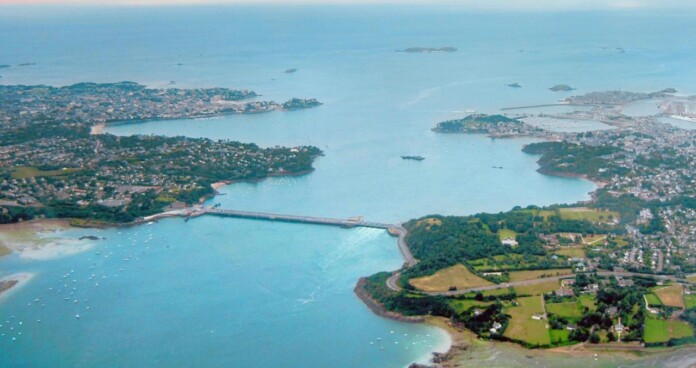
The Rance Tidal Power Station, which Mersey Tidal Power are studying to inform the construction of a similar plant for Liverpool.
The Rance Tidal Power Station, which Mersey Tidal Power is studying to inform the construction of a similar plant for Liverpool.

The River Mersey and the Bay of Liverpool are the largest assets this famous English city possesses, and attempting to beat the British government to a net-zero economy, Liverpool City Region has entered phase 3 planning stage to build the largest tidal power plant on Earth.

Schemes to harness the predictable power of the tides in Liverpool Bay date back to 1924, and with one of the largest tidal ranges of any coastal city in the UK, government utility Mersey Tidal Power believe that they can power 1 million homes and protect the city from floodwaters, all without disturbing the local estuarine ecosystem.

Mersey Tidal Power have released precious little information on the plans thus far, but Eletrek reports that a large dam would be a barrier between the Irish Sea and a tidal basin. Underneath the dam would be large turbines and sluice gates which would open as the tide comes in, pulling water onto the turbines to generate energy.

The gates would close as the 10-meter-high tide finishes, and as the gravity of the moon begins to pull on the water four hours later, the gates would open, causing it to rush past the turbines a second time, generating more clean energy.

“I think that we have a unique opportunity to harness the power of our greatest natural assets—our river and our people—to deliver a cleaner, greener, more prosperous future for our children,” said Liverpool mayor Steve Rotherham.

Tidal power projects are few and far between in both scale and reliability, but like geothermal power, they offer an alternative to sun and wind power which can be interrupted by weather conditions.

MORE TIDAL PROJECTS: These Underwater ‘Kites’ Are Generating Tidal Electricity As They Move

The multibillion-dollar project is in Phase 3 concept development and is about to enter the formal planning stage. Mersey Tidal Power has consulted with experts at the Rance tidal power plant in France, in operation since the 1960s, as well as K Power, which runs the largest tidal plant in the world at Sihwa Lake in South Korea.

YOU MAY ALSO LIKE: ‘Living Breakwater’ Makes Room for Oysters and Tidal Pools In Award Winning Design off Staten Island

Concept imagery from Liverpool City Region Combined Authority shows a similar design to the installation at Rance. The top of the dam would serve as a causeway with green spaces and bike paths that would connect the city of Liverpool to the Wirral Peninsula, the way Rance is connected to St. Malo.

Liverpool City and Mersey Tidal Power are under no illusions as to the complexity and challenge of the project, but they estimate that the capacity of a River Mersey Tidal station could power 1 million homes—essentially the whole of Liverpool—for 120 years.

WATCH a promotional video that’s short on details below… 

SHARE This Inspiring And Enterprising Project For The Future… 

More Teens Than You Think Understand the Positive and Negative Aspects of Smartphones–Survey

By Luke Porter
By Luke Porter

In a poll recently conducted by Pew Research, teenagers were shown to be more conscious of the positive and negative aspects of smartphone use than members of the previous generations may be giving them credit for.

The Center conducted an online survey of 1,453 U.S. teens aged 13 to 17 and parents from September 26th to October 23rd. The criteria for inclusion was that the teens had to still be in their parents’ house.

72% of the teens surveyed said they often feel ‘peaceful’ without their smartphone, while only 44% said it gives them a kind of separation anxiety.

Further wisdom emerged when the teens were asked what they think a smartphone is best used for beyond phone calls, to which small minorities said it helped improve social skills or school performance. A two thirds majority of the teens instead said the smartphone made it easier for them to keep up with hobbies and interests.

When asked if they thought they spent too much, about right, or not enough, time on their smartphone, 44% of teen girls said they spent too much time, reflecting an emerging consensus among social scientists that over-connectivity and social media use is particularly disrupting to young women. By comparison, 33% of teen boys said they spent too much time on their phone.

While two-thirds majority of teens said they don’t take actions to curb their phone use, 41% of teen girls and 32% of teen boys have taken direct steps to limit their phone use, rates which go higher when asked specifically about social media apps.

72% of teens replied that going about their day without their phone makes them feel peaceful, while 74% went as far as saying it made them feel “happy”. By comparison, just 39% of teens said without their phone they’re left feeling lonely.

The data shows that teens today are well-aware of how big a disruption the advent of smartphones have been to human society, whether they are thinking specifically about “text neck” posture, underdevelopment of social skills, overconnectivity, or the potential of mental distress and time-wasting brought about by social media use.

MORE STORIES LIKE THIS: Tobacco, E-Cigarette Use Declines Among High Schoolers, Report Shows

In fact, teens are wiser in this regard than their parents and grandparents think they are—for example, when the Pew surveyors asked parents of teens whether they found themselves distracted by their phone while talking to their teenage children, a mere 4% of adults responded that it happened often, and 27% said it happened sometimes.

But when the same question was posed to their teenage children, the frequency increased, with 8% of teens saying it happened often, and 38% saying it happened sometimes, for a total occurrence rate of 46%.

MORE RESPONSIBLE TEENS: Young People in These G7 Countries are Interested in Investing and Find Savings Accounts ‘Sexy’ – New Poll

New technologies have a way of becoming over-appreciated because of their novelty, an effect which tends to wear off over time as technologies, devices, and programs become more commonplace.

This useful and upbeat research from Pew shows that teens are learning how to moderate their smartphone usage, as well as how to identify and combat addictive use.

SHARE This Encouraging And Upbeat Research With Your Friends…

Full Recovery for Coral Reef Within 4 Years – The Speed of Restoration They Saw was ‘Incredible’

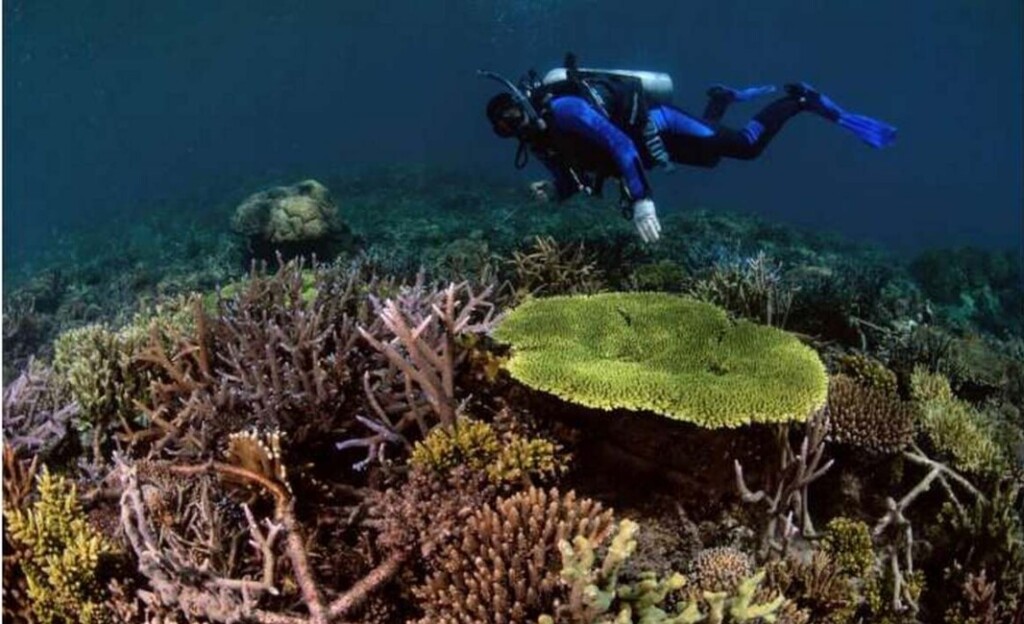
Coral reefs restored at Mars in South Sulawesi with the Reef Stars - credit The Ocean Agency, Steve Vevers.
Coral reefs restored at Mars in South Sulawesi with the Reef Stars – credit The Ocean Agency.

In a truly monumental discovery, scientists studying coral restoration in Indonesia found that artificially restored coral reefs can regrow as fast a naturally occurring reefs just 4 years after the initial transplantation.

With many reefs around the world believed to be threatened by stronger storms and acidic seas, the finding shows that as long as corals can survive in the water, humans can quickly rebuild reefs that are damaged.

The study was conducted at the Mars Coral Reef Restoration Program in South Sulawesi, Indonesia, one of the largest restoration projects in the world, and included an international team of marine biologists. The site was turned from a colorful reef to rubble 30 to 40 years ago from dynamite fishing.

At the project site, “reef stars” are first affixed to the seafloor. These small, recycled metal scaffolds provide a foundation for the coral larvae to glom onto and begin building their hard bodies.

“Corals constantly add calcium carbonate to the reef framework while some fishes and sea urchins erode it away, so calculating the overall carbonate budget basically tells you if the reef as a whole is growing or shrinking,” says Ines Lange of University of Exeter, UK.

“Positive reef growth is important to keep up with sea-level rise, protect coastlines from storms and erosion, and provide habitat for reef animals.”

CORALS LIVE ON IN WARMER SEAS: Some Coral Species More Resilient to Climate Than Thought By ‘Remembering’ How to Survive Previous Heat Waves

Four years after coral transplantation onto the metal reef stars net carbonate budgets have tripled and are indistinguishable from healthy control sites. The only drawback is that because branching coral is preferred for reef restoration, the overall species diversity is lower in restored reefs than natural ones.

“The speed of recovery that we saw was incredible,” said Lange. “We did not expect a full recovery of reef framework production after only four years.”

MORE CORAL NEWS: Volunteers ‘De-seaweeding’ Results in Dramatic 600% Improvement of Coral Regrowth

The carbonate budget method of calculating reef restoration has never been used before, and the team believe it offers a simple, surefire way to assess whether a reef is growing, static, or in decline.

Tim Lamont, a study co-author at the Lancaster University Environment Center, UK, said that while longer-term assessment of restored reefs is needed to fully understand its capability, the success at Mars shows that if humanity can stabilize the climate, we have the tools to undo some of the damage that climate change has wrought on coral reefs.

SHARE This Inspiring News With Your Friends Who’ve Seen Coral Up Close… 

“Who we are is not sitting still in a display case, but rather the endless synthesis of the contradictions of everyday life.” – Eduardo Galeano

The Nefertiti Bust at the Neus Museum - CC 3.0. Philip Pikart

Quote of the Day: “Who we are is not sitting still in a display case, but rather the endless synthesis of the contradictions of everyday life.” – Eduardo Galeano

Photo by: Philip Pikart (CC 3.0 license)

With a new inspirational quote every day, atop the perfect photo—collected and archived on our Quotes page—why not bookmark GNN.org for a daily uplift?

The Nefertiti Bust at the Neus Museum – CC 3.0. Philip Pikart

NASA to Send ‘Message in a Bottle’ Into Space Designed to Communicate With Extraterrestrials

The tantalum metal plaque filled with meaning and symbols - NASA/JPL-Caltech
The tantalum metal plaque filled with meaning and symbols – NASA/JPL-Caltech

In 1977 it was a golden record, now scientists are sending a “message in a bottle” into space to communicate with aliens.

NASA’s Europa Clipper spacecraft will carry a message from Earth in the form of an inscribed plaque when it launches in October, 2024, and heads toward Jupiter’s moon Europa.

On one side is an engraving of U.S. Poet Laureate Ada Limón’s handwritten work In Praise of Mystery: A Poem for Europa, along with a picture of a bottle bobbing in the ocean, at the center of which sits a silicon microchip stenciled with more than 2.6 million names submitted by the public.

Above the poem, the artwork also includes a longhand engraving of the Drake Equation, which was formulated by astronomer Frank Drake in 1961 to estimate the possibility of finding advanced civilizations beyond Earth.

To the left of the poem is a portrait of one of the founders of planetary science, Ron Greeley, whose early efforts to develop a Europa mission two decades ago laid the foundation for Europa Clipper, and in between these sits a visual representation of the radio frequencies considered plausible for interstellar communication, symbolizing how humanity uses this radio band to listen for messages from the cosmos.

For the other side, linguists collected recordings of the word “water” spoken in 103 languages, from families of languages around the world. The audio files were converted into waveforms (visual representations of sound waves) and etched into the plate.

The tantalum metal plaque featuring waveform translations of the word “water” in 103 languages – NASA/JPL-Caltech

Europa shows strong evidence of an ocean under its icy crust, with more than twice the amount of water of all of Earth’s oceans combined, hence the choice of words.

Made of a metal called tantalum and about 7 by 11 inches (18 by 28 centimeters), this is just the most recent message NASA plans to send into space.

MORE NASA GESTURES: Artist’s Painting is the First to Be Curated on the Moon: ‘It Will Last Forever’

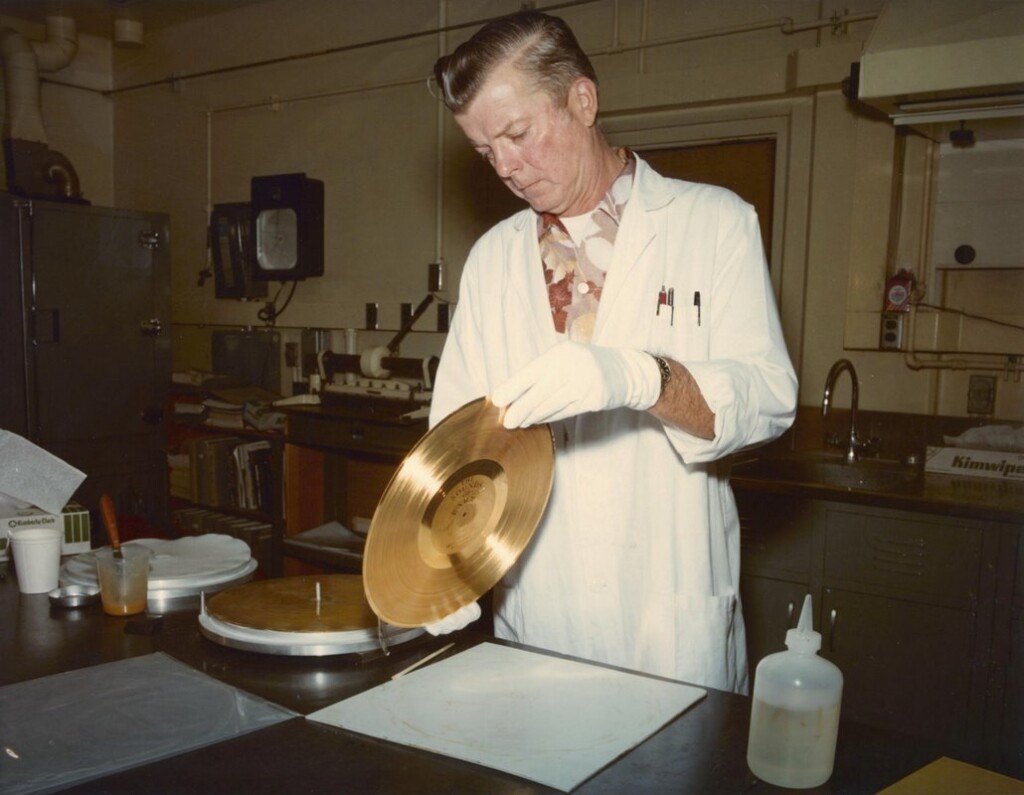
The Voyager Golden Records were two identical phonograph records that were included aboard the two Voyager spacecraft launched in 1977. The records contain sounds and images selected to portray the diversity of life and culture on Earth, and are intended for any intelligent extraterrestrial life form who may find them.

Also in the 1970s, the two NASA Pioneer spacecraft carried gold-anodized aluminum plaques featuring nude figures of a human male and female. The shape, color, and features of the human figures were averaged across tens of millions of images of the human face and body.

Each of the two Voyager spacecraft launched in 1977 carried a 12-inch gold-plated phonograph record with images and sounds from Earth – NASA/JPL-Caltech.

It also carried several symbols designed to provide information about the origin of the spacecraft, including a detailed map to find Earth, using radiowaves emitted by pulsars, no matter where in the galaxy the plaque is discovered.

Europa Clipper, set to launch from Kennedy Space Center in Florida, will arrive at the Jupiter system in 2030 and conduct about 50 flybys of the moon Europa.

The mission’s main science goal is to determine whether there are places below Europa, that could support life. The mission’s three main science objectives are to determine the thickness of the moon’s icy shell and its surface interactions with the ocean below, to investigate its composition, and to characterize its geology.

MORE OCEAN WORLDS: This Tiny Moon of Saturn Is the Smallest Case of a Subsurface Ocean Ever Found in the Solar System

The mission’s detailed exploration of Europa will help scientists better understand the astrobiological potential for habitable worlds beyond our planet.

“The content and design of Europa Clipper’s vault plate are swimming with meaning. The plate combines the best humanity has to offer across the universe: science, technology, education, art, and math,” Lori Glaze, director of the Planetary Science Division at NASA Headquarters in Washington, said in a statement.

YOU MAY ALSO LIKE: The Inspiring and Playful Hidden Message in the Mars Perseverance Rover’s Parachute

“The message of connection through water, essential for all forms of life as we know it, perfectly illustrates Earth’s tie to this mysterious ocean world we are setting out to explore.”

“We’ve packed a lot of thought and inspiration into this plate design, as we have into this mission itself. It’s been a decades-long journey, and we can’t wait to see what Europa Clipper shows us at this water world,” said Project Scientist Robert Pappalardo, of NASA’s Jet Propulsion Laboratory in Southern California.

SHARE NASA’s Third Interstellar Message With Your Friends… 

High School Student Invents an A.I. Powered Trap That Zaps Invasive Lanternflies

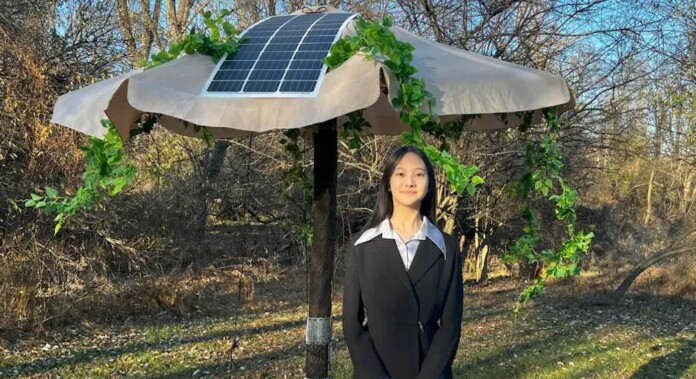
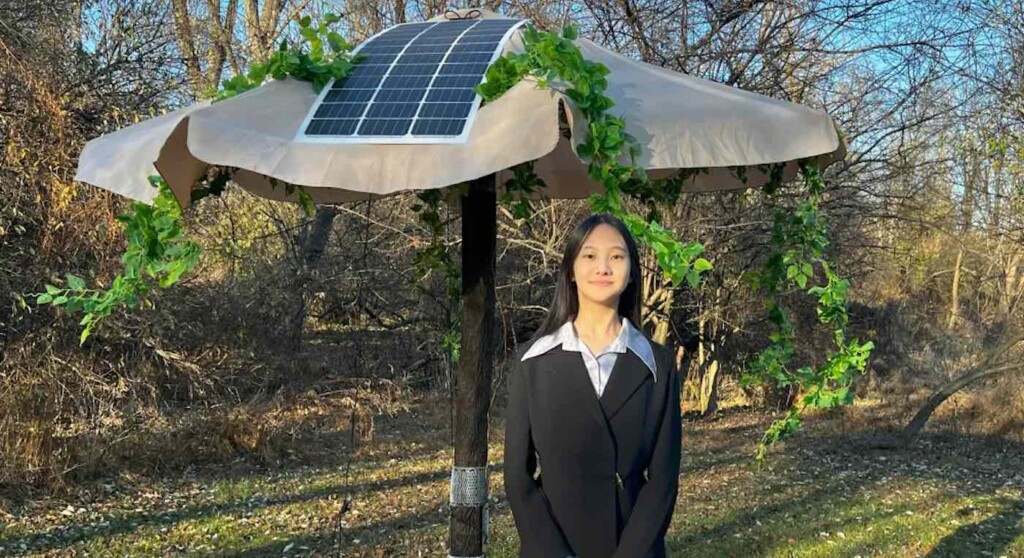
ArTreeficial is a solar-powered AI-driven bug zapper that uses electronic mesh against the spotted lanternfly, invasive to New Jersey – Courtesy of Selina Zhang
ArTreeficial is a solar-powered AI-driven bug zapper that uses electronic mesh against the spotted lanternfly, invasive to New Jersey – Courtesy of Selina Zhang.

A New Jersey high school senior has won a place as a finalist in the nation’s most prestigious science fair with a clever new take on the bug zapper.

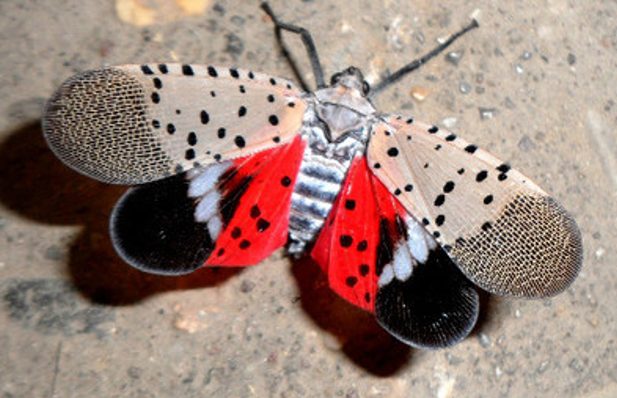
Selina Zhang, 18, designed and field tested a synthetic, eco-conscious, A.I.-powered trap that uses machine learning to selectively lure and electrocute the invasive spotted lanternfly, a species native to China that is now plaguing 17 US states.

Zhang’s invention placed her as one of 40 finalists in the Regeneron Science Talent Search, the country’s oldest and most prestigious science and math competition for high school seniors.

Found in large numbers, with few known predators, spotted lanternflies annually cause a tremendous amount of damage to agriculture. Eating plant sap from tree to tree, their feeding activity creates stress responses in plants that make them more susceptible to damage and disease.

Worse still, the lanternflies excrete a sticky substance colloquially called honeydew that gloms onto the plants they feed on. It blocks photosynthesis and is a breeding ground for black sooty mold. In total, it costs $3 billion in agricultural damages every year on the East Coast.

Selina’s “ArTreeficial” trap, made from a parasol seized from her family’s patio, lures the insects using an incense she made from the lanternfly’s favorite tree, the tree of heaven, which is also an invasive species. An electric mesh then selectively shocks the bug after detection.

None of these features or mechanisms were obvious at the start, and Selina was forced to perform weeks of field study on the spotted lanternfly’s behavior, learning where they liked to feed on various trees, and taking pictures of them.

MORE REGENERON WINNERS: 17-Year-old Wins $150,000 in Science Talent Search for Remarkable Way to Diagnose Pediatric Heart Disease

She also had to examine what was already being used to counter the invasive species already. Typically, traps of neonicotinoids are effective at killing the pest, but unfortunately, they also kill all other bugs that are lured into it, like pollinating bees. Sticky bands wrapped around trees have the same effect of harming friend and foe.

Spotted Lanternfly – NJ Dept. of Agriculture

“For field observations, you have to accumulate a lot of observations over time, and it can sometimes be uneventful,” says Zhang. “But it was also an important test of patience, because you get rewarded by these really interesting things.”

Taking 500 close-up photographs in addition to the field notes, she programmed a deep-learning algorithm to detect when a spotted lanternfly has landed on the trap. A double-layer electric mesh designed like a chessboard then zaps the lanternfly depending on which square it’s on.

KIDS TACKLING GLOBAL PROBLEMS: Precocious Child Identifies Japanese Wolf Specimen Amid Museum Collection, Encouraged to Publish Scientific Paper

She says she got her inspiration from Dance Dance Revolution, a famous arcade game where players have to step on squares in coordination with the rhythm of a song.

Selina’s prototype tree costs just under $200 to construct, but she believes large-scale production could dramatically reduce the cost. She is also researching ways to improve her attractant using an essence from the electrocuted lanternflies. The entire system is solar powered.

“The project uses A.I., it uses chemistry, it’s dealing with climate change and solar power. It’s a whole amalgam of the interdisciplinary nature of science and engineering in this project,” says Maya Ajmera, the president and CEO of Society for Science, which hosts the talent search. “That’s what makes it stand out for me.”

SIMILAR: Yale Honors Work of 9-Year-Old Girl Who is Stomping Out Extremely Invasive Bugs in New Jersey

A general overachiever, Selina is an award-winning violinist who has performed solo at New York’s Carnegie Hall, while also finding time to invent the ArTreeficial Trap, and illustrate her own comic books, in which she turned the spotted lanternfly into a menacing villain.

“Everywhere it goes, it’s spreading disaster,” Zhang told Smithsonian Magazine. “With my comics, I wanted people to better understand this local invasive species and its behavior.”

SHARE This Incredibly Driven Young Woman With Your Friends… 

Vet Student Takes Neglected Golden Retriever on Weight Loss Journey, Thousands Flock to Insta to Watch

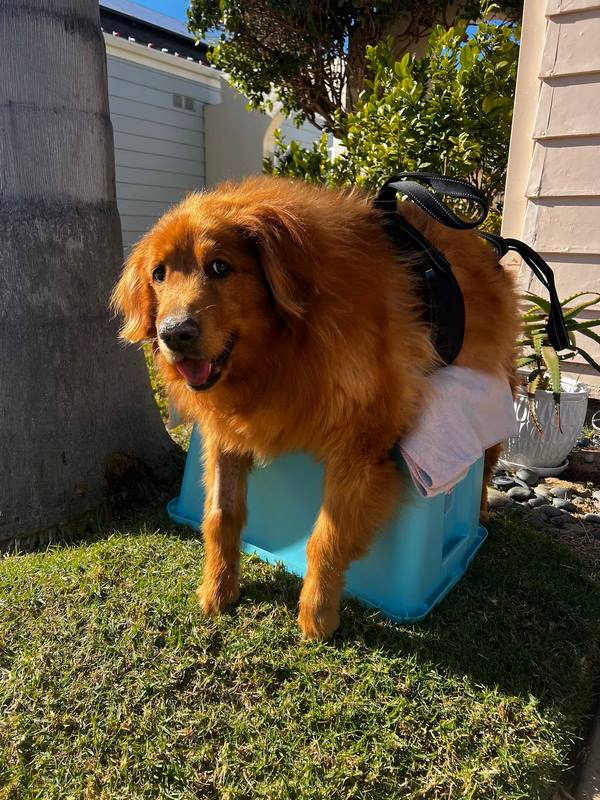
Frannie after she was rescued, when she weighed 125 pounds - credit @frannies.fright
Frannie after she was rescued, when she weighed 125 pounds – credit @frannies.fight

Despite the challenge and schedules of veterinary school, a 24-year-old woman in California is fostering a very overweight dog to the tears and delight of thousands who follow the pair on Instagram.

As the months passed, the pounds have melted away, and as the weight comes off, a sparkling canine personality is emerging that has the young woman certain she’s found a partner for life.

Neglected, obese, and suffering from pneumonia and hyperthyroidism, Frannie the golden retriever was on death’s door when Annika Bram became aware of her plight. As it happened, Bram’s golden retriever Georgia, who had just died, was also extremely overweight when Bram adopted her. She helped Georgia lose 85 pounds in their 5 years together.

Learning from a canine rescue organization Rover’s Retreat that Frannie was going to be euthanized, she felt that Georgia had brought this dog to her, because she knew she was the person who could take care of her.

Contacting Rover’s Retreat, she offered to foster Frannie, who she learned weighed 125 pounds—about double the normal heft of a female golden.

Sydney Maleman, the president of Rover’s Retreat, told the Washington Post that Frannie never had proper veterinary care and was medically unstable. She believed they had got to her just in time. As Frannie recovered what was left of her strength, Maleman knew Bram was the right person to foster her.

“Annika just kept following up,” said Maleman. “After talking to her, we just knew that she was going to set Frannie up for success; she was willing to do everything and anything for a dog she never met.”

ALSO CHECK OUT: When Dog Shelter Makes Appeal for Homes as Temps Plummet Below Zero People Arrive in Droves

Driving three hours down to San Diego, Bram finally met Frannie, but the meeting was bittersweet as the student at UC-Davis School of Vet. Medicine said that the pooch seemed “completely defeated.”

Frannie during weight loss rehab – credit @frannies.fight

Bram was determined, however, to help Frannie get back to a normal weight. Documenting her efforts on social media, hundreds of thousands of people began to tune in to see the techniques Bram used to help her new dog get back on her paws: literally.

MORE INSPIRING RESCUES: 5 Days After Vanishing, Puppy Found Stuck Inside Bramble Thicket Unseen Except By Heat-Seeking Drone (Video)

At first, Frannie was so heavy she couldn’t support herself, so Bram had her sitting over a crate so she could safely learn to put weight back on her legs. With the help of these rehab activities, thyroid medication, and a strict diet, the pounds began to fall away, and a “hidden personality” began to emerge.

“She’s a completely different dog,” said Bram. “Every day, her personality comes out more. All that personality has been hidden away for so long.”

Annika Bram and Frannie – credit @frannies.fight

At the end of February, Frannie was able to run for the first time in who knows how long, chasing a bouncing tennis ball like a normal pooch should.

Bram has applied for adoption of Frannie, whose daily walk is already exceeding a half-mile as she continues her rehab. At the time of publishing, she’s got down to 91.2 pounds from a high of 125.

SHARE This Woman’s Huge Heart For A Huge Dog And Their Journey Together… 

Eddie Van Halen’s Son Donates $100,000 to Kickstart Charity that Funds School Instrument Purchases

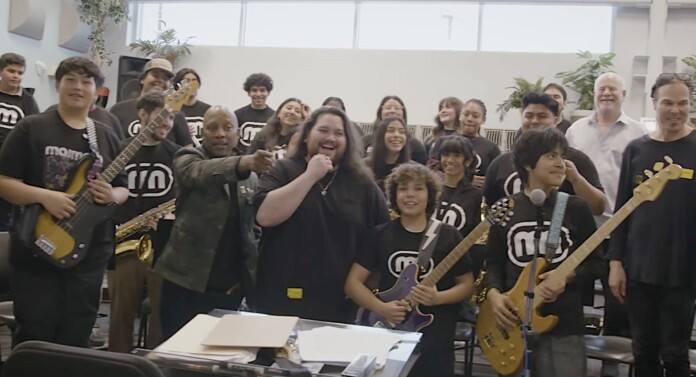
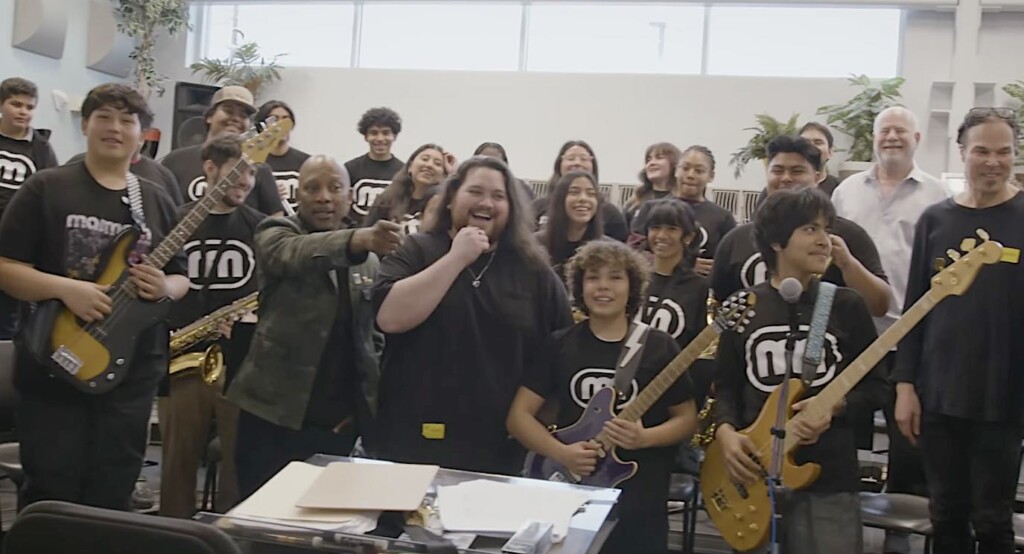
Wolfgang Van Halen with music class – Credit: Mr. Holland’s Opus Foundation via YouTube

Through a charity supported by his father, Wolfgang Van Halen has donated $100,000 to launch a special program to support public schools to acquire instruments for their music programs.

For decades, budgetary debate has remained heated about the importance, or the lack, of music programs in public schools, and Mr. Van Halen is stepping in to ensure educators who believe in the power of music to enrich educational experience have the resources to confer it to their students.

Working with the Mr. Holland’s Opus Foundation (MHOF), Van Halen has launched the Adopt a School campaign which connects qualifying schools across the nation in need of musical instruments with donors interested in supporting music education within a community of their choice.

“Music has been a huge part of my life, and it is our family’s great pleasure to help support music education programs and bring the gift of music to students across the country,” said Wolfgang Van Halen. “Music education has proven to be a huge contributor toward a student’s success in school, and in life.”

Some studies have shown that music classes promote academic excellence and other positive outcomes in school—like this one in Finland that found increased quality of life scores for students in ways that other non-academic classes, like sports and visual arts, did not replicate.

Despite this, music is famously the first program to get crushed under the weight of school district budgetary constraints.

“Our mission is to make sure there is an instrument in the hands of every student who needs and wants one. By increasing schools’ inventories of quality, playable instruments, music teachers will have the tools they need to deliver a quality music education to students who want to learn,” said MHOF CEO Tricia Williams.

YOU MAY ALSO LIKE: Anonymous Shopper Buys Iconic Pantera Guitar For Young Rocker Who Always Came in the Shop to Play it

According to Guitar World, the project was developed off the back of a national survey that found 68% of educators had experienced at least one instance of turning an interested student away from music education because of a lack of resources like instruments.

Also in the survey, which included 225 schools, students were found to struggle in class from using instruments that were in need of repairs, but which the school had no money to pay for.

MORE ROCK AND ROLL PHILANTHROPY: 60 of Rock’s Greatest Icons Play on New Charity Song–Answering Mark Knopfler’s Call to Help Teens w Cancer

Eddie Van Halen, the virtuoso guitar player from the band Van Halen, was a devoted supporter of MHOF, and the charity work he began is carried on by his son Wolfgang, whose $100,000 donation will kickstart the Adopt a School campaign in 100 schools nationwide.

WATCH a short video about the campaign…

SHARE This Generous Music Advocacy With Your Friends On Social Media… 
People are like tea bags—you can’t tell how strong they are until you put them in hot water. – Eleanor Roosevelt

Quote of the Day: People are like tea bags—you can’t tell how strong they are until you put them in hot water. – Eleanor Roosevelt (paraphrased)

Photo by: Svitlana

With a new inspirational quote every day, atop the perfect photo—collected and archived on our Quotes page—why not bookmark GNN.org for a daily uplift?

Paraplegic Veteran Uses Skydiving to Reclaim Lost Sensation in His Legs and Soul

screengrab - Skydive First Project, YouTube.
screengrab – Skydive First Project, YouTube.

There was a lot that Army veteran Alex Dillman lost when he became a paraplegic after an IED blew up under his legs in Afghanistan, but now an unlikely activity has allowed him to take some of what he lost back.

Hurtling through the air at 120 mph, Dillman doesn’t need his wheelchair to skydive; he doesn’t really need his legs either. In that unique state of concentration and freedom, he says he’s “expected to perform,” a do-or-die state of mind that he says he hasn’t felt since his old life on deployment.

Profiled in Walter Allen‘s “Extraordinary Ordinary” segment on Fox 13 News, Tampa, the veteran needed years to develop a method of solo skydiving without the use of his legs.

“[In] some weird way… the universe has offered me this opportunity. I was capable of doing it on my own [sic] was all I needed, and it sent me on this wild trajectory,” Dillman told Allen and Fox 13.

Dillman originally saw adventure therapy as a way to combat depression and PTSD he suffered from in the wake of his lost abilities, but he never imagined it would help him get some of those abilities back.

MORE EXTRAORDINARY ORDINARIES: 3rd Generation Shoemaker Goes Viral–Has Millions Watch Him Fix Shoes as ‘America’s Cobbler’

Now he’s part of an adventure therapy non-profit called Skydive First Project, where he utilizes outdoor adventures to assist individuals suffering from PTSD and depression. Based in Tampa, activities encompass hiking, kayaking, rock climbing, horseback riding, scuba diving, and tandem skydiving.

MORE VETERANS’ RECOVERY: Veterans Are Finding Lasting Peace After Taking These Free Journeys into Nature for Months at a Time

“[The] great thing about skydiving is that it gets me out of the chair,” said Dillman. “I don’t bring my chair with me, so I’m in a free state. I don’t need to be in the chair to perform the act of skydiving.”

“I can feel my legs and my feet to a certain extent. I can get a better sense of my overall being, feel what my legs are doing, feel what my hips are doing. Having that feeling again… even if it’s for 30 seconds or 60 seconds… is enough for me!”

WATCH Dillman freefall, and listen to his story on Extraordinary Ordinary… 

SHARE This Inspiring Tale Of Determination And Recovery With A Happy Ending…

Macgyvered Neck Brace Saves Rare Peruvian Grasshopper: ‘no matter how big or small’ the Zookeepers Care

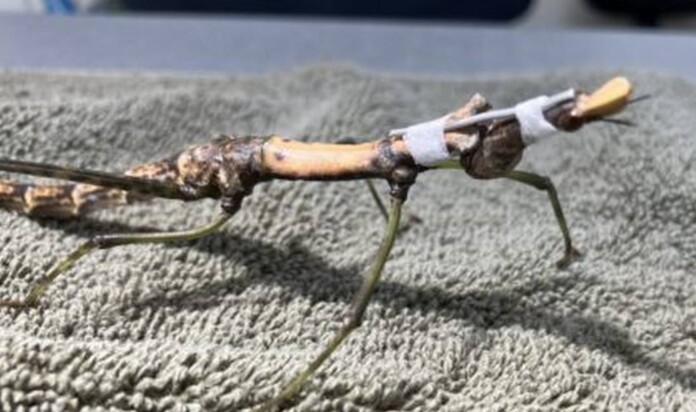
The Peruvian jumping stick with its neck brace - credit, Houston Zoo.
The Peruvian jumping stick with its neck brace – credit, Houston Zoo.

At the Houston Zoo, an emergency medical procedure saw a tiny resident receive a big degree of attention.

At the ‘Bug House,’ the Houston Zoo boasts a number of Peruvian jumping sticks, which appear like stick insects, but are actually grasshoppers.

In early 2024, a female jumping stick was going through molt, a number process by which the bugs shed their exoskeletons and grow new ones. However, when the female finished, attentive zookeepers noticed a crease had developed between her thorax and head in an area without a joint.

This “neck”-like spot (it isn’t really a neck as we would understand it) was so weak that when she attempted to climb up trees, her head flopped almost all the way back on itself.

Rushing her to the veterinary clinic, Julie, the entomologist who first noticed the crease on the jumping stick, came up with the ingenious idea to secure her head with a neck brace. Using the rod of a sterilized Q-top and some microspore tape, they braced her head and thorax which allowed the crease to heal.

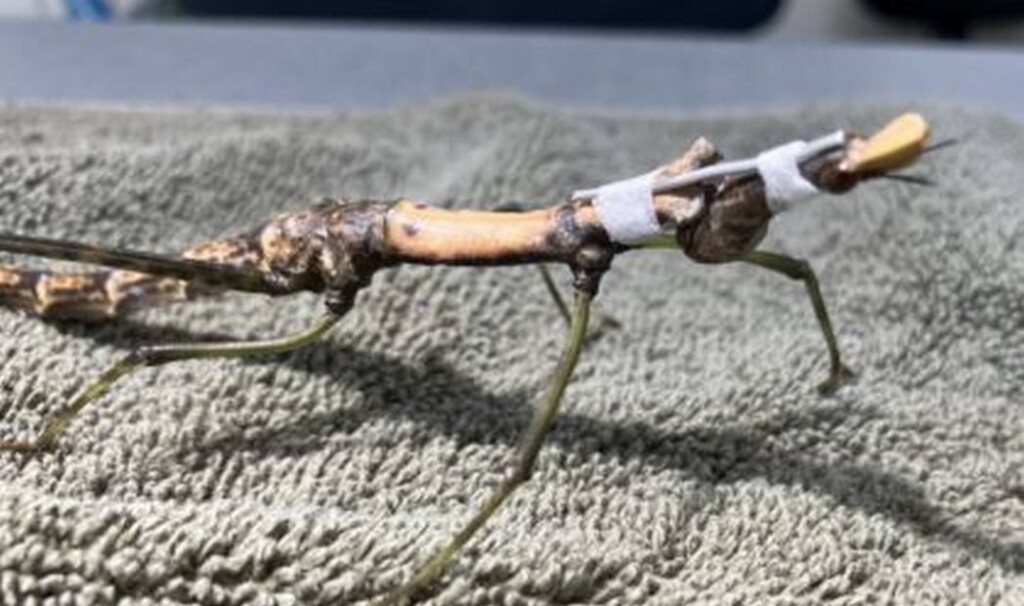
The Peruvian jumping stick after recovery – credit, Houston Zoo.

She had a small visible mark where the original crease happened, but after a few days the brace was removed and she was back to climbing about like normal in her exhibit.

“Whether it’s a mammal, reptile, bird, or even insect, all of our animals receive extraordinary care from our veterinary team, no matter how big or small it may be,” the Houston Zoo, understandably proud of Julie and the entomology team, wrote in a blog post. 

MORE INSECT INTRIGUE: 10-year-old’s Backyard Discovery Reveals ‘Mind-blowing’ Interaction Between Plants and Insects

“Together, with the help of our entomology and veterinary team, one of our smallest critters received exceptional treatment thanks to the ingenious design of a temporary neck brace.”

SHARE This Sweet Attention To One Of The Smallest Critters At The Zoo…