Quote of the Day: “The whole point of getting things done is knowing what to leave undone.” – Oswald Chambers
Photo by: Jonas Smith
With a new inspirational quote every day, atop the perfect photo—collected and archived on our Quotes page—why not bookmark GNN.org for a daily uplift?
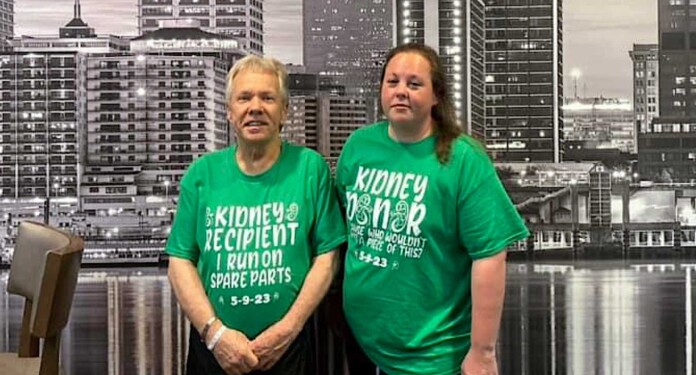
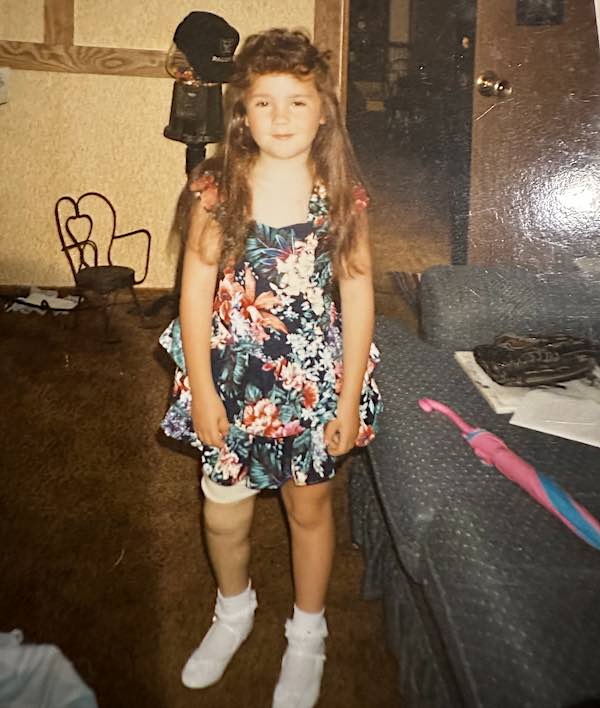
Krystal was 6 years old when Dave Polen began transporting her over 170 miles from her home in Somerville, Indiana, to a hospital.
She was born with Amniotic Band Syndrome and was directed to Shriners Children’s in St. Louis for treatment on her leg and possible amputation.
Dave started volunteering as a driver 30 years earlier, transporting patients so they might improve their quality of life.
Getting back and forth to St. Louis would have been difficult for Krystal’s family as her father worked long hours. So, they accepted an offer for hospital transportation from the local Shriners charity group.
Over the course of 10 trips, the conversations were plentiful on their 3 hour back-and-forth trips to the hospital. Dave was a ‘Driver Dad’ but soon became more. He became a friend—and their unexpected friendship has lasted for over three decades.
In fact, decades after meeting the “sweet little girl” with a prosthetic leg, Dave was a guest at Krystal’s wedding.
As the years rolled on, Dave became sick. Eventually, his doctors gave a diagnosis of end-stage renal failure. They said Dave would need dialysis for the rest of his life or a kidney transplant. Dave also got the warning that an available kidney might take five years to obtain.
Krystal in family photo
Dave reached out to Krystal to talk through the process because her husband had just received a liver transplant that saved his life.
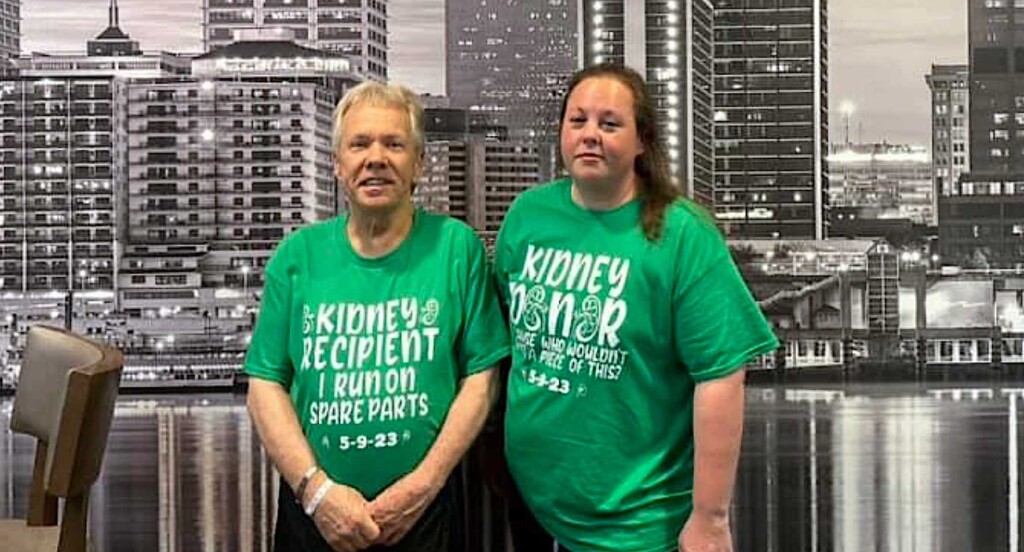
Krystal immediately saw an opportunity to return the favor. She found out they shared the same blood type and, without hesitation, offered to donate her kidney.
“Pack your bags, Dave. You’re going to get a slightly used but new kidney,” laughed Krystal.
“Since I was little, I’ve always questioned why Dave was so good to us because he was so kind and so willing to help out with anything. I’ve always questioned why.
“What I’ve come to understand is: If I was born with one leg so I could give my kidney to Dave, then so be it,” said Krystal.
“This is a gift I can’t ever repay,” said Dave. “I am so thankful! Now, I feel like I can do anything.”
SEND THE BEAUTIFUL STORY to Friends for Inspiration on Social Media…
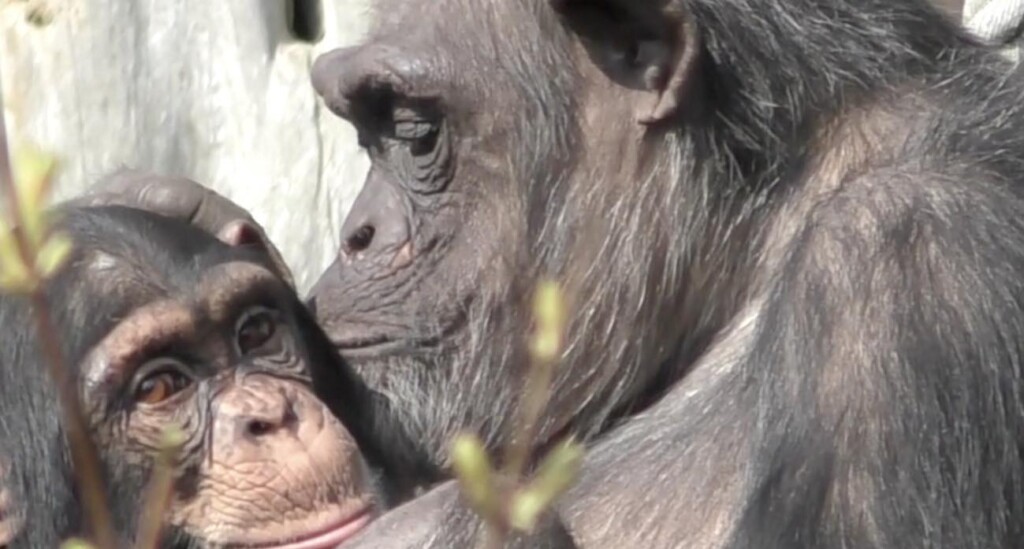
Apes can recognize friends they haven’t seen for decades, reveals new research from Johns Hopkins University.
The study, documenting the longest lasting non-human social memories ever recorded, found that apes recognize photos of group mates they haven’t seen for more than 25 years, and respond even more enthusiastically to pictures of their friends.
The research team said their findings, published yesterday in the journal Proceedings of the National Academy of Sciences, underscore how human culture evolved from the common ancestors we share with these primates, our closest relatives.
“We tend to think about great apes as quite different from ourselves but we have really seen these animals as possessing cognitive mechanisms that are very similar to our own, including memory,” said one of the study’s authors, Dr Laura Lewis, a biological anthropologist at University of California, Berkeley.
“I think that is what’s so exciting about this study.”
The research team was inspired to pursue the question of how long apes remember old pals through their own experiences working with primates – the sense that the animals recognized them when they’d visit, even if they’d been away for a long time.
“You have the impression that they’re responding like they recognize you and that to them you’re really different from the average zoo guest,” said the study’s senior author Dr. Christopher Krupenye of Johns Hopkins.
“They’re excited to see you again.”
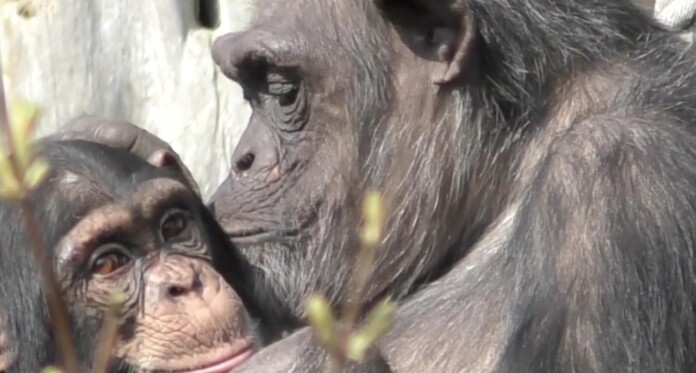
Such emotion was captured on film in 2016 when a 59-year-old chimpanzee—the matriarch of the famous chimpanzee colony of the Royal Burgers Zoo in the Netherlands—was dying of old age. The Dutch biologist Jan van Hooff, who was co-founder of the Burgers colony and had known ‘Mama’ for decades, visited her before she died. Once she became aware of Jan’s presence, even though not seeing him for a long time, her reaction was extremely emotional and warmed the hearts of all the caregivers.
So the goal with this study was to ask, empirically, if that’s the case: Do they really have a robust lasting memory for familiar social partners?
The results showed that chimpanzees and bonobos recognize individuals even though they haven’t seen them for multiple decades—and then there’s a small but significant pattern of greater attention toward individuals with whom they had more positive relationships.
“It suggests that this is more than just familiarity, that they’re keeping track of aspects of the quality of these social relationships,” said Dr. Krupenye.
The researchers worked with chimps and bonobos at three locations: Edinburgh Zoo in Scotland, Planckendael Zoo in Belgium, and Kumamoto Sanctuary in Japan.
The team collected photographs of apes that had either left the zoos or died, individuals that participants hadn’t seen for at least nine months and in some cases for as long as 26 years. The researchers also collected information about the relationships each participant had with former group mates—if there had been positive or negative interactions between them.
The team invited apes to participate in the experiment by offering them juice, and while they sipped it, the apes where shown two side-by-side photographs—apes they’d once known and total strangers.
Using a non-invasive eye-tracking device, the team measured where the apes looked and for how long, observing that the apes looked “significantly” longer at former group mates, no matter how long they’d been apart.
And they looked longer still at their former friends, those they’d had more positive interactions with.
In one of the most extreme cases, during the experiment, bonobo Louise had not seen her sister Loretta nor nephew Erin for more than 26 years at the time of testing. She showed a “strikingly robust” looking bias toward both of them over eight trials. Watch the researchers’ video below…
The results suggest great ape social memory could last beyond 26 years, the majority of their 40- to 60-year average lifespan, and could be comparable to that of humans, which begins to decline after 15 years but can persist as long as 48 years after separation.
Such long lasting social memory suggests that this kind of memory was likely already present millions of years ago in our common evolutionary ancestors.
Krupenye says the idea that apes remember information about the quality of their relationships is another new and human-like finding of the work.
The study also raises the questions of whether the apes are missing individuals they’re no longer with, especially their friends and family.
“The idea that they do remember others and therefore they may miss these individuals is really a powerful cognitive mechanism and something that’s been thought of as uniquely human,” said Dr. Lewis.
It seems, no matter what official measure is used in 2023 to judge the U.S. economy, the numbers look really good for consumers.
The latest positive news comes in the form of a historic milestone reached on the stock market.
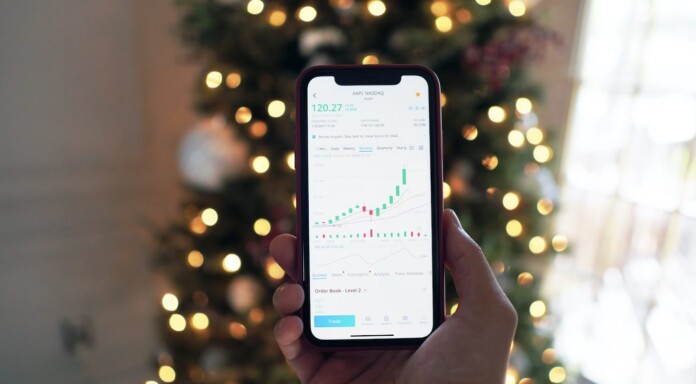
The Dow Jones Industrial Average, which is an average of 30 of the largest U.S. companies—including IBM, Apple, Nike, Verizon, Walmart, and Walt Disney—surged to a record high on December 13, passing 37,000 for the first time.
It beat that record on December 14—and then hit another record (37,305) on Friday, December 15. On Monday, December 18, it continued to improve.
To give you a sense of the increase, the Dow was at 30,930 when President Biden was sworn in on January 21, 2021. Since then, it has climbed more than 6,000 points. Another stock index, the S&P 500, is now 1.2% away from its all-time closing high that was reached in January 2022.
There are several reasons for the growth. The U.S. GDP output of goods and services continues to rise, fueling faith in the world’s largest economy. It rose a whopping 4.9% for the 3-month period ending in September—which is more than twice the GDP growth of the second quarter (2.1%). For comparison, the Chinese economy grew by 1.3 percent, just one-fourth as fast as the US in the third quarter.
Unemployment is low. Inflation also continued to edge downward last month as gas prices fell. Higher wages for US workers, one of the most critical post-pandemic measurements, created increased spending, which also fueled investor optimism.
Perhaps the biggest jolt for bullish investors came after seeing a statement from the Federal Reserve the previous Wednesday that said they might cut its interest rate next year.
With a new inspirational quote every day, atop the perfect photo—collected and archived on our Quotes page—why not bookmark GNN.org for a daily uplift?
“It’s become a huge joke with everyone and we’ve all had a good laugh.
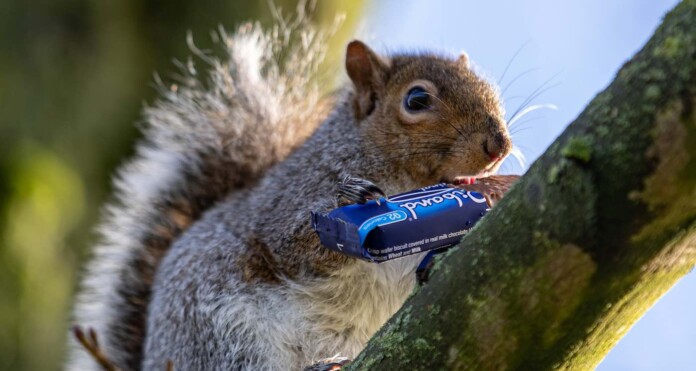
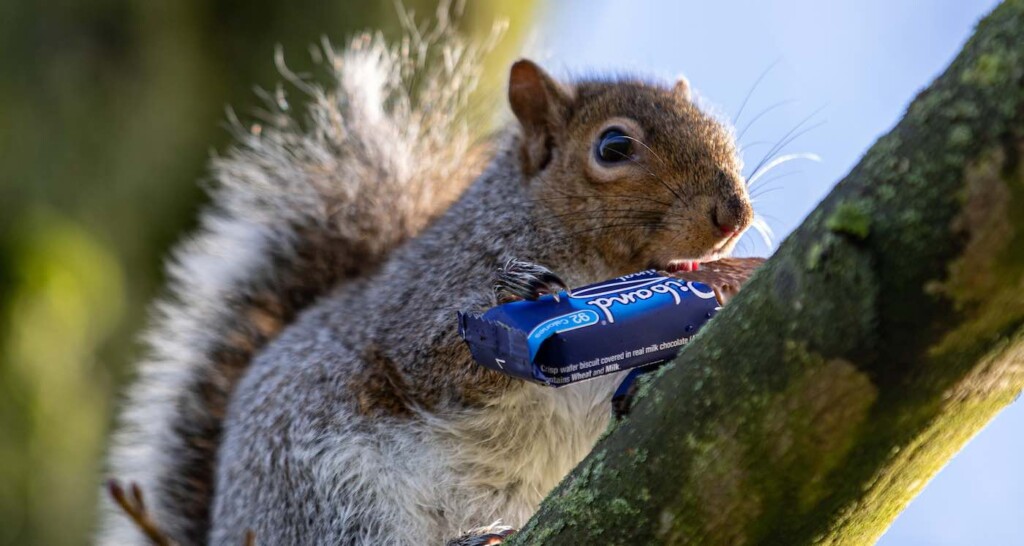
“They have ramped it up even more since we found out, every day I’m picking up wrappers out of rose bushes,” says Fiona. “It’s been hilarious working it out.”
SHARE a GOOD LAUGH With Friends and Squirrel Lovers on Social Media…
Photo by L. MODICA for Knowable Magazine (CC BY-ND)
(Originally published by Knowable Magazine – written by Diana Kwon)
Walk down the cold-remedy aisle of almost any pharmacy and you’ll see a shelf full of zinc supplements. Clearly, people must be worried that they’re not getting enough zinc—a nutrient often touted for its ability to quash the common cold and other respiratory illnesses. But do many of us really need more zinc? And if so, what good does it do?
As researchers learn more about how our bodies use zinc, they’re finding that the element plays a surprisingly key role, particularly within the immune system. “We think zinc is a gatekeeper of immune function,” says Lothar Rink, an immunologist at RWTH Aachen University in Germany who recently coauthored an overview of zinc’s roles in the immune system in the 2021 Annual Review of Nutrition.
And, although scientists still struggle to find good ways to measure zinc levels in the body, it looks as though many people may indeed not have enough zinc in their diet—an essential element—for full immune function.
Too little zinc is clearly bad news for your health. A severe shortage — often the result of a genetic defect or an extremely restricted diet — can cause myriad problems, such as stunted growth in infants and children, hair loss, roughened skin, delayed wound healing and weakened defenses against infections.
But the extent and consequences of more subtle zinc deficiencies have proven harder to pin down. That’s largely because it’s extremely difficult to measure zinc levels accurately in people. Zinc is often on the move both inside and outside our cells. During an infection, for example, blood levels drop as zinc is siphoned out of the bloodstream into cells that help launch an immune response. Zinc levels can also be perturbed by diet, certain drugs and hormones, and health status.
For these reasons, although it is possible to detect zinc levels in blood, these measurements are often imprecise. And unlike iron, which is easily assessed by measuring levels of iron-containing blood proteins like hemoglobin and ferritin, there is no biomarker that can be used as an indicator of zinc levels. “There’s still no 100 percent accurate way to measure zinc in a human being, especially if they have an illness of some kind,” says Daren Knoell, a zinc biologist at the University of Nebraska. Currently, the best way to determine a potential zinc deficit is to look at someone’s dietary intake, he adds.
Knowable Magazine (CC BY-ND)
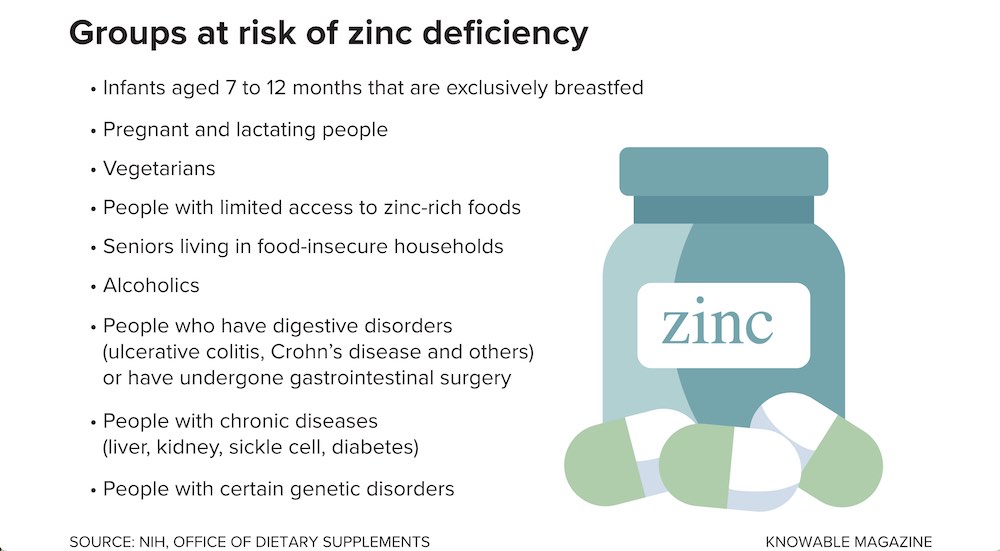
The most common cause of zinc deficiency is not getting enough zinc in your diet. But some groups may be at risk of deficiency due to higher nutritional requirements — during pregnancy, for example, or due to conditions that alter the body’s ability to absorb the mineral, such as Crohn’s and other gastrointestinal diseases.
Because of these limitations, most physicians diagnose zinc deficiency only if patients show symptoms of major deficiency such as rough skin or hair loss, Rink says. “But immune deficiency takes place much earlier, when you have a slight zinc deficiency.” Researchers have found that zinc-deficient individuals are more vulnerable to infection than those with adequate levels of the mineral. Studies have shown, for example, that in healthy elderly individuals, zinc supplements reduced the frequency of infections. (The possible use of zinc supplements to help ward off Covid-19 is an area of active investigation, although the U.S. National Institutes of Health states that there is currently not enough evidence to say if it will be beneficial.)
To help better identify people who aren’t getting enough zinc, Rink is involved in a project aimed at helping clinicians and the general public better assess an individual’s zinc status by using an app to closely track their diet and supplement use.
From the data available so far, it appears that zinc deficiency is relatively common. Based on assessments of diet and the prevalence of stunted growth, a common consequence of inadequate zinc consumption during development, some studies estimate that around 17 percent of the world’s population are at risk of zinc deficiency — and that in certain low- and middle-income regions, such as parts of South Asia, that proportion is as high as 30 percent.
Aging, genetics, pregnancy, illness and other factors all contribute to this shortfall, but diet is the main culprit, when individuals don’t eat enough zinc-rich foods such as seafood, red meat and nuts. Consuming too many phytates, substances found in whole-grain bread, cereals and other sources, can also be a problem. Phytates bind to zinc and prevent it from being absorbed into the body.
Even in the United States, about 15 percent of the population lacks adequate levels of zinc in their diet, according to a 2020 assessment of more than 26,000 US adults by researchers at a supplement company. This may be particularly common among the elderly, largely due to poor diet. But it often goes unnoticed because most people don’t show outward signs of being zinc-deficient, according to Knoell. “But when things go wrong — you get an infection — odds are, you’re going to do worse than somebody who has sufficient amounts of zinc in their diet.”
Knowable Magazine / (CC BY-ND)
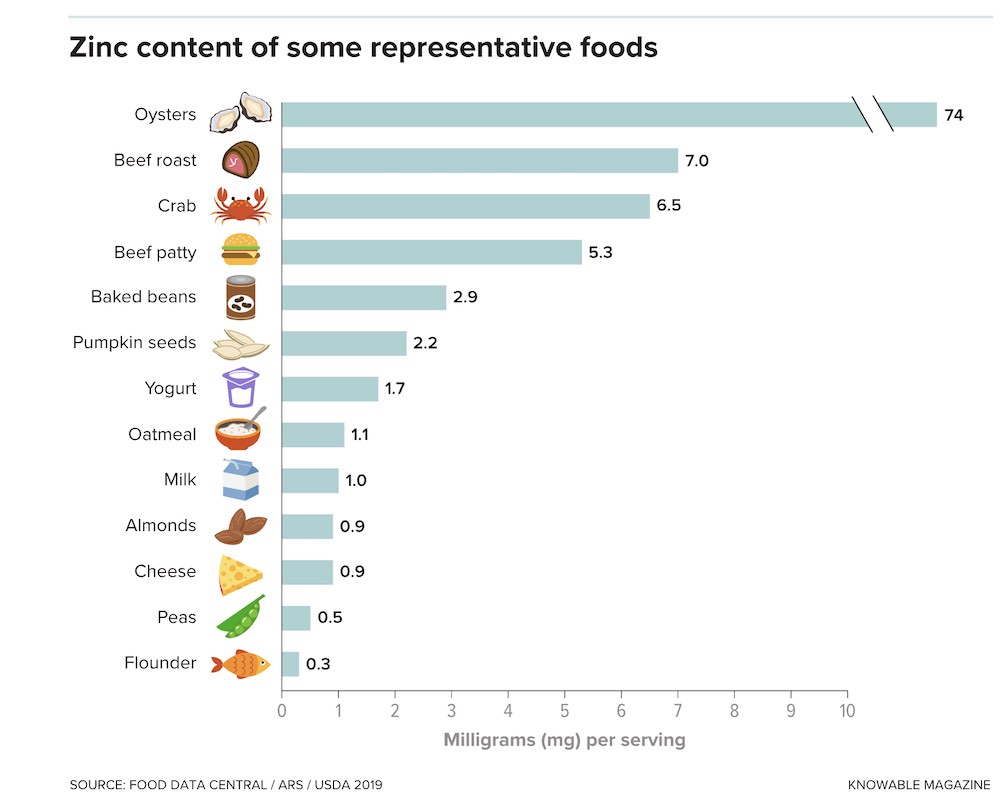
Zinc is present in many different foods. Foods with the highest zinc content include oysters, crab and beef. Phytates, which bind to zinc and limit its absorption into the body, are often present in plants — but plant-based foods, such as pumpkin seeds and oatmeal, can still be good sources of the mineral.
What does zinc do?
Studies show that zinc is important in almost all aspects of the immune system: It helps skin cells and cells lining our organs prevent pathogens from entering, and it keeps the thymus and bone marrow, which are responsible for generating immune cells, functioning normally. Zinc “crops up in all parts of the immune system,” says Sophie Hambleton, an immunologist at Newcastle University in the UK — and zinc-deficient people show a wide range of immune dysfunctions.
Most of the research to date has focused on the role of zinc in the innate immune system, the body’s frontline defense that launches fast, non-specific attacks against foreign invaders. Zinc appears to be involved in making physical barriers — such as the cells that line our organs — more resistant to invasion, as well as ensuring the proper functioning of macrophages, key white blood cells that gobble up pathogens and send out chemical signals to recruit other cellular soldiers.
To ensure that there’s enough zinc to carry out these many jobs, concentrations of the mineral within the body are tightly controlled. At the onset of an infection, for example, immune cells such as macrophages rapidly produce a zinc-transporting protein called ZIP8. This protein controls how much zinc enters these cells, which is important for maintaining the cells’ ability to mop up pathogens and regulating the production of important defense-related molecules, including chemical messengers called cytokines, Knoell and others have found.
More recent work has started to reveal that zinc is also important for the adaptive immune system, which uses memories of prior threats to launch pathogen-specific attacks via antibodies and T cells. In 2019, Hambleton and her colleagues reported that a mutation in another zinc transporter, ZIP7, caused a disease in which patients lack B cells, antibody-producing immune cells that we continuously generate throughout our lives. Further experiments in mice with these same mutations revealed that a lack of ZIP7 reduced the concentrations of zinc within immature B cells, impairing their maturation.
Although it is still unclear what this means for the broader role of ZIP7 in people without this mutation, Hambleton says that it is possible that a defect in ZIP7 may be one way in which an overall deficiency of zinc might lead to problems in immune function.
How much zinc does a person need?
Given how important zinc is to a healthy immune system — and the difficulty of knowing whether a person might be deficient — Rink says zinc supplementation is probably a good idea, especially for people who are at higher risk of being deficient, such as vegetarians, vegans and the elderly. (Rink has consulted for or received research grants from three companies that sell zinc supplements.)
Photo by L. MODICA for Knowable Magazine (CC BY-ND)
Most zinc nutritional supplements are safe and don’t cause any serious side effects at the recommended daily intake, 8 milligrams and 11 milligrams for women and men, respectively, but Rink warns that at very high concentrations zinc can have adverse effects. In 2009, the US Food and Drug Administration warned against the use of Zicam nasal spray and swabs, a common cold remedy containing zinc levels so high that it led to a loss of the sense of smell. Due to this and other potential harms, experts recommend that adults consume no more than 40 milligrams of zinc per day.
Most pharmacies stock over-the-counter zinc supplements. Some studies suggest taking supplements might help reduce the duration and severity of respiratory infections such as the common cold. But open questions — such as the best time to take these supplements, and whether they benefit people who aren’t zinc deficient — remain.
Although clinical trials in humans are scarce, there have been a handful that have examined the effects of zinc supplementation during viral infections. A 2021 review of two dozen clinical trials indicated that in healthy people, taking zinc supplements either as lozenges or nasal sprays at the onset of illness may reduce the duration of the common cold and other respiratory infections by a few days. The study also looked at chronic supplementation, and found evidence that taking zinc supplements daily for seven months to a year might help stave off the effects of respiratory infections, though it did not appear to prevent the common cold.
Hambleton notes, however, that while it’s important to make sure you’re getting enough zinc in your diet, manipulating zinc levels in specific parts of the immune system is not easy because zinc is distributed in different ways across the body. “It’s very simplistic to think that because zinc is required for immunity, more zinc equals more immunity,” she says.
Many open questions remain. For one, the authors of that 2021 review note that there were limitations to the available trials, such as small sample sizes. In addition, the time frame for zinc’s benefits is unclear. Most of the trials looking at the benefits of zinc after infection reported that supplements work only within 24 hours of when symptoms begin — but the team found evidence that window might be longer, and that zinc might be beneficial even when consumed up to three days after the onset of symptoms. And we need better zinc supplements, Knoell says. Most now come in salt form, as zinc sulfate or chloride, but these are not readily taken up by the body, so better formulations would be beneficial, he adds.
There’s also the question of whether certain people are genetically programmed to have a harder time absorbing zinc into their body than others. And researchers also are interested in investigating possible drugs that might target zinc transporters in people who have problems in those proteins.
“We’re starting to ask and answer those questions now in animal models,” Knoell says. “The excitement will be, of course, if some of that translates to the human condition.”
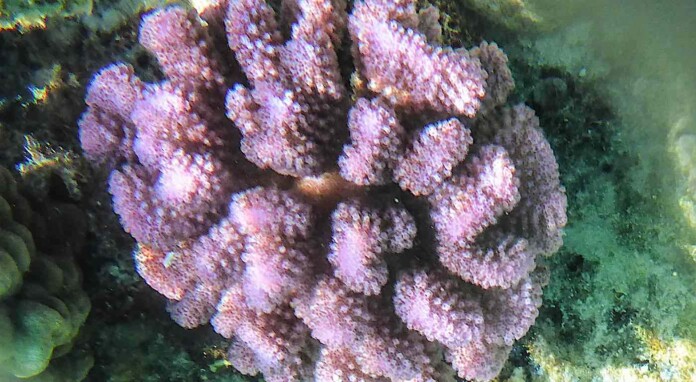
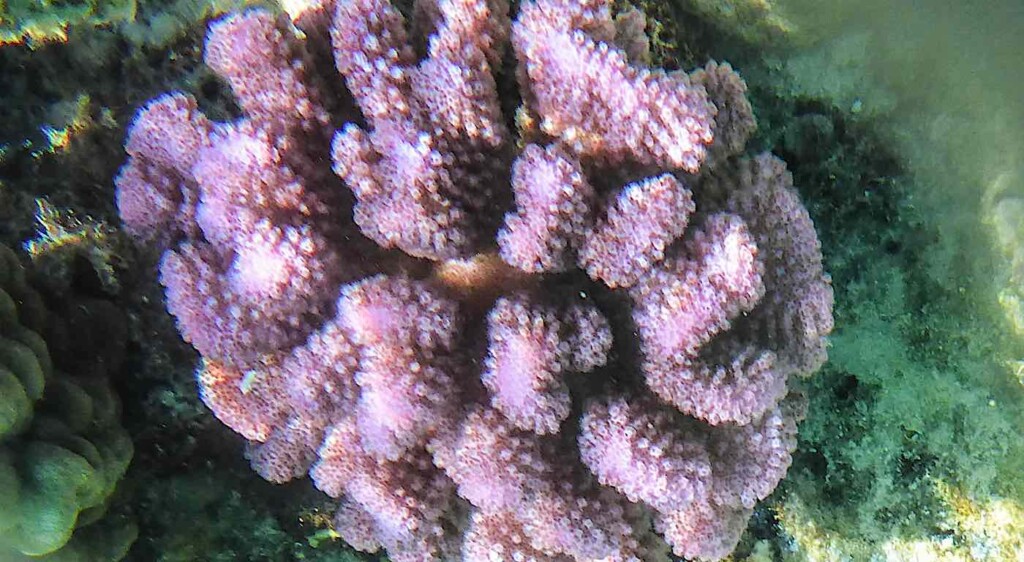
Cauliflower Coral Pocillopora verrucosa on reef off Mo'orea – By Arthur Chapman, CC license
OSU coral researcher Alex Vompe off the north shore of Mo’orea – SWNS / OSU
Some coral species can be resilient to marine heat waves by “remembering” how they lived through previous one, reveals new research.
Scientists at Oregon State University also discovered evidence that the ecological memory response is likely linked to the microbial communities that dwell among the corals.
The study, published today in Global Change Biology, is important because coral reefs are found in less than one percent of the ocean but are home to nearly one-quarter of all known marine species. They also help regulate the sea’s carbon dioxide levels and are a crucial source for scientists searching for new medicines.
“Slowing down the rate of coral cover and species loss is a major conservation goal,” said study author and graduate student Alex Vompe. “Predicting and engineering heat tolerance are two important tools.”
“It is vital to understand how quickly reefs can adapt to ever more frequent, repeated disturbances such as marine heatwaves.
Coral microbiomes—the community of bacteria and archaea living within reefs—could be the key to rapid adaptation.
“Climate change is threatening coral reefs in part because some of the relationships between coral and their microbes can be stressed by warming oceans to the point of dissolution,” explained Vompe.
“But Acropora retusa, a prevalent coral species in the Mo’orean coral reef that we studied, appears to have a powerful ecological memory response to heat waves that the microbiome seems to play a role in.
“This means some coral species may be more resilient to climate change than previously thought.”
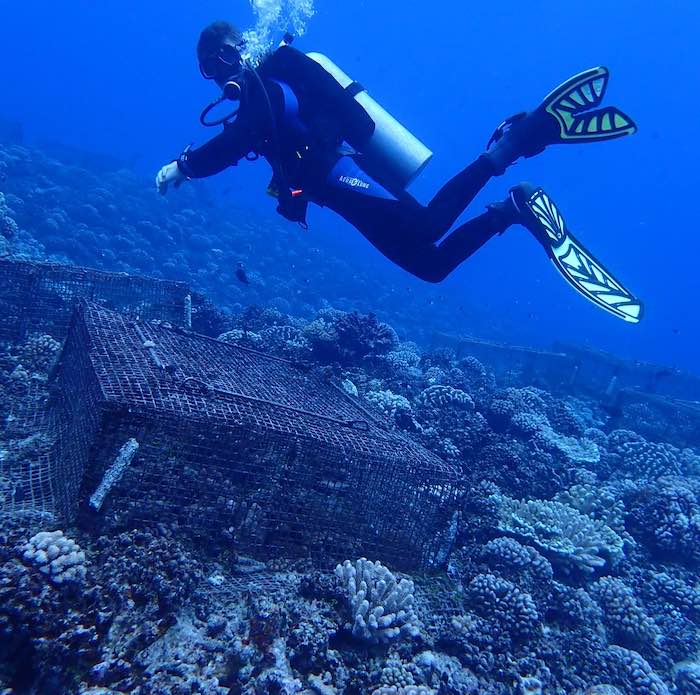
Partly funded by the National Science Foundation, the team spent five years studying 200 coral colonies at a reef on the north shore of Mo’orea, French Polynesia. Because of the reef’s recent history, it presented a unique opportunity to examine heat wave response.
In 2010, crown-of-thorns starfish and a cyclone destroyed more than 99% of the corals, effectively hitting the reset button on the reef.
Corals reestablished and went through comparatively minor heat wave events in 2016 and 2017 before experiencing the area’s most severe marine heat wave in recorded history between December 2018 and July 2019. The second-most severe heat wave soon followed in 2020.
“We observed that some species of coral seem to remember exposure to past marine heat waves and maintain a higher level of health in subsequent heat waves,” said OSU Professor Vega Thurber. “And Acropora retusa’s memory response was strongly linked to changes in its microbiome, supporting the idea that the microbial community has a part in this process.”
Cauliflower Coral Pocillopora verrucosa on reef off Mo’orea – By Arthur Chapman, CC license
Cauliflower corals in the genus Pocillopora stayed in good health through the heat events, and their microbiomes also showed an ecological memory response, she noted. They were perturbed by the initial 2019 heat wave but recovered to their predisturbance state despite the second heat wave in 2020.
“Members of coral microbial communities have unique biological features that make them more adaptable and responsive to environmental change – short generation cycles, large population sizes and diverse metabolic potential,” Vega Thurber said.
“In two of the three coral species we focused on, we identified initial microbiome resilience, host and microbiome acclimatization, or developed microbiome resistance to repeated heat stress. The latter two patterns are consistent with the concept of ecological memory.”
SHARE the HOPE for Coral Reefs With Ocean-Lovers on Social Media…
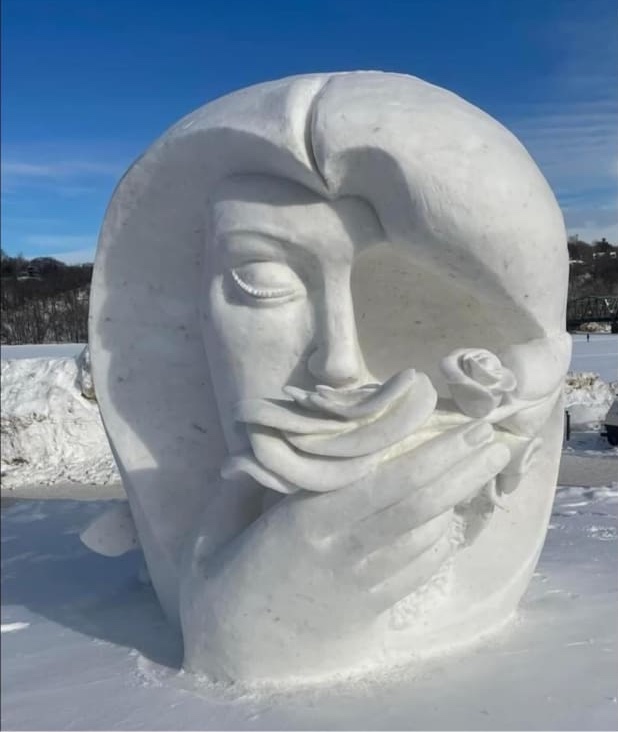
Stillwater, Minnesota is hosting the third annual World Snow Sculpting Championship with artists from eight countries.
The event, sanctioned by the Association Internationale de Sculpture sur Neige et Glace based in Finland, will feature world-class snow sculpting teams from Turkey, Finland, France, Wales, Canada, Mexico, Ecuador, and the U.S. competing to create the most compelling snow sculptures.
“We are thrilled to be hosting this event again in its third year, and to be bringing the beauty and excitement of snow sculpting to Stillwater,” said Robin Anthony, President of the Greater Stillwater Chamber of Commerce and Co-Director of the World Snow Sculpting Championship.
The World Snow Sculpting Championship will be celebrated with a week-long festival of events, entertainment, and activities for people of all ages.
Some of the spectacular sculptures erected during this event include the whimsical and dramatic.
In addition to the events, there will be an indoor market, warming house, and heated tent. You can see the full schedule of events on the official website.
Quote of the Day: “We must sense that we live in a mysterious world—that things happen and can be experienced that remain inexplicable.” – Carl Jung
Photo by: Jr Korpa
With a new inspirational quote every day, atop the perfect photo—collected and archived on our Quotes page—why not bookmark GNN.org for a daily uplift?
Researcher Yousong Cao helped gather samples from the Great Wall for testing - released to Smithsonian by Bo Xiao
Researcher Yousong Cao helped gather samples from the Great Wall for testing – released to Smithsonian by Bo Xiao
For centuries, soldiers stood guard along the Great Wall of China, defending the heartland of the North China Plain from nomadic invaders like the Huns, and the ancestors of the Mongols.
Now, a new kind of protector stands stalwart on the wall, even as the unfinished parts of the great monument crumble away: biological soil crusts.
These mixes of lichen, moss, and cyanobacteria form a crusty surface atop loose soil, and play a major role in arid ecosystems, but in Northern China, they are protecting sections of the wall from wind and water erosion.
Scientists hoping to understand the impact of these soil crusts on the famous wall selected a 300-mile-long section to take samples from. The Great Wall of China was built in several stages, separated by hundreds of years. At times, the wealth and power of the Chinese ruling dynasty allowed them to use brick and mortar, but in other times, or in more remote places, rammed earth was used instead.
Rammed earth is a mixture of mud, gravel, and other natural materials that are compacted, much like the surface of the ground. This has allowed biological soil crusts to flourish on the rammed earth sections of the wall, and indeed were found to cover 67% of the sampled areas.
“Compared with bare rammed earth,” the authors of the study wrote in the journal Science Advances, “the biocrust-covered sections exhibited reduced porosity, water-holding capacity, erodibility, and salinity by 2 to 48%, while increasing compressive strength, penetration resistance, shear strength, and aggregate stability by 37 to 321%.”
In many desert parks in the US, signs are posted along trails warning visitors and hikers to stay away from patches of lumpy dark Earth. These are biological soil crusts, and they keep desert environments more fertile than they otherwise would be by keeping the sandy dirt from blowing away.
In fact, half of all the soil on Earth would be blown into the oceans, approximately 700 million metric tons of dust every year, if not for this diminutive phenomenon. Researchers at the University of Almeria, Spain, have estimated that 25% of all the soil in all the world’s drylands is covered in these biocrusts.
Other scientists have estimated that these little colonies of organisms prevent an amount of dust equal to all human-created atmospheric aerosols, and three times as many as humans have placed into the atmosphere through land-use changes, from entering it.
It can take over 50 years for biological soil crusts to form, and merely 1 second of a heavy hiking boot falling to unmake them. So watch your step!
SHARE This Amazing Discovery And Even More Amazing Phenomenon…
Reed Marcum in 2022 during his seventh annual toy giveaway – Photo by Angie Miller
Reed Marcum in 2022 during his seventh annual toy giveaway – Photo by Angie Miller
Reed Marcum was just a kid when he learned that some children in his town of McAlester Oklahoma didn’t have any toys under their Christmas tree.
A shy kid who was bullied in school, Reed remembered the moment very clearly, since he was no stranger to feeling left out. Even though his parents divorced when he was just 7, there were people who stepped in to make Christmas time special, so the thought this his fifth-grade friend would find nothing under the tree was tough to hear.
Whatever the reason his heart or his blues, he proposed to his mother to hold a toy drive, similar in structure to a backpack drive they had organized the year before. Reed’s mother, Angie Miller, posted a video on Facebook explaining her son’s intentions, and asked for donations of toys or money to buy toys for a giveaway that Reed had decided to do as a 4-H project.
“There was a great response—lots of people went out and bought new toys to donate, or they sent money for us to buy them,” Miller said.
That was all 7 years ago, and now as a university freshman, Reed still drives two-and-a-half hours home from his campus in Stillwater to participate in the annual toy drive; now in its seventh edition.
10,000 toys are slated to be handed out in this year’s giveaway which takes place as a drive-through event, with eager kids in the back seats gesticulating to their parents which toy they like the most. Each kid also receives a pair of socks, underwear, trousers, a shirt, gloves, and a hat.
“We have walls of toys lined up on each side of the cars, and kids tell us which ones to grab as their parents drive them through the line,” Reed, who studies prelaw and sociology at OK State University, told the Washington Post. “Seeing the happy looks on their faces is always the best part.”
54,000 toys have so far been given out to kids in McAlester, which unfortunately has a poverty rate of 24% according to international statistics.
Reed continues paying forward, as he sees it, the kindness his family received more than a decade ago by starting other charitable programs. He holds silent auctions to benefit pediatric cancer patients, and continues the backpack giveaways he started with his mom when he was just 11 years old.
One resident told the Post that he’s catalyzed everyone in the community; everyone wants to get involved with his work in some way, and the paper says his activities have raised more than $3.5 million.
SHARE This Young Man’s Heroic Work With Your Friends In Time For Christmas…
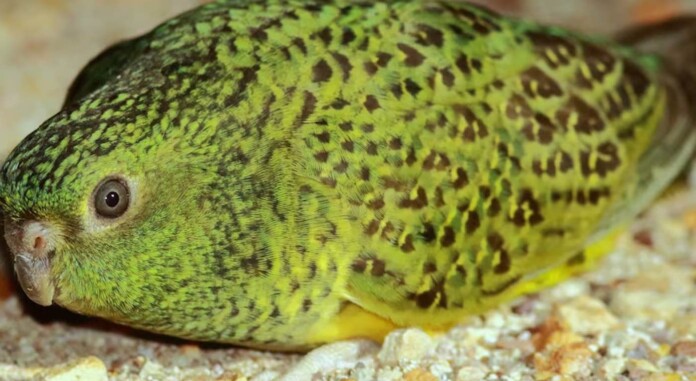
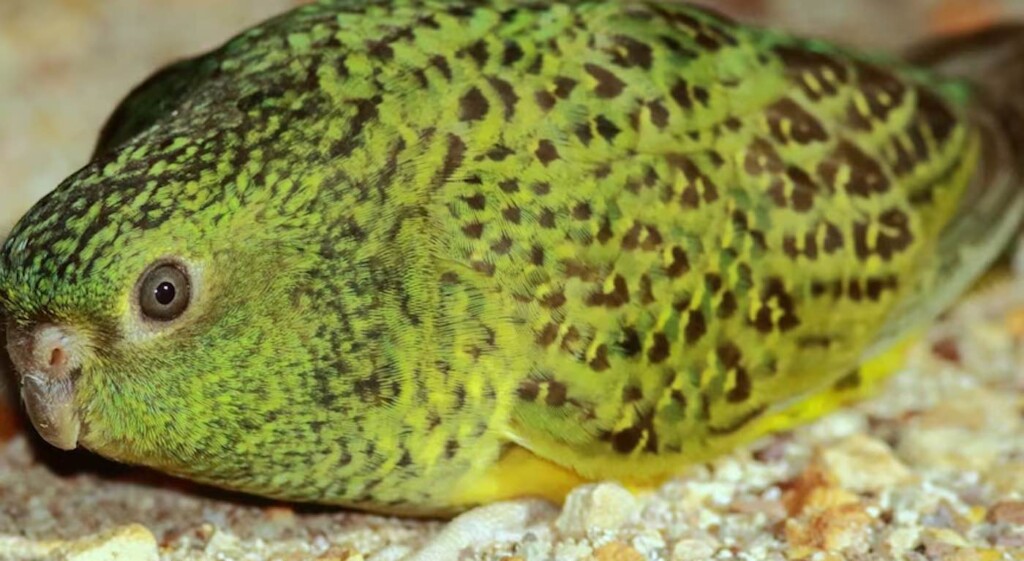
Adult night parrots are ground-dwelling birds that fly – Photo by Steve Murphy
Adult night parrots are ground-dwelling birds that fly – Photo by Steve Murphy
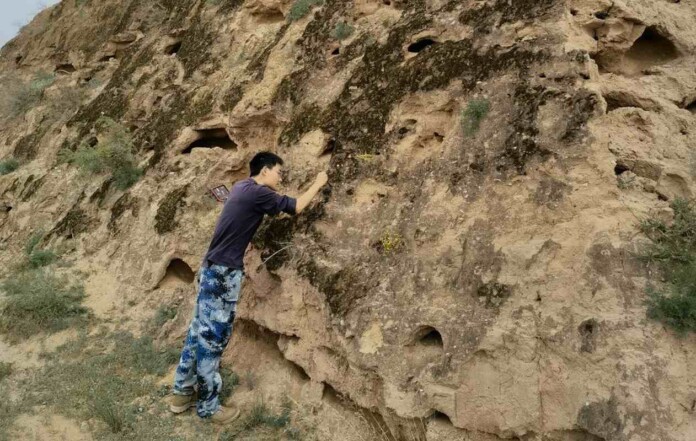
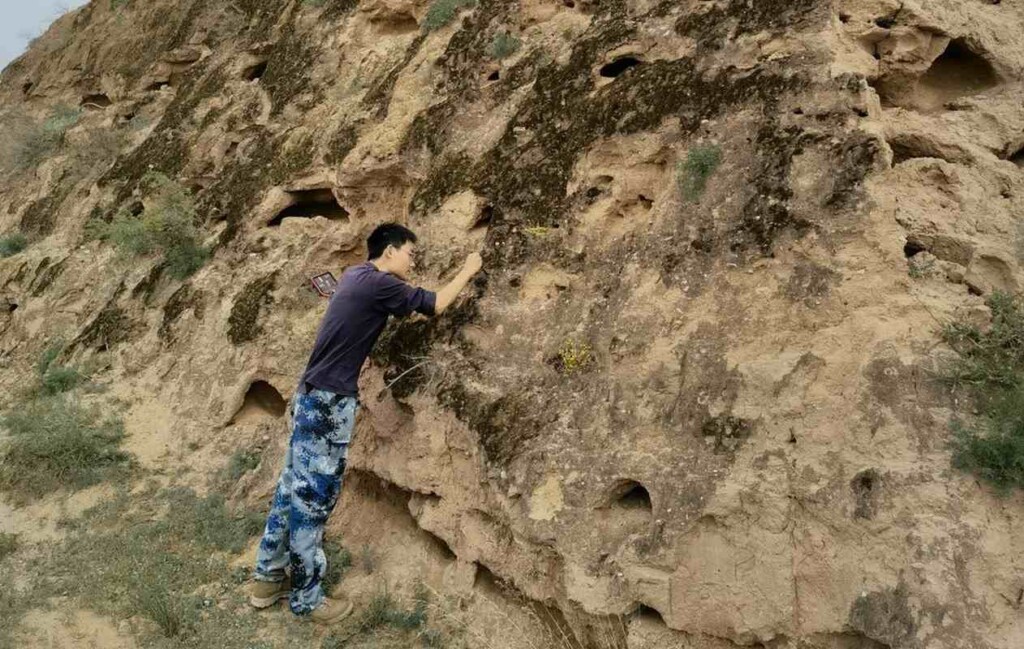
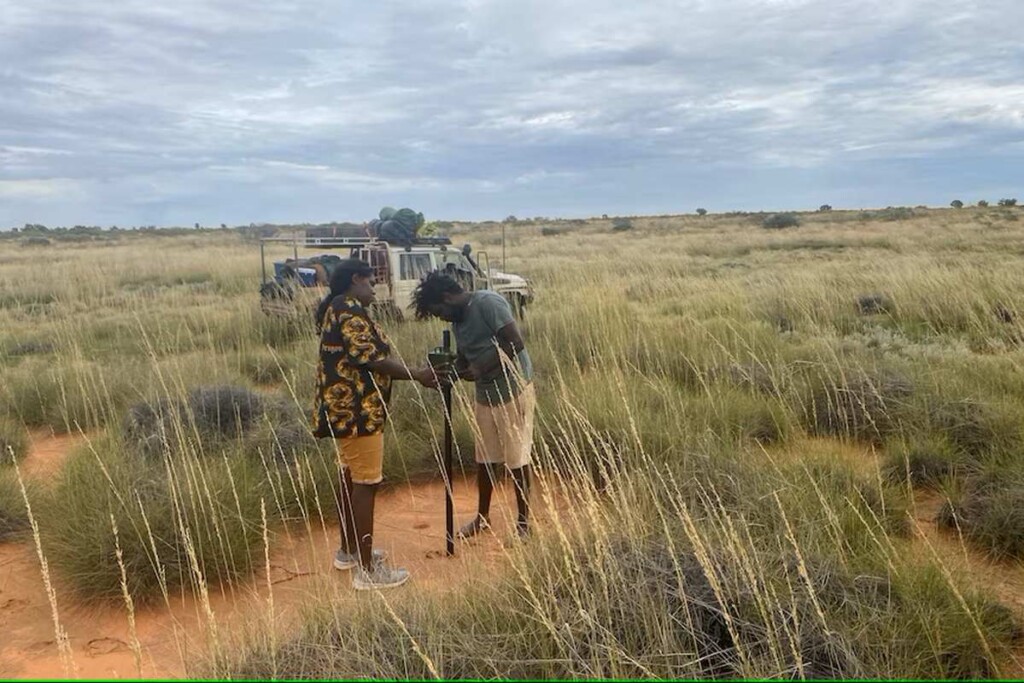
From ABC News Australia comes a fantastic development in indigenous-led conservation, as rangers from the Kiwirrkurra traditional owners have recorded the calls of one of the world’s rarest birds, the night parrot.
There’s nothing better than a natural enigma to heighten or restore your sense of wonder of the natural world, and the night parrot is certainly under this category. A ground-dwelling bird that flies, it does all its calling in spinifex bushes after nightfall.
Feral cats and fires have reduced the available habitat of these animals, and they’re believed to be critically endangered. Now, a Kiwirrkurra ranger team in a remote area of the Gibson Desert in the central regions of the state of Western Australia has become the fifth such team to record their calls.
“It made me really excited that the night parrot still exists there, because it means we’re doing lots of good work,” Kiwirrkurra ranger coordinator Ed Blackwood told ABC. “If that’s there, it means lots of other animals can live and be happy in that same area.”
The calls are extremely valuable conservation data points, as they help define their current habitat areas. Once enough of these recordings have been taken, scientists studying the night parrot will be able to recommend specific spaces for conservation measures.
This year, Kiwirrkurra rangers erected sound recording stations in five separate areas and sent the night’s sound to night parrot expert Dr. Nick Leseberg at the Univ. of Queensland. The bird has a predictable calling sequence, so picking them out in the field recordings is not necessarily difficult.
The difficult part is finding where to put the monitors.
Janine West and Conway Gibson erect song meters to detect the night parrot’s call.(Supplied Tjamu Tjamu Aboriginal Corporation)
“Every time we get a new dot on the map, that extends the range of the night parrot just a little bit further. It’s critical,” Dr. Leseberg told ABC.
ABC News was able to speak to indigenous owners who communicated what the night parrot’s call meant to them.
One, Nolia Yurrkultji Ward, said that her mother used to tell her when she was young that it was time for bed when the night parrot calls, advice that Ms. Ward always took out of fear the calls were evil spirits. Hearing them now doesn’t fill her with fright, but fond memories of her childhood.
The discovery in Gibson means that the Kiwirrkurra are now stewards of 4 endangered species, including the great desert skink, the bilby, and the princess parrot.
The call itself is nothing to write home about if it wasn’t attached to such an enigmatic bird, with three short whistles and then a chatter.
Many conservationists are beginning to find value in audio-focused conservation. Camera trap surveys are extremely laborious and don’t necessarily give good indications of the population density of targeted animals. By mapping whole soundscapes, conservationists can get a much better read on the range and density of animals, as well as the overall intactness of the ecosystems they’re studying, since so many animals vocalize.
SHARE This Great Conservation News With Your Friends…
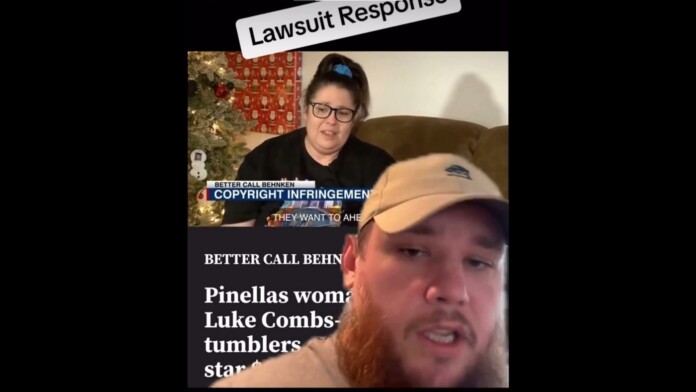
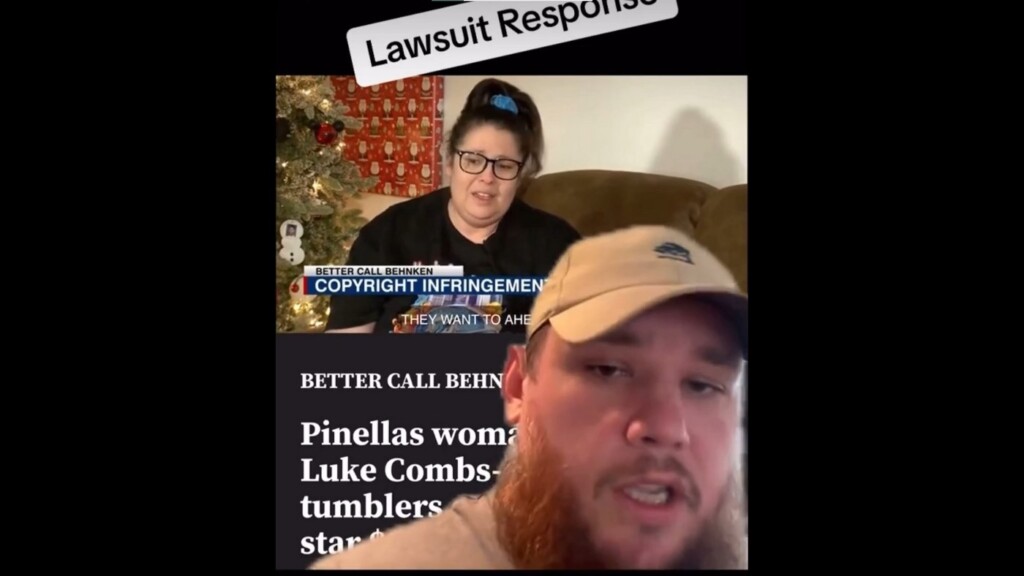
When Country music star Luke Combs learned that a big fan was fined a quarter million dollars for using his likeness, Combs stepped in to help.
A company contracted by Combs’ management identified Florida resident Nicol Harness as selling tumblers and t-shirts with his likeness on them on Amazon. Taking her to court, they won a $250,000 damages judgment, money which Harness, who has congestive heart failure, did not have, and had no means of obtaining.
“She told me she was absolutely shocked by this,” Combs said in a social media post. “I’m so apologetic. Talking to her, it makes me sick honestly that this would happen, especially at the holiday.”
In total, Pinellas had sold just 18 tumblers, earning a total of $360. She had no idea that she was targeted along with a suite of other illegal online vendors in an October lawsuit filed in a court in Illinois.
“So, we do have a company that goes after folks, only supposedly large corporations operating internationally that make millions and millions of dollars, making counterfeit T-shirts, things of that nature run illegal businesses,” Combs explained. “And apparently this woman, Nicol, has somehow gotten wrapped into that.”
Combs said Harness told him she had $5,500 locked in her Amazon account, which the judge determined had to go toward the 250K she has been ordered to pay Combs.
Luke Combs in Amsterdam CC License – Alwyn Greer
“I’m gonna double that send her $11,000 today just so she doesn’t have anything to worry about,” Combs said. “She was never supposed to be involved in anything like this.”
“I invited Nicol and her family out to a show this year so I can give her a hug and say sorry in person,” he said in conclusion. “And yeah, I love you guys. I just wanted to clear that up because it makes me sick for anybody to be thinking I’m this kind of person.”
WFLA Tampa reports that in Illinois, court orders and lawsuits can also be served via email, which Harness said was buried in her junk folder. In Florida, where she lives, court orders and notices of any legal requirements must be served in person.
SHARE This Responsible And Considerate Celebrity With Your Friends…
Quote of the Day: “Life holds its miracles, good erupting from darkness chief among them.” – John Patrick Shanley
Photo by: Filip Bunkens
With a new inspirational quote every day, atop the perfect photo—collected and archived on our Quotes page—why not bookmark GNN.org for a daily uplift?
A close-up of sickle-cell anemia – CC, Libertas Academica license.
The first FDA-approved treatment using CRISPR may see hundreds of African Americans cured of sickle cell disease.
Making headlines without end for years, but only approved for trials, a CRISPR product is now finally on the shelves, so to speak, and this iteration of the treatment is called Casgevy and manufactured by Vertex Pharmaceuticals.
CRISPR edits the genetic code of the body’s own stem cells to treat conditions that arise from defective or mutated genes. In the case of sickle cell, Homo sapiens evolved this genetic change to protect themselves against the malaria parasite of the African continent.
However the disease that sometimes results from the sickle cell gene, which affects over 100,000 Americans, can cause debilitating pain and shortened lifespan.
“It’s been really remarkable how quickly we went from the actual discovery of CRISPR, the awarding of a Nobel Prize, and now actually seeing it being an approved product,” said Dr. Alexis Thompson, chief of the division of hematology at Children’s Hospital of Philadelphia, who has previously consulted for Vertex.
Until now, the only previous treatment for sickle cell disease was a bone marrow transplant from a donor which carried large risks such as rejection of the immune system. It’s also difficult to find a matching donor.
While classified as a one-time treatment, the process involves many individual appointments, which themselves are painful, but NBC spoke to one woman who feels as if she’s been given a second shot at life, and can now run and go to the gym; things she couldn’t do before.
“I’m just like a regular person. I wake up and do a 5K. I lift weights. If I wanted to swim, I can swim. I’m still trying to know how far I can stretch it, like what are all the things I can do,” said 29-year-old LaRae Morning.
She would recommend the treatment to anyone who has the option, despite the painful administration process. Winning the Nobel Prize in chemistry in 2020, CRISPR is new, and state-of-the-art. What it isn’t, though, is cheap, and Casgevy costs $2.2 million.
Because it can help prevent years of medical care, NBC reports at least some of the cost will be covered by insurance.
SHARE This Groundbreaking Moment In The Next Stage Of Medicine…
Lord, and the damage from the tornado - GoFundMe, Caitlin Moore
Lord, and the damage from the tornado – GoFundMe, Caitlin Moore
Sydney Moore watched as the bassinet containing her infant son Lord followed the roof of her mobile home up into the funnel of a tornado—ensuring, she thought, that she would never see him again.
Without time to shed a tear, she threw herself atop her 1-year-old boy just as the walls collapsed on them both.
Outside, her car was obliterated, and the area around her Clarksville Tennessee mobile home was completely destroyed.
Surviving the collapse of the home, she searched desperately for the 4-month-old with her boyfriend, who had been thrown by the force of the funnel which broke his arm and shoulder
“I thought he was dead,” Moore told WSMV in a sober voice. “I thought he was dead and I’d never see him again.”
Then, a miracle.
“It was like a little tree cradle,” Moore remembered. Her baby was but for a cut unscathed, lying asleep in the crook of a fallen tree. Moore’s sister remembered thinking that it looked for all the world as if little Lord had been placed there, as if an angel had guided him through the storm.
Caitlin, Sydney’s sister, organized a GoFundMe to help the family recover from the destruction of their home, means of transport, and the loss of all their furniture and most of their possessions.
Generous souls a-plenty have seen the fundraiser reach $68,000 out of the 100 grand the family is hoping for.
WATCH the story from WSMV…
SHARE This True Miracle With Your Friends On Social Media…
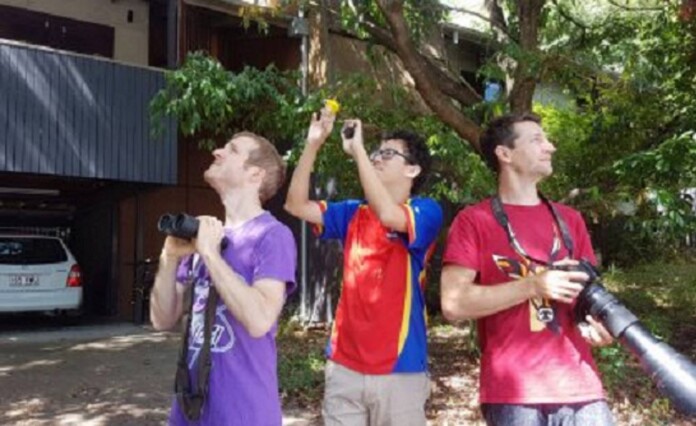
Dr. Holden and his friends - released to the press by the University of Queensland
Dr. Holden and his friends – released to the press by the University of Queensland
If you went out into the backyard of a house in a major metropolitan area, how many species of plants and animals would you expect to find there?
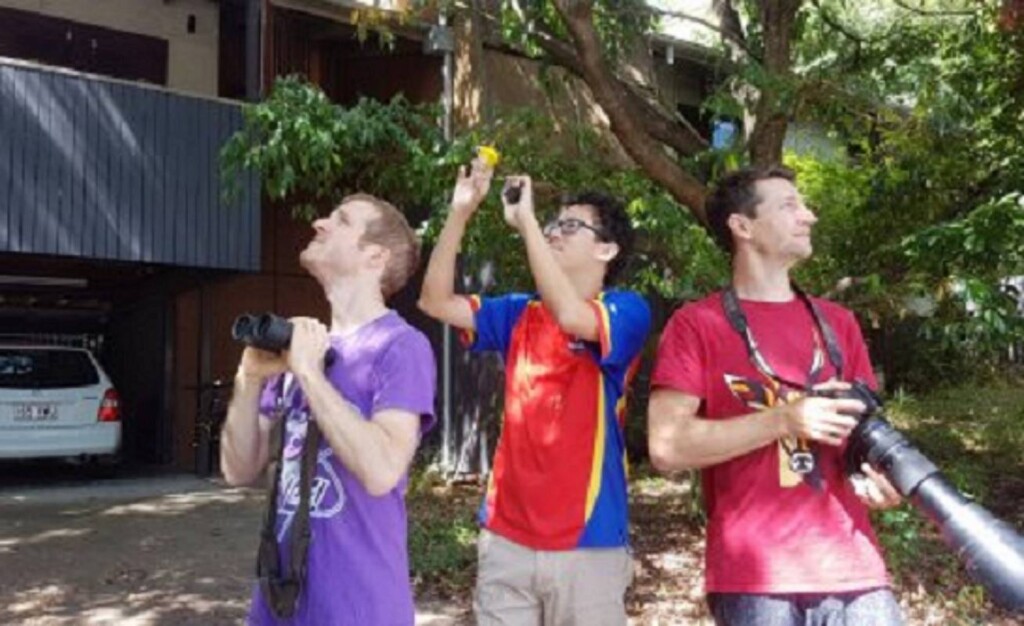
Well scientists who decided to conduct an experiment at their Brisbane suburban home in order to answer that question managed to find over 1,000 species of plants, animals, and fungi.
Dr. Matt Holden, a mathematician, Dr. Andrew Rogers, an ecologist, and Dr. Russell Young, a taxonomist, were roommates together in the city of Brisbane during the initial round of COVID-19 lockdowns in Australia.
The idea of the species count was born when Dr. Rogers went to vacuum cobwebs in his room and wondered how many spiders were on the property.
“We asked a large number of ecologists and conservation scientists how many species they’d expect to find in this setting and they predicted only 200,” said Rogers’ roommate, Dr. Holden. “But after 60 days of surveying, we’d already discovered 777 species.
“It shows suburban houses and apartments could have far more biodiversity than ever imagined, especially when it comes to insects.”
Insects, yes, but not the ones you’d imagine. Their survey, which they turned into a scientific paper published in the journal Ecology, identified 436 moth and butterfly species, yet only 56 different spiders.
In addition to the invertebrates, they found 8 reptiles and 56 birds, including tawny frogmouths, laughing kookaburras, blue-faced honeyeaters, rainbow lorikeets, spotted doves, and a Brisbane favorite: the Australian white ibis.
Holden and and his colleagues spoke with their university press about the experiment, and hailed their house as not just a bachelor pad, but a “complex ecosystem” that showcases Australia’s biodiversity without the need of even going to the Outback.
“The house was a complex ecosystem of species interacting—we stumbled upon the moth Scatochresis innumera, which as a caterpillar spends its whole time feeding inside the dung of a Brushtail Possum before emerging as an adult,” said Dr. Holden.
“The Parilyrgis concolor is another moth species whose caterpillar lives in spider webs and devours spider poop to survive. You don’t have to go traveling to connect with Australia’s diverse range of species, just look in your own backyard.”
Holden recommended keeping native and low-maintenance tree and shrub species, and ignoring the urge to manicure a lawn with pesticides to preserve the greatest biodiversity.
SHARE This At-Home Science And Surprising Results With Your Friends…
FREE WILL ASTROLOGY – Week of December 16, 2023
Copyright by Rob Brezsny, FreeWillAstrology.com
SAGITTARIUS (Nov. 22-Dec. 21):
Egyptian Pharaoh Tutankhamun died over 3,300 years ago. When his mournful entourage placed him in his tomb, the treasures they left included a pot of honey, which was meant to sweeten his travels in the afterlife. In the early 20th century, archaeologists excavated the ancient site. They dared to sample the honey, finding it as tasty and fresh as if it had just been made. Amazingly, this same longevity is a characteristic of most honey. I propose we use this as a metaphor for your life. What old resources or experiences from your past might be as pure and nurturing as they were originally? And now could they be of value now?
CAPRICORN (Dec. 22-Jan. 19): Moonstruck screenwriter John Patrick Shanley writes, “Life holds its miracles, good erupting from darkness chief among them.” I predict a comparable miracle for you, Capricorn, though I suspect it will arise out of confusion or inertia rather than darkness. My advice: Don’t be so bogged down in the muddle that you miss the signs that a great awakening is nigh. Start rehearsing how you will feel when deliverance arrives.
AQUARIUS (Jan. 20-Feb. 18):
Before he reached the height of fame as a novelist, Aquarian Charles Dickens experienced financial instability. When he was 31, the situation got desperate, and he resolved to take extreme measures. For six weeks, beginning in October 1843, he obsessively worked on writing the story A Christmas Carol. It was published on December 19 and sold out in a few days. Within a year, 13 editions were released. Dickens’ economic worries were over. Dear Aquarius, I think the near future will be a favorable time for you, too, to take dramatic, focused action to fix a problem you’re having.
PISCES (Feb. 19-March 20):
Many religious people believe God can hear their prayers and intervene in worldly affairs. Other religious folks think God can hear their prayers but may not intervene. Then there are the non-religious folks who don’t believe in God and think praying is useless. Wherever you might be on the spectrum, Pisces, I’m pleased to reveal that you will have extra access to support and benefaction in the coming weeks—whether that’s from God, fate, nature, or other humans. So seek out blessings and assistance with alacrity. Be receptive to all potential helpers, even unlikely ones.
ARIES (March 21-April 19):
In 1849, Harriet Tubman escaped from enslavement on a plantation in Maryland. She could have enjoyed her new freedom in peace, but instead resolved to liberate others. During 13 bold forays into enemy territory, she rescued 70 enslaved people and ushered them to safety. She testified that she relied on her dreams and visions to help her carry out her heroic acts. They revealed to her the best escape routes to take, the best times to proceed, and information about how to avoid the fiendish “slave catchers.” In alignment with astrological omens, I invite you to be like Tubman and seek practical guidance from your dreams in the coming weeks—to solve problems or seek bliss.
TAURUS (April 20-May 20): Jack Nicholson has often played mavericks and anti-heroes in his movies. His life away from the silver screen has also been less than steady and predictable. For example, he has fathered six children with five different women. His fellow actor, Carrie Fisher, said Jack was “fun because he doesn’t make sense.” A person with casual knowledge of astrology might be surprised that Nicholson is a Taurus. Your tribe isn’t typically renowned for high eccentricity. But in his natal chart, Nicholson has the brash planet Uranus near his sun in Taurus, indicating he’s quirky. Aside from that, I have known plenty of Tauruses whose commitment to being uniquely themselves makes them idiosyncratic. These themes will be in play for you during the coming weeks. (PS: Taurus musician David Byrne starred in the concert film, Stop Making Sense.)
GEMINI (May 21-June 20):
The platitude says that if life gives us lemons, we should make lemonade. I’ve got a variation on this theme. Consider the Neva River in northwestern Russia. It freezes every winter. During the frigid months of 1739-1740, Empress Anna Ioannovna ordered her workers to cut huge blocks of ice and use them to construct a magnificent palace on the riverbank. She filled the place with furniture and art, making it a hub of festivities celebrating Russia’s triumph over the Ottoman Empire. I bring these themes to your attention, Gemini, because I suspect that in the coming weeks, you will have substantial redemptive power. Whether you make lemonade from lemons or a palace from a frozen river is up to you.
CANCER (June 21-July 22):
“If the world were merely seductive, that would be easy,” wrote Cancerian author E. B. White. “If it were merely challenging, that would be no problem. But I arise in the morning torn between a desire to improve the world and a desire to enjoy the world. This makes it hard to plan the day.” According to my astrological analysis, your fate in recent weeks has been more challenging than seductive. You’ve been pressed to work on dilemmas and make adjustments more than you might like. But this rhythm is about to change. Up ahead, life is seductive, welcoming, and appealing. Are you prepared to drop any unconscious attachment you have to your interesting discomfort so you can smoothly make the transition to more ease?
LEO (July 23-Aug. 22):
I want to prepare you for the delights of the coming days. I want to make sure you are fully alert for them and primed to appreciate them. So I give you the thoughts of Leo psychologist Carl Jung. “It is important to have a secret, a premonition of things unknown,” he said. “We must sense that we live in a mysterious world—that things happen and can be experienced that remain inexplicable; that not everything can be anticipated; that the unexpected and incredible belong in this world. Only then is life whole.”
VIRGO (Aug. 23-Sept. 22):
Have you taken a refreshing break lately? Maybe even a soothing sabbatical? Have you treated yourself to a respite from the gritty grind? If not, please do so soon. And while you are recharging your psychic batteries, I ask you to give your fantasy life ample room to wander wildly and freely. In my astrological opinion, your imagination needs to be fed and fed with gourmet food for thought. For the sake of your soul’s health, I hope you dream up fantastic, unruly, even outrageous possibilities.
LIBRA (Sept. 23-Oct. 22):
My Uncle Ned advised me, “The best gift you can compel your ego to accept is to make it your servant instead of your master.” An early Buddhist teacher sounded a related theme when she told me, “The best things in life are most likely to come your way if you periodically shed all hope and practice being completely empty.” The girlfriend I had when I was 23 confided, “You may get more enjoyment from the witty ways I confound you if you don’t try to understand them.” I offer these three ideas to you, Libra, because you’re in a phase when the moral of your story is that there is no apparent moral to your story—at least until you surrender your notions of what the moral of your story is.
SCORPIO (Oct. 23-Nov. 21):
I believe you Scorpios are the zodiac sign mostly likely to benefit from being empathetic. By that I mean you have substantial power to thrive by reading other people’s moods and feelings. You are often able to figure out angles that enable you to gather what you want while helping others to gather what they want. You are potentially a genius at doing what’s best for everyone and getting paid and rewarded for it. According to my analysis of the astrological omens, this knack of yours will soon be operating at peak levels.
WANT MORE? Listen to Rob’s EXPANDED AUDIO HOROSCOPES, 4-5 minute meditations on the current state of your destiny — or subscribe to his unique daily text message service at: RealAstrology.com
Halley's Comet as seen from the Kuiper Airborne Observatory - NASA.
Halley’s Comet as seen from the Kuiper Airborne Observatory – NASA.
Halley’s Comet passed the farthest point in its orbit beyond Neptune and is now heading back toward Earth.
The most famous of all comets has a flattened elliptical orbit that sees it go from the Sun to the outer limits of the solar system. It arrived at the ‘perihelion’ or the closest point to the Sun, in February of 1986.
On December 8th, 2023, it passed its ‘aphelion’ or the furthest point from its orbit, and over the next few decades, there will be better and better chances to see it.
The Marshall Plan was still in the process of rebuilding Germany after World War II the last time Halley had passed its aphelion.
It should be able to be visible when it enters the area of Jupiter, in 2058. By May 2061, it will pass Mars, before arriving near Earth in June.
Space.com has all the details—a truly staggering amount—one could want for planning a Halley’s Comet viewing party 38 years from now including where it will be in the sky at what time of the year, when it’s in opposition to the Sun or brighter planets, and when the best time is to see its blue ion tail.
SHARE This Story With Stargazers In Your Social Media…