All News - Page 254 of 1716 - Good News Network
Home Blog Page 254

Royal Navy Warship Outsmarts Traffickers to Seize Ton of Cocaine Using Missile-Tracking for First Time in Caribbean

HMS Dauntless and a Wildcat from 815 Naval Air Squadron seized $175m worth of cocaine from drug traffickers in Caribbean waters - SWNS / Royal Navy
HMS Dauntless and a Wildcat from 815 Naval Air Squadron seized $175m worth of cocaine from drug traffickers in Caribbean waters – SWNS / Royal Navy

A Royal Navy warship seized more than a ton of cocaine worth $175 million on the streets in a drug trafficking snare set up with the U.S. Coast Guard in the Caribbean.

HMS Dauntless, a Portsmouth-based warship hunted down a ‘go-fast’ smuggling boat with 1,230kg of cocaine, deploying a Wildcat helicopter, Royal Marines, and the US team to stop and search the vessel.

In another operation in the Caribbean Sea, the ship supported additional US law enforcement agencies in tracking a suspicious aircraft flying from Venezuela. The team alerted ground forces and seized a further 550kg of cocaine.

It was the first time the Type 45 destroyer used state-of-the-art sensors normally used to scan the skies for hostile incoming jets and missiles to track a suspect drug flight.

“It shows that not only are we able to disrupt the flow of drugs at sea but have the ability to sense and track air traffic, suspected of transporting drugs,” the HMS Dauntless officers told the Royal Navy.

“This also highlights the importance of taking an interagency approach to counter narcotics, as our US counterparts were able to seize the aircraft upon arrival at its destination.”

MORE GOOD NEWS: After 29 Years in Prison for Rape He Didn’t Commit, the Survivor Helped Free him

The ship’s commanding officer, Commander Benjamin Dorrington, agreed. “The successful counter illicit trafficking operation demonstrates the value of working with partners such as the US Coast Guard and the professionalism of the ship’s company of HMS Dauntless.”

The first operation began when Dauntless’ advanced radar system alerted sailors to the presence of a suspect vessel. Acting quickly, Dauntless closed on its position, launching its embarked helicopter.

POWERFUL TIGER JUSTICE: Police Captures Elusive Tiger Poacher After 20 Years of Pursuing the Bengal Cat Killer

The US Coast Guard team deployed when Dauntless moved in, with the helicopter providing cover overhead.

SALUTE The International Cooperation By Sharing on Social Media…

Spacecraft ‘Hack’ Results in Never-Before-Seen Views of Our Sun – LOOK

An ultraviolet image of the Sun’s corona taken using the EUI occulter on on the ESA Solar Orbiter – European Space Agency via SWNS
An ultraviolet image of the Sun’s corona (the swirls around the edge) captured using the EUI occulter on on the ESA Solar Orbiter – European Space Agency via SWNS

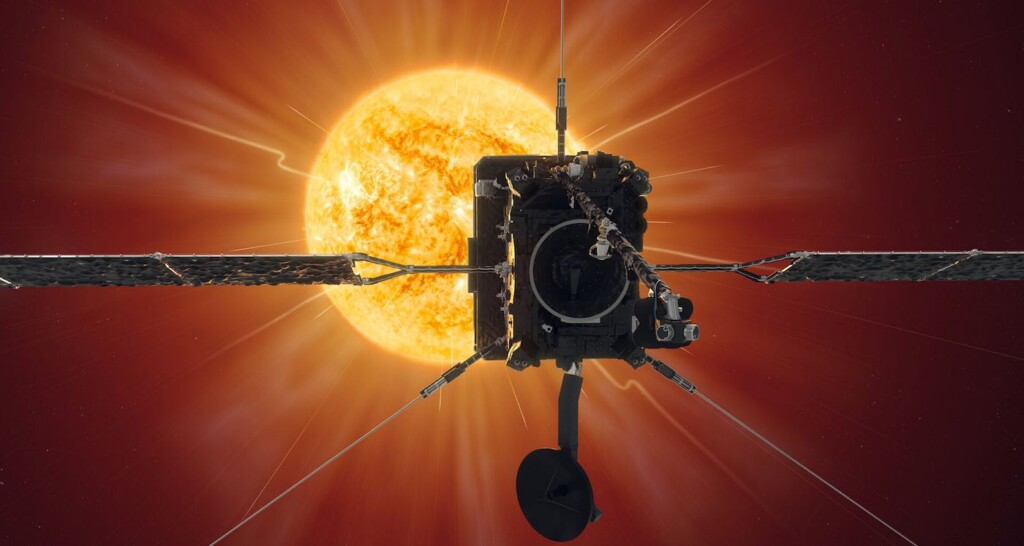
Scientists used a camera aboard a solar orbiter in a new mode which has revealed never-before-seen views of our sun.

The Extreme Ultraviolet Imager (EUI) on the European Space Agency probe has allowed them to record part of the Sun’s atmosphere at extreme ultraviolet wavelengths that has been almost impossible to image until now.

The mode of operation was made possible with a last-minute ‘hack’ to the camera and is likely to influence new solar instruments for future missions.

ESA explained that the EUI captures high-resolution images of the structures within the Sun’s atmosphere—a region known as the corona.

“During EUI’s construction, a last-minute modification to the safety door on the front of the instrument has allowed it to see deeper into its target region than originally specified.”

“It was really a hack,” says Frédéric Auchère, Institut d’Astrophysique Spatiale, Université Paris-Sud, a member of the EUI team. “I had the idea to just do it and see if it would work.”

ESA says it involved adding a small, protruding ‘thumb’, weighing a few grams, to the door of the instrument.

ANOTHER HOT LOOK: ‘Unprecedented’ New Photos of the Sun’s Surface Are Being Hailed as Landmark Achievement for Science

“As the door slides out of the way to let the light into the camera, if it is stopped halfway, the thumb covers the Sun’s bright disc, and EUI can detect the million-times fainter ultraviolet light coming from the surrounding corona.”

Artist impression of Solar Orbiter – European Space Agency / SWNS

The team refers to this as the occulter mode of operation. Tests with the EUI occulter have been on-going since 2021. Now the team are confident in its successful operation and their results were published in Astronomy & Astrophysics.

Their video (shown below) shows an ultraviolet image of the Sun’s corona taken using the EUI occulter. An ultraviolet image of the Sun’s disc has been superimposed in the middle, in the area left blank by the occulter.

SUPER POPULAR: After 17 Years, A Spacecraft Makes its First Visit Home Having Made History

The image of the Sun’s disc has been taken by NASA’s STEREO mission, which happened to be looking at the Sun from almost the same direction as Solar Orbiter at the same time, so the features on the surface have a good correlation to the features in the corona. NASA collaborates on the Solar Orbiter mission with ESA, which operates the probe.

In the past, images of the Sun’s corona have been taken with dedicated instruments called coronagraphs. For example, Solar Orbiter’s coronagraph is called Metis. The value of this new approach is that the coronagraph and the camera can be included in the same instrument.

“We’ve shown that this works so well that you can now consider a new type of instrument that can do both imaging of the Sun and the corona around it,” says Daniel Müller, the ESA Project Scientist for Solar Orbiter.

LOOK: New Solar System Found Where Planets Orbit Two Suns—Just like Luke Skywalker’s Home in Star Wars

Even before those new instruments, there is a lot of new science to come from EUI. The occulter mode makes it possible for scientists to see deeper into the Sun’s atmosphere. This is the region that lies beyond the field of view of classical EUV imagers but it is usually obscured by traditional coronagraphs. Now, however, EUI’s occulter can image this little-explored region easily.

“Physics is changing there, the magnetic structures are changing there, and we never really had a good look at it before. There must be some secrets in there that we can now find,” says David Berghmans, Royal Observatory of Belgium, and the EUI Principal Investigator.

Described as the most complex scientific laboratory ever to have been sent to the Sun, the Orbiter is designed to take images closer than any spacecraft and for the first time look at its uncharted polar regions.

ANOTHER GREAT PIC: Astronomers Observe 2 Neutron Stars Colliding and the Extreme Reaction ‘Defies All Expectations’

By combining observations from Solar Orbiter’s six remote-sensing instruments and four sets of in situ instruments, scientists hope to unravel the mysteries of our solar system’s star.

SHINE the Coolest View of Our Sun on Social Media for Astronomy Fans Worldwide…

Healthy Gut Bacteria Can Reduce Risk of Asthma and Food Allergies in Children, Experts Discover

By Providence Doucet

Babies and young children with diverse bacteria in their gut are less likely to develop allergy-related wheezing and asthma, according to a new Australian study.

Communities of bacteria, known as microbiota, develop in the human body during the early
years of life and are involved in processes that are helpful to the body, such as synthesizing vitamins and boosting the immune system. They can also be occasionally unhelpful, due to the role they play in inflammatory bowel disease and stomach ulcers.

Babies already have some microbiota in their guts from their mothers when they are born. The diversity of bacteria then increases and matures as they are exposed to other children, animals, and different foods.

The researchers analyzed data from the Barwon Infant Study (BIS), which has been running in Australia since 2010, watching 1,074 babies as they grow.

The new results showed that a more mature infant gut microbiota at one year of age was associated with a lower chance of developing food allergies and asthma in childhood.

“This appeared to be driven by the overall composition of the gut microbiota rather than specific bacteria,” said Dr. Yuan Gao, a research fellow at Deakin University, in Geelong, Australia, who presented the study this week at the European Respiratory Society International Congress in Milan, Italy.

They tested whether maturation of the infant gut microbiota in early life is associated with decreased risk of allergy-related wheeze in later childhood—and found they were essentially correct.

For this current study, Dr. Gao and her colleagues looked at the bacteria present in fecal samples collected from the BIS babies one month after birth, six months and one year. At the one-year and four-year postnatal reviews, the BIS investigators asked the parents to report on whether their children had developed allergy-related wheeze or asthma in the previous 12 months. They also did skin-prick tests to see if the children had allergic reactions to any of ten foods and any airborne substances that can trigger an allergic response, such as rye grass or dust.

TEEN HEALTH: Just a Handful of Walnuts 3x Weekly Boosts Attention and Brain Growth in Adolescents, Especially Those With ADHD

In a randomly selected sub-group of 323 children, the BIS team used a DNA sequencing technique to identify and characterize the gut microbiota. They calculated ‘microbiota-by-age z-score’ (MAZs), which is a mathematical estimate of the maturity of the children’s gut microbiota.

“We found that if babies had more mature gut microbiota when they were one year old, they were less likely to have an allergy-related wheeze at one and four years old,” said Dr. Gao. “If MAZ increased within a certain range, known as standard deviation, it halved the risk of allergy-related wheeze at both these ages.”

The mechanisms by which mature gut microbiota contribute to preventing allergy-related disease is not completely understood. “Given the complex origins and development of both gut microbiota and the infant immune system, it is likely that the protective effect of a healthy gut microbiota occurs as a result of communities of bacteria acting in multiple different ways, rather than via one particular mechanism,” said Dr. Gao.

CHECK OUT THIS EVIDENCE: More Physical Activity is Related to Less Respiratory Infections in Children

“We hope that by understanding how the gut microbiota improves the immune system, new ways of preventing allergy-related disease such as asthma can be developed.

The researchers are planning to recruit 2000 children from Australia and New Zealand to a new clinical trial, called ARROW, to see whether giving young children a mixture of dead bacteria, taken orally, can protect them from wheezing illnesses or asthma by boosting a healthy immune response to viral infections. Viruses are the commonest causes of childhood illnesses and can lead to chest infections and wheezing.

SEE ALL OUR GOOD NEWS ARTICLES ON ALLERGIES HERE.

“ARROW has the potential to dramatically improve the health of children with recurrent wheeze and asthma,” said Dr. Gao.

Strengths of the study include its design, which allowed researchers to analyze the development of gut microbiota as the children grew older, and also the fact that the BIS children were drawn from the general population. Limitations include the fact that the DNA methods used to characterize the gut microbiota cannot provide insights into the function of the bacteria.

Dr. Erol Gaillard, a pediatric respiratory expert in the UK who was not involved with the research guessed that the rising incidence of allergy-related illnesses like asthma and eczema may be due to less diverse foods eaten at an early age and less exposure to farm animals.

DID YOU MISS THIS? 16% Drop in Peanut Allergies Among Children As Parents Follow Guidelines And Introduce Peanuts Earlier

“Exposure to a variety of bacteria from an early age is very likely if babies and children are
regularly mixing with other children and animals and are exposed to a larger variety of foods. If we can find ways to boost the maturity of gut microbiota, this could have a significant effect on the incidence of allergies, and so it will be interesting to see the results of the ARROW study.”

SHARE The Discovery With Families on Social Media to Deal With Allergies or Asthma…

Name of Unknown Iron Age Ruler Discovered on 2000-Year-old Coin Found in English Field

C. 50 BC gold coin found in a Hampshire field – Spink Auctions / SWNS

The name of a new Iron Age ruler or king has been discovered emblazoned on a 2,000 year-old coin that was uncovered in a field in Hampshire.

Dating from around 50 BC and made of gold, the coin is stamped with the name Esunertos, a previously unrecorded Iron Age ruler, according to Southwest News Service.

The find has been described by experts as “one of the outstanding discoveries of recent decades”.

About the size of a fingernail, the coin was dug up in a farmer’s field after someone with a metal detector found it this year. Their name and location of the exact site has not been disclosed.

The coin dates back to the very beginning of written language in the British Isles and was struck sometime between 50 and 30 BC, shortly after Julius Caesar’s first Roman raid of Britain.

He landed on the Kent coast from a fleet of ships carrying 20,000 Roman soldiers. Waiting for them on the beach were thousands of Celtic warriors. The Romans were forced to return home after struggling to land, with rough seas wrecking their boats. Caesar then returned the following year with 50,000 soldiers defeating many tribes and marched all the way to the River Thames.

MORE HISTORY FINDS: Garden Ornament Bought for $20 at Flea Market is Actually a Medieval Hand Cannon and Sells for Thousands

After three months of fighting, they turned back in order to stop a rebellion in France—so the long-term settlement in Britain by Rome didn’t occur until 43 AD when Claudius was emperor.

Since its discovery in March, leading Iron Age experts have studied the coin and deduced it to be struck by a pre-eminent male figure dubbed ‘IISVNIRTOS’ whose name translates as ‘Mighty as the God Esos’.

One theory is that he possibly ruled as King from nearby Danebury Hill fort.

Dr. John Sills of the Celtic Coin Index at the Ashmolean Museum said: “It is one of the outstanding discoveries of recent decades in Celtic numismatics.”

Iron Age Coin Specialist Gregory Edmund at Spink auctioneers led the team of experts recording this new find and touted the relic, which is up for auction September 28.

“This fabulous piece of prehistoric artwork completes the mental image we have when we think of Iron Age Britain – the war horse and chariot. But it also surprises us with the appearance of classical languages like Latin.

CHECK OUT: Gold Disk Unearthed Contains Oldest Reference to Norse God Odin: ‘A Huge Discovery’ of ‘Pure Ecstasy’

“This is the reason I come to work; to document the discoveries of national importance and share that knowledge directly with museums, academics, collectors, and the public at large.

“I focused my university degree on the Roman invasion of Britain through the lens of Britain’s first coinage. To now add a critically important contemporary witness to those seismic events in the birth of our island’s story is electrifying.

LOOK AT ALL the Fascinating History Finds Here on GNN!

“Despite the coin’s diminutive size, the name of its conceiver—Esunertos—now truly echoes down the ages.”

SHARE the Phenomenal Find With History Buffs on Social Media…

“Leap, and the net will appear.” – John Burroughs

Quote of the Day: “Leap, and the net will appear.” – John Burroughs

Photo by: Lauren Manning, CC license on Flickr (cropped)

With a new inspirational quote every day, atop the perfect photo—collected and archived on our Quotes page—why not bookmark GNN.org for a daily uplift?

Scientists Manage to Generate Electricity From the Deadly E-coli Bacteria in New Breakthrough

Mohammed Mouhib and Melania Reggente, the study's lead scientists, posing at their lab at EPFL
Mohammed Mouhib and Melania Reggente, the study’s lead scientists, posing at their lab at EPFL

Scientists have managed to generate electricity from the deadly E-coli bacteria—a finding that could lead to a valuable by-product from waste water.

Bioelectronic experts from the Ecole Polytechnique Federale de Lausanne (EPFL) engineered the bacteria to produce electricity in a variety of settings.

The team used a process known as extracellular electron transfer to engineer the bacteria to make them highly efficient electric microbes, leading to a three-fold increase in electrical current generation compared to conventional strategies.

“Instead of putting energy into the system to process organic waste, we are producing electricity while processing organic waste at the same time, hitting two birds with one stone,” said Ardemis Boghossian, a professor at the Swiss university.

According to the study published in the journal Joule, the researchers were able to create a complete EET pathway within E. coli, a feat never achieved before.

“We engineered E. coli bacteria, the most widely studied microbe, to generate electricity,” Prof. Boghossian said. “Though there are exotic microbes that naturally produce electricity, they can only do so in the presence of specific chemicals.

“E. coli can grow on a wide range of sources, which allowed us to produce electricity in a wide range of environments, including from waste water.”

HERO WIFE: When Antibiotics Failed, She Found a Natural Enemy of Superbug Bacteria to Save Husband’s Life

Unlike previous methods the bioengineered E. coli can produce electricity while metabolizing a variety of organic substrates.

By integrating components from Shewanella oneidensis MR-1, a bacterium famous for generating electricity, the researchers successfully constructed a pathway that spans the inner and outer membranes of the cell.

The engineered E. coli was then tested in brewery wastewater where unlike similar electric microbes, it thrived. They believe this shows its potential for large-scale waste treatment and energy production.

CHECK OUT: The Mechanism Behind Memory Loss in Aging Discovered By Scientists at Johns Hopkins

“We tested our technology directly on wastewater that we collected from Les Brasseurs, a local brewery in Lausanne,” said Boghossian.

“The exotic electric microbes weren’t even able to survive, whereas our bioengineered electric bacteria were able to flourish exponentially by feeding off this waste.”

The implications of the study extend beyond waste treatment.

They believe that the engineered E-coli can be used in microbial fuel cells, electrosynthesis, and bio-sensing.

RELATED: Chemists Discover New Way to Harness Clean Energy From Ammonia

The bacterium’s genetic flexibility means that it can be tailored to adapt to specific environments and feedstocks, making it a versatile tool for sustainable technology development.

Lead author and doctoral assistant Mohammed Mouhib, added: “Our work is quite timely, as engineered bioelectric microbes are pushing the boundaries in more and more real-world applications.

“We have set a new record compared to the previous state-of-the-art, which relied only on a partial pathway, and compared to the microbe that was used in one of the biggest papers recently published in the field.

“With all the current research efforts in the field, we are excited about the future of bioelectric bacteria, and can’t wait for us and others to push this technology into new scales.”

SEE ALL the Science Breakthroughs here on GNN…

Tide-Savvy Metal Detectorist Reunites Woman With Late Mother’s Wedding Rings 2 Weeks After They Fell into Sea

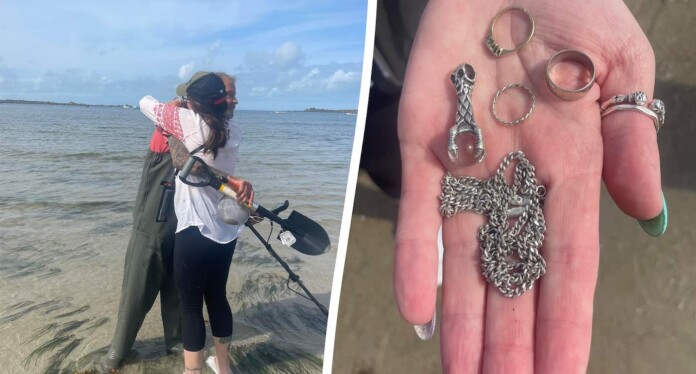
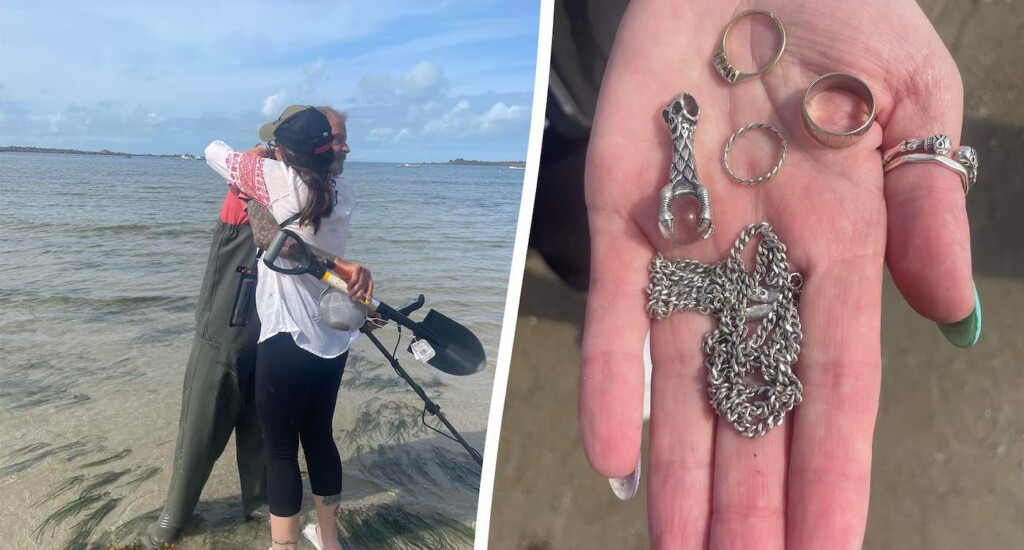
Matthew Kneebone finds 3 rings for Tessa Le Gallez – SWNS

A U.K. metal detectorist has worked a near-miracle, reuniting a woman with a beloved chain that held her late mother’s promise, engagement and wedding rings.

The 24-year-old was “devastated” when her necklace chain broke while she was swimming at Les Amarreurs beach in Guernsey last month.

On the chain hung three of her mom’s rings which always made her “feel close” to her late parent.

Not giving up hope, Tessa Le Gallez telephoned a local metal detectorist Matthew Kneebone and asked if he could possibly help her get the heirlooms back.

“My mum passed away in April and it was her wish that I had her rings,” recalls the office manager.

“I put it on a strong chain around my neck because sometimes in the cold your fingers shrink and you can lose your rings.

“I went swimming and by complete freak accident, my dog jumped on me and his claw got caught in the chain. It took all of his weight and snapped.

She searched for hours but couldn’t find them.

“I was panicking and worried I would never see them again. They’re so precious to me. That’s when I called Matthew and asked for help.”

Mr. Kneebone, a stonemason on the rocky island in the English Channel, told her he would be able to find the lost rings when there was a spring tide again.

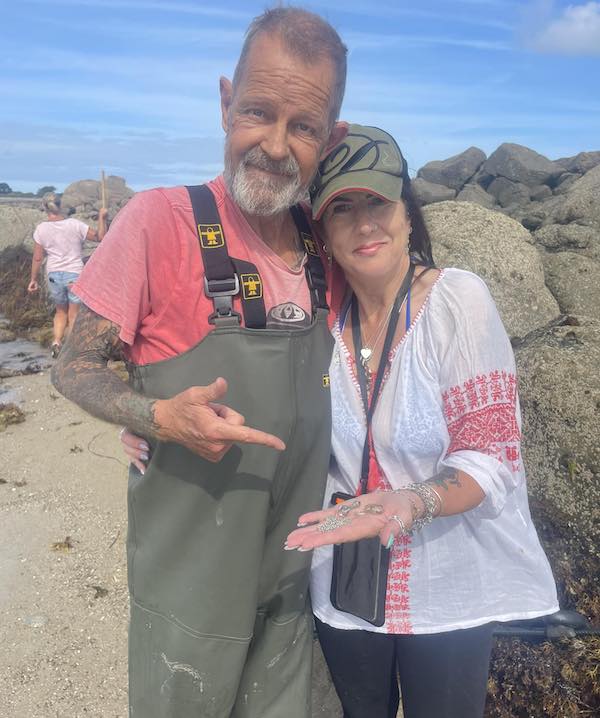
Sure enough, two weeks later, on September 1, Matthew and Tessa headed back down to the beach—and within ten minutes, Matthew had found the chain. Then, amazingly, within a half hour, all of three of heirlooms were uncovered.

MORE FEEL GOODGuy Finds $40,000 Diamond Ring Buried on Florida Beach and Tracks Down the Owner Who Broke into Tears

Tessa Le Gallez with metal detectorist Matthew Kneebone – SWNS

Tessa was elated. “It was such a relief. Those rings mean the world to me and they’re incredibly sentimental.”

The 50-year-old who has been metal detecting since he was 14, said: “Tessa was very grateful and so emotional. She ran up to me and gave me a big hug.

“I’ll never be able to thank him enough and I’ll always be grateful. He’s the most selfless man I’ve ever met in my life and people like him make the world a better place.”

MORE FUN: Family Left Stunned When Their Dog Escaped–Only to Return Later With a Ribbon From a Dog Show

The benefits go both ways, says Matthew. “It’s a really good feeling when you manage to find something for someone.”

SHARE the Good Feelings With Metal Detector Enthusiasts on Social Media…

Experts Find Out Why Exercise Prevents Alzheimer’s Disease–Which Could Lead to Cure

By Shoeib Abolhassani

The reason exercise can prevent Alzheimer’s disease has been discovered and it could lead to new treatments for the currently incurable condition.

Experts have found that a hormone called irisin released during a work-out is associated with the plaques and tangles in the brain thought to cause Alzheimer’s.

Physical exercise has been shown to reduce amyloid beta deposits in various mouse models but the mechanisms involved have remained a mystery.

Now the team from Massachusetts General Hospital have published the results in the journal Neuron, which appear to solve the puzzle.

Previously the researchers had developed the first 3D human cell culture models of Alzheimer’s. Their studies documented two major hallmarks of the condition, the generation of amyloid beta deposits followed by tau tangles in the brain.

GOOD NEWS: An Espresso a Day Could Keep Alzheimer’s at Bay by Preventing Tau Clumping

It was known that exercise increases circulating levels of the muscle-derived hormone irisin, which regulates glucose and lipid metabolism in fat tissue and increases energy expenditure by accelerating the browning of white fat tissue.

Previous studies have revealed that irisin occurs in human and mouse brains but is reduced in those suffering from Alzheimer’s, so the team applied the hormone to their 3D cell culture model of the disease.

“First, we found that irisin treatment led to a remarkable reduction of amyloid beta pathology,” said Dr. Se Hoon Choi.

“Second, we showed this effect of irisin was attributable to increased neprilysin activity owing to increased levels of neprilysin secreted from cells in the brain called astrocytes.”

Neprilysin is an amyloid beta–degrading enzyme found in the brains of mice exposed to exercise.

Previous studies have shown that in mice, irisin injected into the blood stream can make its way into the brain, making it potentially useful as a therapeutic.

THE SCENT OF GOOD NEWS: Smell of Simple Fragrance While Sleeping Produces Major Memory Boost in Older Adults

“Our findings indicate that irisin is a major mediator of exercise-induced increases in neprilysin levels leading to reduced amyloid beta burden, suggesting a new target pathway for therapies aimed at the prevention and treatment of Alzheimer’s disease,” said Dr. Rudolph Tanzi, a senior author of the study and director of the hospital’s Genetics and Aging Research Unit.

SHARE This Valuable Advice With Friends and Family on Social Media…

Your Weekly Horoscope From Rob Brezsny: A ‘Free Will Astrology’

Our partner Rob Brezsny provides his weekly wisdom to enlighten our thinking and motivate our mood. Rob’s Free Will Astrology, is a syndicated weekly column appearing in over a hundred publications. He is also the author of Pronoia Is the Antidote for Paranoia: How All of Creation Is Conspiring To Shower You with Blessings. (A free preview of the book is available here.)

Here is your weekly horoscope…

FREE WILL ASTROLOGY – Week of September 9, 2023
Copyright by Rob Brezsny, FreeWillAstrology.com

VIRGO (Aug. 23-Sept. 22):
In honor of the Virgo birthday season, I invite you to be exceptionally distinctive and singular in the coming weeks, even idiosyncratic and downright incomparable. That’s not always a comfortable state for you Virgos to inhabit, but right now it’s healthy to experiment with. Here’s counsel from writer Christopher Morley: “Read, every day, something no one else is reading. Think, every day, something no one else is thinking. Do, every day, something no one else would be silly enough to do. It is bad for the mind to continually be part of unanimity.” Here’s a bonus quote from Virgo poet Edith Sitwell: “I am not eccentric! It’s just that I am more alive than most people.”

LIBRA (Sept. 23-Oct. 22):
Do you sometimes wish your life was different from what it actually is? Do you criticize yourself for not being a perfect manifestation of your ideal self? Most of us indulge in these fruitless energy drains. One of the chief causes of unhappiness is the fantasy that we are not who we are supposed to be. In accordance with cosmic rhythms, I authorize you to be totally free of these feelings for the next four weeks. As an experiment, I invite you to treasure yourself exactly as you are right now. Congratulate yourself for all the heroic work you have done to be pretty damn good. Use your ingenuity to figure out how to give yourself big doses of sweet and festive love.

SCORPIO (Oct. 23-Nov. 21):
Scorpio novelist Kurt Vonnegut testified, “I want to stay as close on the edge as I can without going over. Out on the edge, you see all kinds of things you can’t see from the center. Big, undreamed-of-things—the people on the edge see them first.” I’m not definitively telling you that you should live like Vonnegut, dear Scorpio. To do so, you would have to summon extra courage and alertness. But if you are inclined to explore such a state, the coming weeks will offer you a chance to live on the edge with as much safety, reward, and enjoyment as possible.

SAGITTARIUS (Nov. 22-Dec. 21):
“Where there is great love, there are always miracles,” wrote Sagittarian novelist Willa Cather (1873–1947). In accordance with upcoming astrological aspects, I encourage you to prepare the way for such miracles. If you don’t have as much love as you would like, be imaginative as you offer more of the best love you have to give. If there is good but not great love in your life, figure out how you can make it even better. If you are blessed with great love, see if you can transform it into being even more extraordinary. For you Sagittarians, it is the season of generating miracles through the intimate power of marvelous love.

CAPRICORN (Dec. 22-Jan. 19):
Capricorn author Alexander Woollcott (1187–1943) could be rude and vulgar. He sometimes greeted cohorts by saying, ‘Hello, Repulsive’. After he read the refined novelist Marcel Proust, he described the experience as “like lying in someone else’s dirty bath water.” But according to Woollcott’s many close and enduring friends, he was often warm, generous, and humble. I bring this to your attention in the hope that you will address any discrepancies between your public persona and your authentic soul. Now is a good time to get your outer and inner selves into greater harmony.

AQUARIUS (Jan. 20-Feb. 18):
In 1963, Aquarian author Betty Friedan published The Feminine Mystique, a groundbreaking book that became a bestseller crucial in launching the feminist movement. She brought to wide cultural awareness “the problem that has no name”: millions of women’s sense of invisibility, powerlessness, and depression. In a later book, Friedan reported on those early days of the awakening: “We couldn’t possibly know where it would lead, but we knew it had to be done.” I encourage you to identify an equivalent quest in your personal life, Aquarius: a project that feels necessary to your future, even if you don’t yet know what that future will turn out to be.

PISCES (Feb. 19-March 20):
“Among those whom I like or admire, I can find no common denominator, but among those whom I love, I can: All of them make me laugh.” Piscean poet W. H. Auden said that. After analyzing the astrological omens, I conclude that laughing with those you love is an experience you should especially seek right now. It will be the medicine for anything that’s bothering you. It will loosen obstructions that might be interfering with the arrival of your next valuable teachings. Use your imagination to dream up ways you can place yourself in situations where this magic will unfold.

ARIES (March 21-April 19):
Aries chess grandmaster Garry Kasparov says war is “more like a game of poker than chess. On a chess board, the pieces are face up, but poker is essentially a game of incomplete information, a game where you have to guess and act on those guesses.” I suspect that’s helpful information for you these days, Aries. You may not be ensconced in an out-an-out conflict, but the complex situation you’re managing has resemblances to a game of poker. For best results, practice maintaining a poker face. Try to reduce your tells  to near zero. Here’s the definition of “tell” as I am using the term: Reflexive or unconscious behavior that reveals information you would rather withhold.

TAURUS (April 20-May 20):
Raised in poverty, Taurus-born Eva Peron became a charismatic politician and actor who served as First Lady of Argentina for six years. The Argentine Congress ultimately gave her the title of “Spiritual Leader of the Nation.” How did she accomplish such a meteoric ascent? “Without fanaticism,” she testified, “one cannot accomplish anything.” But I don’t think her strategy has to be yours in the coming months, Taurus. It will make sense for you to be highly devoted, intensely focused, and strongly motivated—even a bit obsessed in a healthy way. But you won’t need to be fanatical.

GEMINI (May 21-June 20):
Gemini author Ben H. Winters has useful counsel. “Every choice forecloses on other choices,” he says. “Each step forward leaves a thousand dead possible universes behind you.” I don’t think there are a thousand dead universes after each choice; the number’s more like two or three. But the point is, you must be fully committed to leaving the past behind. Making decisions requires resolve. Second-guessing your brave actions rarely yields constructive results. So are you ready to have fun being firm and determined, Gemini? The cosmic rhythms will be on your side if you do.

CANCER (June 21-July 22):
Journalist Alexandra Robbins was addressing young people when she gave the following advice, but you will benefit from it regardless of your age: “There is nothing wrong with you just because you haven’t yet met people who share your interests or outlook on life. Know that you will eventually meet people who will appreciate you for being you.” I offer this to you now, Cancerian, because the coming months will bring you into connection with an abundance of like-minded people who are working to create the same kind of world you are. Are you ready to enjoy the richest social life ever?

LEO (July 23-Aug. 22):
Author Kevin Kelly is a maverick visionary who has thought a lot about how to create the best possible future. He advocates that we give up hoping for the unrealistic concept of utopia. Instead, he suggests we empower our practical efforts with the term “protopia.” In this model, we “crawl toward betterment,” trying to improve the world by one percent each year. You would be wise to apply a variation on this approach to your personal life in the coming months, Leo. A mere one-percent enhancement is too modest a goal, though. By your birthday in 2024, a six-percent upgrade is realistic, and you could reach as high as 10 percent.

WANT MORE? Listen to Rob’s EXPANDED AUDIO HOROSCOPES, 4-5 minute meditations on the current state of your destiny — or subscribe to his unique daily text message service at: RealAstrology.com

(Zodiac images by Numerologysign.com, CC license)

SHARE The Wisdom With Friends Who Are Stars in Your Life on Social Media…

“Words may be false and full of art; Sighs are the natural language of the heart.” – Thomas Shadwell

Quote of the Day: “Words may be false and full of art; Sighs are the natural language of the heart.” – Thomas Shadwell

Photo by: Nik Shuliahin

With a new inspirational quote every day, atop the perfect photo—collected and archived on our Quotes page—why not bookmark GNN.org for a daily uplift?

World’s First Electric Aircraft Flight Powered by New Liquid Hydrogen–Flew for 3 Hours

Credit H2FLY-via-SWNS
Credit H2FLY via-SWNS

The world’s first piloted flight of an electric aircraft powered by liquid hydrogen has taken place.

H2FLY, the Stuttgart Germany-based developer of hydrogen-electric powertrain systems for aircraft announced it has successfully carried out four flights from Maribor, Slovenia, powered by liquid hydrogen as part of its flight test campaign, including one flight that lasted for over three hours.

They believe the flights lay the foundation for long-range, emissions-free flight, with liquid hydrogen doubling the range of the HY4 aircraft to 932 miles (1,500km), compared to using gaseous hydrogen which is much heavier.

“Results of the test flights indicate that using liquid hydrogen in place of gaseous hydrogen will double the maximum range of the HY4 aircraft from 750 km to 1,500 km, marking a critical step towards the delivery of emissions-free, medium- and long-haul commercial flights,” the company said in a statement.

Over the last 12 months, GNN has kept abreast of all hydrogen electric flight milestones, as the liquid fuel is the only current option for decarbonizing aviation. In December, Rolls Royce and EasyJet successfully tested a hydrogen engine for a jumbo jet.

This year, Connect Airlines and Avia have both successfully flown aircraft using green hydrogen fuel, the latter onboard a 40-seater ATR 72-600 regional aircraft during a 15-minute FAA Airworthiness Certificate flight, and the former during a 10-minute flight with a 19-seat aircraft called the Dornier 228.

In May, GNN reported on a Concord-like supersonic jet under development that would use green hydrogen as its fuel source. The company Destinus is working with hydrogen because it’s much lighter than fossil jet fuel, and weight considerations are a key requisite for supersonic travel.

Now however, H2FLY’s piloted HY4 demonstrator aircraft fitted with a hydrogen-electric fuel cell propulsion system was able to conduct tests upwards of 3 hours of flight time, making the German company’s progress the outlier in the field of hydrogen aviation.

HYDROGEN IN OTHER FIELDS: World’s First 100% Hydrogen-Powered Trains Now Running Regional Service in Germany to Replace Diesel

Compared with pressurized gaseous hydrogen storage, H2FLY’s use of liquified, cryogenic hydrogen enables significantly lower tank weights and volume, therefore leading to increased aircraft range and useful payload.

“This achievement marks a watershed moment in the use of hydrogen to power aircraft,” said Professor Josef Kallo, co-founder of H2FLY. “We are now looking ahead to scaling up our technology for regional aircraft and other applications, beginning the critical mission of decarbonizing commercial aviation.”

WATCH the flight test conducted below…
SHARE These Milestones Coming Thick And Fast With Your Friends…

Finding Any Sword is a Treasure But Four is ‘A Dream’ – We Rubbed Our Eyes

Photo by Amir Ganor Israel Antiquities Authority

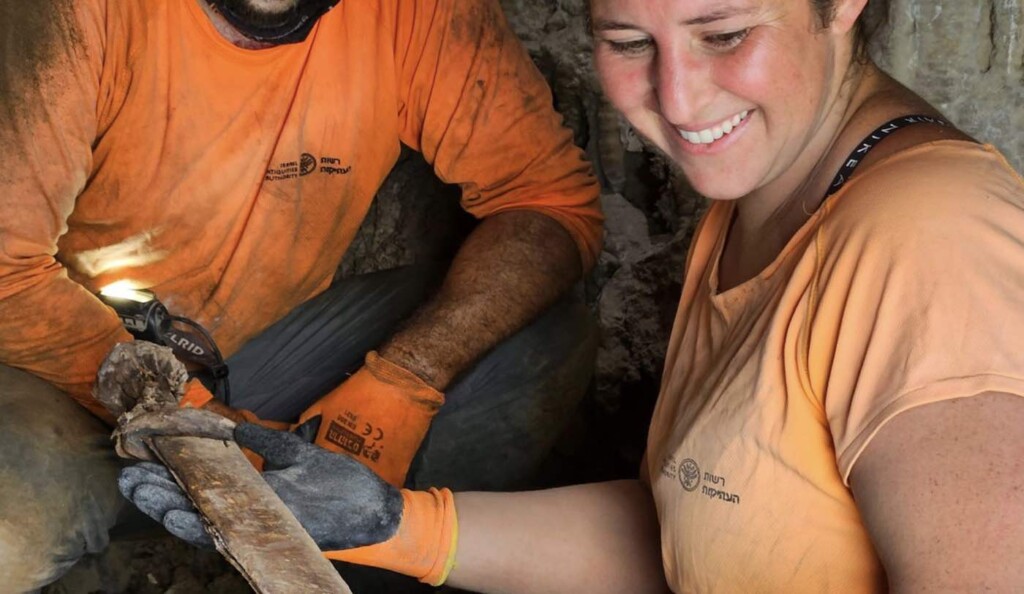
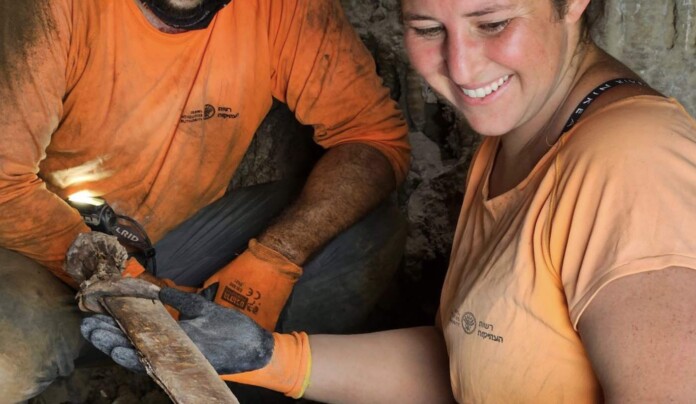
A cache of Roman weapons has been found in an inaccessible cave in Israel near the shore of the Dead Sea.

Delighting the discoverers, archaeologists believe that they were taken off of Roman soldiers and stored there by Judean rebels resisting Roman imperial incursions.

“Finding a single sword is rare—so four? It’s a dream! We rubbed our eyes to believe it,” the researchers said in a statement released by the Israeli Antiquities Authority.

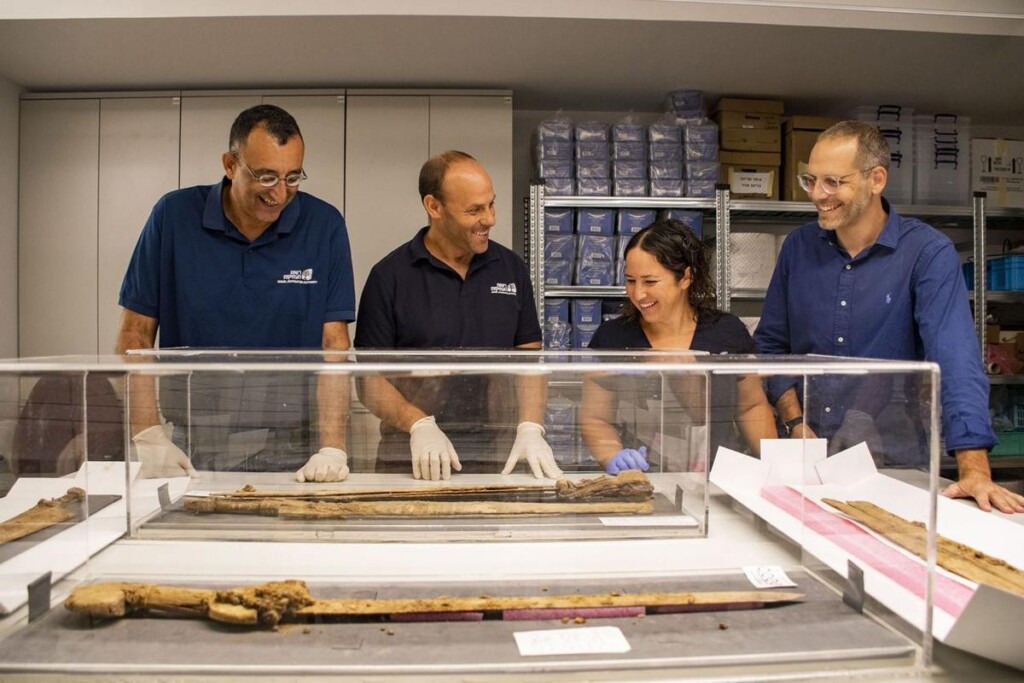
The finding consisted of four swords and the Roman fighting/throwing spear called the pilum, which was a key part of the fighting system the Romans used to dominate the world.

Some of the swords were kept in scabbards of carved wood or leather, while the shaft of the pilum had long ago disintegrated to leave the iron point behind. Three of them measured between 24 to 26 inches long, while a fourth was even shorter.

“The hiding of the swords and the pilum in deep cracks in the isolated cave north of ‘En Gedi, hints that the weapons were taken as booty from Roman soldiers or from the battlefield, and purposely hidden by the Judean rebels for reuse,” said Eitan Klein, one of the directors of the Judean Desert Survey Project.

Alongside the iron weapons was a bronze coin dating to 135 CE, which could be a corresponding date for the swords according to the press release, since this was the year of the fiercest fighting of the second Jewish Revolt, when, after personally taking the field himself, Emperor Hadrian dispatched his generals to utterly crush what had been up to that point an organized and successful revolt by the people of Judaea.

Photo by Yoli Schwarz Israel Antiquities Authority

MORE ROMAN DISCOVERIES: Sealed Vial Reveals the Smell of Ancient Rome With Patchouli Scents From Time of Jesus

“This is a dramatic and exciting discovery, touching on a specific moment in time. Not all are aware that the dry climatic conditions pertaining to the Judean Desert enable the preservation of artifacts that do not survive in other parts of the country,” Eli Escusido, director of the Israel Antiquities Authority, said in the statement.

“This is a unique time capsule, whereby fragments of scrolls, coins from the Jewish Revolt, leather sandals, and now even swords in their scabbards [sic], sharp as if they had only just been hidden away today.”

SHARE This Awesome Piece Of Preserved History With Your Friends… 

Africa NGO Purchases World’s Largest Captive Rhino Population to Rewild 2,000 Across the Continent

3 of the 2,000 southern white rhino up for auction. credit Platinum Rhino

A giant conservation NGO has purchased the largest privately-owned rhino herd on earth to rewild them in secret locations over the next 10 years.

More than 2,000 white rhinos had been bred in captivity as part of a project called Platinum Rhino, to flood the East Asian rhino horn trade with sustainably harvested horns in order to drastically lower the price, and thus disincentivize poachers.

However the breeder, John Hume of South Africa, ran out of money after the Convention on International Trade in Endangered Species (CITES) remained adamant that they would not grant him an exception for the sale of rhino horn—banned as it has been since 1974, and so Hume put all the animals up for auction in April.

On August 4th, Africa’s biggest wildlife NGO, African Parks, announced it had purchased the entire Platinum herd for the purpose of rewilding them across sites in southern Africa.

The organization managed to secure significant emergency funding that not only allowed them to buy all the rhinos, but also pay for an international, intra-Africa relocation of the animals.

These 2,000 are approximately 15% of the remaining wild population of southern white rhino. Many of them were bred in Hume’s massive ranch, while he took in many others who were rescued because their mother’s milk dried up or because they had been orphaned, etc.

African Parks manages 22 protected areas across 12 countries, making them the ultimate organization for this mammoth undertaking.

OTHER RHINO STORIES: For the First Time Since 1977, Zero Rhinos Were Poached In India’s Parks

“African Parks has conducted multiple wildlife translocations and reintroductions–moving over 8,000 animals from 32 species to help repopulate parks and re-establish populations across Africa,” reads a statement released by the organization.

“These efforts have resulted in bringing rhino back to Malawi, Rwanda, and the DRC; as well as bringing lion, cheetah, leopard, and wild dog back to Malawi, along with a historic 500 elephant initiative. Through these wildlife translocations, we have learned and gained valuable experience to consistently refine our approach so that we can ensure a greater likelihood of success for every translocation we undertake.”

While African Parks, and their sponsors the IUCN Rhino Project stress the difficulty of the rewilding, Dr. Richard Emslie, a Pietermaritzburg-based rhino conservation expert, told South Africa’s Daily Maverick he reckoned, having seen the Platinum rhinos, they would get on just fine.

GOOD POACHING NEWS: Researchers Pioneered a Way to Use DNA From Elephant Tusks to Catch Poachers

“I would call them ‘semi-wild’ rather than ‘semi-captive’. It’s interesting that some of John Hume’s black rhinos were sent to a property in Eswatini a few years ago—and within just a few months of their arrival one of the females had been mated by a wild rhino,” said Dr. Emslie. “So I strongly suspect his white rhinos will also do fine. Obviously, this will depend on where they are going.”

WATCH a short video below of John Hume explaining his life’s work… 

SHARE This Rewilding Project With Your Friends…

One in Five Successful Couples have ‘Nothing in Common’ – Showing Opposites DO Attract

credit Tim Mossholder

Researchers have confirmed that opposites do, in fact, attract, as a study commissioned in front of the launch of a UK television show found that one in five couples admit they have nothing in common.

The study of 2,000 adults in a relationship found that 24% have totally different hobbies to their other half. But the differences don’t stop with pastimes.

One in six of the couples, or 14%, said their music taste couldn’t be further apart from their partner.

51% of the couples look very different in appearance, and say this is what sparked the attraction in the first place.

Looks, sense of style, and spoken accent are other common differentiators that initially caught their eyes and ears.

Overall, an eye-opening half of all those polled said these opposing relationships really work.

The study was commissioned by Sky Atlantic, to launch its new series The Lovers.

The data found couples are more likely to be closely aligned on what food they eat and what holidays they prefer to go on, than many other subjects like film taste or their jobs, but 22% of those polled admit they’ve made a conscious effort to change their interests, to match their partner.

Just over a third have clashed with their significant other when it comes to making decisions.

MORE ARTICLES LIKE THIS: Listen to What These Couples From Around the World Have to Say About Being Married for More Than 30 Years

However a quarter of them believe couples who have opposing interests are more likely to stay together than those who do not, and 73% believe having different interests can lead to more diverse and enriching conversations in a relationship.

In today’s 24-hour media landscape, companies pour billions of dollars into making sure adults remain connected with their interests 24-7. Pages on social media sites can rake in ad revenue by doing nothing other than making memes targeted at people who are interested in certain TV shows, hobbies, sports teams, or lifestyles.

READ ONE EXAMPLE HERE: Love in the Time of Corona: An American Traveler Survives Italian Lockdown, and Finds True Love

Outside social media, suggested products follow internet users wherever they go, constantly attempting to connect them with products that match their interests.

All this can lead to an over-emphasis on the importance of cultural or habitual interests in relationships. When trying to make a relationship work, or simply to get one off the ground, it can sometimes just require looking at the person from a different perspective beyond that of whether they share your interests—what else is attractive about that person, how can you place that more toward the center of interactions.

SHARE This Encouraging Bit Of Dating Research With Your Single Friends… 

“The best way out is always through.” – Robert Frost

Quote of the Day: “The best way out is always through.” – Robert Frost

Photo by: Emma Simpson (cropped)

With a new inspirational quote every day, atop the perfect photo—collected and archived on our Quotes page—why not bookmark GNN.org for a daily uplift?

Woman Wrote ‘Please write me’ on an Egg in 1951–Someone Finally Did

credit John Amalfitano - Facebook
credit John Amalfitano – Facebook

We’ve all heard stories about people finding messages in bottles, but I’ll bet you’ve never heard about someone finding a message in an egg carton before.

Emerging from social media, a 92-year-old Iowa resident has had a 70-year dream fulfilled after a message she wrote on an egg at a packing plant in 1951 has finally been responded to.

Mary Foss and a few of the gals that worked at the Forest City Iowa plant decided to all sign eggs with their name and hometown on them and send them off all in different boxes that were going out that day.

The cartons were headed to the East Coast, and Mary, who had never been to New York City, hoped someone there would find it and become her pen pal. She sent out 4 or 5 such eggs to increase the odds of a serendipitous meeting over scrambled eggs, but as the year rolled on, the stunt became a memory to be shared at dinner and lunch parties.

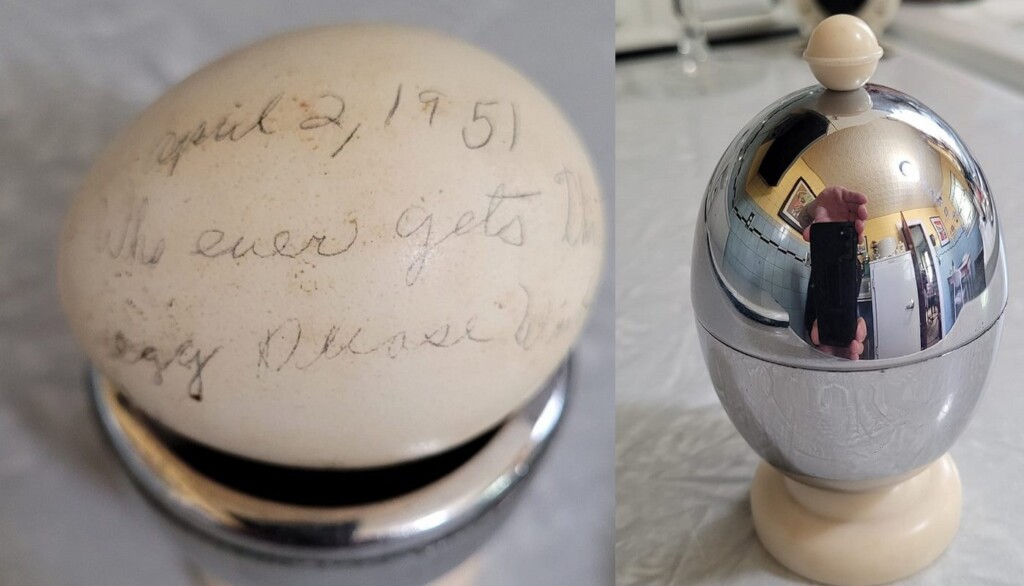
“Whoever gets this egg, please write me,” Mary carefully wrote on several eggs with a pencil. She then added, “Miss Mary Foss, Forest City, Iowa” along with the date, April 2, 1951.

“We heard that egg story our entire lives,” Mary’s daughter Laurie Bascom told the Washington Post. “Our mom always thought it would have been fun to get a response.”

Unbeknownst to Mary, who married and became Mary Starn, one of her eggs had been found by a man named Miller Richardson, who kept it for decades in his home and watched it petrify amid his collection of antiques.

The second key figure in this story is John Amilfitano, a neighbor of Richardson’s who came across the egg one day while helping Richardson find something in his collection. Richardson explained its origin and then, before he died years later, gave it to Amalfitano who kept it in his china cabinet for 20 years.

SIMILAR STORIES: Teen Girl’s Secret Message Left in a Wall 48 Years Ago is Found: ‘I was Absolutely Shocked!’

The story first appeared on Facebook in a group called “Weird (and Wonderful) Secondhand Finds That Just Need To Be Shared,” where Amalfitano thought the curious egg would fit perfectly.

“Wonder if she might still be alive! Tried to locate her, but came up empty. 🥺 I keep the egg safe in a pretty, art deco, English, Egg cozy,” he wrote in a long post in the group along with photos of the egg.

The comment section exploded with curious minds wanting to solve the 72-year-old mystery, and within the day, it came across the screen of one of Mary Starn’s nieces, who in turn shared it with Starn’s daughter Jacque Ploeger.

OTHER LONG-AWAITING RECONNECTING: Pen Pals Finally Get to Meet in Person–68 Years After They Began Writing Letters Back and Forth

Calling Ploeger on the phone, he slowly began explaining the egg story—itself being so bizarre that he didn’t know what to expect even though he knew he may have tracked down the family of the egg author.

“In the background on the call, I heard this voice speak up,” he told the Post. “She said, ‘This is Mary Foss.’”

PEOPLE CONNECTING ACROSS TIME: Wife of WWII Soldier Spends Decades to Reunite Japanese Family With Photo Album He Found on Okinawa –LOOK

Amalfitano said the brief conversation he shared with her was incredibly uplifting, and that he hopes to meet Starn, who herself says she finally found a pen pal from New York (Amalfitano lives on Staten Island), and that it only took 72 years.

SHARE This (Dare I Say It Again) Egg-cellent Story With Your Friends…  

Across Florida, Buildings Are Quietly and Quickly Being Assembled with Real-Life LEGO Bricks

Renco USA released
Renco USA released

A Florida construction firm is seeing fast adoption of its intuitively-made building blocks that work like real-life LEGO bricks.

The interlocking blocks made of a mineral composite and reinforced with glass fiber can be quickly and quietly assembled into walls, floors, and even roofs, with a special adhesive and a rubber mallet being the only tools workers need to get the job done.

By using a process similar to injection molding, Renco USA can take the material and turn it into a variety of shapes, from the standard LEGO bricks to roofbeams and joists. No heavy cutting, welding, or masonry is needed on the job site, and contractors installing plumbing, ventilation, or electrical work can treat the finished block walls like normal concrete.

In Palm Springs, a $21 million, 96-unit housing complex near West Palm Beach is being built by just 11 workers using the blocks and adhesive. Without any cranes or lifts, and no bench saws or metal cutting equipment, the neighbors heard only the muted thud of the rubber mallets.

According to industry reporters, ongoing labor shortages and volatile markets in both steel and concrete are making America’s go-to building strategy for over 100 years more and more difficult to budget for.

Renco’s building system combines standard materials from other industries, like methyl methacrylate glue used in heavy vehicle manufacturing, and recycled glass fiber to reinforce the stability of supply chains and make costs lower and more predictable.

MORE NEWS LIKE THIS: These Lego-Like Bricks Make Building a Raised Garden Bed a Snap

“We worked on this [system] for more than 10 years,” Renco co-founder Tom Murphy, Jr. told Engineering News Record. “We had to keep changing it to make it better and easier to work with. As we did that, making a building with it got faster and easier, and… the building got stronger each time.”

Importantly for Florida weather is that early adoption tests show the blocks are incredibly durable and exhibit properties typically associated with the longest-lasting building materials.

Renco USA released

They’re rated to withstand wind speeds of 275 mph, and because of a naturally-occurring resin used in the injection molding of the blocks, they wick moisture away rather than absorbing it. They’re even insect repellent. A test saw a section of blocks put into a terrarium with a queen termite and 99 males. A month later the block stood alone amid the dead insects.

MORE CONSTRUCTION INNOVATION: World’s Tallest ‘Hempcrete’ Building in South Africa Captures More Carbon than it Emits

Together with a recently closed funding round of $18 million, the Jupiter Florida manufacturing facility churning out 6,000 apartments worth of building materials, and the 96-unit housing complex in Palm Beach, Murphy and President of Renco Kenneth Smuts believe they are poised for a major breakout into the building market.

“Jupiter will be able to produce 6,000 apartment units’ worth of material per year,” Smuts told ENR. “There’s 1.5 million housing starts in the U.S. on an annualized basis. There’s roughly a 5-million housing-start backlog that I don’t think anyone’s ever going to catch up with.”

SHARE This Awesome Next Generation Building Material With Your Friends… 

Portuguese Man Accidentally Finds 82-Foot-Long Dinosaur in His Backyard

Instituto Dom Luiz (Faculty of Sciences of the University of Lisbon)

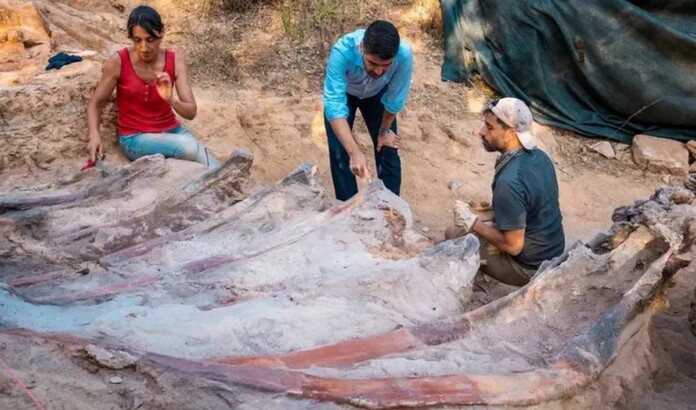
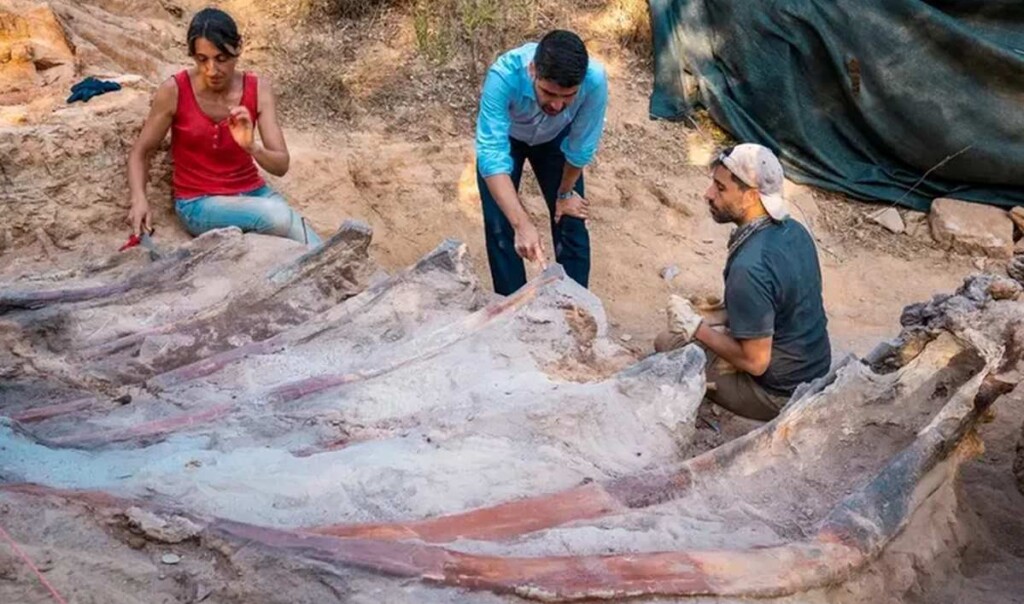
While doing renovations on his property, a Portuguese man stumbled upon a fossilized sauropod that might be the largest dinosaur skeleton ever found in Europe.

It all started in 2017. While carrying out construction work, the owner of the property in central Portugal noticed the presence of several fragments of fossilized bones in his yard. He called scientific authorities, and last month they unearthed several “important” skeletal elements of a beast that may have been 82 feet long (25 meters).

“It’s one of the biggest specimens discovered in Europe, perhaps in the world,” Elisabete Malafaia, a paleontologist from the Faculty of Sciences at the University of Lisbon in Portugal, tells Agence France-Presse.

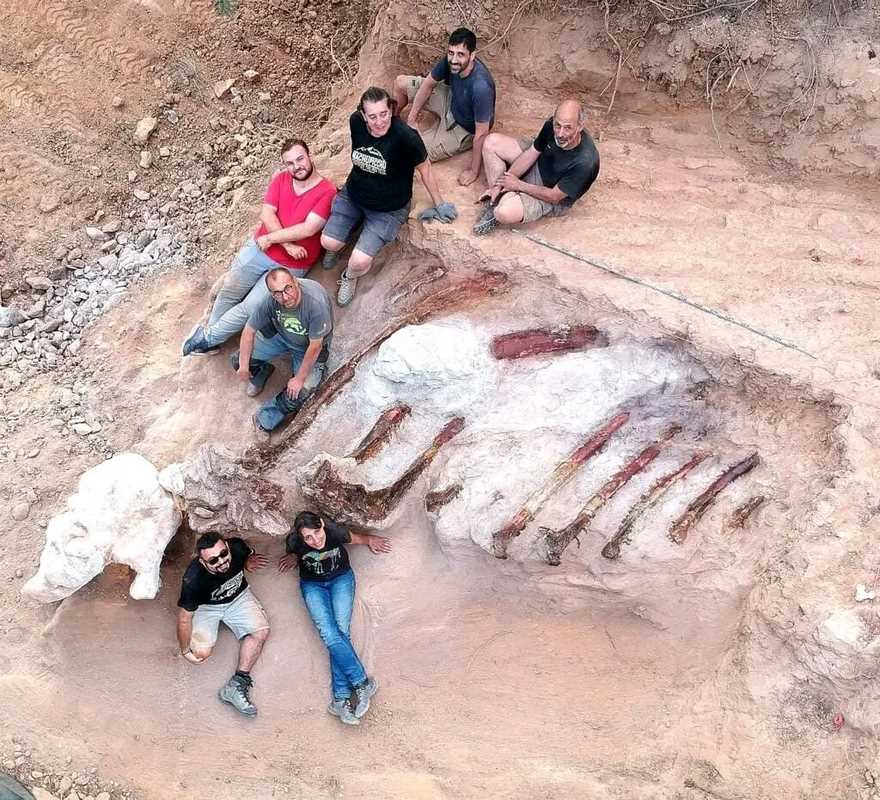
So far, an important set of elements of the axial skeleton has been collected from the site, which includes vertebrae and ribs.

“It is not usual to find all the ribs of an animal like this, let alone in this position, maintaining their original anatomical position,” Malafaia adds in a statement. “This mode of preservation is relatively uncommon in the fossil record of dinosaurs, in particular sauropods, from the Portuguese Upper Jurassic.”

Instituto Dom Luiz (Faculty of Sciences of the University of Lisbon)

The preservation characteristics of the fossils and their disposition indicate the possible presence of other parts of the skeleton of this individual, a hypothesis that will be tested in future excavation campaigns in the deposit.

Europe has found several genera of Brachiosauridae on the continent, and this back garden gargant might be a Brachiosaurus altithorax, a Giraffatitan brancai, or the Late Jurassic species first found in Portugal’s West region, Lusotitan atalaiensis.

What A Way To Kick Off Some Home Improvement-SHARE The Story Below…

Hero Neighbor Charges Into Lake to Save 4-Year-Old Boy With Autism

credit Inside Edition - screen capture
credit Inside Edition – screen capture

A Michigan woman is being hailed a hero after she rescued a 4-year-old autistic boy who jumped into a lake.

Drowning is the leading cause of death among autistic children, but the water would have to make do with frogs and fish after Jessica Bauer and the boy’s Grandma saw him fall in, and the former tossed her smartphone over her shoulder before jumping in.

Ring camera captured the youngster tumbling into a pond and Bauer’s rescue. The young woman has a three-year-old of her own, and said the sight of the little boy drowning was frightening, but nevertheless, she told Inside Edition that she didn’t think much at all as she was jumping in.

The mother of the 4-year-old later thanked her hero neighbor. Bauer says the boy she saved is doing fine and is excited to celebrate his 5th birthday.

WATCH the rescue below…

“We cannot change anything until we accept it. Condemnation does not liberate, it oppresses.” – Carl Jung

Quote of the Day: “We cannot change anything until we accept it. Condemnation does not liberate, it oppresses.” – Carl Jung

Photo by: Sigmund

With a new inspirational quote every day, atop the perfect photo—collected and archived on our Quotes page—why not bookmark GNN.org for a daily uplift?