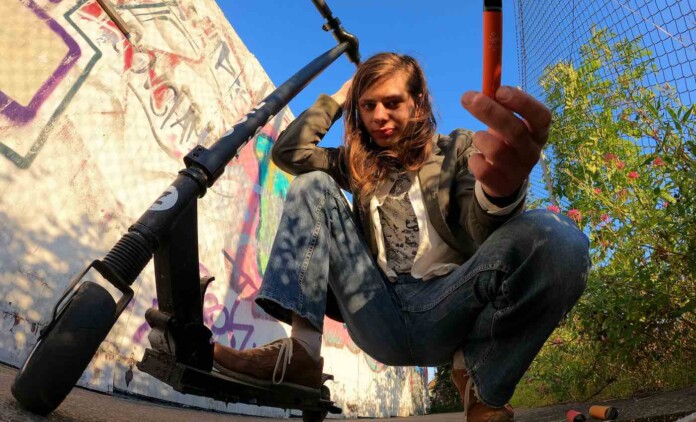
A clever graduate has used 80 discarded vape batteries to power his e-scooter—and to make a point about waste.
The 23-year-old Brit says disposable vape devices are marketed as expendable, but still have plenty of power—and people need to know that.
It didn’t cost any money to pick up 80 discarded vape batteries and he wired the lithium-ion batteries to a scooter purchased on eBay for $37 (£30).
Tobiasz Stanford from Wiltshire now uses the e-scooter everyday and calls it “very reliable”.
“It can go up any hill, has been used in rain, and has been driven through puddles. The only downfall is that it’s quite noisy but other than that the performance is crazy.”
“These vape batteries are very active still, yet they’re marketed as disposable. It needs to stop”
Having a lifetime fascination for electronics and moving parts, the grad student saw his friend smoking a vape and wondered how it worked. He researched different types of vapes and found some could be recharged and reused five times before the vape liquid ran out. After taking them apart, he discovered they used a rechargable lithium-ion battery.
He began recharging the batteries and found after one cycle they could function “almost like a brand new battery”—and decided to try powering a scooter with them.
The one he bought on eBay didn’t have good range and could only go 10 mph (16 km).
“I had to be careful wiring up the batteries but now the scooter works better with the vape batteries than it did before. It goes up to 15 mph (25km), can go up any hill, and can charge in about three hours.
“Once it’s fully charged I go around six miles everyday on it.”
Tobiasz says people are “wowed” when he tells them the small scooter is powered completely by disposable vape batteries.
“Everyone’s quite surprised. My family and friends are completely shocked when they see what I’ve done.
“It’s a very small scooter and most people can’t even tell it’s even powered – never mind powered by vapes.”
Tobiasz says he wants others to know that disposable vapes can in fact be reused and believes there needs to be more restrictions on the reuse of disposable vapes—especially because if they’re dumped in a landfill the chemicals would eventually leach out.
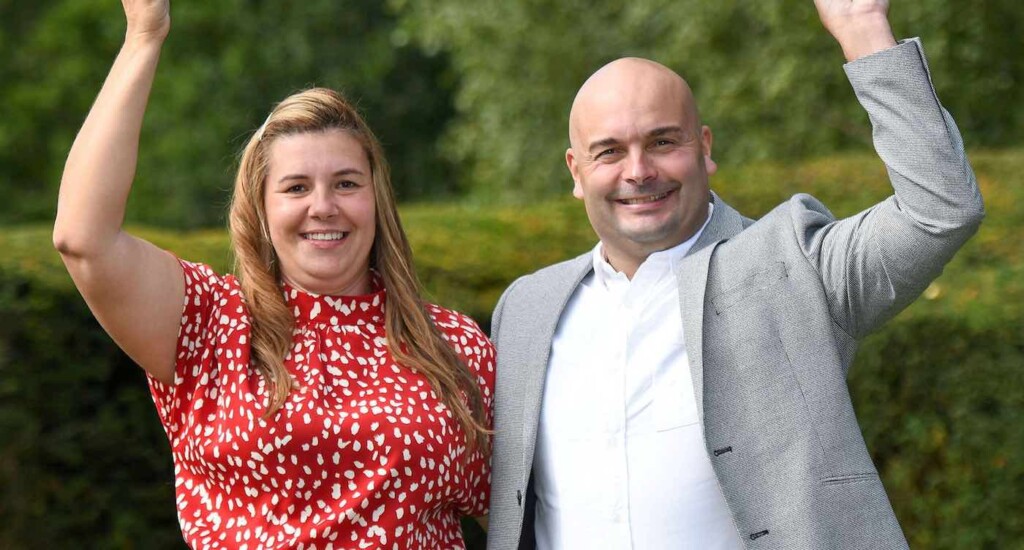
Mark and Kathleen Reece of Stourport, Worcestershire - SWNS
Mark and Kathleen Reece of Stourport, Worcestershire – SWNS
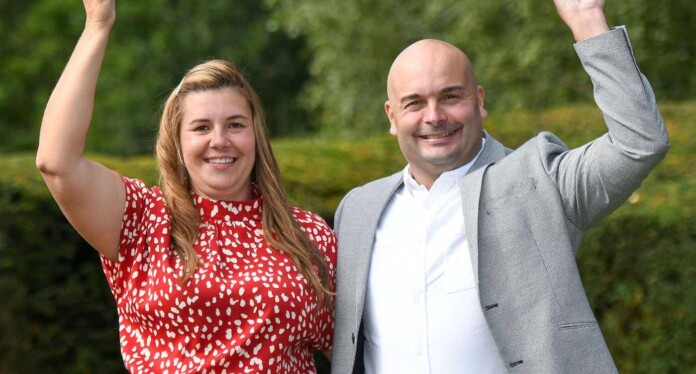
A kindhearted couple who won £100,000 on the Euromillions is planning to spend their winnings on fostering children.
Already parents to three children, the couple in their 40s will now convert their garage into extra bedrooms to begin fostering kids in need, a dream they’ve always shared.
Kathleen Reece admits she’s often moaned in the past about her husband Mark playing the Euromillions every week, believing they weren’t lucky enough to ever win.
And she thought Mark was playing a practical joke on her when he asked her to check the winning ticket while he went out to get some milk in North Worcestershire, England.
But her daughter helped her double-checked the numbers online. “We called out the winning numbers to each other and, as the realization of what this meant hit us, we sat there in disbelief.”
“I decided to call the number on the back of the ticket and was talking to a lady from The National Lottery when Mark came home with the milk.
“I told him to shush, as I was on the phone to The National Lottery. His jaw dropped.
“He looked at me in disbelief so I put the phone on speaker and the lady confirmed we’d won £100,770.”
Kathleen, Mark and their daughter and two sons all sat in the kitchen staring at each other before hiding the winning ticket in Mark’s passport for safekeeping.
“I’ve always wanted to foster children,” said Kathleen. “Mark and I discussed it many years ago and then we had our own.
“My three kids will be leaving home soon and I have too much love to give. I’ve always wanted to foster, however having enough space has always been an issue.”
Kathleen, a full-time teaching assistant said the win was a brilliant way to finish off her summer break.
FREE WILL ASTROLOGY – Week of September 2, 2023
Copyright by Rob Brezsny, FreeWillAstrology.com
VIRGO (Aug. 23-Sept. 22):
Virgo journalist Anthony Loyd has spent a lot of time in war zones, so it’s no surprise he has bleak views about human nature. He makes the following assertion: “We think we have freedom of choice, but really most of our actions are puny meanderings in the prison yard built by history and early experience.” I agree that our conditioning and routines prevent us from being fully liberated. But most of us have some capacity for responding to the raw truth of the moment and are not utterly bound by the habits of the past. At our worst, we have 20-percent access to freedom of choice. At our best, we have 70-percent. I believe you will be near the 70-percent levels in the coming weeks, dear Virgo.
LIBRA (Sept. 23-Oct. 22):
Libra poet T. S. Eliot wrote the iconic narrative poem “The Wasteland.” One part of the story takes place in a bar near closing time. Several times, the bartender calls out, “Hurry up, please—it’s time.” He wants the customers to finish their drinks and leave for the night. Now imagine I’m that bartender standing near you. I’m telling you, “Hurry up, please—it’s time.” What I mean is that you are in the climactic phase of your astrological cycle. You need to finish this chapter of your life story so you can move on to the next one. “Hurry up, please—it’s time” means you have a sacred duty to resolve, as best you can, every lingering confusion and mystery.
SCORPIO (Oct. 23-Nov. 21):
Addressing a lover, Scorpio poet Margaret Atwood says, “I would like to walk with you through that lucent wavering forest of bluegreen leaves with its watery sun & three moons, towards the cave where you must descend, towards your worst fear.” That is a bold declaration. Have you ever summoned such a deep devotion for a loved one? You will have more power and skill than usual to do that in the coming months. Whether you want to or not is a different question. But yes, you will be connected to dynamic magic that will make you a brave and valuable ally.
SAGITTARIUS (Nov. 22-Dec. 21):
Sagittarian theologian N. T. Wright writes, “The great challenge to self-knowledge is blind attachment to our virtues. It is hard to criticize what we think are our virtues. Although the spirit languishes without ideals, idealism can be the greatest danger.” In my view, that statement formulates a central Sagittarian challenge. On the one hand, you need to cultivate high ideals if you want to be exquisitely yourself. On the other hand, you must ensure your high ideals don’t become weapons you use to manipulate and harass others. Author Howard Bloom adds more. “Watch out for the dark side of your own idealism and of your moral sense,” he writes. “Both come from our arsenal of natural instincts. And both easily degenerate into an excuse for attacks on others.” Now is a good time for you to ponder these issues.
CAPRICORN (Dec. 22-Jan. 19):
Capricorn playwright and novelist Rose Franken said, “Anyone can be passionate, but it takes real lovers to be silly.” That’s interesting, because many traditional astrologers say that Capricorns are the *least* likely zodiac sign to be silly. Speaking from personal experience, though, I have known members of your tribe to be goofy, nutty, and silly when they feel comfortably in love. An old Capricorn girlfriend of mine delighted in playing and having wicked good fun. Wherever you rank in the annals of wacky Capricorns, I hope you will consider expressing these qualities in the coming weeks. Romance and intimacy will thrive if you do.
AQUARIUS (Jan. 20-Feb. 18):
As I work on writing new books, I often draw on inspirations that flow through me as I take long hikes. The vigorous exercise shakes loose visions and ideas that are not accessible as I sit in front of my computer. Aquarian novelist Charles Dickens was an adherent of this approach. At night, he liked to walk around London for miles, marveling at the story ideas that welled up in him. I recommend our strategy to you in the coming weeks, Aquarius. As you move your body, key revelations and enriching emotions will well up in you.
PISCES (Feb. 19-March 20):
The coming months will be an excellent time to build, discover, and use metaphorical bridges. To get in the mood, brainstorm about every type of bridge you might need. How about a connecting link between your past and future? How about a nexus between a task you must do and a task you love to do? And maybe a conduit between two groups of allies that would then serve you even better than they already do? Your homework is to fantasize about three more exciting junctions, combinations, or couplings.
ARIES (March 21-April 19):
Climate change is dramatically altering the Earth. People born today will experience three times as many floods and droughts as someone born in 1960, as well as seven times more heat waves. In urgent efforts to find a cure, scientists are generating ultra-creative proposals, including planting mechanical trees, creating undersea walls to protect melting glaciers from warmer ocean water, dimming the sun with airborne calcium carbonate, and covering Arctic ice with a layer of glass. In this spirit, I encourage you to incite unruly and even unorthodox brainstorms to solve your personal dilemmas. Be wildly inventive and creative.
TAURUS (April 20-May 20):
“When love is not madness, it is not love,” wrote Spanish author Pedro Calderon de la Barca. In my opinion, that’s naive, melodramatic nonsense! I will forgive him for his ignorance, since he worked as a soldier and celibate priest in the 17th century. The truth is that yes, love should have a touch of madness. But when it has more than a touch, it’s usually a fake kind of love: rooted in misunderstanding, immaturity, selfishness, and lack of emotional intelligence. In accordance with astrological factors, I assign you Tauruses to be dynamic practitioners of genuine togetherness in the coming months: with hints of madness and wildness, yes, but mostly big helpings of mutual respect, smart compassion, tender care, and a knack for dealing maturely with disagreements.
GEMINI (May 21-June 20):
Gemini author Iain S. Thomas writes, “There are two things everyone has. One is The Great Sadness and the other is How Weird I Really Am. But only some of us are brave enough to talk about them.” The coming weeks will be a favorable time to ripen your relationship with these two things, Gemini. You will have the extra gravitas necessary to understand how vital they are to your full humanity. You can also express and discuss them in meaningful ways with the people you trust.
CANCER (June 21-July 22):
A self-fulfilling prophecy happens when the expectations we embrace actually come to pass. We cling so devotedly to a belief about what will occur that we help generate its literal manifestation. This can be unfortunate if the anticipated outcome isn’t good for us. But it can be fortunate if the future we visualize upgrades our well-being. I invite you to ruminate on the negative and positive projections you’re now harboring. Then shed the former and reinforce the latter.
LEO (July 23-Aug. 22):
The holy book of the Zoroastrian religion describes a mythical mountain, Hara Berezaiti. It’s the geographic center of the universe. The sun hides behind it at night. Stars and planets revolve around it. All the world’s waters originate at its peak. Hara Berezaiti is so luminous and holy that no darkness can survive there, nor can the false gods abide. I would love for you to have your own version of Hara Berezaiti, Leo: a shining source of beauty and strength in your inner landscape. I invite you to use your imagination to create this sanctuary within you. Picture yourself having exciting, healing adventures there. Give it a name you love. Call on its invigorating presence when you need a sacred boost.
WANT MORE? Listen to Rob’s EXPANDED AUDIO HOROSCOPES, 4-5 minute meditations on the current state of your destiny — or subscribe to his unique daily text message service at: RealAstrology.com
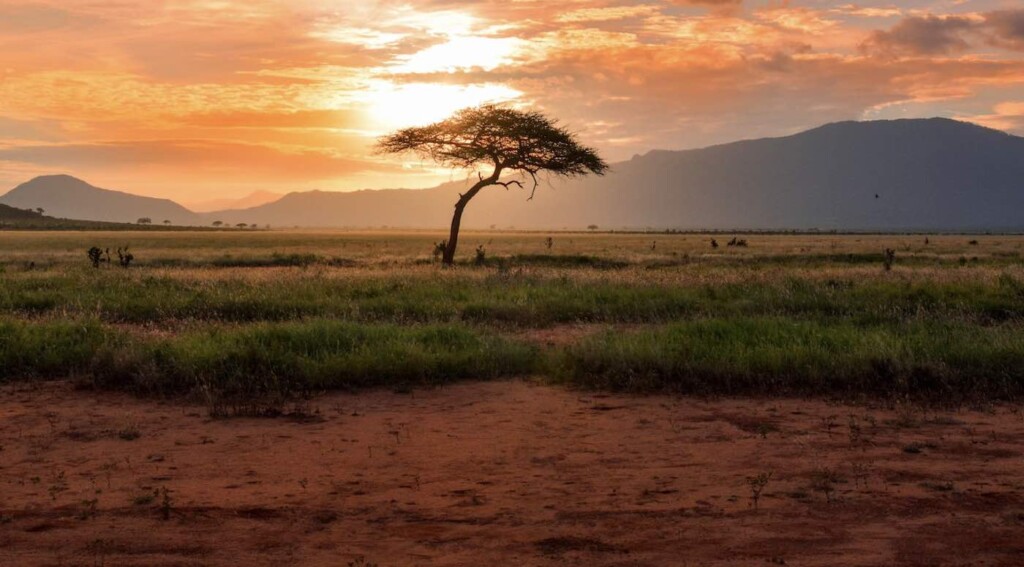
Quote of the Day: “Those who contemplate the beauty of the earth find reserves of strength that will endure as long as life lasts.” – Rachel Carson
Photo by: Damian Patkowski
With a new inspirational quote every day, atop the perfect photo—collected and archived on our Quotes page—why not bookmark GNN.org for a daily uplift?
A painting found in a New Hampshire attic could fetch between a quarter-million and three million dollars after the owner had bought it at a thrift store for just $4.00
That’s because it’s a lost work by prolific Maine artist N.C. Wyeth, whose signature was on the painting itself, but which the buyer assumed was simply a forgery.
NC Wyeth’s Ramona – credit Bonhams Skinner
The painting is one of four that Wyeth, patriarch of the Wyeth family of painters, completed for a 1939 edition of Helen Hunt Jackson’s book Ramona, originally published in 1884.
According to Bonham Skinners, the auction house handling the sale, the woman unknowingly purchased the valuable work after finding it leaning against a wall in Savers thrift shop in Manchester, NH. It was stacked alongside posters and prints, and she selected it only because she was looking for frames to reuse.
After not being able to find any information on the work, the buyer hung it on her bedroom wall, but after a few years ended up stashing it in the attic. During some May cleaning, she came across the painting yet again, and this time posted pictures of it on a Facebook group dedicated to people finding things lost in walls, attics, dug up from under floorboards, or salvaged from “that abandoned house across the street from your grandma’s.”
She connected with a former curator who had handled paintings from 3 generations of the Wyeth family and knew almost immediately the piece was legitimate.
“While it certainly had some small scratches and it could use a surface clean, it was in remarkable condition considering none of us had any idea of its journey over the last 80 years,” Lewis told the Boston Globe, who covered the story.
The company that published Ramona is believed to have passed the work on to an editor or to the author’s estate at some point, and only one other of the four paintings that were made has been found.
Discovering lost famous pieces happens so often, it’s common from a news media perspective. In 2021, seven masterpieces were found in various parts of the West.
Proving that change is possible if the will to create it is present, Chinese megacities like Beijing that were once famous for their apocalyptic grey skies are enjoying the lowest levels of air pollution they’ve experienced in the 21st century.
Falling 42% from an average high in 2013 when Chinese air pollution was higher than 50 particles per cubic centimeters of city air, the change has increased the lifespan of Chinese urbanites by 2.2 years.
The news comes from a report published by the University of Chicago called the Air Quality Life Index which listed some of the actions taken by the Chinese government to reduce air pollution, described by the CCP as a “war on pollution.”
This has included reducing the presence of heavy industry like steel production in city centers, as well as restricting coal power plants from being built inside cities while shuttering those that were already there.
Some cities like Beijing have reduced the number of cars allowed on the roads during peak hours, similar to London’s congestion charge. Lastly, China’s mass urban tree-planting campaigns have been well documented.
While the life expectancy has risen on average 2.2 years, some cities have seen far more drastic increases. Citizens living under the new “Beijing Blue,” are predicted to live 4 additional years, while those 11 million in the north-central city of Baoding are predicted to gain 6.
“At the foundation of those actions were common elements: political will and resources, both human and financial, that reinforced each other,” the report said. “When the public and policymakers have these tools, action becomes much more likely.”
In fact, the decline in China’s pollution levels has been so drastic that it lowered the world average, which the report says would have increased if not for the Middle Kingdom’s war on pollution.
Although Chinese city air is still several times higher than the WHO’s recommended minimum, it shows what’s accomplishable with political and civic effort—particularly to its neighbors in South Asia where the report warns air quality is worsening.
SHARE This Positive Trend In Saving Lives And Greening China’s Cities…
Every so often, it’s the shelter dog that adopts the humans.
Scout was a mutt and a stray and was kept at a shelter in Michigan until the pooch with no past decided he was tired of waiting to be adopted and went trotting out looking for someone to adopt, successfully escaping the shelter and its fences 3 separate times in pursuit of a permanent home.
From the Detroit Free Press comes the story of Scout’s adoption of an entire nursing home, and the invaluable partnership formed between the determined dog, the residents, and the nurses.
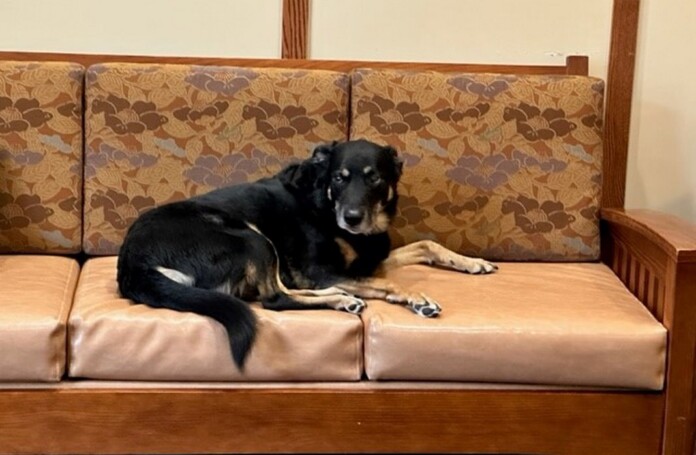
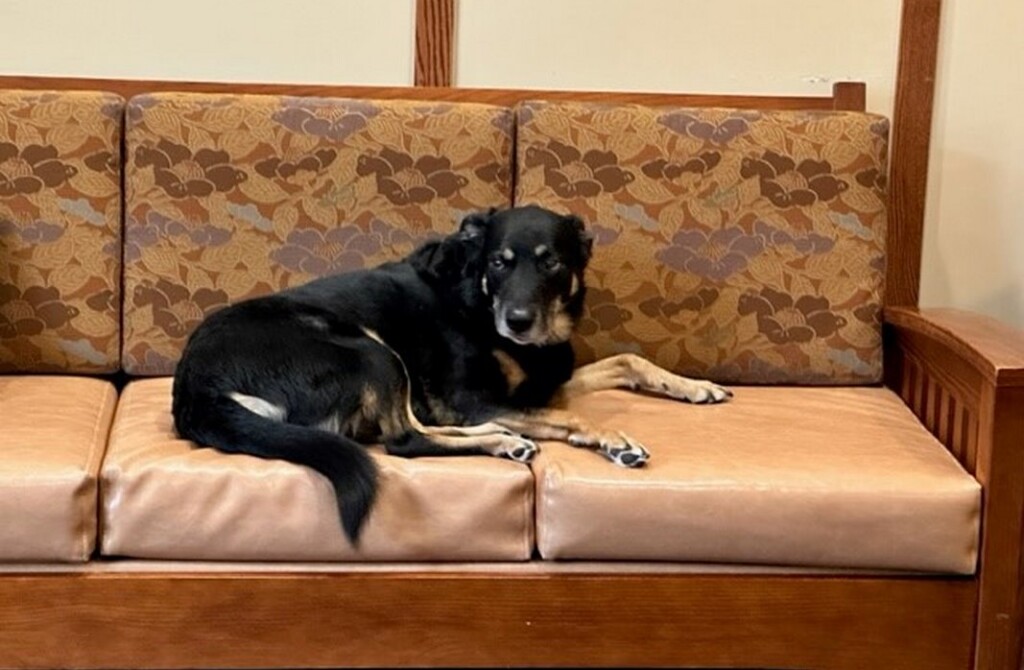
One day in mid-July, Antrim County Animal Control was called to Meadow Brook Medical Care Facility where they found one of their shelter’s dogs, Scout, curled up on the couch in the waiting room.
He had escaped last night from their shelter just down the road, and somehow managed to scale the 10-foot chain link fence, another 6-foot solid privacy fence, cross a busy highway without being run over, find the nursing home, go in through the front door undeterred and curl up on the couch to sleep.
It was a puzzling story, but without any satisfactory way of answering the question, they took Scout back to the shelter only for him to escape again a few nights later and turn up on the couch in the Meadow Brook waiting room. Then, a few nights after that, there Scout was again, and the staff felt they had a decision to make.
“I’m a person who looks at outward signs, and if it’s meant to be, it’s meant to be,” Marna Robertson, the nursing home’s administrator, told the Free Press. “He did that one time, two times, three times, and obviously that’s something that you should pay attention to. And I asked the staff, ‘Well, he wants to be here. Would anybody like to have a dog?’”
Formally adopted by the nursing home, Scout, who the staff says clearly had been abused in his past life, quickly set about the business of making friends with the residents. A long-term/permanent care facility that houses dementia patients, elderly without any other family support, and those in the end-of-life stages, having the dog around has turned out to be a priceless addition.
“To each and every one of them, it’s their dog,” said Jenni Martinek the nursing home’s household coordinator.
He patrols the halls in a manner that’s part security guard part professional greeter, routinely visiting those who are passing away, or popping in on residents who still have the energy to play with him, and always stopping by the rooms of those who keep dog treats in their walkers.
He’s not big, nor menacing, but if someone who doesn’t live there rings the doorbell he barks and jumps up on the wall just to let them know to behave.
The speed at which he has adapted himself to all these roles is remarkable, and when paired with the fact that he simply kept showing up there, gives the staff and the residents the feeling like he was meant to be at Meadow Brook.
You can read the whole saga of Scout’s journey to Meadow Brook at the Detroit Free Press.
SHARE This Amazing, Touching Story With Your Dog Loving Friends…
The bra insert that can detect cancer, credit Canen Dagdeviren, MIT - released
The bra insert that can detect cancer, credit Canen Dagdeviren, MIT – released
A miniature ultrasound device, fitted to a flexible polymer strap, can be slipped into a bra and detect breast cancer tumors among those most at risk of developing one.
The invention is significant for several reasons, and if perfected and developed, could save hundreds of lives.
The first reason it could be a major medical advancement is that developing breast cancer tumors in their earliest stages leads to a nearly 100% survival rate. The second is that developing a tumor even in the space between mammograms does happen, and not at a small rate. Depending on the country, 20-30% of all tumors are found in people who were in between routine screenings.
The device was developed at MIT, and once worn, it allows the user to move an ultrasound tracker across the bra and check for tumors.
“We changed the form factor of the ultrasound technology so that it can be used in your home. It’s portable and easy to use, and provides real-time, user-friendly monitoring of breast tissue,” says Canan Dagdeviren, an associate professor in MIT’s Media Lab, senior author of the study demonstrating its functionality, and inventor of the device.
Dagdeviren drew inspiration for the device from her aunt, Fatma Caliskanoglu, who died after developing aggressive breast cancer tumors between routine screenings after just six months. Sitting by her bedside, Dagdeviren sketched out her idea for the wearable ultrasound bra insert.
In the study, the researchers tested the device on a 71-year-old woman with a history of breast cysts. They confirmed that it could detect the cysts, which were only 0.3 centimeters long, or around the size of an early-stage tumor. They also confirmed that it provided a depth of vision comparable to traditional ultrasound machines used to look for tumors in a hospital or cancer center.
The ultrasonic bra has won Dagdeviren high praise from her colleagues, including Anantha Chandrakasan, the Dean of MIT’s School of Engineering, who also co-authored the paper on the device.
“This technology provides a fundamental capability in the detection and early diagnosis of breast cancer, which is key to a positive outcome,” says Chandrakasan.
“This work will significantly advance ultrasound research and medical device designs, leveraging advances in materials, low-power circuits, AI algorithms, and biomedical systems.”
Similar devices are being pioneered in Nigeria, the Guardian reports, where an entrepreneurial robotics graduate is developing a product called the Smart Bra to help reduce cancer rates in Nigeria where breast cancer is the most common type. Other wearable tech bras are being developed in Mexico and Switzerland.
It won’t be praise from colleagues, though, which Dagdeviren hopes to achieve, but rather increasing breast cancer survival rates from 95% to 98%. It’s not a big number, but it represents hundreds of women like her aunt Caliskanoglu—beloved family members.
WATCH how it works below from MIT…
SHARE This Simple And Lifesaving Piece Of Medical Kit With Your Friends…
Quote of the Day: “I always entertain great hopes.” – Robert Frost
Photo by: Kristopher Roller
With a new inspirational quote every day, atop the perfect photo—collected and archived on our Quotes page—why not bookmark GNN.org for a daily uplift?
American scientists developed a test that focuses on damage to mitochondrial DNA in the blood linked with Parkinson’s disease.
Current diagnoses of Parkinson’s are largely based on clinical symptoms after significant neurological damage has already occurred, and researchers hope this new test could be used to diagnose patients prior to such damage occurring.
Parkinson’s is the second most common neurological disease behind Alzheimer’s. The progressive disorder affects the nervous system and parts of the body controlled by nerves and afflicts around ten million people across the globe.
The study team, led by neuroscientists at the Duke University School of Medicine focused their work on DNA damage in mitochondria.
Mitochondria contain their own DNA, which can undergo damage separately from the nuclear DNA that encodes most of an organism’s genome, and previous studies have shown the association between mitochondrial DNA damage and an increased risk of Parkinson’s disease.
Duke University researchers have previously reported an accumulation of such DNA damage in the brain tissue of deceased Parkinson’s patients, and that this was reflected in the mitochondria.
“A simple blood test would allow us to diagnose the disease earlier and start therapies sooner,” said Duke University neuroscientist and senior author Dr. Laurie Sanders. “Additionally, a clear-cut diagnosis would accurately identify patients who could participate in drug studies, leading to the development of better treatments and potentially even cures.”
This new test also identified high levels of the damaged DNA in the blood samples of people who carry the genetic mutation LRRK2—which has been associated with an increased risk of the disease and was able to detect patients with Parkinson’s disease with and without LRRK2 mutations.
“This disease takes a terrible toll on people… It’s important to get new, effective treatments over the finish line,” said Dr. Sanders. “Our hope is that this assay could not only diagnose Parkinson’s disease but also identify drugs that reverse or halt mitochondrial DNA damage and the disease process.”
SHARE This Important First Step Toward Better Parkinson’s Medicine…
UN Resident and Humanitarian Coordinator for Yemen David Gressly with the FSO Safer
UN Resident and Humanitarian Coordinator for Yemen David Gressly with the FSO Safer
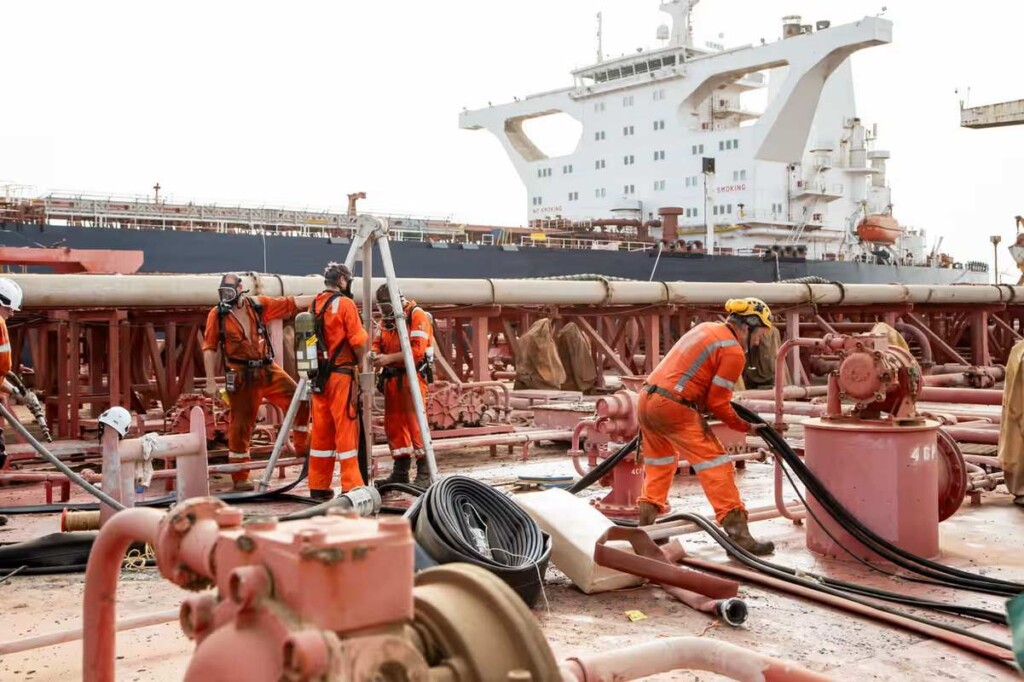
A derelict oil tanker off the coast of Yemen had more than a million barrels of crude sitting around, on the verge of leaching into the Red Sea, until one determined American orchestrated a last-ditch cleanup operation.
Just completed this summer, the salvage operation probably prevented a major environmental catastrophe because the tanker, FSO Safer, was 47 years-old and had serious mechanical and structural risks.
The diplomat working for the United Nations became a true hero after crowdfunding the many millions of dollars needed for the sea-saving work.
David Gressly took advantage of a truce between warring factions in Yemen, where the FSO Safer was abandoned off shore in 2015 when war broke out. The recent truce opened a window of opportunity to do something about this environmental ticking time bomb hanging over the region.
The oil technically belongs to the Yemen state—but who represents that country isn’t yet settled. After a peace agreement was reached in May of 2022, the race was on for Gressly to spearhead a hugely-ambitious fundraiser to find $144 million to buy a new tanker and pay a salvage company to drain the oil and bring the massive bulker to shore.
He knew that the amount of oil was greater—by far—than the barrels spilled in the Exxon Valdez tragedy, so Gressly, the UN Resident Humanitarian Coordinator for Yemen, continued his dogged search for funding over many months.
“If we had a major oil spill there, we would have probably raised a billion dollars in a month—because there are mechanisms for governments to do just that,” Gressly told the Guardian.
Salvage teams at work on the Safer. credit -Lize Kraan-Smit from Boskalis
After government and private sector donations weren’t adding up, Gressly opened the fundraising to citizens of the world: anyone with a dollar to spare was invited to contribute to this admittedly massive goal.
But, by September 2022 the campaign had gathered $75 million—more than half of the required amount—an astonishing return driven by individuals, from Yemeni businessmen to schoolchildren in the US. When the campaign reached $121 million in July this year, the emergency humanitarian fund of the UN provided a low-interest loan to cover the rest.
From there, work was turned over to Boskalis, a salvage company that finished the cleanup operation on August 11th after a brand new oil tanker, dubbed the MT Yemen, weighed anchor alongside Safer to siphon off the last of her oil before the old girl was towed to Yemen’s shore for scuppering.
Because of his lifesaving work in Yemen, Gressly is considering establishing contingency plans for future situations of this sort—especially since it was revealed upon closer examination that Safer had only 12 to 18 months before crumbling into the sea.
WATCH an animation of the whole salvage operation below…
SHARE This Truly Fantastic News Of Averted Disaster On Social Media…
Mangere shell selection - credit Bruce Hayward, released
Mangere shell selection – credit Bruce Hayward, released
Excavations had begun on two huge vertical shafts for a major upgrade of Auckland’s raw sewage pipeline when the groundworks crew came across something astonishing.
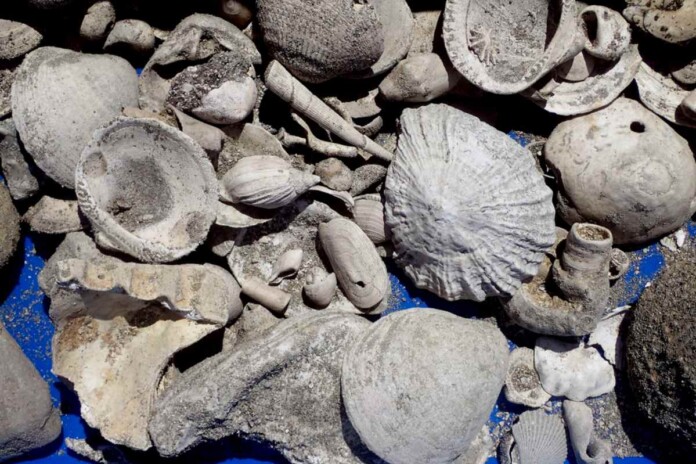
Piercing the threshold of an ancient shell bed filled with sea life, New Zealand paleontologist Bruce Hayward likened it to “finding gold right on your doorstep—a once-in-a-lifetime find.”
300,000 individual lifeforms from 266 species, fossilized 3 million years ago are offering the largest single insight into New Zealand native marine fauna in history, and a new paper released on the subsequent research has identified 10 new species.
182 different mollusks were recorded, including the oldest known member of the genera containing the famous New Zealand flax snail. There is the first fossil record entry for ostrocods—five species no less, also known as ‘seed shrimps’ in New Zealand, and the first appearance of a common coral species as well.
Additionally, great white shark teeth, eagle ray dental plates, a sperm whale tooth, and saw shark bones were also part of the haul.
Watercare, the excavation company digging the pipeline, was apparently all too happy to help the paleontologists pull out as many of the ancient shells as could be found: dumping the prehistoric screenshot in a sandy heap in a nearby field.
The company also funded two paleontology graduate students to do the grunt work of sifting through the sand, locating, cleaning, and sorting specimens.
Working under the supervision of Auckland Museum curator Dr. Wilma Blom, it took weeks to finish the job.
“Detailed identification of the fossils shows that they were deposited between 3 and 3.7 million years ago in a subtidal channel in an early version of the modern Manukau Harbor,” said Dr. Hayward.
“At that time, sea level was slightly higher than it is today as the world was also several degrees warmer than now. As a result, the fossils include a number of subtropical species, whose relatives today live in the warmer waters around the Kermadec and Norfolk islands. At least ten previously unknown species are present and will be described and named in future work.”
Hayward added that this ancient marine channel brought sea creatures and their remains together from both tropical waters and colder climes.
SHARE This Fantastic Collection Of Prehistoric Sea Life With Your Friends…
Villarrica Volcano, Chile - credit Francisco Negroni via SWSN
Villarrica Volcano, Chile – credit Francisco Negroni via SWNS
From lava illuminating clouds above a volcano to an icy wonderland, these are just some of the over 3,000 photographs submitted to the 2023 Royal Meteorological Society’s weather photo competition.
Just in time for World Photography Day, the competition is now in its eighth year, and acts as an observation deck to the vastly different climates experienced across the world.
Both amateur and professional photographers from 94 countries have shared their pictures and stories for the competition.
The photograph above was captured by Chilean photographer Francisco Negroni, who imaged the clouds above this volcano with a three-minute exposure time to capture the faint light coming from the lava inside. During that period, the turning of the Earth shifted the stars’ positions to make them appear as blurry streaks.
The clouds are what are known as “lenticular clouds” which form when air flowing over the ground encounters an obstacle like a volcano. This causes the air to rise and cool, which can allow moisture to condense and form clouds.
credit – Cristiano Xavier, via SWNS
Cristiano Xavier from Brazil followed a large storm hoping it might give him a chance to get a shot of a tornado. Tornadoes are typically created by large storms known as supercells. Variations in wind speeds can cause a rotation in the air, which the storm can pull into a vertical vortex.
If this vortex or funnel cloud reaches the ground, then that’s a tornado, and the intense winds can suck up debris and cause serious damage.
“Luckily this tornado stayed over the crops and didn’t destroy any buildings,” Xavier noted.
Fichtelberg Mountain by Christoph Schaarschmidt via SWNS
“It was not easy to photograph this landscape because it was about -14 degrees that evening, with strong winds,” said German photographer Christoph Schaarschmidt, who took this photograph of a mountain landscape turned into ice sculptures on Fichtelberg Mountain in Saxony, Germany.
credit – Matthew Price via SWNS
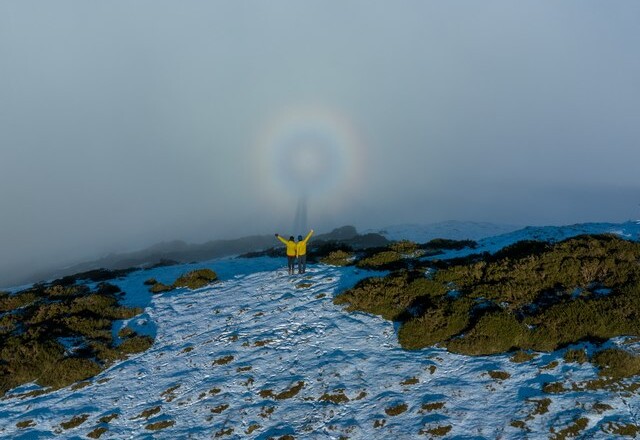
Brocken specters are caused by the shadow of the observer projected onto the mist, often creating the illusion of huge, distant, ghostly figures.
In this photo taken on Hanter Hill in Wales, Matthew Price and his wife spotted the brocken specter that their shadows were creating in the fog.
Using a drone to take a selfie, the specter is surrounded by twinkling rainbow colors as different frequencies of light are reflected back to the camera at different angles by the water droplets in the mist.
Open voting runs until September 24th, and the winner will be selected on October 4th. You can vote for these or any of the other stunning images, like a 6-sided snowflake hanging on the edge of a pine tree branch, or mystical red sprites above a Chinese mountain, here on the contest website.
Quote of the Day: “It has long been my axiom that the little things are infinitely the most important.” – Arthur Conan Doyle
Photo by: Diana Parkhouse
With a new inspirational quote every day, atop the perfect photo—collected and archived on our Quotes page—why not bookmark GNN.org for a daily uplift?
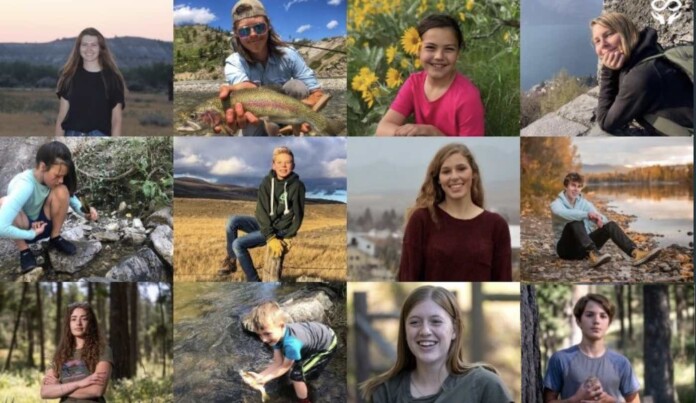
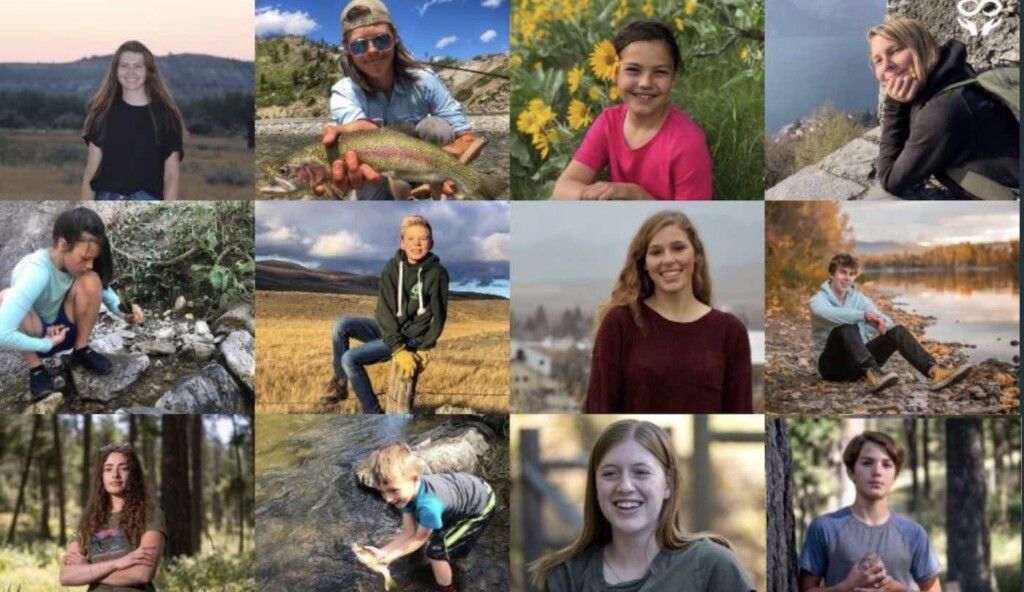
12 of the youth plaintiffs in Held v State of Montana - Our Children's Trust
12 of the youth plaintiffs in Held v State of Montana – Our Children’s Trust
In an historic first, 16 young plaintiffs sued the state of Montana, and won, after asserting that the U.S. state violated their constitutional right to a clean and healthful environment.
In the 103-page decision filed this month in Held v. State of Montana, Judge Kathy Seeley of the First Judicial District Court ruled in their favor based on the state’s own Constitution.
The 50-year-old document declares that citizens have a right to a clean and healthful environment and that each Montanan “shall maintain and improve a clean and healthful environment in Montana for present and future generations.”
With its decree, the court also invalidated as unconstitutional certain Montana laws that promoted fossil fuels without even considering climate change. The court ruled the youth plaintiffs had proven their standing to bring the case by showing significant injuries, the government’s substantial role in causing them, and that a judgment in their favor would change the government’s conduct.
Local news reports say the case was “the first case challenging state and national climate and energy policies to make it to trial in the U.S., and is now the first in which the plaintiffs were victorious.”
Judge Seeley’s Findings of Fact, Conclusions of Law, and Order set forth critical evidentiary and legal precedent for the right of youth to a safe climate, including these highlights:
● “Every additional ton of GHG emissions exacerbates Plaintiffs’ injuries and risks locking
in irreversible climate injuries.”
● “Plaintiffs’ injuries will grow increasingly severe and irreversible without science-based
actions to address climate change.”
● “Plaintiffs have proven that as children and youth, they are disproportionately harmed by
fossil fuel pollution and climate impacts.”
● “The State authorizes fossil fuel activities without analyzing GHGs or climate impacts”
● “(Montana has) the authority under the statutes by which they operate to protect
Montana’s environment and natural resources, protect the health and safety of
Montana’s youth.”
● “Montana’s contributions to GHG emissions can be measured incrementally and
cumulatively both in terms of immediate local effects and by mixing in the atmosphere
and contributing to global climate change and an already destabilized climate system.”
The youth were represented, in part, by attorneys with Our Children’s Trust, who called it “a sweeping win.”
“As fires rage in the West, today’s ruling in Montana is a game-changer that marks a turning point in this generation’s efforts to save the planet from the devastating effects of human-caused climate chaos,” said Julia Olson, Chief Legal Counsel with Our Children’s Trust. “This is a huge win for Montana, for youth, for democracy, and for our climate. More rulings like this will certainly come.”
“Today we witnessed democracy in action as Montana’s judiciary fulfilled its constitutional duty to hold the political branches accountable for actions exacerbating the climate crisis and causing harm to the state’s youngest and most vulnerable people,” said Nate Bellinger, a senior staff attorney with the group.
“Despite the state’s attempts to avoid any responsibility, the court’s decision affirms that the state has the ‘discretion to deny permits for fossil fuel activities that would result in unconstitutional levels of GHG emissions, unconstitutional degradation and depletion of Montana’s environment and natural resources, or infringement of the constitutional rights of Montanans and Youth Plaintiffs,’” said Barbara Chillcott, senior attorney at the Western Environmental Law Center, who also helped litigate the case.
The trial conducted in June included testimony from 10 expert witnesses as well as 12 of the 16 young Montanans who filed the suit over three years ago. They did not not seek any monetary award in their lawsuit. Instead, the youth sued to protect their right to a clean and healthful environment and to enjoy public lands that are threatened by drought, heat, fires, smoke, and floods.
The legislative and executive branches will now be responsible for conforming their practices around fossil fuels to the judge’s ruling, including the admonition that “every
additional ton of GHG emissions exacerbates Plaintiffs’ injuries and risks locking in irreversible climate injuries.”
The State has 60 days to decide whether to appeal the decision to the Montana Supreme Court.
“This ruling, this case; it is truly historic. We are heard! Frankly the elation and joy in my heart is overwhelming in the best way. We set the precedent not only for the United States, but for the world,” said Kian, one of the youth plaintiffs.
DO YOU KNOW Who Would Love This? Share it On Social Media And Find Out…
An artist’s rendering of Huc consuming hydrogen from air – By Alina Kurokhtina
An artist’s rendering of Huc consuming hydrogen from air – By Alina Kurokhtina
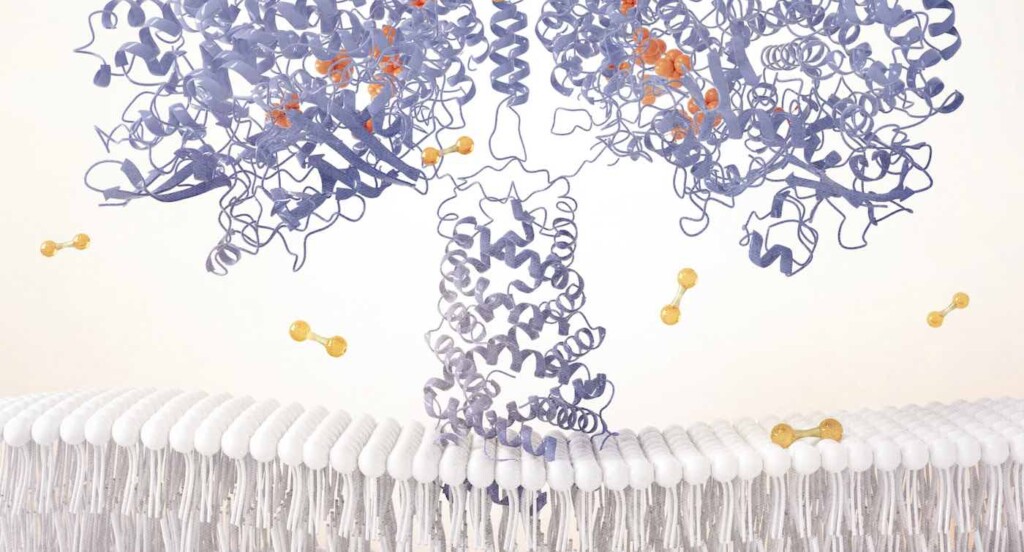
Australian scientists have discovered an enzyme that converts air into energy by using the low amounts of hydrogen in the atmosphere to create an electrical current.
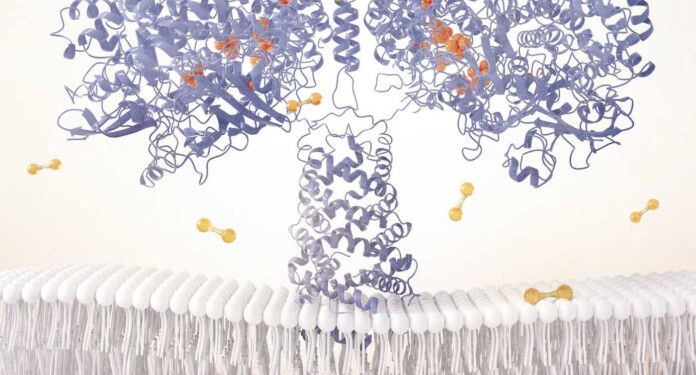
The enzyme in question is called Huc (pronounced “Huck”). It’s made by bacteria, and helps them with growth and survival in soil, in the oceans, in volcanic craters, and even Antarctica.
Monash microbiologists have now discovered it can make electricity from thin air.
The important discovery is outlined in the journal Nature. The research team was led by Monash’s Dr Rhys Grinter, PhD student Ashleigh Kropp, and Professor Chris Greening, from the Biomedicine Discovery Institute.
Professor Greening’s lab specializes in how bacteria obtain energy. Dr Grinter’s lab focuses on the molecular machines that make up bacteria, and how they work.
“We’ve known for some time that bacteria can use the trace hydrogen in the air as a source of energy,” Professor Greening said. “But we didn’t know how they did this, until now.”
Huc works as a hydrogen gas scavenger, and unlike all other known enzymes and chemical catalysts, it can consume the gas below atmospheric levels.
In this way it’s like a natural battery, making a small electrical current from air or added hydrogen. Science has been stumped as to how it worked. This finding opens the way to create devices that literally make energy, in the form of electricity, from thin air.
“What we really wanted to do was isolate Huc from a bacterium able to scavenge atmospheric hydrogen,” says Dr Grinter. “That is a challenging thing to do, because often these environmental bacteria are hard to cultivate. So, we developed a series of new methods for, first, growing the bacteria, then breaking them open and then using chemistry to try and isolate this single component.”
The chosen bacterium was Mycobacterium smegmatis, discovered in 1884 in Austria by a doctor, Sigmund Lustgarten, who was looking into skin diseases. Despite being isolated in this context, M. smegmatis generally lives in the soil, doesn’t cause disease, and is relatively well-studied because of its use as a model for organism for its cousin tuberculosis.
“Also,” he says, “one of the things that’s important for studying bacteria or purifying the components is to be able to change their genomes. Add genes, take them away and put in a little bit of extra DNA that allows you to purify the complexes. These tools exist for M. smegmatis.”
Team member Ashleigh Kropp did much of the lab work, including extracting Huc from the bacteria cells.
“We found that Huc has an extra component that we didn’t know existed,” he says.
“Using this, Huc forms a large complex, and when we remove it, Huc doesn’t form that large complex anymore. It turns out that this component and the complex is really important for how Huc functions in the cells.”
The lab work showed that purified Huc can be stored for long periods.
“It’s very stable. It’s possible to freeze the enzyme or heat it to 80° Celsius, and it retains its power to generate energy,” Kropp says. “This reflects that this enzyme helps bacteria to survive in the most extreme environments.”
What can it power, and how could it be used?
“While there’s a lot of work to do to make this happen, there’s a number of potential applications,” says Dr Grinter. “The synthesis of fine chemicals requires very specific modifications to a molecule, which can be difficult to perform chemically. Huc could use the electrons from small amounts of hydrogen in air to perform these chemical modifications, in industrial chemical synthesis.”
Huc could also be used as a sensor for hydrogen. Huc produces electrical current when hydrogen is present. When Huc is placed in an electrical circuit, this current can be measured to determine the hydrogen concentration.
Because Huc can oxidize hydrogen to extremely low concentrations, a sensor that incorporates it would be very sensitive.
Possibly the most interesting application of Huc is to power small electronic devices using air or low concentrations of hydrogen.
This would mean these devices are powered by a super-clean and sustainable energy source. Because the amount of hydrogen present in air is so small, only a small amount of electricity could be extracted from it.
“Once we produce Huc in sufficient quantities,” Dr Grinter says, “the sky is quite literally the limit for using it to produce clean energy.
“In addition to the potential applications of the research, this work is really important, because it can help us understand how our planet works.
“Between 60% to 80% of bacteria in soils, especially nutrient-deprived soils, have enzymes like Huc, and are constantly absorbing hydrogen.
“They absorb 70 million tonnes of hydrogen every year, and this shapes the composition of our atmosphere, which makes this process important for modulating the climate. Understanding the biochemistry of this process may allow us to harness it to stabilize our climate in the future.”
Nisga’a Nation totem pole – SWNS / National Museums Scotland
Nisga’a Nation totem pole – SWNS / National Museums Scotland
A 36-foot totem pole carved by the House of Ni’isjoohl in British Columbia a century ago is on a sacred journey back home thanks to National Museums Scotland.
The repatriation comes after a year-long discussion with the Nisg̱a’a Lisims Government and marks a historic moment for reconciliation between the museum and the Nisg̱a’a Nation, where the memorial pole was first erected.
“After nearly 100 years, we are finally able to bring our dear relative home to rest on Nisg̱a’a lands,” said Sim’oogit Ni’isjoohl Chief Earl Stephens, who believes the art is “alive with the spirit of (their) ancestors”.
“It means so much for us to have the Ni’isjoohl memorial pole returned to us, so that we can connect our family, nation, and our future generations with our living history.”
The 36-foot-tall (11m) totem pole has remained in Scotland for nearly a century. It was originally sold to the museum by Canadian anthropologist Marius Barbeau.
Weighing one ton, the art will make its way from Scotland to the Nass Valley in Canada in September.
Following months of preparatory work, a delegation of family members and supporters from the Nisg̱a’a Lisims Government travelled to Edinburgh to hold a spiritual ceremony on Sunday, preparing the memorial pole for its journey home.
Nisga’a Nation totem pole – SWNS / National Museums Scotland
It will be transported to Terrace, and then driven in a family procession to the Nisg̱a’a Village of Lax̱g̱alts’ap, then be housed at the Hli G̱oothl Wilp-Adoḵshl Nisg̱a’a museum after a public arrival ceremony on Sept. 29, with a Nisg̱a’a feast to follow.
The pole will be raised in the following days and available for public viewing later in October.
In 1860, House of Ni’isjoohl Matriarch Joanna Moody, from the G̱anada (frog clan), commissioned the pole to be carved by Nisg̱a’a master carver Oyee to honor her family member Ts’awit, who was next in line to be chief.
“The great significance of the Ni’isjoohl memorial pole to the Nisga’a people and their community was made clear to me when I met with their representatives last year,” said Scotland’s Cabinet Secretary Angus Robertson.
Quote of the Day: “To know you have enough is to be rich.” – Lao-Tzu
Photo by: Indi Samarajiva, CC license
With a new inspirational quote every day, atop the perfect photo—collected and archived on our Quotes page—why not bookmark GNN.org for a daily uplift?
Materials that are both strong and lightweight can improve everything from cars to airplanes to medical equipment. Now, researchers have created an extraordinarily strong material with very low density–using two unlikely building blocks: DNA and glass.
“For the given density, our material is the strongest known,” according to Seok-Woo Lee of the University of Connecticut, who partnered with colleagues from Columbia University and Brookhaven National Lab.
“I am a big fan of Iron Man movies,” mused nanomaterials scientist Oleg Gang. “I have always wondered how to create a better armor for Iron Man. It must be very light for him to fly faster. It must be very strong to protect him from enemies’ attacks.
“Our new material is five times lighter but four times stronger than steel.”
Some metals, such as titanium, are stronger and lighter than iron. Certain alloys are even stronger—allowing for lightweight body armor, better medical devices, and safer, faster cars and airplanes. Metallurgical techniques have reached a limit in recent years, until nano materials unleashed creative opportunities.
The colleagues reported inCell Reports Physical Science that by building a structure out of DNA and then coating it with glass, they have created a very strong material with very low density. Glass might seem a surprising choice, as it shatters easily. However, glass usually shatters because of a flaw – such as a crack, scratch, or missing atoms – in its structure. A flawless cubic centimeter of glass can withstand 10 tons of pressure, more than three times the pressure that imploded the Oceangate Titan submersible near the Titanic this summer.
According to UCONN News, it is very difficult to create a large piece of glass without flaws. But the researchers knew how to make very small flawless pieces. As long as glass is less than a micrometer thick, it’s almost always flawless. And since the density of glass is much lower than metals and ceramics, any structures made of flawless nano-sized glass should be strong and lightweight.
The team created a structure of self-assembling DNA. Almost like Magnatiles, pieces of DNA of specific lengths and chemistry snapped themselves together into a skeleton of the material. Imagine the frame of a house or building, but made of DNA.
Gang and Aaron Mickelson from Columbia and Brookhaven’s Center for Functional Nanomaterials coated the DNA with a very thin layer of glass-like material only a few hundred atoms thick. The glass only just coated the strands of DNA, leaving a large part of the material volume as empty space, much like the rooms within a house or building. The DNA skeleton, like scaffolding, reinforced the thin, flawless coating of glass making the material very strong—with the voids comprising most of the material’s volume, it became lightweight.
As a result, the glass nanolattice structure created a combination of strength and lightness that has never been achieved before.
“The ability to create designed 3D framework nanomaterials using DNA and mineralize them opens enormous opportunities for engineering mechanical properties.” Gang explained in a UConn News release.
But much research work is still needed. The team is currently working with the same DNA structure but substituting even stronger carbide ceramics for glass. They have plans to experiment with different DNA structures to see which makes the material strongest.