










All News - Page 258 of 1716 - Good News Network
Home Blog Page 258

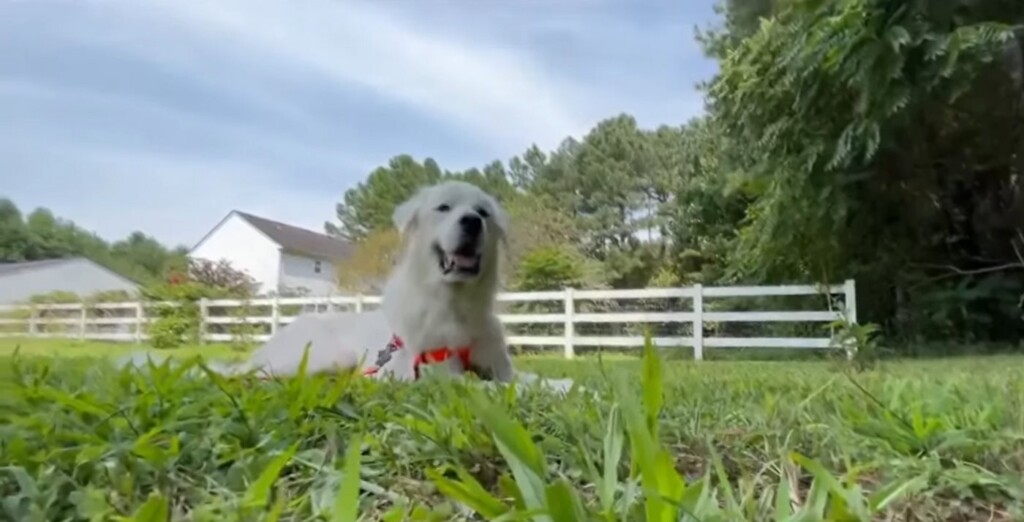
Dog Saves Foster Parents from Fire–Finds Forever Home 1 Day Later

Moose in his new home - WTRK
Moose in his new home – WTRK

A Great Pyrenees who saved his foster family from a fire on their houseboat has been adopted just 1 day later by a secret admirer.

The fluffy white dog named Moose alerted Sheila Janes and her husband Chris, asleep on their houseboat, that a fire had broken out on another boat moored nearby which quickly spread to their own, ready to consume them all.

More remarkably, Moose was only with the family for 48 hours—he was a foster dog who Sheila and Chris thought would give a weekend of fun for their three kids.

They first came to know Moose when they discovered the Portsmouth Humane Society’s ‘Paws Around Portsmouth’ weekend foster program.

They were having so much fun doing all kinds of activities, and it was at a farmers market that they met someone who wanted to adopt the pooch.

“The paperwork was to be finalized the next day, so we had one last night with Moose before he went to his new home. We spoiled him that day with an ice cream pup cup, a visit to the park, and a chicken sandwich,” said Sheila, adding that they decided to keep him at their houseboat rather than bring him back to the shelter.

That night, their houseboat caught fire, and the impromptu sleepover guest potentially saved all 5 of them. Moose was hailed as a hero and followed through with the paperwork the following day.

MORE HERO ANIMALS: ‘Hero’ Dogs From Rescue Operation in Turkey Get First Class Seats on Airliners Flying Them Home

However, the new family and home wasn’t the right fit for the big athletic dog.

Watching local news coverage and social media updates from afar was Ciara Hill. Proud owner of dogs, cats, chickens, and a tortoise on 5 acres of land, when she heard that Moose’s original adoption fell through, her husband gave her the green light for the plus-one.

MORE GREAT DOGS: Big White Dogs Save the World’s Smallest Penguin in Australia

“We saw that he had been returned, and I was talking to my husband. He was like, ‘Well, go get him,’” Hill told WTKR. “My other animals are welcoming him in, and he seems to be pretty comfortable.”

You can watch the news story, including images of the fire, on WTKR’s YouTube channel.

SHARE The Amazing Story Of This Wandering Hero Getting To Put His Paws Up…
Barnacles Could Lead Investigators to the Wreck of the Missing Malaysian Airways Flight 370

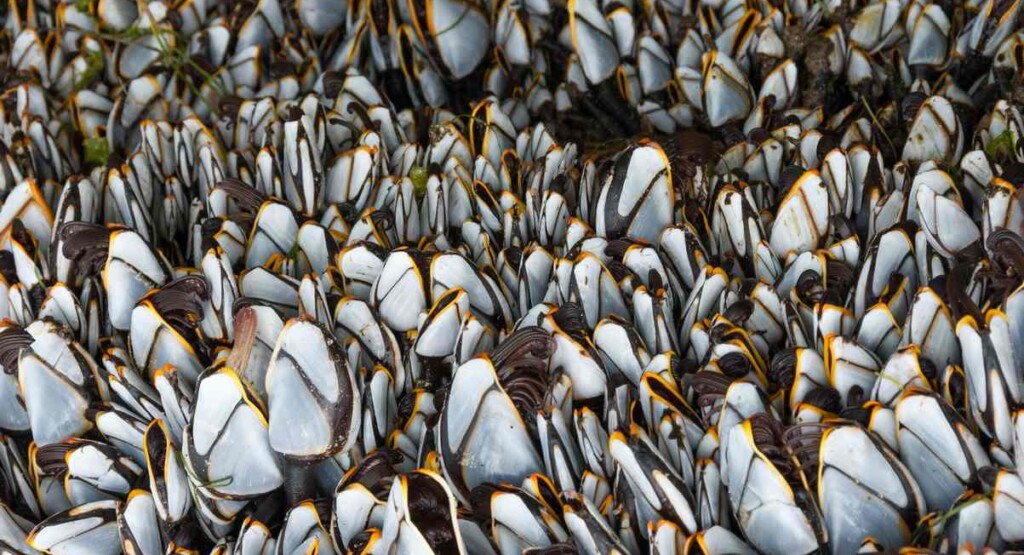
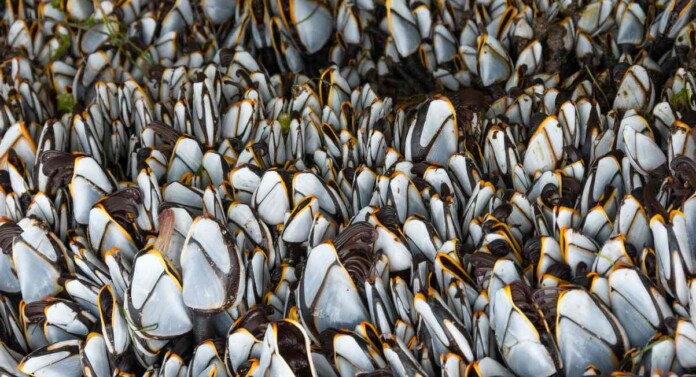
Barnacles on the Channel Islands - Travis Leery
Barnacles on the Channel Islands – Travis Leery

Apart from a few pieces of debris that washed onto an Indian Ocean island, no trace has been found of the Malaysian Airlines flight that vanished in March 2014, but an innocuous marine limpet could provide clues to its whereabouts, as bizarre as it sounds.

Scientists believe they could have the answer to one of the ocean’s biggest mysteries and it lies in the shells of barnacles.

A team of researchers at the University of South Florida has found a method to extract ocean temperature records from the shells. How could this help, you might ask?

Using the record of water temperature, the team believes they will be able to reconstruct the drift path of the barnacles on the washed-up debris back to its point of origin.

The official hunt for the plane, traveling from Kuala Lumpur to Beijing, was called off in January 2017. A six-month private search a year later also failed to find any trace of the aircraft.

So far they have only partially reconstructed the path due to only having access to smaller shells on the wreckage but they believe if they can apply it to the larger ones that formed at the crash site they will find the plane.

University of South Florida geoscientist Associate Professor Gregory Herbert said he got the idea the moment he saw photographs of the plane debris that washed ashore on Reunion Island off the coast of Africa a year after the crash.

“The flaperon was covered in barnacles and as soon as I saw that, I immediately began sending emails to the search investigators because I knew the geochemistry of their shells could provide clues to the crash location,” said Professor Herbet.

An expert in shelled marine invertebrates, Herbert has spent two decades refining a way to extract ocean temperatures stored in shells.

Barnacles and other shelled marine invertebrates grow their shells daily, producing internal layers similar to tree rings. The chemistry of each layer is determined by the temperature of the surrounding water at the time the layer was formed.

Professor Herbert and his team did a growth experiment with live barnacles to read their chemistry, and for the first time unlocked temperature records from their shells.

According to the study, published in the journal AGU Advances, they applied the method to small barnacles from MH370 debris.

With help from barnacle experts and oceanographers at the National University of Ireland Galway, they combined the barnacles’ water temperature records with oceanographic modeling and successfully generated a partial drift reconstruction.

An example from the study here shows each piece of debris from the crash moving around the so-called “Seventh Arc.”

“Sadly, the largest and oldest barnacles have not yet been made available for research but with this study, we’ve proven this method can be applied to a barnacle that colonized on the debris shortly after the crash to reconstruct a complete drift path back to the crash origin,” said Dr. Herbert.

INTERESTING SEA SCIENCE: Man’s Biological Clock Set Back 10 Years After 93 Days Living Under the Ocean in a Research Station

The official search covered 120,000 square kilometers (46,000 sq miles) of ocean, including several thousands of miles along a north-south corridor deemed “The Seventh Arc,” where investigators believe the plane could have glided after running out of fuel.

Ocean temperatures can change rapidly along the arc, leading him to believe that his method could reveal precisely where the plane is.

“Even if the plane is not on the arc, studying the oldest and largest barnacles can still narrow down the areas to search in the Indian Ocean,” he adds.

MORE MYSTERIES UNRAVELLED: Secrets of Namibia’s Fairy Circles Were Demystified After Half-Century

“The plane disappeared more than nine years ago, and we all worked aiming to introduce a new approach to help resume the search, suspended in January 2017, which might help bring some closure to the tens of families of those on the missing plane,” said Dr. Nassar Al-Qattan.

“Knowing the tragic story behind the mystery motivated everyone involved in this project to get the data and have this work published.”

SHARE This Bizarre Yet Ingenious Idea To Solve A Forgotten Mystery… 

Paralyzed Woman ‘Speaks’ with Brain Signals Turned into Talking Avatar in World First

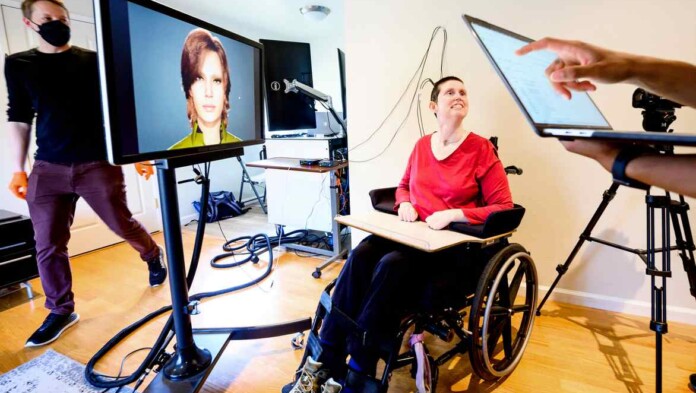
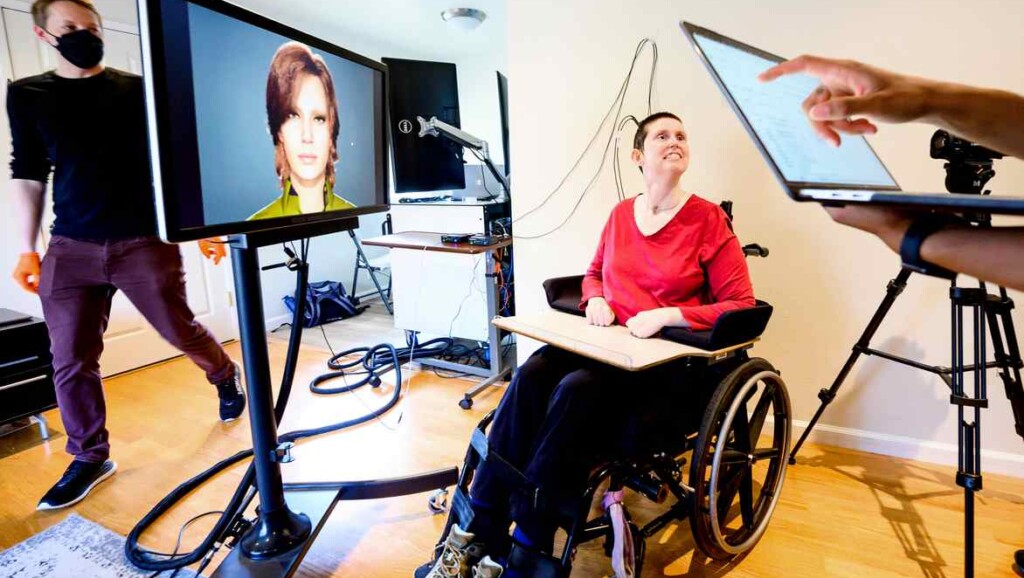
Ann, plugged into the decoder software - credit UCSF via SWNS
Ann, plugged into the decoder software – credit UCSF via SWNS

A paralyzed woman has spoken again after her brain signals were intercepted and turned into a talking avatar, complete with facial expressions and sound samples from the woman’s real voice, all in a world first.

48-year-old Ann suffered a brainstem stroke when she was 30, leaving her paralyzed.

Scientists at the University of California then implanted a paper-thin rectangle of 253 electrodes onto the surface of her brain covering the area critical for speech. They then used artificial intelligence to produce the brain-computer interface (BCI).

These intercept ‘talking’ brain signals and are fed into a bank of computers via a cable, plugged into a port fixed to her head.

The computers can decode the signals into text at a rate of 80 words a minute, while an audio recording of her voice from her wedding day years before the stroke reproduced her voice and then gave it to an on-screen avatar that uses it with facial expressions.

The team from the University of California San Francisco says it is the first time that either speech or facial expressions have been synthesized from brain signals.

“Our goal is to restore a full, embodied way of communicating, which is really the most natural way for us to talk with others,” said Dr. Edward Chang, chair of neurological surgery at UCSF. “These advancements bring us much closer to making this a real solution for patients.”

For weeks, Ann worked with the team to train the system’s artificial intelligence algorithms to recognize her unique brain signals for speech.

This involved repeating different phrases from a 1,024-word conversational vocabulary over and over again, until the computer recognized the brain activity patterns associated with the sounds.

Rather than train the AI to recognize whole words, the researchers created a system that decodes words from phonemes. “Hello,” for example, contains four phonemes: “HH,” “AH,” “L” and “OW.”

Using this approach, the computer only needed to learn 39 phonemes to decipher any word in English. This both enhanced the system’s accuracy and made it three times faster.

MORE CRAZY TECH LIKE THIS: First Time Someone With Cut Spinal Cord is Able to Walk Freely, Thanks to New Swiss Technology

“The accuracy, speed, and vocabulary are crucial,” said Sean Metzger, who developed the text decoder in the joint Bioengineering Program at UC Berkeley and UCSF. “It’s what gives a user the potential, in time, to communicate almost as fast as we do, and to have much more naturalistic and normal conversations.”

Using a customized machine-learning process that allowed the company’s software to mesh with signals being sent from her brain, the computer avatar was able to mimic Ann’s movements, making the jaw open and close, the lips protrude and purse and the tongue go up and down, as well as the facial movements for happiness, sadness, and surprise.

The team is now working on a wireless version that will mean the user doesn’t have to be connected to the computers.

MORE DISABLED RESTORED: Revolutionary Music Therapy Helps Paralyzed Man Walk and Talk Again – It ‘Unlocked the Brain’

The current study, published in the journal Nature, adds to previous research by Dr. Chang’s team in which they decoded brain signals into text in a man who had also had a brainstem stroke many years earlier.

But now they can decode the signals into the richness of speech, along with the movements that animate a person’s face during conversation.

WATCH the story and tech in action from UCSF…

“What would be left of our tragedies if an insect were to present us his?” – Emil Cioran

Quote of the Day: “What would be left of our tragedies if an insect were to present us his?” – Emil Cioran

Photo by: Charlotte Descamps

With a new inspirational quote every day, atop the perfect photo—collected and archived on our Quotes page—why not bookmark GNN.org for a daily uplift?

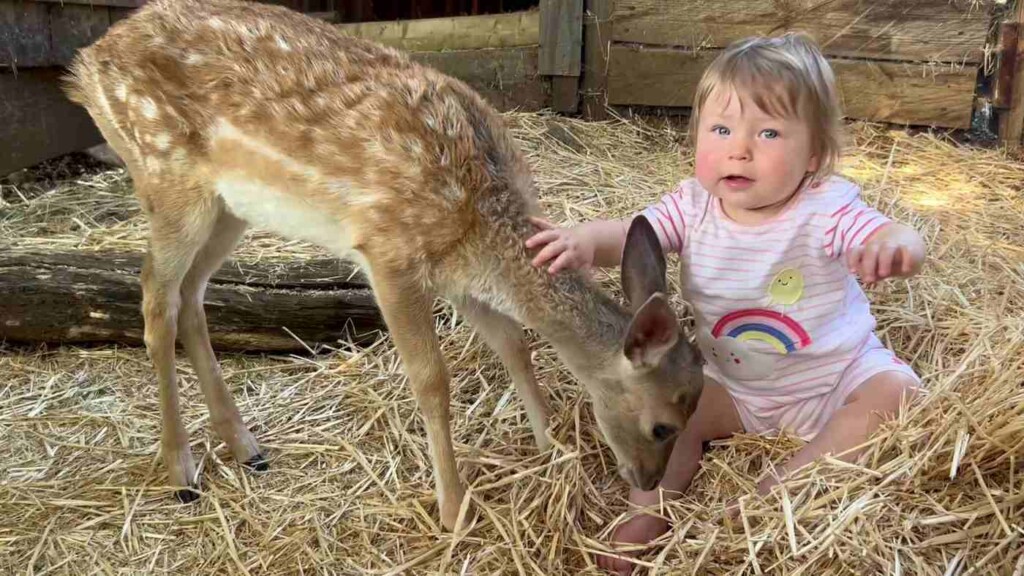
Orphaned Deer Falls Head Over Hooves For Rescuer’s 11-Month-Old Daughter–LOOK

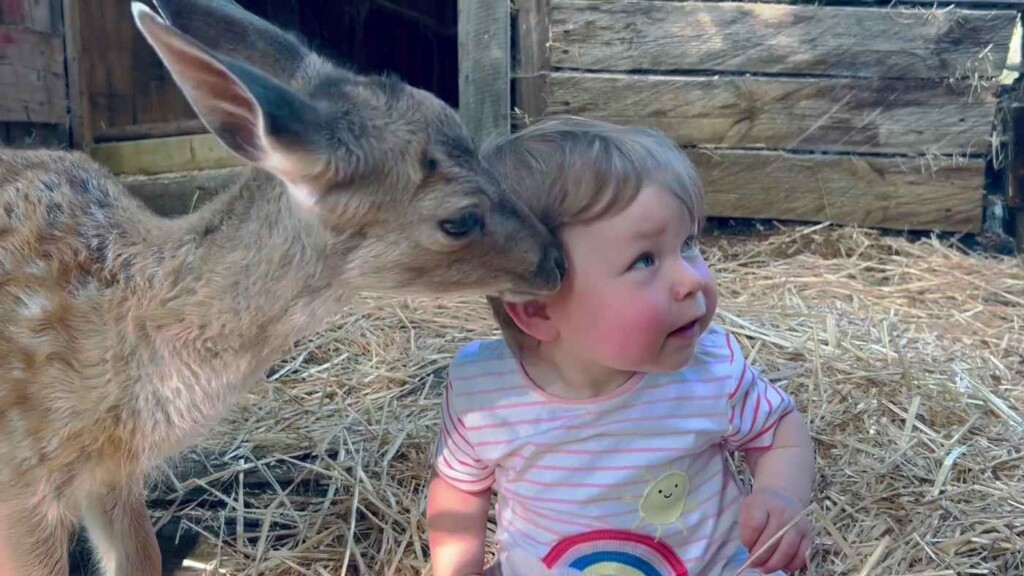
credit - Mountfitchet Castle - via SWNS
credit – Mountfitchet Castle – via SWNS

After an open-air museum took in an orphaned fallow deer, the little thing fell head over hooves for the owner’s 11-month-old daughter.

The deer, named Ziggy, was rescued and taken in by Jeremy Goldsmith who runs Mountfitchet Castle, a Norman castle and museum.

Goldsmith and the staff at Mountfitchet care for a variety of orphaned animals, and it took just a few hours for Ziggy to settle into her new environment.

The fawn, believed to be a two-month-old, was spotted on the side of a road near the castle in Essex after its mother was hit by a car. A passer-by called Mountfitchet Castle who thankfully took in the deer and gave it a warm shed to sleep in.

After settling in, it wasn’t long before Goldsmith found that the fawn had taken a peculiar liking to his daughter. Now, three times a day Jeremy goes to the barn to feed the fawn and takes young Isabella with him.

credit – Mountfitchet Castle – via SWNS

The two spend hours together and Isabella loves to pet and kiss Ziggy. The castle already has a herd of five fallow deer, and the deer will spend the rest of its life well-fed and with company.

“We can’t release her back to the wild now, as she would be too tame and not at all scared of people,” said Goldsmith.

MORE ADORABLE RESCUES: Sam the Lamb is Nursed Through Incredible Recovery After Falling off Highway Truck – WATCH

“We’re an animal-loving family. I was brought up in an animal-loving family and I did the same for my daughter. It’s just so natural, they spend hours kissing and [petting] each other. There’s no fear like you would expect there to be,” he added.

SHARE These Touching Images With Your Friends On Social Media… 

Scientists Regrow Retina Cells to Tackle Leading Cause of Blindness Using Nanotechnology

Macular degeneration is the leading cause of blindness in developed countries, but regrowing the human cells lost to this condition was the feature of a new successful treatment that took advantage of advances in nanotechnology.

Regrowing the cells of the human retina on a scaffold of synthetic, tissue-like material showed substantial improvements over previously used materials such as cellulose, and the scientists hope they can move on to testing their method in the already blind.

Macular degeneration is increasing in prevalence in the developed world. It’s the leading cause of blindness and is caused by the loss of cells in a key part of the eye called the retina.

Humans have no ability to regrow retinal pigment cells, but scientists have determined how to do it in vitro using pluripotent stem cells. However as the study authors describe, previous examples of this procedure saw scientists growing the cells on flat surfaces rather than one resembling the retinal membrane.

This, they state, limits the effectiveness of transplanted cells.

In a study at the UK’s Nottingham Trent University, biomedical scientist Biola Egbowon and colleagues fabricated 3D scaffolds with polymer nanofibers and coated them with a steroid to reduce inflammation.

The method by which the nanofibers were made was pretty darn cool. The team would squirt polyacrylonitrile and Jeffamine polymers in molten form through an electrical current in a technique known as “electrospinning.” The high voltage caused molecular changes in the polymers that saw them become solid again, resembling a scaffold of tiny fibers that attracted water yet maintained mechanical strength.

After the scaffolding was made, it was treated with an anti-inflammatory steroid.

3D-PRINTING CORNEAS: Bioengineered Cornea Can Restore Sight to the Blind and Visually Impaired

This unique pairing of materials mixed with the electrospinning created a unique scaffold that kept the retinal pigment cells viable for 150 days outside of any potential human patient, all while showing the phenotype of biomarkers critical for maintaining retinal physiological characteristics.

“While this may indicate the potential of such cellularized scaffolds in regenerative medicine, it does not address the question of biocompatibility with human tissue,” Egbowon and colleagues caution in their paper, urging more research to be conducted, specifically regarding the orientation of the cells and whether they can maintain good blood supply.

SHARE This Futuristic Occular Research With Your Friends… 

4 Decades of Data Suggests Pacific Coral Reefs Can Acclimate to Warming Oceans and Resist Future Bleaching

SWNS
A coral reef – SWNS

Data collected over the last 40 years at a remote coral reef within the territorial waters of Palau has shown that corals are more adaptable to warming oceans than previously thought

In fact, they’ve already adapted—potentially at a rate of 0.18°F per decade, and the researchers say that established models for coral bleaching events should be updated to presume an enhanced capacity for these stunning underwater ecosystems to sustain themselves over the decades.

The Newcastle University-led study focused on the Pacific Island nation of Palau and drew on decades of field observations, as well as many possible future coral bleaching trajectories for Palauan reefs, each with a different simulated rate of thermal tolerance enhancement.

They found that if coral thermal tolerance continues to rise throughout the 21st century at the most likely historic rate, “significant” reductions in bleaching impacts are possible.

“We quantified a natural increase in coral thermal tolerance over decadal time scales which can be directly compared to the rate of ocean warming,” said study lead author Liam Lachs.

The researchers say that high-frequency bleaching can be fully mitigated at some reefs under low-to-middle emissions scenarios where, for example, the Paris Agreement commitments are fulfilled.

“We know that coral reefs can increase their overall thermal tolerance over time by acclimatization, genetic adaptation, or shifts in community structure, however we know very little about the rates at which this is occurring,” said study co-author Dr. James Guest.

MORE SURPRISES UNDER THE SEA: Dolphins Self-Treat Their Own Skin By Lining Up to Rub on Specific Coral

“This study uses data from a remote Pacific coral reef system and estimates the rate of increase in tolerance since the late 1980s. The results provide some hope that reefs can keep up with increasing temperatures, but only if strong action is taken on climate change.”

To survive amid climate change, the researchers say coral communities need to endure progressively more intense and frequent marine heatwaves.

The Newcastle team’s findings reveal that the thermal tolerance of corals in Palau has likely increased at a rate of 0.1°C per decade since the late 1980s.

MORE GOOD CORAL NEWS: Scientists Find Giant Pristine Coral Reef Undiscovered Near Tahiti, With Clues There Are More

The researchers say that the increase suggests that natural mechanisms, such as genetic adaptation, acclimatization of corals, or their symbiotic microalgae, could have contributed to the enhancement of coral thermal tolerance.

Several early models on climate change, global warming, and ecological degradation have been shown to be incorrect over the years, including the effects of ruminant agriculture on greenhouse gas emissions and plastic pollution entering the ocean—which GNN recently reported could have been overestimated for years by a factor of 30.

MORE SCIENCE LIKE THIS: Climate-Resilient Coral Offers Hope to World’s Reefs, Able to Cope With 2ºC of Global Warming

On corals, some scientists aren’t waiting to see if they can adapt at their own pace. Researchers in Florida are breeding corals that are specifically identified as carrying genetic adaptations that make them less vulnerable to heat and acidic water

SHARE This Inspiring Coal Evolution With Your Friends Concerned About The Climate… 

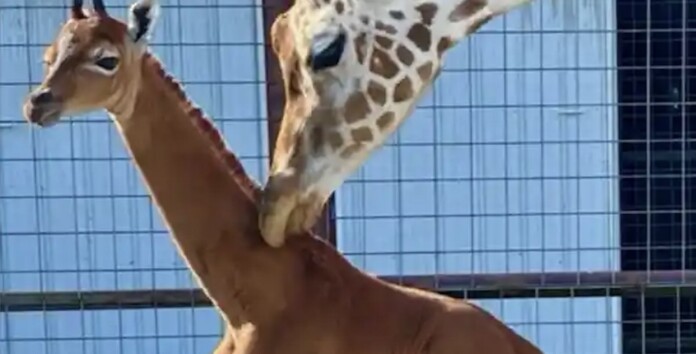
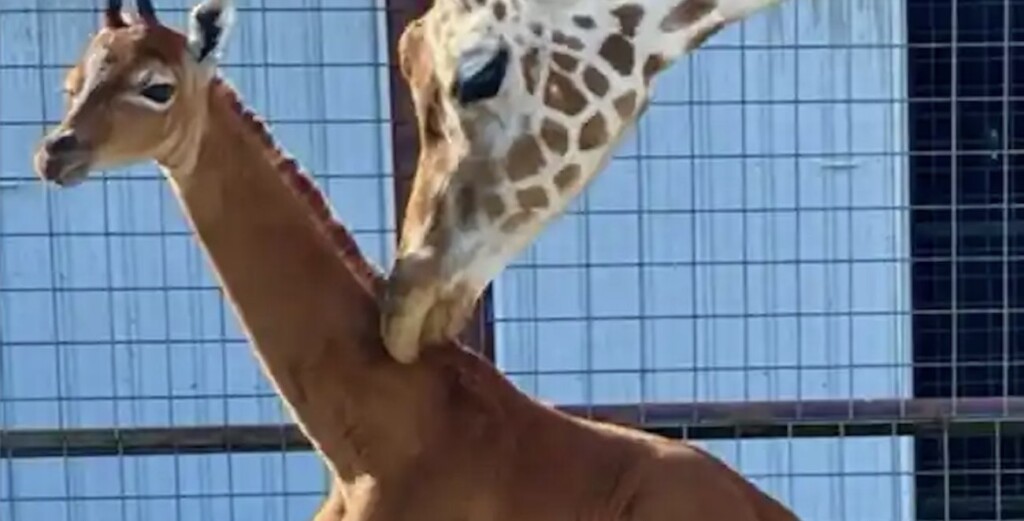
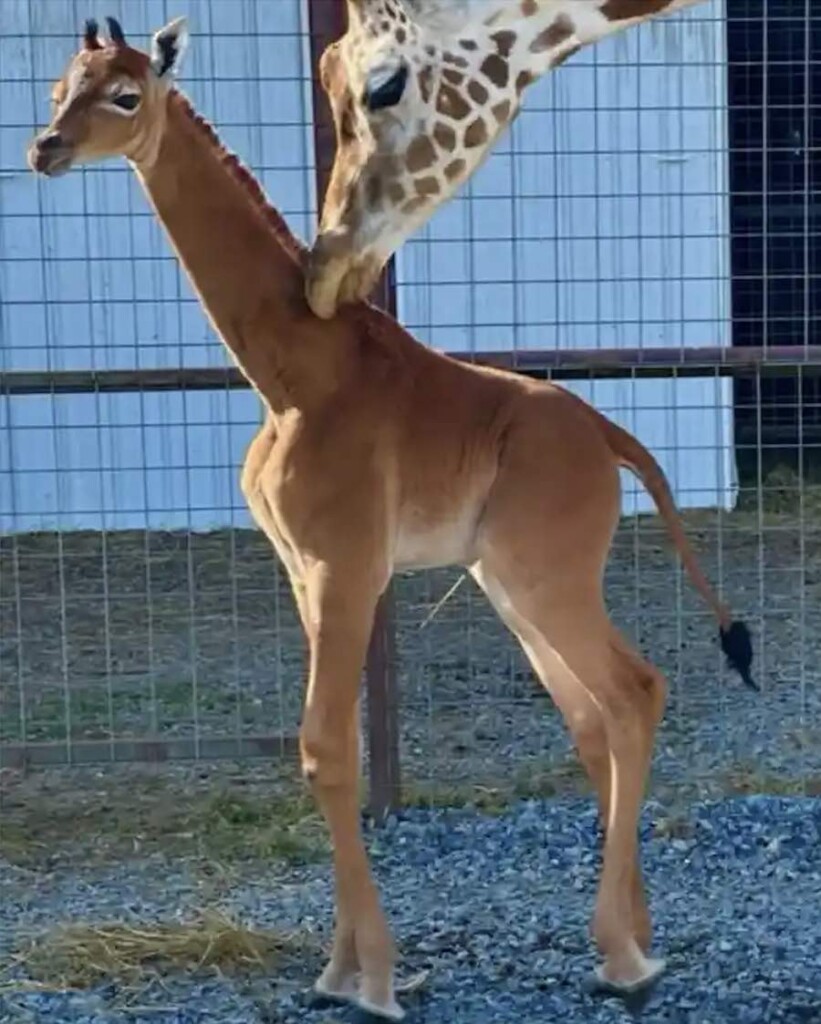
Is it a Llama or a Horse? An Incredible Spotless Giraffe Was Born

We’ve all heard of melanistic leopards, albino pythons, and great white whales, but how about this little princess?

Born at a zoo in Tennessee, you’d have to go back to the 1970s to find the last recorded instance of a giraffe being born without spots.

Born on July 31, she is already as tall as an average NBA player, totally healthy, and content under the watchful eyes of her mother.

Brights Zoo has decided to give the young one a name in Swahili, Kipekee, Shakiri, Jamella, and Firayali, all of which mean either beautiful or unique, are being considered.

A giraffe’s spots are critical for several reasons, and the young female will give an opportunity to scientists to study the animal’s physiology without them. For starters they make for superb camouflage, even despite the animal’s unmistakable long neck.

The pattern is personal to each giraffe just as a fingerprint is to each human, and it’s thought they inherit most of it from their maternal lineage. Underneath their skin, they contain a system of blood vessels that allow them to release body heat through the center of each spot, providing much-needed thermoregulation in the heat of the African day.

MORE WILD ANIMAL MORPHS: First Scientifically Confirmed Images in 100 Years: The Awe-Inspiring, Elusive Black Leopard

“The international coverage of our patternless baby giraffe has created a much-needed spotlight on giraffe conservation,” the founder of Brights Zoo, Tony Bright, said to the local television news station WCYB.

It’s a good thing she was born in captivity, as the lack of spots would probably compromise her ability to hide from predators.

WATCH the newborn find its feet… 

SHARE This Bizarre Beauty With Your Friends On Social Media… 

“If the skies fall, one may hope to catch larks.” – Francois Rabelais

Quote of the Day: “If the skies fall, one may hope to catch larks.” – Francois Rabelais 

Photo by: Diego PH

With a new inspirational quote every day, atop the perfect photo—collected and archived on our Quotes page—why not bookmark GNN.org for a daily uplift?

60% of Ecuadorians Vote Against Continued Oil Drilling in Critical Amazon Biosphere

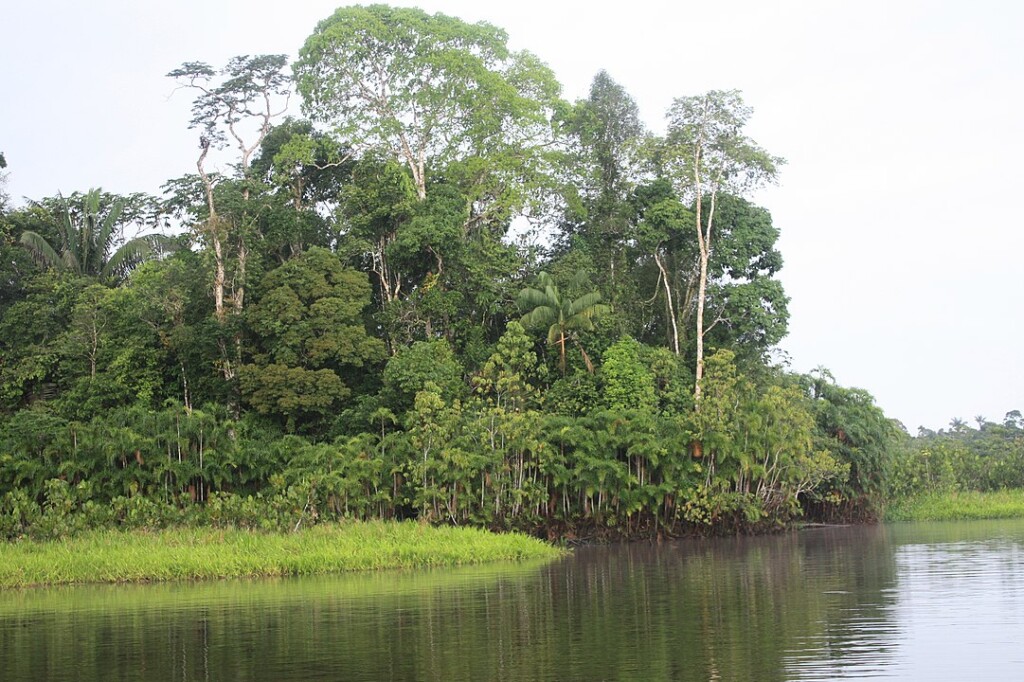
Yasuni Biosphere - ALAI - Agencia Latinoamericana de Información CC 4.0. SA
Yasuni Biosphere – ALAI – Agencia Latinoamericana de Información CC 4.0. SA

It was called the Yasuní popular consultation, and it asked the people of Ecuador a simple question: “Do you agree with the Ecuadorian government in keeping the ITT crude, known as block 43, underground indefinitely?”

At 94% of the vote counted, the answer was 60% ‘yes’. The proposal was approved.

The referendum was a popular initiative demanded by indigenous communities for more than ten years and sought to protect the vast Yasuní National Park from oil drilling.

Home to the claimed ancestral territory of the contactable Huaorani tribe, and the voluntarily-isolated Tagaeri and Taromenane, the park, 700 square miles larger than Yellowstone, was declared a UNESCO World Biosphere Reserve in 1989.

One of, if not the most biodiverse places on Earth, Yasuní National Park is home to thousands of documented species of reptiles, amphibians, fish, mammals, and birds, and according to one study, it holds world records for species richness for amphibians, bats, trees, and reptiles.

Part of its secret is that it lies within a transitional area of the Andes Mountains into the Amazon Rainforest, along several key tributaries of the Amazon River including the Napo.

MORE AMAZON NEWS: Brazil’s President Makes Good on Campaign Promise to Evict Miners from Indigenous Reserves in the Amazon

It has long been known to conceal potentially-vast oil reserves. In 2007 then-President Rafael Correa announced they would be left in the ground if rich nations contributed to an Ecuadorian poverty relief fund equal to around $3.6 billion, which was believed to represent around 50% of the oil wealth there.

Hardly any of the hoped-for total materialized, with only Turkey, Chile, Colombia, Georgia, Australia, Spain, and Belgium contributing, along with some extremely wealthy individuals. And so 6 years later, Correa announced the intention to move ahead with drilling in block 43, within the National Park boundaries.

OTHER BIG BUSINESS REJECTIONS: Arctic Oil Drilling Plans Suffer ‘Stunning Setback’ as Almost ‘No One Shows Up’ For the Sale

The recent referendum was seen as a blow to President Guillermo Lasso, who also had advocated for drilling. State oil company Petroecuador will have to dismantle its drilling operations in the area in the coming months, something which they’ve stated they will comply with as soon as the vote is officially counted and ratified.

SHARE This Huge Legal Victory For Indigenous Peoples And Animals… 

An Unloved English Field Restored to Beautiful Brook as Part of a Large Project to Glorify the River Ise

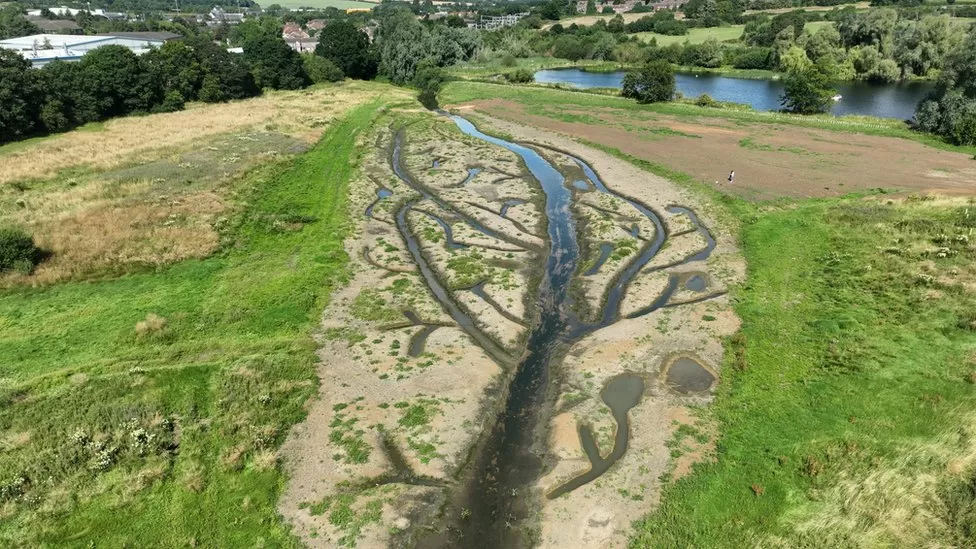
The Slade Brook restoration - Nene River Trust, released
The Slade Brook restoration – Nene River Trust, released

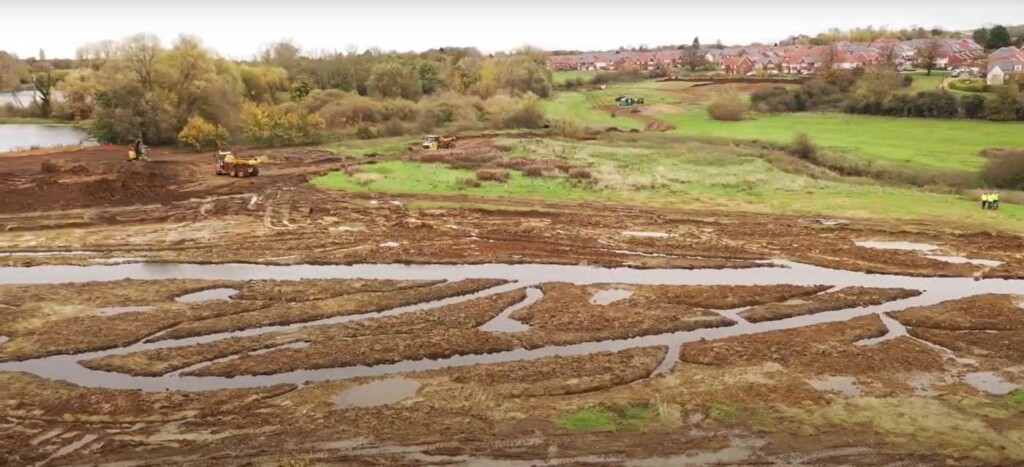
In England’s county of Northamptonshire lay a marginal field that was recognized to have no value, as it could not be built on. It’s now been restored to a wetland meadow that will become a haven for biodiversity and an engine for clean water and green recreation.

Slade Brook, a small waterway that was diverted in the 19th century to build a railway, has been realigned to run through the meadow as part of its once-forever role as a feeder for the larger River Ise.

Once upon a time, the brook babbled its way through the meadow which served as critical flood control. During times of heavy rain the brook would spill over the several-acre meadow which would absorb the excess water and prevent catastrophic flooding downstream.

To that end, the Nene River Trust has shelled out £250,00, or around $310,000 to re-channel the brook through the meadow, restoring it to a more natural state that will hopefully allow England’s aquatic animals to flourish alongside it.

“It was unmanaged land with no value,” Viktor Tzikas from the Trust, told the BBC. “It was taken on by Wicksteed Park, who didn’t know what they could do with it, so they approached us and the Environment Agency, asked for advice and it then snowballed.”

Using heavy earthmoving equipment, the banks of the brook were widened, and several stem channels were dug out leading to small pools replicating what a natural brook would look like.

Slade Brook realignment project half finished – Nene River Trust, released

Slade Brook is just one tributary of the River Ise, which is the largest tributary of the River Nene from which the Trust takes its name. Slade Brook is just one stream in the Trust’s overall aim of restoring streams of the Ise River Valley to the most natural state possible.

OTHER RIVERS RESTORED: Total Rejuvenation of ‘Dead’ River by a Rural Indian Community Hailed as National Example

“Rivers are an expression of their catchments, their path, physical condition, and water quality are a reflection of the landscape they drain and through which they flow,” the Nene Trust writes in their plan overview, rather poetically. “The River Ise is no exception, and its status is an echo of the Valley it transects.”

The Ise Valley sits within a growth area that is seeing the expansion of nearby towns including Kettering, Wellingborough, and Corby. It’s expected the river will see increased pressure through demand for recreation opportunities and ecosystem services such as clean air and water.

“As a result of this growth, there will be the requirement for new accessible, high-quality green spaces as well as the rejuvenation of existing green spaces for local communities,” the plan continues.

GETTING MUDDY: Scientists Uncover Secret In Centuries-Old Mud, Drawing A New Way To Save Polluted Rivers

Many small rivers in the world have been indelibly altered from their natural state—straightened and narrowed to increase speed and depth and therefore more boat traffic, or to allow for roads to be built alongside them. Gradually it was discovered that this significantly increases the flooding risk for towns downriver, as heavy rains have nowhere to go but down. It’s also intolerable for many fresh water species who can’t handle deep, fast-flowing water.

WATCH what it looks like to restore a stream to its natural state…

SHARE This Important Link In A Beautiful Important Chain With Your UK Friends… 

Largest Search for Loch Ness Monster is Using Volunteers for Scientific Study of Britain’s Largest Lake This Week

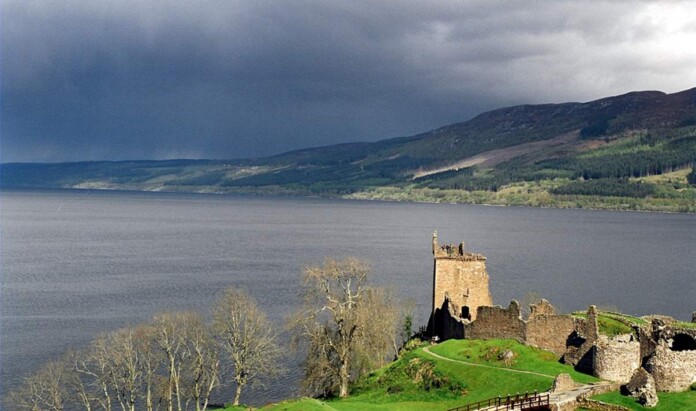
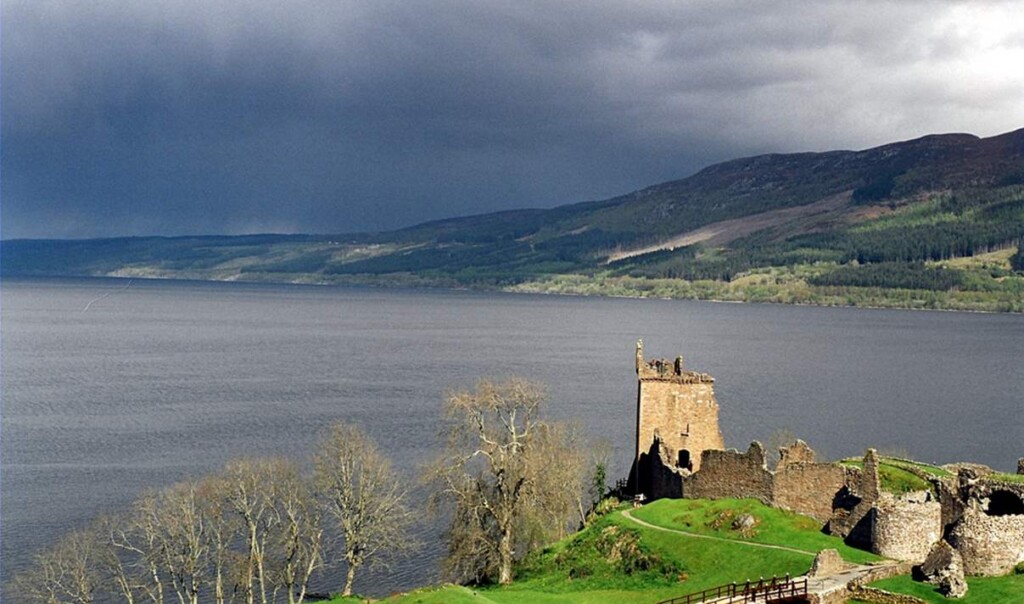
Loch Ness - CC 3.0. Sam Fentress
Loch Ness – CC 3.0. Sam Fentress

This weekend, the Loch Ness Center is holding the largest-ever search for the mythical monster, and will feature a horde of volunteers wielding hi-tech equipment never-before-used on the lake.

It will be the biggest organized search since 1972, and so many “Nessie” enthusiasts signed up for the search they had to close the web portal.

At 22 square miles and with a maximum depth of 788 feet, Loch Ness is Britain’s largest lake, and its unique ecology will be recorded with hydrophones and surveyed with infrared drones.

Most claims of the Loch Ness Monster over the years have been admitted hoaxes, but it’s possible that once upon a time there could have been a giant wels catfish that would have looked perhaps like a serpent from the surface—imagine living in the 19th century and seeing the back of this great beast, caught this year in Italy’s Po River.

Another possible candidate would be a European eel. Eels are known to live in the river, according to a massive study that examined DNA of every animal in the Loch. European eels move snake-like through the water. Furthermore, they can live about 80 years—which would cover the vast majority of the 1,100 or so recording ‘sightings’ of the monster during the 20th and 21st centuries.

However, they’re not anywhere near as big as a wels, which can grow as long as a surfboard.

MORE MYSTERY HUNTING: ‘Unusual’ Circles Spotted on Mars by the Reconnaissance Orbiter

Paul Nixon, general manager of the Loch Ness Center, said he’s excited to see the waters searched like never before over the weekend.

“We are guardians of this unique story,” Nixon said. “And as well as investing in creating an unforgettable experience for visitors, we are committed to helping continue the search and unveil the mysteries that lie underneath the waters of the famous Loch.”

SHARE This Fun Story With The Scotland-Lovers On Your Social Media… 

India Approves $7 Billion For 10,000 Electric Buses to Clean Air in 170 Cities

Maharashtra Chief Minister innaugurates the first of 340 electric buses by Tata to service the Mumbai Eletric Supply and Transport
Maharashtra Chief Minister inaugurates the first of 340 electric buses by Tata to service the Mumbai Electric Supply and Transport

Last Wednesday, India’s federal government approved nearly $7 billion for a nationwide plan to equip the biggest cities in the country with electric buses.

The plan aims to help cut down on air pollution from vehicle exhaust, a major factor in Indian cities’ poor air quality. It’s also believed that the buses will help lower the total national carbon emissions.

Information Minister Anurag Thakur said at a briefing last week that the scheme will follow private-public collaboration that will also see the requisite charging infrastructure be installed along with the buses.

Demand for electric buses had been growing, and Prime Minister Modi is aggregating this into a centralized plan while inviting companies that make electric buses to bid for government contracts.

The fund contains 2 million lakh rupees, or $7 billion US, The cabinet also approved seven railway tracking projects worth 3.25 million lakh rupees to boost connectivity and mobility across nine states.

Meanwhile stateside, $1.7 billion in funding from the infrastructure spending spree signed by President Joe Biden in 2021 will furnish the manufacturing and purchasing of 1,700 electric or low-emissions buses for cities in 46 states.

MORE SUSTAINABLE INFRASTRUCTURE: In Frigid Maine So Many Heat Pumps Were Sold the State Passed its Clean-Energy Target Two Years Early

Part of a slew of measures hoping to electrify more and more of America’s urban roadways, the DoT has received approximately $8 billion in total grant proposals, and expects to award cities a total of $5 billion in electric transit infrastructure grants over the next three years.

SHARE This Great Green News With Your Friends… 

“It’s the friends you can call up at 4 a.m. that matter.” – Marlene Dietrich

Quote of the Day: “It’s the friends you can call up at 4 a.m. that matter.” – Marlene Dietrich

Photo by: Clarisse Meyer

With a new inspirational quote every day, atop the perfect photo—collected and archived on our Quotes page—why not bookmark GNN.org for a daily uplift?

‘I Celebrated My 90th Birthday by Jumping Out of a Plane at 12,000 Feet’

Hilary Oxley skydiving – SWNS

10 years ago, east London resident Hilary Oxley was preparing to turn 80 years old, and her family got the outrageous idea of buying the octagenarian a ticket to go skydiving.

Grandmother Oxley had a blast, but this July it was once again time to think of something to get her as she neared the ninth decade of life.

Figuring it went alright before, her two granddaughters decided to run it back—and challenge their evergreen granny to take the plunge a second time.

“You only live once,” she said after the skydive. “The experience is lovely—sometimes when I go shopping I’m more nervous doing that.”

Granddaughters Stephanie and Daisy admitted they were terrified before jumping and the staff at Skydive Headcorn in Ashford, Kent, couldn’t believe how chilled out she was about the situation.

“Never in a million years when I did it when I was 80 did I think I would be here 10 years later,” said Hilary, who admitted the birthday was really emotional, because one family member got her a scratch-off lottery ticket from which she won a paid holiday to Marbella, Spain.

90-year-old skydiver Hilary Oxley with her granddaughters Stephanie (L) and Daisy (R) – SWNS

Stephanie admitted it was a prized family moment that would live long in their collective memory.

MORE STEELY SENIORS: After Husband Dies 83-Year-old ‘Muddy Mildred’ Runs Her Third Tough Mudder Race to Provide Clean Water

“It’s amazing for me and my sister… to share that memory with my nan is incredible,” she said.

Though Hilary admitted that two skydives were more than enough for now, she refused to rule out another when she turns 95.

SHARE This Unorthodox Birthday Present With Someone You Know Who Needs A Little Inspiration… 

Plant-Based Filter Removes Up to 99.9% of Microplastics from Water

credit - UBC Public Affairs
credit – UBC Public Affairs

What do you get when you cross sawdust and polyphenols? A water filter that can remove 99.9% of microplastics; and that’s no joke.

The health of effects of ingesting microplastics are, predictably, not good, though the science is in its early stages. We already know that microplastics rain down over the world from potentially as high up as the jet stream, that they are present in the deepest ocean trenches, and some of the most remote mountain tops.

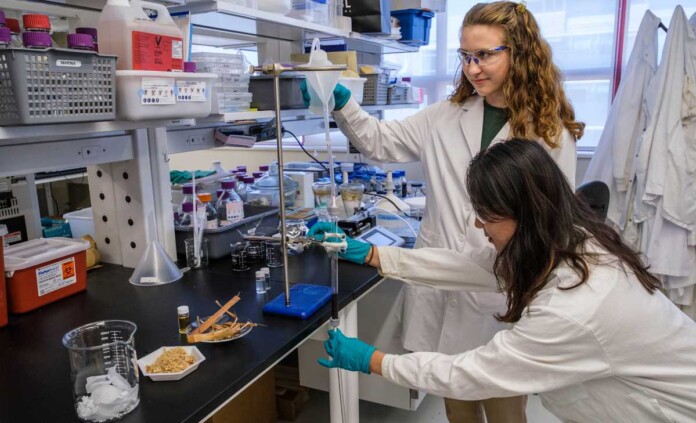
Researchers looking for better ways to filter microscopic particles of plastic from water sources investigated the properties of wood and other plant material and found they work extremely well, with very little cost and potentially unlimited scaling potential.

The water filter design, which the inventors called “bioCap” is made of sawdust, composed of cellulose, hemicellulose, and lignan but which itself isn’t a very good filter; removing just 10% of micro and nanoparticles of plastic. However, with the addition of polyphenols like tannic acid, a defense chemical found in almost all plants that lack underground root systems, that effectiveness became almost perfect.

The polyphenols create strong molecular interactions with polymer particles, including many microplastics, and which didn’t wear out even after repeated filtering trials.

All the commonly-found varieties of plastic polymer in packaging, artificial textiles, and building materials were run through the filter in micro or nano-sized particles.

“By taking advantage of the different molecular interactions around tannic acids, our bioCap solution was able to remove virtually all of these different microplastic types,” said Orlando Rojas, one of the study’s corresponding authors.

OTHER SUSTAINABLE SOLUTIONS: This Tower Filters 273 Hot Air Balloons-Worth of Pollution per Day in India City

He told his university press that in a test to remove particles just 110 nanometers in diameter, which are known to cross the blood-brain barrier, fewer were found accumulating in the internal organs of mice watered with microplastic-contaminated liquid.

“Most solutions proposed so far are costly or difficult to scale up,” Rojas said. “We’re proposing a solution that could potentially be scaled down for home use or scaled up for municipal treatment systems.”

He points out that bark, sawdust, and leaves are extremely easy to obtain essentially anywhere on Earth an entrepreneur would think to open a production line of these water filters.

SHARE This Great Yet Ridiculously Simple Idea With Your Friends… 

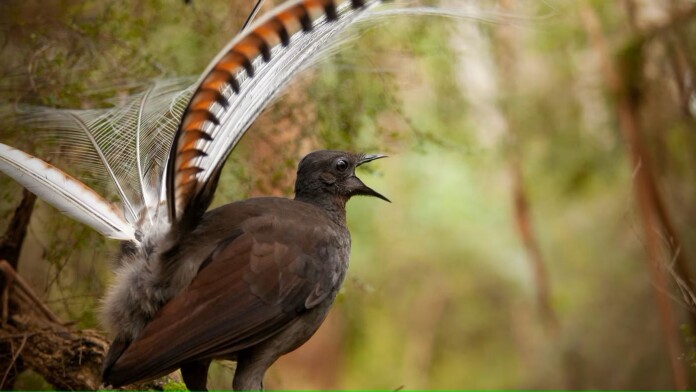
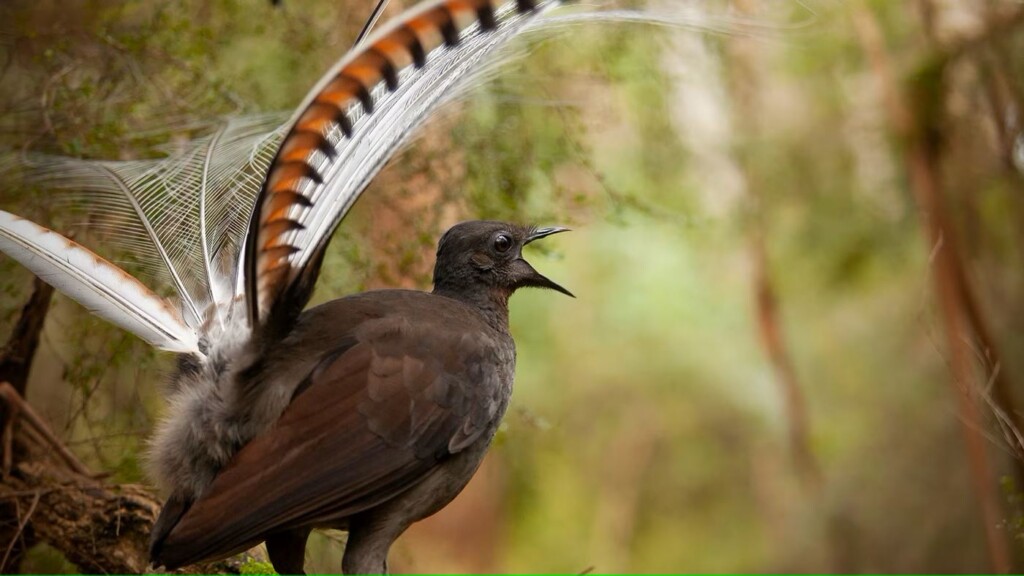
Australian Lyrebirds Give Singing Lessons to Juveniles–Mimicking 10 Different Species–LISTEN

credit - Dr. Alex Maisey
credit – Dr. Alex Maisey

ABC News Australia recently embedded with a team of ornithologists studying the jaw-dropping vocal ability of lyrebirds in their natural habitat.

Deep in the primordial forests of Victoria State’s Dandenong Ranges National Park where there are still ferns as tall as trees, the superb lyrebird Menura (novaehollandiae) can be seen performing elaborate courtship displays with its trademark tail plume flanked by two S-shaped feathers resembling the instrument that lends the bird its name.

It can also be found in Kinglake National Park, and other areas in Victoria, New South Wales, Tasmania, and Queensland that aren’t protected.

These animals are more than just splendid singers, but talented teachers, and their courtship displays are like professional repertoire reviews from which the next generation of juvenile suitors learn how to sing.

The extraordinary bird also varies its calls from forest to forest, which lyrebird experts refer to as a form of dialectics similar to the branches of a language.

“They do all these bizarre sounds and often we think they’re human-origin sounds,” Dr. Alex Maisey a lyrebird expert tells ABC. “But a lot of the time they’re not—they’re just the lyrebirds’ own really weird songs.”

It’s not a bad guess, because along with being incredible composers, they are also expert mimics and can repeat a dozen different bird calls and other noises from their environment in just a 10-second span.

MORE STORIES LIKE THIS: Wildlife Sound Recordist Releases Treasured Audio Collection for Free – to Awe and Inspire the World

Finding the brown birds can be difficult, but experts like Dr. Maisey say that the key is learning the other songs of the forest birds and listening to see if any are coming from the forest floor—a clear sign of the lyrebird’s mimicry.

Scientists like Maisey are concerned that habitat loss could lead to fewer maestro lyrebirds and a subsequent loss in this vocal diversity. Up until essentially recent times, soundscapes were not often considered when planning conservation objectives.

OTHER SONGBIRD STORIES: Visit This Nightingale Thicket and You’ll Hear a Musician Singing with Them – WATCH the Duets

However, more research into sonically-dependent animals has advanced the notion that it isn’t just the visual or material state of nature that has to be preserved if we want to pass on what wilds remain to the next generation, but also the sonic state of nature.

To that end, the lyrebird is the best kind of ambassador—a real Pavarotti—that the conservation community can rally around.

WATCH the lyrebird courtship display and calling below from Dr. Maisey… 

SHARE This Incredible Feathered Frontman With Your Friends… 

“Ideologies separate us. Dreams and anguish bring us together.” – Eugene Ionesco

Quote of the Day: “Ideologies separate us. Dreams and anguish bring us together.” – Eugene Ionesco

Photo by: Ricardas Brogys

With a new inspirational quote every day, atop the perfect photo—collected and archived on our Quotes page—why not bookmark GNN.org for a daily uplift?

Pen Pals Finally Get to Meet in Person–68 Years After They Began Writing Letters Back and Forth

Carol-Ann (left) and Patsy (right) in South Carolina – SWNS

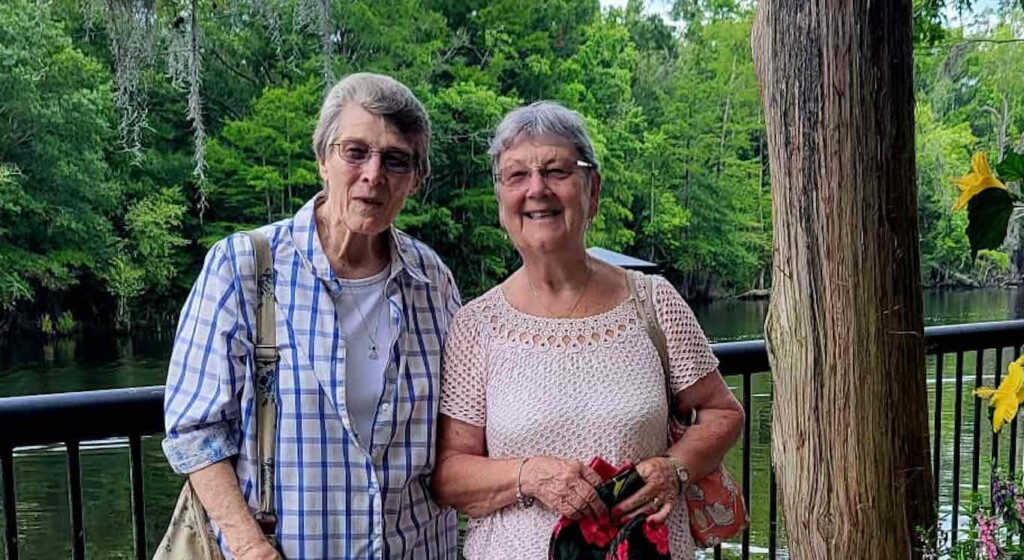
80-year-olds Patsy Gregory and Carol-Ann Krause have been swapping letters since 1955 when they became girl scouts on opposite sides of the Atlantic Ocean.

The pair went on to send and receive more than 800 correspondences, always remembering each other’s birthdays, wedding anniversaries, and Christmas.

But they never met in person until Patsy told her daughter Steph that she’d always wanted to visit Carol-Ann, now living in Conway, South Carolina.

So her family surprised her with a ticket to the USA on her birthday in June this year which allowed her to fly 4,000 miles for the overdue get-together.

Patsy, who shared a heartwarming embrace with Carol-Ann on July 14th, said she had recognized her as soon as she opened her door.

“It was quite emotional, it was lovely,” Patsy from Lancashire County, England said in an interview. “I didn’t feel any nerves, I was excited. It was great to be able to meet her at last.”

“It was just as though I’d seen her last week because we’d known of each other for so long.”

America’s Carol-Ann, who was approached by Steph about the visit before Patsy’s birthday, said she was a little more anxious about their first meeting in person.

MORE LONG-LASTING FRIENDS: These Women Have Been Penpals for 70 Years, Forging a True Friendship From 10,000 Miles Away

Patsy was just 12 when she began writing to Carol-Ann, with the pair discussing their day-to-day experiences. Carol-Ann was living in Buffalo, New York at the time, and Patsy admitted she had been particularly intrigued about the teen’s life in the USA.

“In the girl guides, I happened to get Carol-Ann’s name,” Patsy recounted, using the British term for the girl scouts. “We started writing and we never stopped. It’s as simple as that.”

“It was extremely interesting to learn about her life. The weather, of course, was a big feature. She was living next to the Great Lakes.”

Just a few of Patsy and Carol-Ann’s letters – credit SWNS

“We would write about what had happened in the day, school, anything that was going on, where we were going, who we went out with, or whatever. We were just sharing news, as you would with a friend next door,” said Patsy.

As their lives changed, so did the contents of their letters. Patsy was married in 1964, and Carol-Ann followed just a year later. They both had three kids each, and though they carried on through the decades, sending a total of 400 letters at least per person, they never met face to face.

Patsy said she had mentioned to her daughter Steph that she’d always wanted to meet Carol-Ann before her 80th birthday on June 6th, after which her daughter used social media to track down her pen pal’s family in America to ask if they would be interested in organizing a meet-up stateside.

MORE STORIES LIKE THIS: Holocaust Survivors Reunite in Florida After a Labor Camp Friendship was Broken 80 Years Ago

“Her daughter said she wanted to surprise her mother with a gift of coming to the USA to see me as it’s something that she has always wanted to do,” said Carol-Ann. “I was more than happy to take her up on the offer. Our birthdays are only separated by a month.”

During the stay, she said the pair had chatted for hours about their friendship while also taking in the local sights and going out for meals at places Carol-Ann and her husband frequented—all as if they had only been separated by a few years, such was the strength of their friendship.

SHARE This Reminder Of The Power Of The Pen Pal With Your Pals… 

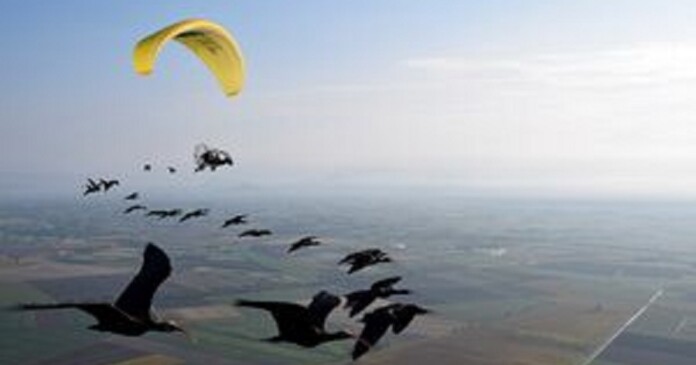
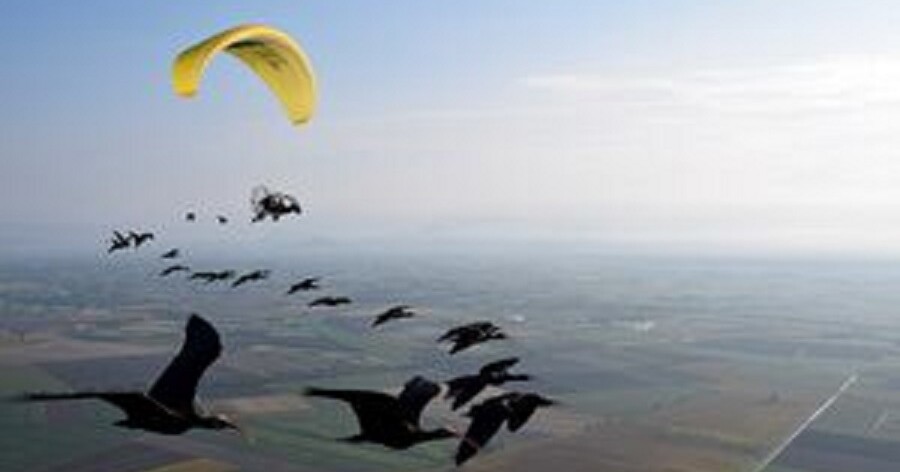
To Halt Ibis Extinction Austrian Man Shows Birds a New Migration Route With His UltraLight–And it’s Working

Assisted first migration of Northern Bald Ibises - photo by Helena Wehner
Assisted first migration of Northern Bald Ibises – photo by Helena Wehner

An Austrian ornithologist has pioneered an incredible way of wildlife rehabilitation by fostering chicks of an endangered species before re-instituting their migratory practice by leading them along their natural migration route with an ultralight aircraft.

The method was developed to help reconnect the northern bald ibis, a bird that was extirpated in Europe 400 years ago, with its summer-winter migration pattern from northern Europe to its sunny southern climes.

The history of these ibises is long, and by the time the Pilgrims sighted land on Plymouth Rock, Europeans had eaten probably all of them. Fortunately, other colonies survived in West and East Africa, and some in the Fertile Crescent.

In 2002, a small team of scientists and conservationists investigated the feasibility of reintroducing the northern bald ibis in Europe. This successful research project then led to a reintroduction project funded by the European LIFE-program in 2014.

It was the first project to reintroduce a migratory species back into the wild and soon became popular for the rather spectacular images of their main method of translocation: the human-led migration.

“Northern bald ibis chicks from the breeding program of zoological gardens form the basis for reintroduction. They are raised by human foster parents and trained to follow a microlight airplane with human foster parents as co-pilots. In this way, the juvenile birds are guided to a wintering area in autumn, where they are released.” explains Johannes Fritz, head and founder of Waldrappteam Conservation and Research.

Fritz was that one man for his time that decided there was no limit to the amount of effort he was willing to dedicate to reconnect these birds with their natural movements. The 56-year-old biologist and pilot was part of the reintroduction effort and found that while long periods of zoological captivity had not erased the birds’ instincts to migrate, their journey “south” took them to Russia.

MORE SUPER SUCCESSFUL CONSERVATION: Religious Practices Have Preserved 125,000 Sacred Groves in India, Growing a Conservation Success

That was when he started ferrying them over the Alps in his ultralight aircraft at the end of September.

In 2011, the first northern bald ibis migrated independently from the Tuscan winter area to its breeding area in Bavaria, marking the emergence of a new migration tradition, but it was a long time coming, and a long way yet to fly before these birds were able to migrate safely in large numbers.

Then, a changing climate saw their migration routes become unstable. Their instincts would see them depart their breeding areas north of the Alps in late October, and by November the mountains were impassible due to wind and snow. Three migrations failed this way.

Fritz came to the rescue again, hand-rearing chicks on ground mice and beef heart 8 times a day, while letting the inquisitive, gregarious chicks investigate his ears and nose for curiosity’s sake.

This was all a part of getting them to the age of flight when he would lead them again in his ultralight aircraft along a 2,500-mile circumnavigation of the Alps to a new wintering site on the sunny Spanish south near Cadiz.

BIRDS BACK FROM THE BRINK: Two Critically Endangered Baby Condors Born in National Park Are Healthy, ‘Adorable Fluffballs’

The New York Times charted the inaugural voyage, describing a man rolling what looks like a car seat, an airboat fan, and a bunch of scaffolding on three wheels out into a field while 35 ibises sat around poking their beaks into the muck in an early Austrian morning.

SHARE This Truly One-Of-A-Kind Conservation Success Story…