











All News - Page 265 of 1716 - Good News Network
Home Blog Page 265

Airbnb Will Chip In for Its Hosts’ Green Upgrades

In May, Airbnb began helping its hosts in Massachusetts afford climate-friendly or energy-efficient home improvements, such as insulation, rooftop solar arrays, or heat pumps.

Airbnb is partnering with Abode Energy Management to offer a $2,000 rebate on heat pump installation and $500 for weathering upgrades.

The chief aim of Airbnb is to utilize recent legislation passed in the state to make it financially feasible for homeowners to install heat pumps. The Inflation Reduction Act (IRA) includes a 30% tax credit for up to $2,000 spent on heat pumps.

50% of Massachusetts homes are heated by natural gas, while 25% rely on expensive heating oil for space heat. As well as being cheaper to operate, heat pumps emit 3 to 5 times less carbon dioxide and equivalents than the burning of heating oil.

“It’s an opportunity to expose so many guests to these kinds of improvements,” said Abode CEO Travis Estes. “It’s really exciting — it means we’re to helping to convert our society as a whole to be more electrified and decarbonized.”

To make these home improvements affordable, Abode will help Hosts access rebates of up to $10,000 to convert to air-source heat pumps and additional rebates for weatherization upgrades, depending on eligibility.

MORE CORPORATE RESPONSIBILITY: Veterinary Conference Turns into Free Clinic to Care for the Pets of Denver’s Homeless

The rebates are available through Mass Save, a collaborative of Massachusetts’ electric utilities and energy efficiency service providers working to empower residents, businesses, and communities to make energy-efficient upgrades. On top of the rebates that Hosts may be eligible for through Mass Save, Airbnb will provide additional grants of up to $2,500.

In 2022, Airbnb launched similar programs in the UK and France. Massachusetts marks the first home energy efficiency program in the US for the company. Two-thirds of hosts, says the company, use their earnings from Airbnb to make ends meet.

The partnership with Abode is all about helping these hosts get ahead of the cost curve and install energy-efficient features they would otherwise not be able to afford at any single moment in time.

MORE CORPORATE RESPONSIBILITY: The First Cargo Ship Running on Green Methanol Weighs Anchor Amidst Merchant Shipping Decarbonization

There are plenty of reasons to host on Airbnb in Massachusetts, whether that’s Cape Cod, Boston, Nantucket Island, Martha’s Vinyard, or the Berkshire Mountains. It’s nice to know that visiting these areas, and staying in an Airbnb, is a more sustainable choice than before.

SHARE This With Anyone You Know Hosting In Mass… 
Pre-Incan ‘Floor of Thunder’ Found Where Ritual Dances Atop Stone Platform Made Booming Footsteps Like Thunder

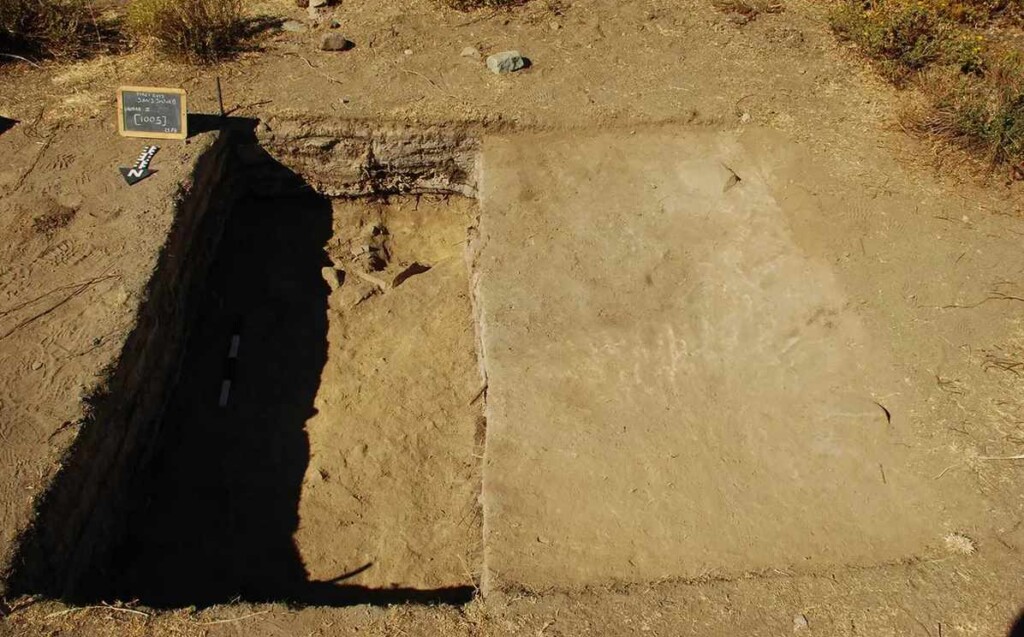
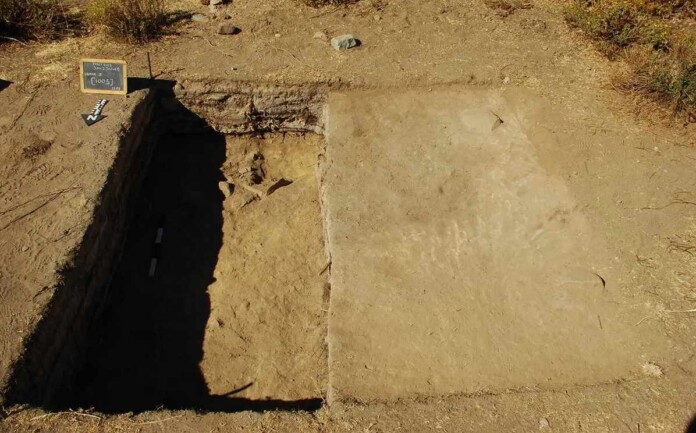
The floor was 10 meters, or about 30 feet in diameter - ORP-PIACI Project
The floor was 10 meters, or about 30 feet in diameter – ORP-PIACI Project

Dancers in a pre-Incan civilization of Peru built specially designed dance floors to honor a nearby god of mountains and lightning, a new study shows.

The floor could accommodate 26 dancers, and was hollow underneath with layers of resonant material on the underside of the cavity that would’ve aided in creating a booming noise like thunder.

It was discovered at a pre-Incan site of Viejo Sangayaico, about 120 miles south of Lima, after archaeologists walked over an open space and realized it was hollow underneath, which is exactly like something out of an Indiana Jones movie when you think about it.

It was quite near at hand to a temple dedicated to the Incan god of lightning, even though the construction of the dance floor took place around 1,000 CE, before the heyday of the Incas.

This, archaeologists believe, suggests that like their own footsteps tripping over it in our time, Incan people would have found it, realized the floor made a sound like thunder, and incorporated it into their rituals by building a temple nearby.

“We know that in pre-Hispanic Andean rituals dance was a big part of the proceedings. I believe that this specially constructed platform was built to enhance the natural sounds associated with dance,” Kevin Lane, an archaeologist with the Instituto de las Culturas (IDECU) of the Universidad de Buenos Aires who helped carry out the fieldwork, told Art News.

MORE ANCIENT MUSIC: Tiny Bone Flutes Discovered May Have Been Used for Calling Birds 12,000 Years Ago

“I believe that these open platforms would have been used during the pre-Hispanic period as a stage on which to venerate the nearby mountain gods, in this case those of Huinchocruz,” Lane says. “This would likely have been accompanied by drums and possibly Andean wind instruments.”

The platform was made by carving out a cavity under the rock and layering it with the dung of an animal, possibly a guanaco, and silty clay. These materials gave resonance to the noise created within the hollow as the dancers above performed their rituals.

MORE SOUTH AMERICA STUDY: Incredible Discovery Beneath the Southern Amazon Reveals Urban-Agrarian Society Never Seen Before

The study authors raise the question of whether this was a common feature of Incan and pre-Incan settlements, and perhaps that completed excavations should be reexamined for such thunder dancefloors.

SHARE This Completely-Different Archaeological Discovery On Social Media…

‘A Blessing’ For Wounded Soldiers Who Help Scientists Save Coral Reefs

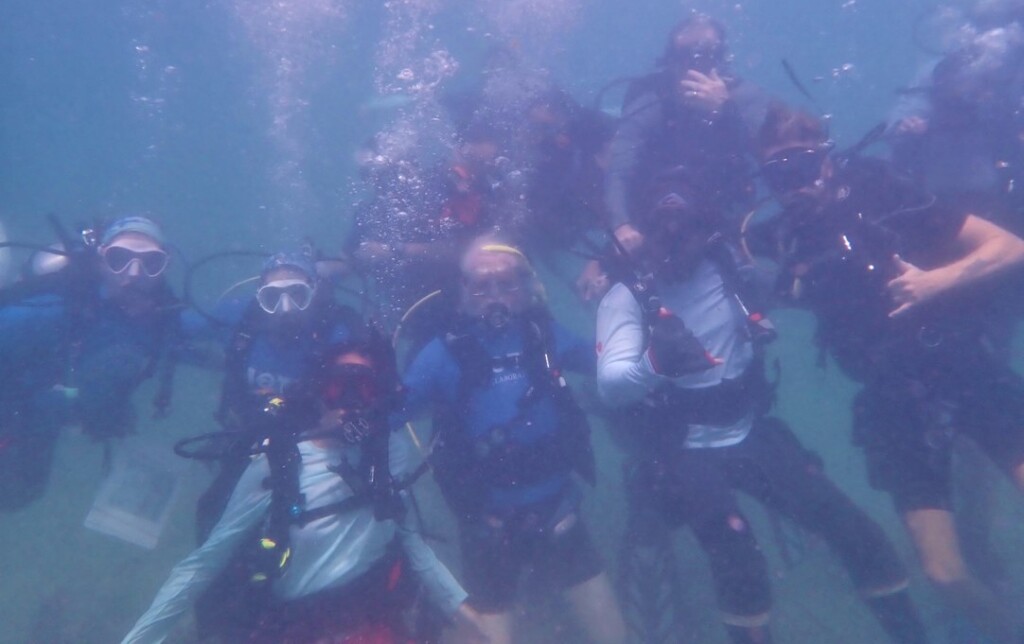
Wounded US Army veterans are being enlisted to restore coral reefs of the Florida Keys, giving them a new mission and purpose.

Feeling like they have no purpose is a common despair from veterans of several generations, and the work under the waves is helping combat that sense of listlessness, not to mention putting them in an environment where a lost leg is not nearly as impeding.

The work is part of a collaboration between the Mote Marine Laboratory and the non-profit Combat Wounded Veteran Challenge (CWVC).

For a week every year, a team of veterans comes down to help Michael Crosby “re-skin” coral reefs below the waves off the southern tip of Florida.

Crosby has been breeding corals of specific phenotypes that demonstrate tolerance and resilience to rising temperatures and more acidic water, representing conditions that may arise during the next 50 years as the climate changes.

Taking the nursery-raised coral down with them, this year’s work saw a team of 31 veterans seed 1,040 new corals in a reef called Higgs Head. This takes the total of such corals planted by the Mote Laboratory to over 200,000.

They dive down to first clean the dead or dying corals of algae, then use an epoxy resin to glue new, lab-grown coral fragments.

MORE GOOD CORAL NEWS: $25 Million Donation Launches Largest Coral Restoration Project in Hawaii to Renew 120 Miles of Reef

“They have been instrumental in my recovery, helping me learn what I was going to be able to do after losing my leg,” said 41-year-old Army veteran Billy Costello. “It’s great for the heart and the soul, especially when you’re around a group of veterans that have gone through very similar situations and have beat the odds and recovered in such a positive way… It is such a blessing.”

“The coral planting gives the wounded, ill, or injured service member a new found sense of purpose, they get to help the environment and work as a team with other military members who have been what they have been through,” said Lt. Col. (Ret) Andrew Lourake, CWVC Vice President of Operations. “The challenge, camaraderie, and knowing they are making a difference is the highlight of the year for almost all our participants.”

SHARE This Inspiring Vision Of Healing For Man And Sea…

“Laughter is the closest distance between two people.” – Victor Borge

Quote of the Day: “Laughter is the closest distance between two people.” – Victor Borge

Photo by: Bagas Muhammad

With a new inspirational quote every day, atop the perfect photo—collected and archived on our Quotes page—why not bookmark GNN.org for a daily uplift?

Pacific Garbage Patch Is Teeming With Life–An Ecosystem Older Than Plastic But No One Saw it

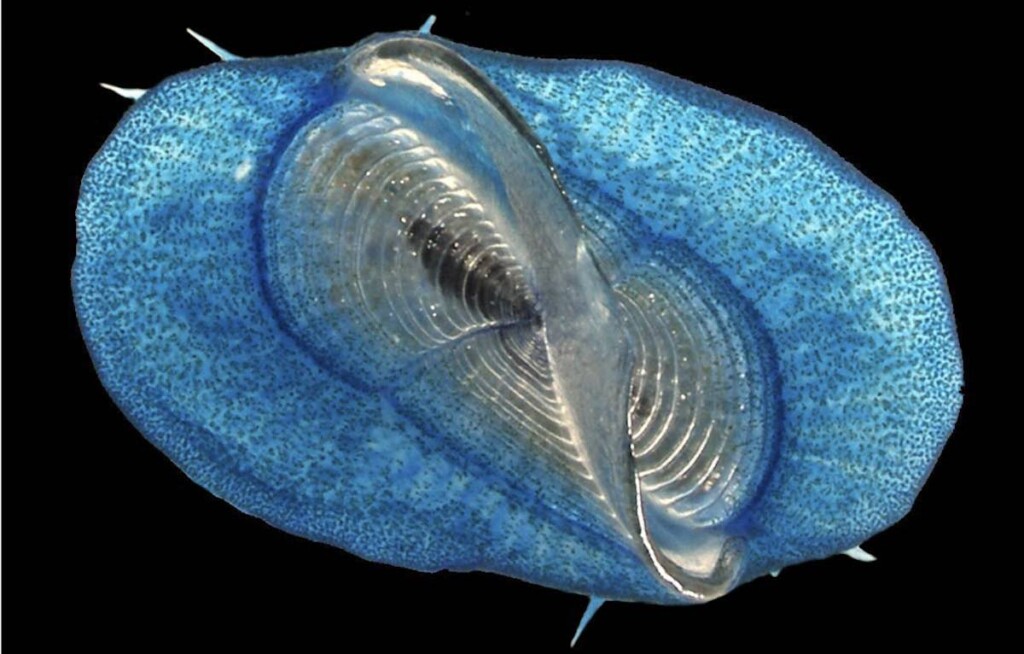
By Denis Riek via The Global Ocean Surface Ecosystem Alliance, CC license

In the northern Pacific Ocean, a powerful ocean ‘gyre’ pulls together several ocean currents into a single region—the site of the infamous Great Pacific Garbage Patch (GPGP).

However, longer before there was plastic waste in these waters, and in spite of it, the Northern Pacific ocean gyre is teeming with specially-adapted marine organisms that drift through the sea.

Take this beautiful violet snail above, constructing floating bubble rafts by dipping its body into the air and trapping one bubble at a time, which it then wraps in mucus and sticks to its floater.

Scientists recently documented hundreds of different life forms all concentrated within the center of the GPGP, where 1.8 trillion pieces of plastic have created an environmental feature like no other on Earth.

A swimmer named Benoît Lecomte completed a swim of 389 miles across the GPGP in 2019 and asked the scientists at Georgetown University to accompany the support crew in order to document the sea life.

The work they did has now been published in the journal PLOS One. They found greater concentrations of wildlife inside the GPGP than on its periphery. This is not because of, but in spite of, the trillions of pieces of plastic, as these living ocean hitchhikers evolved to use ocean gyres and currents to get around over thousands of years.

Violet snails, blue button jellies, by-the-wind sailor jellies, and sea slugs called blue sea dragons that hunt the tentacles of man o’ wars to use as makeshift protection, are all found there in large numbers.

Velella blue jellies (known as by-the-wind sailors) By Denis Riek via The Global Ocean Surface Ecosystem Alliance, CC license

“We saw just massive amounts of life at the surface,” study senior author Rebecca Helm, a marine biologist at Georgetown University, told National Geographic. “We’ve seen so many pictures of plastic from the Great Pacific Garbage Patch, but we’ve never seen any pictures of life there.”

“These places that we’ve been calling garbage patches are really important ecosystems that we know very little about.”

MORE SURPRISING OCEAN LIFE: Scientists Discover Pristine Deep-Sea Coral Reefs in Galápagos Marine Reserve ‘Teeming With Life’

The technical term for all this floating sea life is called neuston, and much of it is colored blue atop, and white beneath—a sort of camouflage Helm and her team believe.

Most of our children will never be able to see the GPGP, because it’s currently on track to be totally cleaned down to the microplastic level over the next 20 years.

SHARE This Inspiring Change Of The Narrative With Your Friends… 

Hero Teen Saves Brother Being Swept Away: ‘Mom…I Might Not Be Back’

The Gamage boys - supplied
The Gamage boys – supplied

In New Zealand, a young boy has become the world’s youngest recipient of the Mountbatten Award after saving his younger brother from a treacherous stretch of coastal water last year.

The hero was Kalya Gamage, 14, who must have paralyzed his mother with fear when he saw his brother Kithmi being pulled out to sea by 3-meter waves and said to her ‘Ok Mum, I’m going out. I might not be back.’’

12-year-old Kithmi was a good swimmer in his own right, but couldn’t resist being ripped off his feet by several large waves that broke ashore on Chrystalls Beach in South Otago. Quickly tiring himself out trying to fight his way back to land, he was out around 60 meters (180 feet) treading water in a “notoriously-dangerous” patch of coastal ocean where the Royal Life Saving Society (RLSS) notes “no one survives.”

Kalya jumped into the frigid water and had little difficulty reaching his brother, but became nervous about whether he could reach the shore.

But he was relieved that they did, cold and tired, but alive.

“Undoubtedly, Kalya’s brave response saved his brother’s life that day,” said the RLSS.

MORE RESCUE STORIES: 7-Year-Old Massiah Is Hero After Rescuing a Drowning 3-Year-Old – All on His Own

Kalya wants to start a business or be an engineer when he grows up, but has spent time specifically improving his swimming skills. Those skills, and the rescue they afforded, won Kalya the 2022 Mountbatten Award, given to a single member of the whole British Commonwealth per year—over 2 billion people in 56 countries.

While his high school and even the Kiwi government expressed their pride at Kalya’s bravery and presence of mind, the greatest reward will of course be having his brother around for many decades to come.

SHARE This Boy’s Heroics With Your Friends…

Paris District Declared the ‘Republic of Good-Neighbors’ Reviving Conviviality and Cutting Loneliness

Bonjour on the Rue de L'Aude - Credit Hyper Voisins Facebook
Bonjour on the Rue de L’Aude – Credit Hyper Voisins Facebook

In the south of Paris’ city center, the 14th arrondissement is conducting a neighborhood-wide experiment on deliberate living by consciously choosing to be good neighbors.

It’s an effort aimed at combatting the paradox of the big city: millions of people crammed together, many of whom suffer from social isolation as their millions of neighbors take on endless shades of anonymity.

This is true of many cities in the world, but unique to Paris is the brusqueness that develops from a city of perpetual hustle and hordes of tourists.

Unwilling to let the City of Light, their City of Love, dim under this curtain of curtness, the self-proclaimed “Republic of Good Neighbors” (Republique des Hyper Voisins) is on a mission to transform their neck of the woods into a vision of Paris from the past, full of ‘bonjours,’ of greenery and promenading, and of taking every opportunity to chat with passersby.

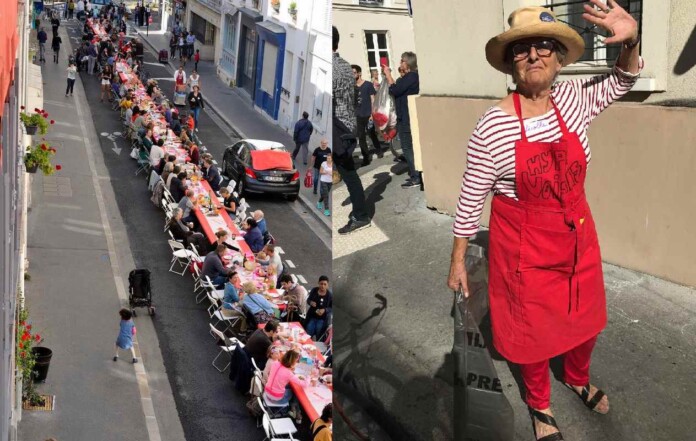
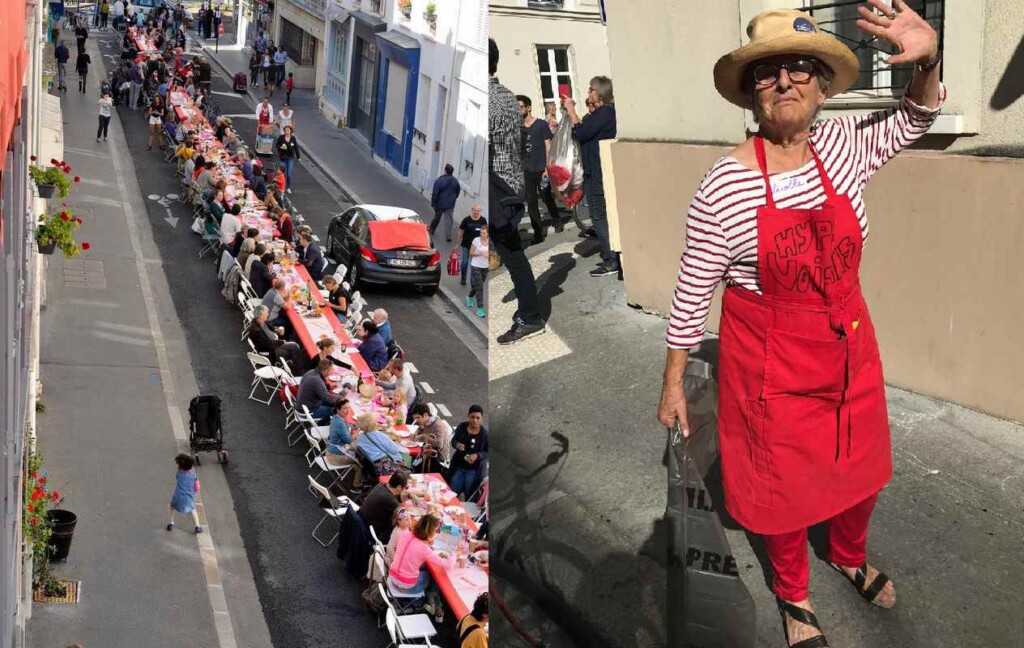
In the first effort of the collaboration, a 215-meter-long table (715 feet) was set out on the Rue de L’Aude, where the entire 14th arrondissement was invited to a special lunch event entitled “Bonjour.”

The Guardian newspaper, reporting from the event, called it “distinctly un-Parisian,” and local cafe owner Benjamin Zhong said, “I’d never seen anything like it before. It felt like the street belonged to me, to all of us.”

“The stereotype of a Parisian is brusque and unfriendly,” added Patrick Bernard, the former journalist and local resident who launched the project. “But city living doesn’t have to be unpleasant and anonymous. We want to create the atmosphere of a village in an urban space.”

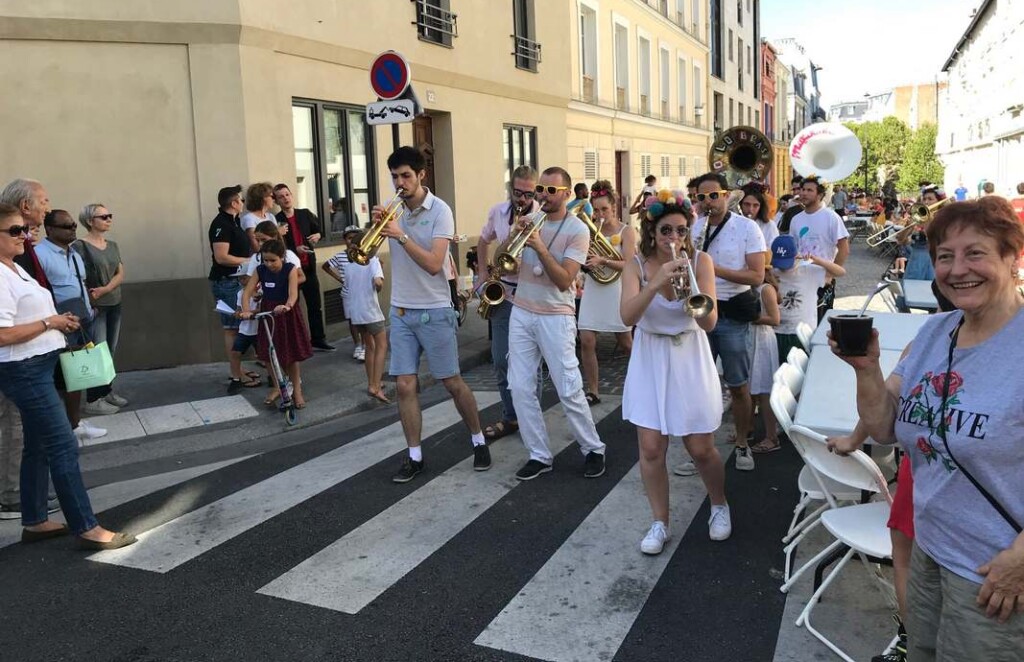
Since 2018, the Republic has been the site of hundreds of small events celebrating conviviality, including brunches, aperitifs, cultural outings, bake-a-thons, children’s activities, and group exercise meets. The airwaves are filled with communications from dozens of WhatsApp groups, for people trading and selling handmade goods, people repairing electronics or mechanical equipment, or sharing referrals to various professional services.

Many residents say the deliberate shift to good neighborliness has changed their lives. This includes not only Frenchmen, but immigrants to the area as well, who feel they’re living the Paris they always imagined.

Musique on the Rue de L’Aude – credit Hyper Voisins Facebook

A French Revolution

Once the good neighbor republic realized it could organize the citizenry in camaraderie, it began doing so for other causes, including improving local access to healthcare services and electric transportation.

Mr. Bernard has petitioned for, and received, several grants from city hall to pursue civic improvements like electric bike rentals and charging stations. The Hyper Voisins actually opened a medical clinic, staffed by ten people, that targets its facilities and services around the needs of people in the 14th arrondissement.

The Republique has lobbied city hall to levy a tax on businesses deemed undesirable by those in the neighborhood, such as banks that no one uses, or delivery hubs.

It’s also hired local green entrepreneurs to design a variety of collection points for organic waste which is then turned into compost for the neighborhood trees and flower boxes.

Its most recent civic engagement project was when the Republique turned its attention to the Place des Droits L’Enfant, a plaza that had become a largely lifeless road junction. By working together, the neighbors pedestrianized it, cleaned up litter and broken pavement, planted a variety of garden beds along the roads and plaza, and inaugurated the new space with a big party of music and board games.

While there, the Guardian met with Patrick Touzeau, who moved to the area with his three kids in 2018. Touzeau believes the concept should be implemented everywhere on Earth.

SHARE This Vision Of Gay Paris With Your Urbanite Friends…

Pterosaur Dubbed ‘Elvis’ Because of Quiff-like Bony Crest on its Head 145 Million Years Ago

(SWNS)
(SWNS)

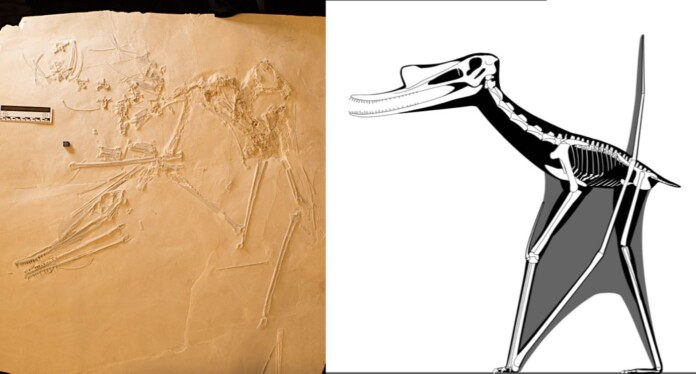
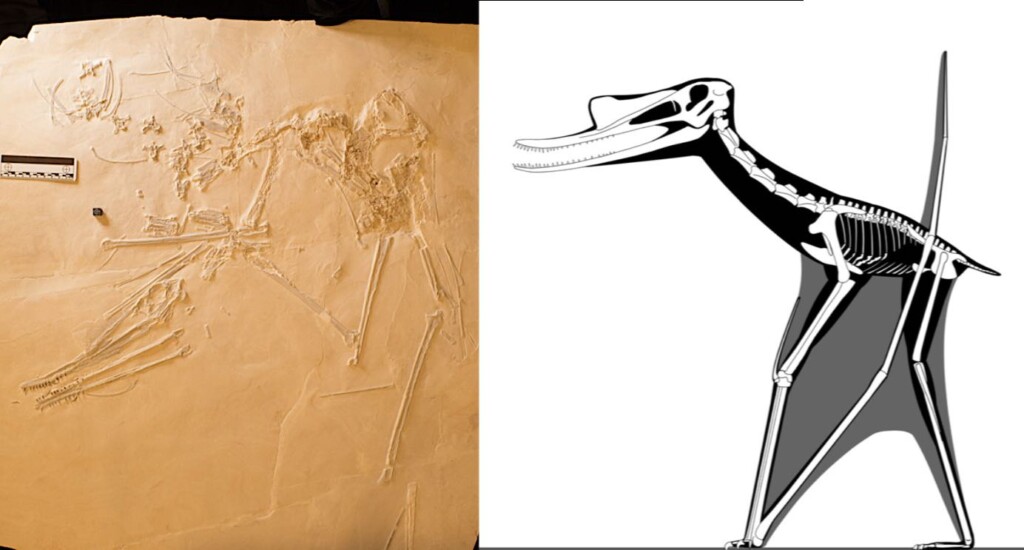
This flying reptile, found in a German rock quarry, wasn’t fully grown when it was embedded in the sediment, but it nevertheless sported a two-meter wingspan and a neatly-parted pompadour reminiscent of Elvis Presley, paleontologists suggest.

In life, it would have waded the shore of shallow seas but might have ventured into estuaries or to lakes. Its long jaw with many small teeth would have been good for grabbing at small fish, shrimp, and other aquatic prey.

It has the biggest crest for its sub-group and is one of the largest pterosaurs from the late Jurassic period.

This beast belonged to a clade of pterosaurs called Ctenochasmatidae, but unlike its closest relatives, it had an expansion at the back of the skull to attach large jaw muscles and give it a stronger bite than many of its contemporaries.

“The animal was nicknamed ‘Elvis’ when the fossil was first unearthed in Bavaria, Germany because of the giant pompadour-like bony crest on its skull,” said study co-author Bruce Lauer of the Lauer Foundation.

Lauer was part of a team of British, American, and German paleontologists who officially named it Petrodactyle wellnhoferi which translates as ‘Wellnhofer’s stone-finger’ honoring legendary German paleontologist Peter Wellnhofer who spent his career working on German pterosaurs, rather than Petrodactyle presleyi. 

A BIZARRE DINO: New Dinosaur With Rows of Bristles On its Head Like a Toothbrush Has Been Discovered

“Petrodactyle is a member of a group of pterosaurs called the ctenochasmatids that were mostly small filter feeders,” explains Lauer. “The specimen was located in a quarry which is producing scientifically important fossils that provide additional insights into Late Jurassic Pterosaurs.”

It is thought that pterosaurs used their bony crests primarily as sexual signals to other members of the species, but Pterodactyle has by far the largest crest ever seen in a ctenochasmatid.

MORE COOL FOSSIL DISCOVERIES: Fossil Preserves Dinosaur Being Attacked and Eaten by Mammal as Mudslide Entombs them Both

“Big though this crest is, we know that these pterosaurs had skin-like extensions attached to it, so in life Petrodactyle would have had an even larger crest,” said study lead author Dr. David Hone, of Queen Mary University. “[I]t is one of the largest pterosaurs known from the Late Jurassic period.”

It’s bizarre to think that such a giant mouth and fearsome appearance were attached to a filter feeder, not unlike a duck. Giant animals were everywhere during the Jurassic Era, and so presumably, while the strategies to find food were the same as animals we share the Earth with today, the prerequisite for survival was a large body to be able to prey on and defend oneself from the large animals alive during the time.

SHARE This Funny Pterosaur Skeleton With Your Friends… 

“Nature is an infinite sphere of which the center is everywhere and the circumference nowhere.” – Blaise Pascal

Quote of the Day: “Nature is an infinite sphere of which the center is everywhere and the circumference nowhere.” – Blaise Pascal

Photo by: Leon Liu, in Horseshoe Bend, Arizona 

With a new inspirational quote every day, atop the perfect photo—collected and archived on our Quotes page—why not bookmark GNN.org for a daily uplift?

Eight Habits to Take Up by Age 40 if You Want to Live Decades Longer

Rike Dohmen - Unsplash
Rike Dohmen – Unsplash

Researchers who studied the lifestyles of 700,000 Americans found men who had adopted all eight by age 40 lived around 24 years longer than those who had none.

Women who did so lived 21 years longer, according to the findings.

The eight habits are: being physically active, being free from opioid addiction, not smoking, managing stress, having a good diet, not regularly binge drinking, having good sleep hygiene, and having positive social relationships.

While literally not one of those is likely to surprise any individual who has taken even a single cursory glance at a recommendation for how to improve their health, 24 years does encapsulate the importance of basic, well-researched habits.

“We were really surprised by just how much could be gained with the adoption of one, two, three, or all eight lifestyle factors,” said study author Dr Xuan-Mai Nguyen, of the Department of Veterans Affairs at Carle Illinois College of Medicine, emphasizing exactly that point.

“Our research findings suggest… the earlier the better, but even if you only make a small change in your 40s, 50s, or 60s, it still is beneficial.”

The team used data from medical records and questionnaires collected between 2011-2019 from 719,147 people enrolled in the Veterans Affairs Million Veteran Program.

The analysis included data from adults aged 40-99 and included 33,375 deaths during follow-up.

Low physical activity, opioid use, and smoking had the biggest impact on lifespan with around a 30% to 45% higher risk of death.

MORE NEWS LIKE THIS: 8 Weeks of Lifestyle Changes Reduced Biological Age by 3 Years In Groundbreaking Proof-of-Concept Study

Stress, binge drinking, poor diet, and poor sleep hygiene were each associated with around a 20% increase in the risk of death.

A lack of positive social relationships was only associated with a 5% increase.

The findings, presented at the annual meeting of the American Society for Nutrition in Boston, Massachusetts, emphasize the role of lifestyle factors in contributing to chronic diseases such as type 2 diabetes and heart disease.

TAKE ACTION NOW: Free Quiz Designed by Functional Medicine Doctor Rates Your Risk of Nutritional Deficiencies

“Lifestyle medicine is aimed at treating the underlying causes of chronic diseases rather than their symptoms,” said Dr. Nguyen. “It provides a potential avenue for altering the course of ever-increasing health care costs resulting from prescription medicine and surgical procedures.”

Nguyen stressed that it is never too late to adopt a healthy lifestyle, which is even true for those who are already living healthy lifestyles. In a multi-faceted lifestyle intervention trial on healthy middle-aged men, just 8 weeks of a few targeted lifestyle alterations, such as deep-breathing exercises and a phytonutrient supplement, were able to shed 3 biological years of their clocks.


Simple Test for Children with Sinusitis Could Slash Antibiotic Use

Taking a nasal swab—similar to what we all did a hundred times during COVID—to check for three types of bacteria in youngsters believed to have a sinus infection can indicate whether antibiotics are likely to be effective or not, say American scientists.

Sinusitis, which is an inflammation or swelling of the sinuses, can cause congestion, runny nose, discomfort and difficulty breathing. Doctors often prescribe antibiotics, which target only bacterial infections, to treat the condition—even though it may be caused by viruses.

“Five million kids in the U.S. get prescribed antibiotics for sinusitis each year,” said study lead author Professor Nader Shaikh of the University of Pittsburgh.

“Our study suggests that only half of these kids see an improvement in symptoms with antibiotic use, so by identifying who they are, we could greatly reduce unnecessary antibiotic use.”

He adds that’s is difficult to properly diagnose the nature of a sinus infection.

“For an ear infection, we can look inside the ear; for pneumonia, we listen to the lungs. But for sinusitis, we have nothing to go on from a physical exam. That was very unsatisfying to me.”

With the target of developing a better tool to diagnose bacterial sinusitis, Prof Shaikh and his team enrolled around 500 children with sinusitis symptoms from six centres across the U.S. and randomly assigned them to receive either a course of antibiotics or placebo.

The research team also took swabs from inside the nose of each child and tested for the three main types of bacteria involved in sinusitis.

Youngsters who tested positive for the bacteria had better resolution of symptoms with antibiotic treatment compared to those who did not have bacteria.

The findings, published in the Journal of the American Medical Association (JAMA), suggest that testing for bacteria could be a simple and effective way to detect children who are likely to benefit from antibiotics and avoid prescribing the drugs to those who wouldn’t.

“If antibiotics aren’t necessary, then why use them?” said Dr. Shaikh. “These medications can have side effects, such as diarrhoea, and alter the microbiome, which we still don’t understand the long-term implications of.”

MORE IMPORTANT DISCOVERIES: World’s First ‘Tooth Regrowth’ Medicine Moves Toward Clinical Trials in Japan

“Overuse of antibiotics can also encourage antibiotic resistance, which is an important public health threat.”

He says a common belief among parents and doctors is that yellow or green snot signals a bacterial infection.

“But we found no difference, which means that colour should not be used to guide medical decisions.”

MORE USEFUL DIAGNOSES: Free Quiz Designed by Functional Medicine Doctor Rates Your Risk of Nutritional Deficiencies

The study shows how important “basic science” as it’s generally referred to, still is. This was as simple a trial as one could imagine but with incredibly serious consequences. The knowledge regarding the importance of the human microbiome, as Dr. Shaikh explained, continues to grow rapidly, while antibiotic-resistant infections occur in 2.8 million Americans every year, and there is a gradual slowing down in the development of new antibiotics.

SHARE This Simple But Brilliant Discovery With Your Friends… 

Texas Oak Tree Thought to Be Extinct Discovered in Big Bend National Park

Michael Eason - released
Michael Eason – released

America’s national parks are more than just places of rest and relaxation or protective zones around our country’s most bizarre, unique, and delicate landscape features, they are bastions of biodiversity.

Case and point, Big Bend National Park in Texas, where a species of oak unique to the state’s western mountain ranges was rediscovered having been declared extinct for some time.

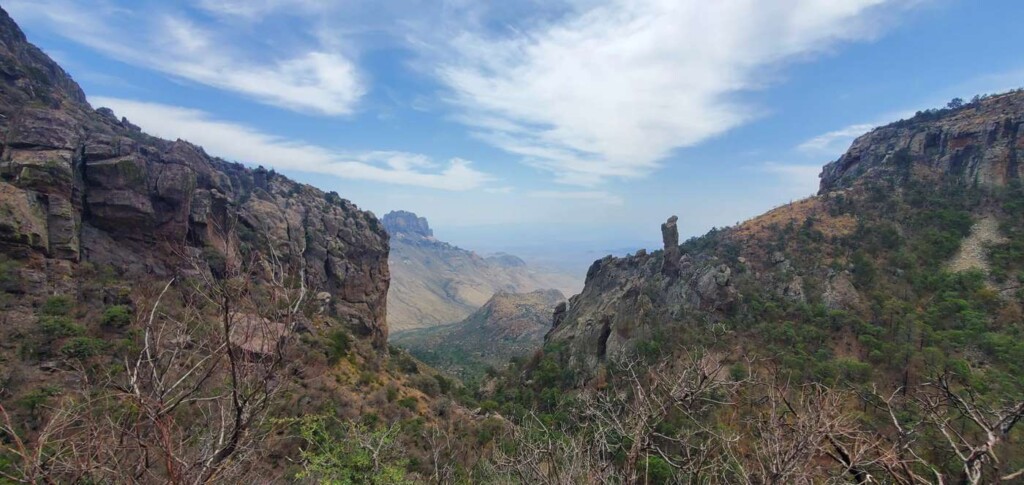
Quercus tardifolia or the late-leaf oak, is a living relic of a bygone climactic period in Texas’ history when the Lone Star State was wetter and cooler. The tardifolia keeps its leaves all winter and regrows them very late into spring.

As such, the only place it can thrive is in north-facing canyons in Big Bend National Park’s Chisos Mountains where there is plenty of shade and moisture.

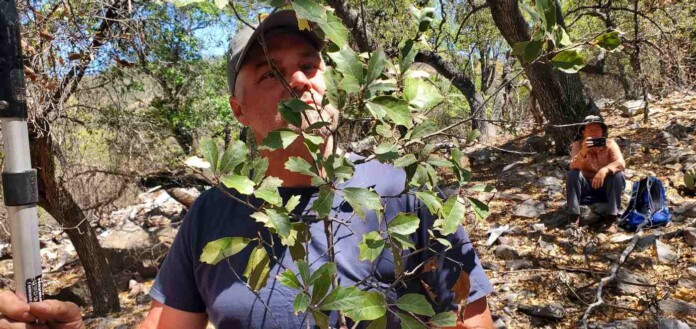
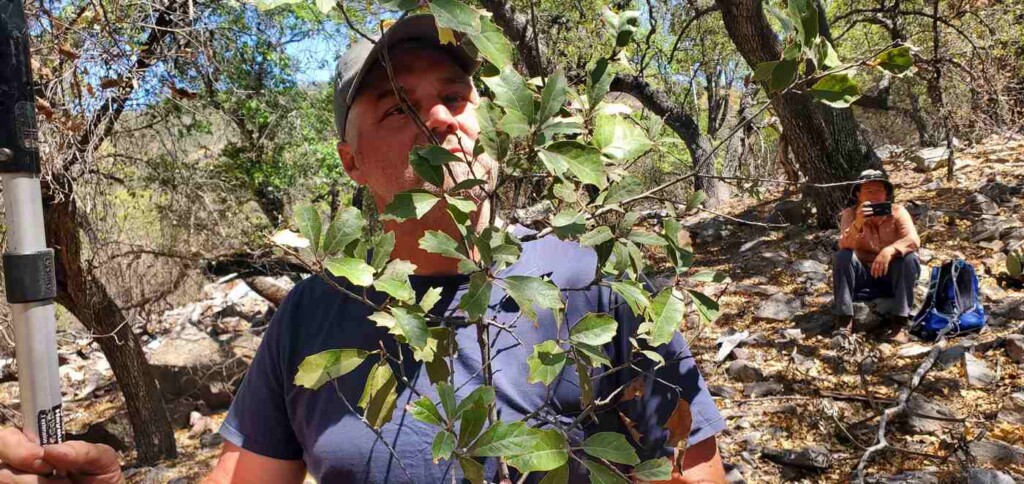
Michael Eason, a scientist with the San Antonio Botanical Garden’s Rare Plants and Conservation program, went into Big Bend with a team of botanists in order to try and find a late-leaf oak.

“The Tardifolia, the one that nobody could ever find, was sort of a—I wouldn’t say a missing link—but we were trying to figure out ‘where does this sit?’” Eason told NPR. 

OTHER TEXAS TALES: Texas Lists Two Critical Pollinator Flowers as Endangered Species, Practically Guaranteeing Milkweed Recovery

Getting a hold of some leaf samples in a location called Boot Canyon, Eason sent them to the Morton Arboretum to be analyzed. When the microscopy results came back, it confirmed Eason’s suspicions that Quercus tardifolia was still out there.

credit – Bartlett Tree Research Laboratories And Arboretum

Fanning out along the slopes of Boot Canyon, Eason and his team were able to locate two of these supposedly extinct oaks, take off some branches, and graft them onto oak rootstock back at the San Antonio Botanical Garden.

“It’s definitely a highlight of the career finding something that was presumed extinct,” he said. “There’s definitely elation when we found it that first day, I was pretty emotional. I don’t think anyone thought that we would find two, and I don’t think anyone ever thought that we would be looking at other populations on private land.”

MORE SPECIES RECOVERIES: After 20 Years He Finally Spotted the Elusive North American Butterfly Beauty in a Nearby Bog

Other individuals were found in canyons on privately-owned ranch land in the surrounding area.

Eason now has quite a few oaks in his greenhouse and is shipping seedlings to botanic gardens across the country in order to preserve the species.

SHARE This Good Texas Story About Bringing Species Back From The Brink…

Sydney Resident Watches with Joy as Surfer Paddles out to Save Drowning Magpie

credit Amanda Williams

In the Australian state of New South Wales, a surfer cut his surf trip short to save a struggling magpie that had somehow managed to dump itself in the ocean waves several dozen yards from shore.

Watching it all from an observation deck was Amanda Williams, the only reason the still-anonymous surfer’s good deeds are known to the world, because she described this “beautiful” rescue to local news.

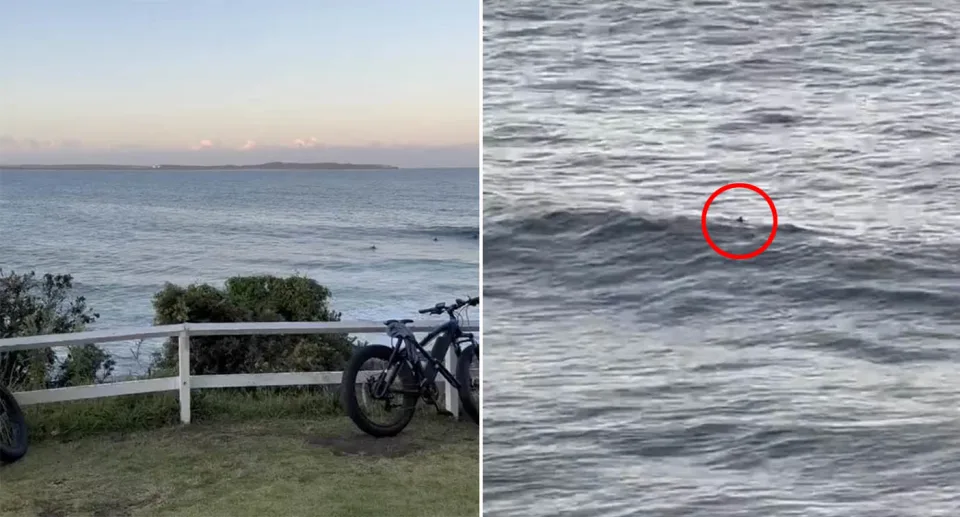
Walking along the headland above South Cronulla beach in NSW, Williams noticed there was something struggling in the water. At first she wasn’t sure what it was, but the fear it might have been a human led her to take out her phone’s camera and zoom in.

That’s when she saw that it was a magpie—this small bird was flapping about, getting swooped by seagulls no less, with no ability to save itself.

Williams wanted to help, but there was no one around, and with her 6-month-old infant strapped to her chest, there was nothing she could do.

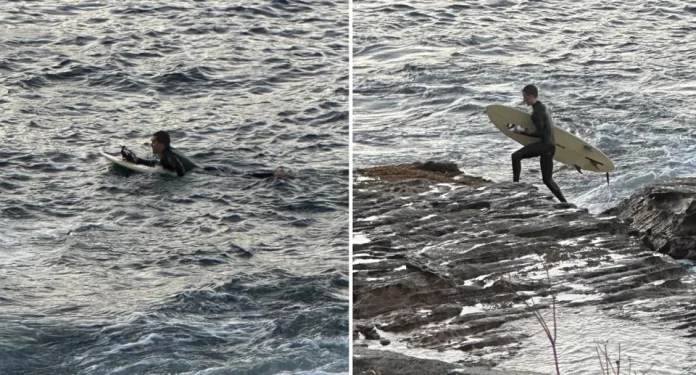
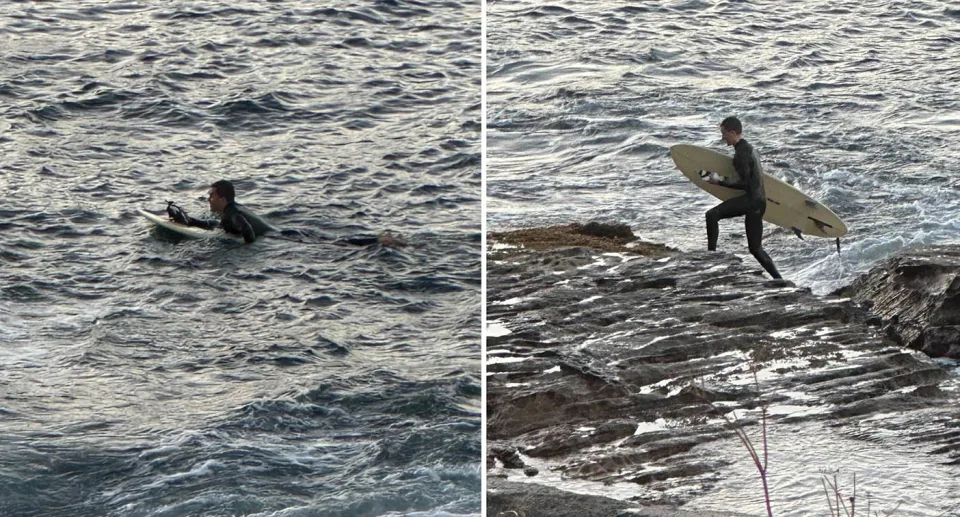
After 10 minutes, some surfers went out to catch some of the waves, and one of them noticed the magpie was there. Paddling his board under the exhausted bird, he lifted it out of the water. The waves though sent his board bobbing up and down, and eventually the surfer just had to pick the magpie up in his hand.

MORE AUSSIE NEWS: Big White Dogs Save the World’s Smallest Penguin in Australia

“He was just holding this thing like it was a pet bird, it just sat in his hand,” Mrs. Williams said. “It was so beautiful, he could’ve just left it or ignored it but he went and cut his surfing trip short for this poor little magpie. He went out of his way and took it to the vet, it was beautiful.”

She watched, touched, until bird and brawn were out of sight. She then went home and posted the episode to her local Facebook page where it accumulated a big reaction.

MORE ANIMAL RESCUES: Migrating Turtles and Tiny Hatchlings Get a Boost from Workers at a Connecticut Dry Cleaners

“I have no idea who he is, he just did it on his own. No one was watching, there was no-one on the shore cheering. He just did it for this poor little bird that was drowning in the surf,” she said, adding that she wanted to thank him for “showing me that there are still good people around”.

Williams did manage to contact the veterinary hospital, who said the bird was rapidly improving.

SHARE This Beautiful Moment Of Man’s Compassion For Nature… 

“We all have ability. The difference is how we use it.” – Charlotte Whitton

Quote of the Day: “We all have ability. The difference is how we use it.” – Charlotte Whitton

Photo by: Alexandre Pellaes

With a new inspirational quote every day, atop the perfect photo—collected and archived on our Quotes page—why not bookmark GNN.org for a daily uplift?


Probiotics Enhances Cognitive Abilities Through the Gut: A Key to Aging Brain Health

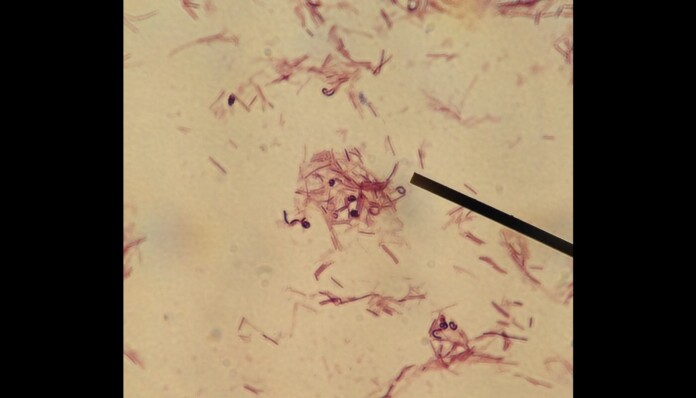
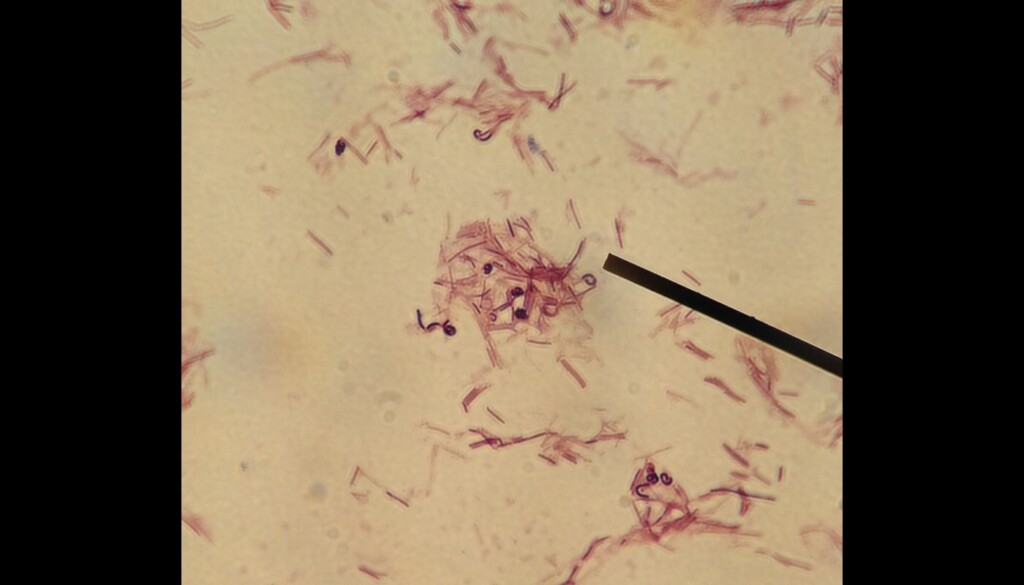
Lactobacillus rhamnosus LSU lab CC 2.0. (Dr. Karen Sullivan)

It’s not correct to tell someone you are what you eat, because you’re also what the trillions of microbes that live inside your GI tract and brain eat.

A study looking to see if taking a probiotic could improve symptoms of mild cognitive impairment found that the above refrain is correct—even when it’s related to cognitive decline associated with aging.

Specifically, participants with cognitive decline who were given Lactobacillus rhamnosus GG (LGG) for three months had increased cognitive scores associated with specific and measurable changes to the composition of their gut microbiome.

“The implication of this finding is quite exciting, as it means that modifying the gut microbiome through probiotics could potentially be a strategy to improve cognitive performance, particularly in individuals with mild cognitive impairment,” said Mashael Aljumaah, a microbiology doctoral candidate at the University of North Carolina.

“This adds a new layer to our understanding of the microbiome brain-gut connection and opens up new avenues for combating cognitive decline associated with aging.”

On account of the microbes, including viruses, bacteria, and other creatures that live in the gut, the gut is both the largest immune center and endocrine organ in the body, meaning more immune system activity is activated and modulated and more hormones are created in the gut than anywhere else.

When factoring in digestion and nutrient absorption, it’s perhaps no surprise that the diversity of microbial species in the gut could affect our biology as far afield as the cognitive centers of the brain.

The trial was double-blinded, meaning neither the patients nor the researchers knew who was given the placebo, and who was given the LGG. Over three months, patients aged 52 and 75 years old with mild cognitive impairment had their neurological markers improve concordantly with a drop in the prevalence of a microbiota genus called Prevotella.

MORE HEALTH NEWS: Men Free of Prostate Cancer Had Guts Fortified By Microbes Found in Yogurt

“By identifying specific shifts in the gut microbiome associated with mild cognitive impairment, we’re exploring a new frontier in preventive strategies in cognitive health,” said Aljumaah. “If these findings are replicated in future studies, it suggests the feasibility of using gut microbiome-targeted strategies as a novel approach to support cognitive health.”

The researchers are now working to understand the specific mechanisms of how microbes like Prevotella influence the gut in a way that improves brain health. Specifically, they are exploring how certain molecules produced by these bacteria modulate the functionality of neuroprotective hormones that can cross the blood-brain barrier.

Commercial probiotics contain many different species, and before running off to the store to buy one, it’s important to remember that this trial used one single species, and that the results were correlated with the drop in a single genus—a genus that may not be present in all gut microbiomes.

MORE NEWS FROM THE GUT: Specific Gut Bacteria Extract More Energy Which Seems to be Associated with Obesity

Nevertheless, it’s a very important finding, but just one in a long, long line of discoveries related to gut health and overall wellness.

SHARE This Very Important Finding With Your Friends… 

Migrating Turtles and Tiny Hatchlings Get a Boost from Workers at a Connecticut Dry Cleaners

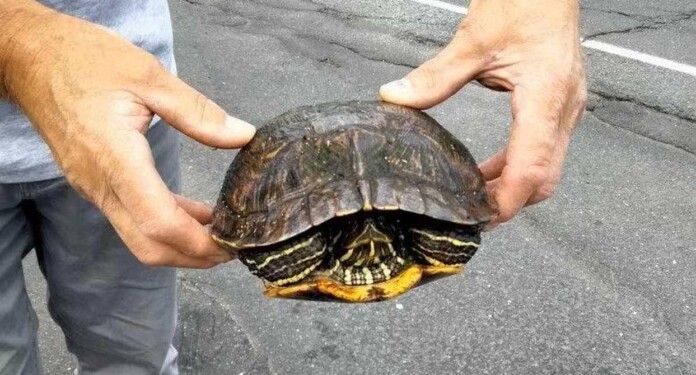
Some years ago, a Connecticut dry cleaners realized their store was smack dab in the middle of a turtle migration route, and now every year from May through September, job responsibilities shift from cleaning and pressing clothes to cleaning and pressing clothes and picking up turtles.
Pameacha Pond, a 19-acre body of water in Middletown, CT, is the site of a spring migration of Eastern painted turtles, who have to cross a busy two-lane road to get there and lay their eggs.

Later in summer, the flow of turtles changes, and rather than adult turtles entering Best Cleaner’s front door, tiny hatchlings—no bigger than a quarter—come through the back.

“Every summer, we’re always looking at our feet because we don’t want to step on them,” assistant manager Jennifer Malon told the Washington Post.

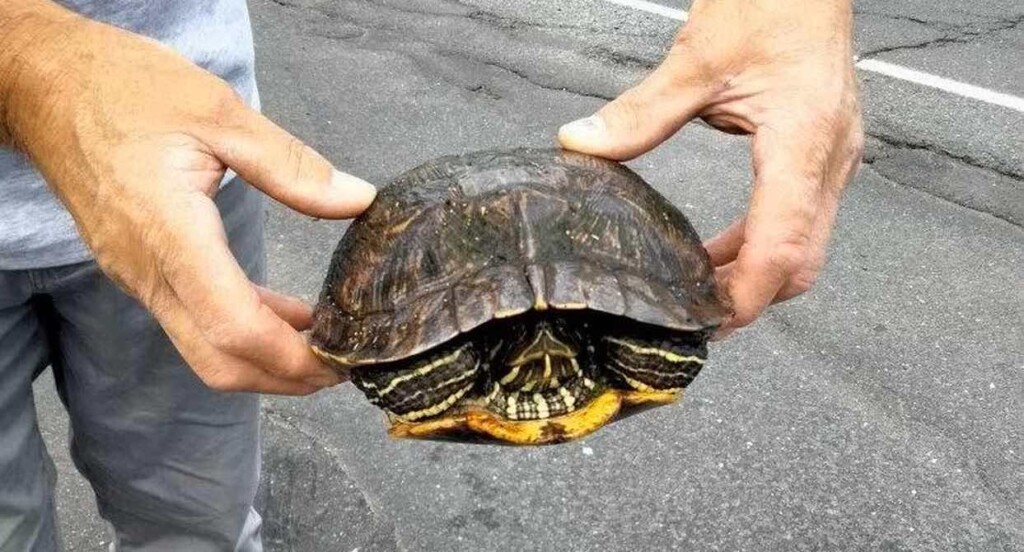
Malon is just one pair of hands at Best Cleaners that routinely crosses the busy road, turtle(s) in hand, because ever since local news covered the story, and it was picked up by the Post, locals have been coming to pitch in.

“We have all helped bring at least one turtle across,” Malon told Middletown Press. “We’re used to it now; it’s part of the job almost. We put them a good distance toward the water and they usually climb down the bank.”

YOU MAY ALSO LIKE: In Tribute to His First Love, Man Constructs a Wetland Home for Beavers and Frogs

Though neither rare nor endangered (the Eastern painted turtle is one of the most common turtles in America) they are important indicator species and can be used as a proxy of the integrity of the ecosystem as a whole.

Charmingly, the residents of Middletown believe it’s part of what makes the town special—seeing turtles slipping about on the floors of the store when they come to pick up the dry cleaning.

SHARE This Quaint Story Of A Small Town Making Room For Nature… 

Artist Drops Sketchbook With Years of Work Lost – Until Toronto Steps up to Help

Dmitry Bondarenko / Facebook

From Toronto comes a lovely story about lost and found, and how this nearly universal feature of Western society can bring out the best in people.

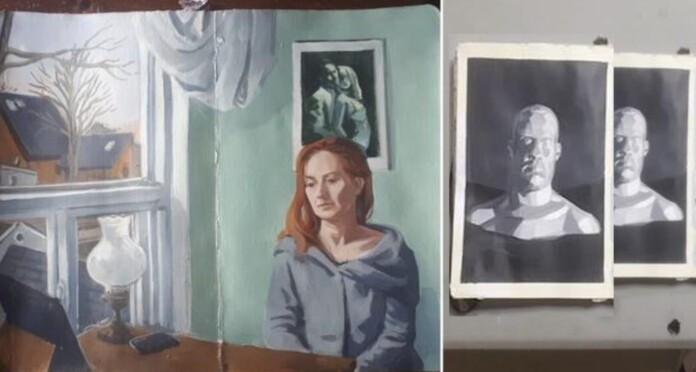
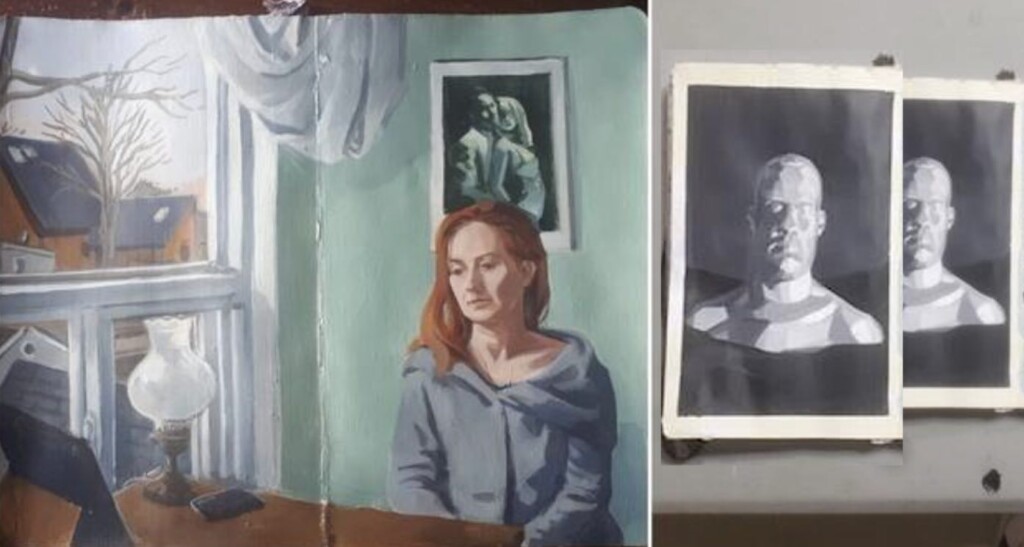
Dmitry Bondarenko, a Toronto-based artist and lecturer, had spent 10 years filling up a 5×7 black sketchbook of paintings in acrylic and gouache, but lost it while cycling through his adopted city of Leslieville.

Bondarenko and his parents immigrated to Canada from the USSR, and the sketchbook contained some of that memory, including still-life paintings of objects belonging to his Russian great-grandfather in the Red Army.

The weight of its absence was felt immediately, and Bondarenko set about trying to find it. He retraced his steps, put up more than 70 flyers on telephone poles and street lamps, and checked with park services in the park he had cycled through.

Eventually he turned to social media, writing in a Facebook post that normally “I’d just let it go, but this book was different. Some losses and mistakes simply hurt more than others, and I need to give finding this book a try.”

Two days later, the post was shared onto a FB group called “I Am A Leslievillain” where it reached a man who had found the sketchbook on the trail.

It didn’t sit well, the Toronto Star reported, in the home of Chris Ellam, 75. One glance through its paint-bound pages was enough to clue him in on the book’s significance to someone. But there was no name, no phone number or address, and nothing in the numerous artworks that gave Ellam any idea who it might belong to.

He had considered hanging it from a tree near to where he found it, but wanted more to ensure it wasn’t damaged by the rain. Fortunately after two days he saw the Facebook post, and through a relay of several people was able to get in touch and schedule a meet-up with Bondarenko.

MORE FRIENDLY CANADIANS: Woman Spontaneously Offers Homeless Man a Job on Her Farm Proving the Power of Kindness

“And then I lectured him like an old man,” Ellam told the Star. “I told him, ‘Put your name and number in it!’”

The Russian-Canadian tried and failed to present Ellam with a reward, and said it was a very humbling experience, a welcome act of goodwill in difficult times.

SHARE This Nice Story Of A Nice Neighbor With Your Friends…

Historic Homes Being Turned into Heritage Building Materials by These Awesome Savannah Women

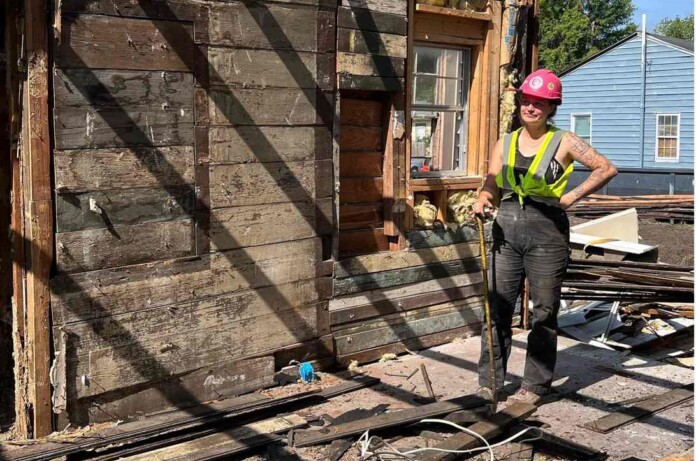
Katie Fitzhugh of Re:purpose Savannah - @repurposesavannah on IG
Katie Fitzhugh of Re:purpose Savannah – @repurposesavannah on IG

In Savannah, Georgia, a female-led non-profit works in hard hats and pink high-vis vests in a gradually growing business of reuse and recycling—deconstruction.

Deconstruction is what you do if most parts of a building could and should be used again; because they’re made from heritage materials; because they’re built with boards of high-quality endangered timbers; because otherwise it would all be thrown in a landfill.

Re:purpose Savannah is a 501(c)3 that takes old, condemned buildings apart for their bricks, timber, door frames, metalwork, and other components and sells them to construction firms building new homes for discerning clients. They’ve taken apart beach houses, dairies, bungalows, cottages, and traditional homes in town.

It’s the ultimate in circular economics, and despite the fact that 6 times more labor hours go into deconstructing a house than demolishing one, it was during COVID-19 that the value of this niche occupation revealed itself.

“When COVID happened the price of lumber skyrocketed, all our lumber was coming from elsewhere,” said Mae Bowley, Executive Director for Re:purpose Savannah. “My supply, which is local, didn’t dry up, I didn’t have to raise my prices a penny,” she said in a mini-doc shot by the Christian Science Monitor.

Bowley said that her company’s salvaged lumber was comparable in cost to the high-priced lumber during COVID.

Furthermore, much of the wood that Bowley and her crews pull down comes from trees no longer used for lumber because they are endangered, or because there are better options for mass timber planting.

PICKING THROUGH THE PIECES: Pair of Dirty Windows Purchased on Facebook Are Set to Sell for $200,000

These include white and red oak, longleaf pine, sweetgum, walnut, and hickory. Longleaf pine in particular is a very high-quality wood with a tensile strength that’s higher than steel.

The non-profit sells all of the salvaged material at its own lumber yard, where old boards, beams, joints, and flooring undergo a light touch of restoration to remove decay or split ends.

RELATED: Watch Woman Save Bees By Rescuing Hives From Old Buildings With Her Bare Hands

They keep detailed records of every historic building that’s torn down so that as much context as possible can stay with the materials and lumber as they’re shipped off to their new home.

WATCH the documentary below… 

SHARE This Awesome Story Of Wonder Women And Historic Homes… 

“When in doubt, don’t.” – Benjamin Franklin

Quote of the Day: “When in doubt, don’t.” – Benjamin Franklin

Photo by: Steve Rotman (cropped)

With a new inspirational quote every day, atop the perfect photo—collected and archived on our Quotes page—why not bookmark GNN.org for a daily uplift?


A Humble Stick Reveals Wealth of Information About Extinct Heidelberg Hominids as Hunters and Craftsmen

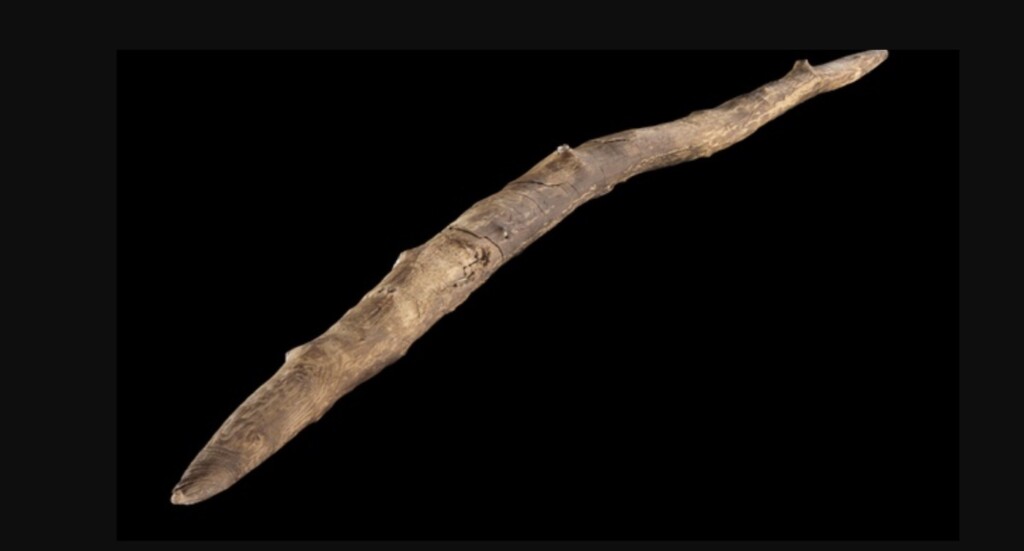
Double-pointed throwing stick from Schöningen Germany / SWNS

In the hands of a capable Ice Age hunter, this simple stick could be used to nail small mammals, or even assist in taking deer and horses.

It is supposed that the four-foot-long projectile could be hurled at beasts grazing up to 30 meters away, and with a point at either end, was twice as likely to do damage as a single-pointed dart.

It was dug up at the Schoeningen Palaeolithic site complex in Lower Saxony, a coal-mining area that has yielded a number of archaeological discoveries since the 1990s. Produced by early humans known as the ‘Heidelberg People,’ the skillful woodwork techniques show how they may have been more sophisticated and intelligent than previously thought.

“Our detailed analysis of the double-pointed stick leaves no doubt this was a well-planned, expertly manufactured, and finely finished tool,” said Dr. Annemieke Milks of Reading University, lead author of the paper published on the tool.

The Heidelberg People were the first recorded proper hominids to build homes and hunt big game, but they became extinct before the end of the last Ice Age. This stick was found amid a number of similar wooden tools found by a lakeside where it is believed they had a permanent encampment.

Throwing sticks have been recorded in dozens of ancient cultures, perhaps the most famous of which being the boomerang of the Australian Aborigines. They’re a rudimentary rung of the evolutionary ladder that took humans to the modern archery setup of carbon fiber, laser pointers, and razer-bladed mechanical broadhead tips, but could nevertheless be absolutely lethal if aimed properly.

OTHER NEWS LIKE THIS: Remains of Prehistoric BBQ Suggests Dinner was Served 780,000 Years Ago–600,000 Years Earlier than we Thought

“The hominins selected a spruce branch which they then debarked and shaped into an aerodynamic and ergonomic tool. They likely seasoned the wood to avoid cracking and warping. After a long period of use, it was probably lost during hunting,” wrote Dr. Milks.

An interesting, if less-likely scenario for this throwing stick is that it was a child’s toy—meant to fit their hands and allow them to gain experience with a larger, similar weapon they would eventually grow up to use. Other researchers have shown this to be common practice among early hominids.

MORE PREHISTORIC FINDS: Prehistoric ‘Axe Factory’ Found in Britain Triggers Search for More Artifacts

“The Schoeningen hominins thus had the capacity for remarkable planning depth, knowledge of raw materials, and considerable woodworking skill, resulting in an expertly designed tool,” Dr. Milks commented.

“The double-pointed sticks were potentially used to assist the hunting of larger prey but may have also been used for hunting birds and small mammals.”

Researchers can only guess how exactly the stick may have been used. Some hunter-gatherers alive today rely on wearing down their prey over long-distance chases. In such circumstances, a volley of these double-pointed sticks hurled at a target in the hope of a light wound could have made all the difference over the miles of the successive chase.

SHARE This Prehistoric Hunting Strategy With Your Friends…