












All News - Page 55 of 1711 - Good News Network
Home Blog Page 55

Son Receives 24-Year-old Letter Written by his ‘Hero’ Flight Attendant Mom who Crashed on 9/11

Jevon Castrillo and mother Cee Cee Lyles-family photo
Jevon Castrillo and mother Cee Cee Lyles – family photo

The mother’s letter survived four different moves and 24 years—it was destined to reach her son.

Jevon Castrillo’s mother, Cee Cee Lyles, first wrote the letter in March of 2001. Her son had just finished a book end-to-end and Lyles wanted to share the good news with Jevon’s kindergarten teacher, Tammy Thurman.

“Dear Ms. Thurman, Jevon read a book last night that he brought home from the library. He read it from cover to cover. I told him I would write you a note and tell you what an outstanding job he did,” Lyles wrote. “We are very proud of him and will continue to work with him at home. Again thank you for your dedication and courage for the job that you do.” – Cee Cee Lyles

The story took its tragic turn in the fall of 2001 when Lyles was one of the flight attendants aboard United flight 93 that was hijacked during the September 11 attacks. While in the air, Lyles called her husband at home and told him the passengers aboard were going to fight back.

Thanks to Lyles and other heroes on the plane, Flight 93 eventually crashed down in an empty field in Shanksville, Pennsylvania—likely saving thousands of lives at potential targets in Washington, DC.

Cee Cee Lyles in United Airlines uniform – family photo

Jevon lost his mother that day, but Ms. Thurman kept a close eye on the letter ever since. This year, she gave the letter to a news reporter, Jon Shainman, who works near Lyles’ hometown of Fort Pierce, Florida, and he promised to get the letter to her son.

Another Teacher Making a Difference: Preschool Teacher Spots Symptoms and Tells Parents, Leading to Child’s Early Diagnosis With Rare Disease

The exchange took place this past September—24 years later. Thurman even sent along a class photo featuring 6-year-old Jevon.

“As a mom, I know you need to see those words from your mom,” Thurman told Jevon in the video below by WPTV in West Palm Beach… “She was a wonderful woman and you were a wonderful student.”

On camera, Jevon read the letter from his mother that praised his reading prowess so many years ago. A few decades worth of emotions overflowed.

Tears followed soon afterward, and a new connection was made between this life and the next one.

“It’s very touching…” Jevon said. “It seems very sweet and it seems like something she would definitely say, you know.”

SEPTEMBER 11th KINDNESS: The Queen Broke a 450-Year-old Palace Tradition to Honor Americans After 9/11

Jevon, now a father himself with a 3-month-old child, said he’ll continue working each day to make his mom proud.

But thanks to the 24-year-old letter that finally made its way home, Jevon can feel his mother’s pride in his hands, anytime he wants.

FLY THIS OVER to Your Own Guardian Angels on Social Media…

Golfer Hits First Hole-in-one, Then Gets a Second the Same Day and Wins $500 From a Scratch-off

By Lotus Head, CC license

This particular day will be tough to beat.

Anton Lawrence has been playing golf for 40 years and never once had a hole in one. Then, he stepped onto the teebox for Hole No. 8 at Cobbossee Colony Golf Course near Augusta, Maine.

Lawrence was playing in a charity golf tournament with his youngest son, his brother who was in town from Louisiana, and his good buddy Mark. His swing on No. 8 felt pretty solid. The ball soared into the September sky and was soon bouncing on a perfect line toward the hole. And then, it dropped in.

Lawrence had his first-ever hole in one – but there were still 10 holes to play.

Magic arrived again on Hole No. 2. Lawrence was playing the course out of order thanks to the tournament’s format.

He teed off on No. 2 and once again, his swing and shot seemed perfectly in sync. The golf ball sailed forward on an optimal path to the hole. This time, it hit the pin and fell in.

Lawrence, who had played for four decades without once feeling the thrill of a hole in one, now had experienced it twice in the same round.

“It was just great,” Lawrence told WGME-TV in Portland, Maine in the video below… “It was a fun feeling.”

Clearly, it was Lawrence’s lucky day. Friends told him he had better play the lottery too. Otherwise, he’d be wasting an epic run of good fortune.

Check Out This Golf Dream Come True: Great-Grandad Gets Hole-in-One at Age 93 – May Be the Oldest Golfer in Britain to Do it

As it turns out, they were right. Lawrence didn’t win the Powerball drawing that night, but the two scratch-off tickets he purchased instantly paid $500, topping off his legendary luck.

And when the day finally ended, Lawrence had another win too.

“We ended up winning the tournament,” Lawrence said. “…So it was a good time.”

It was indeed quite a time and quite a day—and it certainly will be a tough one to beat.

BESTOW SOME LUCK On Friends By Sharing This On Social Media…
California’s First Solar Panel-Covered Canal Is Now Fully Online

The 110-foot-long section near Hickman - credit, Turlock Irrigation District
The 110-foot-long section near Hickman – credit, Turlock Irrigation District

Californian power authorities have finished their first solar panel-covered canal project, that will generate 1.6 megawatts.

Overseen and built by and for the Turlock Irrigation District Water & Power overtop a curved section near the town of Hickman, the canal helps irrigate cotton, tomatoes, almonds, and other crops in California’s central valley.

The decision to install the panels was influenced by a landmark 2021 research paper, where scientists at Univ. of California Santa Cruz crunched the numbers and figured that the panels would save 63.5 billion gallons of water from evaporation annually by shading the flowing water.

It also found that for every megawatt of solar energy generated during Turlock’s 290 days of average sunshine, the pairing of panels over canals could replace 15-20 diesel generators used to pump water along the canals.

Called Project Nexus, the work began in October 2022 with funding of $20 million from the state’s coffers.

One of only a handful of arrays worldwide to be mounted over canals, and just the second in the US, Project Nexus will be monitored overtime to see how well the performance matches the earlier estimates.

The first canal-panel combo was installed last October on the Pima-Maricopa Indian Reservation near Phoenix, Arizona.

“Why disturb land that has sacred value when we could just put the solar panels over a canal and generate more efficient power?” said David DeJong, director of the Pima-Maricopa Irrigation Project, which is developing a water-delivery system for the Gila River Indian Community.

Along with preventing evaporation, reducing the land clearance needed for solar farms, and boosting the state’s green energy output, the canal-mounted panels are believed to benefit from longer functional lifespans, as the water underneath keeps the panels’ undersides cooler.

Yet further, without direct sunlight, harmful algae will not grow along the canals, removing the need to clear it by hand or with chemicals.

FINDING ROOM FOR THOSE PANELS: Resourceful Singapore Finds Perfect Place for 86 MW Solar Farm–its Biggest Reservoir

This idea actually began in the Indian state of Gujarat in 2014, when a pilot project covering 750 meters of canal space led to the creation of an entire canal-topped solar plant in Vadodara District, and another one totaling 100 megawatts off the Narmada River.

Researchers in India found that the water running beneath prevented overheating and resulted in an average efficiency increase of between 2-5%.

MORE SOLAR IDEAS: Turning a Landfill into a Solar Powerhouse, Pittsburgh Airport is Now Totally Energy-Independent

There are around 4,000 miles of canals in California, which could produce up to 13 gigawatts of power which would cover around 750,000 homes, or around half of Los Angeles.

SHARE This No-Brainer Of A Brilliant Idea In California’s Central Valley…

‘God is blessing me so I can bless others’ Woman Donates Lottery Winnings to Charities

Carrie Edwards with her winnings - credit, Virginia Lottery, released
Carrie Edwards with her winnings – credit, Virginia Lottery, released

A Virginia lottery winner immediately donated the entire sum of her winnings to three personally-important charities.

Winning $150,000 after matching 4 of the 5 numbers plus the Powerball number, a $1 dollar Powerplay addition saw her standard $50,000 prize tripled.

Carrie Edwards won the September 8th drawing, but received her gift yesterday.

According to WISTV, the first $50,000 gift was made to the Association for Frontotemporal Degeneration, an organization supporting urgent research and family resources for those affected by early-onset dementia.

The donation was made under Carrie’s name and her late husband, Steve, who died of the disease.

“This cause is deeply personal,” she said, during what happened to be FTD Awareness Month. “I wanted this gift to shine a light on the families who are fighting this disease and on the researchers working toward a cure. God is blessing me so I can bless others through him.”

The second gift was made to Shalom Farms. Based in Richmond, this organization strives to create richer food opportunities to underprivileged residents and low-income earners.

The third $50,000 was given to the Navy-Marine Relief Society, providing several programs and services, such as educational support, to assist active duty and retired Sailors, marines and their families in financial need.

LOTTERY WINNERS GIVING: 

“These three organizations represent healing, service, and community,” Edwards said. “Shalom Farms heals through food and soil, AFTD brings hope through research, and the Navy-Marine Corps Relief Society carries forward the tradition of supporting military families in times of need.”

“All of us at the Lottery are delighted to see this prize being shared with worthy causes, due to the wonderful generosity of Carrie Edwards,” said Lottery Executive Director Khalid Jones.

Edwards hopes the donations make a difference to their respective causes, but also that they inspire similar acts of kindness and generosity among Virginians.

SHARE This Woman’s Inspiring, Selfless Act Of Generosity On Social Media… 
“Life is best when you are in love.” – Michael Moriarty

Clay Banks

Quote of the Day: “Life is best when you are in love.” – Michael Moriarty

Photo by: Clay Banks

With a new inspirational quote every day, atop the perfect photo—collected and archived on our Quote of the Day page—why not bookmark GNN.org for a daily uplift?

Clay Banks

Good News in History September 24

RM8, first production AEC Routemaster, at a bus rally in Ocean Village, Southampton - credit, Murgatroyd CC 4.0. By SA

71 years ago today, the London street scene was made all the more iconic with the introduction of the Routemaster 8 (RM8) from AEC—becoming the double-decker red bus so associated with the British capital. A pioneering design, the Routemaster outlasted several of its replacement types in London, survived the privatization of the former London Transport bus operators, and even spread to other cities in the UK. READ a tad more about this iconic automobile… (1954)

Citizen Scientists’ Makeshift ‘Coffee Filter Arks’ Help Prevent These Sparrows Chicks from Drowning

Saltmarsh Sparrow (Ammodramus caudacutus) at Great Bay Boulevard Wildlife Management Area - credit, Brian Henderson CC 2.0. via Flickr
Saltmarsh Sparrow (Ammodramus caudacutus) at Great Bay Boulevard Wildlife Management Area – credit, Brian Henderson CC 2.0. via Flickr

This is a saltmarsh sparrow, an Endangered species of bird that builds its nest in its eponymous habitat.

A collaboration of citizen scientists working in Jacob’s Point salt marsh in Rhode Island is attempting to save the animal—which they believe will go extinct by mid-century—from drowning in the marsh.

In a state of nature untouched by man, these birds would build their nests in higher-elevation marshes where the threat of flooding was rare. But coastal development over the last 200 years has seen most of the higher-lying marsh cleared, forcing the sparrows to move to lower-lying marshes like Jacob’s Point that are routinely flooded by high tides.

The citizen scientists, under the moniker Needle in a Haystack Society, have for the last 10 years conducted a monitoring/intervention project in Jacob’s Point that has seen them floodproof the sparrows’ nests.

By placing a rigid coffee filter under their conical nests of intricately woven grass, the whole thing, eggs or chicks and all, rises and floats until the high tide or flood recedes. Not everyone they’ve contacted about the project are enthusiastic about it, with one expert pointing out how sensitive the mother sparrows are to signs of nest tampering.

But only half of the Haystack Society’s work is intervening. The other half is monitoring, and unfortunately that has involved capturing footage of nests and chicks being drowned by both floods and the highest tides.

Featured in a documentary from the Guardian newspaper in England, the society have gathered findings that remain unpublished which show the coffee filter “arks” prevent nests from drowning, in all but 8% of instances, and not a single parent has abandoned a nest after the ark was installed.

By contrast, unsecured nests drowned 18% of the time during extreme tides.

The saltmarsh sparrow sits on something like a waitlist for Endangered Species Act protections, but the society is worried that after 9 years on the waitlist, the potential protections will come too late to save the bird.

SALT MARSHES: There’s a Salt Marsh on the East Coast Where You Can See More Than 250 Species of Birds

Although, a previous critic of the society’s interventions, evolutionary biologist Chris Elphick at the University of Connecticut, Storrs, recently co-authored a paper in which he and his team presented findings which showed the decline in the saltmarsh sparrow had slowed, and the population actually increased.

The paper also concluded that sea-level rise, though seemingly more inevitable and apocalyptic than other factors like road density and habitat integrity, was not as good a predictor for the long-term population trends of coastal birds than the latter two factors.

MORE ENDANGERED BIRDS: First Egg Laid in the Wild by Guam Kingfishers in 40 Years–Hanging on to Survival Thousands of Miles from Home

In that sense, better habitat protections—like those that might prevail from an Endangered Species Act listing—could yet save this extremely specialized songbird from singing shanties in Davy Jones’ Locker.

And if that were the case, then the dozens of chicks who were made safe from rising tides by the coffee filter arks would be able to carry on building their curious nests long into the future, with the citizen scientists of the Needle in a Haystack Society to thank for it.

SHARE This Songbird Saga Up In Rhode Island’s Salt Marshes On Social Media…
112-Million-Year-Old Amber Samples Preserve a Snapshot of an Ancient Forest

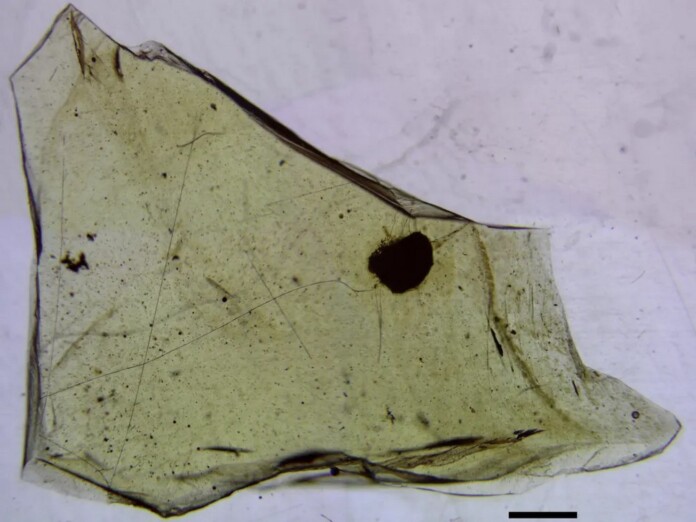
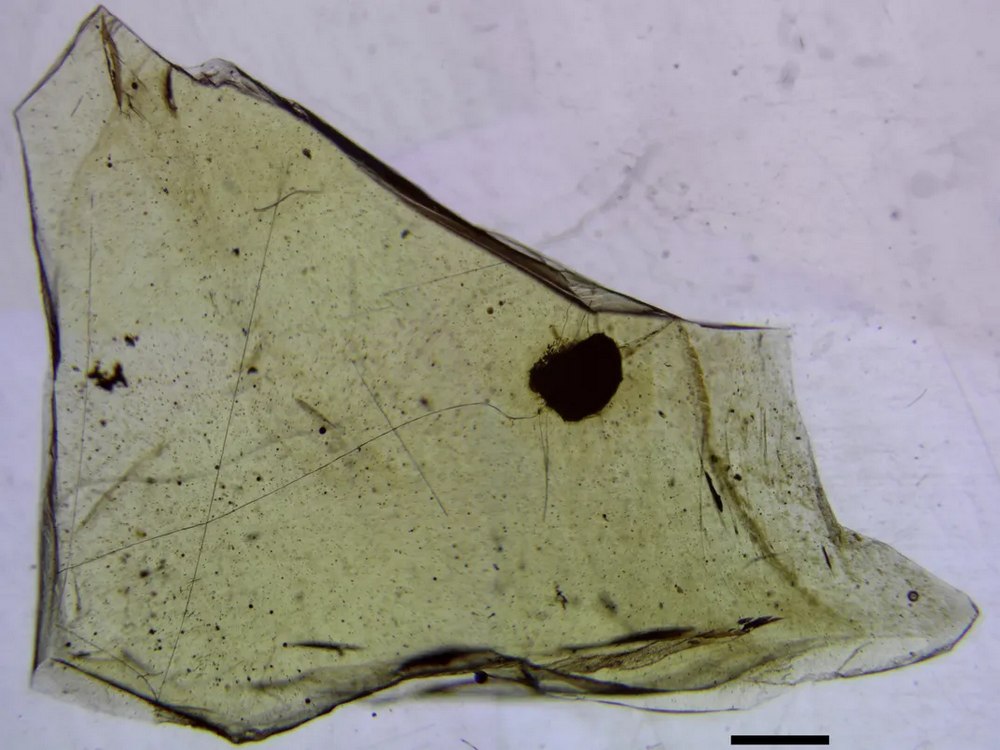
A portion of spider web in a studied amber sample. Enrique Peñalver
A beetle in amber sample – Credit: Senior Researcher Enrique Peñalver

In the blockbuster 1993 film Jurassic Park, Steven Spielberg’s screenwriters tell the story of scientists who recover dinosaur DNA from a mosquito entombed in amber and use it to clone the animals back into existence.

Today, a recent paleontological discovery comes to the very doorstep of that fictional tale, bringing much of the excitement, short of the impossibilities.

A fly trapped in a studied amber sample. Mónica Solórzano-Kraemer

Two amber samples: one from below ground and one from the limbs of an ancient tree, show incredible 3D snapshots of life from 112 million years ago. 6 orders of arthropods are seen inside, including beetles, flies, and spiders encased within.

This entomological time capsule is only possible because of amber, a tree resin that when exposed to millions of years will harden into a crystalline structure. Sold as jewelry today, it also sometimes contains “bio-inclusions.”

“Amber essentially preserves the exoskeletons of small organisms from the past. The preservation of these outer structures is so excellent that, under a microscope, they can look like freshly dead organisms, yet they are millions of years old,” Xavier Delclòs, a paleoentomologist from the University of Barcelona and first author on the study, told Reuters.

To be fossilized, an organism needs to be made of sterner stuff than chitin—the material that forms the exoskeletons of insects—and Delclòs would later tale Gizmodo that without amber we’d never have the opportunity of seeing these prehistoric invertebrates.

Discovered in Ecuador, the amber dates to the period when all the continents were joined together into the giant Gondwana super continent.

A portion of spider web in a studied amber sample. Enrique Peñalver

In the amber piece that was exposed to air, creatures that come from the orders of flies and mosquitoes, beetles, and wasps/ants were all identified, as well as the silken strands of a spider’s web, if it can be believed.

They are just the second-ever bio-inclusions found from an amber in the Southern Hemisphere. They date to a period when the eons-long relationship between the flower and the pollinating insect first began, and the scientists who published the study on the examinations of the ambers believe they may help reveal more about this relationship at the very dawn of its development.

MORE AMBERS:

In Jurassic Park, the one fiction in the premise is that DNA could remain stable inside a mosquito encased in amber for tens of millions of years. The blood-sucking bug found in these ambers will almost have certainly fed on dinosaurs, but don’t be fooled into thinking your children will get to go see T. rex at a zoo, the delicate DNA will have long turned to nothingness.

SHARE This Amber Time Capsule With Your Friends On Social Media… 
Rarest Monkeys Now Number Close to 2,000 Thanks to One Man’s Jane Goodall-like Passion

A golden snub-nosed monkey in Tanjiahe National Nature Reserve, Sichuan Province - credit, David Blank CC BY-NC-SA 3.0.
A golden snub-nosed monkey in Tanjiahe National Nature Reserve, Sichuan Province – credit, David Blank CC BY-NC-SA 3.0.

From the BBC comes the story of an intrepid and dedicated scientist who has spent decades working in China’s mountain forests in an effort to protect and understand one of the nation’s most amazing animals.

The golden sub-nosed monkey is revered alongside the giant panda as “national treasures” of Chinese wildlife, yet this couldn’t protect them from logging and hunting that followed in the wake of Mao’s Cultural Revolution.

Members of this sub-species located in the UNESCO-listed Shennongjia mountains of Hubei Province, were the subject of intense study by Professor Yang Jingyuan, a research ecologist who arrived in these mountains in 1991.

For Yang, the golden sub-nosed monkey was Jane Goodall’s chimpanzees. By the time Yang arrived in Shennongjia, the population had collapsed to just 500 or so individuals across 6 family groups. Years of illegal logging as a form of subsistence living had reduced forest coverage in the mountains to 63%.

But before Yang could protect the animals, he had to first learn to understand them. With his research colleagues, he began striking out into the newly-created Shennongjia Forest Reserve to study these incredible animals.

The monkeys were at first so wary of humans that Yang and his team had to stay half a mile away to be able just to observe the monkeys in their habitat. Eventually though, with repeated encounters, half a mile became and quarter mile, and a quarter mile became 200 yards, 100 yards, 20 yards—until Yang and whoever he brought with him were accepted by the troupes.

The BBC’s China Correspondent, Stephen McDonell, experienced this treatment as baby monkeys and curious juveniles climbed all over him on a visit to special, 100 square kilometer monkey zones hat are off-limits to the hundreds of thousands of visitors who come to enjoy a mountain ecosystem that is without exaggeration unique in the world.

“Even after logging was banned there were still people illegally felling timber. If they didn’t cut down trees, how would they have money?” Professor Yang, director of the Shennongjia National Park Scientific Research Institute, told McDonell.

Golden snub-nosed monkeys in Tanjiahe National Nature Reserve, Sichuan Province – credit, David Blank CC BY-NC-SA 3.0.
Shennongjia virgin forest – credit, Evilbish CC BY-SA 3.0

“There were also people secretly hunting here to survive. It was only after a long period of building awareness that the consciousness of local farmers changed.”

In the 1990s, with a shifting focus from forestry to forest conservation, local residents eking out this subsistence living were offered government money to relocate so that the forests could regrow. Many accepted the offer, and now benefit from the tourism boom the mountains are experiencing.

There is no place on Earth that has greater biodiversity of deciduous woody plants than Shennongjia, and a dizzying 3,400 higher-order plant species, and over 600 invertebrates have been recorded there. The golden snub-nosed monkey is very much a fuzzy golden cherry on top of a biodiverse cake ten layers-high.

“I’m very optimistic,” said Prof Yang. “Their home is now very well protected. They have food and drink, no worries about life’s necessities and, most of all, their numbers are growing.”

Golden snub-nosed monkeys captured via camera trap – credit, eMammal CC 2.0. via Flickr

Indeed, an archived report from Xinhua claimed that those 500 remnant individuals became 1,200 by 2013. This represents major progress since females give birth to only one baby at a time.

At the time McDonell visited, their numbers had jumped again to 1,600, and forest cover along the hills and valleys had increased to around 96% of the reserve’s total area.

ALSO CHECK OUT: China Achieves ‘Excellent’ Water Quality in 90% of Rivers and Lakes, Now Looks to Improve Whole Ecosystems

Professor Yang can live freely among them like some character of fable. He speaks to them in their calls, having learned the meanings of each vocalization during his many years of observing them.

Like Goodall, his research has yielded incredible insights into their lives. For example, each monkey has an egg timer-like understanding of its lifespan, and when it’s time to pass away, they silently leave their families behind and visit special, secluded areas to die alone in the forest.

MORE MONKEY BUSINESS: In the Amazon, One Woman’s Ingenious Canopy Bridges Are Helping Monkeys Cross the Road Safely

According to Yang, there hasn’t been a single successful attempt to find these sites, either by researchers or rangers.

Yang’s institute estimates that the monkeys will come to number 2,000 individuals in Shennongjia sometime over the next 10 years, a testament to the magnificent outcomes conservation can provide, providing there’s someone in the right place at the right time to make the effort to make a difference.

SHARE This Amazing Story Of A Man, A Monkey, And The Mountains… 
The Seine in Paris Now Cools 800 Buildings in the Summer: ‘People Are So Proud’

The Seine featuring the Saint Alexander III Bridge and the Eifel Tower - CC 2.0. ilirjan rrumbullaku
The Seine featuring the Saint Alexander III Bridge and the Eifel Tower – CC 2.0. ilirjan rrumbullaku

The world’s most romantic river also helps prevent residents from getting all hot and bothered, cooling their offices and homes through a heat transfer system.

Currently, around 60 miles of piping channels water to and from the Seine in Paris, but it has nothing to do with plumbing. Rather, this network, which includes pumps and heat exchangers, naturally cool 800 Paris buildings.

The heat exchanger works by bringing the cool temperatures of the Seine’s undercurrent and using them to cool the air that circulates through the buildings. The water gradually absorbs the heat that was present in the air, and when it loses its cool, it returns to the Seine to deposit that thermal energy into the water.

Water is 800 times denser than air, so using it to store temperatures is much more efficient. It’s so efficient that the Seine’s district cooling services are set to more than double through ongoing expansion work.

Those 100 kilometers of pipes are set to become 245 kilometers, allowing the system to welcome an additional 2,200 buildings into the fold.

Another advantage district cooling has, and one reason why it’s so desired in central or downtown districts, is that there’s no heat discharge back out into the city. Air conditioners pump heat into the alleyways and streets they face, contributing to the urban heat island effect that is more intense the more buildings there are.

One of the system’s largest clients is none other than the world’s most famous museum. The Louvre uses 12 megawatts of cooling power—12-times more than the average building—to keep its countless galleries and halls at the ideal temperature and humidity for preserving artifacts and works of art. That means the only cost of cooling this massive underground building is the cost of pumping the water.

Compared to other district cooling systems that use deep, colder lakes rather than shallow, UNESCO-protected rivers, the capacity for the Seine to expand is minimal. The riverbed cannot be deepened, while excavating to lay new pipes is excruciatingly slow because of the layers of history in a city like Paris and the requirements for archaeological surveying.

BEATING THE HEAT: Four Frugal Methods to Cool Down Without A/C This Summer

But the city is experiencing extreme heatwaves routinely during the summers; each of the last 4 years included, and access to cooler spaces is becoming more and more of a priority; somewhat like how warm spaces were 100 years ago.

In the 19th century, one could go swimming in the Seine if it got too hot, a possibility that was gradually removed by rampant pollution. But with the clean-up of the Seine complete, Paris has now effectively doubled its cooling power—by refreshing those both in and out of river.

MORE COOLING STRATEGIES: New York Building Proves Ice Is Nice for Staying Cool Without Power-Hungry A/C Units

GNN has also reported on the brilliance of district heating systems, which, like the Seine’s cooler depths, utilize excess heat produced by factories and data centers to warm water that is transferred to office spaces. There, it heats the air that circulates through the building before being pumped back into reservoirs under the factories to be re-heated again.

SHARE This Brilliant Use Of A City River With Your Friends… 

“That the birds of worry fly above your head, this you cannot change. But that they build nests in your hair, this you can prevent.” – Chinese proverb

Quote of the Day: “That the birds of worry fly above your head, this you cannot change. But that they build nests in your hair, this you can prevent.” – Chinese proverb

Photo by: © GWC

With a new inspirational quote every day, atop the perfect photo—collected and archived on our Quote of the Day page—why not bookmark GNN.org for a daily uplift?

Good News in History September 23

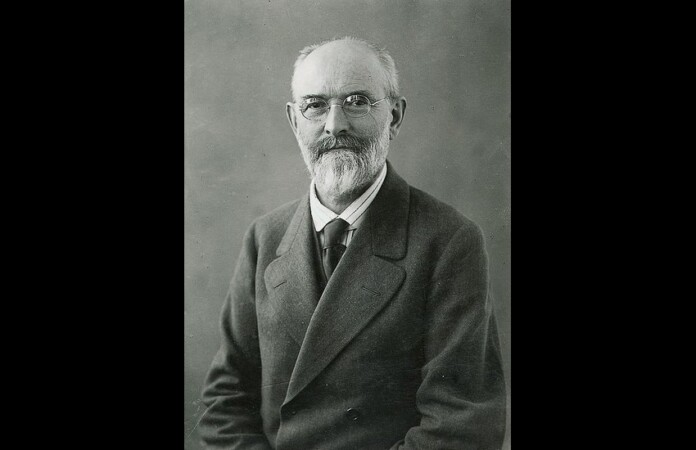
Robert Bosch in 1925

164 years ago today, Robert Bosch, founder of the corporation Robert Bosch GmbH, was born in Ulm. One of the most important German industrialists of the 19th and 20th centuries, Bosch and the engineers at his company pioneered the high-voltage magneto ignition system that created the first commercially-viable spark plug for internal combustion engines. Bosch launched other automotive innovations like diesel fuel injection, and by 1927 was present on every continent. One of the most responsible companies in Germany, Bosch introduced the 8-hour workday and other early employment benefits, while donating all the proceeds from the lucrative munitions contracts he received from weapons manufacturing in WWI to charity. The company today is worth $91 billion, and is the world’s largest automotive parts manufacturer. READ more about the man behind this famous brand… (1861)

Birth of UK’s Only Bonobo Baby Gives Fresh Hope for World’s Most Endangered Ape

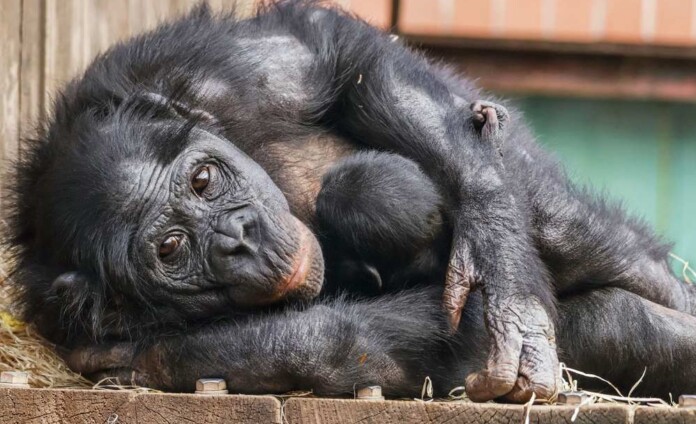
credit - Adam Kay, Twycross Zoo / SWNS
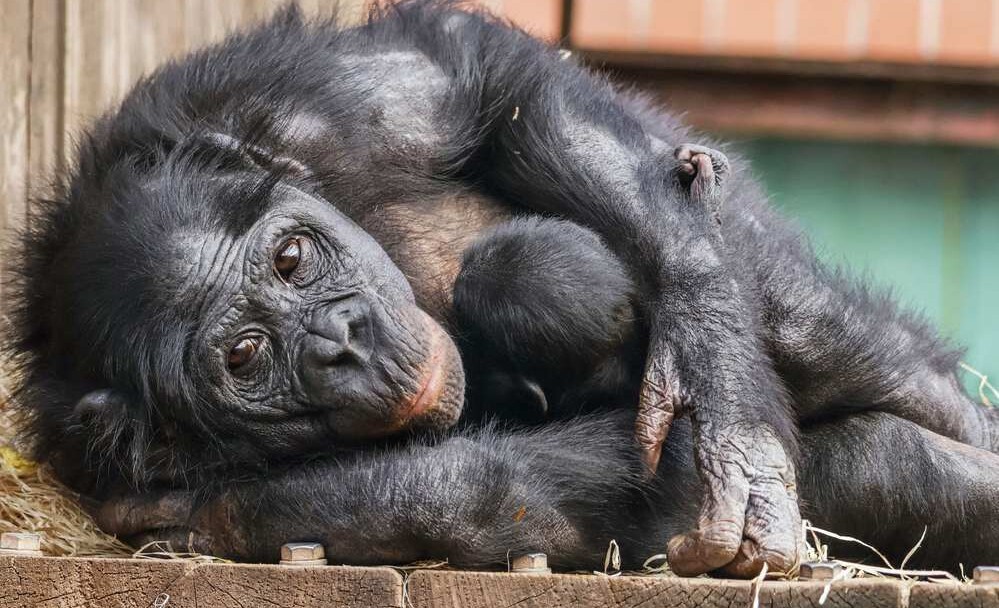
credit – Adam Kay, Twycross Zoo / SWNS

Conservationists and zookeepers are celebrating our closest living relative giving birth to a healthy baby.

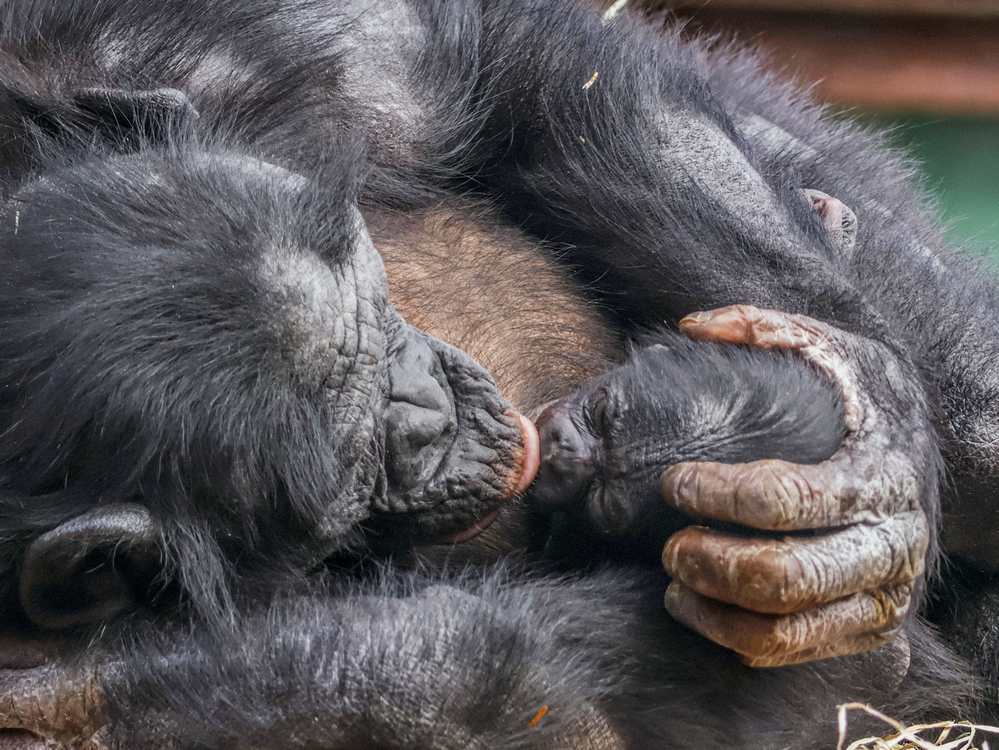
Heart-tugging photos show the bonobo mother Yuli cradling her tiny newborn after it was born at Twycross Zoo in Leicestershire last Thursday.

Experts have hailed the birth as a ‘globally significant’ moment which could help save one of the world’s rarest apes and humanity’s cousin.

Twycross Zoo is the only UK zoo to care for the species, and says the new arrival has the distinguished status as the only baby bonobo in the whole country.

The infant’s mother Yuli arrived at Twycross Zoo from Vallée Des Singes in France as part of the European-led conservation program in 2023.

“Bonobos are human’s closest living relatives, yet they remain one of the most endangered and least understood apes on Earth,” said Dr. Rebecca Biddle, chief conservation officer at Twycross Zoo. “Every birth is a true milestone and a powerful reminder of what can be achieved when zoos work together.

“As the only UK zoo caring for bonobos, here at Twycross Zoo, we are immensely proud and feel a great responsibility to play our part in protecting this incredible species,” she added.

credit – Adam Kay, Twycross Zoo / SWNS

Bonobos, which are listed as “Endangered” on the IUCN Red List of Threatened Species, are indeed as Biddle says—Homo sapiens’ closest living relatives, sharing more than 98% of our DNA.

CONSERVATION FOR THE GREATS: Camera Traps Reveal New Babies Born to World’s Rarest Great Ape Species, Sparking Hope For its Survival

In the wild, their population is said to be decreasing due to many human-caused threats such as poaching and deforestation.

Found only in the wilds of the Democratic Republic of the Congo, the bonobo is a highly unique ape due to their matriarchal society. Typically, primate troops are led by a dominant male, but bonobos are one of few primate species, and the only great ape, to live in female-led societies.

MORE APES ENTERING THE WORLD: Doctors Called in for Rare Emergency C-Section on Gorilla in the Zoo–and the Baby Pics Are Incredible

The conservation program looks after 10% of all the bonobos in Europe, and is a key part of a collaborative effort between EAZA (European Association of Zoos and Aquaria) member zoos.

At the moment, neither mother nor newborn will be visible to the public as they enjoy a critical period of bonding and nurturing.

SHARE This Amazing Photo And The Even More Amazing Species In The Lens… 

Deep Sea Divers Recover Bell, Other Artifacts From Titanic’s Sunken Sister Ship–The Britannic

credit - Greek Ministry of Culture
credit – Greek Ministry of Culture

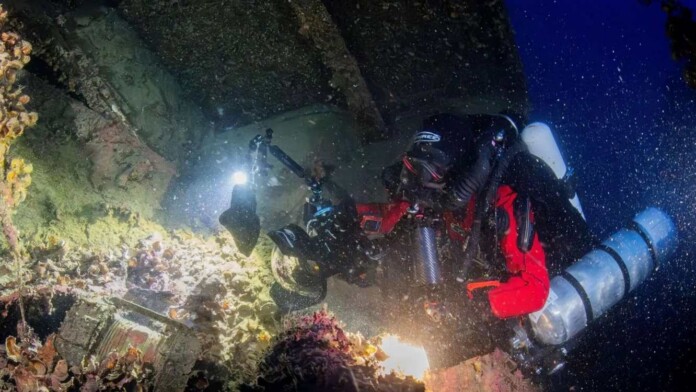
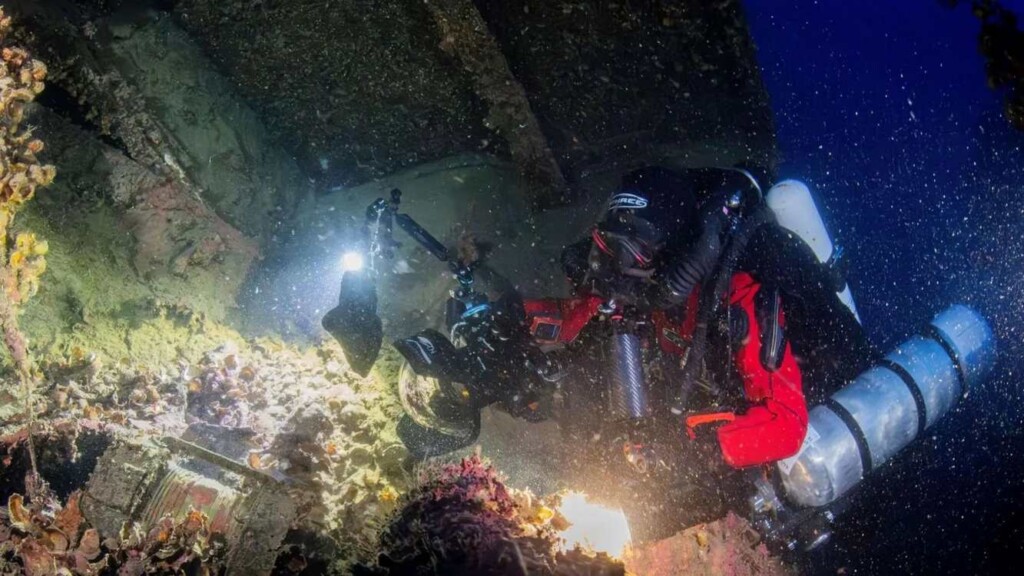
A team of deep-sea divers has recovered a slew of artifacts from the wreck of Titanic’s sister ship, a vessel sunk by a mine during the First World War.

Called the HMHS Britannic, it was one of three Olympic-class ocean liners built by the White Star Lines company in the early 20th century, with the others being HMS Titanic and HMS Olympia. 

The dive was organized by British historian Simon Mills, founder of the Britannic Foundation and owner of the wreck, and saw 11 professional divers enter the Aegean Sea in May and conduct a survey of the ship for artifacts they might recover.

Details were kept secret until last Monday when images of what was recovered were published by the Greek Ministry of Culture.

Included among the items were a porcelain wash basin, binoculars, a portside navigation lamp, tiles from Turkish baths, equipment from first and second-class cabins, and most excitingly, the lookout’s bell.

Connected to air balloons, they floated up from the depths to be secured by waiting crews who packaged them up for transfer to a conservation center in Athens.

A porcelain wash basin covered in marine life – credit Greek Ministry of Culture (2)

Once cleaned of marine organisms, they will go on display in the war section of the National Museum of Underwater Antiquities in Piraeus.

The loss of Titanic would have been a terrible one for the company’s fortunes, but was likely less than the confiscation and subsequent loss of HMHS Britannic by the British Government for use as a hospital ship in World War I.

SHIPWRECKS AND THEIR TREASURES: 

With one sunk by an iceberg, and the other by a German mine, and with several other vessels lost during the war that had also been “requisitioned” for the war effort, the company had to conduct a post-war triage until three liners obtained from Germany as war reparations were given over to White Star Lines as something approaching compensation.

The HMHS Britannic

Thankfully, and quite unlike her more famous sister ship, the sinking of Britannic claimed only 30 of the more than 1,000 souls onboard; the others escaping via an adequate number of life boats.

Today, the vessel is the largest intact passenger ship on the seabed in the world.

SHARE This Underwater Effort To Resurface The History Of This Great Liner… 

Engineering Student Turns Red Solo Cups into Stylish Sweaters That Don’t Shed Microplastics

A college engineering student is making headlines for her clothing line that spins red solo cups thrown away after fraternity parties into soft sweaters and beanie caps.

The process addresses every concern or question one might have, and is finding a second life for these hard-to-recycle cups.

Made by companies like Solo and Hefty, solo cups are a staple at American parties across the nation. God only knows how many are used and tossed every year, but many recycling facilities won’t have the equipment needed to process their plastic blend.

Enter Lauren Choi, an engineering student formerly at Johns Hopkins University, who founded the New Normal Collective after discovering a way that these cups could be turned into textiles.

She had long had an interest in sustainable fashion, but it was after she graduated in 2020 that she was able to secure grant funding to buy an extruder machine which can turn shredded plastic cups into thread. She had tried to build one of these machines herself in her parent’s garage during school years, and knew that they were the key to turning her vision into a reality.

Choi relied on two other engineering colleges to provide a non-toxic, natural material that would turn the icky, plasticy feeling thread into a soft and comfortable, knitwear-ready yarn.

Final solution ready, and missing only the machinery, Choi received further grant funding from none other than Reynold’s Consumer Products, the parent company of Hefty—one of the largest producers of plastic solo cups in America.

Her supply chain now is anchored in North Carolina and Virginia where the yarn is made from the shredded cups. It’s then shipped to a facility in Brooklyn where a 3D knitter creates the sweaters and beanies available on the New Norm’s collection in a single knit using filament yarn rather than spun yarn.

Spun yarn—typical of wool products, is made from many small threads spun together, while filament yarn is a continuous, unbroken thread. The advantage of the latter is that it prevents a major source of pollution from artificial textiles: microplastic shedding.

Every time spun-yarn made from polyester or other artificial textiles is washed, it sheds some of its threads. These in turn enter the environment as air and water pollution and represent a major contributor to the overall burden of microplastics.

Another advantage of 3D knitting is that it produces a whole garment without any fabric scraps.

“3D knitting has a lot less waste compared to traditional cut-and-sew, where many fabric scraps are wasted,” Choi told the Guardian. “Instead, our pieces are knit straight out of the machine without any seams – it’s just one full garment that doesn’t need additional sewing.”

No artificial dyes are used in the production process, as the pastel shades of yellow, green, blue, and pink, come from the cups themselves.

The Guardian reports that The New Norm product drops will occasionally sell out within hours, generating thousands in revenue. It’s encouraged Choi to seek future opportunities in the business-to-business side, and she’s now undergoing trials with several large firms who are testing the thread for strength and durability.

The sweaters retail for between $45 and $85.

WATCH how they’re made below… 

SHARE This Student’s Vision And Execution With Someone In Need Of Knitwear…

Six Baby Cheetahs Born in the Richmond Zoo’s Prolific Breeding Program – 167 Cats Since 2013 (WATCH)

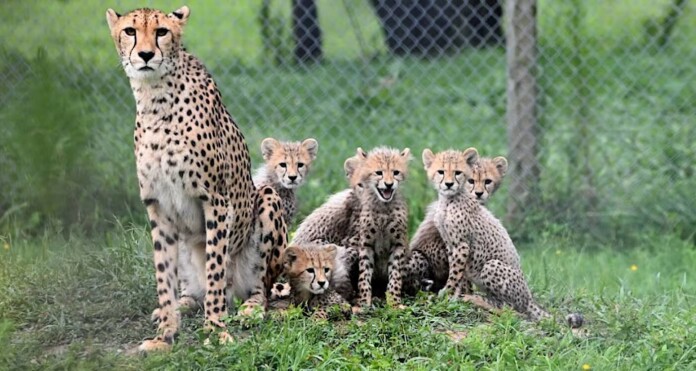
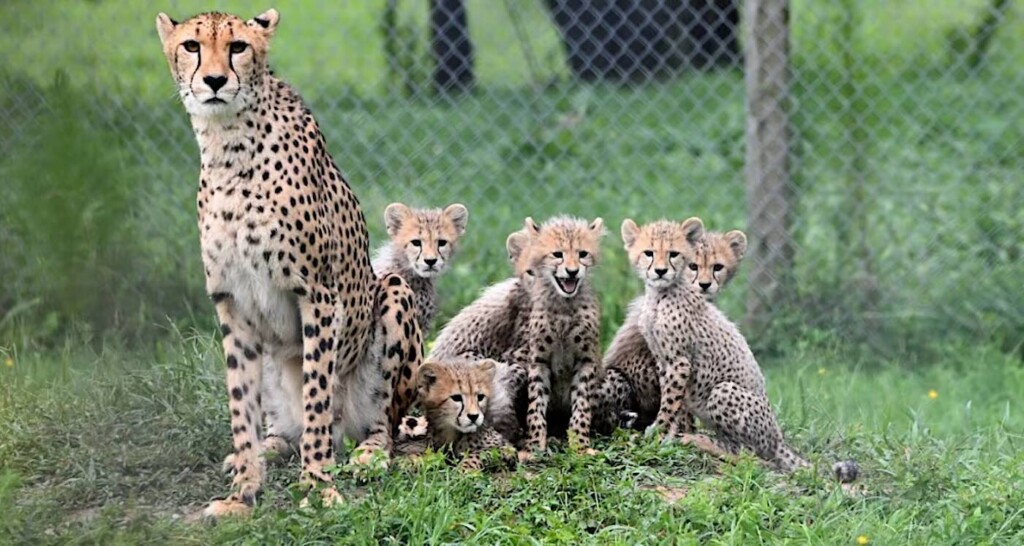
Six cheetah cubs with their mother –Courtesy of Metro Richmond Zoo

At a zoo in Richmond, a raucous litter of cheetah cubs is delighting onlookers having spent the summer months growing in secret.

One of the largest litters born at the zoo, the three-month-old cubs are hitting milestones and progressing well towards adolescence.

Named after African capitals, such as Lusaka, Kampala, and Cairo, the cubs were born in April but were kept hidden away to develop in peace through their most sensitive period with mother Zuri.

Sprinting, jumping on each other, and investigating every object in their enclosure, they seem well on their way to becoming the world’s fastest land animal.

“Some are shy; one is bold and brave — that’s Lusaka,” said Kristina Coonley, a lead zookeeper at the Metro Richmond Zoo, Virginia. “[Cairo] is always the last one out and the last one to come in.”

Though just the 99th most populated city in America, the Richmond Zoo nevertheless boasts one of the country’s most prolific and successful cheetah breeding program for purposes of conservation. Zuri’s litter of 6 takes the total number of captive-born cubs in the program’s history to 167 since 2013.

Coonley told the Washington Post that the Cheetah Conservation Center looks carefully and genetics and disposition when deciding which of their cats are suitable for breeding. Zuri is 5 years old, and has already mothered one litter. Her partner was Ramses, a 13-year-old sire of 25 other cubs.

MORE CAT CONSERVATION PROJECTS:

Though losing out on conservation column inches to the likes of the lion and tiger, cheetah are considered Vulnerable by the IUCN. With around 6,500 individuals across the whole of Africa, a relic populations in Iran, and a diminishing introduced population in India, they are the most at-risk of the African big cats because of their need for space befitting the world’s greatest sprinters.

It’s no bad thing then that the Metro Richmond Zoo has seen even bigger litters than these 6, with a resident female last year bringing 9 little mohawked babies into the world.

WATCH the cubs play with their mom below… 

SHARE These Adorable Newcomers And The News Of Their Birth… 

“I’ve never known any trouble than an hour’s reading didn’t assuage.” – Arthur Schopenhauer

Credit: Aaron Burden

Quote of the Day: “I’ve never known any trouble than an hour’s reading didn’t assuage.” – Arthur Schopenhauer

Photo by: Aaron Burden

With a new inspirational quote every day, atop the perfect photo—collected and archived on our Quote of the Day page—why not bookmark GNN.org for a daily uplift?

By Aaron Burden

Good News in History September 22

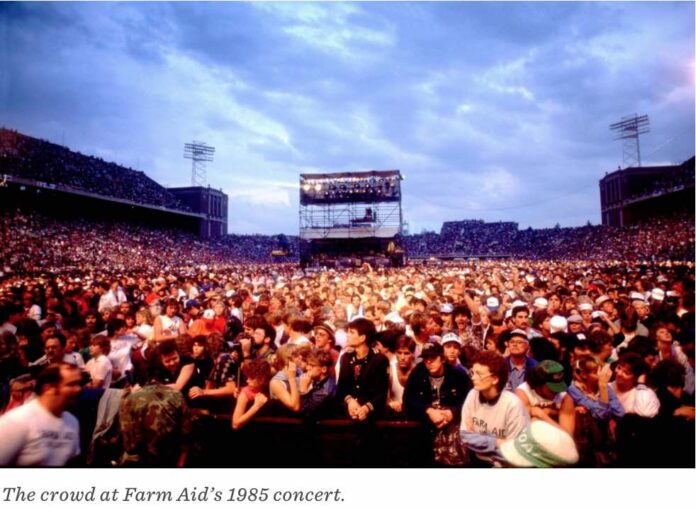
40 years ago today, the first Farm Aid benefit concert was held to raise money for family farmers in the United States. The concert was organized by Willie Nelson, John Mellencamp and Neil Young, spurred on by Bob Dylan’s comments at Live Aid earlier in that year that he hoped some of the money would help American farmers in danger of losing their farms through mortgage debt. The show at the University of Illinois’ Memorial Stadium in Champaign raised $7 million, with a crowd of 80,000 people enjoying performances by Bob Dylan, Billy Joel, B.B. King, Roy Orbison, John Fogerty, Bonnie Raitt, and Tom Petty. WATCH a little story about how it happened… (1985)

Scientists Find a Switch That Could Stop Osteoporosis, Making Bones Stronger in Old Age

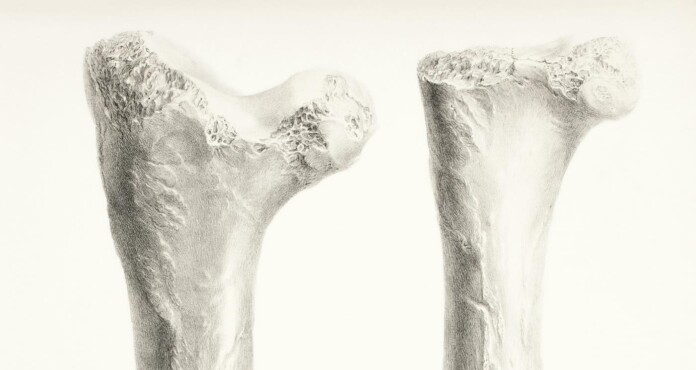
Credit: BHLNZ - Biodiversity Heritage Library NZ (public domain)
Credit: BHLNZ – Biodiversity Heritage Library NZ (public domain)

There is a high demand for safe and long-lasting medications to treat bone loss for the millions of people with osteoporosis.

Discovering new targets for drug development is therefore a key step towards better therapies.

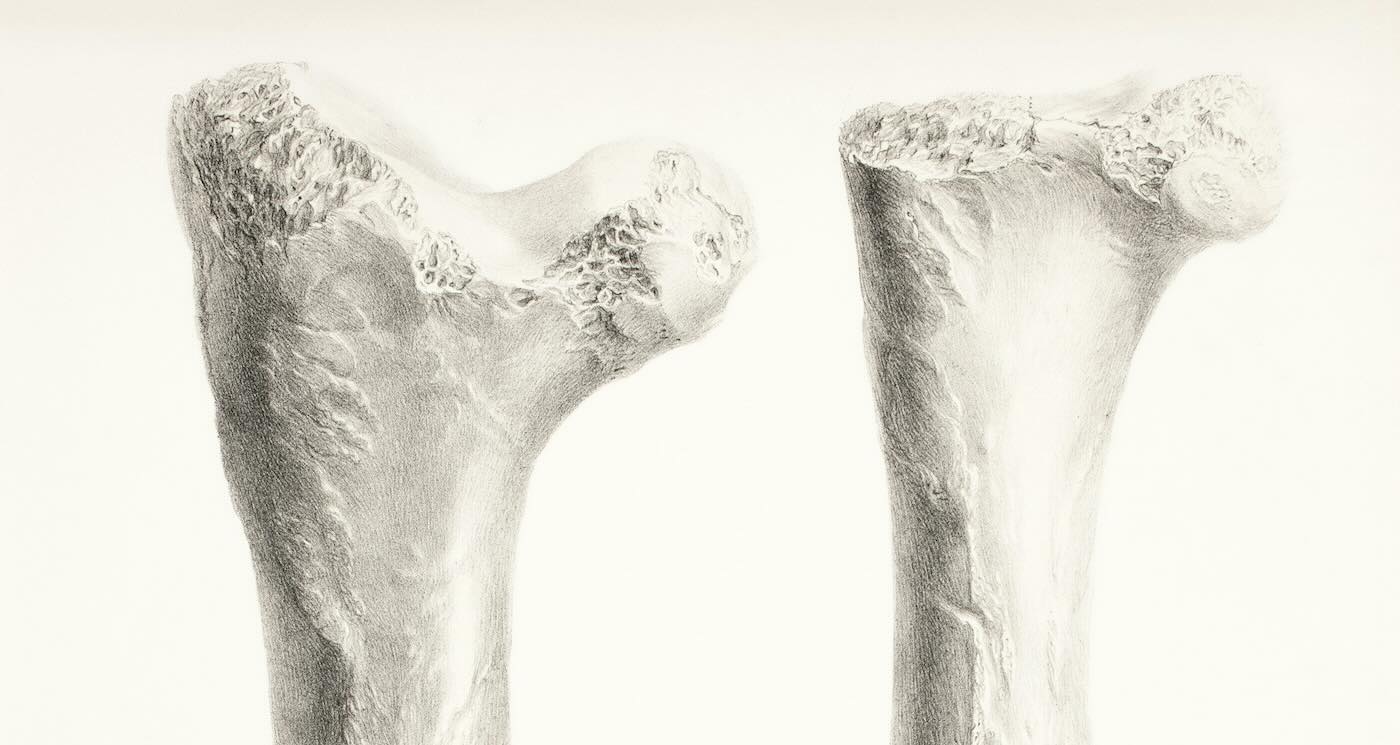
In a recent study, scientists at Leipzig University in Germany demonstrated that the G protein receptor called GPR133 plays a central role in building and maintaining healthy bone

“If this receptor is impaired by genetic changes, mice show signs of loss of bone density at an early age—similar to osteoporosis in humans,” explains Professor Ines Liebscher, lead investigator of the study published in Nature.

The team was able to significantly increase bone strength in both healthy and osteoporotic mice using the substance AP503, which was recently identified as a stimulator of GPR133.

In bone tissue, GPR133 is activated through the interaction of neighboring bone cells and mechanical strain. This triggers a signal that stimulates bone-forming cells (osteoblasts) and inhibits bone-resorbing cells (osteoclasts).

The result is stronger, more resilient bones.

In the future, it could be used both to further strengthen healthy bones and to rebuild weakened ones—for instance, in cases of osteoporosis in women going through menopause.

MORE BONE SCIENCE: Prunes Can Protect Older Women Against Osteoporosis, Says Penn State Study

Great potential for an aging population

In an earlier study, researchers at Leipzig University had already found that activation with AP503 also strengthens skeletal muscle.

“The newly demonstrated parallel strengthening of bone once again highlights the great potential this receptor holds for medical applications in an aging population,” says Dr Juliane Lehmann, lead author of the study and a researcher at the Rudolf Schönheimer Institute of Biochemistry.

CHEESE FOR THE BONES: Trendy Type of Norwegian Cheese May Stave Off Bone Thinning, Shows New Study

The Leipzig research team is already working on several follow-up projects to further investigate the role of GPR133 in the body.

Olympic Boxer Gives His Gold Medal to American Who Rightfully Beat Him Decades Ago (Watch the Tears)

It’s never too late to make amends.

Nearly 35 years after his gold medal-winning boxing match, the guilt still weighed on South Korea’s Park Si-hun.

He knew he lost in 1988, but was awarded the gold with a controversial 3-2 win over American Roy Jones Jr. at the Summer Olympics in Seoul, in front of a hometown crowd.

Most observers thought Roy Jones dominated the match.

An announcer said during the broadcast of the fight, “If he doesn’t win the gold off this, I think there’s something rotten in Korea because that was absolutely one of the most dominant things I’ve seen”.

Jones even received the Val Barker Trophy given to the best boxer in the Olympic Games. And yet, the gold medal was awarded to someone else.

“Well there it is,” another announcer said after the fight. “Park Si-hun has stolen the bout!”

Rumors circulated for years that the judges were corrupt. In 1996, documents were reportedly discovered from East Germany’s Stasi secret police that some judges were paid to favor South Korean boxers. Many people believe the East Germans did it to stay ahead of the United States in the medal rankings.

However, an International Olympic Committee Investigation a year later found no significant evidence to prove that there was a bribery scheme.

The medal remained with Park, but the guilt persisted.

Many people viewed him as a victim too, a pawn in a bribery scheme that gave him a result he didn’t request. Park retired from boxing soon after the Games—and called his life with the gold medal a nightmare.

Jones, meanwhile, grew into one of the best fighters in boxing history, perhaps using that Olympic disappointment to fuel his illustrious career. He ended up winning championships in four different weight classes and compiling an overall record of 66-10 with 47 knockouts.

The only win that seemed to elude him was the gold medal in 1988.

But finally, years later, the two boxers would meet again.

Park sought closure and traveled to Jones’ hometown in Pensacola, Florida to surprise his former Olympic rival.

That day, Jones thought he was heading to the gym for a routine interview. Instead, Park was there to hand over the medal that had been denied for 35 years.

Park said through his son, who translated, “I had the gold medal, but I wanted to give it back to you. It belongs to you.”

More than three decades of emotions erupted in Jones.

MORE OLYMPIC KINDNESS: Polish Olympian Auctions Silver Medal for Infant’s Heart Surgery, but Winning Bidder Won’t Accept It

“Wow, that is crazy,” the boxer said as he fought the tears welling in his eyes.

News of Park’s actions were shared for the first time ever on Jones’ YouTube page earlier this month—and the good deed has captivated sports fans worldwide.

Discussions are underway to turn the entire ordeal into a documentary or movie. There is simply too much inspiration and too many lessons within the feel-good story for it not to be shared.

And it’s clearly never too late to make amends.

CHECK OUT: Five Classy Olympic Moments That Should Win a Gold Medal For Inspiration

“Park lost that fight but he never lost his soul,” one commenter wrote on YouTube. “A couple of minutes like these are what life is all about. (The) man beat the game of life. Imagine the integrity he’s bestowed upon his son. Such a legendary moment for such a small clip on YouTube…”

SHARE THIS on Social Media with your gold medal friends…