












An Alaska district court judge has ruled against a coalition of logging interests looking to get their saws on Tongass National Forest’s old growth timber stands.
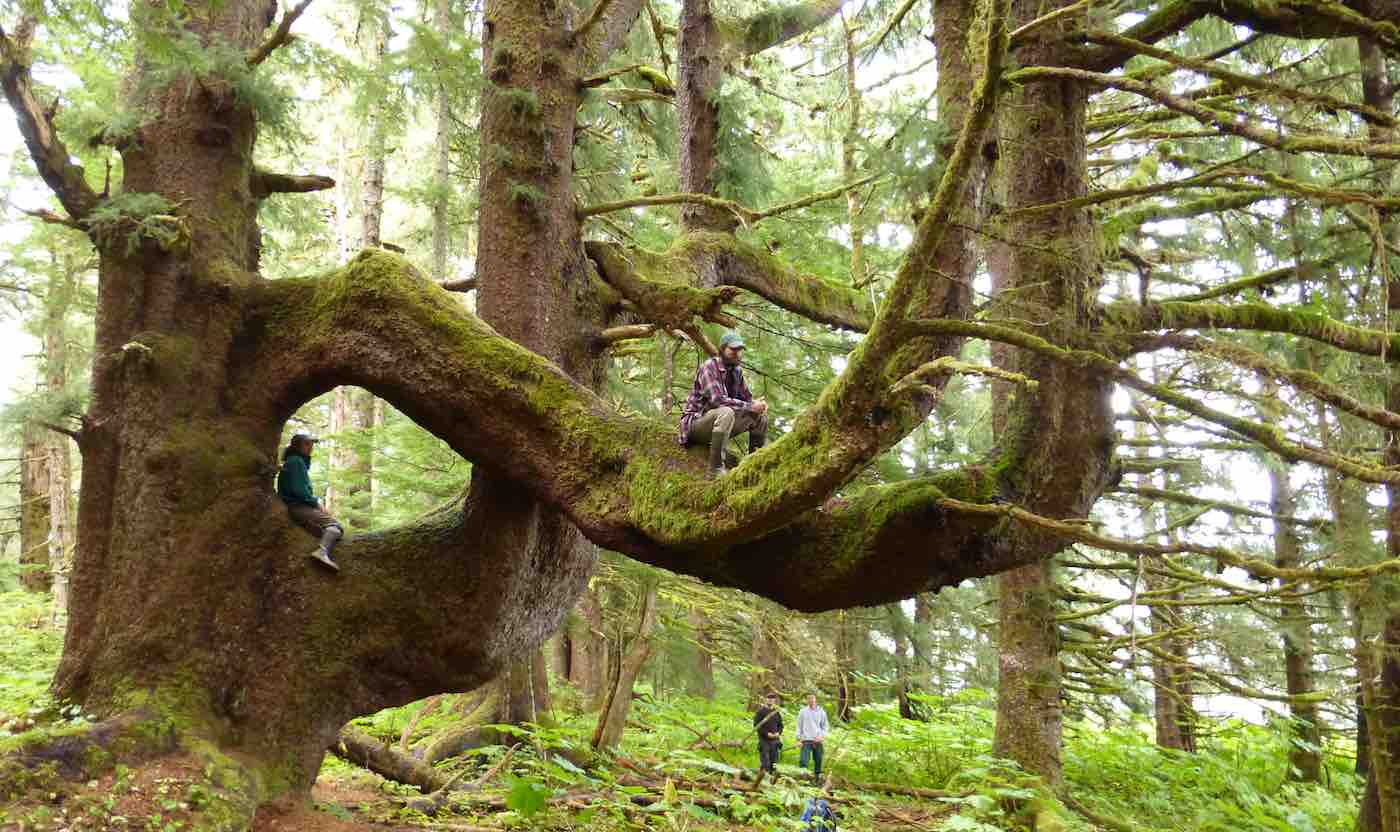
As the nation’s largest national forest, and the world’s largest temperate rainforest, Tongass acts as a superb stronghold for many species, such as the bald eagle, sperm whale, Steller’s sea lion, Chinook salmon, brown bear, mountain goat, and the Endangered Haida ermine, an all-white relative of the weasel.
The logging interests consisted of Alaska Forest Association, Viking Lumber Company, Inc., and Alcan Timber Incorporated, which together sued the US Dept. of Agriculture and its secretary, and the US Forest Service and its director, last March. Two local townships and several environmental groups joined the suit on the side of the defense.
Judge Sharon L. Gleason granted the defendants’ motion to dismiss, and did so ‘with prejudice,’ meaning that the plaintiffs can never sue the same parties for the same reasons again.
Prejudice is usually invoked in cases deemed frivolous, when the plaintiffs have improperly served legal notice, or if the judge determines that the plaintiff’s case as it was thusly brought was deceitfully put together.
Whatever the reason, it means that the old-growth forests in Tongass will remain erect for the Haida ermine, the bald eagles, and the rest of the woodland wildlife.
“This ruling is a big victory for the Tongass’ old-growth forests. I’m relieved the court squarely rejected the logging industry’s rash attempt to force large-scale logging,” Marlee Goska, the Center for Biological Diversity’s Alaska attorney, said in an email to GearJunkie.
“This lawsuit had no legal basis, and the court was right to dismiss the case outright. We need to leave the Tongass standing for the sake of wildlife, climate, and local communities.”
The lawsuit revolved around two regulations passed by the USDA in 2016 and 2021, and a 1990 law called the Tongass Timber Reform Act (TTRA). The TTRA lays out a requirement to provide the timber industry with areas to log in order to meet “market demand.”
ALSO CHECK OUT: Thousands of Acres of Koala Haven Forest to Come Under Logging Bans in New South Wales
The 2016 Forest Plan, contingent on the TTRA’s requirement, outlined that logging interests could buy 46 million board feet of timber from Tongass, 34 million of which could come from old growth and 12 million from young growth. Then, in 2021, the USDA announced the “Southeast Alaska Sustainability Strategy,” (SASS) which provided for an end to old-growth logging in Tongass except for tribal reasons.
The plaintiffs argued the totals able to be logged over the last few years have been far below 34 million board feet, and also far below “market demand.” They also claimed that since the SASS was a ruling, it should have undergone a comment period, which it didn’t.
The defendants argued that neither the 2016 Forest Plan nor the TTRA set out quotas or requirements, but merely outlined a broad objective as well as an upper limit. Furthermore, they argued that the SASS was simply a continuation on the 2016 Forest Plan, not a whole new ruling. Judge Gleason sided with this argument, and agreed that the 2016 plan’s language does not set up a goal of logging 34 million board feet of old-growth trees, but rather a cap.
MORE GOOD EARTH RULINGS: Government Saves Rare Old-Growth Trees From Further Logging on 10,000 Sq-Miles of BC Forest
She dismissed the case with prejudice. In the preparatory materials on the day when Judge Gleason heard the arguments for the request to dismiss the case, the Center for Biological Diversity quoted a Viking Lumber company officer stating in a company release that absent sales of new old-growth lumber, the company will likely go bankrupt.
SHARE Stunning Trees Like This One To Be Protected From Logging…