












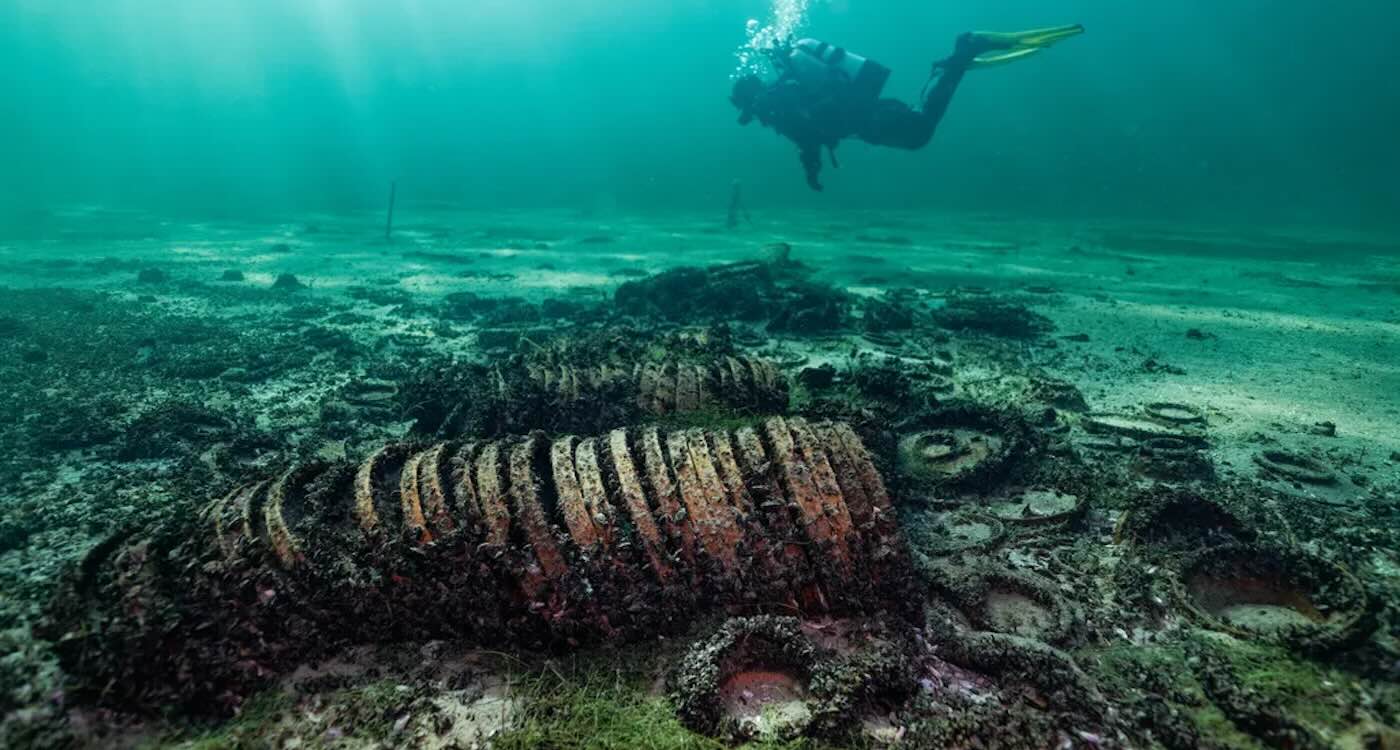
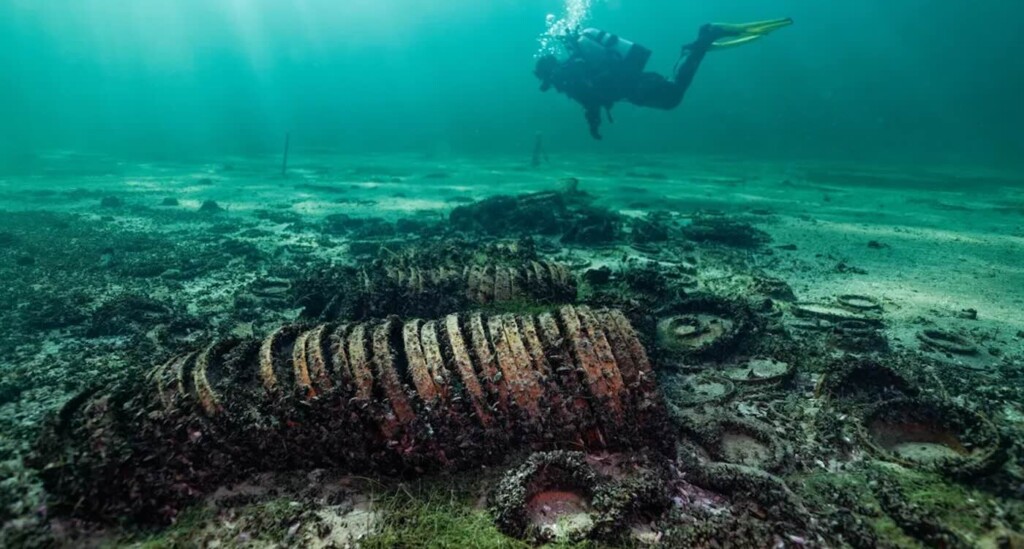
In November 2024, an exceptional shipwreck was discovered at the bottom of Lake Neuchâtel, Switzerland.
It contained an exquisitely preserved cachet of pottery, weapons, tools, and components for horse-drawn transport that date back 2,000 years.
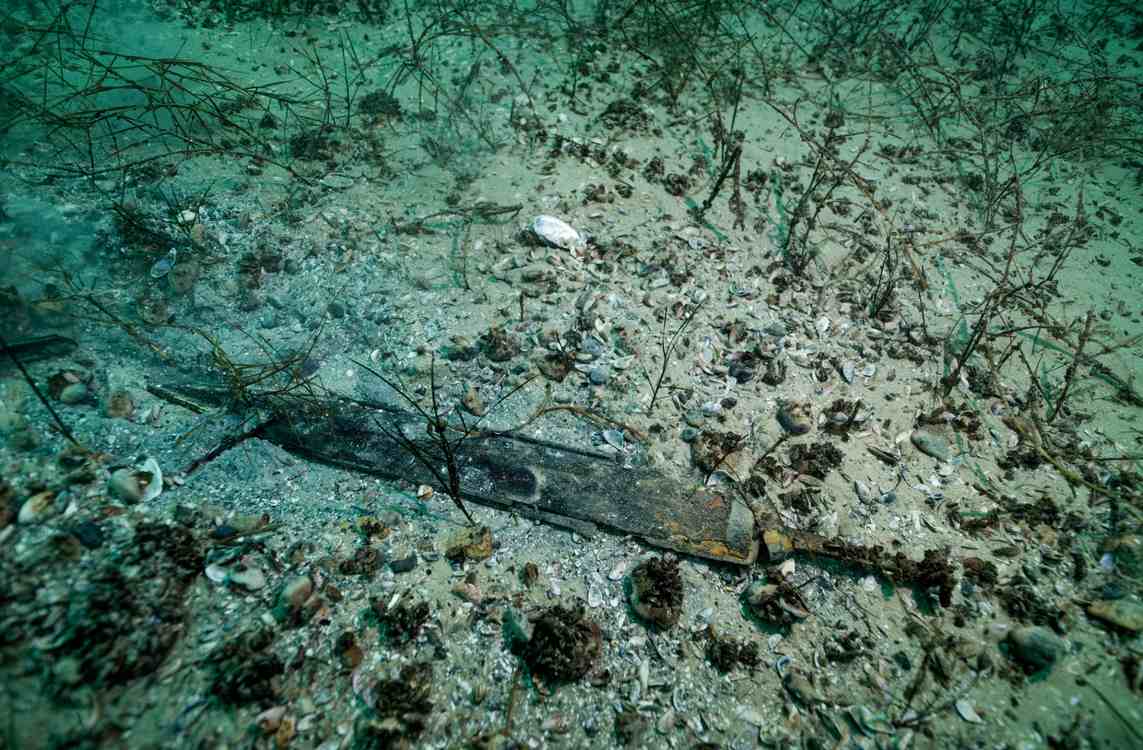
Archaeologists believe it was a civilian merchant ship crossing the lake on a supply mission to a Roman legionary camp on the northern shore, but the cause of the wreck—given the absence of the boat itself—remains a tantalizing mystery.
“At the time, the loss must have been immense,” notes a statement from the Octopus Foundation, a nonprofit collaborating with the Cantonal Archaeology Office of Neuchâtel, which conducted the dives down to the lakebed.
The discovery in 2024 was made via drone surveys examining the details of the 84-square-mile lakebed. While initial surveys indicated the cargo was in good condition, there was a fear that it could become susceptible to looters, so a decision was made to recover it.
The first excavations were conducted in March of last year and continued until some 1,200 objects were recovered. Many of these were ceramics—dishes, plates, cups, and bowls produced regionally across the Swiss Plateau. Olive oil amphorae, imported from Spain, showed the extent of long-distance transport of goods in Roman times.
Metal tools including a pickaxe, horse cart/chariot components which even included wheels, and three swords, one still in its leather scabbard, were also found. A style of brooch known to be worn during the Imperial period of Rome, called a fibula, and a plank of wood, helped corroborate the year in which the cargo sank.
MORE GREAT SHIPWRECKS: Shipwrecked Cargo of Roman Lead Bars Provides a Chance to Observe Dark Matter on Earth
Based on the breadth of items, the Octopus Foundation wrote that the archaeologists’ working hypothesis is that the cargo was destined for the 13th Legion’s camp at what was then called Vindonissa along the Aare River between 16 and 45 CE.
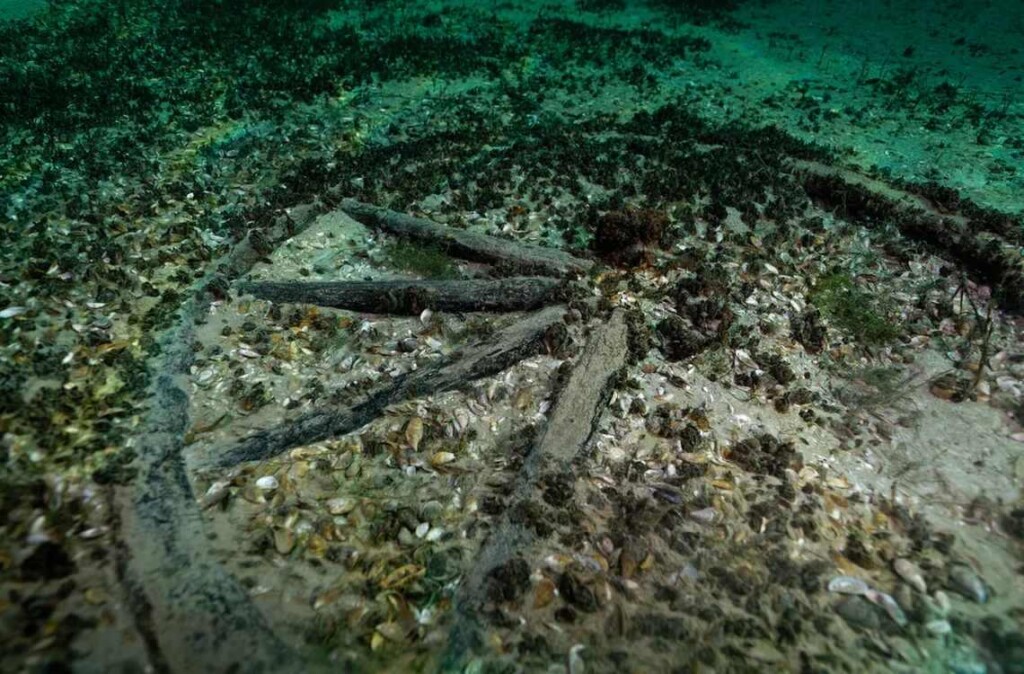
The area was patrolled by the legion, whose job was to prevent hostile Germanic tribes from moving southward from Germany. The berth of the vessel might well have been Eburodunum, an ancient port at the southern end of the lake that is now called Yverdon-les-Bains, Smithsonian Magazine reports.
SWISS STORIES: 4 Sisters Invent Electric Tractor with Mom and Dad and it’s Selling in 5 Countries
Perhaps a strong gust of wind, as can manifest all-unexpectedly on Alpine lakes, caught the sailors unawares so that their goods slipped out of their moorings and into the water.
The Canton of Neuchâtel described the cargo as an “exceptional discovery, unique in Switzerland and in the inland waters north of the Alps,” and wrote that the items are destined for display at the Museum of Archeology of Neuchâtel once proper preservation work is carried out on the waterlogged artifacts.
SHARE This Fascinating Discovery From The Early Roman Frontier…