













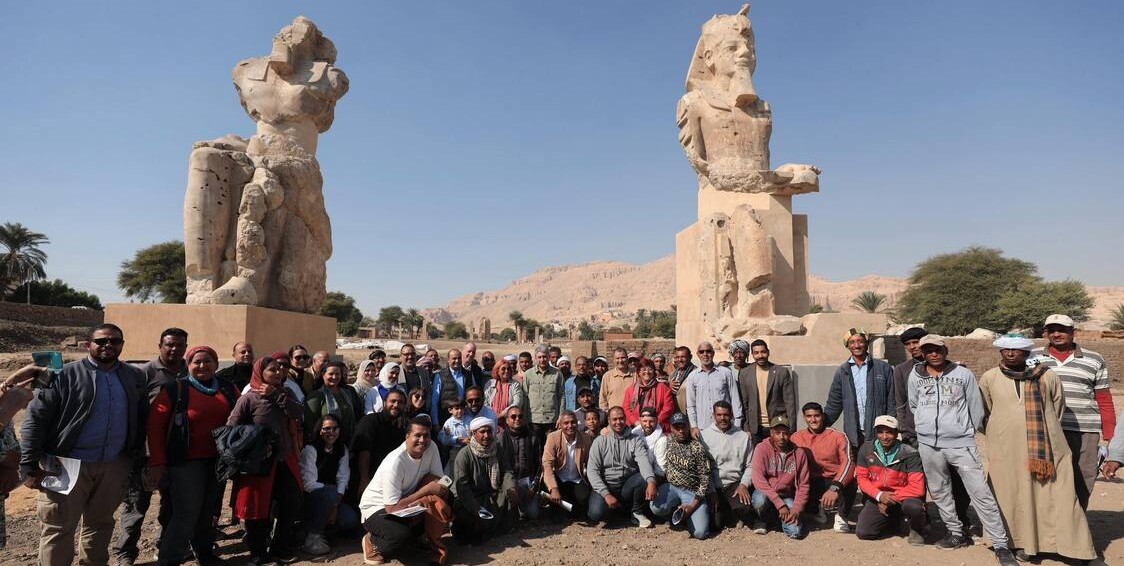
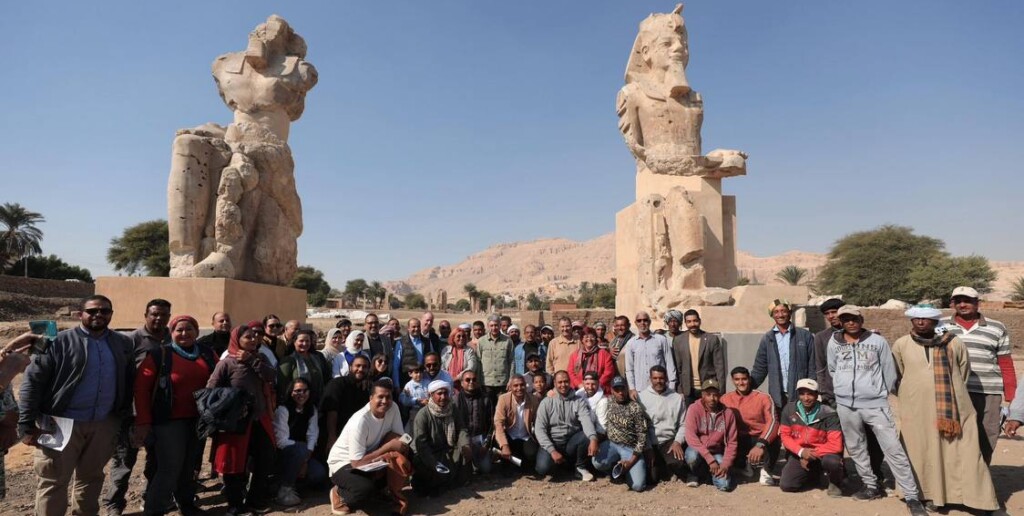
On Sunday, Egyptian authorities unveiled the completed restoration works on two colossal alabaster statues of a notable Egyptian king.
Located in Luxor, and standing over 30 feet tall, the two statues were destroyed in an earthquake 1,200 years ago, making their reconstitution an awfully long time coming.
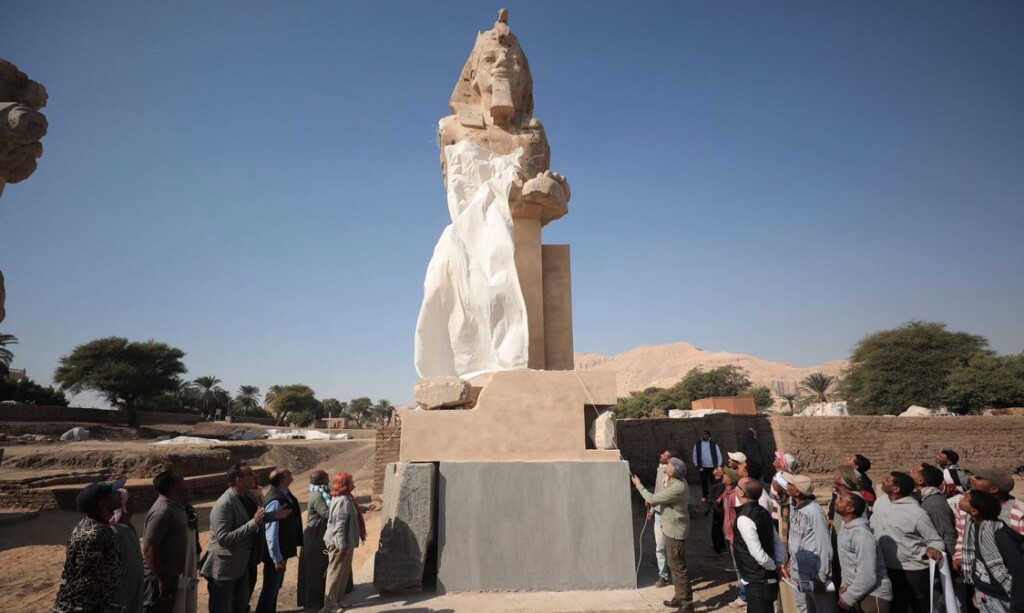
King Amenhotep III (spellings may vary) ruled between as early as 1,388 BCE to as late as 1349, and presided over one of several zeniths in ancient Egyptian society. The 9th Pharoah of the Eighteenth Dynasty, he was worshipped as a deity during his lifetime.
His impressive mortuary temple on the Western bank of the Nile was guarded over by two enormous depictions, called the Colossi of Memnon. They were hewn out of Egyptian alabaster from the quarries of Hatnub, in Middle Egypt, and depict Amenhotep looking to the east and wearing a royal/godlike crown called the nemes headdress.
In the late 1990s, reports Africa News, an Egyptian-German mission chaired by German Egyptologist Hourig Sourouzian was working on the temple site and began to investigate the potential for reassembling the alabaster rubble into its original forms.
The works resulted in the discovery, restoration, documentation, reinstallation and lifting of many statues that existed in the temple, as well as some of its architectural elements—apart from the Colossi.
MORE EGYPTIAN MONUMENTS:
- Ancient Tombs More Than 3,000 Years Old Unearthed in Egypt’s Luxor
- Cleaning a Millennium of Sand and Soot Egyptologists Reveal Ancient Creation Myth in Exquisite Artwork
- Holland Will Return a Looted 3,500-Year-Old Stone Bust Following Lavish Egyptian Museum Opening
The right-side statue’s torso and head are more complete than the left-hand side statue, which in turn has both of the legs the right-side statue is missing. The right side has an almost complete face, and even the serpent which crowned the nemes headdress over the forehead has survived through the ages.
The Secretary General of the Supreme Archaeological Council emphasized in a statement that all statue works were done according to the latest scientific methods and international standards approved in the field of archaeological restoration and the use of materials consistent with the nature of the archaeological stone, both ensuring their long-term sustainability and historical integrity.
SHARE This Brilliant Reason To Go To Luxor With Your Friends…