














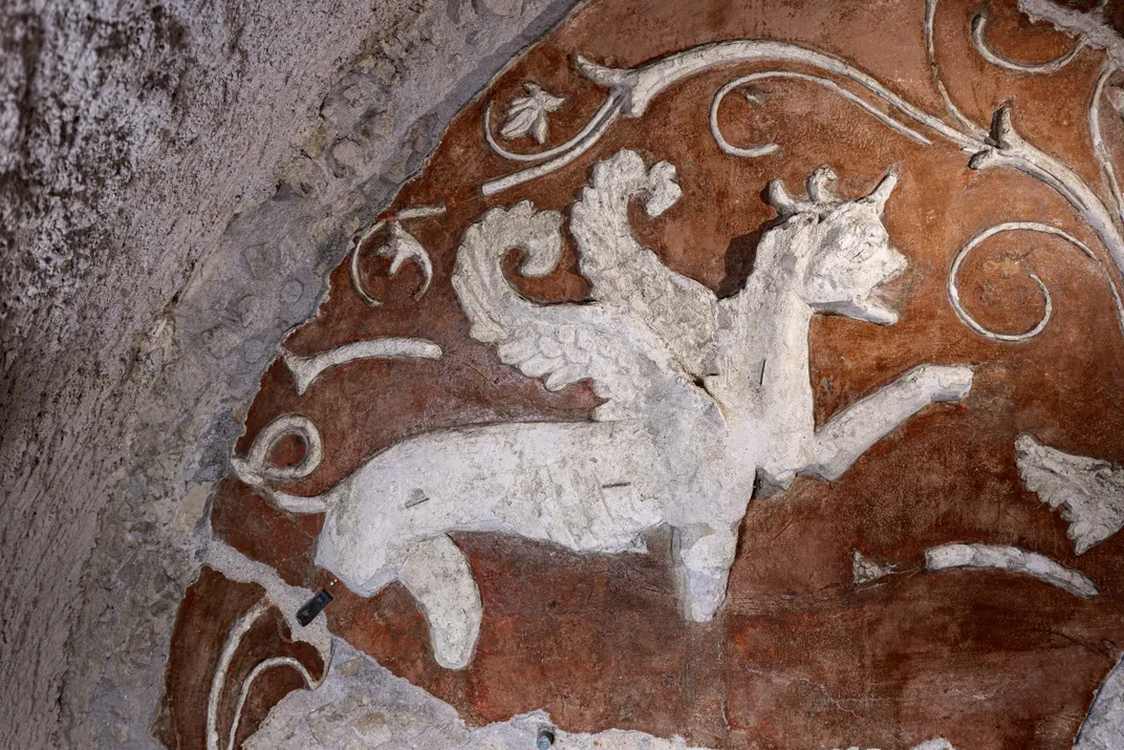
In a bid to combat overtourism in the Eternal City, the Colosseum Archaeological Park is allowing visitors to virtually access the House of Griffins, the remains of an elite mansion which though well-documented has always been closed to visitors.
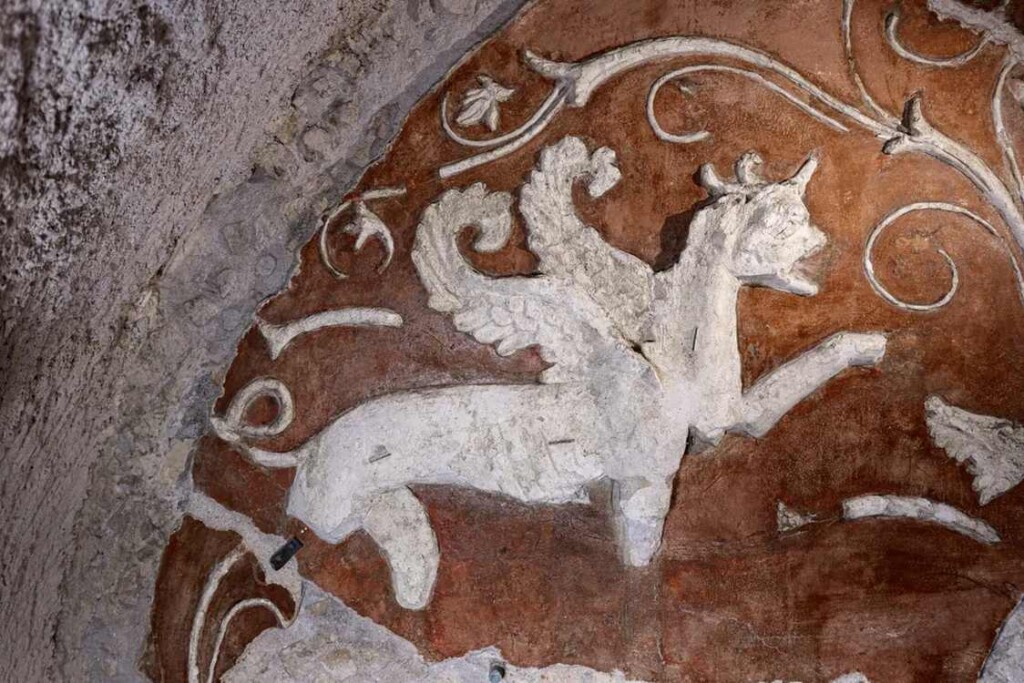
The House of Griffins, thusly named for a pair of white stucco griffins decorating an internal portico, was once the residence of a patrician-class Roman from the Republican era.
It was located on the Palatine Hill, the city’s top zip code for wealthy elite, but was demolished and buried to make room for Emperor Domitian’s palace.
The twist of fate was that in burying the bottom floors, the Romans preserved it to an exceptional degree, allowing us to enjoy its artistry and opulence today.
But buried under soil for so long, the wall-to-wall, floor-to-ceiling frescoes are sensitive to moisture and other environmental contaminants. This fact made the House of Griffins a haunt only of researchers.
But with planners seeking to draw visitors away from the most popular attractions, the mansion is now opening to the public for the very first time—via a guide with a smartphone mounted on their head.
“The Colosseum Archaeological Park thus expands its cultural offerings, making accessible a previously invisible, yet well-known and documented, site,” the Colosseum Archaeological Park’s director Simone Quilici said in a statement translated from Italian.
“This achievement is made possible by the integration of archaeology and technology, which is increasingly destined to become the standard.”
A tour guide equipped with a head-mounted smartphone will walk through the space and provide live narration. Above, up to 12 people will be able to watch the tour from a vestibule near the site.
MORE ROMAN ARCHEOLOGY: This 2,300-year-old Mosaic Made of Shells and Coral Has Just Been Found Buried Under Rome
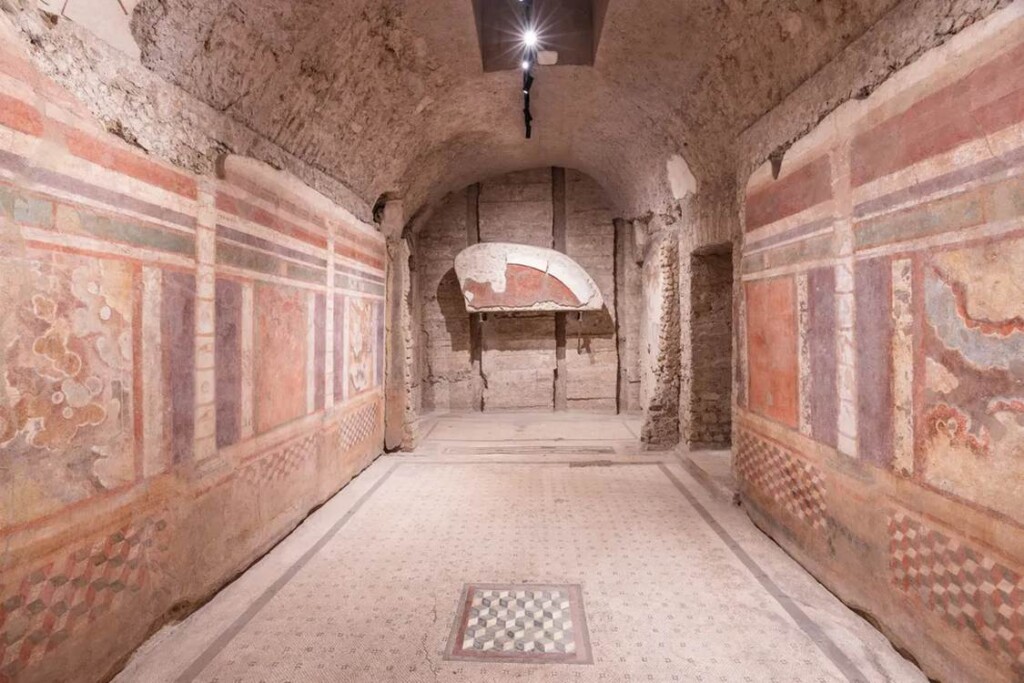
The building was constructed between the 1st and 2nd centuries BCE, where an unknown owner feathered for himself a charming residence among Rome’s elite. It was discovered in the 20th century by archaeologist Giacomo Boni, whose excavations uncovered 8 now-subterranean rooms accessible via a stairwell past an atrium and baths.
Therewithin, colorful mosaics coat the floors, while frescoes cover the walls. The farthest surviving chamber includes green marble-tiled floors and even mirrors. Some of the artworks seem to reminisce of a southern city under the shadow of a mountain: Pompeii.
MORE STORIES LIKE THIS: Hall of Peacock Frescoes Restored at Pompeii Villa Belonging to Emperor Nero’s Wife
Does this mean that the owner himself was a southerner, or maybe just that the artist was?
Whatever the identify of the owner, the top half of his home would eventually be demolished to make room for the palace of Emperor Domitian, close to 200, or even 300 years after the Griffin House was built.
SHARE This Great New Attraction From The Heart Of Rome…