













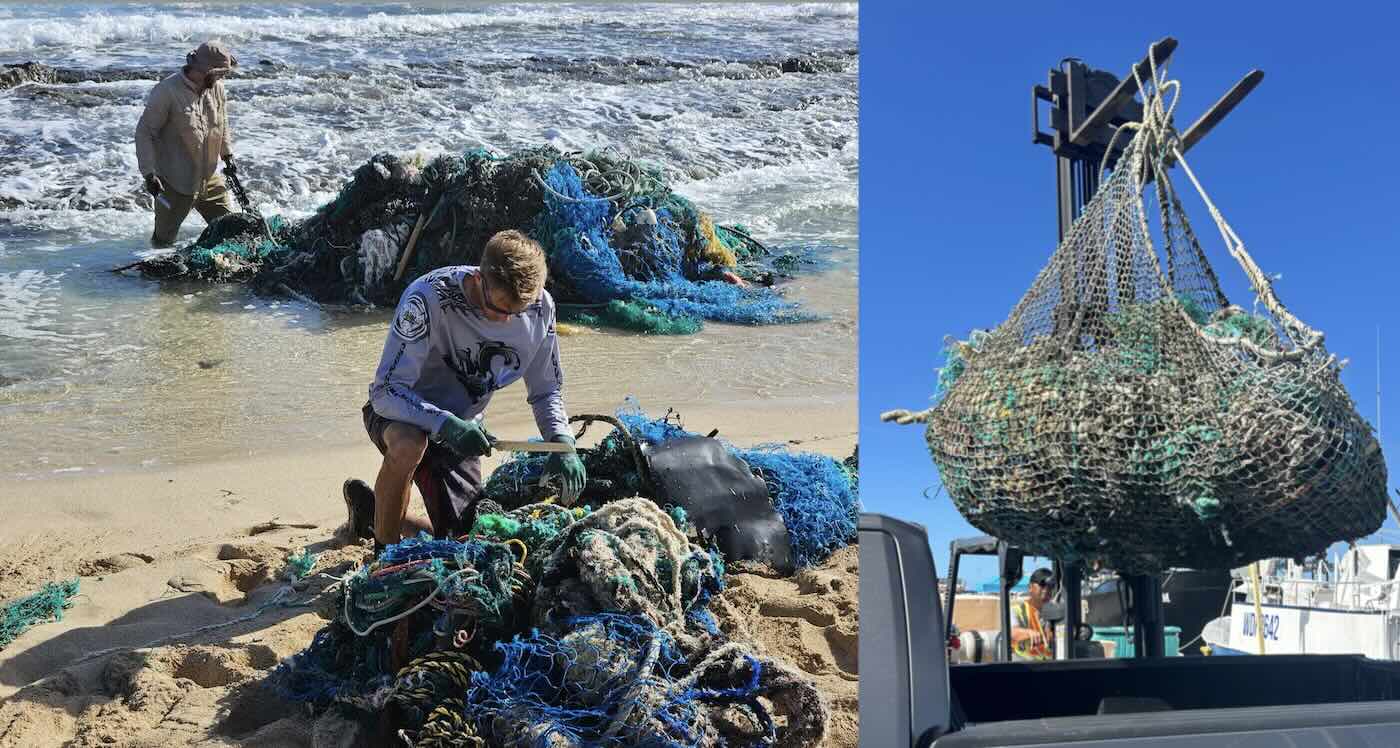
In just over 3 years, Hawaiʻi Pacific University’s “Bounty Project” has removed over 185,000 pounds (84 metric tons) of derelict fishing gear from the North Pacific Ocean by turning commercial fishing trips into opportunities for ocean cleanup.
By pulling nets, lines, and floats out of the water before they can drift into reefs, shorelines, or threaten endangered marine wildlife, the Bounty Project is one of only 3 known efforts to remove debris in the distant North Pacific Garbage Patch.
The Bounty Project was organized by the University’s Center for Marine Debris Research (HPU CMDR) and launched in November, 2022, according to a novel, straightforward idea: position the fishermen already working on the ocean at the center of the solution.
It may be that certain irresponsible fishermen are responsible for the “ghost gear” that can do so much harm to marine life, but in economics, incentives matter.
Through partnerships with the Hawaiʻi Longline Association and the Hawaiʻi Department of Land and Natural Resources, eligible commercial fishermen are compensated to recover derelict gear during routine fishing activity, so removal occurs at sea, not after debris had already reached the shore.
“It is incredible that we are now approaching 200,000 pounds of gear removed from the ocean through this project,” says HPU CMDR Project Manager Katie Stevens in a statement, “and it has been great to see the enthusiasm and engagement of the commercial fishers as stewards of the ocean environment.”
Supported through a 2022 award from the National Oceanic and Atmospheric Administration (NOAA) Marine Debris Program, with Ocean Conservancy providing matching funds, the Bounty Project has helped scale up removals and strengthen the Project’s recovery system and partnerships.
“This project stands out for its innovative approach, partnering with commercial fishers toward a solution. Compensating those already on the water to remove derelict fishing gear, maximizes both efficiency and environmental benefit,” shared Mark Manuel, NOAA Marine Debris Program’s Pacific Islands Region Coordinator.
77 commercial fishermen conducted more than 690 ghost gear seizures, with the objects taken ashore either for reuse, recycling, energy recovery, or responsible disposal.
Participating non-longline fishermen removed gear within 12 hours of first detection 88% of the time, helping prevent debris from repeatedly snagging and dragging across sensitive habitat.
ONE SCIENTIST’S BRILLIANT SOLUTION: Washed up Hi-Tech Tracker Buoys Brilliantly Redeployed to Protect Turtles from ‘Ghost Nets’
The Project included monthly surveillance of sensitive reef habitats, including Kāneʻohe Bay, supporting rapid-response recovery where derelict gear poses immediate risk.
“The financial reward has created friendly competition and results in a very rapid response to get the nets off of reefs to give the corals a fighting chance of survival,” commented Hank Lynch, a fisherman who participated in the project.
“When the nets are too large, we call on the other bounty fishers for help and split the reward. The payment helps to diversify the income of commercial fishers and supports maintenance of our vessels so we have the capacity to continue this work.”
MORE STORIES LIKE THIS:
- Fishermen Getting Paid to Collect Plastic Trash at Sea, As Indonesia Slashes Pollution
- A Fisherman’s Underwater Sculptures Have Stopped Illegal Trawling – Bringing Art and Biodiversity Back to Italian Bay
While most of the equipment is shredded and incinerated, 2,323 pounds of recovered gear were shredded and recycled into a Hawaiʻi Department of Transportation experimental pavement project in ʻEwa Beach called “Nets-to-Roads.” Some recovered material has also been stored for additional recycling research.
To sustain and expand this work, HPU CMDR is seeking support in multiple ways to keep removal efforts moving, strengthen rapid-response recovery in sensitive reef areas, and advance solutions that prevent ghost gear from entering the ocean in the first place. Interested parties are encouraged to contact Director of the HPU CMDR, Jennifer Lynch, Ph.D.
SHARE This Inspiring Movement In Ocean Cleanup With Your Friends…