











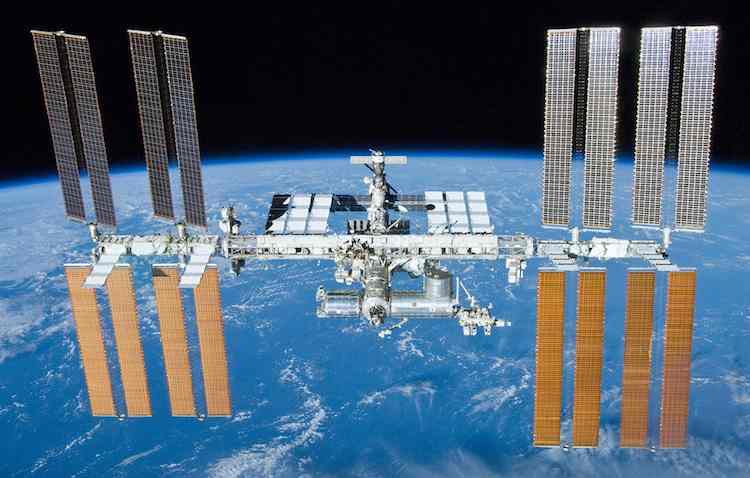
The reproductive spores of a moss species were able to somehow survive the vacuum of space during a 9-month stint outside the International Space Station.
In the immortal words of Jeff Goldblum, life, uh, finds a way.
Physcomitrella patens is known as a hardy pioneer species of spreading moss that readily cultivates on muddy ground.
Scientists looking to test the boundaries of the plant’s resilience exposed the moss’ spores to a variety of extreme, space-like conditions in laboratory settings, including to a deep-freeze environment without oxygen, and another bathed in ultraviolet radiation.
Having demonstrated resilience even in the face of these lethal conditions, the team then sent the moss up to the ISS onboard the Cygnus NG-17 spacecraft. Once there, astronauts stuck containers of the spores in a sample holder on the exterior hull of the station and left them there for 9 months.
Compared to a germination rate of 97% on Earth, the space-abused spores returned to Earth and reproduced 86% of the time.
“If such spores can endure long-term exposure during interplanetary travel and then successfully revive upon rehydration and warming, they could one day contribute to establishing basic ecosystems beyond Earth,” Dr. Tomomichi Fujita, the lead author of the study, from Hokkaido University in Japan, said in a statement.
LIFE ABOARD THE ISS: Artwork That Can Exist Only in Space Delights Everyone Aboard the International Space Station–LOOK
Dr. Fujita said that being able to tolerate these conditions and reproduce could put moss squarely in the astronaut’s future toolkit when exploring other bodies.
“While moss may not be on the menu, its resilience offers insights into developing sustainable life-support systems in space. Mosses could help with oxygen generation, humidity control or even soil formation.”
MIRACLE MOSSES: Moss is So Unique it’s Acted Like Fingerprints to Help Solve a Dozen Crimes
By contrast, a human wouldn’t last much longer than a minute beyond the pressurized, oxygenated walls of the ISS. Within 15 seconds, being both unable to breathe and unable to hold one’s breath, a human would lose consciousness.
Dr. Fujita’s study isn’t the first that has investigated whether plant material can survive space to reproduce. Some seeds have also been tested outside the ISS and shown this ability.
SHARE This Idea Of Space Moss With Your Friends Who Love That Sort Of Thing…