














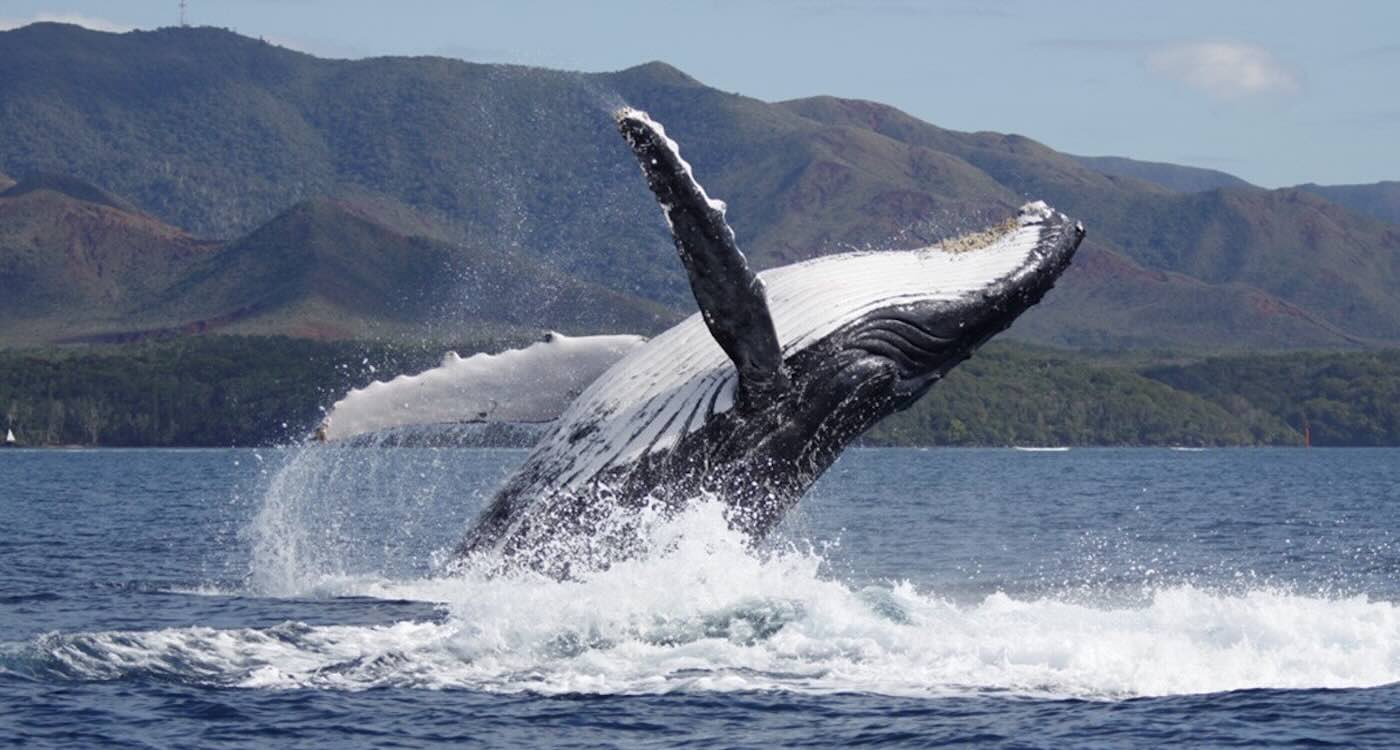
Older male whales are more successful at mating than their younger rivals because they are better singers, suggests new research.
The older singing whales are increasingly successful at birthing offspring compared to younger males, with the findings suggesting that the humpbacks may need time to learn and refine their singing and competitive tactics—giving experienced males a clear advantage.
Researchers believe that as the whale population recovers after centuries of being hunted, females may also have become more selective, which could lead to greater success among males with favorable traits or the strongest performance.
The international study, led by the Sea Mammal Research Unit at the University of St. Andrews in Scotland, showed that the role of age in male humpback whale reproduction has changed as their numbers grow.
Whaling drove many species to the brink of extinction, but scientists say its legacy runs deeper than just a drastic decline in numbers.
Decades after commercial whaling ended, researchers found its impacts continue to shape whale populations—influencing which males most often reproduce.
The study, published in the journal Current Biology, assessed two decades of data from humpback whales breeding in New Caledonia in the South Pacific.
They found that during the early years of recovery, the population was dominated by young males. But, over time, as the overall population increased, the age structure shifted: When older individuals became more common, they became increasingly successful at siring offspring, compared to younger males.
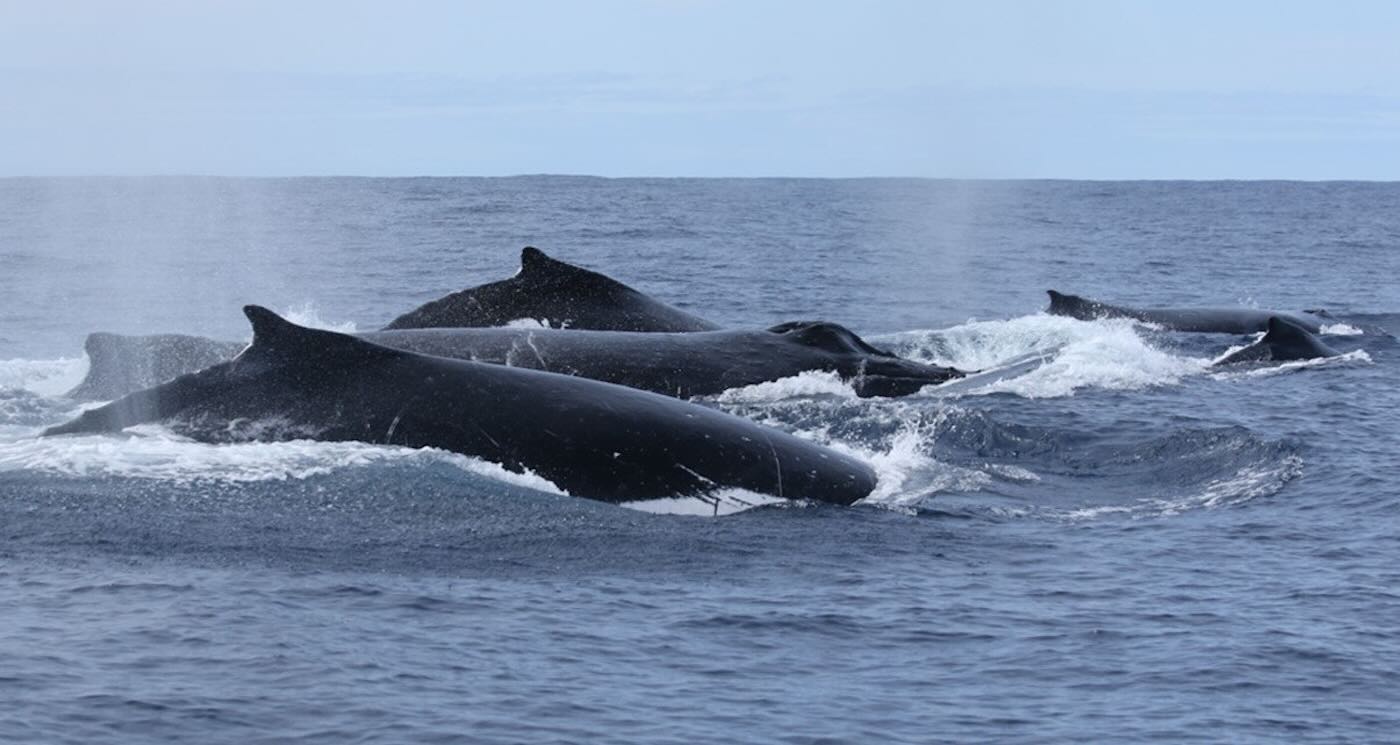
Humpback whales have never been observed mating in the wild, and so ‘who’ is fathering a calf remained largely unknown, until now.
Drawing on long-term monitoring conducted by the NGO Opération Cétacés, the research team analyzed changes in age structure, behavior, and paternity in male whales.
The team applied genetic analysis to identify paternity—and used an ‘epigenetic molecular clock’ to estimate the age of individual whales—all from just a small piece of whale skin.
Humpback whales have undergone a remarkable comeback in recent years, and, in fact, populations are now well above pre-whaling levels in Australia. It now seems behavior is also evolving.
The most elaborate songs in the animal kingdom
Male humpback whales are famous for producing some of the most elaborate songs in the animal kingdom. Their powerful vocal displays can often be heard far across breeding grounds.
AMAZING: Humpbacks Are Singing More: Number of Songs Has Doubled as Food Sources Became More Abundant
Males may also escort females or engage in intense physical competition with rival males.
“As the population recovered, there were more older males than expected singing, escorting females, and successfully fathering calves compared to younger animals,” said senior author Dr. Ellen Garland, of the Sea Mammal Research Unit.
The study’s lead author, Dr. Franca Eichenberger, also from the Sea Mammal Research Unit, said new technology is allowing new insights.
“It is only now, as whale populations recover and new analytical tools become available, that we are beginning to understand how far-reaching the consequences of whaling truly are.”
MORE WHALE TALES:
• In World First, Scientists Share What Was Almost Certainly a Conversation with a Humpback Whale
• Kayaker Singing in Hopes of Attracting Beluga Whales Never Imagined They Were Actually Listening (WATCH)
“The impacts extend beyond population size—they shape behavior, competition, and reproduction. Virtually all populations of whales have changed due to whaling; our work shows that they continue to change as they recover.
“Now is the time we can learn so much more about their behavior and life history. We just need to keep looking.”
CHEER ON OLDER MALES By Sharing The Surprising Research on Social Media…