












All News - Page 110 of 1714 - Good News Network
Home Blog Page 110

World’s Smallest Pacemaker is Made for Newborns, Activated by Light, and Requires No Surgery

Worlds smallest pacemaker – Credit: John Rogers / Northwestern University press release
World’s smallest pacemaker next to a grain of rice – Credit: John Rogers / Northwestern University press release

Northwestern University engineers have developed a pacemaker so small that it can fit inside the tip of a syringe and be non-invasively injected into the body, according to a new study published in Nature.

Although it can work with hearts of all sizes, the pacemaker is particularly well-suited to the tiny, fragile hearts of newborn babies with congenital heart defects.

A pacemaker is an implantable device that helps maintain an even heart rate, either because the heart’s natural cardiac pacemaker provides an inadequate or irregular heartbeat, or because there is a block in the heart’s electrical conduction system.

Smaller than a single grain of rice, the pacemaker is paired with a small, soft, flexible, wireless, wearable device that mounts onto a patient’s chest to control pacing. When the wearable device detects an irregular heartbeat, it automatically shines a light to activate the pacemaker.

These short light pulses, which penetrate through the patient’s skin, breastbone, and muscles, control the pacing.

Designed for patients who only need temporary pacing, the pacemaker simply dissolves after it’s no longer needed. All the pacemaker’s components are biocompatible, so they naturally dissolve into the body’s biofluids, bypassing the need for surgical extraction.

The paper demonstrates the device’s efficacy across a series of large and small animal models as well as human hearts from deceased organ donors.

“We have developed what is, to our knowledge, the world’s smallest pacemaker,” said John A. Rogers, PhD, professor of Neurological Surgery, Dermatology, and in the McCormick School of Engineering, who led the device development.

“There’s a crucial need for temporary pacemakers in the context of pediatric heart surgeries, and that’s a use case where size miniaturization is incredibly important. In terms of the device load on the body—the smaller, the better.”

“Our major motivation was children,” said Igor Efimov, PhD, professor of Medicine in the Division of Cardiology and in the McCormick School of Engineering, who co-led the study.

“About 1% of children are born with congenital heart defects, regardless of whether they live in a low-resource or high-resource country. The good news is that these children only need temporary pacing after a surgery. In about seven days or so, most patients’ hearts will self-repair. But those seven days are absolutely critical. Now, we can place this tiny pacemaker on a child’s heart and stimulate it with a soft, gentle, wearable device. And no additional surgery is necessary to remove it.”

This work builds on a previous collaboration between Rogers and Efimov, in which they developed the first dissolvable device for temporary pacing. Many patients require temporary pacemakers after heart surgery — either while waiting for a permanent pacemaker or to help restore a normal heart rate during recovery.

For the current standard of care, surgeons sew the electrodes onto the heart muscle during surgery. Wires from the electrodes exit the front of a patient’s chest, where they connect to an external pacing box that delivers a current to control the heart’s rhythm.

When the temporary pacemaker is no longer needed, physicians remove the pacemaker electrodes. Potential complications include infection, dislodgement, torn or damaged tissues, bleeding, and blood clots.

“That’s actually how Neil Armstrong died,” Efimov said. He had a temporary pacemaker after a bypass surgery. When the wires were removed, he experienced internal bleeding.”

ADVANCES TO GET YOU EXCITED: Tiny Implantable Sensors Helped Broken Bones Heal in Weeks Rather Than Months

In response to this clinical need, Rogers, Efimov, and their teams developed their first dissolvable pacemaker, which was introduced in Nature Biotechnology in 2021. The thin, flexible, lightweight device eliminated the need for bulky batteries and rigid hardware, including wires.

To help further reduce the device’s size, the researchers also reimagined its power source. Instead of using near-field communication to supply power, the new, tiny pacemaker operates through the action of a galvanic cell, a type of simple battery that transforms chemical energy into electrical energy. Specifically, the pacemaker uses two different metals as electrodes to deliver electrical pulses to the heart. When in contact with surrounding biofluids, the electrodes form a battery. The resulting chemical reactions cause the electrical current to flow to stimulate the heart.

“When the pacemaker is implanted into the body, the surrounding biofluids act as the conducting electrolyte that electrically joins those two metal pads to form the battery,” Rogers said. “A very tiny light-activated switch on the opposite side from the battery allows us to turn the device from its ‘off’ state to an ‘on’ state upon delivery of light that passes through the patient’s body from the skin-mounted patch.”

BIODEGRADABLE IMPLANTS: Dissolvable Implant Relieves Pain On Demand Without the Use of Drugs or Opioids

The team used an infrared wavelength of light that penetrates deeply and safely into the body. If the patient’s heart rate drops below a certain rate, the wearable device detects the event and automatically activates a light-emitting diode. The light then flashes on and off at a rate that corresponds to the normal heart rate.

“Infrared light penetrates very well through the body,” Efimov said. “If you put a flashlight against your palm, you will see the light glow through the other side of your hand. It turns out that our bodies are great conductors of light.”

PEDIATRIC ADVANCES: Incredible Internal Cochlear Implants on the Way as Massachusetts Engineers Overcame All Obstacles

Even though the pacemaker is so tiny—measuring just 1.8 millimeters in width, 3.5 millimeters in length and 1 millimeter in thickness—it still delivers as much stimulation as a full-sized pacemaker.

“The heart requires a tiny amount of electrical stimulation,” Rogers said. “By minimizing the size, we dramatically simplify the implantation procedures, we reduce trauma and risk to the patient, and, with the dissolvable nature of the device, we eliminate any need for secondary surgical extraction procedures.”

WATCH the device and story below from Northwestern University Press…

SHARE This Incredible Invention With Your Friends On Social Media… 

A Treetop Walkway Perched Above Zoo Animals in Minnesota is Winning Awards and Hearts (LOOK)

The Treetop Trail at the Minnesota Zoo (Credit)

There’s no better way to observe and enjoy wildlife than when they aren’t aware of your presence, and hoping to create these conditions at the Minnesota Zoo, the administration has converted an old monorail track into a pedestrian walkway that’s winning awards.

Opened in 2023, the Treetop Trail was recently called the Best Specialty Construction of the Year by Engineering News Record.

The Treetop Trail gives guests year-round access to hundreds of acres of hardwood forest, ponds, and marshes, and the diverse wildlife that call Minnesota home while simultaneously providing new perspectives on many zoo animals, including tigers, moose, and bison.

Opened in 1978 with a completed monorail in 1979, the Minnesota Zoo would eventually decommission its overhead transport line in 2013, leaving the rusted track and platforms to do little more than shade visitors.

Snow Kreilich Architects and PCL Construction turned the monorail into the world’s longest elevated pedestrian treetop walkway (1.25 miles). Measuring 8 feet for the entire length, it has several platforms that stretch far from the main concourse and which allow visitors to gaze down at the larger enclosures containing the flagship species.

20-foot-long segments were prefabricated by PCL and associated contractors before being shipped to the job site for assembly. Teams of harnessed construction workers then bolted the segments into place on the monorail’s steel skeleton.

MORE AMAZING ARCHITECTURE: Skyscraper Bursting with 80,000 Plants Opens to the Public in Singapore–LOOK

Work was divided into four stages and done to consider the zoo animals’ daily routines.

“The Treetop Trail marks a new chapter for the Minnesota Zoo,” said Minnesota Zoo Director and Foundation President John Frawley in a statement at the Trail’s opening. “As we look ahead to the Zoo’s next 45 years, the Treetop Trail is a major step in furthering connections to nature and animals in an accessible and immersive way.”

SEE what it looks like below…

SHARE This Award-Winning Attraction In The North Star State With Your Friends…

Village Saves its Phone Booth with Campaign to Make More Calls – and Preserve a ‘Lifeline’

Mathias Reding - via Unsplash+
Mathias Reding – via Unsplash+

When non-Britons imagine the classic red phone box, it would seem like the strangest decision ever to get rid of one, charming and iconic as they are.

Yet a rural village called Sharrington, in Norfolk, woke up one morning to find a notice on their neighborhood British Telecom phone box saying that not enough calls were being made to justify its continued service.

The community then took action, holding a call drive to meet the quota of 52 calls needed for BT to change its mind.

“It just goes to show you that communities can achieve incredible things when we stand together to protect what matters to us,” said North Norfolk MP Steffan Aquarone. “The K6 phone box is a lifeline in this small, rural village and, when BT said they were planning to remove it, the whole of Sharrington stood up and said ‘absolutely not’.

Calling it a lifeline is no exaggeration, as it had been used last year not only to call 911 (999 in the UK) but also by an ambulance driver to make a call during an emergency when he had no cell reception.

On March 15th, residents gathered in the nippy morning air to place enough phone calls from the box to ensure BT kept the lifeline connected, which a spokesperson from the company told BBC was indeed what would happen.

OTHER STORIES OF RURAL COMMUNITIES: 

“This decision was made due to the poor mobile phone signal in the area and the significant number of calls made from the payphone, highlighting its importance to the community,” the spokesperson said.

Local resident Derek Harris said he was “so proud of our community” for standing up and standing together on behalf of what was important to them.

“It means everything to me to know that the phone box will still be here long after I’m gone.”

SHARE This Delightful And Heartwarming News From An English Village… 

Sunshine Coast Recycles Wastewater to Irrigate Farms–Instead of Dumping into a River

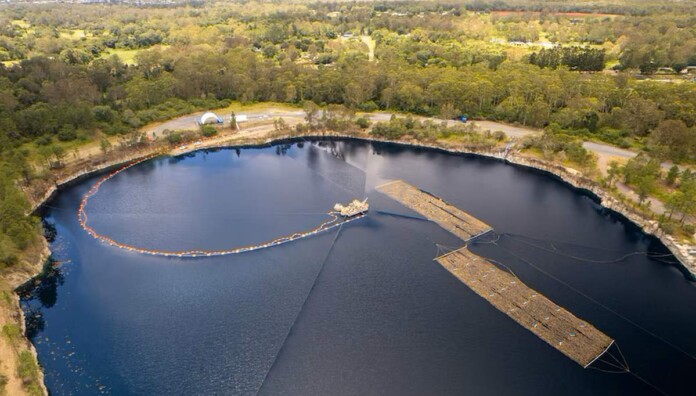
Moodlu Quarry is now being used as a balancing facility to store recycled water - credit: Unitywater / Supplied
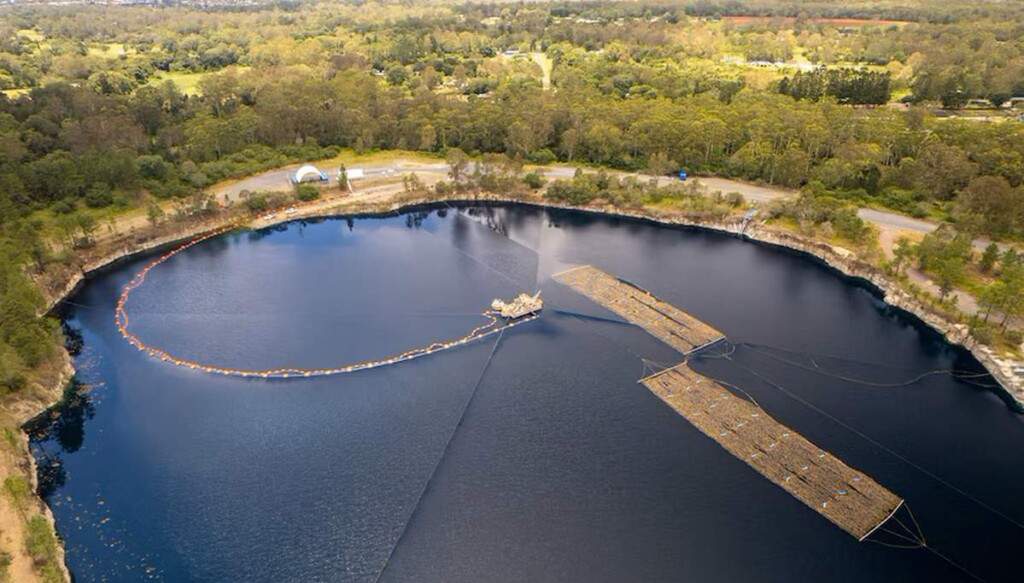
Moodlu Quarry is now being used as a balancing facility to store recycled water – credit: Unitywater / Supplied

After 10 years of planning and AUD$120 million in investments, one of Australia’s fastest-growing areas will be diverting 500 million gallons of treated wastewater from being dumped into rivers and eventually the sea.

What’s more, the water is set to take over irrigation needs for thousands of acres of farmland—all the better considering this is happening in Australia’s “Berry Belt” region.

Managed by the local governments of Moreton Bay, Sunshine Coast, and Noosa around Brisbane, the Wamuran Irrigation Scheme is a total sea change from how wastewater was managed in the area before.

Class A treated effluent, or highly-treated wastewater that’s nevertheless not safe to drink, was dumped along the Caboolture River, which ran to the sea in a very nutrient-sensitive area.

The wastewater contains thousands of tons of nutrients like phosphorus and nitrogen that can cause large blooms of harmful algae in rivers. The algae reduce the amount of oxygen in the water, choking fish, crustaceans, and frogs.

Instead, that nutrients will help fertilize crops of pineapples, avocados, strawberries, raspberries, and turf.

A 22-kilometer-long pipeline will carry the water from the South Caboolture sewage treatment plant northwestward to be stored in Moodlu Quarry—an old mining site that, like the wastewater, is being recycled into a reservoir.

The population of the areas the program is meant to cover is expected to double by 2040, and every flushed toilet will put pressure on the wastewater treatment system and therefore the river and ocean if previous practices are maintained.

This new method, informed by similar programs in Singapore, will not only boost one of the area’s largest economic outputs, but also relieve farmers of irrigation pressures whenever the next dry period comes around.

“We’re in a wet period at the moment, but it will be dry again soon, and whenever it’s dry, water is always a challenge,” said Pinata Farms general manager Gavin Scurr to ABC News AU. “It limits our production, and it limits our ability to deliver consistent fruit to consumers.”

GOOD PROCESSES: From Sewage-Filled Waters to Crystal Blue: Switzerland Rivers and Lakes Offer Hope for Cleaning Up Other Countries

The program will provide various knock-on benefits that are really exciting for rural residents like Scurr. The recycled water will allow natural creek systems to remain unsiphoned for more of the year, alleviating litigation between farmers upstream and those downstream. Many of these creeks fill dams on the farmers’ properties, which will be allowed to overflow and spill out over the surrounding natural ecosystem, increasing the biodiversity on the landscape.

MORE SEWAGE STORIES: Ponds of Poop Turned into Clean Power for 16% of Pork Production in Australia

At the moment, 5 farms are part of the initial stages of the Wamuran Irrigation program, but more could be added as infrastructure improves.

According to ABC, experts believe Queensland will become more vulnerable to droughts by 2059, at which point these recycling programs will not only be productive and sensible, but perhaps even fundamental to future Australian agriculture.

SHARE This Fantastic Change Of Culture In Australian Water Management… 

“Pain and suffering are always inevitable for a large intelligence and a deep heart.” – Fyodor Dostoevsky

Quote of the Day: “Pain and suffering are always inevitable for a large intelligence and a deep heart.” – Fyodor Dostoevsky

Photo by: Mohammad Ali Mohtashami

With a new inspirational quote every day, atop the perfect photo—collected and archived on our Quote of the Day page—why not bookmark GNN.org for a daily uplift?

Uncovered Plesiosaur Fossil Suggests Multiple Types of Long-Necked Reptiles Prowled Oceans 180 Million Years Ago

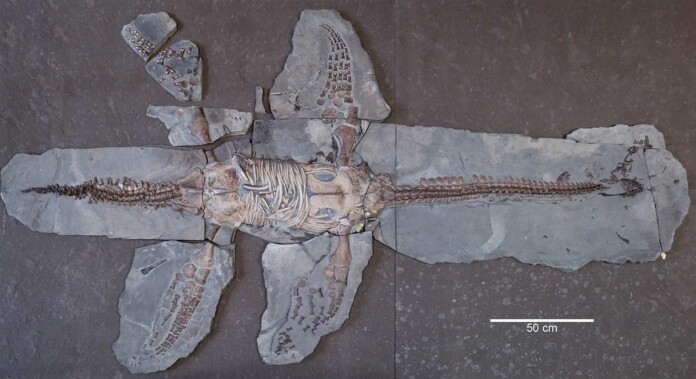
A skeleton of Plesiopterys wildi, recently found in Germany - credit SWNS.
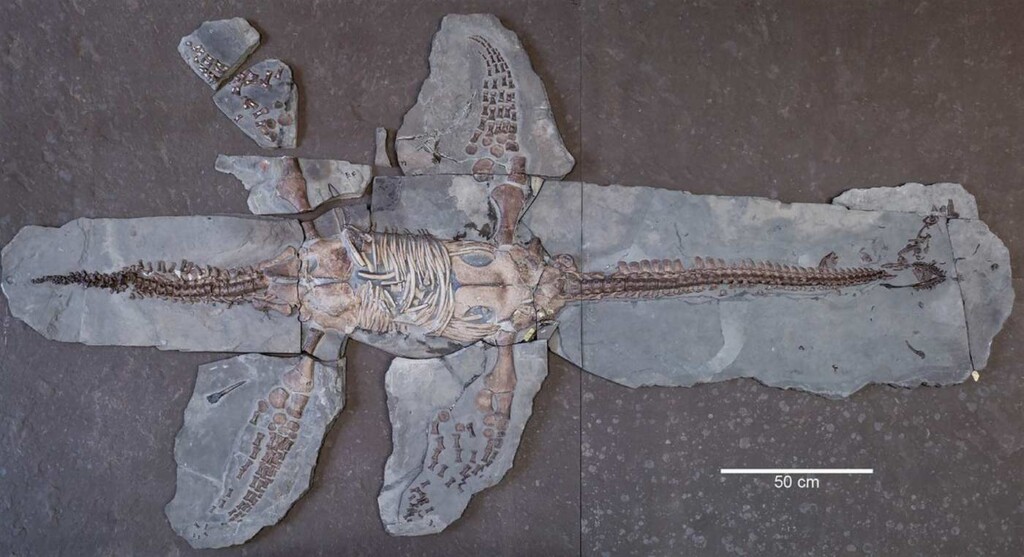
A skeleton of Plesiopterys wildi, recently found in Germany – credit SWNS.

The nearly complete specimen of a known plesiosaur species is opening scientists’ eyes to the diversification of these ancient marine reptiles during the Early Jurassic period.

Found in southern Germany, Plesiopterys wildi, a relatively small species measuring 10 feet long, is the only member of its genus, and a study published in the journal PeerJ Life and Environment details the discovery and analysis of the “exceptionally well-preserved” fossil.

It offers new clues about the evolution and geographic distribution of plesiosaurs in Europe nearly 180 million years ago, particularly about how isolated each was from all others, and how this isolation affected the animals’ development.

Unearthed from the Lower Jurassic Posidonienschiefer Formation near the German town of Holzmaden, the fossil, referred to as MH 7, is one of the most complete articulated plesiosaur skeletons found in the region.

Unlike ichthyosaurs and marine crocodile relatives which dominate the fossil record of the formation, plesiosaurs are comparatively rare.

The researchers say MH 7 represents a “subadult” individual, refining the known characteristics of the species and confirming its validity as a distinct taxon.

The team’s analysis positions Plesiopterys wildi as an early-diverging plesiosauroid, closely related to Franconiasaurus brevispinus, suggesting a gradual evolutionary transition towards more derived Cryptoclidids, another family of plesiosaurs from the Late Jurassic.

The researchers say the discovery supports the idea that plesiosaur species may have been “regionally distinct” within the epicontinental seas of Early Jurassic Europe.

“The Holzmaden specimen gives us an unprecedented look at Plesiopterys wildi in a more mature stage of development, allowing us to refine our understanding of this species and its place in plesiosaur evolution,” said study lead author Miguel Marx, of Lund University, Sweden.

“It also suggests that distinct plesiosaur communities may have evolved in different regions of the European seas during the Early Jurassic.”

OTHER UNDERSEA ANIMALS: 11-Year-old Uncovers Giant Ichthyosaur Fossil – The Largest Marine Reptile Ever Found

He said the findings highlight the Early Jurassic as a crucial period for plesiosaur evolution, as early forms diversified and set the stage for later groups that would dominate marine ecosystems.

The researchers say that the presence of unique plesiosaur species in different parts of Europe reinforces the hypothesis that early members of this group may have been geographically restricted.

MORE PREHISTORIC NEWS: Fossilized Bones Found in Australia Identified as New Species of Pterosaur

“Our research reinforces that plesiosaurs were already evolving specialised adaptations and distinct regional lineages much earlier than we used to believe,” said study co-author palaeoherpetologist Sven Sachs.

“This has important implications for understanding how marine reptiles responded to environmental changes in the Jurassic seas.”

SHARE This Story With Anyone You Know Who Loves Those Dinos… 

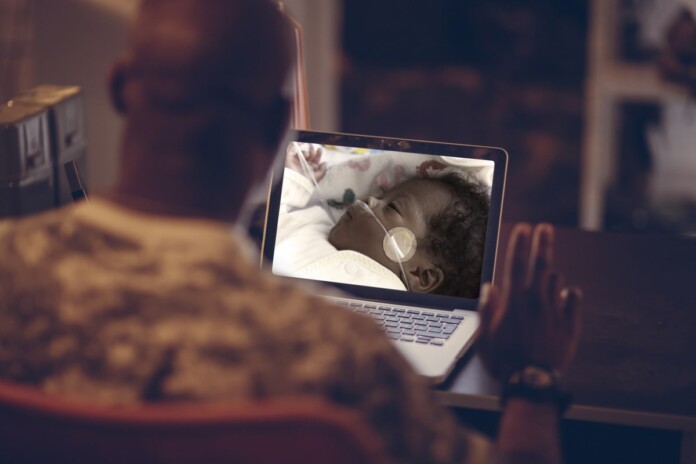
‘Angel Eye Cameras’ Let Parents of Premature Babies Check-in on Neonatal Ward Whenever Anxiety Strikes

- credit courtesy of AngelEye Health
– courtesy of AngelEye Health

1 in every 10 women in the United States will experience the premature birth of their child. A heroic organization is helping these women keep two eyes on their baby even if they are miles away.

Called the AngelEye System, developed by the firm of the same name, it’s a camera with a remotely-accessible 24-hour feed that’s mounted via a boom arm onto any of the beds or tables an infant may be placed on.

It allows the parents who may not always be able to stay with their child to keep an eye on them whenever nerves or separation anxiety strike.

Thanks to advances in medical science, premature birth is a challenge that can be reliably overcome. A modern neonatal intensive care unit (NICU) contains batteries of devices for ensuring that development can continue on the right track for a long and healthy life even under these terrifying circumstances.

NICU stays for premature babies though can sometimes take weeks, even months, during which the new parents will have to face the fact that they can’t simply live in the hospital.

Philadelphia’s Lauren Walsh had to face this exact situation when her third baby John was born prematurely at 32 weeks, not even weighing 2 pounds.

“John was so critical when he was born that they didn’t even lift him over the sheet for me to see him,” Walsh told CBS News. “So, I saw him just being wheeled out of the operating room.”

John required a 61-day stay in the NICU, and the AngelEye Camera was a lifeline for his mom and dad who could check up on him at any point by switching the camera feed on from their phones or computers.

FOR THE MOTHERS OUT THERE:

Walsh said that her first sight of John was actually through the camera, as the most intensive care he required during his stay was in those first few hours.

“You’re always thinking about him,” father Robert Walsh said. “You’re always wondering how he’s doing, how he’s progressing. It was extremely comforting because there was not a time that I didn’t have John right here on my phone.”

MORE NICU NEWS NUGGETS:

Lauren added, saying there was no time when that camera wasn’t activated.

The Superhero Project, the main charity of the Philadelphia Building Trades, was responsible for equipping Philadelphia hospitals with the AngelEye Camera Systems, and as a tribute, John’s older siblings dress up like superheroes.

SHARE This Amazing Relief To Stressed-Out Parents With Your Friends… 

Record Number of 736,000 Sandhill Cranes Flock to Nebraska in Spring Migration–with No Bird Flu

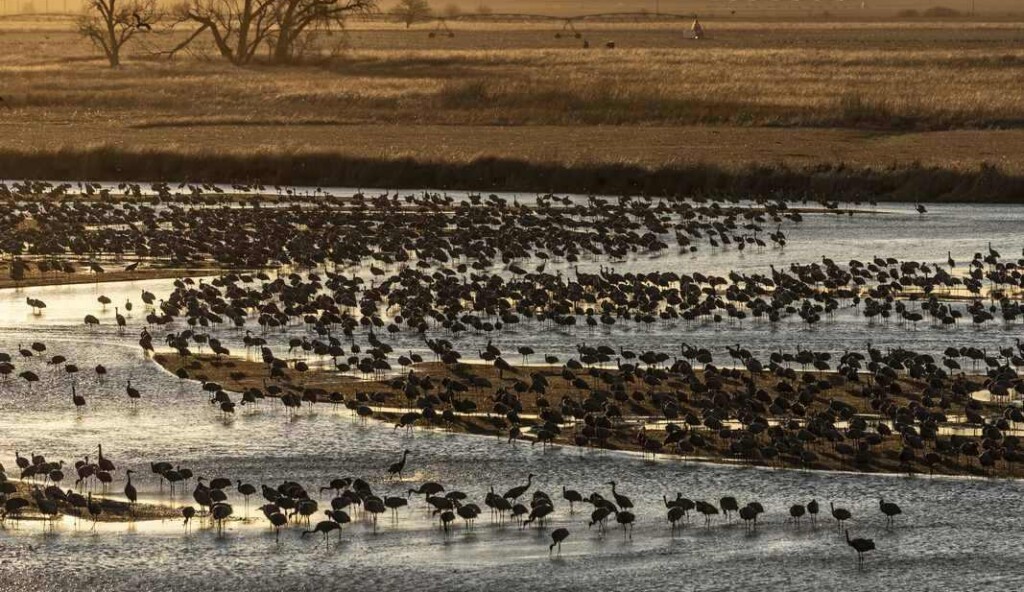
Crane migration in Nebraska – Credit: Kylee Warren / Crane Trust

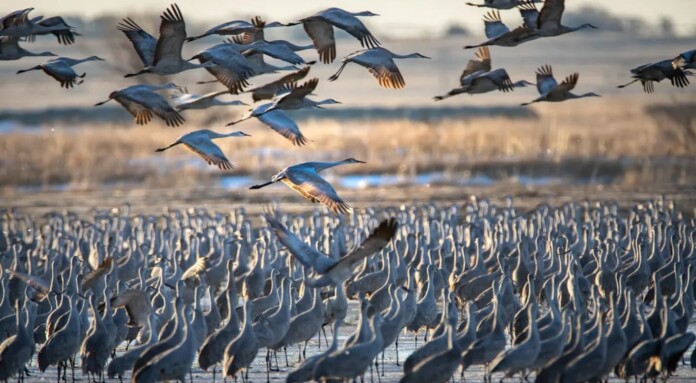
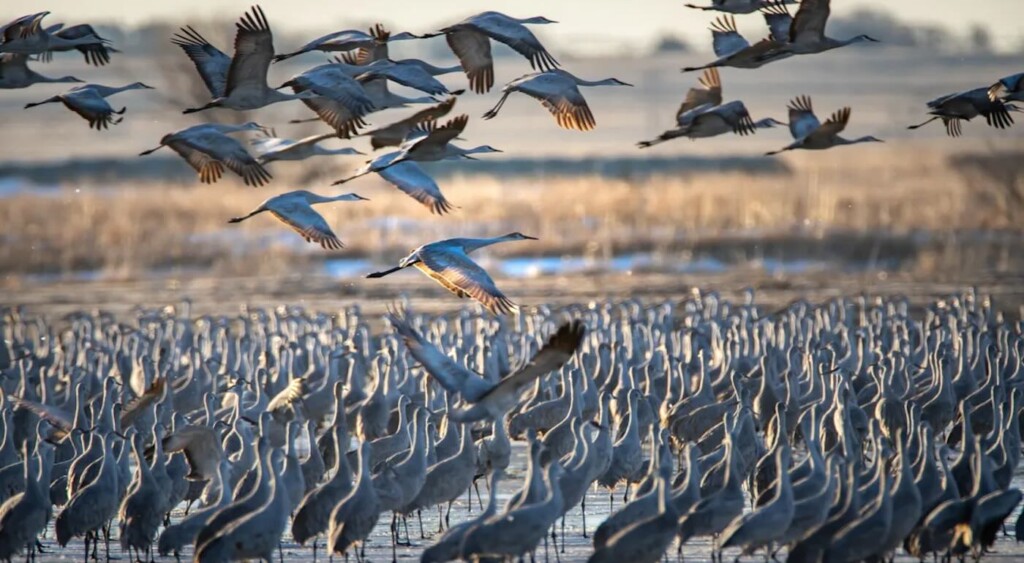
Fears that Nebraska’s annual spring migration of sandhill cranes could be the avian equivalent of a “superspreader” event have been completely abated, as a record-setting stopover in Nebraska of thousands of birds was enjoyed without any sign of a bird flu outbreak.

Three-quarters of a million cranes migrating north to their spring habitat landed in the Platte River in Nebraska. The number is deemed an underestimation, but you try counting more than 700,000 birds.

Fears that the highly contagious new strain of bird flu H5N1 could carry over to the cranes from livestock have been assuaged as the birds are beginning to move off again without a single dead crane being observed, local news reports.

Aside from the mini celebration of bird flu’s absence, the real celebration—that this year was the largest on-record for the sandhill crane migration—can begin.

The official estimate of 738,000 animals was made during aerial surveys by the Crane Trust, a nonprofit whose raison d’etre is to protect these magnificent birds and this unforgettable spectacle.

These cranes have been visiting an 80-mile-long stretch of the Platte River, braided in some sections, for 9 million years, which these days lies between the towns of Chapman and Overton, Nebraska.

“What makes the central Platte River valley attractive to sandhill cranes is the river that we help manage,” says Matt Urbanski, a spokesman for the Crane Trust, to KSNB’s Madison Smith. “We will make sure that there’s not a ton of vegetation choking the river out. We’ll make sure that it can widen, so the sandhill cranes have six to eight inches of water to sit in during the nighttime.”

The sandhill crane stands between 3 and 4 feet tall, and is easily identifiable for its crown of red feathers and their rattling bugle-like call. It is one of only 2 species of crane that live in North America.

Sandhill cranes on the Platte River – credit: Matt Urbanski / Crane Trust.

Earlier this year, over 1,000 cranes were found dead in Indiana from H5N1, which sparked fears of an outbreak among the larger gatherings. However, the birds that migrate over Indiana and those who do so in Nebraska will seldom come into contact as they stick to rigid and separate migration routes.

MORE NORTH AMERICAN BIRD LIFE: After Building Causes 1,000 Bird Deaths, $1.2M Window Makeover Shows Chicago How to Beak Kind

Interestingly, though the cranes have visited this site for eons, they did so even before there was a river there. Additionally, they now spend much of their time feeding on spare corn kernels leftover from nearby harvests, and spend the night standing in the water where they’re safe from predators.

Arrivals and departures are staggered over several weeks, but at peak stopover, it’s one of the great sights of natural America.

PROTECTING GREAT MIGRATIONS: To Halt Ibis Extinction Austrian Man Shows Birds a New Migration Route With His UltraLight–And it’s Working

“There is nothing else like it in the world,” says Marcos Stoltzfus, director of the Iain Nicolson Audubon Center at Rowe Sanctuary in Gibbon, Nebraska, to News Channel Nebraska.

WATCH some migration footage below… 

SHARE This Great Wildlife Spectacle, Safe From Harm, And Amazing To Witness…

3-year-old Finds Ancient Egyptian Scarab Seal at the Site of David and Goliath’s Battle

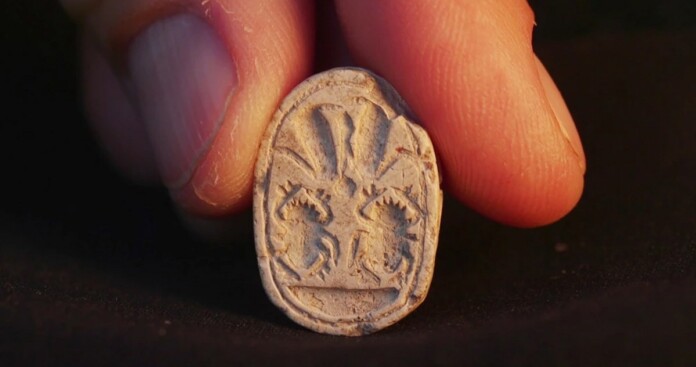
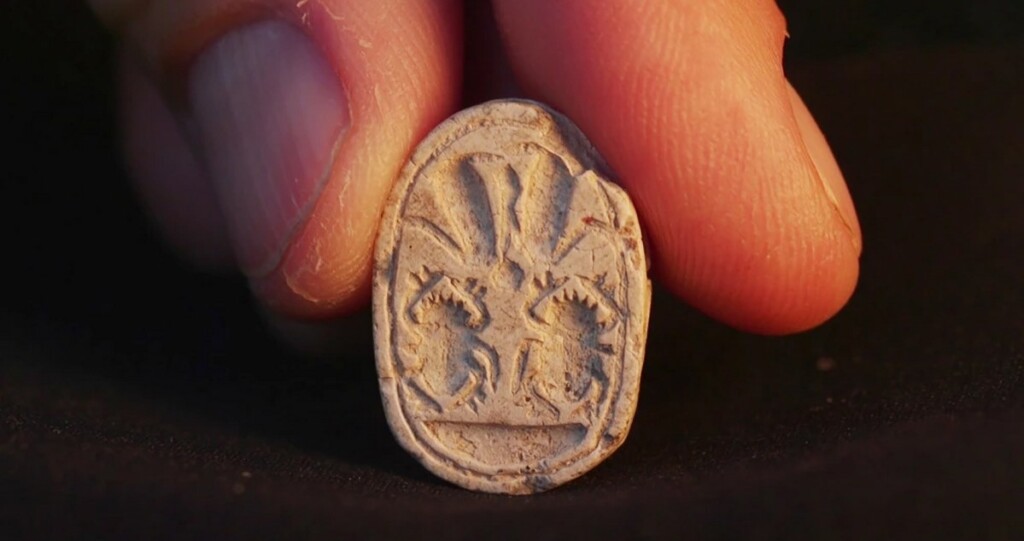
A close up of the scarab - credit Israeli Antiquities Authority
A close-up of the scarab – credit Israeli Antiquities Authority

A child in central Israel could have picked up any old stone lying on the ground, but the one she chose turned out to be more than just an old stone.

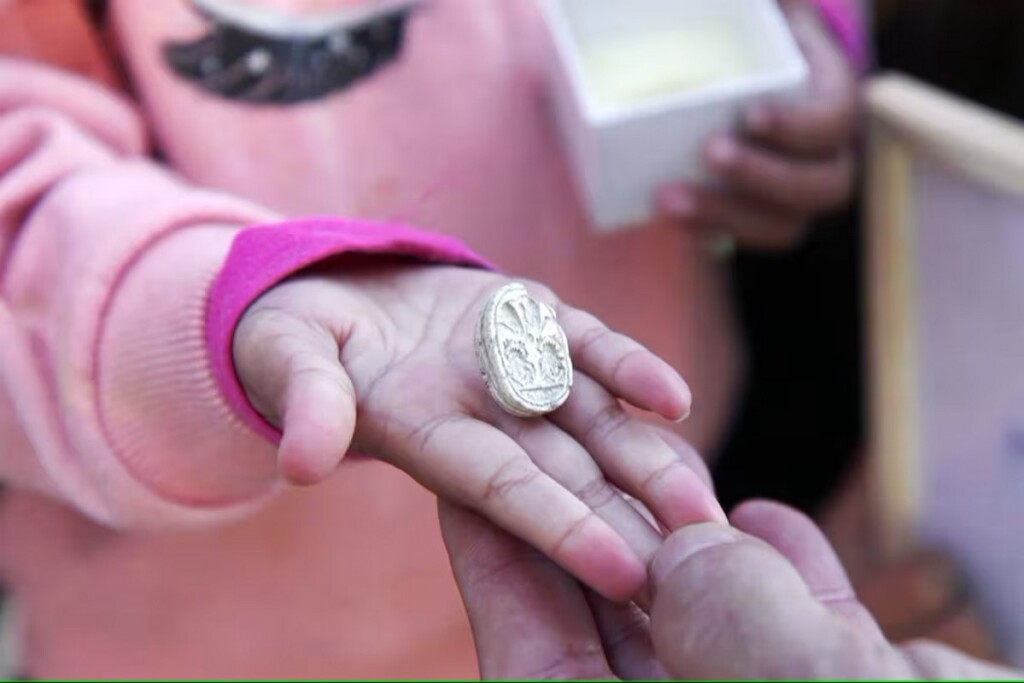
Believed to have been brought to modern-day Israel by the Ancient Egyptians, 3-year-old Ziv Nitzan found a scarab amulet that could be 3,800 years old.

Ziv Nitzan with her find – credit Israeli Antiquities Authority

The head of the Israeli Antiquities Authority said such a find helps connect us to “ancient civilizations that lived in this land thousands of years ago.”

Ziv’s sister Omer Nitzan said in the Facebook post: “When she rubbed it and removed the sand from it, we saw something was different about it. I called my parents to come see the beautiful stone, and we realized we had discovered an archaeological find.”

What they found was either an Egyptian or Canaanite scarab, which bears some explaining. The English word scarab doesn’t only mean beetle, but also a culture of functional and decorative sculptural jewelry based on the beetles.

To say an Egyptian official was buried “with a scarab” means he possessed a kind of personalized piece of jewelry. Yet, they often acted as seals—conferring evidence of a bureaucratic, military, or royal position. They were sometimes carved with religious or even personal messages. The carved scarab beetle would sit atop a flat surface on which the inscriptions would be made.

FROM THIS PART OF THE WORLD: Diver Finds 900-Year-old Sword Wielded in the Crusades Off the Coast of Ancient Israeli Town (LOOK)

“Scarabs were used in this period as seals and as amulets. They were found in graves, in public buildings, and in private homes. Sometimes they bear symbols and messages, that reflect religious beliefs or status,” Daphna Ben-Tor, an Egyptologist, said in the Facebook post.

MORE ANCIENT EGYPTIAN LORE: Cleaning a Millennium of Sand and Soot Egyptologists Reveal Ancient Creation Myth in Exquisite Artwork

It’s thought that dung beetles were sacred animals in Ancient Egypt and that in the Sun’s movement across the sky could be seen the work of a celestial dung beetle rolling it along with its back legs. This is perhaps why the scarab beetle family came to be symbolized in their theocracy.

The family made the discovery at an ancient archaeological site called Tel Azekah, the site of the legendary battle between David and Goliath.

SHARE This One In A Million Find At The Hand Of A Wee Lass… 

“Great artists suffer for the people.” – Marvin Gaye (Died 40 years ago this week)

By Gracious Adebayo

Quote of the Day: “Great artists suffer for the people.” – Motown’s Marvin Gaye (Died 40 years ago this week)

Photo by: Gracious Adebayo

With a new inspirational quote every day, atop the perfect photo—collected and archived on our Quote of the Day page—why not bookmark GNN.org for a daily uplift?

By Gracious Adebayo

Kazakhstan Efforts to Restore Last Wild Equine Species Receive Huge Boost of 150 Horses

Przewalski's Horse at the Highlands Wildlife Park - CC 3.0. Floato
Przewalski’s Horse at the Highlands Wildlife Park – CC 3.0. Floato

With the imminent arrival of 150 Przewalski’s horses to the Kazakh steppes, the future of the world’s last non-domesticated horse species is poised to bolt.

Following up on a successful introduction of 5 mares and 2 stallions from Berlin and Prague, Hungary’s Minister of Agriculture István Nagy announced the country would be shipping 150 horses to Kazakhstan in order to safeguard the animal’s future from disease and inbreeding.

Around 6,000 years ago at an unspecified place on the Eurasian Steppe, of which Kazakhstan makes up a major component, human beings domesticated the horse. It changed history forever, but not more so than for the ancient residents of Kazakhstan and related topographies who used them to roam, trade, raid, and conquer for millennia.

From that first day until now, all individual species interbred themselves more or less out of existence with the exception of Przewalski’s horse, which is why its return is so exciting.

Kazakhstan has become something of a conservation and rewilding champion among low and middle-income countries. It has been in the process of restoring major members of its ungulate populations, including the saiga antelope, Bukhara deer, and Przewalski’s horse.

It even plans to reintroduce the tiger by welcoming members of a subspecies related to the local “Turanian” tiger which went extinct over 70 years ago. In the fall of 2023, two cats from the Netherlands arrived in the large Illy-Balkhash Nature Reserve, and this year another 5 are expected from Russia.

YOU MAY ALSO LIKE: Two Lost Cities Discovered Along the Silk Road–the Iconic Ancient Trade Route

For the Przewalski’s horses, the seven individuals transferred from Berlin and Prague arrived at the Altyn Dala Reserve in Kazakhstan’s Kostanay region. The incoming 150 will be located across the country.

MORE CENTRAL ASIAN WILDLIFE: Wild and Wonderful Saiga is No Longer Endangered with a Million Roaming Now in Central Asia

Hungary sits at the Western terminus of the Eurasian steppe, and takes its name from a people who emerged from its grasslands, the Huns.

It’s fitting then that it should be an ancestral relative that offers the Kazakhs this amazing opportunity to restore a quintessential figure to the grasslands—the wild horse.

SHARE This Great Progress Towards A Wilder Kazakhstan… 

Shelved Movie ‘Wile E. Coyote vs. Acme’ Will Finally Hit Screens with its Hilarious Plotline

Getty Images for Unsplash+
By pch.vector via Free license on www.freepik.com

Few in America will likely be aware that a critically acclaimed live-action/animated Looney Tunes movie starring Wile E. Coyote was fully made, but then shelved by Warner Bros. studios.

But, after a raucous outcry from the creative team who fell in love with the project and spent months bringing it to life, Warner Bros. Discovery (WBD) finally agreed to sell the rights to Ketchup Entertainment for what an insider told The Wrap was around $50 million.

Called Coyote vs. Acme, the film is reported to boast that brilliant mixture of adult and childish humor that made Looney Tunes relevant for so long among American audiences.

The “Vs.” in the name implies legal action—wherein Wile E. Coyote files a lawsuit against Acme for the countless faulty products he purchased from the company in his pursuit of the indomitable Road Runner.

Even though the film had consistently been highly rated by critics and early-screening audiences, it almost received an Acme anvil to the head before anyone in the public could view it.

Reported extensively by The Wrap, Coyote vs. Acme had been green-lit by a previous team of executives, 4 of whom were replaced during production.

The new suits, who had to delay the theatrical release to avoid contending with Barbie, decided to switch strategies and finally—following the wave of indignation from the film’s production team—acquiesced to letting them shop it around.

What they didn’t tell the team was that the price would be fixed, and WBD would do the talking. After failing to find a buyer for an $80 million take-it-or-leave-it price tag for streaming and non-streaming releases—and rejecting a $50 million offer from Paramount that would include a theatrical release, WBD was prepared to shelve the film permanently and take a $40 million tax write-off in advance of a bad third-quarter earnings drop last year.

YOU MAY ALSO LIKE: True Story of Penguin’s Annual Return to See the Man Who Saved it From Oil Spill is Now a Feature Film (See Trailer)

In summary, over a year of creative labor from stars Will Forte, John Cena, Lana Condor, and Tone Bell, was nearly “silenced by a movie studio’s balance sheet.”

Will Forte, who plays Wile E. Coyote’s legal counsel, said specifically that the decision made his “blood boil.”

But before that was all folks, it was announced on Monday that the film was finally sold to Ketchup Entertainment—who recently released another Looney Tunes movie entitled The Day The Earth Blew Up. 

Getty Images for Unsplash+

ALSO CHECK OUT: Elon Musk to Bring Back 1st Drive-in Movie Theater to LA at Tesla’s New Supercharging Station

“We’re thrilled to have made a deal with Warner Bros. Pictures to bring this film to audiences worldwide,” Ketchup Entertainment CEO Gareth West said in a statement.

“‘Coyote vs. Acme’ is a perfect blend of nostalgia and modern storytelling, capturing the essence of the beloved Looney Tunes characters while introducing them to a new generation. We believe it will resonate with both longtime fans and newcomers alike.”

A release date of 2026 in American theaters is believed to be most likely.

SHARE This Saga Of Corporate Vs Creativity With Your Friends Who Loved The Looney Tunes…

Mausoleum with Gladiator’s Epitaph Discovered in Imperial Roman Colony in Southern Italy

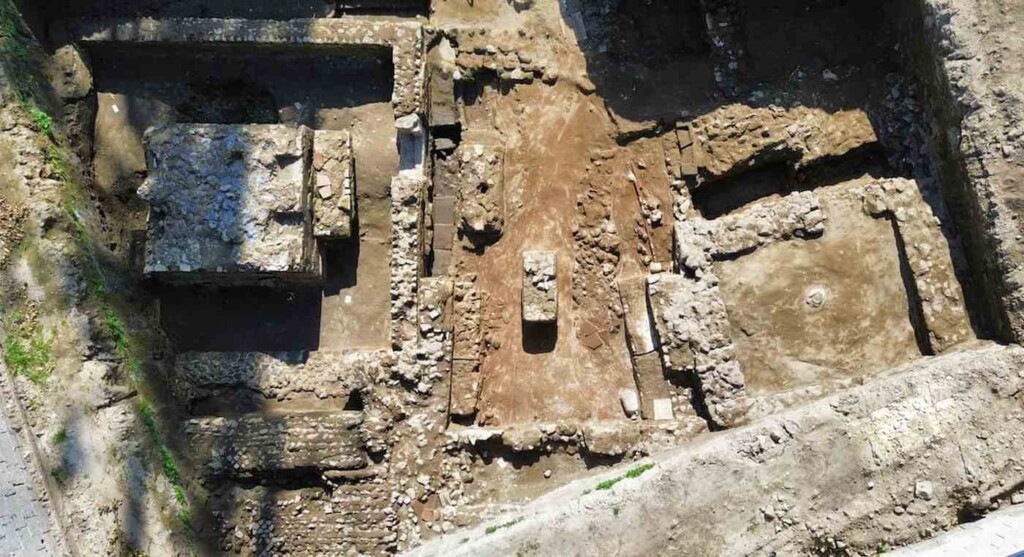
An overview of the mausoleum - Credit Soprintendenza Archeologia Belle Arti e Paesaggio per l'area metropolitana di Napoli
An overview of the mausoleum – Credit Soprintendenza Archeologia Belle Arti e Paesaggio per l’area metropolitana di Napoli

In the southern Italian region of Campania, excavations in a known Roman colony called Liternum have uncovered a necropolis of substantial historic interest containing a gladiator’s tomb bearing an inscription in his honor.

One of the most romanticized of all ancient warrior societies, the mausoleum where the inscription was found suggests that these gladiators could win substantial post-career retirements and posthumous honors.

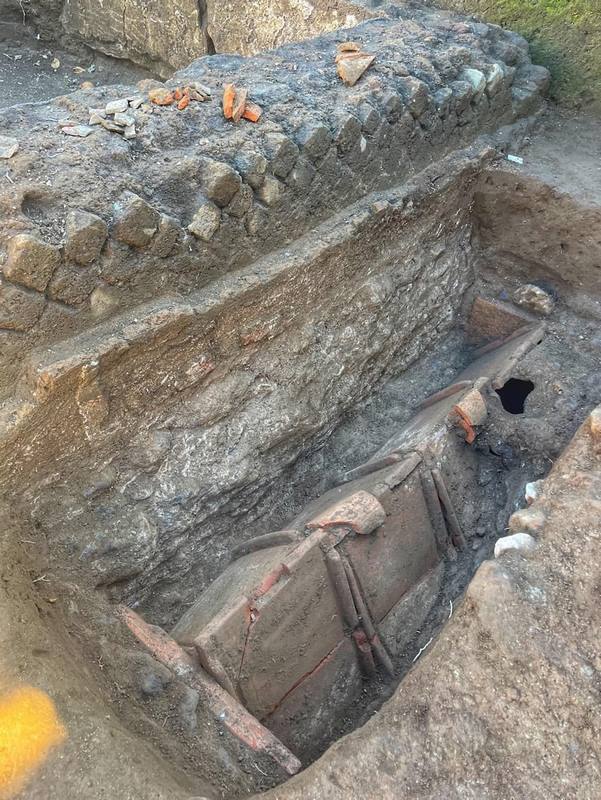
One of the a cappuccina tombs found at the Liternum – Credit Soprintendenza Archeologia Belle Arti e Paesaggio per l’area metropolitana di Napoli

Located in the present-day municipality of Giugliano in Campania, the site dates to the first century BCE, and saw use as a final resting place well into the middle imperial period some two to three hundred years later.

A release from the Superintendency of Archaeology, Fine Arts, and the Countryside of the Naples Metro Area details that the stratigraphy of the site and the recovery of grave goods including coins, oil lamps, and ceramics, demonstrate how funerary customs changed over the empire’s history.

The necropolis at Liternum consisted of two funerary enclosures, totaling around 1,500 square feet and enclosed in white-washed grey tuff blocks with red detailing.

The deceased were interred there in several ways, including funerary urns set within about 20 plastered niches cut into the walls, large ossuaries, and enclosures on the floor sealed with pitched roofs of terracotta tiles—called “a cappuccina” tombs.

MORE ROMAN DISCOVERIES: Latest Digging from Pompeii Turns Up Large Private Spa Built to Spoil Wealthy Visitors

Among the most relevant discoveries were diverse marble cenotaphs, some of which remained intact, and one in particular that bears the epitaph of a gladiator, documenting the value and memory of these combatants in Roman society, a statement from the Superintendency read. 

Its presence in Liternum suggests that the city was home to gladiators who, after their careers in the arena, found their final resting place there.

YOU’LL ALSO ENJOY: Archaeologists Unearth ‘Exceptionally Rare’ Roman Helmet at the Site of ‘Weapon Sacrifice’

“The Giugliano territory is experiencing an extraordinary period of discoveries, first with the Tomb of Cerberus and now with this necropolis,” the Superintendent Mariano Nuzzo said. “The quality of the structures and their excellent state of preservation enrich our understanding of the history of the Liternum colony and deepen the study of the sociocultural context of the time.”

Excavations are still ongoing, and more secrets may yet reveal themselves, perhaps about Liternum’s place on the Via Domitiana, a road that went from Rome to Campania that was known to have been lined with necropoli and tombs.

SHARE This Latest Discovery From The Roman World… 

Stir Stick to Detect if Your Drink Is Spiked Developed by Chemists Hoping to See Them on Every Bar Top

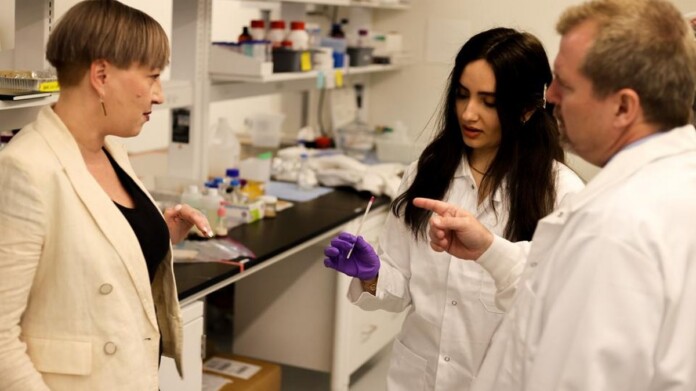
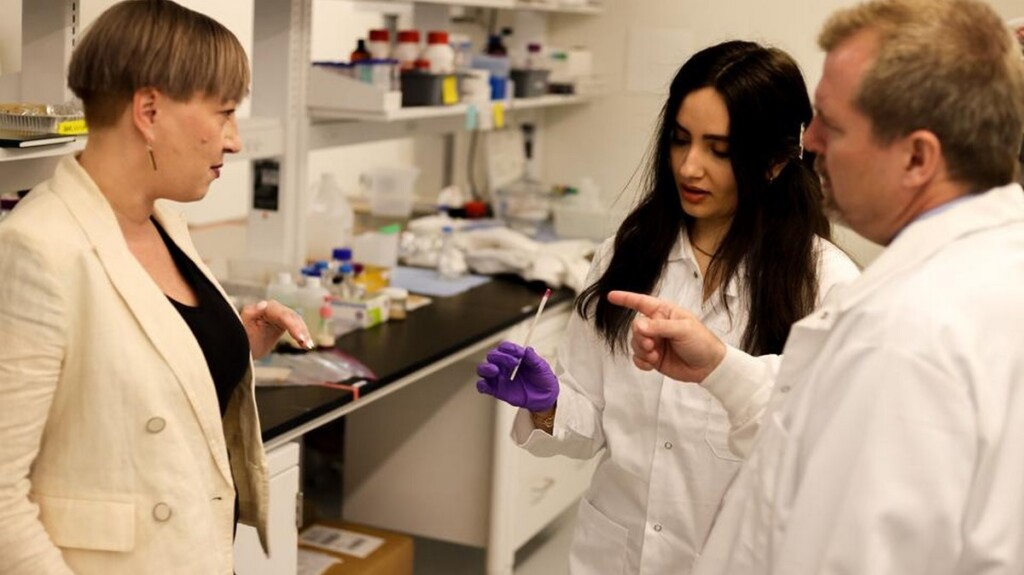
The Spikeless teaam, including consultant Sasha Santos (left) and chemists Samin Youssef and Johan Foster - credit, UBC
The Spikeless team, including consultant Sasha Santos (left) and chemists Samin Yousefi and Johan Foster – credit, UBC

After 12 years of research and development, a team of Canadian chemists has created what could be the ultimate tool for detecting if your drink has been spiked.

More discreet and accurate than anything else on the market, the simple, innocuous-looking drink stir comes with a tip that will change color if exposed to any of the common drugs used by predatory bargoers.

Called Spikeless, the stirrer was envisioned by a team of brothers at the University of British Columbia and can detect common drink spiking drugs like GHB and ketamine, which are otherwise odorless and tasteless, within 30 seconds.

Dr. Johan Foster, associate professor of chemical and biological engineering, and his brother, Andrew, came up with the idea in 2012 and predicted the tool could be carried around with one’s phone, wallet, and keys, or provided by venues upon request.

“Anywhere there’s a bar—clubs, parties, festivals—there’s a risk,” said Samin Yousefi, a UBC master’s student in chemical and biological engineering and the device’s co-inventor alongside the Fosters.

“People have tried cups, coasters, straws, even nail polish to detect these drugs. Our device is more discreet than existing alternatives and doesn’t contaminate the drink.”

MORE GOOD INVENTIONS: He Invented a $2 Paper Microscope For Remote Lab Work So Scientists Don’t Have to Haul Heavy Equipment

The tool still requires approval from Health Canada, and the inventors haven’t come up with any mass-manufacturing process for it yet.

Global News, a Canadian news outlet reporting on the invention, quoted one expert in the field of sexual abuse and violence, Sasha Santos, who said that providing defense solutions and education, while also leaving the onus to prevent such predation entirely on the individual, hasn’t worked to reduce rates of incidents involving spiked drinks.

PROTECTING THOSE MOST VULNERABLE: This Moving Company Now Helps Victims of Domestic Violence Leave Abusive Homes Nationwide At No Cost

If the cost of Spikeless could be made low enough, establishments could simply have a tray of them on the bar or drink stand, where they could be used like normal drink stirrers.

WATCH the story below from Global News… 

SHARE This Great, No-Brainer Invention With Your Friends… 

“To live is the rarest thing in the world. Most people just exist.” – Oscar Wilde

Eddie Kopp

Quote of the Day: “To live is the rarest thing in the world. Most people just exist.” – Oscar Wilde

Photo by: Eddie Kopp

With a new inspirational quote every day, atop the perfect photo—collected and archived on our Quote of the Day page—why not bookmark GNN.org for a daily uplift?

49-Year-old Becomes First Blind Woman to Swim English Channel: ‘Nothing is Impossible’

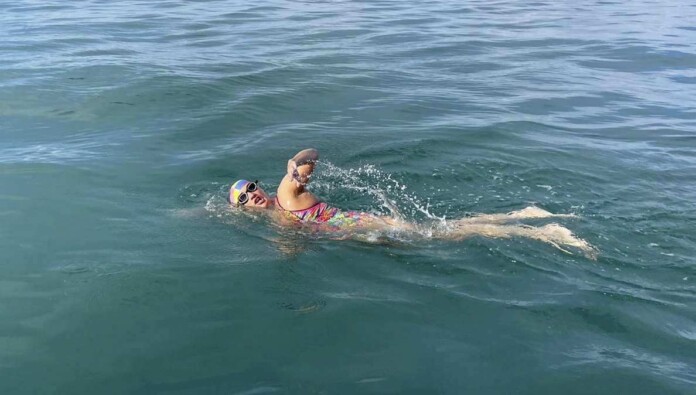
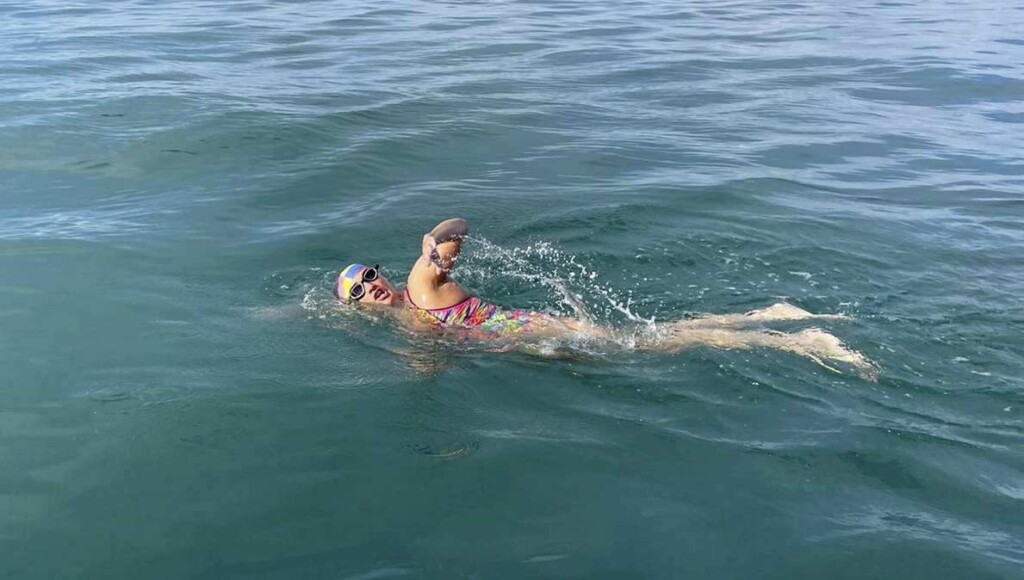
Melanie Barratt out in the English Channel - credit SWNS
Melanie Barratt out in the English Channel – credit SWNS

A Paralympic gold medalist has become the first blind woman to swim across the English Channel, and she finished under time.

She said that being blind has left her feeling “isolated,” but thanks to swimming, she has a “newfound confidence” and hopes her feat “inspires others”.

49-year-old Melanie Barratt took on the challenge after falling in love with open-water swimming.

She swam the Channel, from Shakespeare Beach in Dover to Cap Gris Nez Beach in France, in 12 hours and 20 minutes, faster than the expected 14 hours, and described it as “a dream come true.”

“My life has been filled with challenges because of my blindness, and it often led me to feel isolated and unsure of myself,” said Barratt.

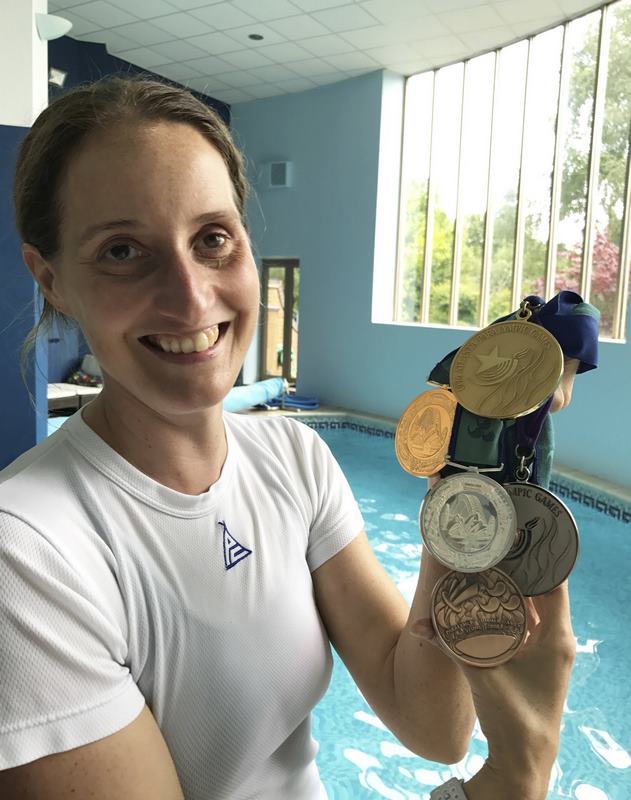
Melanie, now a special needs assistant after winning two gold medals, two silvers, and a bronze at the 1996 Atlanta and 2000 Sydney Paralympics, said she “never thought it would be possible to achieve something like this.”

It’s no mean feat, even for an Olympian, as the Channel weather regularly takes the lives of sailors and refugees in crossing.

Melanie Barratt with her haul from the 1996 and 200 Paralympics – credit SWNS

Melanie was born with scarred eyes after her mom contracted congenital toxoplasmosis during pregnancy. She grew up virtually blind and was only able to make out bright colors and shapes. She first began swimming with the British Blind Sport charity.

“I loved the water,” she remembers. “The charity helped me by teaching me to swim straight and how not to bump my head into the pool ends.”

“I struggled to fit in at school because of my blindness, so I often turned to the pool as an escape.”

Slowly improving, a swimming partner invited her to the Paralympic games, which lit a fire underneath her that pushed her to succeed. After Sydney, Melanie retired from competitive swimming and wanted “something more.”

“Sadly, my guide dog doesn’t swim,” she said, according to English news media outlet SWNS. “But I became friends with an incredible open-water swimmer who took me under her wing.”

“The shock of the cold water made me aware of every single cell of my body, and it was freeing.”

Once hooked on open-water swimming, Melanie competed in several races, including a 10k lake swim, the Thames Marathon, and a relay race in Lake Geneva in July 2023.

It was as freeing as it was frightening, since there were no indicative surfaces or objects for her to use as a reference point. A solution presented itself as her husband paddling alongside her in a kayak, the bright colored paint of which she could see.

MORE RECORD-SETTING WOMEN: Texas Woman Sets Record for Donating Almost 700 Gallons of Breastmilk

“I also started using bone-conducting headphones that allowed him to communicate with me throughout my swims,” she says. “It made open-water swimming more accessible.”

Two years before her Geneva feat, Melanie signed up for the English Channel swim, describing it as “the Everest of swimming,” and on August 28th, 2024, she swam the Channel in 12 hours and 20 minutes, receiving a Guinness World Record for the feat two months later.

“Halfway through the swim, I felt scared and sick. I didn’t think I was going to make it,” she said. “But I had the most amazing team and I was really determined.”

MORE RECORD-SETTING SWIMMERS: Heavy-Set Grandmother Completes Terrifying 29-Mile Swim Through Shark-Infested Waters to Break the Record

“Life is incredibly difficult being blind, and it’s very limiting, but sport and open-water swimming have given me a newfound confidence and made me proud of who I am.”

“My husband and two boys always know I love to push myself and that I always need something to work towards, and I hope I’ve inspired others to do the same.”

SHARE This Woman’s Unreal Accomplishment On The Open Sea… 

6 Expert Parenting Tips for Getting Closer to Your Kids–Try Changing Up These Routines

Photo by Some Tale on Unsplash

A therapist has revealed six parenting tips for building a stronger connection with your child.

Melinda O’Neil, 37, an associate licensed Professional Clinical Counselor in Pleasanton, California, has been a therapist for one year and child counselor for seven.

O’Neil—also the mom of a six-year-old son—focuses on connection, empathy, and personal growth as key components of effective parenting.

From fostering independence to encouraging emotional intelligence, here are her top tips for parenting.

Become a fan

It’s easy for parents to tune out when their child is talking about video games, dinosaurs, or the latest pop star, but O’Neil says engaging with their interests is crucial for bonding.

“[Renowned physician and educator] Maria Montessori always said, ‘Follow the child,’” O’Neil summarizes.

“That means embracing whatever they’re into—whether it’s excavators, the alphabet, animals, or trains.”

She acknowledges that parents may not always love their kids’ taste in music, but she encourages them to listen anyway.

“[L]istening with them means you know what they’re listening to. Plus, it’s a great way to bond. If they want to go to a concert, chaperone!”

“Even if you don’t love the artist, bring some earplugs—it’s about showing interest in their world.”

Rephrase your questions

Parents often ask, “How was school today?” only to be met with a one-word response. O’Neil suggests taking a more intentional approach to foster open communication.

“Ask specific questions about their day,” she said. “Instead of ‘How was school?’ try ‘Did you see your friend today?’ or ‘What was the funniest thing that happened?’ Make communication a two-way street.”

By engaging in detailed conversations, parents create an environment where children feel safe opening up.

“It’s not just about you talking at them or them talking at you—it’s about having real conversations where they feel heard.”

Own your own mistakes

Kids are always watching, and O’Neil says parents should be mindful of the behaviors they model.

“If you make a mistake, own it,” she explained. “Say, ‘I got really frustrated and shouldn’t have reacted that way. Next time, I’ll take a deep breath.’”

By doing this, parents show kids that mistakes are a normal part of life and that they can be handled with accountability and grace.

“It’s a lot of pressure because kids are always copying us,” she admitted. “But modeling healthy responses teaches them how to navigate emotions and interactions in a positive way.”

– credit: Quinn Dombrowski, CC 2.0. via Flickr.

Try new things

While it’s important to follow a child’s interests, O’Neil also stresses the value of trying new things.

“Structured activities beyond the park—like cooking classes, new hobbies, or different restaurants—help kids expand their world,” she explained.

“And if they’re hesitant? Encourage them anyway. Remind them, ‘You might like it!’”

She acknowledges that not every new experience will be a hit.

“If they try something and truly don’t like it, that’s okay,” she said. “Congratulate them for trying. But the key is to keep encouraging curiosity and new adventures.”

Let them be emotional

Emotions can be messy, but O’Neil says learning to sit with them is crucial for emotional intelligence.

“Feelings can make us uncomfortable, but if your child is experiencing one, let them,” she advised. “Be present. Sit with them in their sadness, frustration, or joy.”

She notes that emotions naturally cycle every seven minutes.

“Give them that space,” she said.

“If they’re crying, tell them, ‘It’s okay to cry.’ Even if it makes you uncomfortable, practice sitting with it instead of shutting it down.”

Getty Images / Unsplash+

Parent yourself

The best parenting starts with self-growth, O’Neil says.

“One thing I see every day is that many parents weren’t taught how to manage their own emotions,” she explained. “So as adults, we’re almost re-parenting ourselves.”

She stresses the importance of self-reflection.

“The best thing you can do for your child is to become a healthier version of yourself.

“Acknowledge your mistakes, work on your emotional responses, and show yourself the same compassion you’d show them.”

At the end of the day, O’Neil says parenting is about connection, empathy, and being willing to grow alongside your child.

“Promote empathy and compassion,” she said. “And that includes being compassionate with yourself.”

SHARE These Good Foundational Parenting Points With Any New Moms And Dads On Your Social Media… 

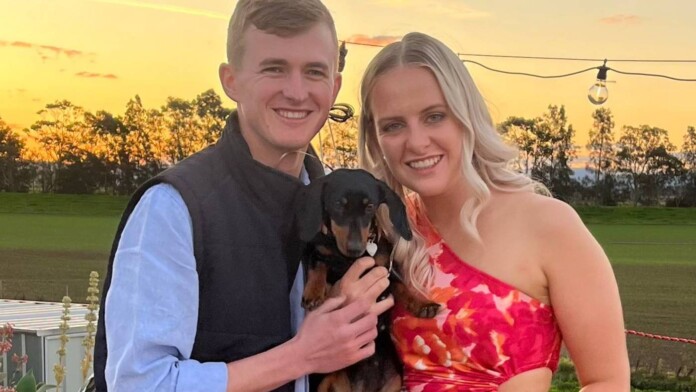
How Valerie the Weiner Dog Survived 18 Months in the Australian Bush to Make it Home

Josh Fishlock, Valerie, and Georgia Gardner - credit family photo
Josh Fishlock, Valerie, and Georgia Gardner – credit family photo

On an island south of Adelaide, a strange creature has been seen creeping through the bush. A long cylindrical body and long snout flanked by floppy ears are dead giveaways.

But this wiener dog named Valerie isn’t lost anymore. After almost 18 months of living wild on Kangaroo Island, local police are poised to get her out of there and reunite her with owners Josh Fishlock and Georgia Gardner.

In 2023, the pair were enjoying a camping holiday on the island with their miniature dachshund Valerie, who weighs no more than 8 pounds soaking wet. The pampered pooch was used to pink sweaters and toys, treats and ramps to help her get upstairs, and so the couple thought it would be safe to leave her closed in her cage with plenty of pleasures while they went fishing.

But within minutes of casting their lines, another camper told them that Valerie had escaped, run underneath a van, and then bolted into the bush when some people tried to coax her out.

“We spent the next five days searching for her through the bushland, hiking up and down big hills and camping overnight,” Georgia told the Sunday Times. They had packed only one pair of clothes each, and amid the stink, the rain, and the lack of any sign of their beloved pooch, the two reluctantly gave up and returned home to Albury.

Meanwhile, on the island inhabited by large venomous black tiger snakes and wedge-tailed eagles that prey on the native wallabies, Valerie’s fate seemed sealed.

But it seems there’s more wolf than wiener in Valerie than meets the eye, and a survival instinct evidently kicked in that has seen her make it through 500 days of wild living.

Via a local Facebook group, Georgia said they heard last month that Valerie had been seen on the island at the end of February, just over nine miles from the campsite where she had been lost.

OTHER LOST AUSSIES: Woman Lost 8 Days in the Australian Bush Survives to See Her 4 Children Again ‘It is miraculous’

Georgia then contacted Jared Karran, according to the Times, who works as both a local police officer and wildlife rescuer. Karran organized an effort to locate Valerie’s territory by baiting and setting out cameras. They eventually spotted her—alive and in rude health.

One local tour operator said the most likely food source has been roadkill, and that the eagles would have been her biggest threat. Valerie is extremely canny, and Karran is reluctant to try and trap the dog. Instead, they are hoping to reactivate her domesticated instincts and coax her out into a space where she can be apprehended.

OTHER LOST DOG STORIES: Lost Dog Finds Way Home Across 150 Miles of Neighboring State, Villages Hold Feast in His Honor

For their part, Georgia and Josh are preparing for a 13-hour-long drive back to Kangaroo Island to retrieve her.

“We’re just waiting to see what condition she’s in and whether she’s still domesticated,” Georgia says. “It’s all pretty overwhelming. I just want to give her a big hug.”

SHARE This Unlikely Story Of Survival Of A Diminutive Dachshund… 

‘Change Has Been Amazing’ For Depleted Mountain: with New Vegetation Comes Deer, Pumas, Andean Bears

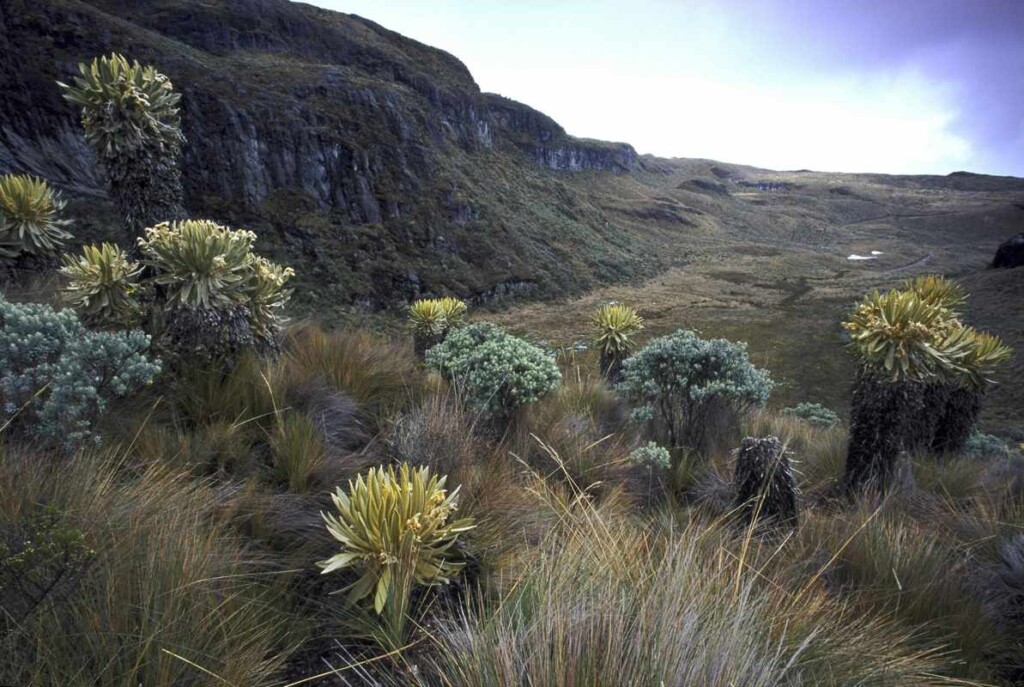
The paramo in Colombia - Getty Images for Unsplash+
The paramo in Colombia – Getty Images for Unsplash+

High along the peaks and ridges of the mountains in Ecuador, a 25-year-long conservation program is bearing succulent fruit in the form of cleaner water and abundant wildlife.

Established in the year 2000, Quito’s fund for the protection of water has allowed a critical South American ecosystem unique to the world and vital to both plants and animals to reclaim vast tracts of its former landscape, and people are noticing the difference.

“Before the water fund, the páramo in Antisana was very degraded. The only thing you would see was sheep.” Silvia Benitez, the Nature Conservancy’s Director of Freshwater for Latin America, said in a statement. “The change has been amazing. Vegetation is back. The wetlands are restored.”

“Now people see groups of deer. They see puma. I saw a fox. I had never before seen a fox in this area.”

The story of this quarter-century success began when the United States nonprofit the Nature Conservancy partnered with Quito’s water utility company, known as EPMAPS. The second-highest capital city on Earth by altitude, Quito is surrounded by a famous ecosystem called the páramo, a biodiversity hotspot where masses of mosses, lichen, high-altitude palms, and endemic grasses create a mountain environment unlike any other.

The páramo covers slopes above 10,000 feet in elevation all over the Andes Mountains, and acts like a giant sponge absorbing and condensing moisture from the lower ground before releasing it in streams and rivers further down. The Nature Conservancy estimates that in Colombia, where páramos cover just 2% of land area, this hydrological service provides 70% of all municipal water. It’s estimated that páramo sequesters 6 times more carbon than tropical rainforest.

EPMAPS and the Nature Conservancy organized $21,000 in seed money to kick-start a trust fund that would charge downstream users of water from the páramos around Quito for the conservation measures needed to protect them.

MORE STORIES LIKE THIS: Before and After Photos of World’s Largest Dam Removal in Calif. Will Have You Cheering for Team Salmon (LOOK)

Called the Fund for the Protection of Water, or FONAG, it’s accumulated $2.5 million in annual contributions over the last 25 years, and as a result, páramos are retaking ranchland that once displaced them, and the wildlife like whitetail deer, Andean bears, Mountain tapirs, and condors are returning as well.

FONAG has so far protected and conserved 55,000 hectares of páramos. But that is just the beginning. In the coming decades, FONAG plans to protect a total of 150,000 hectares of páramos.

Andean Condor. Photo by Enrique Ortiz

“Since FONAG’s beginning, its priority has always been the protection of the water sources. But when you conserve water sources, it’s almost automatic that you have other co-benefits—biodiversity, carbon sequestration, and social benefits,” said Bert de Bievre, Technical Secretary of FONAG.

Local communities have become very involved in FONAG’s work. Two dozen have become páramo rangers, local ranchers have moved their animals to lower elevations, agriculturalists have worked with EPMAPS to switch to low-impact methods of cultivation away from watersheds, and the Nature Conservancy runs a nursery that grows many of the endemic páramo plants for use in reforestation.

SOUTH AMERICAN CONSERVATION: Locals Finally Save ‘the Yosemite of South America’ After Decade Long Battle with Industrialist Who Owned it

The Quito-FONAG model is now being implemented across the northwestern areas of South America, and it shows how much can be achieved by simply letting rivers run free.

“Each year, the global water sector spends $700 billion on building and repairing pipes and reservoirs, using grey solutions to engineer themselves out of a problem created by deforestation, agriculture or other threats upstream,” said Brooke Atwell, Associate Director of the Nature Conservancy’s Resilient Watersheds strategy.

“If we were able to reallocate just 1% of that spending ($7 billion) toward protecting nature, it would eclipse all global philanthropic spending on conservation today.”

SHARE The 25 Years Of Quiet Success Above Ecuador’s Capital… 

“What matters most is how well you walk through the fire.” – Charles Bukowski

Quote of the Day: “What matters most is how well you walk through the fire.” – Charles Bukowski

Photo by: Gert Boers

With a new inspirational quote every day, atop the perfect photo—collected and archived on our Quote of the Day page—why not bookmark GNN.org for a daily uplift?