Glow in the dark road markings have been unveiled on a stretch of highway in the Netherlands south east of Amsterdam.
The paint contains a “photo-luminizing” powder that charges up in the daytime and slowly releases a green glow at night, doing away with the need for streetlights — and all the energy they require.
Daan Roosegaarde’s inspiration came from the undersea world, and he has been working on several ideas for sustainable roads that he calls Smart Highways.
There are no lifeguards at Ocean Beach because there shouldn’t be any swimming in that churn of frigid fast-breaking waves that can pull you under so fast that nearby beachcombers would never know it happened.
The moment surfer Tony Barbero spotted a flash of red t-shirt and a boy floundering in the icy water, he knew the kid was in big trouble.
Barbero, a 17-year-old high school student and firefighter’s son, powered through the waves, grabbed the boy and pulled him up on his surfboard.
Afterward, he saw the boy’s uncle who was already face down in the surf.
Highlands College students who are studying construction technology have used their design wizardry to fashion a luminous new dream kitchen built especially for the disabled at the Silver Bow Developmental Disabilities Council in Butte, Montana.
“There’s no other place like it in Butte,” said Cassie Weightman, specialist with the Montana Independent Living Project.
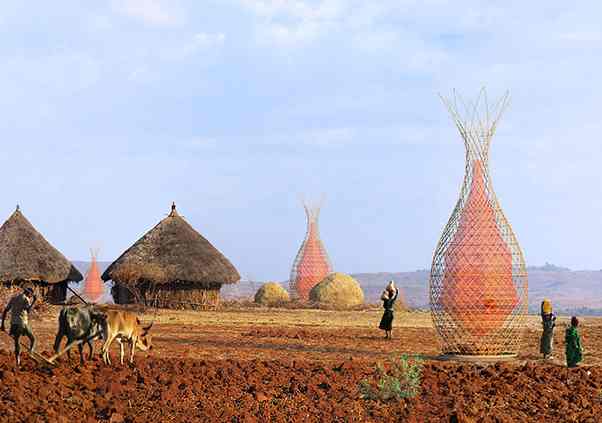
After visiting Ethiopia and seeing for himself how women and children are forced to walk miles every day for water, an Italian designer and cofounder of Architecture And Vision, became determined to create a solution that would be simple, create local jobs, and provide clean water in any of these mountainous villages.
Named WarkaWater, for the traditional warka trees which are vanishing from the landscape there, towers made of bamboo and fabric were created to harvest potable water from the evening air.
The nine-meters tall towers use special fabric hanging inside capable of collecting water through the air via condensation. The lightweight structure is designed with parametric computing, but can be built with local skills and materials by the village inhabitants.
The towers, designed by Arturo Vittori’s VittoriLab, cost approximately $550 each, and can harvest 100 liters of water per day.
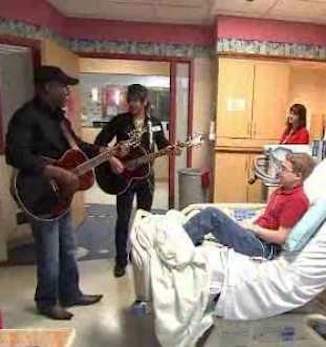
Megan Ford, whose stubborn leukemia is blasted every Friday with chemotherapy, jumped at the chance to receive a song made especially for her.
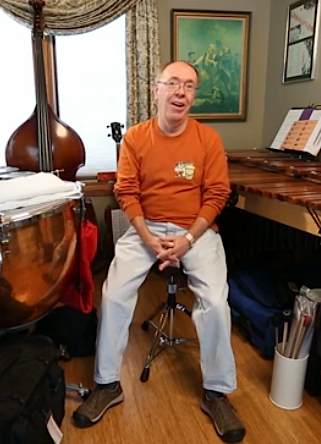
The organization called “Songs of Love” called upon five middle-aged musicians who volunteer to write songs for very sick children like the young girl from Des Moines, Iowa.
The songs serve as medicine for the children but also for the aging men who create the songs. The songs, written to make the kids feel “important”, incorporate special characteristics they have revealed about their favorite hobbies, people or places.
Stanford University scientists have found a new, highly efficient way to produce liquid ethanol that doesn’t involve energy intensive food production, like corn-based fuel. This promising discovery involving carbon monoxide gas could provide an eco-friendly alternative to conventional ethanol production from crops, say the scientists.
“We have discovered the first metal catalyst that can produce appreciable amounts of ethanol from carbon monoxide at room temperature and pressure – a notoriously difficult electrochemical reaction,” said Matthew Kanan, an assistant professor of chemistry at Stanford and coauthor of the study.
Most ethanol today is produced at high-temperature fermentation facilities that chemically convert corn, sugarcane and other plants into liquid fuel. But growing crops for biofuel requires thousands of acres of land and vast quantities of fertilizer and water. In some parts of the United States, it takes more than 800 gallons of water to grow a bushel of corn, which, in turn, yields about 3 gallons of ethanol.
The new technique developed by Kanan and Stanford graduate student Christina Li requires no fermentation and, if scaled up, could help address many of the land- and water-use issues surrounding ethanol production today. “Our study demonstrates the feasibility of making ethanol by electrocatalysis,” Kanan said. “But we have a lot more work to do to make a device that is practical.”
They call the process “oxide-derived” because a novel metallic electrode was produced from copper oxide.
For the process to be carbon neutral, scientists will have to find a new way to make carbon monoxide from renewable energy instead of fossil fuel, the primary source today. Kanan envisions taking carbon dioxide (CO2) from the atmosphere to produce carbon monoxide, which, in turn, would be fed to a copper catalyst to make liquid fuel. The CO2 that is released into the atmosphere during fuel combustion would be re-used to make more carbon monoxide and more fuel – a closed-loop, emissions-free process.
Their study results are published in the April 9 advanced online edition of the journal Nature.
According to Henry David Thoreau: “Happiness is like a butterfly: the more you chase it, the more it will elude you, but if you turn your attention to other things, it will come and sit softly on your shoulder.”
A large number of psychologists dare to differ. According to them if you chase the pretty butterfly named happiness enough you might just get it to come and hop on your shoulder. Here are eight simple — and some of them, essential – steps to happiness:
1. Stop dwelling.
The past is precious because you can learn from your mistakes and learn from others’ mistakes.
The pain is just training; it doesn’t define you. Think about what went wrong but stop dwelling on it. Decide how you will make sure that, next time, it won’t happen again.
Choose to remember the good times. Choose to forget the pain and the tears. Only then can the heartaches heal.
Instead of buying that extravagant piece of diamond, why not go on a trip to a place that has always intrigued you?
No doubt buying things makes us feel better immediately, but at the end of the day it’s the experiences that count. They enrich our lives and make memories that remain for years.
3. Pay compliments.
Start paying compliments. If you like someone’s hairdo or their shoes or their smile, go ahead, tell them. Tell them you find them beautiful, with a smile. And the moment you do that, you will feel better about yourself. The idea behind this is when you know you can make someone feel better about themselves, you automatically feel good about yourself too.
Studies show this works.
4. Stop blaming, Foster forgiveness.
When you blame others for a mistake they did, you, yourself, carry half the burden of their faults on your shoulders.
If the loss is too great, forgiveness will take time. Know that holding onto grudges will only increase your pain.
5. Start a gratitude journal.
Maintain a gratitude diary. Write down all the things you are grateful for.
You saw a baby and she smiled at you at the coffee shop. It made you feel so good; write it down in your diary.
Doing this exercise can calm despair and promote happiness.
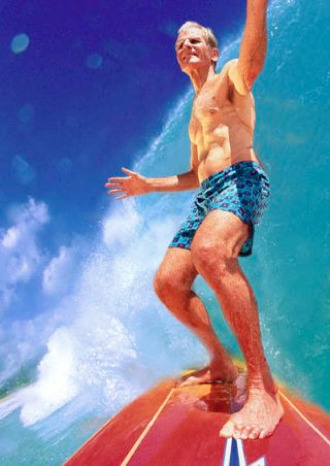
Senior surfer Harold Ige, by Sun Star
6. Do what you like. Live your dreams.
This is a very simple and easy thing to do, but we rarely we do it.
Do you like reading? Sit all day at home and read those books you love.
Do you like dancing but due to something or the other you never got a chance to take your dancing onto another level?
I say, do it right now. Go get yourself enrolled into a dance school or dance at parties for fun. Go and try your luck in a reality show. Do it! Curbing our desires for the sake of fitting in the society or under any other pressure is no good. Do what you really want to.
7. Learn something new.
Think of a subject, a country or a flower that you wish you knew more about and spend 20 minutes on the Internet reading about it. Or, if you prefer, go to a bookstore and buy a book on the subject. Pick a subject that is really close to your heart, not something that you think you ‘should’ know or ‘need to’ learn about.
8. Smile!
Indeed the simplest step to happiness.
Even if you don’t feel like it, fake it! Research shows that even a fake smile induces hormones that make you feel better instantly.
Learn to take these simple little conscious steps towards happiness and it will do wonders to your life.
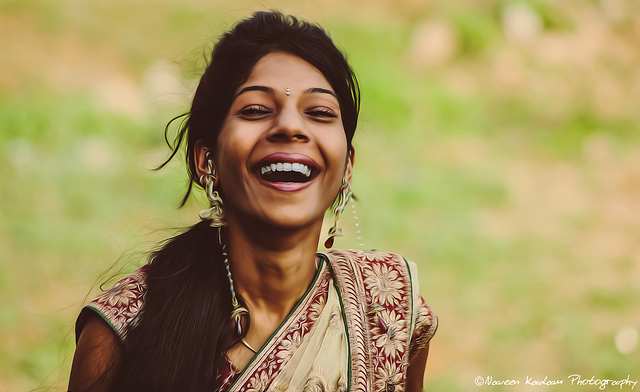
Photo credit (top): Naveen Kadam Photography – CC license
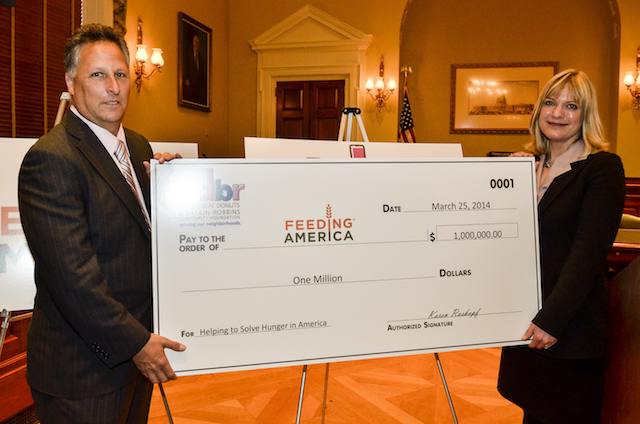
The Dunkin’ Donuts, Baskin-Robbins Community Foundation just gave $1,000,000 to help put food in backpacks for poor children to take home from school throughout America.
The grant will support the Feeding America® initiative that provides hungry children with nutritious and easy-to-prepare food to take home on weekends and school vacations when other resources are not available. The grant will also support the School Pantry Program, which provides food to children and their families to take home from school.
The grant, announced on March 25 on Capitol Hill in Washington, DC, is the largest donation in The Foundation’s history, and will be distributed among Feeding America member food banks across the United States.
The Dunkin’ Donuts, Baskin-Robbins Community Foundation has partnered with Feeding America at the national level since 2007 and has donated more than $1,000,000 over the last seven years to support Feeding America and its local food banks. Additionally, over the past seven years, the DDBRCF has addressed the issue of hunger relief through both national and local efforts. Dunkin’ Donuts and Baskin-Robbins franchisees have led food drives in the communities they serve and have organized volunteer days at their local food banks to help fill backpacks with nutritious meals for children.
Feeding America is the nation’s leading domestic hunger-relief charity, with more than 200 member food banks serving all 50 states distributing 3 billion pounds of donated food and grocery products annually.
“With millions of children struggling everyday in America, the support of our partners in the fight against hunger has never been more critical,” said Maura Daly, Chief Communication and Development Officer at Feeding America. “We are extremely grateful to The Dunkin’ Donuts & Baskin-Robbins Community Foundation for their generous grant to help us distribute food to those who need it the most.”
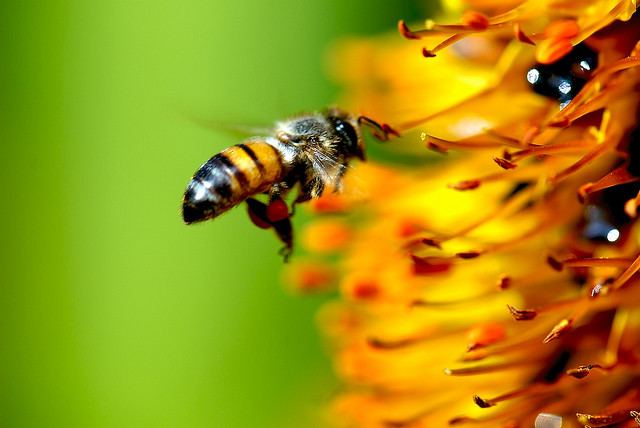
A pioneering European Union survey into the impact of pests and diseases on honey bees in 2012 and 2013 found death rates were lower than feared, in part countering concerns about the collapse of colonies of the crop-pollinating insects.
“It’s the first major study of pests and diseases that affect honey bees. A lot of it seems very encouraging,” said a bee specialist in response to the study of 32,000 bee colonies across 17 EU member states.
A rising number of Australian teenagers are choosing not to drink alcohol, according to the National Drug and Alcohol Research Centre.
Between 2001 and 2010 the number of teens aged 14 to 17 abstaining from alcohol rose from 33 percent to more than 50 percent, the research shows.
“There’s also a sense that the current generation is very focused on health and well-being and this is one step they’re taking to try and stay fitter and healthier, said the study’s author Dr Michael Livingston.
Britain got a double boost on Tuesday as its recovery from recession gathered momentum and the International Monetary Fund raised the country’s growth forecasts more than for any other major economy.
Factories expanded production far more quickly than expected in February, UK statistics office data showed. Separate surveys showed a strong first quarter for companies and a long-awaited pick-up in wages.
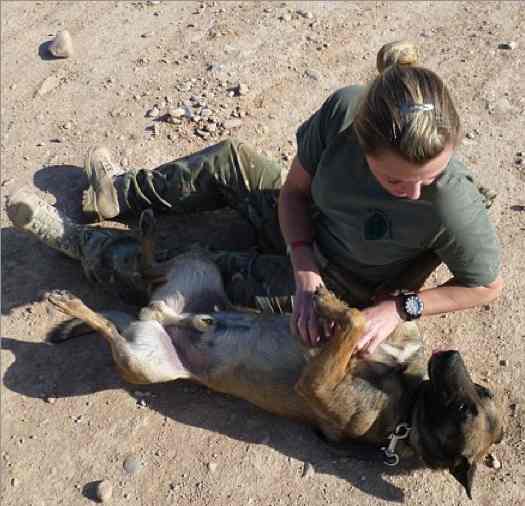
A female soldier who befriended a heroic bomb-hunting dog in Afghanistan tracked down her comrade and gave him a new home after he became too timid to serve on the front lines.
Angie McDonnell, 40, a reservist who served in war-torn Helmand province as a medic, became ‘best friends’ with four-year-old Vidar while the two were based at Camp Bastion.
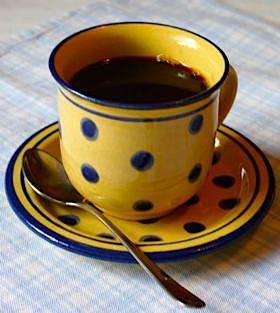
This week marks the 20th anniversary of the start of the Rwandan Genocide that claimed the lives of up to a million members of that country’s minority. The journey back from that insanity has not been an easy one, but coffee has played a key role in the creation of worthwhile livelihood for many of those remaining.
Inspired by Rwandan President Paul Kagame’s call for “trade – not aid”, Grace Hightower De Niro created the company Grace Hightower & Coffees of Rwanda.
Hightower wanted to establish a venture that could simultaneously empower Rwandans and help them restructure their economy. The passionate initiative is now responsible for creating livelihoods for over 500,000 coffee farmers in Rwanda.
Each bag of hand-picked and sorted coffee ($12.50 for 12 oz) goes directly toward sustaining a family for an entire year. As the redevelopment of the country continues, Grace Hightower & Coffees of Rwanda allows farmers the opportunity to market their unique products to the world.
Grace Hightower De Niro started the company in New York City offering a unique coffee line in 4 different blends. With every purchase, consumers are helping to support the future of the people in Rwanda, Africa.
(WATCH the video below)
Photo via Grace Hightower & Coffees of Rwanda FB page
Wow, it has been a long, winding road to get to the point where you can read this blog post from the new Good News Network website, version 4.0.
You’re looking at the fourth iteration of the website, which has evolved over nearly two decades. The first version I built alone in our spare room using Adobe software and a little html code that I taught myself from a book.
In 2012, version 3.0 started breaking down in numerous ways. Processes that had been automatic suddenly need daily updates by hand. So I started looking for developers who could update the software. Thousands were spent on hiring people in Minnesota, and then India, who were incapable of doing such a job. By last November, I felt so weary of the whole process because it was so daunting: We had 14,000 articles to migrate, along with 18,505 registered users, 4786 comments and thousands of photos to migrate to the new site.
With a persistence that I am known for, and a lot of faith, I started another round of interviews and by January I had assembled an amazingly competent team that would work together from four different parts of the globe: First and foremost, a Joomla expert in the UK, Robert Went, would work with a WordPress team in Dallas, Creative Cat Media, and a local freelancer, Anna Fischer who would handle my subscription tables, working with a husband-wife team of developers in Philadelphia who had the new membership plugin I needed.
I didn’t have the money to pay for all the hours of work that were needed. Thank GOODNESS my fans answered the call for donations which helped raise the last round of funding.
As I write this, I can hardly believe the day is finally here when we don’t have to do registrations manually and update subscription payments by hand.
It’s actually going to be FUN again, posting stories, multiplying the good, instead of being bogged down in frustrating IT dilemmas!
This site looks so great on a mobile phone that I expect we will be able to double our traffic by the end of a year.
Thanks for hanging in there, putting up with blank emails coming to your inbox, and all the other messed up processes that revealed the age of my web software, some of which was launched six years ago.
Let’s hope that major good fortune showers down upon our creative efforts at the Good News Network so in another six years I will be able to hire a project manager and not even worry about the Hows and Whys of software updates.
Always remember, in the words of Tim Berners-Lee, the inventor of the World Wide Web, “You affect the world by what you browse.”
P.S. Leave us some feedback about the new site down below in the Comments. It is a work in progress.
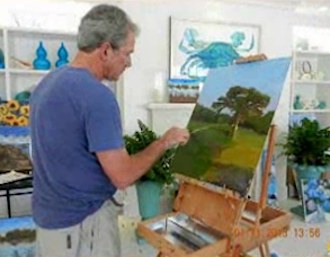
Former president George W. Bush interviewed by his daughter, Jenna Bush Hager, on the TODAY show, revealed for the first time his portraits of fellow world leaders that went on public display last week.
Bush’s passion for painting grew out of an iPad app he was fooling around with after leaving the White House in 2009. He told Jenna he never imagined himself as an artist.
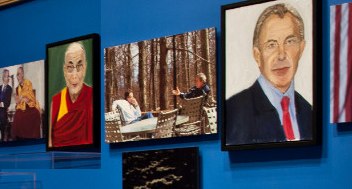
More than two dozen of his portraits, including one of their dog, along with world leaders like Tony Blair, Vladimir Putin and the Dalai Lama, will be part of an exhibit called The Art of Leadership: A President’s Personal Diplomacy at the George W. Bush Presidential Library and Museum.
“I hope they take it in the spirit in which these were painted in,” he told Jenna. “That was the spirit of friendship and that I admire them as leaders and was willing to give it a shot in terms of getting people to see how I felt about them.”
Five leading art museums in the U.S. are collaborating with a billboard trade group to exhibit masterworks of American art outdoors in cities this summer.
50 works will be reproduced in tens of thousands of public spaces, including billboards, bus stops, and subway stations, providing chance encounters with great works of art nationwide.
It’s called Art Everywhere US, a first of its kind collaboration for US museums, based on a successful version in the UK last summer. For the project this August, online voting from the public will determine which 50 artworks make the cut, choosing from 100 paintings, designs and photographs.
The National Gallery of Art in DC, Art Institute of Chicago, Whitney Museum of American Art in New York, and the Museums of Art in Los Angeles and Dallas each chose twenty pieces from their collections that best tell the story of America.
They collaborated with artists, estates, foundations, and rights agencies to be able to share the images of these 100 works on websites and social media and eventually outdoors in public.
It affords an unprecedented opportunity to acquaint countless millions of Americans and visitors to our country with some of America’s best and most memorable artworks.
The 100 artworks span the history of the United States, from portraiture before and after the American Revolution in 1776, to landscapes of the nineteenth century, to scenes of daily life in the last quarter of the 1800s, to still life paintings and images of the well-to-do. Selections from the early twentieth century take us to the American West through photography, to a scene from the Bible, to the First World War.
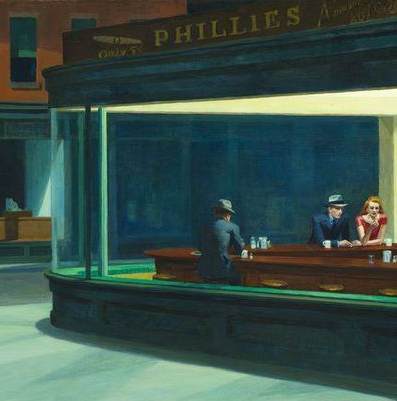
Gritty urban scenes documenting the Great Depression are joined by an image of the Dust Bowl in the West and the genius and travails of African-Americans at that time. Surrealism, Abstract Expressionism and Pop Art, such Andy Warhol’s soup are also represented. Among the artists whose works are on the ballot: Edward Hopper, Mark Rothko, John Singer Sargent, Mary Cassatt, Ed Ruscha, Catherine Opie, Andy Warhol, Cindy Sherman and Frank Lloyd Wright.
“All in all, the 100 works in Art Everywhere US bring us face-to-face with the story of our nation, told by the visionaries who captured our essence at the time they lived and worked, and who to this day compel us to find our place in the evolving story of America,” says the Art Everywhere US website.
Billed as the biggest art exhibition in history, the project hopes to inspire everyone to visit their local museums, and start a national conversation about the importance of creativity in our schools and daily lives.
Vote for your favorites at ArtEverywhereUS.org, where the final list of 50 artworks will be announced June 20.
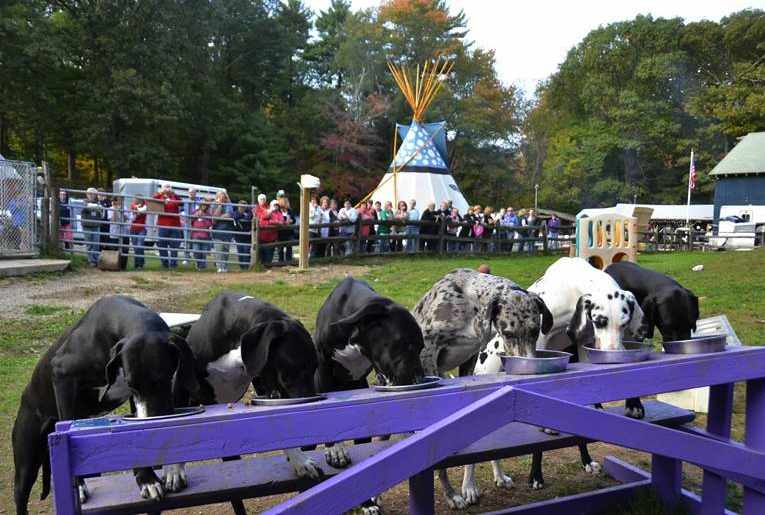
Crowd watches during the 4:30pm feeding of the young Dane group. Feedings are shown daily on explore.org. Photo by Mark Amirault.
The Service Dog Project has donated over 45 Great Danes as service dogs to individuals with severe balance and mobility limitations, including Multiple Sclerosis, PTSD and more. Preference is given to Veterans who need a better quality of life. The daily administration, cleaning, feeding, exercise & training activities of the dogs are lovingly carried out by the project’s owner, Carlene White, her small staff, and an army of volunteers, including myself. The staff and volunteers work tirelessly for the nonprofit organization, located in Ipswich, MA, and are the foundation of the SDP program.
In June of 2012, explore.org, a multimedia organization that documents leaders around the world who have devoted their lives to extraordinary causes, began live online streaming of the activities at SDP through web cams located on the property. This new reality-based experience has created a seismic shift in the dynamic of the farm. Now thousands of visitors are educated through real-time viewing of the dogs which typically run 24-7. This has also opened the lines of communication with those on the farm about the ongoing activities through continuous online comments and emails. This interaction does allows for a new online fundraising resource which allows SDP to produce and donate more service dogs each year.
The 501c3, fully accredited by Assistance Dogs International, is a farm that raises Great Danes, has 2 horses, a donkey, chickens, a pond and a tee-pee. Yes, a tee-pee. The tee-pee is sponsored by the online community group known as “the camera people”, or “CP’s” and it has become a respite for those visiting to find peace and relaxation, or looking to spend quiet time with one of the dogs. The CP community grew from the comment sections of the indoor puppy & puppy hill web cams on explore.org.
Hundreds of people asking questions, sharing experiences, chatting with one another, all watched together as each batch of puppies, with their purpose predetermined, is brought into the world. They watch as they grow, develop, train and then finally, as they leave with their new recipient. A sad day for many as they have watched the dogs carefully through the months, but ultimately a glorious outcome as they continue to watch them transform the lives of their new owners. It’s amazing really. And, the community of CP’s helps keep this life-cycle flowing by answering calls for needed resources with donations, physical visits to help when they can, and, of course, they continue to watch, while becoming a part of the history, at SDP.
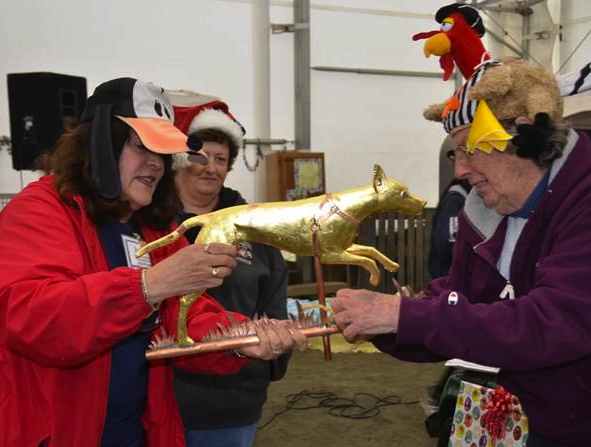
Carlene gifted with a Great Dane weather vane, purchased with funds raised by online community. Photo by Mark Amirault.
Laughing, smiling, meeting others only known online, meeting Carlene, the volunteers and staff, playing with dogs of all sizes, were all the main focus of those at the event. Spirit sticks were created by those who could not attend and sent to SDP to be displayed. They were shown on camera so those at home could see. Squeezed in along the way was a clam bake, barn painting, laundry folding, poop scooping, crazy hat day, chicken poop bingo and Carlene’s “chicken stew.” Volunteers spent the weekend making sure the farm ran as usual while also enjoying the festivities of the retreat. Despite some rain, the weekend was overflowing with nothing but happiness and joy, and the event was a huge success. Invigorating, actually.
With many CP’s later described the SDP retreat, via explore and Facebook comments, as the “happiest place on earth,” even better than “Disney” for those who had only before been able to visit virtually. Many cried when they had to leave.
I volunteer weekly and can tell you first hand, the farm is a wonderful experience that always leaves you wanting more. The dogs, the staff, the volunteers and the camera people, have become an important part of each others lives- they have become family. And, it is the love for the dogs, those Great Danes, that keeps people emotionally and spiritually charged. There is something dynamic about a beautifully large, selflessly loyal, fun-loving animal, whose purpose is to care for others. It is awe-inspiring and truly motivational in nature and it is heartwarming to say the least. These dogs, unbeknownst to them, are destined not only to touch the hearts and change the lives of those they service, but of every individual they meet along the way. They have helped build a community far greater than one can imagine.
New Volunteers are Always Welcome. Visit the Service Dog Project website, www.servicedogproject.org , or visit the farm during their Sunday Stew, held every Sunday from 12-4pm, for visitors to come meet the dogs, and learn about SDP. Watch the cameras on www.explore.org.
If you are a Veteran with PTSD, have MS or other immobilizing challenge and live locally, please visit the farm, or the site for more information on becoming a recipient. You are all invited to become a part of the SDP community!
After a 5-year run as a subscription news service, the Good News Network is officially announcing the removal of its paywall in order to make its daily content free to all.
I will continue to ask for your voluntary support to keep the website growing and improving. I ask that you consider giving membership pledges whenever you can (log-in and click Contribute/Membership). Or, give a Gift membership that can uplift someone you know. (These are now $15).
I want us to be partners — spreading the good news together. We are a Good News Network. The NETWORK is you!
The new interactive website was made, most importantly, with you in mind. With open blogs, users can share stories in their own words. You can also submit your best photography for the coveted Photo Of the Day spot. Most importantly, the website is now mobile friendly with lots of SHARE buttons. With one click you can MULTIPLY the good by sharing your favorite stories on Facebook, Pinterest or Twitter or email it to someone who needs a smile. If you appreciate a story, someone else could benefit too.
Our Membership Bonus page – for those who contribute financially – offer some cool bonus content and goodies if you contribute as low as $2.00 per month.
*NOTE* For those who paid annual subscriptions in the last year, we are offering cash refunds if you want your money back, because the site is now free. Simply use our Contact Page and send your request, including your GNN username and the amount you would like returned. (Refunds will be made via Paypal, unless you paid by check.)
I hope you enjoy the Good News Network v. 4.0! Give us Feedback below.