











All News - Page 123 of 1714 - Good News Network
Home Blog Page 123

Bison Ranchers Return Thousands of Animals to Native Lands and Witness Total Rejuvenation of Ecosystem

- credit: Tanka Fund, via Facebook
– credit: Tanka Fund, via Facebook

A tribal-led nonprofit is creating a network of native bison ranchers that are restoring ecosystems on the Great Plains, restoring native ranchers’ connections with their ancestral land, and restoring the native diet that their ancestors relied on.

Called the Tanka Fund, they coordinate donors and partners to help ranchers secure grazing land access, funds needed to install and repair fencing, increase their herd sizes, and access markets for bison meat across the country.

That’s the human part of the story. But as Dawn Sherman, executive director of the Tanka Fund, told Native Sun News, they’re “buffalo people” and these four-legged, 2,000 lbs. “cousins” are equal-part-protagonists.

The return of the bison means the return of the prairie, one of the three great grassland ecosystems on the planet, of which just 1% remains as it was when the Mayflower arrived.

“Bringing buffalo back to their ancestral homelands is essential to restoring the ecosystem. We know that the buffalo is a keystone species,” said Dawn Sherman, a member of the Lakota, Delaware, Shawnee, and Cree.

“Bringing the buffalo back to the land and to our people, helps restore the ecosystem and everything it supports from the animals to the plants to the people. It’s come full circle. That’s how we see it.”

As Sherman and the Tanka Fund help native ranchers grow their operations, everyone is well aware of the power of the bison to transform the environment: just as nations across Europe are, who are reintroducing wood bison to various ecosystems, for all the same reasons.

YOU’LL SURELY LIKE: Absolutely Epic: Watch the Release of a Wild Bison Herd onto Blackfeet Tribal Land

Sherman points out the variety of ways in which buffalo anchor the prairie ecosystem. The almost-extinct black-footed ferret, she points out, lived symbiotically with the bison, and with the latter gone, the former followed—nearly.

The long-billed curlew uses bison dung as a disguise to hide nests from predators. Deer, pronghorn antelope, and elk all rely on bison to plow through deep snows and uncover the grasses that these smaller animals can’t reach.

TRIBES REGAINING THEIR RIGHTS: After 9 Years of Work, Chumash Tribe Finally Seals Protection of CA Marine Reserve Bigger Than Yosemite

Everywhere the bison hurls its massive body, life springs in the beast’s wake. When bison roll about on the plains, it creates depressions known as wallows. These fill with rainwater and create enormous puddles where amphibians and insects thrive and reproduce. Certain plants evolved to grow in the wet conditions of the wallows which Native Americans harvested for food and medicine.

Native plants evolved under the trampling hooves of millions of bison, and that constant tamping down of the Earth is a key necessity in the spreading of native wildflower seed.

GOOD NATIVE STORIES: Bison Herd New to Park Uncover Ancient Petroglyphs With Their Hooves Fulfilling Indigenous Prophecy

Indeed, Sherman says some of these native ranchers are bringing bison onto lands still visibly affected by the Dust Bowl, and already the animals are acting like a giant wooly cure-all for the land’s ills.

Since 2020, the Tanka Fund, in partnership with the Inter-Tribal Buffalo Council and the Nature Conservancy, has overseen the transfer of 2,300 bison from Nature Conservancy reserves to lands managed by ranchers within the Tanka Fund network.

“[T]he more animals that we can get the more of that prairie we can restore,” said Sherman. “We can help restore the land that has been plowed and has been leased out to cattle ranchers.”

WATCH a video explaining what the Tanka Fund does… 

SHARE This Native Project Of Renewal And Enrichment With Your Friends…

Big Oil Shares Data Maps to Unlock Fresh Drinking Water for Millions of Africans

Ruden AS workers in front of the Kimbiji aquifer site - credit Ruden AS
Ruden AS workers in front of the Kimbiji aquifer site – credit Ruden AS

Firms that conduct exploratory surveys for oil drilling have been sitting on mountains of geologic data that are now used to locate hidden aquifers of water for African communities.

Two-thirds of the African population is affected by water scarcity, but while this basic human necessity costs so little, the costs of finding underground sources are prohibitive for all but large development agencies or governments.

However, a drilling company founded by former petroleum industry men realized that in many regions of Africa where oil is believed to be present, extensive seismic surveys have pinpointed dozens of hidden water wells that the exploration companies weren’t interested in, and that water projects couldn’t afford to search for.

That company, Ruden AS, has spent years collecting this industry data in order to unlock freshwater sources for millions of Africans.

One in particular, now known as the Kimbiji aquifer, will provide 2 million Tanzanians with water for a century.

“Everyone got excited because this was the discovery of an aquifer that no one knew existed,” Elizabeth Quiroga Jordan, a petroleum engineer at Ruden AS, told Euro News.

Fritjov Ruden, from Norway, founded Ruden AS alongside his daughter Helene Ree in 2009. Having worked as an oil explorer turned water driller in Tanzania, Ruden learned that if an oil company fails to find oil after a certain number of feet, they will declare it dry even if it’s filled with water.

Working for the Ministry of Foreign Affairs, Ruden and his daughter were able to convince it to launch a charm offensive on the Petroleum Ministry, where decades of seismic survey data were held by the nationalized oil company. They hoped to use the data to find aquifers, something scientists recently determined were more numerous across Africa than previously thought.

GOOD NEWS FOR AFRICA: Egypt Has Finally Been Declared Malaria-Free After 4,000 Years of Infections—Even the Pharaohs

After 3 years, they received it, and sure enough, it revealed to Ruden that he and his team weren’t drilling deep enough in Tanzania’s Kimbiji Ward, and that a massive aquifer lay 1,800 feet down.

In 2005 they reached it, and water gushed forth. The extensive Kimbiji is estimated to contain a whopping 5,000 cubic kilometers of water, and its annual recharge rate is 2,000 cubic kilometers per year. This holds the power to furnish millions with clean drinking water for generations.

MORE STORIES LIKE THIS: Kazakhstan Sees Incredible Progress Scaling Back World’s Worst Environmental Disaster

In Somalia, different oil and gas exploration campaigns have to date drilled for 80 oil and gas wells and more than 30,000 miles of seismic lines have been mapped. Ruden AS is currently exploring this massive dataset to hopefully provide Somalia with what has been provided already to Tanzania.

SHARE The News Of These Hidden Resources Unlocked For Africa… 

“Men can starve from a lack of self-realization as much as they can from a lack of bread.” – Richard Wright

Quote of the Day: “Men can starve from a lack of self-realization as much as they can from a lack of bread.” – Richard Wright

Photo by: yulia pantiukhina

With a new inspirational quote every day, atop the perfect photo—collected and archived on our Quote of the Day page—why not bookmark GNN.org for a daily uplift?

Almost Extinct Caribbean Lizard Makes a Comeback After Island Restoration

Sombrero ground lizard - credit: Richard Brown / Fauna & Flora ©
Sombrero ground lizard – credit: Richard Brown / Fauna & Flora ©

Originally published on Mongabay by Shreya Dasgupta

A tiny lizard found only on one tiny Caribbean island has seen a dramatic 1,500% increase in its population, after just a few years of island restoration efforts.

In 2018, researchers estimated there were fewer than 100 individuals of the critically endangered Sombrero ground lizard (Pholidoscelis corvinus) on the small hat-shaped Sombrero Island, part of Anguilla in the Caribbean. Just six years later, there are more than 1,600 of them, a recent survey has found.

MORE CONSERVATION NEWS: Native Wildlife Flourishing Again After Another Caribbean Island Banishes Invading Rodents

“I am beyond thrilled to see the ground lizards on the road to recovery, and this is a fantastic reward for everyone who has worked hard to restore Sombrero,” Jenny Daltry, Caribbean alliance director at conservation NGOs Fauna & Flora and Re:wild, told Mongabay. “Too many island species have been lost already, and we really need to prevent extinctions whenever we can.”

Today, Sombrero Island hosts large seabird colonies and several unique and rare species. But invading mice, likely brought to the island on ships or other means by people, as well as climate change impacts, have wreaked havoc on the island’s inhabitants.

When mice take over islands, they devour almost everything, from seeds to seabirds, Daltry said.

“By preventing plants from regenerating, the mice deprived the lizards of vital shelter and food, including fruits and insects. No doubt they also preyed on the lizards’ eggs and young.”

With native vegetation in a precarious state, storm surges and hurricanes striking the island further devasted the island’s lizard populations.

To turn things around, Fauna & Flora, Anguilla National Trust, and Re:wild began restoration efforts in 2018. They trapped and removed all the mice by placing bait from June to August 2021. They also developed a “biosecurity plan” in which researchers regularly check the island to ensure it’s still mouse-free.

MORE GOOD ISLAND NEWS: Islanders Remain Dedicated to Conservation Above All, Living on the ‘World’s Best Beach’

Given Sombrero’s remote location, the likelihood of reinvasion by mice is considered low, Daltry said. She added that the teams are also developing “remote surveillance cameras with AI capability” to automatically detect and alert them of invasive species.

While the mice may be gone, the threat from hurricanes fueled by climate change still looms close. While the researchers have been working to restore the island’s native vegetation, the island has lost much of its original soil cover, which will take time to rebuild, Daltry said. With no tree cover yet, any severe hurricane or storm surge in the future “could set back the speed of recovery of the soil layer and vegetation,” she added.

READ NEXT: Rats Finally Eradicated from Caribbean Island as Huge Nature Reserve Rises in Their Place

However, Daltry said she’s hopeful that even the current sparse vegetation provides the Sombrero ground lizards “with vital food and shelter, giving them a much better chance of survival when the next storm strikes.”

“This could make the difference between survival and extinction,” she said. “The big question is whether the recovery of Sombrero Island and its wildlife will be able to keep pace with the speed of climate breakdown.”

SHARE The Impressive Recovery Of This Tiny But Important Lizard… 

Reprinted under a CC 4.0. license from Mongabay 

The Emotional Moment Dog was Returned to Owners 7 Years After Being Stolen

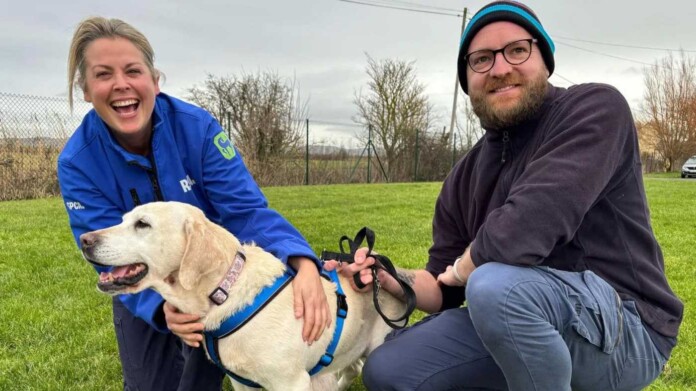
RSPCA inspector Kim Walters (left), pictured with colleague Andy Cook - credit: RSPCA, supplied
RSPCA inspector Kim Walters (left), pictured with colleague Andy Cook – credit: RSPCA, supplied

An English family has been reunited with their beloved Labrador Daisy who was stolen from their front lawn 7 years ago.

Their tireless search and advocacy for their lost family member attracted the attention of British celebrity and even helped steer a law through Parliament, but the ultimate reward for the devotion to their lost dog was the chance to see her again, elderly and slightly battered, but alive and loving.

In 2017, a truck arrived in front of Rita and Philip Potter’s Norfolk house. Two men hurriedly lept out, grabbed Daisy, and stuffed her into the back—a despicable act seen by neighbors.

Ruling out the possibility that Daisy got lost in the woods somewhere, the Potters contacted the police and urged a response. An RSPCA search in Somerset—200 miles and 7 years later—has recovered a 13-year-old Daisy, who was likely the victim of an illegal pet breeding operation.

A quick microchip scan, and Daisy was on her way home.

“We kept a photograph on the mantlepiece and would look at it every day thinking of her, and where she might be,” Mrs. Potter told the BBC. “It is an absolute dream come true that the RSPCA found her and returned her to us—where she belongs—we are so, so grateful,” said Mrs Potter.

Following Daisy’s abduction, the Potters were active in the press and social media trying to ensure anyone who might have seen the dog understood where she had come from. Tom Hardy, the A-list action star from Dark Knight Rises and Inception, shared their post on his X account.

EMOTIONAL REUNIONS: Arizona Man Who Never Stopped Trying is Reunited with Dog Lost 8 Years Ago in Another State

The Potters then collected 100,000 signatures on a petition for greater government action to fight pet crime. The Pet Abduction Act changed the UK sentencing guidelines, making it a criminal offense with a prison sentence of up to 5 years. Previously, pets were considered property, and abducting them was punished under the UK’s 1986 Theft Act.

During the RSPCA’s investigation, the owner agreed to turn Daisy over to the organization, explaining they had only had her for a few years and didn’t know she could have been stolen. At their facility, a microchip scan revealed Daisy’s provenance and the call to the Potters was an emotional one.

MORE STORIES LIKE THIS: Special Police Unit Tracks Down $27 Million in Stolen Cars Including Crates Full of Snagged Luxury Vehicles

“They were obviously shocked—but elated at the same time,” said RSPCA inspector Kim Walters. “I was a bit choked from listening to them, and clearly how much they loved her, so it was great telling them that we could get her back home soon.”

Now in her golden years, and with several health issues from a half-decade of maltreatment, the Potters look forward to loving, spoiling, and caring for her.

SHARE This Inspiring Story Of Hope And Advocacy With A Happy Ending… 

Rate of Deforestation in Colombia Last Year Was Among the Lowest in 23 Years

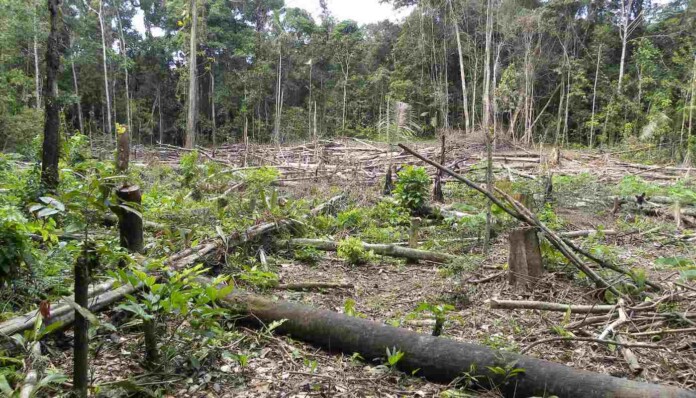
Deforestation in Colombia's Amazonas Department - credit: Lowfill Tarmak, via Flickr.
Deforestation in Colombia’s Amazonas Department – credit: Lowfill Tarmak, via Flickr.

Looking at the number of deforested acres in Colombia, the outgoing environment minister says 2024 will be one of the least damaging years in recent decades.

Considering the level of paramilitary presence in rural Colombia over the past 50 years, it’s an incredible achievement to have seen it fall so low in one of the world’s most biodiverse countries.

Colombia has had problems with deforestation for years owing to the occupation of rural highland forest areas by the revolutionary Marxist guerilla force FARC, and a similar group called the ELN, with which Colombia remains in conflict.

Deforestation is in part driven, it’s believed, by dissident rebels from these and other groups, including drug traffickers, including through building roads, camps, ranching animals, and perhaps supplying the illegal hardwood trade.

In 2023, deforestation rates fell by more than one-third, to 305 square miles, and though there has been a slight uptick since then, Minister Susana Muhamed told reporters that 2024 will be the third-lowest in the 21st century, showing the state can maintain the progress it’s already made.

A STORY ALONG THESE LINES: Deforestation Fell 26% in Colombian Amazon Last Year Since Peace and Reconciliation with Rebels in FARC

Deforestation is not measured by the number of trees felled by men with chainsaws, but also includes weather events and disasters such as landslides or fires. 2024 was originally predicted to see a sharp rise in forest loss amid a strong El Nino weather phenomenon that brought about dryer and hotter conditions, droughts, and fires throughout Colombia by April.

Deforestation had increased 40% in the first quarter of 2024 compared to the same period the prior year, but these trends must have petered out significantly over the following months.

SHARE This Positive Phenomenon In A Troubled, Yet Beautiful Country… 

Discovery of Stunning Einstein Ring by European Space Agency’s Euclid – the Dark Universe Detective

European Space Agency’s Euclid captures Einstein Ring – Credit: ESA

When parsing through images meant to test the camera on a new space telescope, scientists recently recognized a striking and rare phenomenon that had been perfectly captured by the craft.

A galaxy, shining in the distance, was tightly encircled by a halo of white light—also known as an Einstein Ring, and the result of gravitational lensing.

Close up of the Einstein ring around galaxy NGC 6505 – credit: ESA, released

Euclid, named after the Ancient Greek mathematician, was launched into space by the European Space Agency in July 2023, and it began to test its camera systems in September.

In February 2024, Euclid began a survey that will map more than a third of the sky, observing billions of galaxies out to 10 billion light-years in order to create the most detailed 3D map of the universe ever assembled.

NASA has two spacecraft en route to launch for similar purposes, the SPHEREx broad surveyor, and the Nancy Grace Roman Space Telescope, a middle-ground surveyor between SPHEREx and the flagship observatories Hubble and James Webb.

These surveyor telescopes represent the astronomical science community’s desire to understand more about dark matter and dark energy—unseen forces that shape the positions of galaxies throughout the universe, and it only took a few months for Euclid to produce this amazing observation of their effects through space.

“I look at the data from Euclid as it comes in,” explains Euclid Archive Scientist Bruno Altieri. “Even from that first observation, I could see it, but after Euclid made more observations of the area, we could see a perfect Einstein ring. For me, with a lifelong interest in gravitational lensing, that was amazing.”

OTHER COOL SPACE DISCOVERIES: Tiny Planet Makes Big Splash as Surprise Study Shows it May Be Producing its Own Organic Compounds

Gravitational lensing was predicted by Einstein who stated that light would bend around large objects. In this image from Euclid, a galaxy called NGC 6505 shines with clear light from the center of space. Located 590 million light-years away, it is surrounded by the light from a second, very bright galaxy more than 4 billion light-years away.

As the light from the unnamed, older galaxy arrives at NGC 6505, it bends around and coalesces on the other side (as we see it) distorted. NGC 6505 actually behaves in this scenario like a magnifying glass, providing a much greater amount of light from the distant, unnamed galaxy, than we would be able to see imaging it directly.

MORE EXAMPLES OF GRAVITATIONAL LENSING: Beyond the ‘Dragon Arc’ Astronomers Unveil a Treasure Trove of Hidden Stars

“All strong lenses are special, because they’re so rare, and they’re incredibly useful scientifically,” said Conor O’Riordan, of the Max Planck Institute for Astrophysics, Germany, and lead author of the first scientific paper analyzing the ring. “This one is particularly special, because it’s so close to Earth and the alignment makes it very beautiful.”

The ESA press team writes that Einstein Rings are a rich laboratory for scientists. Studying their gravitational effects can help us learn about the expansion of the Universe, detect the effects of invisible dark matter and dark energy, and investigate the background source whose light is bent by dark matter in between us and the source.

SHARE This Cool Phenomenon And Research Field With Your Friends… 

“The head never rules the heart, but just becomes its partner.” – Mignon McLaughlin

Quote of the Day: “The head never rules the heart, but just becomes its partner.” – Mignon McLaughlin

Photo by: Tim Winkler

With a new inspirational quote every day, atop the perfect photo—collected and archived on our Quote of the Day page—why not bookmark GNN.org for a daily uplift?

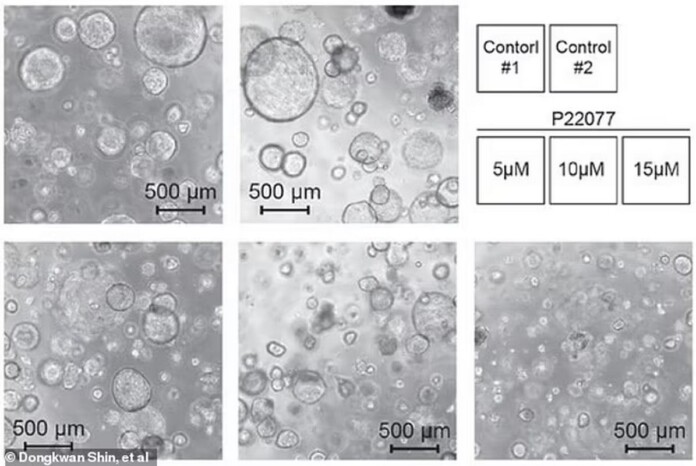
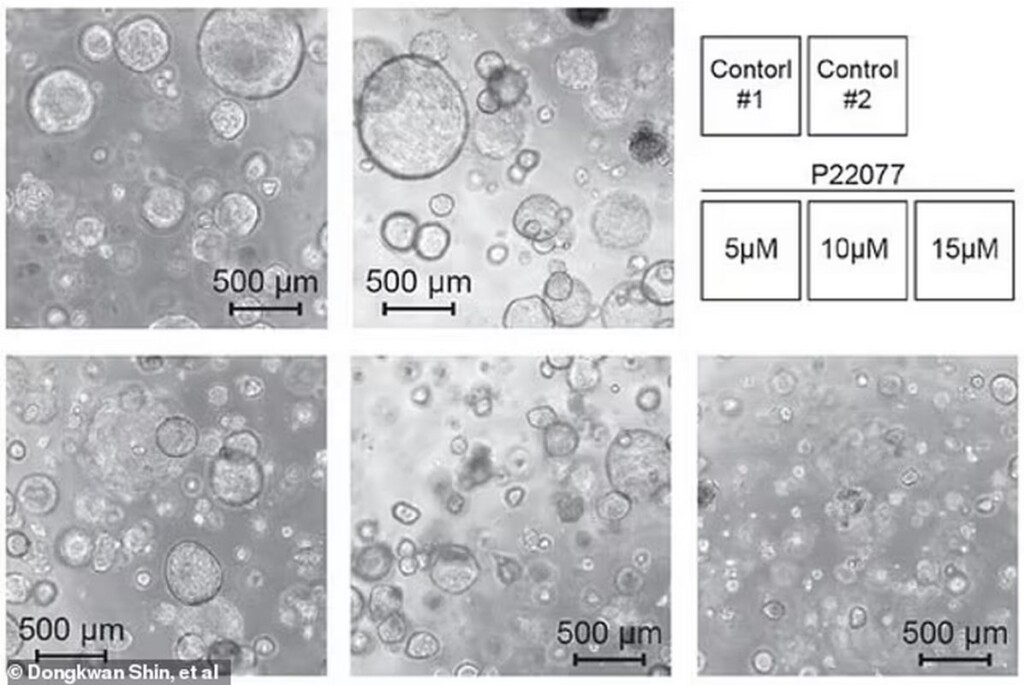
Fighting Cancer Without Fighting: Scientists Switch Tumor Cells Back to Healthy Ones at ‘Critical’ Moment

Cancer growth (top left) was reverted back to a health state (bottom right) - credit Dongkwan Shin et al.
Cancer growth (top left) was reverted back to a health state (bottom right) – credit Dongkwan Shin et al.

What if the best course of action in the fight against cancer isn’t to fight at all?

Rather than killing these mutated cells, a new study from Korea presents a treatment wherein they can be changed back to healthy cells at a key moment.

The authors liken the method to the moment just before water reaches 212°F (100°C), when it’s neither truly liquid nor truly gas. There is such a moment when a cell is both cancerous and normal, when it’s possible to turn it back down the path of health with a gentle nudge.

The experiment was performed on a lab-grown tumor in a petri dish, and so has a long way to go before it’s visible in any hospital.

“This study has revealed in detail, at the genetic network level, what changes occur within cells behind the process of cancer development, which has been considered a mystery until now,” Kwang-Hyun Cho, a professor of biology at the Korea Advanced Institute of Science and Technology and co-author of the new research, said in a statement.

“This is the first study to reveal that an important clue that can revert the fate of [tumor development] is hidden at this very moment of change,” he added.

The authors write in their paper that recent advances in gene regulatory network modeling have offered insights into controlling cell fates, especially interesting for the ‘critical transitions’ referred to earlier; but modeling the tipping point from cell to tumor remains challenging due to genetic alterations that dynamically reshape networks throughout the tumorigenic process.

Nevertheless, Professor Cho and their partners identified an enzyme hindering the breakdown of certain cancer-related proteins, allowing them to fuel tumor growth. By blocking the enzyme, the lab-grown tumors stopped growing and reverted to a healthy state of normal functioning.

MORE CANCER BREAKTHROUGHS: Youngest Cancer Patient Treated with ‘Nano-knife’ Is Now Cancer-Free

What other functions does the enzyme have in tumors; what about in healthy cells? Could it be blocked with a pharmaceutical application? These questions will certainly be much on the minds of the study team as they expand on this potentially revolutionary idea of treating cancer.

SHARE This Story With Your Friends On Social Media… 

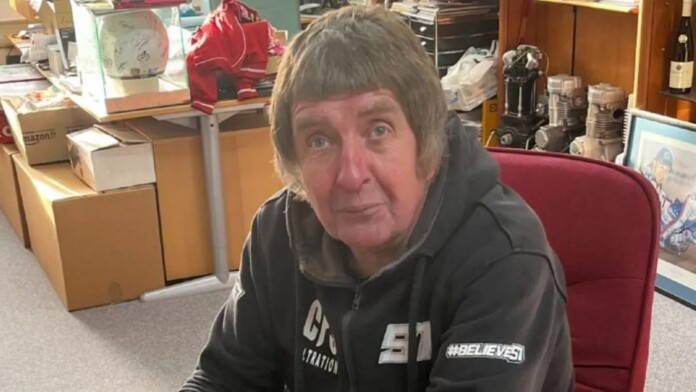
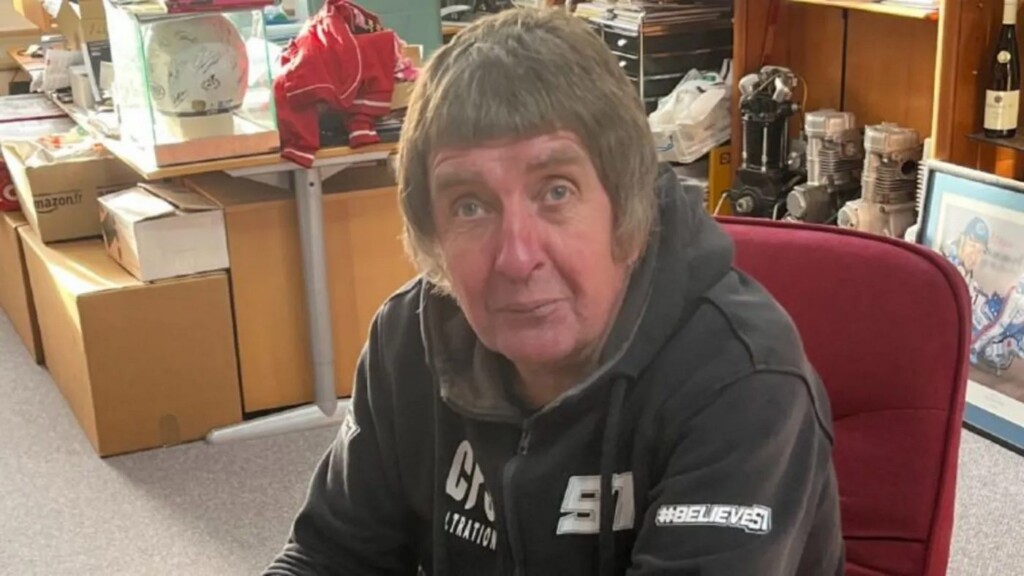
Mechanic Learns to Read at 58 and Finally Gets to Enjoy a Magazine He Bought 40 Years Ago

Ted Midgely - credit supplied
Ted Midgely – photo supplied

A dyslexic Englishman who was never properly taught how to read in school has finally been able to enjoy a copy of a magazine he bought in 1985.

Ted Midgely has learned how to read at 58 years old thanks to the help of a tutor, who told the BBC that adults without the ability to read are actually more common in the UK than one might think.

Midgely was born in Bradford, England, where he struggled in school and was dubbed “lazy” by the teaching staff. It was only when he arrived in middle school that someone reached out to his parents and suggested Ted might be dyslexic.

Leaving middle school, he was moved to another institute for those with learning impairments but struggled, and eventually drifted out of the education system altogether to work in a textile mill.

No one reading needs to feel sorry for Midgely, as despite his inability to read, he had a rewarding career as a mechanic for the specialist motorcycles used in a unique British motorsport called ‘speedway’ in which the riders compete on a dirt oval track with single-gear dirtbikes that have no brakes.

He’s gotten to travel around the world for races, and it acted as the genesis for his desire to learn how to read.

“I got involved with a young chap from Australia called Brayden Elliot and it’s gone really well and I want to become his manager—that’s what I’d like to do,” Midgley told the BBC. “But to do that I need to read emails.”

READ MORE STORIES: CNN Hero: Man Helps Barbers Fill Their Shops with Books to Help Kids Find Excitement in Reading

He has been taking two 30-minute lessons a week from Duncan Livsey, a tutor with Read Easy Derby.

“He’s been brilliant,” Livsey said. “Because Ted’s so positive he’s been so easy to teach—it’s been so rewarding and I get a buzz each time I sit down with him.”

LATE GRADUATES: 72-Year-old Graduates from College with His 99-yo Mom Cheering Him On

As well as reading Elliot’s emails, Midgely was able to read something a lot more special: a copy of Speedway Star magazine he bought 40 years ago.

“I had this for so long and I’ve never been able to read it… it was amazing to do it,” he said.

SHARE This Never-Too-Late Story With Your Friends On Social Media… 

90% of All Power Grid Additions in American During 2024 Were Renewable–Solar Alone Made up 80%

- credit, energy.gov, released.
– credit, energy.gov, released.

In a staggering statistic, where it took a whole year to add one gigawatt of solar power in 2004, it now takes one single day.

A gigawatt can power around 200,000 homes in the US, and in another staggering statistic, American businesses and governments funded the installation of 30 in 2024 alone.

Indeed, 90% of all grid additions in 2024 were renewable energy sources, including solar, wind, biomass, hydro, and geothermal.

Solar accounted for 80% of all these additions alone, providing 30 gigawatts of electricity, or around 75% of the total renewable energy supply California has installed in the state’s history.

New solar capacity added in 2024 is almost nine times that added by natural gas and nuclear power combined.

There was also a respectable amount of capacity added by new wind power installations, which added 3 gigawatts to state grids. Additionally, 213 megawatts of hydropower, 51 MW of biomass, and 29 MW of geothermal steam were added, taking the total renewable energy footprint in 2024 to 90.5% of all new power sources.

RENEWABLE NEWS FOR 2024: 

Part of this can be explained by the long-term nature of fossil fuel plants, the builders, financiers, and operators of which have been disincentivized for years to initiate the construction of one of these power plants.

By contrast, solar power, even in large amounts, can be installed incredibly quickly.

Solar’s share of US generating capacity is now 10x greater than a decade ago, and renewables have inched up beyond 30% of the total grid mix.

SHARE This Sunny Energy Forecast With Your Friends On Social Media… 

Stradivarius Violin Auction Raises $11 Million for Scholarships at Boston Music School

A Stradivarius violin in the royal palace in Madrid - credit: Σπάρτακος CC 3.0.
A Stradivarius violin in the royal palace in Madrid – credit: Σπάρτακος CC 3.0.

A music conservatory has made a remarkable sacrifice in the name of providing the best education in the arts for its students.

Crafted in 1714 and considered one of the greatest violins ever made or heard, the Joachin-Ma Stradivarius violin was owned by the New England Conservatory, but it’s now been sold to establish the largest endowed scholarship at the institute.

Going up for auction at Sotheby’s in New York, it was estimated to fetch between $12 and $18 million, as the brand value is simply ‘Strad-ospheric.’

The name Joachin-Ma is a combination of the violin’s two most illustrious owners: Hungarian virtuoso Joseph Joachim who lived between 1831 and 1907, and Si-Hon Ma, a Chinese-American immigrant from 1948 who died after the turn of the millennium. It’s strongly believed to have influenced a piece by Johannes Brahms.

“Brahms wrote the Violin Concerto [D Major] specifically for this violin, and it was debuted on this violin in the mid-1800s,” Mari-Claudia Jiménez, Sotheby’s Americas president told CBS Boston days before the auction.

OTHER NEWS LIKE THIS: With Park Funds Dwindling, Woman’s Endowment Could ‘Save Lives’ in National Forests for Years to Come

Ma gifted the violin to the New England Conservatory before his death, having received a degree there in 1950. The sale fell short of estimates at $11.3 million, $4 million less than the world record for a musical instrument sale.

AUCTIONS FOR GOOD: 6 Saplings of Dinosaur-Era Tree Species Being Auctioned to Spread the Pines Around Australia

“The sale is transformational for future students, and proceeds will establish the largest named endowed scholarship at New England Conservatory,” said Andrea Kalyn, president of New England Conservatory. “It has been an honor to have the Joachim-Ma Stradivari on campus, and we are eager to watch its legacy continue on the world stage.”

WATCH the story from CBS News… 

SHARE This Latest Chapter In The Story Of A Remarkable Instrument With Your Friends… 
“Two things can be true at once. Things are bad, AND good things also happened this week.” – Jessica Craven

Quote of the Day: “Two things can be true at once. Things are bad, AND good things also happened this week.” – Jessica Craven

Photo by: Ross Stone

With a new inspirational quote every day, atop the perfect photo—collected and archived on our Quote of the Day page—why not bookmark GNN.org for a daily uplift?

Thank-You Cards Pile Up with Nowhere to Go After School District Receives Anonymous ‘Transformative’ Donation

- credit Ashlands School District
– credit Ashland School Foundation

As the hours ticked by, superintendent Joseph Hattrick was flummoxed by the sheer number of cards and papers lined with cut-out hearts and birds, colored all over with heartfelt messages.

Hundreds began to pile up in his office—all saying the same thing: “Thank you, (whoever you are).”

The Ashland Schools Foundation was recently shocked when they were asked to oversee an $890,000 donation from an anonymous benefactor on behalf of Ashland School District in Oregon.

The foundation works through fundraising to provide schools with enriching programs, events, and activities, but the district itself faces a financial crisis and mid-year staffing shortages beyond the nonprofit’s ability to address.

$850,000 of the donation is thusly going towards the district budget and $40,000 is going towards student affinity groups which help foster a sense of belonging for all students.

“This extraordinary act of generosity demonstrates the profound impact that community members can have on public education,” said Erica Thompson, executive director of the Ashland Schools Foundation.

“The donor was moved to action after reading about our district’s challenges in Ashland.News and recognized our Foundation as a trusted partner to facilitate their support while maintaining anonymity.”

YOU MAY ALSO LIKE: Man Leaves Fortune of 10 Million to a Tiny French Town He Never Visited

Students of all ages across the district have written hundreds of heartfelt thank you cards to express their appreciation to the anonymous donor, with more continuing to arrive daily.

ANONYMOUS PHILANTHROPY: Anonymous $3.5 Million Gift to Milwaukee Art Museum Provides Free Admission for Children

“Collecting the thank you cards was incredibly heart-warming,” said Hattrick in a statement. “Students expressed to me that they were amazed by how generous this donor was, and that they want to do nice things for other people just like the donor did.”

“I have heard stories from classroom teachers and community members of random acts of kindness they have witnessed as a result of the example this donor has made. I would love to see random acts of kindness spread through our community that can be attributed to what started here.”

SHARE This Beautiful Response To A Beautiful Gesture With Your Friends… 

Scientists Unite to Count Tiny Krill from Space – to Inform Climate and Fishing Policies

- credit: Øystein Paulsen CC 3.0. BY-SA
– credit: Øystein Paulsen CC 3.0. BY-SA

An international satellite monitoring collaboration is being formed to track the population of a keystone species in the waters around Antarctica.

Aimed at providing sophisticated and accurate data to help inform decisions about fishing in the Southern Ocean, it will use changes in the degree of red coloration detected by satellites to track its quarry: a tiny shrimp smaller than your pinky finger.

Krill anchor the marine food web by feeding dozens of major species, like humpback and blue whales, squids and other cephalopods, and penguins, and they school in such large numbers they can actually color the blue waters of the Earth red when seen from space.

During peak periods of population, you can find 10,000 krill per cubic meter of water.

The unique ‘Krill from Space’ project was launched at the 26th edition of the convention for the signatories of the Paris Climate Agreement, known as ‘COP’ in Baku, Azerbaijan. The World Wildlife Fund, the University of Strathclyde, and the British Antarctic Survey are all joining forces to help establish a space-based krill monitoring program.

“We start with seawater, then we add in a krill and take a measurement [of how much light the water absorbs]. Then we add another krill and take another measurement,” said Dr. Cait McCarry, from the University of Strathclyde who recently returned from an expedition to the Southern Ocean to gather these measurements.

“With sea ice declining and industrial fishing growing, we urgently need to better manage the fishery and protect krill habitats within a network of marine protected areas,” stated Rod Downie, chief polar advisor at WWF-UK. “‘Krill from Space’ may give us a new tool to help monitor and safeguard this vital species.”

Though krill are small, they are suspected to play a large role in maintaining the carbon cycle of the oceans by feeding on phytoplankton (which absorb CO2) and then depositing that CO2 in their droppings to the ocean floor.

GETTING GOOD RESULTS: Fin Whales Are Feeding In Huge Numbers in Antarctica for First Time in 45 Years – WATCH

This down-cycling system is estimated to sequester 300,000 metric tons of carbon into Davy Jones’ Locker, the equivalent of the entire daily emissions of the United Kingdom.

Oceanographic Magazine reports that whilst sea temperatures rise and Antarctic krill nurseries lose their protective sea ice, their populations are shrinking and shifting south.

MORE INITIATIVES LIKE THIS: Satellites Powerful Enough to Identify Individual Whales From Markings Can Track Migration and Help Save Species

“This is a ground-breaking effort to develop a new way to monitor krill swarms at the surface where they are known to occur in huge patches that are important feeding grounds for whales and other important marine species,” said David McKee, Reader in the Department of Physics at Strathclyde.

“We are delighted to be partnering with the WWF and BAS on this project. In time we hope to be able to support international conservation and sustainable management of this most important Antarctic species.”

SHARE This Monumental Effort At Studying The Southern Seas… 

Strangers Rally to Return Vibrant Sculptures Found in Bargain Bin 1,200 Miles From Where They Were Mailed

Sydney Blum sculpture via Instagram @sydneyblum.art and Sonja Krawesky

From Canada comes the story of a lost work of art, the bargain-bin bounty of a lifetime, and a connection that bloomed into a friendship across 1,200 miles.

Nova Scotian applied artist Sydney Blum was packaging two of her signature plates of color-phase tiles for shipment to a Montreal gallery, excited at the chance to exhibit her craft and vision.

Both took 300 hours of work, and both got lost in the mail.

Canada Post workers and managers alike failed Blum in their attempts to locate the package, leaving Blum heartbroken.

Weeks later, an Ontario school teacher was perusing the trays of consignment items at Krazy Binz Liquidation store in Hamilton when from out of the bland mixture of mass-produced plastic, a strange texture covered in color caught her eye.

Sonja Krawesky loved the look of it, and quickly located a second plate nearby. She had a hunch these did not belong there, and took them home with the intention of sleuthing out their origin.

Meanwhile, Blum was contacting local politicians to try and get someone to answer for the lack of success in finding her package. She told CBC News that by “putting all this energy” out into the world, she hoped something would be returned to her.

The reverse side of one of Blum’s sculptures – credit: Sydney Blum

One morning, an email arrived in her inbox: a teacher, something something bargain bin—something something lost artwork—Ontario.

“It [was] the strangest email … I lost my breath when I read it,” Blum said, believing it at first to be a scam.

Krawesky had tracked Blum down through the Montreal gallery, and found her Instagram page where she saw the very plates she found in Krazy Bins advertised as being lost in the mail.

Going back the other way, Blum, worried she was being scammed, identified there was a Krawesky working at a Hamilton school district, called their office, and received confirmation that Sonya Krawesky was who she claimed.

CHARMING ENCOUNTERS OF CHANCE: Sisters Who Found Each Other Through DNA Discover They Had Mysteriously Named Their Kids After Each Other

Blum was blown away, and Krawesky knew she had to return the plates to their rightful owner, but wouldn’t be caught dead sending them through the mail again. Instead, Blum contacted a truck driver she knew, who put the two women in touch with an Ontario trucker Piotr Banasik, who volunteered to bring the artwork to Nova Scotia 1,200 miles away.

“Somebody else would have just brushed them off and thought, ‘I’m not interested in that,'” Blum said of Krawesky. “[But] she’s a voracious sleuth… It’s remarkable.”

MORE STORIES LIKE THIS: Friends Miraculously Get Car Keys Back When Ocean Returns Them in Big Wave–VIDEO

The encounter blossomed into a remote friendship after the two women connected over several shared opinions and interests.

“The connection that we have is, I think, pretty special … one of those kindred spirit type things,” Krawesky said. “Maybe I’ll be inspired to get back and to do more of my own creative things.”

SHARE This Serendipitous Discovery Leading To Relief And Friendship… 

Cleo the Cat Is Rescued After Five Days Trapped Underground During Record-Breaking Storm

SSPCA Animal Rescue Officer with Cleo the cat - credit: Scottish SPCA
SSPCA Animal Rescue Officer with Cleo the cat – credit: Scottish SPCA

Rescuers in Scotland saved an exhausted cat who was trapped underground during a storm for 5 days.

The SPCA was called to the site of a Dundee apartment building where the cries of 15-year-old Cleo the Bengal cat had gotten the attention of residents.

Cleo became trapped when she squeezed through a tiny hole to escape the chaos of Atlantic Storm Eowyn which recently battered the UK with winds and rain the likes of which haven’t been seen for 26 years.

The UK Meteorological Office described Eowyn as a ‘sting jet,’ a small area of very intense winds that forms in powerful weather systems for a relatively short period of time. Tens of thousands were left without power, shops closed, and transport networks ground to a halt.

In the aftermath, the SPCA officers who had been trying to help the cat were quickly running out of options.

“After several attempts to lure Cleo out with food, planks of wood, and rope, we quickly realized she didn’t have enough energy to climb out on her own,” said Animal Rescue Officer Stephanie Smillie. “That’s when the incredible Scottish Fire and Rescue team stepped in.”

“After carefully tearing up some floorboards, they discovered a tiny trap door leading into the foundations from the building’s kitchen. With their help, we were finally able to reach Cleo and free her.”

Trying in vain to help Cleo escape – credit: Scottish SPCA

“She was exhausted, but after lots of cuddles, a good meal, and a big drink of water, she was doing much better,” Smillie added.

A small crisis arose when Cleo’s microchip revealed that she belonged to a family in England, but quickly abated when a local with ownership papers who had been looking for Cleo for days rushed to the office to retrieve her.

CARING FOR ANIMALS DURING CRISES:

“Cleo had been missing for four weeks and with the weather being so cold, I feared for the worst,” Cleo’s owner Arlene Connor told the Scottish Daily Express. “We had posted missing appeals for Cleo on social media and were overjoyed to receive the phone call that she had been found.”

Connor lived just 4 blocks from the building where Cleo was trapped.

SHARE This Long Hard Rescue Effort To Rescue A Tired Old Cat… 

“If you fell down yesterday, stand up today.” – H. G. Wells

By Irudayam, CC license

Quote of the Day: “If you fell down yesterday, stand up today.” – H. G. Wells

Photo by: Irudayam (CC license)

With a new inspirational quote every day, atop the perfect photo—collected and archived on our Quote of the Day page—why not bookmark GNN.org for a daily uplift?

By Irudayam, CC license

She Beat Cancer Three Times and it Inspired Her to Become a Paramedic to Give Back

Katherine Murrell beats cancer and becomes paramedic – SWNS

A young woman who has survived cancer three times has become a paramedic so she can ‘give back’ to the National Health Service in England, and serve other patients who are going through the same thing.

Katherine Murrell was first diagnosed with cancer when she was just 16. She underwent six months of daily chemotherapy before being given the all-clear—but years later received two more diagnoses.

Now 27, Katherine is finally cancer-free and says her experience with the NHS is what inspired her to join the London Ambulance Service.

“I’ve spent 11 years going to regular hospital appointments. When you get that used to it, you want to give something back,” said the Essex resident.

Since battling stage four lymphoma—a blood cancer that affects the immune system—she’s undergone a double mastectomy to decrease her risk of further cancer, after undergoing so much radiation therapy.

Fortunately, Katherine has been cancer-free for over a year and wants to share how her experience inspired her to become a paramedic—especially because all the medical care interrupted her opportunity to go to university.

Being rushed to the hospital as a teenager sparked her interest in emergency medicine.

“The staff were so incredible. It really hit me that the medic crew was amazing and how cool it would be do something like that.

“I now know that was just in a day’s work for them, but the care they gave has really stuck with me. They gave me exactly what I needed.”

SWNS

Katherine trained to become an emergency medical technician (EMT) in the London Ambulance Service and believes her cancer diagnoses has made her more empathetic and better able to relate to her patients.

MORE GIVING BACK: Little Boy With Leukemia Returns to Hospital to Deliver 400 Christmas Gifts to Kids Stuck There for Holidays (LOOK)

Now, months after the last diagnosis she’s seen how her chosen career has been enhanced by the cancer.

“It has made me acutely aware of my abilities, my empathy, and compassion – it’s given me that skill,” she told news agency SWNS.com.

“It’s a connection I have with these patients – an emotional connection of course, but more than that I have a real understanding of the physical aspects of what they are going through, like the hair loss and everything else.

“When I go to patients like that, that’s when the penny drops for me that I’m in the right job. I get this wave of happiness that I’m in the right place, I’m where I belong.

CANCER BREAKTHROUGH: Belgian Boy is the First Child in the World to Have Been Cured of Brain Stem Glioma, a Brutal Cancer

“I come away and I feel like I’ve been able to give someone a little bit of positivity about what they are going through.”

Katherine explained how she has “reframed” what happened to her in positive light—and is currently thriving in her career.

“People would assume that the time I spent sitting in a hospital getting treatment was just horrible. But I got so much exposure to medicine and clinical pathways in that time, I use that knowledge gained from those experiences every day now.

INSPIRING IDEA: Chinese Couple Created ‘Cancer Kitchen’ in Their Alley to Let Family Members Cook for Loved Ones in Nearby Hospital

“So now I use it as a superpower and I’d advise anyone going through a similar situation to try to do the same.”

INSPIRE AMBULANCE DRIVERS EVERYWHERE By Sharing On Social Media…

Scientists Find the Natural Vegetable Antioxidant Luteolin Could Prevent Gray Hair

Getty Images for Unsplash+

Graying hair is a hallmark of aging and often considered an inevitable part of growing older. However, recent research from Nagoya University in Japan suggests that an antioxidant might suppress this process.

Researchers Masashi Kato and Takumi Kagawa identified luteolin, an antioxidant found in vegetables, as being a potential anti-graying agent. Their findings pave the way for potential applications in human hair care.

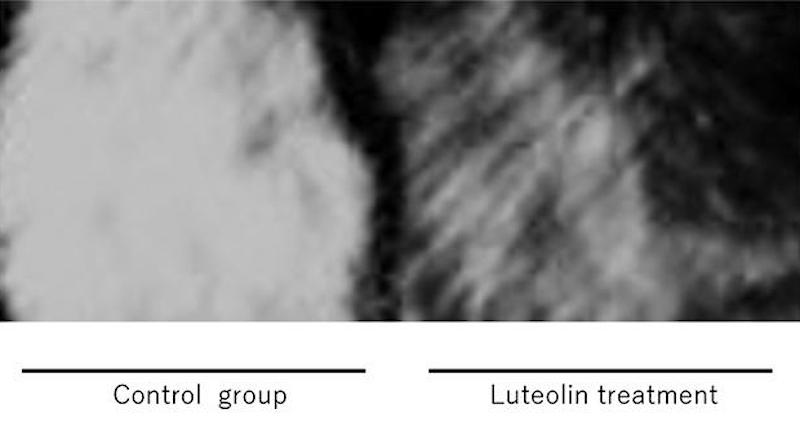
The study focused on three antioxidants—luteolin, hesperetin, and diosmetin—to assess their anti-graying effects in mice that were bred to go gray like humans.

The difference was “startling”, the mice that received luteolin retained their black fur, even as their cage mates’ fur turned gray, regardless of whether the luteolin was given externally or internally.

“This result was surprising,” Professor Kato said. “While we expected that antioxidants may also have anti-graying effects, only luteolin—not hesperetin or diosmetin—demonstrated significant effects. This finding suggests that luteolin may have a unique medicinal effect that prevents graying.”

Found in celery, broccoli, carrots, onions, and peppers, luteolin’s anti-graying effects are closely linked to its influence on endothelins—proteins that play a crucial role in cellular communication.

RELATED: Stress Can Accelerate Grays, But Hair Color Can Be Restored When Stress is Eliminated, Scientists Find

In the study published in MDPI, luteolin treatments preserved the expression of endothelins and their receptor. This preservation supports healthy signaling pathways, preventing the decline in melanocyte activity that typically accompanies graying.

Credit: Masashi Kato

“Interestingly, luteolin had limited effects on hair cycles, indicating that its primary impact is on pigmentation rather than hair growth or shedding,” Professor Kato said. “This targeted action makes luteolin particularly intriguing.”

The similarities between the hair graying processes in the model mice and humans offer encouraging prospects for translating these findings into human applications, according to a press release.

ALSO CHECK OUT: Method of Stopping Hair From Going Gray Might Finally Have Been Discovered

As well as vegetables, luteolin is already available as a supplement for topical and oral use, making it a viable candidate for further development as an anti-graying treatment. As research progresses, this antioxidant could become a key ingredient in hair care regimens, helping individuals preserve their natural hair color as they age.

Building on these results, Dr. Kagawa hopes to conduct broader research to see if luteolin’s anti-aging effects could also be applicable to balding.

SEND THESE SHADES OF GRAY to Aging Friends On Social Media…