











 Conservation efforts have more than doubled the number of black rhinoceros in African reserves over the past decade.
There are currently about 4,700 of the critically endangered rhinos, up from a low of nearly 2,100 in the early 1990s.


Conservation efforts have more than doubled the number of black rhinoceros in African reserves over the past decade.
There are currently about 4,700 of the critically endangered rhinos, up from a low of nearly 2,100 in the early 1990s.
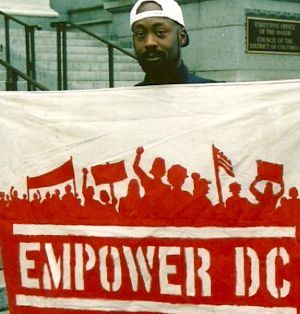
Eric Sheptock has 4,548 Facebook friends, 839 Twitter followers, two blogs and an e-mail account with 1,600 unread messages.
What he doesn’t have is a place to live.
Being a homeless homeless advocate is the thing that gives Sheptock – an unemployed former crack addict who hasn’t had a permanent address in 15 years – his clout on the issue of homelessness.
(READ the story in the Washington Post)

Teachers and homeschoolers can infuse multimedia into their daily lessons with YouTube as an excellent starting point.
Plenty of universities, nonprofits, museums and media companies post videos on YouTube for the cause of education. The following 100 channels feature plenty of solid content actively trying to make viewers smarter.
(READ and use the list at OnlineCollegeCourses.com)

Frogs across Australia and the US may finally be recovering from a fungal disease that has devastated populations around the world.
New surveys suggest that the frogs are re-establishing across a number of species, according to University of Newcastle researchers in New South Wales.
Barred river frogs, for instance, have returned to streams after having disappeared across Australia’s Central Coast.
(READ the story in New Scientist)

Taiwan’s Justice Ministry offers a free forensic service for repairing damaged cash, which is lucky for Lin, the man who accidentally shredded $6,600 last month.
Nicknamed the “jigsaw expert” a specialist took just seven days to piece together the remains of 200 $1,000 bills that were mistakenly dropped into a shredding machine.
(READ the story from Reuters)
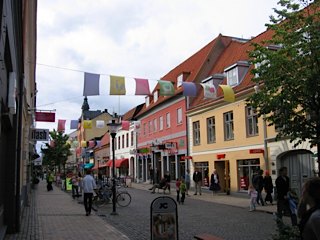
When a Swedish city vowed a decade ago to wean itself from fossil fuels, it was a lofty aspiration few thought it could meet.
But Kristianstad has already succeeded, with its population of 80,000 essentially using no oil, natural gas or coal to heat homes and businesses, even during the long frigid winters.
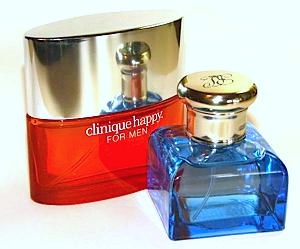
The Museum of Arts and Design in New York is set to create a first of its kind gallery devoted to the fragrance arts. The new Center of Olfactory Art will explore the creation of scent as an art form.
(READ the story in the Wall Street Journal)
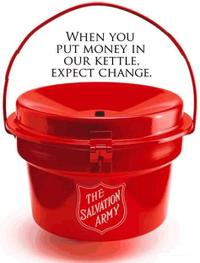
A man at a Kmart placed $5,500 in $100 bills into the famous Salvation Army red kettle, a spokeswoman told the Atlanta Journal-Constitution. The unnamed donor in Georgia, gave the large amount of cash just at a time when the charity is seeing a dip in donations.
The Salvation Army on Maui said one area donor gave generously this holiday season — leaving a diamond ring and a gold band in one of the organization’s red kettles, reported the KITV News.

Chapman University students studying for finals got a chance to pause for some quick stress relief offered by a few huggable dogs brought in by a campus mental health group.
Nearly 300 students showed up Wednesday for the two-hour Furry Friends for Finals, hosted for the second year by the campus club Active Minds, which promotes mental-health awareness.

The District of Columbia Circuit Court of Appeals yesterday denied an attempt by industry groups and the state of Texas to halt implementation of greenhouse gas regulations developed by the Environmental Protection Agency (EPA) under the federal Clean Air Act. The court’s order found that industry’s allegations of harm supposedly caused by the regulations were “speculative” rather than “certain,” and thus failed the legal test for issuing a “stay,” or suspension, of the regulations.
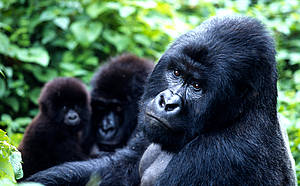
The number of mountain gorillas living in the Virunga Massif in central Africa has soared by 26.3% since 2003, according to a new census. The increase in numbers from 380 to 480 individuals — an average growth of 3.7 percent per year — is thanks to “immense” efforts to reduce poaching and disease, scientists said.
(READ the story in the Guardian)

A retiree named Bob recently put an old watch for sale on eBay, starting at $9.95 with no reserve price. Within days, the price shot past $30,000, and ended up at $66,100.
The watch turned out to be an ultrarare Rolex Submariner Ref 5510, a model popularized by Sean Connery in the James Bond films.
(READ the story on GeekoSystem.com)
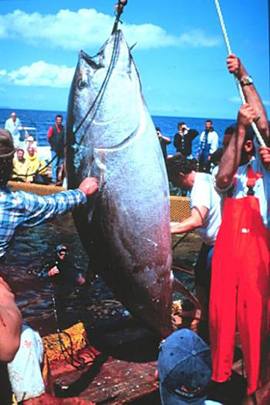
More than 20,000 people have agreed to boycott bluefin tuna as part of a campaign to save the fish, driven to the brink of extinction by the voracious appetite of the sushi market. In the first week of the boycott, consumers from all 50 states and 91 countries signed a pledge not to eat bluefin or spend money at restaurants where the fish is on the menu.
There is reason to hope that campaigns like this can make a difference. In 1998, with North Atlantic swordfish populations on the verge of being wiped out, the NRDC launched a campaign that became wildly successful and resulted in new fishing restrictions.

Instead of Hollywood celebrities accepting trophies at the Nickelodeon HALO Awards, the stars are giving the awards — to some amazing, accomplished teens working to make the world a better place. And, in an awards show twist, they surprise the unsuspecting teens on videotape, then, present the awards — all hosted by actor Nick Cannon.
Tomorrow night, Dec 10, at 8PM on the US cable network, TeenNick, the second annual TeenNick HALO Awards will present big prize money to four teens and let them hang out with stars like Mariah Carey, Ashton Kutcher, Rosario Dawson, and Wyclef Jean.
The four award winners are:
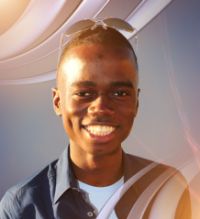 Herold Charles grew up in Haiti but has lived in Miami for 5 years. His heart was tugged back to the island after the 7.0 earthquake struck. After finally hearing that his own family was alright, he set about helping others in the same situation. Using twitter, Herold helped 25 families locate their loved ones. Then he began using his twitter account to help guide relief organizations to the exact locations of people still trapped under debris, texting for help.
Since then, Herold has organized food drives at school, and relentlessly makes himself useful to aid organizations like The Human Initiative, Help Haiti Heal, and Help Chile Heal — helping not just Haiti, but anyone faced with a natural disaster.
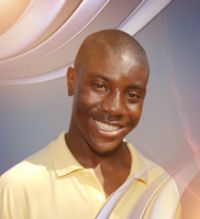 From a very young age, Joshua Hall spent holidays volunteering with his family — working at food pantries or visiting the sick. Later, as a high school freshman, Joshua traveled with the Journey for Change group to South Africa, assisting residents of the country’s shantytowns with their basic needs of food, water, and clothing.
The following year, Joshua learned of the epidemic of human trafficking — and child slavery — in Ghana. Upon hearing that Ghanaian children as young as three were being sold into slavery by their desperate parents, he visited and resolve to raise awareness of the problem. He’s continued his advocacy, making presentations at universities and the United Nations, all in the hopes of educating the public that slavery is not yet over.
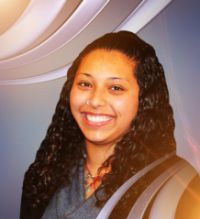 Lauren Huichan came from an abusive home and later drifted within the broken foster care system without any real support. Lauren began skipping school, hanging with the wrong crowd. Today, she is a high school graduate in college, with her own apartment, and has dedicated herself to making sure other foster youth won’t have to struggle the way she did.
As a powerful voice for all foster youth, Lauren educates and collaborates with judges, attorneys, social workers, legislators, and foster parents, helping them understand the experiences common to the children and teens in their care. Her days are busy not just with a full course load, but with conference calls and meetings, planning committees, and volunteer coordination.
 Pageant queen Jordan Somer won 2nd place in the teen division of Miss America. But it was after she won a juniors pageant when she was 13 that she decided she could do a lot more with her crown than attend parades.
As a regular volunteer with Special Olympics, Jordan knew how much pride the participants take in receiving their awards — whether it’s 8th place or 1st. And having learned so much about public speaking, poise, confidence, and leadership through her pageant experiences, Jordan knew that she could help give girls with disabilities those same opportunities and that same pride of accomplishment.
So in 2007, at the age of 13, Jordan created Miss Amazing, a pageant for young women with physical and mental disabilities. Participants don’t just get to wear their prettiest outfit on stage and practice public speaking and performing; they enjoy a full day of activities — all organized by Jordan. Since 2007, Miss Amazing has doubled in size to 30 participants, and Jordan is still busy every year personally securing sponsorships and donations, recruiting participants and judges, and coordinating and producing the event itself.
Jordan is currently working on establishing a non-profit organization for Miss Amazing, in the hopes of going national.
For links to their projects and more details on the winners, visit TeenNick Halo Awards.
Instead of Hollywood celebrities accepting trophies at the Nickelodeon HALO Awards, the stars are giving the awards — to some amazing, accomplished teens working to make the world a better place. And, in an awards show twist, they surprise the unsuspecting teens on videotape, then, present the awards — all hosted by actor Nick Cannon.
Tomorrow night, Dec 10, at 8PM on the US cable network, TeenNick, the second annual TeenNick HALO Awards will present big prize money to four teens and let them hang out with stars like Mariah Carey, Ashton Kutcher, Rosario Dawson, and Wyclef Jean.

Two neighboring families are using the power of a Christmas light display to feed a lot of hungry people in the San Francisco Bay Area.
Not only has the Severns-Pease Christmas Display become a local must-see home, but since 2002 the neighbors on Tangerine Way in Sunnyvale have sought to collect canned food or cash donations from spectators to benefit the area’s Second Harvest Food Bank.
This year’s goal is to raise $80,000 – and it looks like they’re going to make it.
The popular holiday exhibit is so big it covers the house, roof and yard of the Severns’ home, and the adjacent house and yard of the Pease family.
“It’s always a work in progress, so what you saw in years ago doesn’t resemble what you see now,” said Dave Severns, a retired engineer who is the creative force behind the display.
The first year that donations were collected, the families garnered $8,000. Steadily each year the amount has increased.
“Even in the economic downturn, we continued to do better than the previous year, which really surprised me,” he said. Last year the display took in more than $54,000.
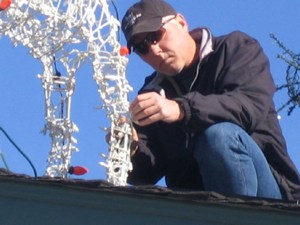 The inspiring project not only has the charity component, but also a forward-thinking, environmentally-sustainable foundation. The cost to power all those lights? Zero. Severns installed solar panels years ago. A switch to more LED lights in recent years has dramatically reduced energy usage.
Green, yes, but Severns is also competitive. He is determined to meet the $80,000 goal, especially after he found out that if they indeed raise that amount, the Christmas display will become a member of Second Harvest’s “Million Pound Club”, an honor usually bestowed on large corporations sponsoring massive food drives.
On opening night, November 27, the site collected more than $21,000. During week one, another $15,500 was donated.
Severns enjoys brightening the holidays for children and adults, as well as helping to feed the hungry people locally.
“In general it’s been super-gratifying,” he said.
This master of holiday cheer doesn’t bother keeping track of how many hours he puts into designing, setting up, maintaining and disassembling the display each year. He and neighbor Andy Pease start installing the display on November 1. 12-hour days are spent in preparation for the opening on Thanksgiving weekend. The display runs through January 1, 5:30 to 11 p.m. every night. It takes about a week to take it down. Severns said they spend about $2,500 per house each year, if needed, on new lights and materials.
Pam Marino is founder of goodneighborstories.com where the original story was first published. (Additional editing by Good News Network)
Two neighboring families are using the power of a Christmas light display to feed a lot of hungry people in the San Francisco Bay Area.
Not only has the Severns-Pease Christmas Display become a local must-see home, but since 2002 the neighbors on Tangerine Way in Sunnyvale have sought to collect canned food or cash donations from spectators to benefit the area’s Second Harvest Food Bank.
This year’s goal is to raise $80,000 – and it looks like they’re going to make it.
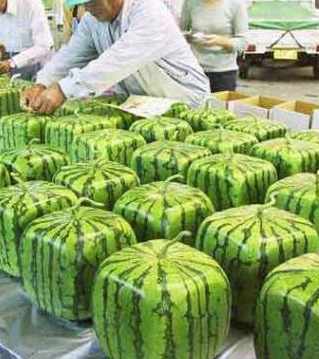
Don’t assume something is impossible just because it has never been done. Like the case of the Japanese watermelon, just because it has always been round, doesn’t mean it always has to be.
“Japanese grocery stores had a problem. They are much smaller than their US counterparts and therefore don’t have room to waste. Watermelons, big and round, wasted a lot of space.”
Then, some Japanese farmers came up with a solution. They invented the square watermelon, by thinking outside the box — so to speak.

We’ve lots of media stories featuring the wonders of Facebook. But these amazing outcomes will cheer even the surliest of social media critics.
From the past year, the Good News Network chooses the following six tales as the most inspiring. Which one is your favorite? (Got another? Leave the link in the comments)
1) Concentration Camps, Death Marches — and Facebook
“Amid tears, laughter and hugs, three Holocaust survivors — childhood friends from the same hometown of Hungary — reunited for the first time in 65 years. Though they have fond memories of playing together, their strongest bonds developed in 1945, as they were struggling to survive a three-week death march from the Russian front to a concentration camp in Austria,” began the Jewish Week news report.
For 65 years, one of the friends had been trying to locate the other who had saved his life. After private investigators had been unsuccessful, a 15-year old nephew got involved and took his quest to Facebook.
2) Random Act of Kindness for 93 Dollars Sparks $100,000 In Spontaneous Donating
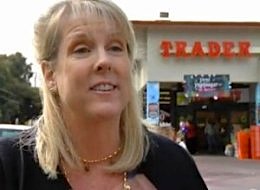
A random act of kindness in the check-out aisle at Trader Joe’s market — a stranger stepping forward to pay her $207 bill — led to a payback which left $93 extra for charity. A Facebook discussion propelled the original Samaritan to give the extra money to a hunger charity, which eventually led to an avalanche of like donations started pouring in from Facebook friends, eventually totaling $100,000 in spontaneous giving.
The video and inspiring story was shared worldwide . . . and on the Good News Network.
 3) Woman Recruits A Facebook Army to Save 7000 Tiny Gulf Coast Crabs
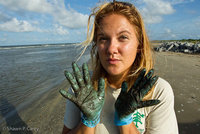
In the months since the BP oil spill, Leanne Sarco, a ranger at the wildlife preserve in the Gulf of Mexico along the fragile barrier islands of Louisiana, recruited an army of volunteers to collect thousands oil-drenched hermit crabs, cleaning and releasing them into a saltwater marsh about 15 miles inland.
Wildlife officials didn’t think they could save the tiny creatures, but Leanne knew them to be critical to ecosystems. So, she turned to Facebook and put out a call to the world. Strangers soon began to arrive, who came to help, some even sleeping on her couch for weeks. . . Story and links on Good News Network.
4) Bird Drawings by Young Girl Raises Fortune for Gulf Wildlife Rescue 
Saddened by what the oil spill was doing to wildlife near her family’s summer home on the Gulf coast, an 11-year-old began creating pictures of birds to raise money for rescue operations. Her mom started a Facebook page which propelled the total amount raised to $200,000.
She was recently named “Breakthrough Woman of the Week” by CNN for her continuing efforts to preserve the environment for her own generation. . . Video and links on Good News Network.
5) Mayor Donates Kidney to Facebook Friend
A 44-year-old father whose kidneys were failing due to diabetes, searched for a donor with his wide circle of “friends” on Facebook — only hesitantly and on his doctor’s suggestion. 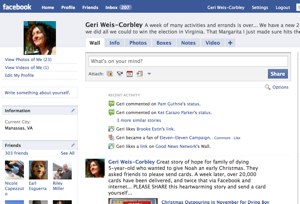
“East Haven mayor April Capone sent him a private message and just said, ‘Hey, I’ll get tested.’ She had a feeling that indeed she would be a perfect match.
“I don’t know why, but I just knew it,” she told the Associated Press.
6) Facebook Alibi Gets Teen Out of Jail
A teenager was unjustly jailed for an armed robbery that took place while he was 13 miles away in his father’s apartment in Harlem. Luckily a critical piece of evidence surfaced on Facebook that freed the young man and proved his innocence beyond a shadow of a doubt. . . Read the story at ABC News.
We’ve seen lots of media stories featuring the wonders of Facebook. But these amazing outcomes will cheer even the surliest of social media critics.
From the past year, the Good News Network chooses the following six tales as the most inspiring. Which one is your favorite? (Got another? Leave the link in the comments)