










All News - Page 1435 of 1716 - Good News Network
Home Blog Page 1435

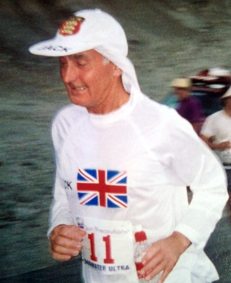
75-Year-old to Run Three Day Race Through Death Valley Heat

death-valley-runner-jack-denness.jpg

death-valley-runner-jack-denness.jpgFew places are more deserving of their name than Death Valley at the height of summer.

Incredibly, it is into this furnace of sand and peril that a 75-year-old grandfather from England will run next week in an effort to raise money for Cerebral Palsy Care in Kent.

He already holds the record as the oldest man to compete in the world’s toughest foot race, securing it as a sprightly 70-year-old back in 2005.

Jack Denness — also known as Death Valley Jack after completing the race no less that 14 times — will run 135 stamina-sapping miles in just 3 days, with little sleep, for the last time.

He credits his fitness to his slim frame and taking cod liver oil since he was a boy. As for relaxing once the race is over, Denness says he’ll crack open a few beers… After that he will get ready for a run through the Sahara.


Obama: New Rules Will Make PTSD Claims Easier for Veterans

soldier_helps_iraqi_boy

soldier_helps_iraqi_boy.jpgPresident Obama announced today that the Department of Veterans Affairs will begin on Monday to make it easier for veterans with Post Traumatic Stress Disorder to receive the benefits they need.

Until now, veterans with PTSD have been stymied from receiving benefits by tedious regulations requiring them to produce evidence that a specific event caused the disorder.

Streamlining the process will help not just the veterans of the Afghanistan and Iraq Wars, but VietNam veterans too.

Obama: New Rules Will Make PTSD Claims Easier for Veterans

soldier_helps_iraqi_boy

soldier_helps_iraqi_boy.jpgPresident Obama announced today that the Department of Veterans Affairs will begin on Monday to make it easier for veterans with Post Traumatic Stress Disorder to receive the benefits they need.

Until now, veterans with PTSD have been stymied from receiving benefits by tedious regulations requiring them to produce evidence that a specific event caused the disorder.

Streamlining the process will help not just the veterans of the Afghanistan and Iraq Wars, but VietNam veterans too.

Pollution-Eating Concrete Clears Roadway Air

concrete-pollution-eating.jpg

concrete-pollution-eating.jpgResearchers at the Eindhoven University of Technology in the Netherlands have tested pollution-eating concrete on about 1,000 square meters of roads in the town of Hengelo.

We already knew it worked in the lab, but this was a real-world test and the results are pretty impressive: a 25 to 45% reduction in oxides of nitrogen (NOx) over the special roads.

This could mean that someday our roads and other concrete structures could be used to clean up the air. How does it work?

READ the story in Treehugger

Virginia College Harvests Algae Into Biodiesel Fuel

algae-jim-conrad.jpg

algae-jim-conrad.jpgThe College of William and Mary is turning fish-killing algae into biodiesel fuel for cars and other gas-guzzling machines.

The project is too small scale to solve the nation’s energy woes, but it will help scientists learn a more cost-effective way to convert algae to biodiesel
— and a pollution-marred lake on the edge of campus will get a much needed cleaning, as well.

(WATCH the video below, and READ the longer report at the Daily Press)

(Updated) Ringo Starr Marks 70th Birthday With Peace Salute

ringo-starr-nbcvid.jpg

ringo-starr-nbcvid.jpgCelebrating his birthday with raucous applause at New York’s Hard Rock Café on Wednesday, the oldest Beatle proved he’s still young at heart, asking everyone around the world to flash a peace sign at noon in honor of his 70th.

WATCH the video below (NOTE: music removed by NBC), or see it on MSNBC

UPDATE: Also, read this tribute at Zeitgeist Report

Rocket Nozzles Could Pull Carbon From Coal Power Plants

pollution in Wisconsin

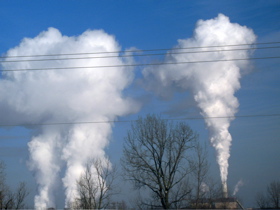
pollution-wisconsin.jpgAn aerospace firm is working to turn rocket nozzle technology into a novel method for pulling carbon dioxide from the smokestacks of coal-burning power plants.

The idea is to use aerodynamic force, rather than chemicals, to separate out carbon dioxide from a power plant’s air before it is released into the atmosphere, a technique that should be 50 percent cheaper than currently available systems.

(READ more in Discovery.com)

Stocks Climb on Good News for Retail and Jobs

business-graphic-up

business-graphic-up.gifU.S. stocks rose, with the S&P 500 capping its first three-day rally since April, as a drop in jobless claims and higher-than-forecast sales at some retailers bolstered confidence in the economy.

Initial claims for jobless benefits fell by 21,000, more than double what some economists had forecast.

“There’s evidence that the global economy continues to recover. In the U.S., some retailers are doing well. Valuations are reasonable. The stock market may have found a short-term bottom,” one investor told the San Francisco Chronicle.

(READ more in the SF Chronicle)

Germany’s Auto Industry Again Thriving

bmw.jpg

bmw.jpgGermany’s car industry, the backbone of Europe’s largest economy, is booming again.

Fueled by the huge appetite for German luxury cars in China and the fact that the plunging euro has made European products cheaper abroad, manufacturers say they are shaking off the last of the economic downturn, adding extra shifts and hiring more workers to meet increasing demand.

(READ more of the AP story on SF Gate)

Solar Power in U.S. Homes Saves Money in the Short Term, Too

solar home

solar-home.jpgSolar power is inching closer to the mainstream, with a 40% increase last year in U.S. households installing the renewable power source.

The costs have sharply decreased in the past few years and the return on investment is attractive for some — while the investment builds home value similar to installing a new kitchen.

In states with high electricity rates, like California, the system could pay for itself in six or seven years. Tack on incentives for switching to renewable energy, like the 30% rebate on installation costs in Illinois, and it could be as fast at two or three years, according to Housing Watch.

There are also federal tax credits for up to 30 percent of costs.

For one man in Illinois who invested $20,000 in a solar system a few years ago, the return on his investment is about 3 or 4 percent a year.

The Chicago Tribune reports: “His gas use has dropped more than 50 percent, and his electricity use has dropped about 70 percent. He sells extra power back to the electricity grid and sells renewable energy credits, which investors buy and trade to support renewable energy projects.”

Cimate-gate Scientists Cleared of Misconduct Allegations

Solar-eclipse.jpg

Solar-eclipse.jpgAn independent commission in Britain cleared climate-change researchers of charges of academic misconduct Wednesday, completing an inquiry begun after hundreds of e-mails from the scientists were released to the public.

The commission, chaired by a Scottish university administrator, was the latest to find no evidence that researchers embroiled in the “Climate-gate” scandal had violated academic standards. After examining e-mails and research from the University of East Anglia’s Climatic Research Unit, the commission said, “we find that their rigor and honesty as scientists are not in doubt.”

The university also investigated and found “no evidence of any deliberate scientific malpractice” in the e-mails.

(READ more in Washington Post, or more in the Scotland Herald)

Wildlife Officials to Save 70,000 Gulf Sea Turtle Eggs With FedEx Trucks

leatherback-turtle.jpg

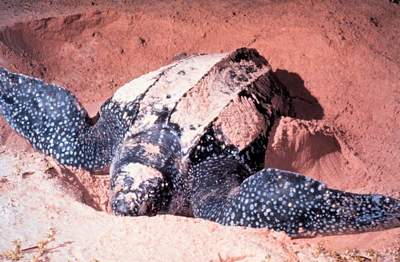
leatherback-turtle.jpgGulf Coast rescuers are hatching a daring plan to save as many as 70,000 sea turtle eggs from the fouled water along Florida’s Panhandle.

Each year, thousands of newly hatched sea turtles instinctively scramble toward the water from their nests in sandy beaches. The U.S. Fish and Wildlife Service is determined that this year’s hatchlings won’t be among the Gulf casualties.

In a couple of weeks, biologists plan to relocate all the nests from the Gulf Coast to Florida’s eastern coast, digging up an estimated 700 to 800 nests, containing up to 70,000 eggs, placing them in foam containers and shipping them overland  — in FedEx trucks — to Florida’s far side.

They’ll be allowed to complete their incubation, and hopefully the turtles will emerge, to be released into the ocean.

(READ or LISTEN to the story from NPR’s Weekend Edition)

Wildlife Officials to Save 70,000 Gulf Sea Turtle Eggs With FedEx Trucks

leatherback-turtle.jpg

leatherback-turtle.jpgGulf Coast rescuers are hatching a daring plan to save as many as 70,000 sea turtle eggs from the fouled water along Florida’s Panhandle.

Each year, thousands of newly hatched sea turtles instinctively scramble toward the water from their nests in sandy beaches. The U.S. Fish and Wildlife Service is determined that this year’s hatchlings won’t be among the Gulf casualties.

In a couple of weeks, biologists plan to relocate all the nests from the Gulf Coast to Florida’s eastern coast, digging up an estimated 700 to 800 nests, containing up to 70,000 eggs, placing them in foam containers and shipping them overland  — in FedEx trucks — to Florida’s far side.

They’ll be allowed to complete their incubation, and hopefully the turtles will emerge, to be released into the ocean.

(READ or LISTEN to the story from NPR’s Weekend Edition)

Russia to Create National Parks and Reserves Nearly Size of Switzerland

Polar bear

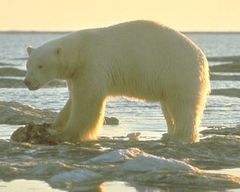
Polar-bear.jpgPolar bears, walruses, sea otters, and other endangered species are all set to benefit from a Russian decision to boost its national protected areas to nearly 3 percent of its territory by 2020, an addition of land nearly equal to the size of Switzerland.

The Russian government’s decision establishes 9 new nature reserves and 13 national parks covering a total area of nearly 15,000 square miles (3.8 million hectare) by 2020. Russia is also introducing marine buffer zones over an area of nearly 4,000 square miles (1 million ha).

Russia to Create 15,000 Sq Mi of New National Parks, Reserves

Polar bear

Polar-bear.jpgPolar bears, walruses, sea otters, and other endangered species are all set to benefit from a Russian decision to boost its national protected areas to nearly 3 percent of its territory by 2020, an addition of land nearly equal to the size of Switzerland.

The Russian government’s decision establishes 9 new nature reserves and 13 national parks covering a total area of nearly 15,000 square miles (3.8 million hectare) by 2020. Russia is also introducing marine buffer zones over an area of nearly 4,000 square miles (1 million ha).

FDA OKs Tiny Telescope Cure For Elderly Blindness

eye-macular-telescope.jpg

eye-macular-telescope.jpgAn implantable device to treat macular degeneration, a common cause of blindness in the elderly, has been approved by the Food and Drug Administration as safe and effective, the agency said Tuesday.

The tiny telescope made by VisionCare Ophthalmic Technologies Inc., is surgically implanted in one eye, as a replacement for the natural lens and projects an image to the healthy portion of the retina that has been magnified more than two times.

About 8 million people in the United States have age-related macular degeneration (AMD) and nearly 2 million of them already have significant vision loss, according to the National Eye Institute. AMD can make it difficult or impossible to recognize faces or perform daily tasks such as reading or watching television.

China To Recycle Waste From Russia, North Korea

recycle-logo-spanish-alvimann-morguefile

recycle-logo-spanish-alvimann-morguefile.jpgChina will build a huge center to recycle wastes from Russia and North Korea, in a city that borders the two countries, local authorities said today.

The expansive center is expected to recycle nearly three million tons of scrap machines, cables, appliances, vehicles, mobile phones, batteries, plastics and other wastes each year, and is expected to create nearly 10,000 jobs, while turning a nice profit.

(READ the report from Xinhua)

NYC Makes it Easy to Recycle Clothing, in New Community Bins

goodwill_donation_bin-cc-lic.jpg

goodwill_donation_bin-cc-lic.jpgStarting in September, New York City will launch one of the largest textile recycling initiatives in the United States. The aim is to make it easy to donate clothing in a city where some 190,000 tons of wearable textiles entered landfills in 2008 alone.

The plan would place 50 collection bins in high-traffic areas.

Not only would that clear up some room in landfills, it could also create jobs

(READ today’s AP story in TheSpec.com)

Giving Kids Social Skills to Get Ahead

kids in england

kids_in_england.jpgGrowing up in the digital age, kids may not be regularly practicing skills that could get them into a favorite college or impress adults who might help them get a job.

A college professor was taken aback by the behavior of students in her class and decided to teach a basic social skills class for younger children who need to know that good manners and clear speaking are a requirement, not an option, for getting ahead in life.

A class for children 4 to 7 stresses the importance of eye contact and a firm handshake. They also practiced  basic greetings as well as proper phone etiquette.

From Job Skills To People Skills: Learning U.S. Ways

Photo by Sun Star

3-woman-chanting.jpgFort Wayne, Ind., deals with multiple cultural challenges and obstacles every day as a primary relocation destination for refugees.

The city houses the largest Burmese community in the country, and cultural differences have at times divided this community.

Nearly all refugees here frequent the Refugee Resource Center. It offers services and classes in everything from how to clean a home, to proper indoor bathroom etiquette. These are sometimes new concepts for people who have only lived in rural villages or refugee camps.

One classroom teacher explains that it is important to look in Americans’ eyes when speaking. That’s different than the Asian custom of looking at the ground.

A group of first responders works with the various immigrant communities to reduce cultural barriers during emergencies.

(READ the story, or listen, at Nat’l Public Radio)

Photo courtesy of Sun Star