Eight-year-old Jonathan Krouse of Pennsylvania was able to donate $8,500 to the Alzheimer’s Association from proceeds he raised from the sale of a comic book that he created.
After he started making comics in his art class at school, he thought it would be a great idea to use his creation to help his grandmom and others like her by raising money for the Alzheimer’s.
London has opened its first exercise playground for older people, with specially designed fitness equipment to help the capital’s aging baby boomers stay fit.
Organizers say people lined up at central London’s Hyde Park beginning early Wednesday to use the equipment, which includes a sit-up bench, a cross-trainer and a stationary bicycle.
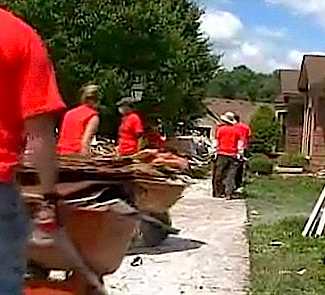
Thousands of volunteers have been working in Nashville since floods devastated the city three weeks ago. College and high school students especially have given up leisurely weekends to become Good Samaritans simply trying to ease a stranger’s pain.
Schools in Chicago, Los Angeles, Washington D.C., Minneapolis and Seattle will receive solar panel arrays paid for by the Walmart Foundation.
The grant for $1.2 million will pay for solar installations on 20 schools as part of the National Energy Education Development Project (NEED), it was announced yesterday.
Not only will the schools save money on energy, the Walmart Solar School program will teach the next generation about the benefits of using renewable energy.
Three weeks ago in Nepal, 1,000 villagers gathered to mark a momentous day in the history of Room To Read, a charity that builds children’s libraries around the developing world. They celebrated the opening of the group’s 10,000th library.
John Wood, founder and executive chairman, launched Room to Read 10 years ago after a trek through Nepal where he visited several local schools. He was amazed by the warmth and enthusiasm of the students and teachers, but also saddened by the shocking lack of resources. Driven to help, John quit his senior executive position with Microsoft and built a global team to work with rural villages in furthering the educating of young people.
Wood wrote on his blog, “This achievement was not just an achievement for me but it was an achievement for all of us -– for our staff that has worked tirelessly over these past ten years to enable us to reach this point, and for our partners who have helped us to create a global movement to bring change to the world through education.”
Room To Read boasts an astonishing average of 6 library openings every day in the developing world -– that’s 3,000 kids every day who gain access to a well-stocked library with the tools they need to further their education.
Since 2000, the team has supplied more than seven million books to more than four million children in Bangladesh, Cambodia, India, Laos, Nepal, South Africa, Sri Lanka, Vietnam and Zambia. The non-profit organization has also built 1,000 schools, particularly empowering girls with increased access to high-quality educational opportunities – including 10,000 girls this year who are attending school on scholarship.
“Marrying the best business practices John and I learned from the private sector with those from the nonprofit sector has allowed us to scale to the degree that we have with maximum efficiency and quality,” said Erin Ganju, Room to Read Co-Founder and CEO.
WATCH the Room To Read Video below, Celebrating its 10,000th library:
Three weeks ago in Nepal, 1,000 villagers gathered to mark a momentous day in the history of Room To Read, a charity that builds children’s libraries around the developing world. They celebrated the opening of the group’s 10,000th library.
John Wood, founder and executive chairman, launched Room to Read 10 years ago after a trek through Nepal where he visited several local schools. He was amazed by the warmth and enthusiasm of the students and teachers, but also saddened by the shocking lack of resources. Driven to help, John quit his senior executive position with Microsoft and built a global team to work with rural villages in furthering the educating of young people.
The Inner City 100 ranks the fastest-growing inner-city businesses in the U.S., a Who’s Who of companies located in downtrodden urban areas that are prospering, despite the recent recession.
The annual roundup is compiled by the Boston-based not-for-profit Initiative for a Competitive Inner City, founded in 1994 by Harvard Business School competitiveness guru Michael Porter.
The goal is to show that not only can companies thrive in the inner city, but there are also competitive advantages to locating there. Over the past 12 years, winners have created 71,000 new jobs and employed 40,000 inner-city residents.
Porter notes that the Inner City 100 dealt nimbly with the effects of the recession and is prepared for the recovery. That may be why 85 percent of the companies on the list expected revenue to increase in 2009-10, with more than a quarter predicting upwards of 30 percent, about double from the previous year’s expectations.
(READ the storyin Business Week:Watch videos of CEO profiles and see the Top 100 list there…
You would think the lack of jobs would mean more burglaries or strong-arm robberies as some people turned to crime to get money. But that just hasn’t been the case.
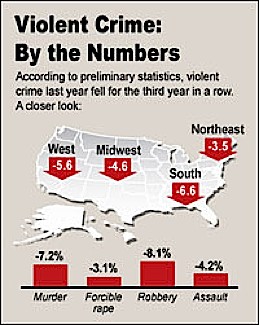
For the third straight year, crime rates fell in 2009, according to data released today by the Federal Bureau of Investigation.
The preliminary numbers indicate the national violent crime rate fell 5.5. percent, while, the property crime rate fell by 4.9 percent.
In fact, all four categories of violent crime declined overall compared to 2008: robbery, down 8.1 percent; murder, down 7.2 percent; aggravated assault, down 4.2 percent; and forcible rape, fell 3.1 percent. Violent crime declined 4.0 percent in metropolitan counties and 3.0 percent in nonmetropolitan counties.
It may be time to go on a special type of vacation: a drug vacation.* A drug vacation is a time in which you reduce the doses or eliminate entirely whatever over-the-counter drug or drugs you are taking. A drug vacation may give you an opportunity to learn whether you really need to continue taking this drug or not. More important, this vacation will give your body an opportunity to manifest its everyday self-regulating and self-healing propensities without the crutch of a pharmaceutical agent inhibiting or suppressing its important work.
You may not even recognize it, but you may be addicted to one or more of the drugs in your medicine cabinet. You may have noticed but your body has become accustomed to these drugs, and you’ve probably have had to increase or change the dosage over time.
It may be time that you received an intervention, though this time, you should probably intervene on yourself rather than have anyone do it for or to you.
A New Jersey man produced such a bountiful harvest in his vegetable garden that the neighbors received their fill and his wife wouldn’t allow any more in the house. With 40 pounds of excess fresh produce that he didn’t want to waste, he brought it to the local food pantry and homeless shelter. [UPDATE: Link fixed below.]
When he was told that his produce was the only fresh food the pantry would serve all year, he decided to create an online directory that would connects gardeners nationwide with food pantries.
He realized that a Google search sometimes miss dozens of nearby food pantries locally, which might end up detering gardeners from donating.
AmpleHarvest.org fills that gap now, with information that could rescue fresh produce from a wasteful end and potentially save lives. Nearly 2,000 food pantries across the U.S. are now registered.
A 13-year-old American boy on Saturday became the youngest climber to conquer Mount Everest, the world’s highest mountain, a climbing website said.
Jordan Romero from Big Bear, California, scaled the 8,850 meter (29,035 feet) summit from the Tibetan side. The ascent has put Romero one step closer to reaching his goal of climbing the highest mountains on all seven continents.
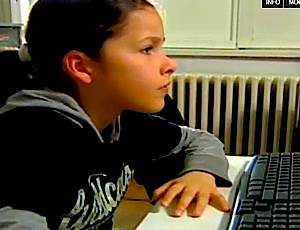
A boy studying in a dilapidated school in Macedonia is the youngest Microsoft systems engineer in the world. He holds four Microsoft certificates and has written a 312-page book on Microsoft’s Windows 7. He’s 9 years old.
Marco Calasan speaks three languages and is learning a fourth and while English is not his mother tongue, his command of the language and vocabulary is mind-boggling. In finite detail he explains the ins and outs of computers and the curriculum he’s teaching his peers and adults. He even educates his own teachers.
Best of all, Marco is the complete opposite of arrogant. He’s humble, friendly and so very patient in explaining the computer jargon that flies over most people’s head.
Toyota and Tesla Motors have announced a surprise joint venture, augmented by Tesla’s purchase of a sprawling auto plant, recently closed near San Francisco.
The remarkable turn of events creates the potential for Toyota to become more involved in the production of electric cars, and a boost for the recently embattled Tesla, as well as a huge rebound for the factory that just last month produced its last Toyota Corolla before closing its doors.
Elon Musk, chief executive of Tesla Motors, said the company has already begun hiring some former workers and will continue to hire more.
Nicolaus Copernicus, the 16th-century astronomer whose findings were condemned by the Roman Catholic Church as heretical, was reburied by Polish priests as a hero on Saturday, nearly 500 years after he was laid to rest in an unmarked grave.
His burial in a tomb in the cathedral where he once served as a church canon and doctor indicates how far the church has come in making peace with the scientist whose revolutionary theory that the Earth revolves around the Sun helped usher in the modern scientific age.
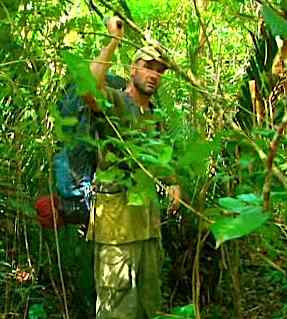
With every machete whack and every soggy step, Ed Stafford gets a little closer to joining the ranks of the explorer elite — becoming the first person to walk the length of the Amazon River – all 4,000 miles — and be officially recognized for doing so.
The Amazon is a steaming, stinging, slithering test of will, and his will to press on is inspiring school kids around the globe.
Ed Stafford’s adventure wraps up the ABC morning show’s 5-day Be Inspired week, which ended yesterday.
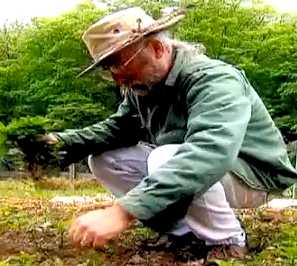
Rosado isn’t your typical prisoner. He is an inmate with one of the greenest thumbs in the history of the New York’s Department of Corrections.
Rosado is credited with developing a garden in one of the few green spaces inside the otherwise cement-heavy prison. In the two years since the garden’s inception, it has provided some of the only access the prison’s 800 inmates have to fresh vegetables and fruit.
On top of that, he received a Bachelor of Arts degree Saturday from the prestigious Bard College, a student of the Bard Prison Initiative, a privately-funded program that offers inmates the opportunity to work toward a college degree.
A unique program for patients with depression has achieved a zero suicide rate over the last two and a half years, a stunning decline within a population that, even while receiving mental health treatment, normally loses hundreds per 100,000 every year.
The program, chronicled in an article in this week’s Journal of the American Medical Association, was created by the Behavioral Health Services division of the Detroit-based Henry Ford Health System in 2001.
The rate of suicide in Henry Ford’s patient population decreased by 75 percent in the first four years of the program, from 89 per 100,000 patients down to 22, which is significantly lower than the annual rates for suicides in similar patient populations. For the last two and a half years though, that rate has dropped to zero per 100,000. This remarkably low rate of patient suicide stands in marked contrast to an expected rate of 230 per 100,000 as reported from scientific research.
Will Ferrell’s support of his college buddy’s Cancer for College program has helped raise thousands of dollars for college scholarships, helping young cancer survivors go to school.
“I don’t think there’s anything I do that makes me feel as good,” said the actor and comedian.
WATCH the Making A Difference video below, or at MSNBC…
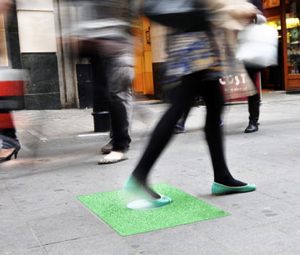
A 24 year-old British industrial design engineer has invented a pavement slab that harvests kinetic energy from people walking on busy sidewalks and converts it to electricity.
Urban planners and architects can’t get enough of his clever design. The paving stones can easily be retrofitted into pavements and they are made from 100% recycled car tires.
Laurence Kemball-Cook’s Pavegen system stores the collected energy in a battery (for up to three days), making it available for any low-power application.
Currently, the invention is in the final rounds of testing, logging millions of footsteps.















 Eight-year-old Jonathan Krouse of Pennsylvania was able to donate $8,500 to the Alzheimer’s Association from proceeds he raised from the sale of a comic book that he created.