













 The Obama administration has developed a five-year blueprint for rescuing the Great Lakes, a sprawling ecosystem plagued by toxic contamination and invasive species.
U.S. Unveils $2.2 Billion Great Lakes Fix
Oxytocin Shows Promise in Autism
 Social function improved in autism-spectrum patients treated with the hormone oxytocin, according to a small study.
Known for inducing nurturing in new mothers, oxytocin made the adults with Asperger’s syndrome or high-functioning autism more likely to focus attention on the eyes and inclined to become more social in games.
Previous research has suggested roles for the hormone in emotional regulation and social behaviors. One study found that inhaled oxytocin made adults more trusting of others in a game situation.
(READ ABOUT the good news study at ABC)
Family Dog Kept Missing 3-Year-old Girl Safe, Warm

A family dog is credited with keeping a little girl safe when she spent the night outside in 30-degree temperatures Friday after wondering off. The local sheriff credits the dog, a Queensland Heeler, with 3-year-old Victoria Bensch’s survival.
(Read AP story or watch the video at ABC-15)
Research Shows You Can Learn to Be Lucky

If you think you’re unlucky, you should change your outlook in order to generate more good fortune, according to psychologist Richard Wiseman.
Findings have revealed that the thoughts and behavior of unlucky people are responsible for much of their misfortune.
A decade ago, I set out to investigate luck.I wanted to examine the impact on people’s lives of chance opportunities, lucky breaks, and being in the right place at the right time. After many experiments, I believe that I now understand why some people are luckier than others and that it is possible to become luckier.
To launch my study, I placed advertisements in national newspapers and magazines, asking for people who felt consistently lucky or unlucky to contact me. Over the years, 400 extraordinary men and women volunteered for my research from all walks of life: the youngest is an 18-year-old student, the oldest an 84-year-old retired accountant.
Jessica, a 42-year-old forensic scientist, is typical of the lucky group. As she explained: “I have my dream job, two wonderful children and a great guy whom I love very much. It’s amazing; when I look back at my life, I realise I have been lucky in just about every area.”
Over the years, I interviewed these volunteers, asked them to complete diaries, questionnaires and intelligence tests, and invited them to participate in experiments. The findings have revealed that although unlucky people have almost no insight into the real causes of their good and bad luck, their thoughts and behaviour are responsible for much of their fortune.
Experiments Reveal the Difference
Take the case of chance opportunities. Lucky people consistently encounter such opportunities, whereas unlucky people do not. I carried out a simple experiment to discover whether this was due to differences in their ability to spot such opportunities.
I gave both lucky and unlucky people a newspaper, and asked them to look through it and tell me how many photographs were inside. On average, the unlucky people took about two minutes to count the photographs, whereas the lucky people took just seconds. Why? Because the second page of the newspaper contained the message: “Stop counting. There are 43 photographs in this newspaper.” This message took up half of the page and was written in type that was more than 2in high. It was staring everyone straight in the face, but the unlucky people tended to miss it and the lucky people tended to spot it.
For fun, I placed a second large message halfway through the newspaper: “Stop counting. Tell the experimenter you have seen this and win £250.” Again, the unlucky people missed the opportunity because they were still too busy looking for photographs.
 Personality tests revealed that unlucky people are generally much more tense than lucky people, and research has shown that anxiety disrupts people’s ability to notice the unexpected. In one experiment, people were asked to watch a moving dot in the centre of a computer screen. Without warning, large dots would occasionally be flashed at the edges of the screen. Nearly all participants noticed these large dots.
The experiment was then repeated with a second group of people, who were offered a large financial reward for accurately watching the centre dot, creating more anxiety. They became focused on the centre dot and more than a third of them missed the large dots when they appeared on the screen. The harder they looked, the less they saw.
And so it is with luck – unlucky people miss chance opportunities because they are too focused on looking for something else. They go to parties intent on finding their perfect partner and so miss opportunities to make good friends. They look through newspapers determined to find certain types of job advertisements and as a result miss other types of jobs. Lucky people are more relaxed and open, and therefore see what is there rather than just what they are looking for.
My research revealed that lucky people generate good fortune via four basic principles. They are skilled at creating and noticing chance opportunities, make lucky decisions by listening to their intuition, create self-fulfilling prophesies via positive expectations, and adopt a resilient attitude that transforms bad luck into good.

I wondered whether these four principles could be used to increase the amount of good luck that people encounter in their lives. To find out, I created a “luck school” – a simple experiment that examined whether people’s luck can be enhanced by getting them to think and behave like a lucky person.
I asked a group of lucky and unlucky volunteers to spend a month carrying out exercises designed to help them think and behave like a lucky person. These exercises helped them spot chance opportunities, listen to their intuition, expect to be lucky, and be more resilient to bad luck.
One month later, the volunteers returned and described what had happened. The results were dramatic: 80 percent of people were now happier, more satisfied with their lives and, perhaps most important of all, luckier. While lucky people became luckier, the unlucky had become lucky. Take Carolyn, whom I introduced at the start of this article. After graduating from “luck school”, she has passed her driving test after three years of trying, was no longer accident-prone and became more confident.
In the wake of these studies, I think there are three easy techniques that can help to maximize good fortune:
- Unlucky people often fail to follow their intuition when making a choice, whereas lucky people tend to respect hunches. Lucky people are interested in how they both think and feel about the various options, rather than simply looking at the rational side of the situation. I think this helps them because gut feelings act as an alarm bell – a reason to consider a decision carefully.
- Unlucky people tend to be creatures of routine. They tend to take the same route to and from work and talk to the same types of people at parties. In contrast, many lucky people try to introduce variety into their lives. For example, one person described how he thought of a colour before arriving at a party and then introduced himself to people wearing that colour. This kind of behaviour boosts the likelihood of chance opportunities by introducing variety.
- Lucky people tend to see the positive side of their ill fortune. They imagine how things could have been worse. In one interview, a lucky volunteer arrived with his leg in a plaster cast and described how he had fallen down a flight of stairs. I asked him whether he still felt lucky and he cheerfully explained that he felt luckier than before. As he pointed out, he could have broken his neck.
Richard Wiseman is a psychologist at the University of Hertfordshire. His book, The Luck Factor
Research Shows You Can Learn to Be Lucky
If you think you’re unlucky, you should change your outlook in order to generate more good fortune, according to psychologist Richard Wiseman.
Findings have revealed that the thoughts and behavior of unlucky people are responsible for much of their misfortune.
A decade ago, I set out to investigate luck.I wanted to examine the impact on people’s lives of chance opportunities, lucky breaks, and being in the right place at the right time. After many experiments, I believe that I now understand why some people are luckier than others and that it is possible to become luckier.
To launch my study, I placed advertisements in national newspapers and magazines, asking for people who felt consistently lucky or unlucky to contact me. Over the years, 400 extraordinary men and women volunteered for my research from all walks of life: the youngest is an 18-year-old student, the oldest an 84-year-old retired accountant.
Sudan Government, Rebels Sign Truce
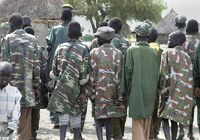
A major Sudanese rebel group in Darfur has signed a cease-fire agreement with Sudan’s government following negotiations in neighboring Chad.
A statement from the Chadian presidency in Ndjamena Saturday said the cease-fire between the Justice and Equality Movement and the Sudanese government takes effect immediately.
How To Check Tires for Hidden Dangers

Old tires (more than 5 years old) are sold as “new”, because the outside tread looks untouched. However, tires, like milk, have a shelf life after which they can be dangerous — even deadly — for drivers. For instance, an ABC News investigative team found some Walmart stores selling 12 year old tires as “new.”
The next time you buy tires, make sure you know how to read the code on the side of the product.
Numbers engraved in rubber on a tire wall will tell you when they were made. Many are easy to see on the outside, but sometimes companies put this number on the inside of the tire.
This ABC news video from 2008 demonstrates how to decode the jumble of numbers on a tire to decipher when the tire was made.
Watch below, or at ABC News…
School For Winter Olympians: 14 From One Utah College

Westminster College in Salt Lake City has 14 students competing in Vancouver in events like freestyle aerials, moguls and cross-country skiing. It’s a school with a serious winter sports culture.
Serious skiers from out of state come to this small liberal arts college for a unique combination — the academic challenge along with the ability to head out to the mountain five days a week. Park City is just 30 minutes away.
(Listen to the story or continue reading at NPR)
Supermodels and Celebs Strut Their Stuff for Haiti with ‘Fashion for Relief’

London’s fashion week kicked off with some of the biggest names in fashion, entertainment and sport, hitting the catwalk to raise money for women, children and babies in Haiti.
The Fashion For Relief show, organized by supermodel Naomi Campbell, raised more than £1million.
Online auctions commenced on March 15 and featured donated items modeled by celebrities that night. The auctions were expected to double the amount raised overall, according to the organizers.
(Watch video below – Read more in the Daily Record, here)
Top 5 Superhero Animals

From Planet Green TV comes this rundown of their picks for the Top 5 animal rescues of the decade. An angel Dog, a pig who gets attention on the highway to rescue its owner and a goat warmer are three of the “Planet 100 Top 5 Superhero Animals.”
Watch the video below… or on YouTube.
After IRS Crash, Iraq War Vet Sprang to Action With Ladder to Help 5 Escape

A 28-year-old Iraq war veteran saw black smoke billowing from an office building as he was driving by in his truck. Robin De Haven turned around and rushed to the scene thinking he could help.
He hurled his 17-foot ladder from off his truck, helping to rescue people peeking through broken windows as thick smoke poured into the air.
“I don’t feel like a hero. I was just trying to help,” he said.
(Continue reading the AP story at Dallas Morning News)
Mortgage Delinquencies Fall, Trade Group Says

Fewer home loans are going bad these days, the Mortgage Bankers Assn. said Friday in its quarterly delinquency report.
Calling the finding surprising, the trade group interpreted it as a signal that the housing markets are healing.
“We are likely seeing the beginning of the end of the unprecedented wave of mortgage delinquencies and foreclosures that started with the subprime defaults in early 2007.”
(Continue reading at the LA Times)
Being Positive and Optimistic Could Prevent Heart Attacks, Study Finds

Being happy and naturally optimistic cuts the risk of developing heart problems, say researchers.
They found that those who are enthusiastic, contented and believe the glass is half full rather than half empty have a better chance of keeping their heart healthy.
Being Positive and Optimistic Could Prevent Heart Attacks, Study Finds
Being happy and naturally optimistic cuts the risk of developing heart problems, say researchers.
They found that those who are enthusiastic, contented and believe the glass is half full rather than half empty have a better chance of keeping their heart healthy.
It is the first study to find such a strong link between positive emotions and a lower risk of heart disease.
Findings published in the European Heart Journal reveal the potentially damaging effects of pessimistic thoughts and long-term negativity.
“This is the first study to show an independent relationship” between heart disease and a positive attitude that was spelled out through clear data, as opposed to just being based on a person’s own report of their attitude.
(Contine reading in the Daily Mail)
Photo courtesy of Sun Star
10 Year-Census Discovers 5,000 New Marine Species

The Census of Marine Life, a project that involved more than 2,000 scientists from 80 countries, has paused to announce the discovery of more than 5,000 new species.
These include bizarre and colourful creatures, like the hirsuta crab (photo, right), which was so unusual it warranted a whole new family designation. Many of the organisms produce therapeutic chemicals.
A panel of scientists presented these preliminary insights from the decade-long census at the American Association for the Advancement of Science annual meeting in San Diego. The final report will be released in October.
(Read more of the report in the BBC)
Thanks to Pricsilla W. in France for sending the link!
Mosquito ‘Nose Transplant’ a Breakthrough in Wiping out Malaria
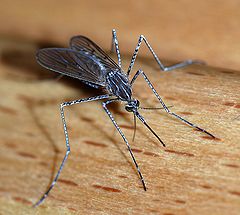
Five years of exhaustive research has yielded the key to thwarting “the most dangerous animal on the planet:” disarming its nose. Scientists at two American universities have pulled apart the 70 different and distinct receptors that work in a mosquito’s nose, or antennae, to lead the insects to human skin.
The discovery represents a major advance in the all-out war by scientists around the world and the Bill and Melinda Gates Foundation to eradicate malaria.
(Continue reading from HealthZone.com)
14 Year Old Makes a Difference for Rwandan Girls

Jessica was only a sixth grader when she learned that most girls in Rwanda are orphans, and they don’t have the money or materials to attend school. Over the next several years, she rallied her classmates to raise money for rural Rwandan girls through bake sales, tee shirt sales and donation drives.
After a recent front page article in the Seattle Times caught the attention of Microsoft cofounder Paul Allen, he donated $25,000, bringing her total to $75,000 raised in three years.
The charity, Richard’s Rwanda, now has five chapters in Seattle high schools and, after visiting the African country, Jessica has recruited a private girls’ school there to help expand her fundraising work internationally.
Survey Shows 3 Out of 4 Girls Happy With Their Bodies

According to a national survey released by the Girl Scouts on the eve of New York City’s legendary Fashion Week, most girls are happy with their bodies and reject thin fashion models as unrealistic.
According to a Girl Scouts of America press release, the survey of 1,002 girls ages 13 to 17 “comes amid continuing controversy over super thin models who are dangerously underweight, (and charges that) the fashion industry’s preference for waif-like women has led to models engaging in obsessive dieting and extreme weight loss, as well as setting a poor example for teenage girls.”
The study found that girls’ friends and peers have much more influence over how they feel about their bodies than do fashion models. Eighty-two percent said that their peers and friends influenced how they felt about their bodies; 65 percent said it was their parents, and 62 percent reported another family member.
About three-quarters of the girls were happy with their bodies.
(Continue reading at Discovery.com)
Positive Stories E-mailed More Than Negative: Study

Do people prefer to spread good news or bad news? Researchers at the University of Pennsylvania have intensively studied the New York Times list of most-e-mailed articles and found that readers would rather enlighten others.
People preferred e-mailing articles with positive rather than negative themes, and they liked to send long articles on intellectually challenging topics. Perhaps most of all, readers wanted to share articles that inspired awe, an emotion that the researchers investigated after noticing how many science articles made the list.
(Read reading the results in New York Times)
Photo courtesy of Sun Star
Portugal Bike Paths Decorated with Poetry (Video)

A new set of bike paths placed along the Tejo river in Lisbon, are filled with phrases from a famous Portuguese poem by Fernando Pessoa, the well known lines inspired by that very river.
Translation in English:
The river of my village doesn’t make you think about anything.
When you’re at its bank you are only at its bank.”
Through the Tejo you go to the World.
Beyond the Tejo is America
And the fortune you encounter there.
Nobody ever thinks about what’s beyond
The river of my village.
Watch a beautiful and romantic video taken of the bike path and set to music.
(See full poem on Treehugger)