The director of the Rainier Valley Food Bank says he’s overwhelmed by the donations that have poured in since locals learned that $2,000 worth of donated food was stolen on Seattle area location on Wednesday.
“It’s a record — by far,” Osborne said. “Everything from $10,000 from Walmart to two very young kids coming down this morning with their mother and the contents of their piggy bank after they heard about it on the radio.”
The Bill & Melinda Gates Foundation on Thursday announced its biggest education donation in a decade, $290 million, in support of three school districts and five charter groups working to transform how teachers are evaluated and how they get tenure.
A separate $45 million research initiative will study 3,700 classroom teachers in six cities, including New York, seeking to answer the question that has puzzled investigators for decades: What, exactly, makes a good teacher effective?
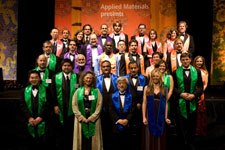
The Tech Awards is an international program honoring innovators from around the world who are applying technology to benefit humanity. This year’s winners received their awards at a Gala yesterday in San Jose, CA.
The 2009 Tech Awards Laureates represent regions as diverse as Nigeria, Brazil, Great Britain, the United States and Bangladesh. And their work impacts people in many more countries worldwide.
15 innovators were honored for projects that address global issues on the environment, economic development, education, equality and health. A $50,000 cash prize was awarded to one Laureate in each category.
One Nigerian company with its Cows to Kilowatts program lowers pollution from the slaughterhouse, eliminates greenhouse gas emissions, while producing clean, cheap energy. The technology turns animal blood and waste into inexpensive, clean energy for consumers.
An innovation called Ultra Rice addresses the severe vitamin deficiency especially in women and children around the world with its product, which looks, cooks and tastes just like rice.
Watch the video below, and at the bottom read a description of the Laureates and their life-changing work.
The Tech Awards Laureates 2009:
Environment Award
Dr. Joseph Adelegan, Cows to Kilowatts (Nigeria): Slaughterhouse waste is one of the most significant sources of water pollution and greenhouse gas emissions in most developing economies. The anaerobic fixed film reactor used in the Cows to Kilowatts project (link opens in PDF) decontaminates the waste stream from slaughterhouses and turns this organic waste into methane that can be used to generate electricity or as inexpensive cooking gas.
GRUPEDSAC Eco-techniques Toolkits for Self-Sufficiency (Mexico): Poor quality of life in rural Mexico includes loss of soil fertility, lack of access to clean water, adequate shelter, nutrition, and health resources. Customizable Eco-techniques Toolkits for Self-Sufficiency combine old and new sustainable technologies — from cisterns to solar ovens — to fit the needs of each community.
Sean White, Electronic Field Guide (USA): Plant species are disappearing at an alarming rate; mobile identification and classification of plant species may aid in conservation and cataloguing. The Electronic Field Guide uses mobile-augmented photo identification of leaves based on virtual reality and situated visualization.
Biosciences Economic Development Award
Alternative Energy Development Corp., Alternative Energy for Empowerment (South Africa): Fuel cell use largely avoids the lead-acid waste of solar or wind installation batteries. Inexpensive, zinc-air fuel cells can be used in poor communities lacking access to grid power. Fuel cell waste can even be recycled as fertilizer.
Solar Ear (Botswana and Brazil): Standard Western hearing aids cost an average of $750, with battery costs typically $1 per week. Solar Ear, an inexpensive hearing aid suited to local conditions and manufactured by deaf workers who train one-another, costs $100 and is paired with a solar recharging unit for the batteries.
Driptech (India): Hundreds of millions of people in the developing world face water shortages in crop production; drip irrigation delivers precisely the right amount of water and not more. Driptech’s unique laser technology drills holes in one main line, thereby reducing the number of parts and the cost of a drip irrigation system.
Education Award
Akshaya Patra Foundation, School Meals Program (India): High quality, nutrient rich meals are key to the education process in poverty stricken areas. The School Meals Program uses integrated and adapted high-performance kitchen technology and food delivery systems to serve millions of Indian children a nutritious daily meal.
GeoGebra: Dynamic Mathematics for Everyone is a free, open-source software to display and practice geometry and mathematics that will help achieve rapid diffusion of information and quicker comprehension. GeoGebra created web-based, open-source software to visualize and practice geometric-based mathematics.
The Khan Academy: High school students around the world need informal, clear explanations that can be reviewed at a leisurely pace to supplement their formal learning. The Khan Academy created hundreds of free educational videos in math, statistics, physics, and finance using drawing software. The “blackboard” style videos are accessible via the internet and hosted on YouTube.
Equality Award
World of Good Development Organization (International): Handicraft workers around the world are generally paid per piece, often at low hourly rates. World of Good‘s Fair Wage Guide Software provides localized pricing evaluation of handmade goods to improve wages of informal workers. The free web-based platform encourages ethical trade by comparing wages worldwide.
Kiwanja.net: kiwanja.net’s FrontlineSMS allows for SMS technology to be used by hundreds of NGOs worldwide, for activities as diverse as election monitoring and dissemination of agricultural prices. This free software for non-governmental organizations deploys two-way SMS messaging and provides easy-to-use communications infrastructure for outreach in rural and urban areas.
Shidhulai Swanirvar Sangstha (Bangladesh): Providing mobile solar lighting can alleviate health problems due to smoke and CO2 emissions while establishing social enterprises. Retrofitting existing kerosene hurricane lanterns with CFL or LED lights can provide lighting for transient settlers in flood and hurricane-prone areas. SuryaHurricane also establishes women-oriented infrastructure for recharging lantern batteries using boats equipped with PV modules.
Health Award
mPedigree (Ghana): Counterfeit drugs are ubiquitous in the developing world; up to 80 percent of drugs in pharmacies are fakes with little or no active ingredients. Pharmaceutical manufacturers label packages with an alphanumeric code, which is later confirmed when consumers send free text queries in to the mPedigree database. This low-cost, instant method for reducing drug counterfeiting is expanding from Ghana to Nigeria, Rwanda, and India.
PATH, Ultra Rice: More than a billion people in developing nations suffer from dietary deficiencies in crucial micronutrients, including iron, zinc, folic acid, and vitamin A. Ultra Rice is an affordable, nutrient-fortified additive to standard rice, tailored to satisfy deficiencies common in the region where it is distributed.
Village Reach, Management Information System for Vaccine (Mozambique): Poor countries bear the greatest burden of infectious diseases, and have the least infrastructure for public health programs. Village Reach worked closely with the Mozambique Ministry of Health to implement supply chain logistics management systems, utilizing portable USB drives to automatically update and share information to improve the delivery of vaccines, drugs and critical medical supplies to rural clinics.
The Tech Awards is an international program honoring innovators from around the world who are applying technology to benefit humanity. This year’s winners received their awards at a Gala yesterday in San Jose, CA.
The 2009 Tech Awards Laureates represent regions as diverse as Nigeria, Brazil, Great Britain, the United States and Bangladesh. And their work impacts people in many more countries worldwide.
15 innovators were honored for projects that address global issues on the environment, economic development, education, equality and health. A $50,000 cash prize was awarded to one Laureate in each category.
One Nigerian company with its Cows to Kilowatts program lowers pollution from the slaughterhouse, eliminates greenhouse gas emissions, while producing clean, cheap energy. The technology turns animal blood and waste into inexpensive, clean energy for consumers.
An innovation called Ultra Rice addresses the severe vitamin deficiency especially in women and children around the world with its product, which looks, cooks and tastes just like rice.
Watch the video below, and at the bottom read a description of the Laureates and their life-changing work.
The “chocolate cure” for emotional stress is getting new support from a clinical trial published online in the Journal of Proteome Research. It found that eating about an ounce and a half of dark chocolate a day for two weeks reduced levels of stress hormones in the bodies of people feeling highly stressed. Everyone’s favorite treat also partially corrected other stress-related biochemical imbalances.
Beneficial substances in dark chocolate may also reduce risk factors for heart disease and other physical conditions, according to growing scientific evidence. Until now, however, there was little evidence from research in humans on exactly how chocolate might ease emotional stress.
In the study, scientists identified reductions in stress hormones and other stress-related biochemical changes in volunteers who rated themselves as highly stressed and ate dark chocolate for two weeks. “The study provides strong evidence that a daily consumption of 40 grams [1.4 ounces] during a period of 2 weeks is sufficient to modify the metabolism of healthy human volunteers,” the scientists say.
A plant that converts cow dung into energy for homes opened in the Netherlands last week.
Manure from cows at a nearby dairy farm will be fermented along with grass and food industry residues, and the biogas released during the process will be used as fuel to heat around 1,100 homes.
General Motors Co. is expected to fully repay its $6.7 billion in U.S. government loans by 2011, four years earlier than required. The auto manufacturer reported the news Monday after announcing recent sales exceeded expectations and costs came in lower than expected.
Under the plan, the automaker said it will begin paying the U.S. Treasury Department $1 billion each quarter, beginning at the end of December.
The highly visible success of the stimulus program known as cash-for-clunkers induced a boom in vehicle sales this summer that clearly would not have happened otherwise.
Now, the Obama administration is looking at creating a new version of the program — this time for home weatherization.
One proposal, which would give households money to pay for weatherization projects that help cut carbon emissions, might be called “cash for caulkers.” Rahm Emanuel told the New York Times, “It’s one of the top things (the president) is looking at.”
Two Chicago nonprofits, together with the University of Chicago, unveiled a counseling and sports program Wednesday aimed at stemming chronic youth violence in Chicago’s public schools.
Chicago is employing a growing array of efforts against youth violence – including a new $30 million program that tries to target the 1,200 kids most at-risk for violence.
Bacteria which glow green in the presence of explosives could provide a cheap and safe way to find hidden landmines, Edinburgh scientists claim.
Edinburgh University said the microbes, which forms green patches when sprayed onto ground where mines are buried, could be dropped by air onto danger areas.
Within a few hours, they would indicate where the explosives can be found.
In January, during the final hours of Israel’s three-week war in Gaza, a pair of Israeli tank shells blasted through a bedroom on the third floor of the doctor’s home, north of Gaza City.
The strike ended the lives of three of Dr. Izzeldin Abuelaish’s daughters, but he stubbornly refuses to submit to the anger.
Instead, taking advantage of the notoriety that has inevitably come his way, Abuelaish continues to promote peace to Jews, Arabs and anyone who will listen – as many seem eager to do.
“I don’t want any bad feeling to control me and dominate.”
(Continue reading about the newly established Canadian resident in the Toronto Star)
Prisoners are paired with puppies in a ground-breaking program to train service dogs for injured war veterans. The program, Puppies Behind Bars, develops confidence and healing in both the soldiers and convicts.
Inmates in seven different facilities teach 78 different commands to service dogs and also train explosive-detective dogs for use in airports and law enforcement.
So far, the program, founded by Gloria Gilbert Stoga, has graduated hundreds of animals since 1998. On her Website, she writes about Dr. Thomas Lane, a veterinarian in Florida, who first thought that prison inmates would make excellent puppy raisers, and started the first guide-dog/prison program.
“Not only do inmates have unlimited time to spend with the puppies, but they benefit from the responsibility of being puppy raisers in ways that are especially important to their rehabilitation: they learn patience, what it is like to be completely responsible for a living being, how to give and receive unconditional love, and — since puppy raisers take classes and train the dogs together — how to work as a team.”
Watch the videos below, including a report by Glenn Close featured on Oprah in June…
Prisoners are paired with puppies in a ground-breaking program to train service dogs for injured war veterans. The program, Puppies Behind Bars, develops confidence and healing in both the soldiers and convicts.
Inmates in seven different facilities teach 78 different commands to service dogs and also train explosive-detective dogs for use in airports and law enforcement.
So far, the program, founded by Gloria Gilbert Stoga, has graduated hundreds of animals since 1998. On her Website, she writes about Dr. Thomas Lane, a veterinarian in Florida, who first thought that prison inmates would make excellent puppy raisers, and started the first guide-dog/prison program.
“Not only do inmates have unlimited time to spend with the puppies, but they benefit from the responsibility of being puppy raisers in ways that are especially important to their rehabilitation: they learn patience, what it is like to be completely responsible for a living being, how to give and receive unconditional love, and — since puppy raisers take classes and train the dogs together — how to work as a team.”
Watch the videos below, including a report by Glenn Close featured on Oprah in June…
According to a Gallup poll that measures happiness through the years, when the markets tanked last fall, happiness did too, but here’s the funny thing: by this past summer, overall well-being was higher than it was in the summer of 2008, before the Apocalypse. In fact, the latest report finds America’s cheeriness at an all-time high.
It seems that many people are finding the upside in the downturn.
Remember last year when the heroic girl’s softball teammates volunteered to carry an injured player from the opposing team around the bases helping her to score after she hurt her knee in the championship playoffs? Here is an update on the girls from different teams who have formed a nonprofit organization, the Mallory Holtman and Sara Tucholsky Sportsmanship Defined Foundation…
Small grants given directly to villagers have brought important changes to this corner of Afghanistan, offering a model for the country.
In Jurm, people have taken charge for themselves — using village councils and direct grants as part of an initiative called the National Solidarity Program, introduced by an Afghan ministry in 2003.
Before then, this valley had no electricity or clean water, its main crop was poppy and nearly one in 10 women died in childbirth… Today, many people have water taps, fields grow wheat and it is no longer considered shameful for a woman to go to a doctor.
No longer locked in one big war, Iraq has become a land of a hundred little wars — tribal disputes that lead to bloodshed. But, victory through negotiation is becoming more common, thanks to the mediation movement spawned by Harvard Law School guru Roger Fisher, coauthor of the 1981 book “Getting to Yes.’’ The Boston area has become a global hub for teaching conflict resolution theory and practice for uses in law, diplomacy, and business in farflung places.
A total of 73 municipal officials and tribal sheiks from across Iraq underwent intensive training from Conflict Management Group, the nonprofit consulting firm launched by Fisher in 1984 that is now part of the international development and relief group Mercy Corps.
TOMS Shoes was founded on a simple premise: With every pair you purchase, TOMS gives a pair of new shoes to a child in need. Using the purchasing power of individuals to benefit Ethiopian children in need.
Since its founding in May 2006, American internet entrepreneur Blake Mycoskie has given over 150,000 pairs of shoes to children through the One for One model.
The business plan calls for giving over 300,000 pairs of shoes in 2009.
TOMS Shoes was founded on a simple premise: With every pair you purchase, TOMS gives a pair of new shoes to a child in need. Using the purchasing power of individuals to benefit Ethiopian children in need.
Since its founding in May 2006, American internet entrepreneur Blake Mycoskie has given over 150,000 pairs of shoes to children through the One for One model.
The business plan calls for giving over 300,000 pairs of shoes in 2009.
A low-cost health care clinic in Goshen, Ind., has come up with a business plan that allows patients to pay for treatment with something other than money. At the Maple City Health Care Center, patients can help pay off their medical bills by performing community service.
Last fall, when the unemployment rate in Elkhart County, Indiana, topped 10 percent, clinic workers began noticing that patients weren’t showing up for appointments. Turns out they couldn’t even come up with a few bucks for an office visit.
So James Gingrich, the clinic’s medical director, decided to tap his patients’ skills and resources instead.


















 GRUPEDSAC Eco-techniques Toolkits for Self-Sufficiency (Mexico): Poor quality of life in rural Mexico includes loss of soil fertility, lack of access to clean water, adequate shelter, nutrition, and health resources. Customizable