The Netherlands is closing eight prisons due to a decline in crime that has left many cells empty. The Dutch ministry’s research department expects the decline to continue.
The Obama administration unveiled a $4bn plan to upgrade public housing for low-income Americans, as part of an ambitious green job-creation project.
The renovation program will replace windows, insulation and even light bulbs in aging and neglected housing stock.
The labor secretary, Hilda Solis, will also announce $500m to train up workers for the new jobs. Of those funds, $50m will be directed to regions that have been hardest hit by the recession – such as the rustbelt state of Michigan where the unemployment rate is now 12%
Even in the face of a worsening economy, the nation’s 717 community foundations raised their giving by an estimated 6.7 percent in 2008 to a record $4.6 billion, and outpaced corporate foundation funding for the first time, according to Key Facts on Community Foundations, a May 2009 report from the Foundation Center.
A church in Dallas, Texas has made it their mission to help people who are struggling financially.
Earlier this year the pastor of Crossed Timbers told members to take money from the collection plate if they needed it, even though church donations were down. That day they had the largest collection ever.
Thirteen-year-old Kavya Shivashankar of Olathe, Kan., has claimed the title of the nation’s top speller. Kavya aced the word ‘Laodicean’ Thursday night to win the 82nd Scripps National Spelling Bee.
Proof of Sir Richard Branson’s dedication to low carbon emissions will be displayed next year when Virgin Galactic’s two spacecrafts, Mothership Eve and SpaceShipTwo, perform test flights together using non-carbon based fuels. Virgin Fuels is working on biofuels made from algae to power the space ships, providing a tiny carbon footprint compared to even normal airplane travel.
New orders for long-lasting U.S. manufactured goods saw their biggest gain in 16 months in April, according to data on Thursday that suggested the deep recession was abating.
How many new species would you guess are discovered by scientists in a given year? Would you believe, a tally of more than 18,000 species in 2007 alone?
From among the more than 10,000 newly spotted species each year, scientists have named the top 10 new species — the most colorful, weird and surprising of them all.
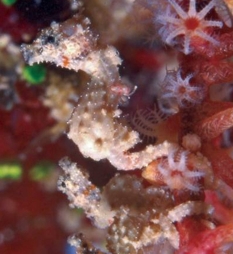
The Arizona State University ‘s International Institute for Species Exploration along with a committee of taxonomists – scientists responsible for species exploration and classification – tallied their votes to come up with the list for 2008, which includes a pea-sized seahorse, caffeine-free coffee and bacteria that live in hairspray.
The top 10 new species also include the world’s tiniest snake just 4 inches long, an insect as big as a dog, a ghost slug from Wales, a deep blue damselfish, and a palm that flowers itself to death.
According to Quentin Wheeler, an entomologist and director of the International Institute for Species Exploration at Arizona State University, a new generation of tools are coming online that will vastly accelerate the rate at which we are able to discover and describe species.
“Most people do not realize just how incomplete our knowledge of Earth’s species is or the steady rate at which taxonomists are exploring that diversity. We are surrounded by such an exuberance of species diversity that we too often take it for granted,” says Wheeler, who also is ASU vice president, dean of the College of Liberal Arts and Sciences, and a professor in the School of Life Sciences.
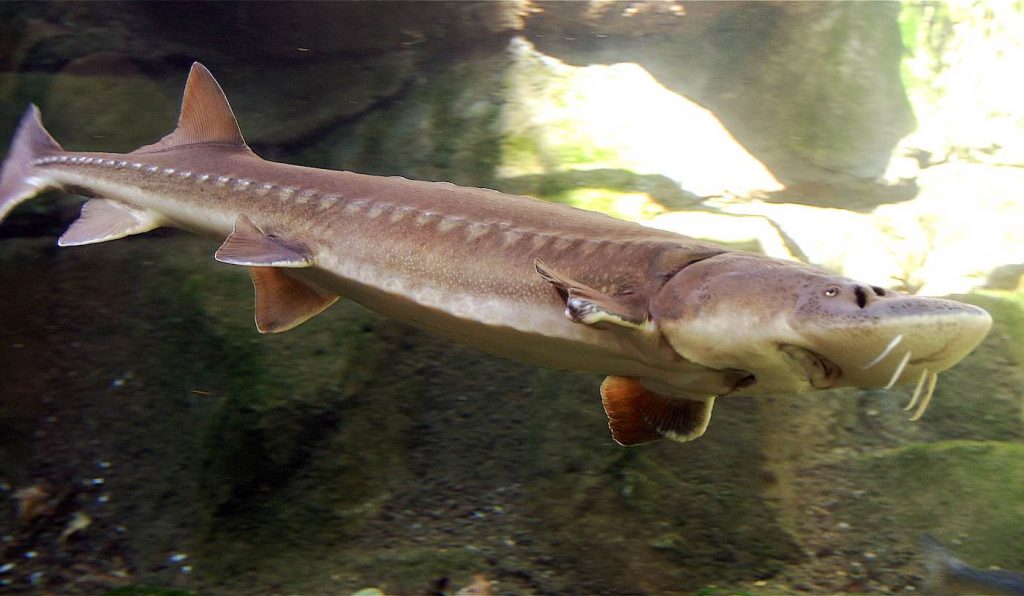
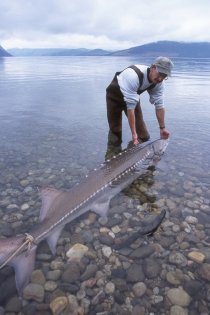
For the first time in almost 40 years lake sturgeon have spawned in the Detroit River, thanks to an international reef construction effort completed last fall. The Detroit River International Wildlife Refuge announced Tuesday that the joint project between Canadians and Americans had succeeded in providing the perfect place for the threatened fish to lay eggs.
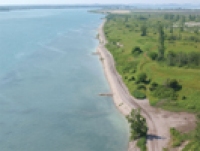
Just 12 miles southwest of Detroit, in Ontario waters along the shore of Fighting Island, officials found the right combination of flow, current speed, depth, and other factors that would attract the lake sturgeon.
“We were pretty confident it would work,” said Dr. Patrick J. Rusz, Director of Wildlife Programs for the Michigan Wildlife Conservancy. “The amazing thing was that it happened so quickly.”
Excessive fishing and water pollution had taken its toll on Michigan rivers, which were some of the best sturgeon fisheries in the world, even rivaling Russia’s. Recently, new stringent fishing regulations along with pollution controls were setting the stage for a sturgeon comeback. There was just one problem.
A century ago, growing cities needed gravel for roads and concrete, and there was no better place to get gravel than a river bed. Over 8 million cubic yards of gravel had been dredged from that part of the Detroit River, removing a critical habitat for spawning sturgeon.
Recent population studies confirmed that despite lack of suitable spawning grounds, adult sturgeon congregated along Fighting Island near Wyandotte. Local, regional and international wildlife officials hatched a plan to surgically replace a small fraction of this key physical habitat to encourage spawning and help populations rebound.
“We are now seeing that even replacing a fraction can pay BIG dividends,” said Rusz in a telephone interview with the Good News Network.
Barge operators dropped limestone and fieldstone in waters up to 20 feet deep while divers below monitored the construction of a 600 x 150 foot reef. The river’s new spawning grounds were completed in late October 2008, an historic effort that marked the first time both Canadian and U.S. money was pooled for a common habitat rehabilitation project in the Great Lakes.
The governments of both nations were involved, with funding coming from the U.S. Fish and Wildlife Service, Environment Canada, National Fish and Wildlife Foundation, and the Ontario Ministry of Natural Resources. The Michigan Wildlife Conservancy, a private non-profit group, donated $30,000. Two U.S. companies—DTE Energy and BASF—also provided construction funds. The general contractor for the project was the Essex Region Conservation Authority (of Canada), with technical help from the U.S. Geological Survey, and other agencies and organizations.
The Detroit River International Wildlife Refuge is the only international refuge in North America. Managed by the U.S. Fish and Wildlife Service, it has 48 miles of what was once some of the continent’s most productive shoreline for fish and wildlife. The Refuge is gradually expanding to provide critical habitat for many species of birds and fish that conservationists hope to see recover from decades of habitat loss.
By Cacophony, CC license
The sturgeon is a great example. The current population is only about 1 percent of what it was 150 years ago. From 1970 to 1999, no sturgeon spawning was documented in the Detroit River. But since then, sturgeon have attempted to spawn in a few areas of the river, and more of the fish have been showing up down river near Fighting Island. Now, thanks to the efforts of two countries, the lake sturgeon, a threatened species in Michigan, have spawned four times this season using the man-made reef. Other Great Lakes fish such as walleye and lake whitefish, and even madtom, have also used the spawning grounds.
“It is so heartening to see the amazing success of this sturgeon habitat restoration for the Detroit River International Wildlife Refuge,” notes Congressman John Dingell (D-MI). “No one thought this degree of success was possible only 30 years ago. It truly validates the decades of international cooperation on pollution control and conservation efforts in the River and throughout the Refuge. I want to give my special thanks to all the Canadian partners who made this possible and I look forward to continuing this important work with them in the future.”
“Michigan Congressman John Dingell originally had a vision of restoring the wildlife especially in the Great Lakes and tributaries at a time when a lot of people scoffed at the idea, assuming no one could pull it off,” recalls Dr. Rusz. “Lake Erie was once considered dead and now is a world class fishery once again… It’s nice to see it has happened in his lifetime.”
Lake sturgeon spend a lot of their time in waters 20 to 40 feet deep. They spawn in May or June in a variety of depths, typically 6 to 28 feet. While on river spawning grounds, sturgeon often break the surface with porpoise-like jumps. Females lay several hundred thousand eggs at a time.
Females become sexually mature at 25 years of age, males at 15. Females only spawn every 4 to 6 years, and males every other year. Some individual sturgeon have lived 150 years.
Sturgeon feed on sand or muck bottoms where they suck in bottom organisms including crayfish, snails, and larvae of mayflies and other insects.
It was only a matter of time before emissions-free technology moved from cars and bicycles to water vehicles. The ECO Jet Ski, supposedly the world’s first all-electric jet ski, travels at up to 50 mph and has a battery life of 3 hours–so only the most hardcore jet skiers will have to worry about running out of juice.
Best of all it is nearly silent.
EcoWatercraft, says it wants to build only in America using facilities that are “100% powered from renewable sources of energy.”
Today’s wind turbines are like race cars with one gear. Slow off the line and crippled at high speeds, the turbines are effective at generating electricity only within a sweet spot of moderate wind speeds.
Scientists from Purdue University want to change this by creating intelligent wind turbines that shape-shift with the wind. These smart wind turbines would help maximize the amount of electricity generated by wind power while ensuring longer life spans for wind turbines.
Experts say lease-purchase options could solve the foreclosure problem. A Georgia company is in the forefront of efforts to turn foreclosures around by giving troubled consumers a shot at home ownership, while sprucing up neighborhoods with lovely community homes.
A 47-year-old who has been behind bars for more than two decades is set to become the latest wrongfully convicted inmate cleared through DNA testing in Dallas County. DNA results proved Jerry Lee Evans’ innocence of the 1986 aggravated sexual assault.
At the Willard, one of Washington, DC’s oldest and most prestigious hotels, the high society guests find recycle waste baskets in their rooms for bottles and cans, the 19th century chandeliers are outfitted with energy-saving bulbs, and the chef features organic and local food while composting all his waste.
All this and more makes the Willard a first class green hotel.
U.S. consumer confidence jumped in May by the most in six years, bolstering indications that the recession will end this year. The 28-point jump in confidence since the end of March is the biggest two-month rally since records began in 1967.
“Psychology plays a big part in the business cycle,” said economist Ed Yardeni, president of Yardeni Research. “When people want to believe that the economy should improve, it usually does. That’s the power of positive thinking.”
Stocks soared on the news yesterday, with major indices up more than 2 percent.
A new reserve in the Democratic Republic of Congo will save some of the region’s last pristine forests: ensuring the survival of the embattled bonobo—the least-known of the world’s four great ape species—and protecting a wide variety of biodiversity from the Congo peacock to the dwarf crocodile.
The new Kokolopori Bonobo Reserve covering 1,847 square miles (4,875 sq km) is noteworthy for another reason: every step of its creation—from biological surveys to reserve management—has been run by the local Congolese NGO and villages of Kokolopori.
To succeed, some environmental organizations have learned, give control to the local people.
A nine-year journey ended Tuesday for about 50 high school students who, as fourth-graders at Wallace Elementary, were promised college scholarships if they completed high school.
I Have a Dream, a nationwide nonprofit organization that helps students pay for college, guaranteed tuition assistance to the entire fourth-grade class at Wallace Elementary in 2000 if they graduated from high school.
For Kelso High School senior Katrina Hobbs, the I Have A Dream program and its volunteer mentors helped her become the first high school graduate in her family.
A man’s decision not to end his terminally ill bulldog’s life ended up saving his own.
Scott Seymour said his dog, Brittney, awakened him with her barking early Saturday in time for both of them to escape from his burning house in Grand Rapids.














 The Netherlands is closing eight prisons due to a decline in crime that has left many cells empty. The Dutch ministry’s research department expects the decline to continue.




 The governments of both nations were involved, with funding coming from the U.S. Fish and Wildlife Service, Environment Canada, National Fish and Wildlife Foundation, and the Ontario Ministry of Natural Resources. The Michigan Wildlife Conservancy, a private non-profit group, donated $30,000. Two U.S. companies—DTE Energy and BASF—also provided construction funds. The general contractor for the project was the Essex Region Conservation Authority (of Canada), with technical help from the U.S. Geological Survey, and other agencies and organizations.