














 For the past few years, Nawal Abdulla Hadi of Baghdad couldn’t travel to see her family for the Eid al-Adha, giving up the traditional reunion during the annual Muslim holiday because the roads weren’t safe. Today she is packing up the car with the kids and heading south.
With Violence Down, Iraqis Celebrate Religious Holiday as They Did in the Past
Malaria Vaccine Shows Promise in Babies and Youngsters
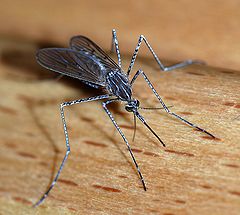
A promising malaria vaccine gives babies and young children significant protection against the deadly disease, suggest two clinical trials to be published Thursday in the New England Journal of Medicine. They delivered a 53 percent reduced rate of malaria. (CBC Canada has full story)
Dog Pulls Injured Dog From Highway Dodging Traffic
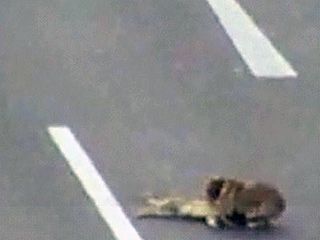
Footage from a traffic camera overlooking a busy freeway in Santiago, Chile captured a dog performing a heroic act — pulling an injured friend from oncoming traffic. The hero dog dodges out to drag the severely injured canine across lanes of traffic as cars swerve around it. Rescue workers arrive to help the dog in the end. . . A reminder that kindness extends beyond humans. (Video below)
Nobel Winner Sees End to AIDS Spread Within Years
A French scientist who shared this year’s Nobel Prize for medicine said on Saturday he believed the transmission of AIDS could be eliminated within years. “I hope to see in my lifetime the eradication of, not the AIDS epidemic, but at least the infection,” said Luc Montagnier, director of the World Foundation for AIDS Research and Prevention. “This could be achieved.”
Polluters Pay Record Fines, Achieve Record Clean Up

Fiscal year 2008 was a banner year for the U.S. Environmental Protection Agency’s enforcement of pollution laws and resulted in a record $11.8 billion spent in projects to clean up the environment, the agency said on Thursday.
“After these pollution control activities are completed, EPA estimates record pollution reductions of 3.9 billion pounds per year,” said Granta Nakayama, assistant administrator for EPA’s Office of Enforcement and Compliance Assurance. “This is nearly four times the level of pollution reduction achieved in fiscal year 2007.”
Notable accomplishments included cutting tons of air pollution from power plants, convicting environmental criminals, stopping the import of illegal engines, protecting the nation’s water from construction site runoff, and holding polluters accountable for hazardous waste cleanups.
Specific Environmental Protection Successes Include:
10 Healthy Ways to Save Cash Now

Does the bailout boogeyman have you hiding under the bed? Whether we live on Wall Street, Main Street, or Sesame Street we’re all affected by the financial pinch.
The following minor lifestyle adjustments not only ensure better health, they will ease your anxiety as well as your pocket book.
(Photo, right, by Sun Star)
- Cut the Caffeine. One fewer latte a day won’t kill you. A grande every day is running you upwards of $1000/year. Brew a batch at home instead; it will probably be better quality than the brown water spit out by the mega chain machine.
- Avoid the valet/cab. Walk it. At first it may make you feel like a commoner, but in a month or two your legs will be on the ‘A’ list—sooner if you wear heels to dinner.
Enjoy the Holidays While Treading Lightly on the Planet

Rockefeller CenterModern LED lights last ten times as long as other bulbs, and use75 to 90 percent less energy, saving you money on the electric bill.
With a little bit of effort you and your family can enjoy the holiday and help save the planet at the same time. Read the article below about more ways to enjoy a green holiday. (May take a couple seconds to load.)
Photo, right: Laura Bush gives tour of new energu-saving White House decorations.
More info about cities and public buildings using LED lights at USA Today.
Secret Santas in 3 States Spread Cheer, $100 Bills
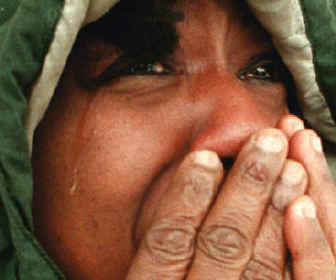
A mother in suburban St. Louis was overcome by emotion when a woman approached her and handed her two $100 bills, that could help to get the heat turned back on in her family’s home. The words “secret Santa” were stamped on the money and the woman said, “The only condition is that you do something nice for someone. Pass it on.” (Read the USA Today report here)
Bush Administration Has Housed Many Homeless
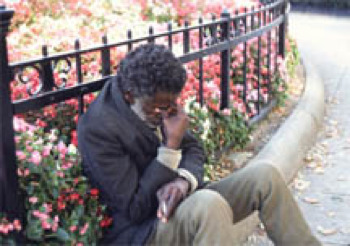
The Bush administration’s “radical and liberal” national campaign against chronic homelessness has been successful in leading the nation in a 30 percent decline in U.S. chronic homelessness from 2005 to 2007. “Housing first,” it’s called… (Read good news reporter Frank Greve’s story in McClatchy News)
Everyone Wants to be Like Harold Hamilton
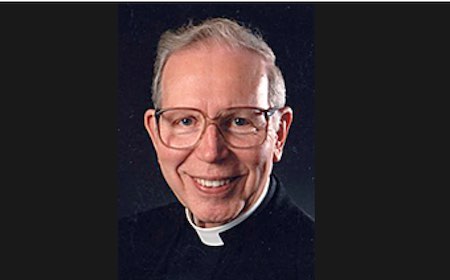
“I want to be like Harold Hamilton,” was the refrain on blogs and in dozens of comments following a news report on this 86-year-old hustler.
The retired Lutheran pastor shuffles along buys extra cases of anything on sale in the grocery stores and delivers them to any one of 8 charities in Lincoln Nebraska.
He is always on the move helping someone. And don’t forget his jokes: Q: According to the Bible, how long did Cain hate his brother? A: As long as he was abel.
UPDATE: The pastor died in 2013 and was remembered for helping the hungry, especially after his retirement, during which he involved his grandchildren in his charity work.
Huge Holiday Bonuses Surprise Workers (Video)
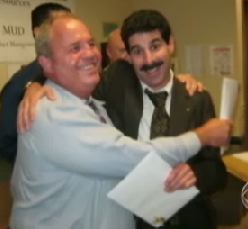
A company based in Chicago had a special surprise for its employees: huge holiday bonuses. Golden Parachutes were given to workers they often call “family”. One employee even got $100,000.
International Volunteer Day Celebrated Around the World
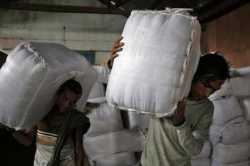
Congratulations to thousands of volunteers who contribute their energy and initiative to projects around the world, including critical United Nations activities, senior UN officials offered yesterday as they marked the day dedicated to those who give their time and efforts for free to help others.
“The altruistic spirit of volunteerism is immense and renewable,” Secretary-General Ban Ki-moon said in a message released for International Volunteer Day, which has been observed by the UN and civil society on December 5th every year since 1986.
Around the world volunteers are holding events this week to mark the Day: in Haiti, a school damaged by hurricanes is being rehabilitated; in Sudan, doctors and dentists are providing free medical consultations; in Kazakhstan, children in orphanages and hospitals are receiving “clown therapy”; and in Indonesia, new mangroves are being planted.
UN Volunteers (UNV) deploys about 7,500 people in 140 countries every year to support national development efforts.
Yesterday UNV launched an online volunteering service – which brings together hundreds of development organizations and thousands of volunteers who would otherwise have time or physical constraints from participating – in French and Spanish and re-launching an upgraded version in English.
“Online volunteers have contributed to environmental projects in Africa, human rights in Asia, youth education in Latin America, and community work worldwide,” Ms. Pansieri said in a statement.
“Online volunteering promotes social inclusion and contributes in a very tangible way to the work of development organizations and communities facing some of the toughest challenges of our time.”
UNV volunteers often work closely with the UN Development Program (UNDP), and that agency’s Administrator Kemal Dervis highlighted their joint efforts to improve conditions in countries emerging from disaster or conflict by rebuilding infrastructure, promoting democratic governance and engaging marginalized or vulnerable groups, such as women and youth.
Measles Deaths Dramatically Cut by 74 Percent Worldwide
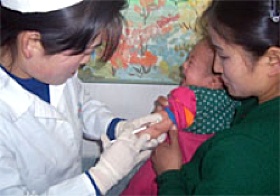
Measles deaths have plummeted by some 74 percent worldwide since 2000, the United Nations announced yesterday. Thanks to improvements in routine and immunization activities, the number of people dying from measles each year dropped from an estimated 750,000 to 197,000 between 2000 and 2007.
In the same period, massive efforts by the Eastern Mediterranean countries – including Afghanistan, Pakistan, Somalia and the Sudan – have cut measles deaths from 96,000 to 10,000, achieving three years ahead of time the UN goal of reducing measle deaths by 90 percent. These major successes were a result of ramping up vaccination campaigns, with more than twice the number of children immunized in 2007 compared to the previous year, thanks to the hard work of national governments, volunteers and partners in the Measles Initiative.
Author Helps Build Recreation Center for City

A Microsoft software developer is donating 20 percent of the profits from his debut novel, “Revolution,” toward a community recreation center at Redmond’s Washington Cathedral and a mission in Honduras sponsored by the church.
Alex Tamayo-Wolf wrote “Revolution” as a tribute to his mother’s father. Georg Wolf was the chief of police in Zirndorf, Germany during Nazi tyranny and helped many Jewish families escape from extermination. Tamayo-Wolf didn’t know about his grandfather’s heroism until he was 19 years old, studying Theology and German at a seminary in Austria. He did extensive research on this period in history and delved into his own family’s past to memorialize both innocent people who suffered and those like his grandfather, who freed them from the Nazis.
Tamayo-Wolf explained the link between his book, see it on Amazon here, and his interest in special projects at Washington Cathedral.
“Project Transformation helps feed and educate children living in the Tegucigalpa, Honduras city dump. In essence, to help them escape, which parellels what my grandfather did in his time,” he said.
A Life Changing Holiday Gift

In a recent survey, 71% of people said they didn’t need or want anything this Christmas. People would prefer to have a gift given on their behalf to help somebody else. That’s where World Vision comes in with their catalog. You can buy a baby alpaca, a baby pig or even a goat for a family in need with prices ranging from $35 to $600. (USA Today has the story)
Study Suggests Good Cheer May Spread Itself

When you’re smiling, the whole world really does smile with you. A paper being published Friday in a British medical journal concludes that happiness is contagious — and that people pass on their good cheer even to total strangers. American researchers who tracked more than 4,700 people in Framingham, Mass., as part of a 20-year heart study also found the transferred happiness is good for up to a year. (Full Associated Press story at Yahoo!)
(Photo courtesy of Sun Star)
Adopt a Rescued Koala for Christmas

Here’s a neat idea for a holiday gift, an alternative to the usual gift card, or present! Definitely what I will be asking for: They’re cute, they’re cuddly and, in these times of financial woe, they make an affordable festive gift that’s also good for the soul — adopt a rescued koala. (Reuters News via Yahoo!)
Hawaii Jumps On Plan for Statewide Electric Car Grid

The State of Hawaii and the Hawaiian Electric Company on Tuesday became the second in the nation to commit to building an alternative transportation system based on electric vehicles and an “intelligent” network of tens of thousands of battery recharging stations.
The plan, the brainchild of the former Silicon Valley software executive Shai Agassi, and his company, Better Place L.L.C., will help fuel Hawaii’s drive to lead the nation in renewable energy use, create jobs locally, while also helping to secure its energy future.
(photo: L-R Shai Agassi, Founder and CEO of Better Place, Hawaii Governor Linda Lingle and Robbie Alm, Hawaiian Electric executive vice president… Thanks to Sun Star for sending the story!)
Beautiful Surf Attracts Many, Now That Angolan Wars are Over

The restoration of peace in 2002 has turned oil-rich Angola into one of the world’s fastest growing economies and opened a new frontier for surfers, mostly from Luanda, who flock to the warm blue waters of Cabo Ledo to ride waves. Officials expect the country’s warm climate, vast sandy beaches along with the recently restored peace to begin attracting visitors from abroad. (Reuters Life!)
(Photo courtesy of Sun Star)
______________________________________________
______________________________________________
Amazing Basket Wins Game (Raw Video)

Senior Scott Morton tossed a three-foot shot over his head from the left baseline with his back to the basket at the buzzer to give host SUNY Geneseo a dramatic 85-84 win over SUNY Oswego. (Dec. 3)
We are sorry. The content item you requested needs to be replaced since the sydicator has abruptly ended this news service. The Good News Network is committed to finding another version of this news story elsewhere and adding the replacement link by mid-January, 2009. Please check back!