All News - Page 257 of 1715 - Good News Network
Home Blog Page 257

Ospreys Breed in Ireland for the First Time in More Than 200 Years

The Golden Eagle Trust

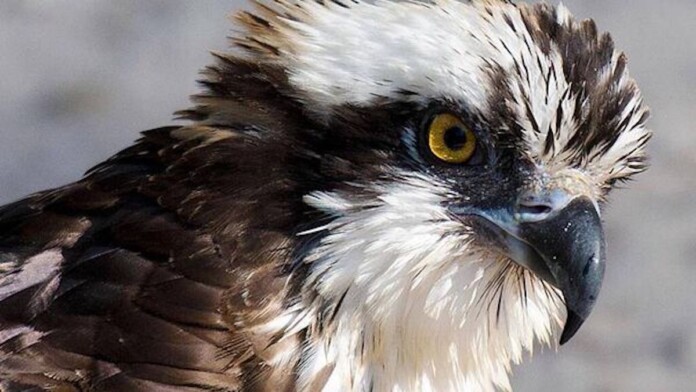
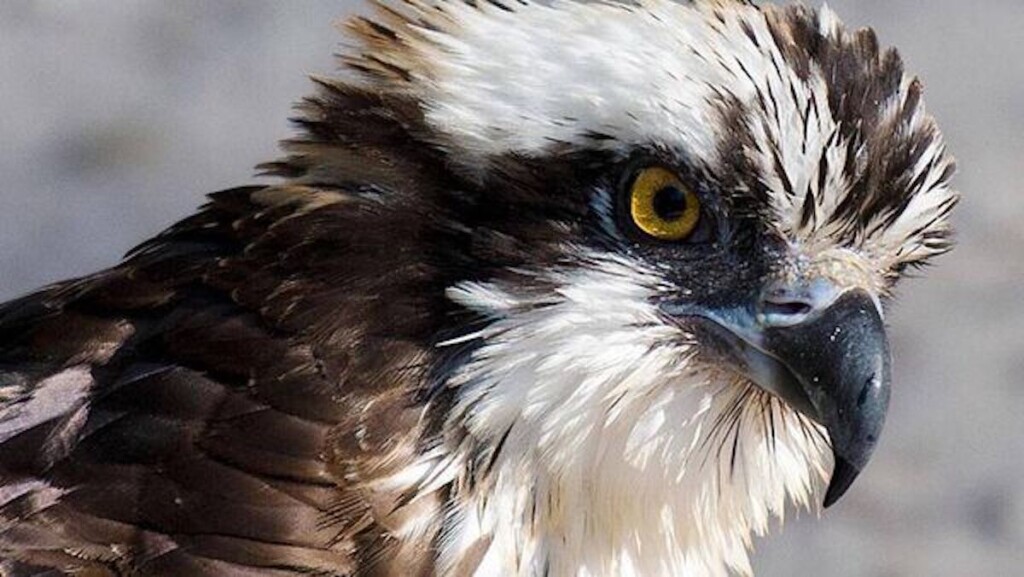
Irish conservationists report that the magnificent osprey has successfully bred in the wilds of the Emerald Isle for the first time in almost 250 years.

Worldwide, ospreys are doing great—listed as “Least Concern” by the IUCN who add they are increasing in population. However their massive brown and white wings have been absent from Irish skies for two centuries after being hunted to extinction.

The last recorded osprey to nest in Ireland was found in 1779 writes the Ireland-based conservation group Golden Eagle Trust on Facebook.

Visiting ospreys sometimes stop on the island to rest, but almost since the signing of the US Declaration of Independence, no pair has ever deemed it a safe environment to raise young.

A nesting pair (ospreys mate for life) was discovered by experienced birdwatcher Giles Knight, the Environmental Farming Scheme Advisor with Ulster Wildlife, a conservation non-profit.

“Along with my son Eoin, I have watched the adults return to the same site since 2021, so you can imagine my excitement the moment that I saw three chicks and two adults this year,” said Knight in a statement. “It was a rub-your-eyes, once-in-a-lifetime moment; an absolute highlight of my 30-year wildlife career—like finding long-lost treasure.”

“With at least two of the chicks fledging this season, this is a huge conservation success story and indicates a healthy wetland ecosystem with plenty of suitable habitat and fish to bring this apex predator back to our skies and plunging into the Fermanagh Lakelands. Truly the return of a living countryside!”

MORE NEWS FROM THE BRITISH ISLES: For the First Time in 240 Years, White-Tailed Eagles Spotted Flying Over England

Ireland has experienced a fair amount of recent raptor conservation success, and Ulster Wildlife admits that all the signs have been pointing toward this long-awaited return.

The old Gaelic name for osprey was “Iascaire Coirneach”, meaning “Tonsured Fisherman”, possibly related to how its black eye band and white crown give it the appearance of the semi-bald tonsure typical of medieval Christian monks, the Golden Eagle Trust wrote on Facebook in a celebratory post.

“Now these birds are back in Ireland and breeding successfully, it is critical that they are left in peace so their numbers can continue to grow by returning year on year to breed,” Knight added in the statement. “We believe and hope that this could be the start of a raptor dynasty.”

SHARE This Long-Awaited Return With Your Friends… 

A 5-Year-Old’s Lemonade Stand in Seattle Raised Over $17,000 for Victims of Maui Wildfires

Edison’s lemonade stand – Courtesy: Ami Jean Juel

This young boy in Seattle is showing that there’s no barrier to entry for disaster relief; that all it takes is a willing heart, a hot summer day, and some ice-cold lemonade.

Having recently returned from a family vacation on the Big Island, Ami Juel and her husband were watching the devastation of the Lahaina fires on television when their son, Edison, asked them to turn it off because it was too sad.

They didn’t realize the 5-year-old could become so emotionally connected to an abstraction so far away and seen only on television, so they decided to take the time to make a life lesson out of it and explain what had happened to the famous Maui town.

Edison immediately wanted to help and suggested setting up a lemonade stand like he saw once in Colorado. Ami and Edison’s father thought it a great idea, and so stocked up on pink and yellow lemonade, ice cream sandwiches, candy, sparkling water, and popsicles.

The hard opening came last Saturday on a busy Seattle street, where the response was absolutely prolific—stunning the family.

Even though the lemonade sold for $1.00 per cup, drivers regularly paid with $5, $10, or $20 bills with instructions to donate the change.

“Most people were like, ‘this is so cool. What a great idea. We’ve been looking for ways to help. We felt so helpless and didn’t know where to donate,'” Ami with USA Today. “A lot of people came by and stopped and told us like their story of a trip to Hawaii or some connection they had to the island.”

MORE MAUI STORIES: ‘My Brother Died a Hero’ Going Back to Save 4 Seniors in Maui Wildfire

Ami took the idea a bit further and set up ways to donate online, and she and her husband even got their corporate jobs to match whatever was made from selling lemonade. After a week’s worth of sales, Ami and Edison had $17,000 to send to Lahaina.

SHARE This Young Man’s Inspiring Efforts With The World…

Your Weekly Horoscope From Rob Brezsny: A ‘Free Will Astrology’

Our partner Rob Brezsny provides his weekly wisdom to enlighten our thinking and motivate our mood. Rob’s Free Will Astrology, is a syndicated weekly column appearing in over a hundred publications. He is also the author of Pronoia Is the Antidote for Paranoia: How All of Creation Is Conspiring To Shower You with Blessings. (A free preview of the book is available here.)

Here is your weekly horoscope…

FREE WILL ASTROLOGY – Week of August 26, 2023
Copyright by Rob Brezsny, FreeWillAstrology.com

VIRGO (Aug. 23-Sept. 22):
“I don’t believe that in order to be interesting or meaningful, a relationship has to work out—in fiction or in real life.” So says Virgo novelist Elizabeth Curtis Sittenfeld, and I agree. Just because a romantic bond didn’t last forever doesn’t mean it was a waste of energy. An intimate connection you once enjoyed but then broke off might have taught you lessons that are crucial to your destiny. In accordance with astrological omens, I invite you to acknowledge and celebrate these past experiences of togetherness. Interpret them not as failures but as gifts.

LIBRA (Sept. 23-Oct. 22):
The amount of rubbish produced by the modern world is staggering: over 2 billion tons per year. You and I can diminish our contributions to this mess, though we must overcome the temptation to think our personal efforts will be futile. Can we really help save the world by buying secondhand goods, shopping at farmer’s markets, and curbing our use of paper? Maybe a little. And here’s the bonus: We enhance our mental health by reducing the waste we engender. Doing so gives us a more graceful and congenial relationship with life. The coming weeks will be an excellent time to meditate and act on this beautiful truth.

SCORPIO (Oct. 23-Nov. 21):
I hope that in the coming weeks, you will wash more dishes, do more laundry, and scrub more floors than you ever have before. Clean the bathrooms with extra fervor, too. Scour the oven and refrigerator. Make your bed with extreme precision. Got all that, Scorpio? JUST KIDDING! Everything I just said was a lie. Now here’s my authentic message: Avoid grunt work. Be as loose and playful and spontaneous as you have ever been. Seek record-breaking levels of fun and amusement. Experiment with the high arts of brilliant joy and profound pleasure.

SAGITTARIUS (Nov. 22-Dec. 21):
Dear Sagittarius the Archer: To be successful in the coming weeks, you don’t have to hit the exact center of the bull’s-eye every time—or even anytime. Merely shooting your arrows so they land somewhere inside the fourth or third concentric rings will be a very positive development. Same is true if you are engaged in a situation with metaphorical resemblances to a game of horseshoes. Even if you don’t throw any ringers at all, just getting close could be enough to win the match. This is one time in your life when perfection isn’t necessary to win.

CAPRICORN (Dec. 22-Jan. 19):
I suspect you are about to escape the stuffy labyrinth. There may be a short adjustment period, but soon you will be running half-wild in a liberated zone where you won’t have to dilute and censor yourself. I am not implying that your exile in the enclosed space was purely oppressive. Not at all. You learned some cool magic in there, and it will serve you well in your expansive new setting. Here’s your homework assignment: Identify three ways you will take advantage of your additional freedom.

AQUARIUS (Jan. 20-Feb. 18):
Though my mother is a practical, sensible person with few mystical propensities, she sometimes talks about a supernatural vision she had. Her mother, my grandmother, had been disabled by a massive stroke. It left her barely able to do more than laugh and move her left arm. But months later, on the morning after grandma died, her spirit showed up in a pink ballerina dress doing ecstatic pirouettes next to my mother’s bed. My mom saw it as a communication about how joyful she was to be free of her wounded body. I mention this gift of grace because I suspect you will have at least one comparable experience in the coming weeks. Be alert for messages from your departed ancestors.

PISCES (Feb. 19-March 20):
“Those who know the truth are not equal to those who love it,” said the ancient Chinese sage Confucius. Amen! Seeking to understand reality with cold, unfeeling rationality is at best boring and at worst destructive. I go so far as to say that it’s impossible to deeply comprehend anything or anyone unless we love them. Really! I’m not exaggerating or being poetical. In my philosophy, our quest to be awake and see truly requires us to summon an abundance of affectionate attention. I nominate you to be the champion practitioner of this approach to intelligence, Pisces. It’s your birthright! And I hope you turn it up full blast in the coming weeks.

ARIES (March 21-April 19):
None of the books I’ve written has appeared on the New York Times best-seller list. Even if my future books do well, I will never catch up with Aries writer James Patterson, who has had 260 books on the prestigious list. My sales will never rival his, either. He has earned over $800 million from the 425 million copies his readers have bought. While I don’t expect you Rams to ever boost your income to Patterson’s level, either, I suspect the next nine months will bring you unprecedented opportunities to improve your financial situation. For best results, edge your way toward doing more of what you love to do.

TAURUS (April 20-May 20):
Addressing a lover, D. H. Lawrence said that “having you near me” meant that he would “never cease to be filled with newness.” That is a sensational compliment! I wish all of us could have such an influence in our lives: a prod that helps arouse endless novelty. Here’s the good news, Taurus: I suspect you may soon be blessed with a lively source of such stimulation, at least temporarily. Are you ready and eager to welcome an influx of freshness?

GEMINI (May 21-June 20):
Humans have been drinking beer for at least 13,000 years and eating bread for 14,500. We’ve enjoyed cheese for 7,500 years and popcorn for 6,500. Chances are good that at least some of these four are comfort foods for you. In the coming weeks, I suggest you get an ample share of them or any other delicious nourishments that make you feel well-grounded and deep-rooted. You need to give extra care to stabilizing your foundations. You have a mandate to cultivate security, stability, and constancy. Here’s your homework: Identify three things you can do to make you feel utterly at home in the world.

CANCER (June 21-July 22):
On Instagram, I posted a favorite quote from poet Muriel Rukeyser: “The world is made of stories, not atoms.” I added my own thought: “You are made of stories, too.” Many of my stories happen while I’m alone with my inner world. My nightly dreams are some of my favorite stories.” Anyway, Cancerian, I’m offering this exchange to you now because you are in a story-rich phase of your life. The tales coming your way, whether they occur in social settings or in the privacy of your own fantasies, will be extra interesting, educational, and motivational. Gather them in with gusto! Celebrate them!

LEO (July 23-Aug. 22):
Author A. Conan Doyle said, “It has long been my axiom that the little things are infinitely the most important.” Spiritual teacher Jon Kabat-Zinn muses, “The little things? The little moments? They aren’t little.” Here’s author Robert Brault’s advice: “Enjoy the little things, for one day you may look back and realize they were the big things.” Ancient Chinese sage Lao-Tzu provides even further nuance for you to contemplate this week: “To know you have enough is to be rich.”

WANT MORE? Listen to Rob’s EXPANDED AUDIO HOROSCOPES, 4-5 minute meditations on the current state of your destiny — or subscribe to his unique daily text message service at: RealAstrology.com

(Zodiac images by Numerologysign.com, CC license)

SHARE The Wisdom With Friends Who Are Stars in Your Life on Social Media…

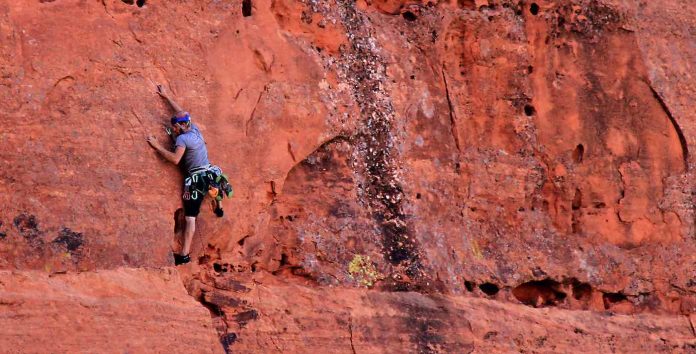
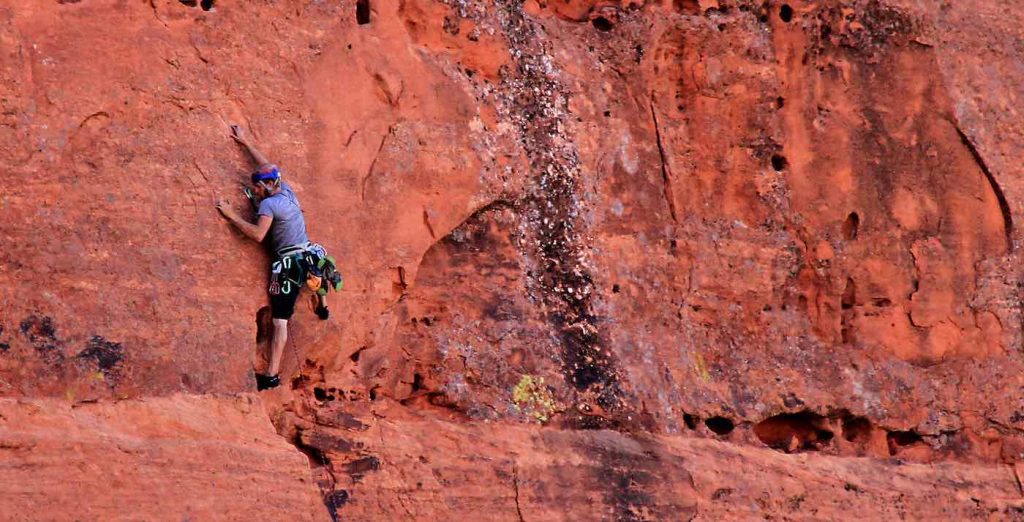
“I do not give up, I never give up, for there is nothing in this entire world that is irrevocably unchangeable.” – Sri Chinmoy

Quote of the Day: “I do not give up, I never give up, for there is nothing in this entire world that is irrevocably unchangeable.” – Sri Chinmoy (on the anniversary of the spiritual leader’s birth in 1931)

Photo: Utah climber by arbyreed, CC license

With a new inspirational quote every day, atop the perfect photo—collected and archived on our Quotes page—why not bookmark GNN.org for a daily uplift?

A Powerful Antibiotic That Can Tackle Superbugs Has Been Discovered in the ‘Dark Matter’ of Bacteria

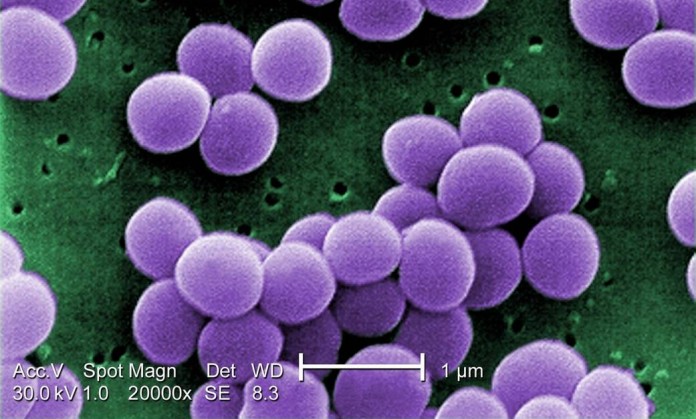
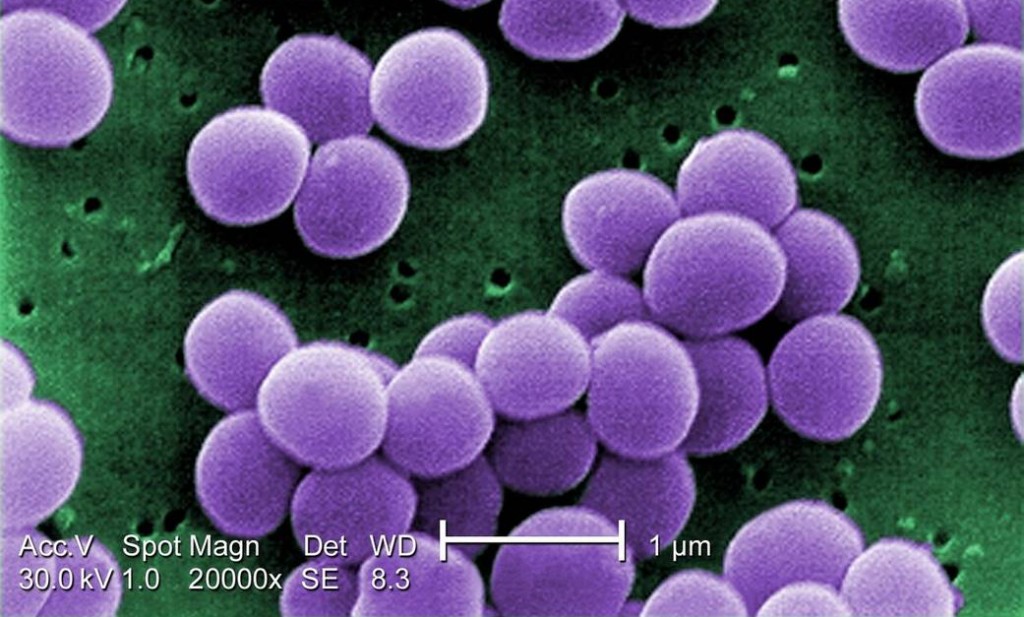
VRSA (Staphylococcus Aureus), a kind of medically-resistant infection, under a microscope
VRSA (Staphylococcus Aureus) under a microscope

A new drug, called Clovibactin, has been created out of “dark matter bacteria” which rather than being a research term, was created by the press to suit the mysterious origins of Clovibactin and potential future drugs like it, which could represent an urgently needed new font of antibiotics.

Scientists in the US managed to grow the bacteria out of a morass of life cleverly coined ‘bacterial dark matter,” due to the fact that it was based on a lifeform that can’t be cultured in a petri dish.

99% of all bacteria are similarly unculturable and could not be grown in laboratories previously, hence the moniker dark matter, because 95% of the universe is made up of dark matter and dark energy.

The new drug was discovered from bacterial dark matter found in sandy soil from North Carolina, and developed by an international team of researchers alongside the company NovoBiotic in Boston.

“We urgently need new antibiotics to combat bacteria that become increasingly resistant to most clinically used antibiotics,” said Dr. Markus Weingarth, a researcher from the chemistry department of Utrecht University.

“Clovibactin is different. Since Clovibactin was isolated from bacteria that could not be grown before, pathogenic bacteria have not seen such an antibiotic before and had no time to develop resistance. In fact, we did not observe any resistance to Clovibactin in our studies.”

MORE NEWS LIKE THIS: Life-Saving Breakthrough for Antibiotics Uses Shapeshifting Chemistry that Won 2022 Nobel Prize

Clovibactin successfully attacked a broad spectrum of bacterial pathogens in mice, including the so-called antibiotic-resistant Staphylococcus aureus.

It targets not just one, but three different precursor molecules that are all essential for the construction of the cell wall, an envelope-like structure that surrounds bacteria.

“The multi-target attack mechanism of Clovibactin blocks bacterial cell wall synthesis simultaneously at different positions,” said co-author Professor Tanja Schneider from the University of Bonn in Germany. “This improves the drug’s activity and substantially increases its robustness to resistance development.”

The results, published in the journal Cell, revealed the drug was named after its mechanism acting like a cage, with Clovibactin derived from the Greek word “Klouvi”, which means cage.

This was because it was discovered that Clovibactin self-assembles into large fibrils on the surface of bacterial membranes.

MORE NEW DRUGS: Scientists Develop Invisibility Cloak for Cancer Drugs

These fibrils are stable for a long time and ensure that the target molecules remain locked in for as long as necessary to kill bacteria.

“Since these fibrils only form on bacterial membranes and not on human membranes, they are presumably also the reason why Clovibactin selectively damages bacterial cells but is not toxic to human cells,” Dr. Weingarth said.

“Clovibactin hence has potential for the design of improved therapeutics that kill bacterial pathogens without resistance development,” he added.

SHARE This Important, Potentially Game-Changing Discovery… 

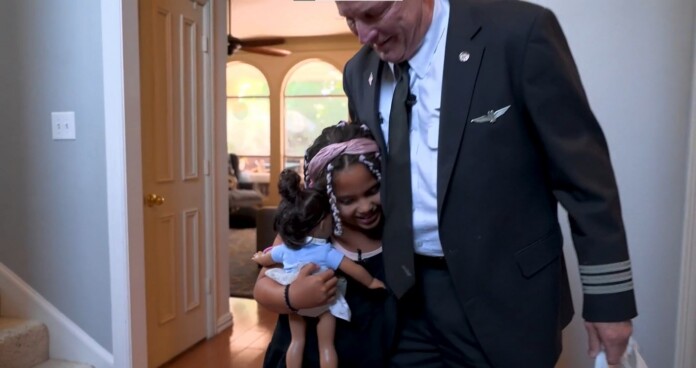
Airline Pilot Reunites 9-Year-Old with Her Beloved Doll Lost Half a World Away

From Texas comes the story of a girl named Beatrice who was taken to meet the captain on a flight home from Tokyo.

Beatrice is an American Girl Doll, and her flight home would see her reunited with her loving owner, 9-year-old Valentina Dominguez who was left devastated after losing the doll on a similar trip a month before.

Returning to Plano, Texas from a family trip a Japan, Valentina and her parents frantically searched through the luggage trying to find her best friend, to no avail. Her father Rudy reasoned they must have lost Beatrice at Haneda Airport, or perhaps even left her on the plane.

Fortunately, a social media post about the doll alerted a friend, who alerted a neighbor, who alerted American Airlines First Officer of 30 years, James Danen.

Describing his readiness to help others as something “in his nature,” he got in contact with the lost and found staff at Turkish Airlines, and was directed to their workers at Haneda Airport in Tokyo who had by that time found Beatrice.

“It’s my nature. I like helping people… that’s just what I like doing,” said Danen, adding that he just so happens to fly to Tokyo often. “I was really glad I could do something nice for somebody.”

ANOTHER STORY LIKE THIS ONE: Airline Captain Writes Sweet Note to Tooth Fairy For Girl on Plane

It took Danen two such trips to finally get his hands on Beatrice.

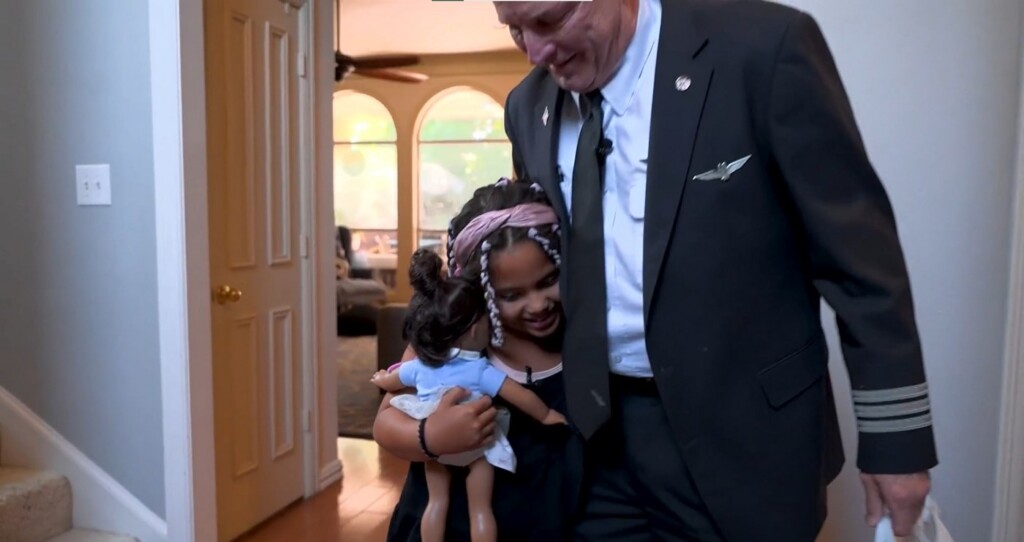
Last Monday, Danen, who lives just a few miles from the Dominguez Household, personally escorted Beatrice back into the loving arms of her best friend.

“Thank you! Was she well-behaved on the flight?” Valentina asked Jim who brought back some Japanese candy and a map of the world showing all the places Beatrice had visited on her travels, according to WFAA.

WATCH the news story below from WFAA…

SHARE This Sweet Hero Pilot With Your Friends…

Tree-Loving Brits Crowdsource a National ‘Ancient Tree Inventory’ – 200,000 Unique Trees

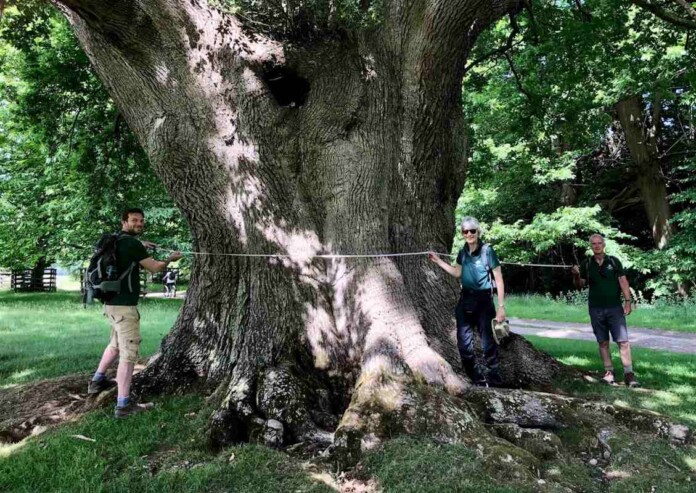
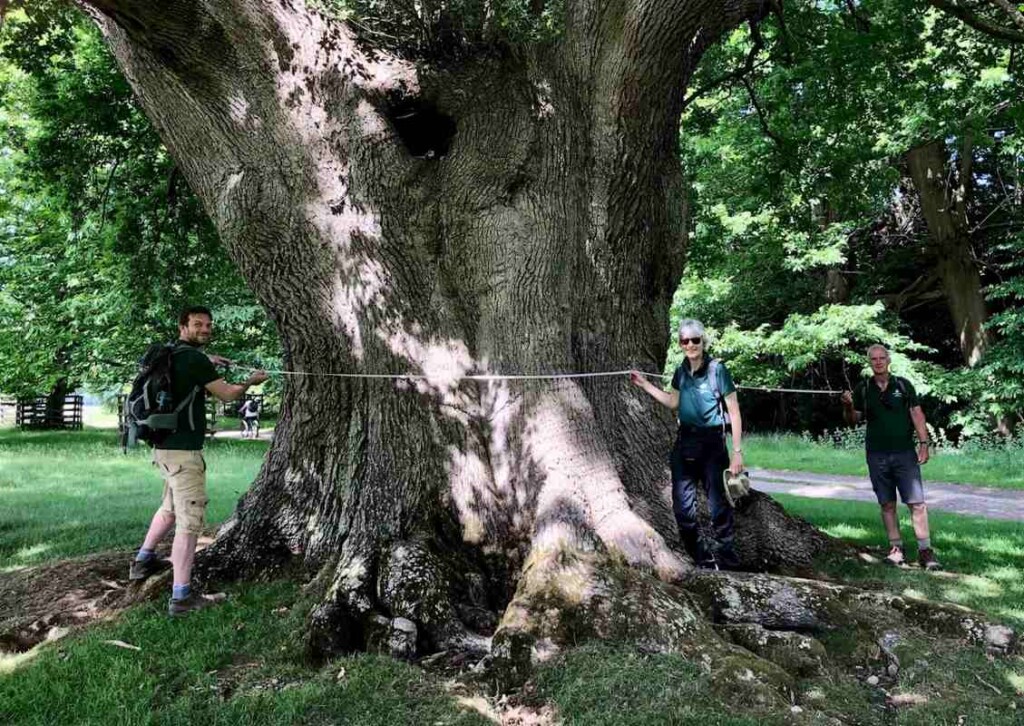
Tom (ATI Citizen Science Officer), Hilary and Jeremy measuring a huge ancient oak at Petworth Park - credit Woodland Trust Blog
Tom (ATI Citizen Science Officer), Hilary and Jeremy measuring a huge ancient oak at Petworth Park – credit Woodland Trust Blog

A UK non-profit has leveraged the special relationship that the British have for trees to create an ‘Ancient Tree Inventory’ to coordinate conservation, environmental activism, and scientific research by allowing anyone familiar with an ancient tree to record and share its existence with the country.

Perhaps a lesser-known trait in the world at large of the British is their faithful love and dedication to the surprising numbers of ancient and elder trees on their islands.

Even by the late Neolithic, much of the woodlands that would have covered lower Britain had been cleared by stone axes. Waves of immigration and warfare continually reduced the size of forests, and industrialization accelerated it even further.

Despite this, there are hundreds of thousands of trees on the British Isles that are hundreds of years old.

The Ancient Tree Inventory organized by the Woodland Trust is more than just a national tree registry, such as they have in Italy; it’s crowdsourced, and each tree is not only measured by its size but by the number of species living on or inside it.

Italy’s Monumental Tree Registry has about 22,000 individuals—the ATI from Woodland Trust has almost ten times as many.

OTHER COOL CITIZEN SCIENCE PROJECTS: Fungi Species New to Science Discovered in Scottish Highlands

“As I find and record these magnificent trees, I’m grateful to be playing a small part in helping to protect them and to preserve them for [posterity],” writes Kevin Stanley, an ancient tree “verifier.”

The Woodland Trust maintains an app as well as printed sheets to allow anybody to officially register the location and characteristics of ancient, ‘veteran,’ or ‘notable’ trees, which can then be found on a GPS map on the Trust’s website.

Ancient trees are fundamental to the health of forested ecosystems worldwide. Having survived myriads of storms, insects, cold snaps, and droughts, their seeds contain vital genetic memories to help future trees adapt to changing conditions.

MORE STORIES LIKE THIS: Ancient Cypress in Chile May be World’s Oldest Tree, at 5,000 Years Old

Studies done on woodland health have shown that when a forest loses too many ancients or elders, the overall survival of the whole ecosystem falls precipitously. By contrast, forests that have their ancients are much more likely to maintain high biodiversity and canopy cover, even those that exist in unstable areas.

The Woodland Trust every year organizes the Tree of the Year contest in the UK to raise awareness and celebrate these ancient woody Britons. See this year’s contestants here.

WATCH the Ancient Tree Inventory explainer video below…

SHARE This Awesome Project With Your Friends In The UK… 

Horses Can See Emotions in Our Face and Voice–and Have a Preference, Reveals New Study

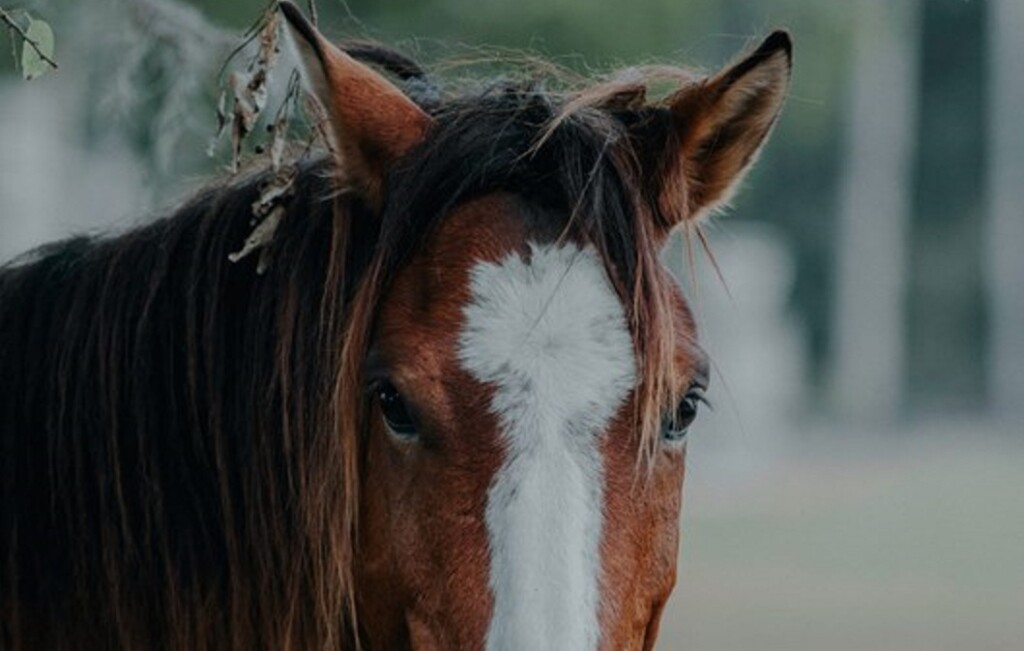
Ivana Cajina - unsplash


Ivana Cajina – unsplash

Horses have incredible sensitivity to not only outward human emotions such as joy and anger, but also inward, low arousal emotions like sadness, a new study shows.

This emotional sensitivity isn’t limited simply to facial expressions, but extends to the sounds coming from the individual whom the horse is observing as well.

Perhaps even more than other domestic animals like dogs, horses are incredibly tuned in to their environment. They’ve not only been selected for close cooperation with humans, but are herd animals of prey. As such, changes in the emotional contours of their surroundings are about the most important thing for a horse to be able to detect.

A Finnish-French study wanted to investigate whether horses were able to discern sadness in human faces, and also whether the animals were able to detect emotional content by sounds.

“Sadness is an intriguing emotion, as it is not only negatively charged but also represents a low arousal state. Previous studies have demonstrated that horses respond to high arousal emotions, like anger or joy,” explained Plotine Jardat, lead author of the study and doctoral researcher at the University of Tours.

“However, can they also detect cues of low arousal emotions, like sadness? We wanted to investigate whether horses can associate human expressions of sadness with the corresponding sounds, as they do with joy and anger.”

In the study they showed a horse an image of a joyful face and a sad face along with sounds and tones associated with human joy or human sadness.

OTHER STORIES ABOUT HORSES: Iceland Trots Out Service That Lets Horses Reply to Work Emails While You’re On Vacation

When sad tones were accompanied by a sad face, or joy with joy, the horses could quickly change their focus, but when a joyful face was matched with sorrowful sounds or vice versa, the horses were deemed to be confused, because their attention remained fixed on the images for much longer.

“This is intriguing because it would mean that when horses observe our faces and hear our voices, they do not perceive them as separate stimuli, but can integrate them across different sensory modalities,” Océane Liehrmann, a doctoral researcher from the University of Turku, told the Finnish Times.

MORE ANIMAL INTELLIGENCE: Parrots Kept as Pets Were Taught to Video Call Each Other—and They Loved It

The horses tended to remain fixated on the joyful human expression during which time their heart rate also rose, and the researchers believe this could be because the joyful imagery tended to have more colors and movement, or because it was associated joyful expressions with those observed in their lives and related it to pleasant memories.

The researchers want to continue investigating horses’ abilities to detect sadness, particularly wheather they can detect sadness amongst othe negative emotions.

SHARE This With The Horse People You Know, Who May Not Be Surprised…

“People are not disturbed by things, but by the view they take of them.” – Epictetus

Quote of the Day: “People are not disturbed by things, but by the view they take of them.” – Epictetus

Photo by: Brad West

With a new inspirational quote every day, atop the perfect photo—collected and archived on our Quotes page—why not bookmark GNN.org for a daily uplift?

Military Veterans Who Lost Limbs Receive Mortgage-Free Homes to Honor Their Service

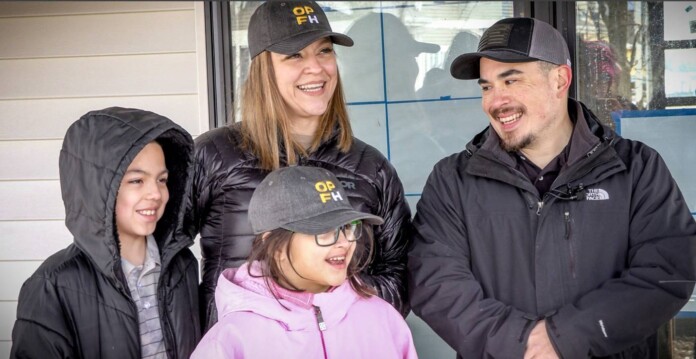
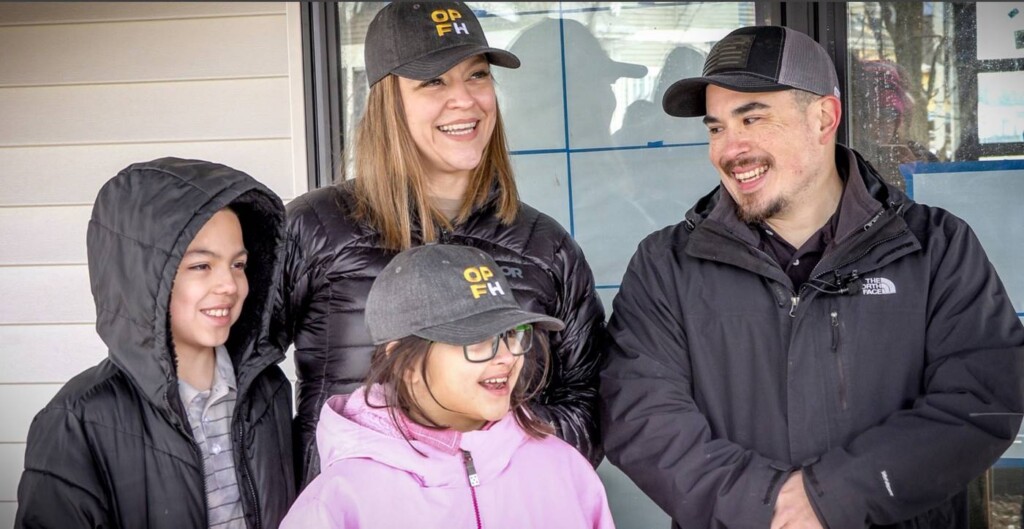
Former Sergeant Honda with his family in front of their new home - credit Operation Finally Home
Former Sergeant Honda (right) with his family in front of their new home – credit Operation Finally Home

Across the country, soldiers who came home mangled from the wars in the Middle East are receiving mortgage-free homes as a small measure of gratitude and honor for their sacrifices.

In DeForest, Wisconsin, a medically-retired former Sergeant Tory Honda was recently given the keys to a new mortgage-free home. Walking through it alongside television cameras, he, his wife Marsela, and their kids were overwhelmed by the gesture.

They learned back in March that a coalition made up of Operation Finally Home, Tim O’Brien Homes, and the Structural Building Components Association had secured a new home for their family in the Bear Tree Farms area of DeForest.

“It means so much to me. Perspective? I can’t even put that into words. I’m just grateful, and I hope I deserve every bit of it. I feel like I don’t, but I really hope I do. I hope I can live up to the standards that everybody looks forward to,” he told Channel 3000, after cutting the ribbon in front of the house.

For an even more unfortunate soldier, retired Army Sergeant Shane Parsons, the gesture was even more grand.

Wheelchair-bound after losing both legs and suffering a traumatic brain injury, the Gary Sinise Foundation built a smart, 100% accessible home for the man, his wife Jennifer, and their two sons Owen and Emmett.

MORE NEWS LIKE THIS: Call of Duty Game Hits Milestone of 100,000 Veterans Placed in Meaningful Jobs–And Blizzard Gives $30 Mil More

“In the living situations we’ve had, he could only really live through 70 to 80% of the house, it was about as much as he could access,” said Jennifer, adding that this new home is all built specifically for him. “Even though he’s already a wonderful dad, it’s going to allow him to be more hands-on, be able to participate more where before he wasn’t able to.”

Located in central Ohio in Plain City, Shane says he’s looking forward to settling into a normal life.

MORE VETERANS NEWS: Marine Vet Gifted With New Vehicle to Resume His Service to Disabled Veterans and Children

The Gary Sinise Foundation has provided 80 mortgage-free homes to veterans who have lost physical capacity in some form or another, and while the process isn’t fast, it’s certainly very rewarding.

“It’s surreal, I can’t believe I’m actually in my own home,” Parsons told WCMH. “I keep thinking that I’m in somebody else’s house.”

WATCH Former Sgt. Honda receive his house via Channel 3000…

SHARE These Truly Just Rewards For Our Servicemen With Your Friends… 

Dog Saves Foster Parents from Fire–Finds Forever Home 1 Day Later

Moose in his new home - WTRK
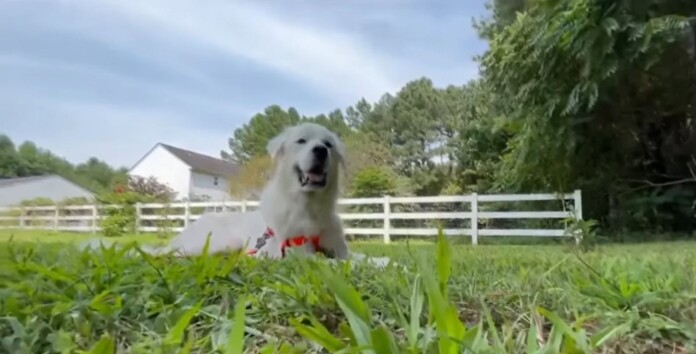
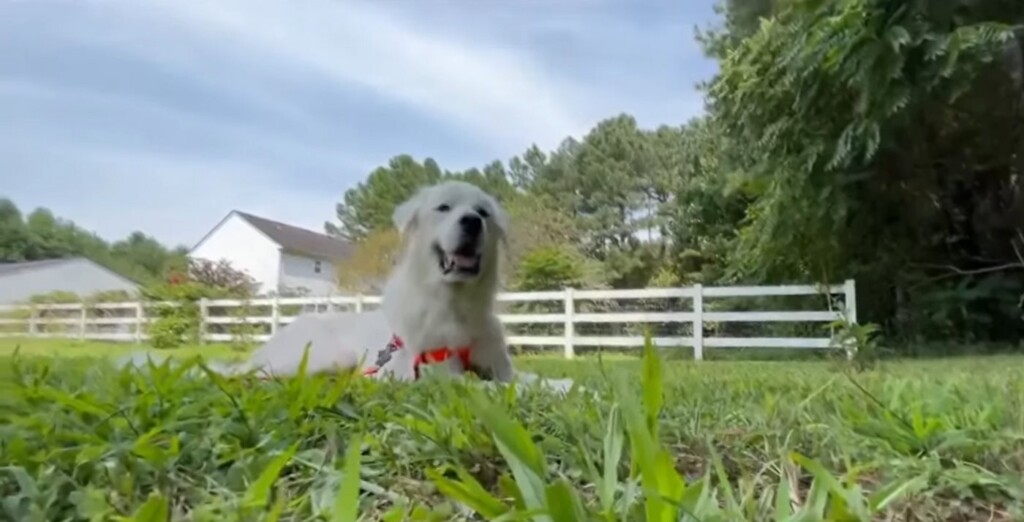
Moose in his new home – WTRK

A Great Pyrenees who saved his foster family from a fire on their houseboat has been adopted just 1 day later by a secret admirer.

The fluffy white dog named Moose alerted Sheila Janes and her husband Chris, asleep on their houseboat, that a fire had broken out on another boat moored nearby which quickly spread to their own, ready to consume them all.

More remarkably, Moose was only with the family for 48 hours—he was a foster dog who Sheila and Chris thought would give a weekend of fun for their three kids.

They first came to know Moose when they discovered the Portsmouth Humane Society’s ‘Paws Around Portsmouth’ weekend foster program.

They were having so much fun doing all kinds of activities, and it was at a farmers market that they met someone who wanted to adopt the pooch.

“The paperwork was to be finalized the next day, so we had one last night with Moose before he went to his new home. We spoiled him that day with an ice cream pup cup, a visit to the park, and a chicken sandwich,” said Sheila, adding that they decided to keep him at their houseboat rather than bring him back to the shelter.

That night, their houseboat caught fire, and the impromptu sleepover guest potentially saved all 5 of them. Moose was hailed as a hero and followed through with the paperwork the following day.

MORE HERO ANIMALS: ‘Hero’ Dogs From Rescue Operation in Turkey Get First Class Seats on Airliners Flying Them Home

However, the new family and home wasn’t the right fit for the big athletic dog.

Watching local news coverage and social media updates from afar was Ciara Hill. Proud owner of dogs, cats, chickens, and a tortoise on 5 acres of land, when she heard that Moose’s original adoption fell through, her husband gave her the green light for the plus-one.

MORE GREAT DOGS: Big White Dogs Save the World’s Smallest Penguin in Australia

“We saw that he had been returned, and I was talking to my husband. He was like, ‘Well, go get him,’” Hill told WTKR. “My other animals are welcoming him in, and he seems to be pretty comfortable.”

You can watch the news story, including images of the fire, on WTKR’s YouTube channel.

SHARE The Amazing Story Of This Wandering Hero Getting To Put His Paws Up…

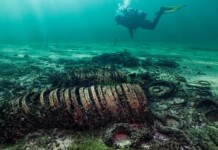
Barnacles Could Lead Investigators to the Wreck of the Missing Malaysian Airways Flight 370

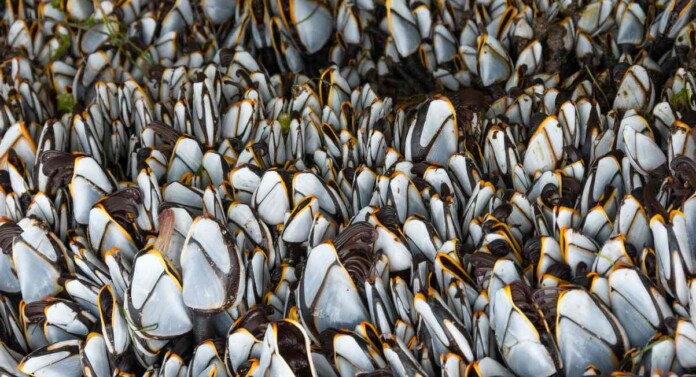
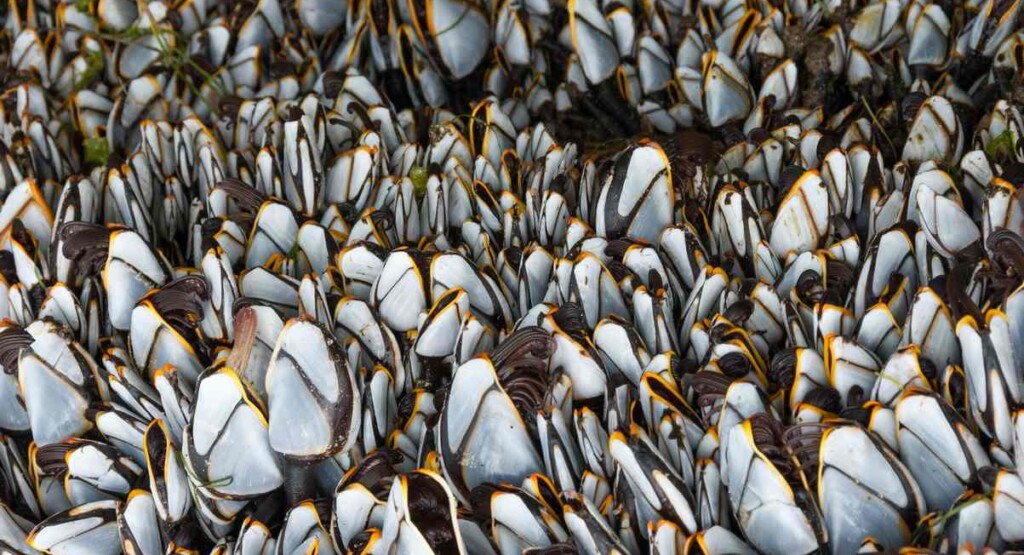
Barnacles on the Channel Islands - Travis Leery
Barnacles on the Channel Islands – Travis Leery

Apart from a few pieces of debris that washed onto an Indian Ocean island, no trace has been found of the Malaysian Airlines flight that vanished in March 2014, but an innocuous marine limpet could provide clues to its whereabouts, as bizarre as it sounds.

Scientists believe they could have the answer to one of the ocean’s biggest mysteries and it lies in the shells of barnacles.

A team of researchers at the University of South Florida has found a method to extract ocean temperature records from the shells. How could this help, you might ask?

Using the record of water temperature, the team believes they will be able to reconstruct the drift path of the barnacles on the washed-up debris back to its point of origin.

The official hunt for the plane, traveling from Kuala Lumpur to Beijing, was called off in January 2017. A six-month private search a year later also failed to find any trace of the aircraft.

So far they have only partially reconstructed the path due to only having access to smaller shells on the wreckage but they believe if they can apply it to the larger ones that formed at the crash site they will find the plane.

University of South Florida geoscientist Associate Professor Gregory Herbert said he got the idea the moment he saw photographs of the plane debris that washed ashore on Reunion Island off the coast of Africa a year after the crash.

“The flaperon was covered in barnacles and as soon as I saw that, I immediately began sending emails to the search investigators because I knew the geochemistry of their shells could provide clues to the crash location,” said Professor Herbet.

An expert in shelled marine invertebrates, Herbert has spent two decades refining a way to extract ocean temperatures stored in shells.

Barnacles and other shelled marine invertebrates grow their shells daily, producing internal layers similar to tree rings. The chemistry of each layer is determined by the temperature of the surrounding water at the time the layer was formed.

Professor Herbert and his team did a growth experiment with live barnacles to read their chemistry, and for the first time unlocked temperature records from their shells.

According to the study, published in the journal AGU Advances, they applied the method to small barnacles from MH370 debris.

With help from barnacle experts and oceanographers at the National University of Ireland Galway, they combined the barnacles’ water temperature records with oceanographic modeling and successfully generated a partial drift reconstruction.

An example from the study here shows each piece of debris from the crash moving around the so-called “Seventh Arc.”

“Sadly, the largest and oldest barnacles have not yet been made available for research but with this study, we’ve proven this method can be applied to a barnacle that colonized on the debris shortly after the crash to reconstruct a complete drift path back to the crash origin,” said Dr. Herbert.

INTERESTING SEA SCIENCE: Man’s Biological Clock Set Back 10 Years After 93 Days Living Under the Ocean in a Research Station

The official search covered 120,000 square kilometers (46,000 sq miles) of ocean, including several thousands of miles along a north-south corridor deemed “The Seventh Arc,” where investigators believe the plane could have glided after running out of fuel.

Ocean temperatures can change rapidly along the arc, leading him to believe that his method could reveal precisely where the plane is.

“Even if the plane is not on the arc, studying the oldest and largest barnacles can still narrow down the areas to search in the Indian Ocean,” he adds.

MORE MYSTERIES UNRAVELLED: Secrets of Namibia’s Fairy Circles Were Demystified After Half-Century

“The plane disappeared more than nine years ago, and we all worked aiming to introduce a new approach to help resume the search, suspended in January 2017, which might help bring some closure to the tens of families of those on the missing plane,” said Dr. Nassar Al-Qattan.

“Knowing the tragic story behind the mystery motivated everyone involved in this project to get the data and have this work published.”

SHARE This Bizarre Yet Ingenious Idea To Solve A Forgotten Mystery… 

Paralyzed Woman ‘Speaks’ with Brain Signals Turned into Talking Avatar in World First

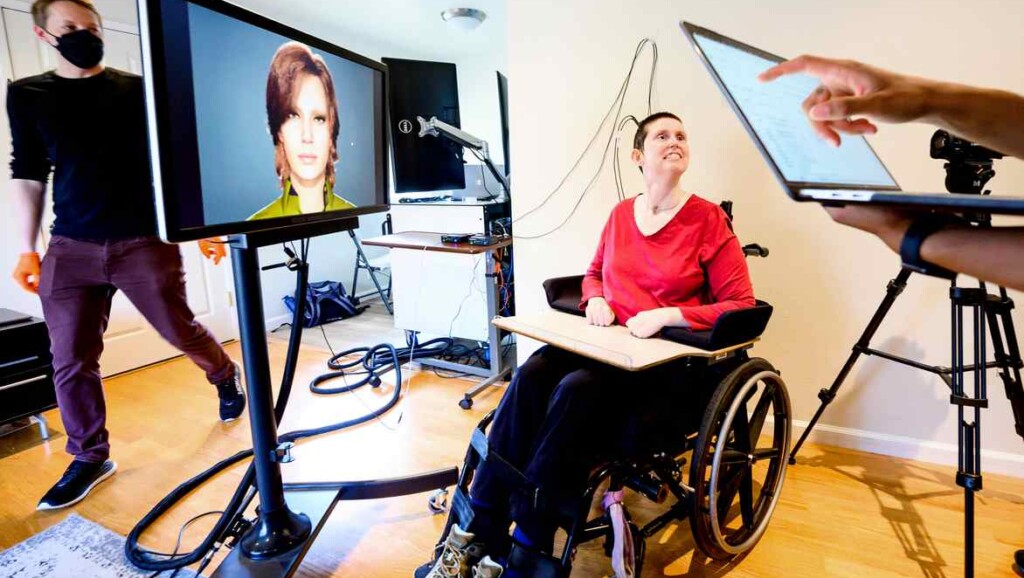
Ann, plugged into the decoder software - credit UCSF via SWNS
Ann, plugged into the decoder software – credit UCSF via SWNS

A paralyzed woman has spoken again after her brain signals were intercepted and turned into a talking avatar, complete with facial expressions and sound samples from the woman’s real voice, all in a world first.

48-year-old Ann suffered a brainstem stroke when she was 30, leaving her paralyzed.

Scientists at the University of California then implanted a paper-thin rectangle of 253 electrodes onto the surface of her brain covering the area critical for speech. They then used artificial intelligence to produce the brain-computer interface (BCI).

These intercept ‘talking’ brain signals and are fed into a bank of computers via a cable, plugged into a port fixed to her head.

The computers can decode the signals into text at a rate of 80 words a minute, while an audio recording of her voice from her wedding day years before the stroke reproduced her voice and then gave it to an on-screen avatar that uses it with facial expressions.

The team from the University of California San Francisco says it is the first time that either speech or facial expressions have been synthesized from brain signals.

“Our goal is to restore a full, embodied way of communicating, which is really the most natural way for us to talk with others,” said Dr. Edward Chang, chair of neurological surgery at UCSF. “These advancements bring us much closer to making this a real solution for patients.”

For weeks, Ann worked with the team to train the system’s artificial intelligence algorithms to recognize her unique brain signals for speech.

This involved repeating different phrases from a 1,024-word conversational vocabulary over and over again, until the computer recognized the brain activity patterns associated with the sounds.

Rather than train the AI to recognize whole words, the researchers created a system that decodes words from phonemes. “Hello,” for example, contains four phonemes: “HH,” “AH,” “L” and “OW.”

Using this approach, the computer only needed to learn 39 phonemes to decipher any word in English. This both enhanced the system’s accuracy and made it three times faster.

MORE CRAZY TECH LIKE THIS: First Time Someone With Cut Spinal Cord is Able to Walk Freely, Thanks to New Swiss Technology

“The accuracy, speed, and vocabulary are crucial,” said Sean Metzger, who developed the text decoder in the joint Bioengineering Program at UC Berkeley and UCSF. “It’s what gives a user the potential, in time, to communicate almost as fast as we do, and to have much more naturalistic and normal conversations.”

Using a customized machine-learning process that allowed the company’s software to mesh with signals being sent from her brain, the computer avatar was able to mimic Ann’s movements, making the jaw open and close, the lips protrude and purse and the tongue go up and down, as well as the facial movements for happiness, sadness, and surprise.

The team is now working on a wireless version that will mean the user doesn’t have to be connected to the computers.

MORE DISABLED RESTORED: Revolutionary Music Therapy Helps Paralyzed Man Walk and Talk Again – It ‘Unlocked the Brain’

The current study, published in the journal Nature, adds to previous research by Dr. Chang’s team in which they decoded brain signals into text in a man who had also had a brainstem stroke many years earlier.

But now they can decode the signals into the richness of speech, along with the movements that animate a person’s face during conversation.

WATCH the story and tech in action from UCSF…

“What would be left of our tragedies if an insect were to present us his?” – Emil Cioran

Quote of the Day: “What would be left of our tragedies if an insect were to present us his?” – Emil Cioran

Photo by: Charlotte Descamps

With a new inspirational quote every day, atop the perfect photo—collected and archived on our Quotes page—why not bookmark GNN.org for a daily uplift?

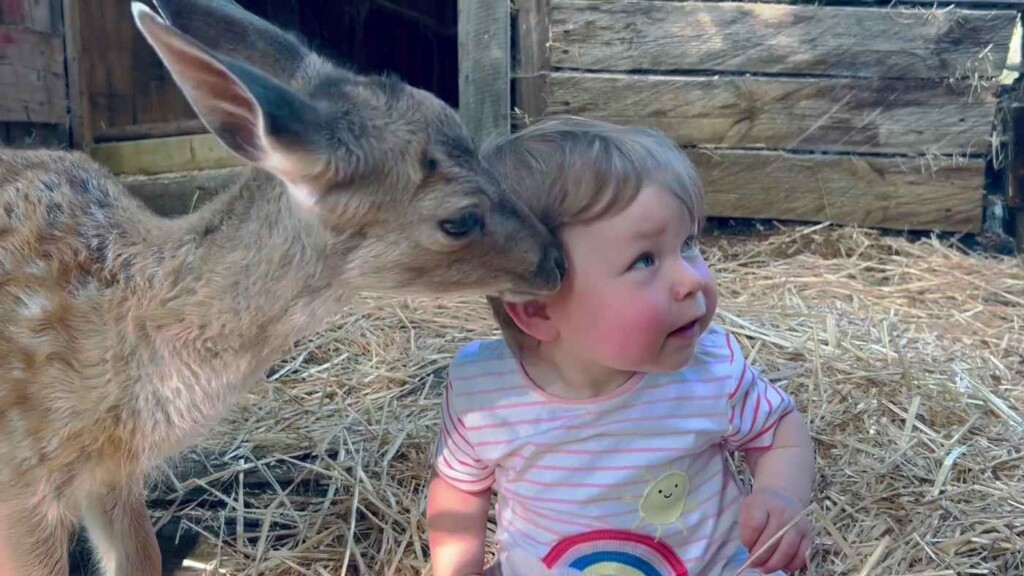
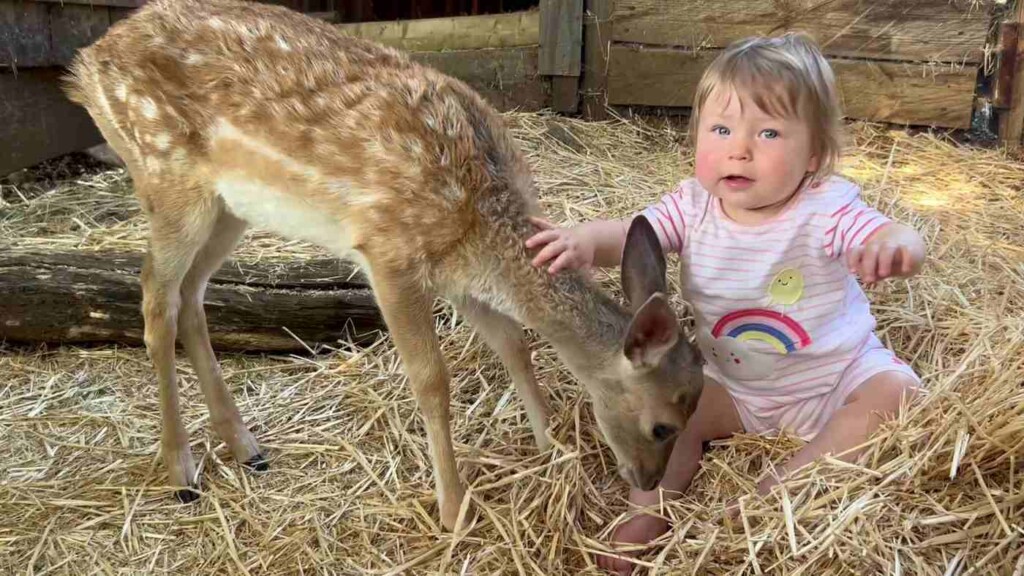
Orphaned Deer Falls Head Over Hooves For Rescuer’s 11-Month-Old Daughter–LOOK

credit - Mountfitchet Castle - via SWNS
credit – Mountfitchet Castle – via SWNS

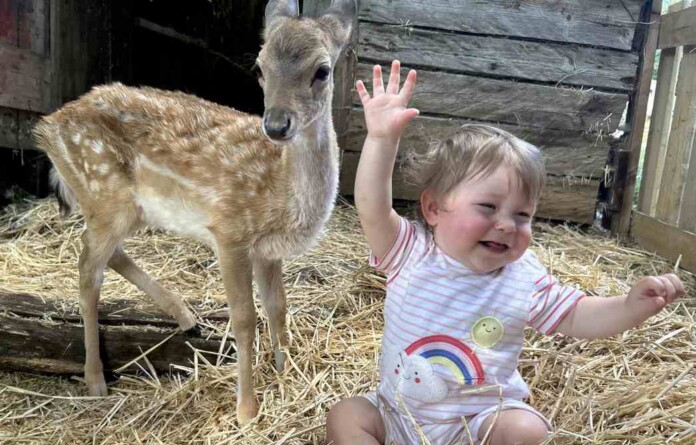
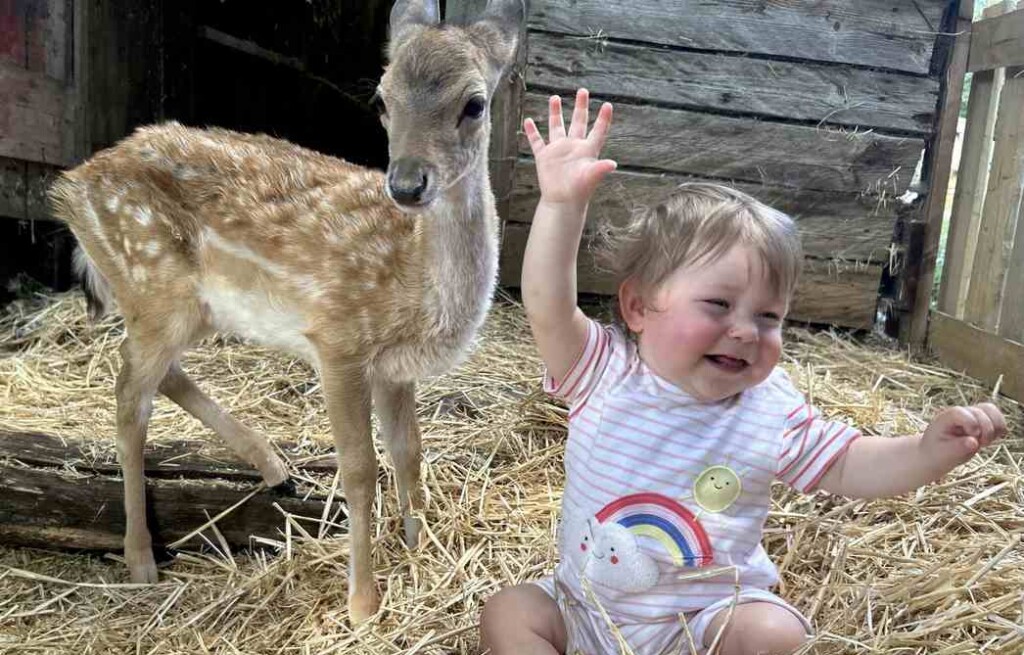
After an open-air museum took in an orphaned fallow deer, the little thing fell head over hooves for the owner’s 11-month-old daughter.

The deer, named Ziggy, was rescued and taken in by Jeremy Goldsmith who runs Mountfitchet Castle, a Norman castle and museum.

Goldsmith and the staff at Mountfitchet care for a variety of orphaned animals, and it took just a few hours for Ziggy to settle into her new environment.

The fawn, believed to be a two-month-old, was spotted on the side of a road near the castle in Essex after its mother was hit by a car. A passer-by called Mountfitchet Castle who thankfully took in the deer and gave it a warm shed to sleep in.

After settling in, it wasn’t long before Goldsmith found that the fawn had taken a peculiar liking to his daughter. Now, three times a day Jeremy goes to the barn to feed the fawn and takes young Isabella with him.

credit – Mountfitchet Castle – via SWNS

The two spend hours together and Isabella loves to pet and kiss Ziggy. The castle already has a herd of five fallow deer, and the deer will spend the rest of its life well-fed and with company.

“We can’t release her back to the wild now, as she would be too tame and not at all scared of people,” said Goldsmith.

MORE ADORABLE RESCUES: Sam the Lamb is Nursed Through Incredible Recovery After Falling off Highway Truck – WATCH

“We’re an animal-loving family. I was brought up in an animal-loving family and I did the same for my daughter. It’s just so natural, they spend hours kissing and [petting] each other. There’s no fear like you would expect there to be,” he added.

SHARE These Touching Images With Your Friends On Social Media… 
Scientists Regrow Retina Cells to Tackle Leading Cause of Blindness Using Nanotechnology

Macular degeneration is the leading cause of blindness in developed countries, but regrowing the human cells lost to this condition was the feature of a new successful treatment that took advantage of advances in nanotechnology.

Regrowing the cells of the human retina on a scaffold of synthetic, tissue-like material showed substantial improvements over previously used materials such as cellulose, and the scientists hope they can move on to testing their method in the already blind.

Macular degeneration is increasing in prevalence in the developed world. It’s the leading cause of blindness and is caused by the loss of cells in a key part of the eye called the retina.

Humans have no ability to regrow retinal pigment cells, but scientists have determined how to do it in vitro using pluripotent stem cells. However as the study authors describe, previous examples of this procedure saw scientists growing the cells on flat surfaces rather than one resembling the retinal membrane.

This, they state, limits the effectiveness of transplanted cells.

In a study at the UK’s Nottingham Trent University, biomedical scientist Biola Egbowon and colleagues fabricated 3D scaffolds with polymer nanofibers and coated them with a steroid to reduce inflammation.

The method by which the nanofibers were made was pretty darn cool. The team would squirt polyacrylonitrile and Jeffamine polymers in molten form through an electrical current in a technique known as “electrospinning.” The high voltage caused molecular changes in the polymers that saw them become solid again, resembling a scaffold of tiny fibers that attracted water yet maintained mechanical strength.

After the scaffolding was made, it was treated with an anti-inflammatory steroid.

3D-PRINTING CORNEAS: Bioengineered Cornea Can Restore Sight to the Blind and Visually Impaired

This unique pairing of materials mixed with the electrospinning created a unique scaffold that kept the retinal pigment cells viable for 150 days outside of any potential human patient, all while showing the phenotype of biomarkers critical for maintaining retinal physiological characteristics.

“While this may indicate the potential of such cellularized scaffolds in regenerative medicine, it does not address the question of biocompatibility with human tissue,” Egbowon and colleagues caution in their paper, urging more research to be conducted, specifically regarding the orientation of the cells and whether they can maintain good blood supply.

SHARE This Futuristic Occular Research With Your Friends… 

4 Decades of Data Suggests Pacific Coral Reefs Can Acclimate to Warming Oceans and Resist Future Bleaching

SWNS
A coral reef – SWNS

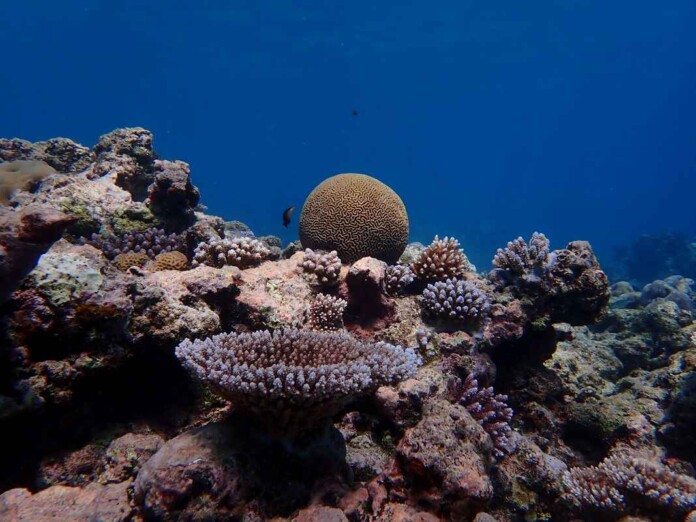
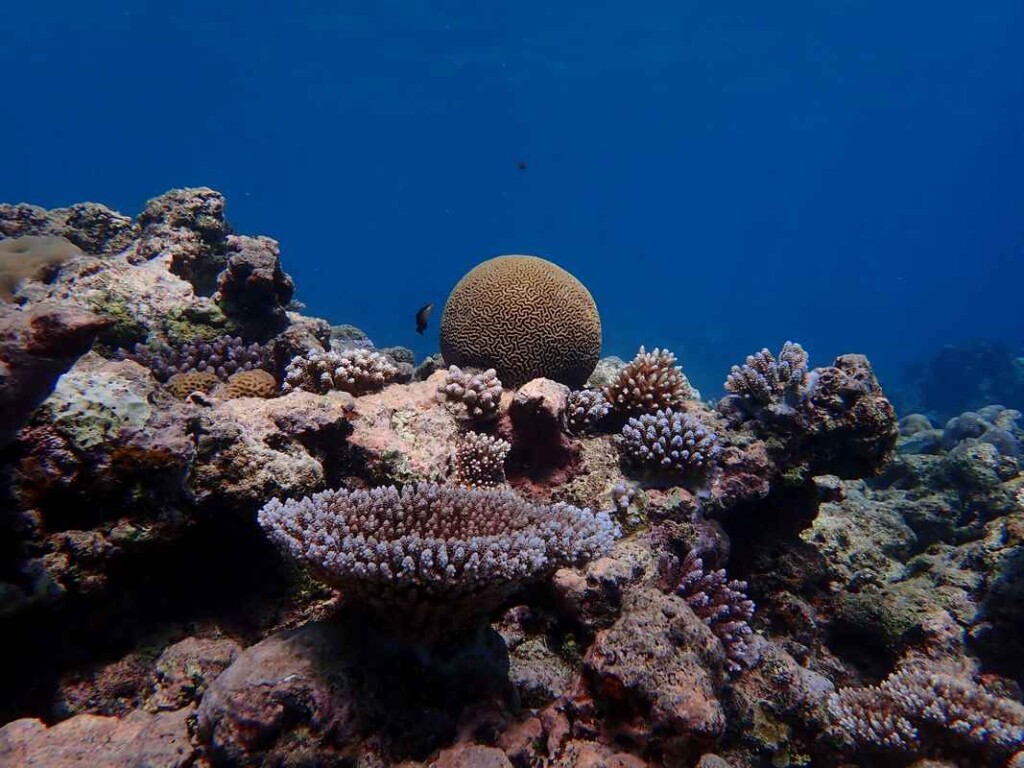
Data collected over the last 40 years at a remote coral reef within the territorial waters of Palau has shown that corals are more adaptable to warming oceans than previously thought

In fact, they’ve already adapted—potentially at a rate of 0.18°F per decade, and the researchers say that established models for coral bleaching events should be updated to presume an enhanced capacity for these stunning underwater ecosystems to sustain themselves over the decades.

The Newcastle University-led study focused on the Pacific Island nation of Palau and drew on decades of field observations, as well as many possible future coral bleaching trajectories for Palauan reefs, each with a different simulated rate of thermal tolerance enhancement.

They found that if coral thermal tolerance continues to rise throughout the 21st century at the most likely historic rate, “significant” reductions in bleaching impacts are possible.

“We quantified a natural increase in coral thermal tolerance over decadal time scales which can be directly compared to the rate of ocean warming,” said study lead author Liam Lachs.

The researchers say that high-frequency bleaching can be fully mitigated at some reefs under low-to-middle emissions scenarios where, for example, the Paris Agreement commitments are fulfilled.

“We know that coral reefs can increase their overall thermal tolerance over time by acclimatization, genetic adaptation, or shifts in community structure, however we know very little about the rates at which this is occurring,” said study co-author Dr. James Guest.

MORE SURPRISES UNDER THE SEA: Dolphins Self-Treat Their Own Skin By Lining Up to Rub on Specific Coral

“This study uses data from a remote Pacific coral reef system and estimates the rate of increase in tolerance since the late 1980s. The results provide some hope that reefs can keep up with increasing temperatures, but only if strong action is taken on climate change.”

To survive amid climate change, the researchers say coral communities need to endure progressively more intense and frequent marine heatwaves.

The Newcastle team’s findings reveal that the thermal tolerance of corals in Palau has likely increased at a rate of 0.1°C per decade since the late 1980s.

MORE GOOD CORAL NEWS: Scientists Find Giant Pristine Coral Reef Undiscovered Near Tahiti, With Clues There Are More

The researchers say that the increase suggests that natural mechanisms, such as genetic adaptation, acclimatization of corals, or their symbiotic microalgae, could have contributed to the enhancement of coral thermal tolerance.

Several early models on climate change, global warming, and ecological degradation have been shown to be incorrect over the years, including the effects of ruminant agriculture on greenhouse gas emissions and plastic pollution entering the ocean—which GNN recently reported could have been overestimated for years by a factor of 30.

MORE SCIENCE LIKE THIS: Climate-Resilient Coral Offers Hope to World’s Reefs, Able to Cope With 2ºC of Global Warming

On corals, some scientists aren’t waiting to see if they can adapt at their own pace. Researchers in Florida are breeding corals that are specifically identified as carrying genetic adaptations that make them less vulnerable to heat and acidic water

SHARE This Inspiring Coal Evolution With Your Friends Concerned About The Climate… 

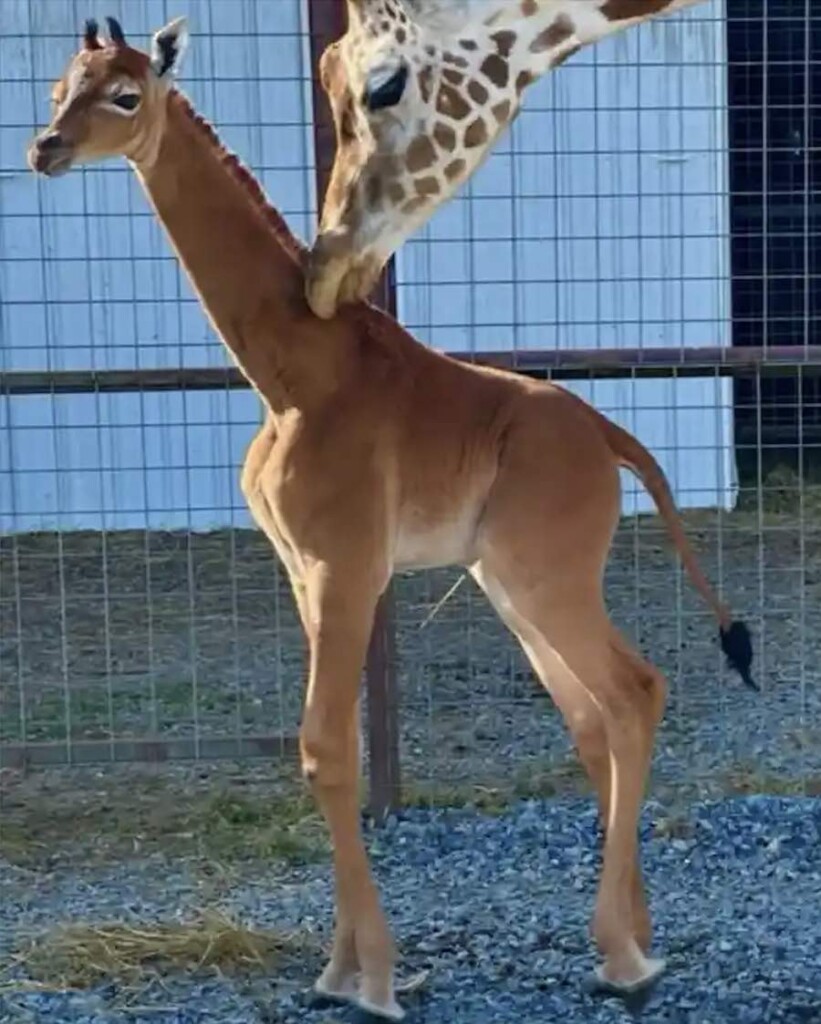
Is it a Llama or a Horse? An Incredible Spotless Giraffe Was Born

We’ve all heard of melanistic leopards, albino pythons, and great white whales, but how about this little princess?

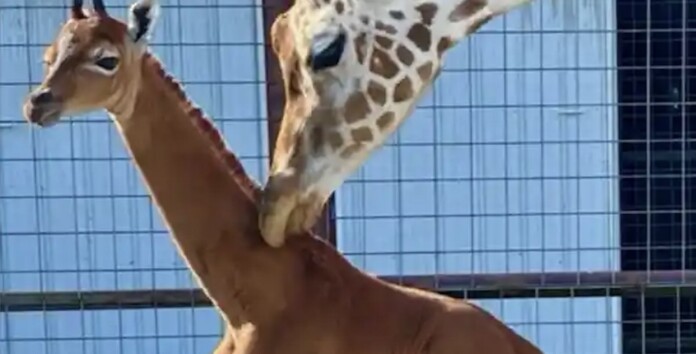
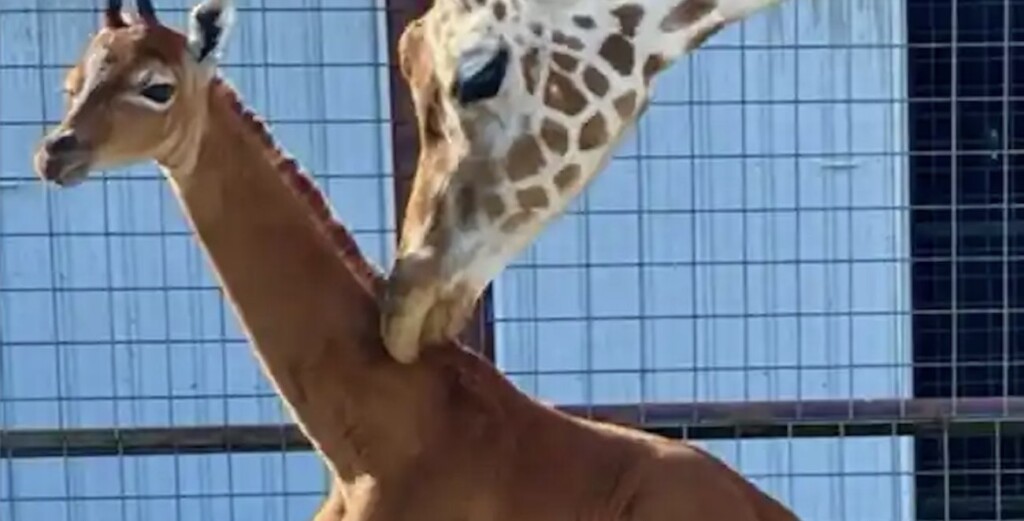
Born at a zoo in Tennessee, you’d have to go back to the 1970s to find the last recorded instance of a giraffe being born without spots.

Born on July 31, she is already as tall as an average NBA player, totally healthy, and content under the watchful eyes of her mother.

Brights Zoo has decided to give the young one a name in Swahili, Kipekee, Shakiri, Jamella, and Firayali, all of which mean either beautiful or unique, are being considered.

A giraffe’s spots are critical for several reasons, and the young female will give an opportunity to scientists to study the animal’s physiology without them. For starters they make for superb camouflage, even despite the animal’s unmistakable long neck.

The pattern is personal to each giraffe just as a fingerprint is to each human, and it’s thought they inherit most of it from their maternal lineage. Underneath their skin, they contain a system of blood vessels that allow them to release body heat through the center of each spot, providing much-needed thermoregulation in the heat of the African day.

MORE WILD ANIMAL MORPHS: First Scientifically Confirmed Images in 100 Years: The Awe-Inspiring, Elusive Black Leopard

“The international coverage of our patternless baby giraffe has created a much-needed spotlight on giraffe conservation,” the founder of Brights Zoo, Tony Bright, said to the local television news station WCYB.

It’s a good thing she was born in captivity, as the lack of spots would probably compromise her ability to hide from predators.

WATCH the newborn find its feet… 

SHARE This Bizarre Beauty With Your Friends On Social Media… 
“If the skies fall, one may hope to catch larks.” – Francois Rabelais

Quote of the Day: “If the skies fall, one may hope to catch larks.” – Francois Rabelais 

Photo by: Diego PH

With a new inspirational quote every day, atop the perfect photo—collected and archived on our Quotes page—why not bookmark GNN.org for a daily uplift?

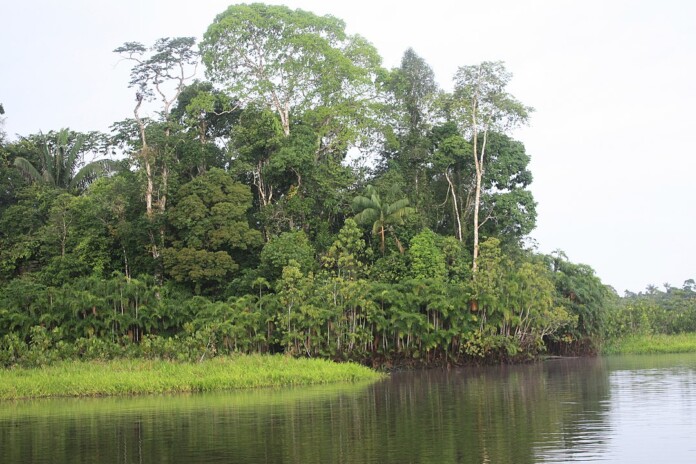
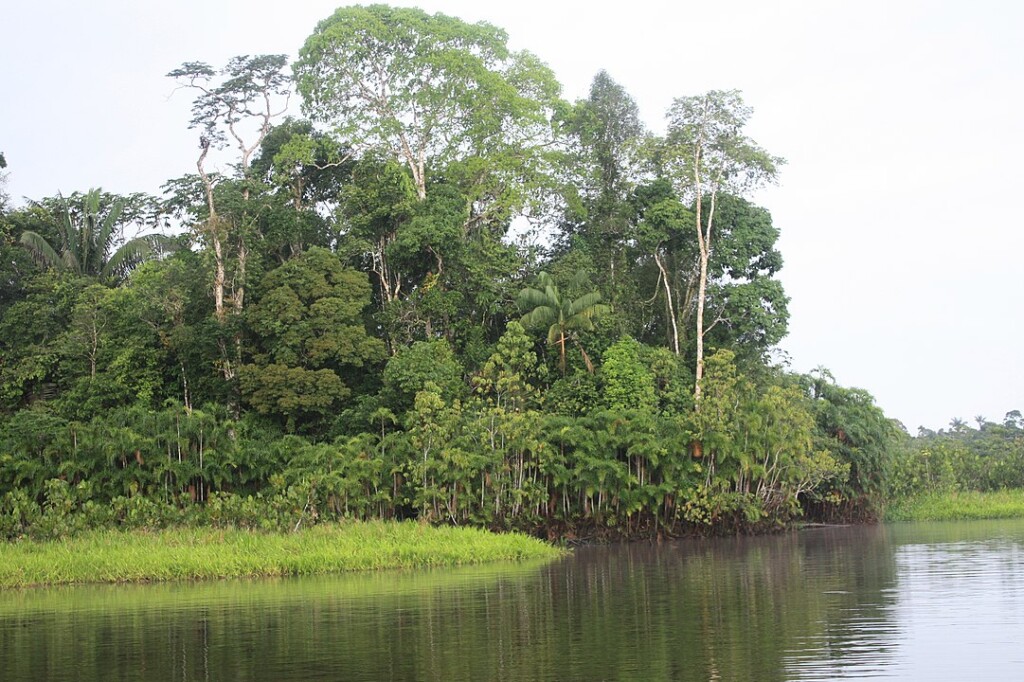
60% of Ecuadorians Vote Against Continued Oil Drilling in Critical Amazon Biosphere

Yasuni Biosphere - ALAI - Agencia Latinoamericana de Información CC 4.0. SA
Yasuni Biosphere – ALAI – Agencia Latinoamericana de Información CC 4.0. SA

It was called the Yasuní popular consultation, and it asked the people of Ecuador a simple question: “Do you agree with the Ecuadorian government in keeping the ITT crude, known as block 43, underground indefinitely?”

At 94% of the vote counted, the answer was 60% ‘yes’. The proposal was approved.

The referendum was a popular initiative demanded by indigenous communities for more than ten years and sought to protect the vast Yasuní National Park from oil drilling.

Home to the claimed ancestral territory of the contactable Huaorani tribe, and the voluntarily-isolated Tagaeri and Taromenane, the park, 700 square miles larger than Yellowstone, was declared a UNESCO World Biosphere Reserve in 1989.

One of, if not the most biodiverse places on Earth, Yasuní National Park is home to thousands of documented species of reptiles, amphibians, fish, mammals, and birds, and according to one study, it holds world records for species richness for amphibians, bats, trees, and reptiles.

Part of its secret is that it lies within a transitional area of the Andes Mountains into the Amazon Rainforest, along several key tributaries of the Amazon River including the Napo.

MORE AMAZON NEWS: Brazil’s President Makes Good on Campaign Promise to Evict Miners from Indigenous Reserves in the Amazon

It has long been known to conceal potentially-vast oil reserves. In 2007 then-President Rafael Correa announced they would be left in the ground if rich nations contributed to an Ecuadorian poverty relief fund equal to around $3.6 billion, which was believed to represent around 50% of the oil wealth there.

Hardly any of the hoped-for total materialized, with only Turkey, Chile, Colombia, Georgia, Australia, Spain, and Belgium contributing, along with some extremely wealthy individuals. And so 6 years later, Correa announced the intention to move ahead with drilling in block 43, within the National Park boundaries.

OTHER BIG BUSINESS REJECTIONS: Arctic Oil Drilling Plans Suffer ‘Stunning Setback’ as Almost ‘No One Shows Up’ For the Sale

The recent referendum was seen as a blow to President Guillermo Lasso, who also had advocated for drilling. State oil company Petroecuador will have to dismantle its drilling operations in the area in the coming months, something which they’ve stated they will comply with as soon as the vote is officially counted and ratified.

SHARE This Huge Legal Victory For Indigenous Peoples And Animals…